THE NIBBLE BLOG: Products, Recipes & Trends In Specialty Foods


Also visit our main website, TheNibble.com.

It’s International Hummus Day: Try A New Brand Like Hope Foods


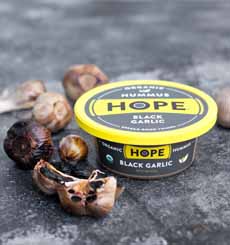
Hope Black Garlic Hummus
[1] Black Garlic, one of 11 delicious flavors of Hope Hummus (photos #1 and #3 © Hope Foods).

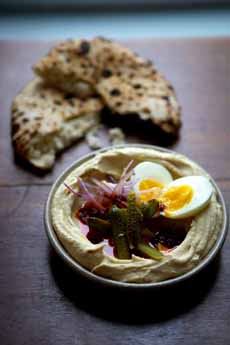
Salad-Topped Hummus
[2] One of our favorite ways to serve hummus: topped with salad ingredients and, as a lunch dish, with a hard-boied egg (photo © Shaya Restaurant | NOLA).

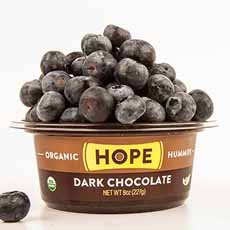
Chocolate Hummus
[3] Woo hoo, Hope Foods’ chocolate hummus, shown here topped with blueberries.

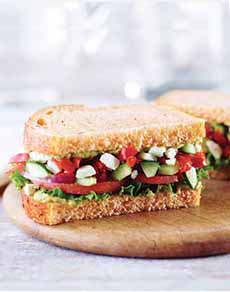
Hummus & Israeli Salad Sandwich
[4] A hummus sandwich with Israeli salad. Check out these 20 ways to garnish a hummus sandwich (photo © Panera).


May 13th is International Hummus Day.

Over the last two decades, hummus has evolved from a mezze at Mediterranean restaurants to the hottest, most nutritious dip and spread at supermarkets nationwide. It’s the darling of nutritionists, nutritious and versatile, and a better-for-you snack.

Hummus is Arabic for chickpeas. The more long-form name for what we refer to as hummus is hummus bi tahina, chickpeas with tahini. Tahini is a paste made of toasted, hulled sesame seeds, which can be joyed as a dip on its own.

The recipe for hummus is simple: chickpeas, tahini, and seasonings (including garlic), mashed and puréed*.

> International Hummus Day is May 13.

> National Taco Day is the first Tuesday in October.

Below:

> The history of hummus.

> 18 delicious hummus recipes.

> The different types of mezze.

Elsewhere on The Nibble:

recipe is easy, once you found a store with tahini).

But since the hummus renaissance, stores have been sagging under the weight of so many brands and so many flavors. We’ve counted more than two dozen flavors among different brands. Our two personal favorites are horseradish and black olive, which we found at Trader Joe’s.

But, we like everything. So we were very pleased to receive samples of a new brand from Hope Foods. If you head to the website now, you can enter to win a year’s supply of hummus.
 
 
HOPE FOODS ORGANIC HUMMUS

There are 11 flavors of hummus. We tried three of them, all especially delicious.

First, the consistency is wonderful, like well-mashed homemade hummus.

While we enjoy the ultra-smooth texture of big brands like Tribe, we welcome the return of toothsome texture, like Grandma used to make (if your grandma’s ancestry was in the eastern Mediterranean).

Second, the flavor selection is a bit more interesting, with black garlic, Thai coconut curry, and spicy avocado hummus (the most popular flavor).

The line is preservative-free, certified Gluten-Free, Non-GMO Certified, OU kosher, and USDA Organic. There’s a store locator on the website.
 
 
HOPE HUMMUS FLAVORS

Currently, the line of hummus includes:

  • Black Garlic Hummus
  • Jalapeño Cilantro Hummus
  • Kale Pesto Hummus
  • Lemon Peppercorn Hummus
  • Original Recipe Hummus (nice and peppery)
  • Red Pepper Hummus
  • Spicy Avocado Hummus
  • Sriracha Hummus
  • Thai Coconut Curry Hummus
  •  
    Plus Dessert Hummus

  • Dark Chocolate Hummus
  • Dark Chocolate Coconut Hummus
  •  
    While we haven’t had Hope’s chocolate hummus, we have had other brands: Thumbs up!

    The company also makes guacamole, which we look forward to trying.

    “Spread” the word!
     

    THE HISTORY OF HUMMUS

    Chickpeas, sesame, lemon, and garlic have been eaten in the Levant† for millennia. Though widely consumed, chickpeas were cooked in stews and other hot dishes. Puréed chickpeas eaten cold with tahini do not appear before the Abbasid period (750 to 1517 C.E.) in Egypt and the Levant.

    The earliest known recipes for a dish similar to hummus bi tahina appear in 13th-century cookbooks from Cairo.

    Some food historians believe the dish appeared a century earlier, prepared by Saladin, the first sultan of the Ayyubid dynasty (1174–1193). (If so, it was more likely created by a cook in Saladin’s kitchen, the idea of the warlord Saladin-as-cook being tough to swallow.)

    Recipes for cold purée of chickpeas without tahini, but with vinegar, oil, pickled lemons, herbs, and spices (but no garlic), appear in medieval cookbooks; as do recipes with nuts vinegar (though not lemon), with many spices and herbs. [source]

    Whomever and however, we’re grateful that it came to be part of our [almost] daily diet,
     
     
    WHAT ARE MEZZE: THE DIFFERENT TYPES

    Mezze (MEH-zay) or meze is the singular form for a number of small dishes served in the Middle East to accompany drinks (add an “s” for the plural form in English).

    In some countries, an assorted mezze plate is served as an appetizer. In Greece, this appetizer platter is also called a pikilia.

    Each country has its favorites. The ones most often found in the U.S. are:

  • Babaganoush, mashed eggplant mixed with seasonings (also spelled baba ganoush and babaghanoush).
  • Dolmades can take many forms. In the U.S., they’re usually Greek-style: grape leaves stuffed with rice, chopped mint, and lemon juice (these are also called sarma). In some countries, eggplants, peppers, and zucchini are stuffed, often with the same ingredients plus minced lamb.
  • Falafel, a deep-fried ball or patty made from ground chickpeas, fava beans, or both.
  • Fattoush, a salad made from several garden vegetables and toasted or fried pieces of pita bread.
  • Feta cheese or other local cheese.
  •  

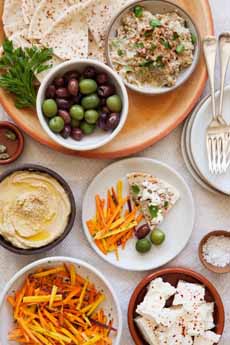
    Mezze Platter
    [5] A delicious mezze plate: babaganoush, feta, hummus, olives, pita and a local touch, pickled carrots—all of which you can purchase ready-made (photo © Good Eggs).

    Hummus Platter
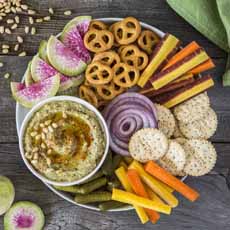
    [6] Hummus itself is gluten-free, but not the pita. This gluten-free hummus plate created by Glutino Foods has gluten-free pretzels and crackers instead. You can find gluten-free pita and recipes to bake your own online (photo © Glutino Foods).

  • Halloumi cheese, sliced and grilled.
  • Hummus, a dip or spread made from cooked, mashed chickpeas.
  • Kibbeh, a mixture of bulghur, minced onions, finely chopped meat, and spices. Depending on the region, it is shaped into balls or patties and fried, baked, cooked in broth, or served raw (tartare).
  • Souvlaki, bite-sized lamb cubes, grilled on a skewer.
  • Labneh, strained yogurt that is more tart, like sour cream.
  • Tabbouleh, bulgur wheat, finely chopped parsley, mint, tomato, green onion; with lemon juice, olive oil and seasonings.
  • Taramasalata, a carp roe dip based whipped with lemon juice and olive oil. Sometimes, mashed potatoes or bread are added to stretch the recipe. We buy the Krinos brand, which does not add fillers.
  • Tyrokafteri, a spicy feta dip.
  • Tzatziki, a dip made from plain yogurt, chopped cucumber with finely chopped garlic and mint leaf.
  • Yogurt.
  •  
    They are typically served along with Greek-style olives and pita, or other flatbread.
     
    Greek Mezze Platter
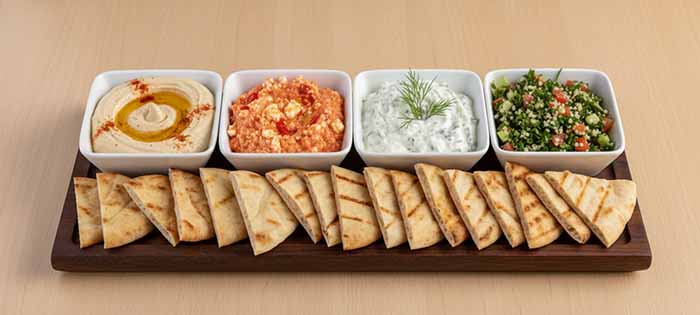
    [5] A mezze platter, or pikidilia in Greek: hummus, tyrokafteri, tzatziki, and tabbouleh (Abacus Photo).
     
     
    MORE HUMMUS RECIPES

  • Almond Hummus Recipe
  • Asparagus Hummus
  • Beyond Dipping: More Ways To enjoy Hummus
  • Black Garlic Hummus Recipe
  • Carrot Hummus Recipe
  • Carrot Hummus Recipe #2
  • Carrot Top Hummus
  • Dessert Hummus
  • Easy Hummus Recipe
  • Green Hummus Recipe
  • Hummiki: Combine Hummus & Tzatziki
  • Hummus Salad
  • Hummus Sushi
  • Make Your Signature Hummus
  • Nacho Hummus & Hummus Tacos
  • Rancho Gordo Hummus Recipe
  • Turn Plain Hummus Into Flavored Hummus
  • 20 Ways To Make A Hummus Sandwich
  •  
    ________________

    *Some brands also add olive oil.

    †The Levant is an English term that first appeared in 1497. It originally referred to the “Mediterranean lands east of Italy.” The historical area comprises modern-day Iraq, Israel, Jordan, Lebanon, Palestine, and Syria. Among other popular foods, Levantine cuisine gave birth to baklava, falafel, kebabs, mezze (including tabbouleh, hummus, and baba ghanoush), pita and za’atar, among other dishes that are enjoyed in the U.S. and around the world.
     

    CHECK OUT WHAT’S HAPPENING ON OUR HOME PAGE, THENIBBLE.COM.


    Comments off

    TIP OF THE DAY: Salad In A Wine Glass

    Tumbler Salad

    Riedel O Red Wine Tumbler

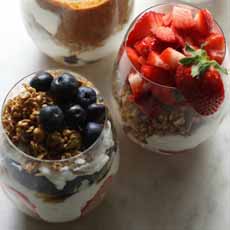
    Yogurt Parfaits

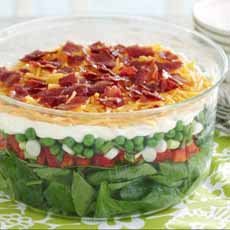
    Classic Layered Salad

    Avocado Layered Salad
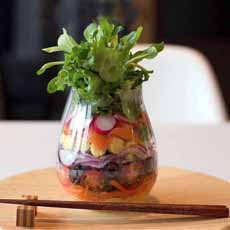
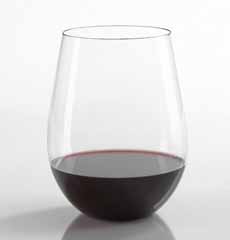
    [1] A beautiful layered salad in a wine tumbler (photo courtesy Riedel Japan). [2] Riedel’s O series tumbler for red wine (photo courtesy Riedel). [3] How many different ways can you use them? See our list (photo Riedel | Facebook). [4] A classic layered salad (photo courtesy Kraft). [5] The most recent layered salad trend: in a Mason jar (here’s the recipe from the California Avocado Commission).


    Yesterday’s tip was to use salad as a soup garnish.

    Today we’re taking a slightly different turn.

    Serve an elegant layered salad in (photo #1) a wine tumbler, like Riedel’s O Red Wine Tumbler (photo #2).

    In fact, when you’re not drinking wine from the tumblers, you can variously use them:
     
    At Breakfast

  • Fruit Salad
  • Juice or milk
  • Scrambled eggs
  • Yogurt and granola
  •  
    At Lunch

  • Salad
  • Soup
  • Dessert
  •  
    At Dinner

  • First course
  • Sides
  • Dessert
  •  
     
    WHAT’S THE DIFFERENCE BETWEEN A WINE TUMBLER & A WINE GLASS?

    Like its entire line of fine glassware for wine and spirits, Riedel’s wine tumblers are sophisticated glassware engineered for different grape varietals, to deliver the maximum flavors and aromas. The shape of the bowl and mouth direct the wine to different areas of the palate.

    Now, to the stemmed wine glass that has been around for many centuries. It is meant to be held by the stem, not by the bowl.

    Stemware was created for elegance, so the heat from one’s hand didn’t warm the wine in the bowl, and so one’s sticky fingers didn’t leave grease marks on the glass.

    But, with the increasing casual that has developed over the last 30 years, few people know or care about etiquette, and most people hold their stemware by the bowl.

    If you can’t lick ‘em, join ‘em; so Riedel, the world’s greatest wine glass maker, decided to give people what they want: a bowl with no stem.

    The O Stemless Tumblers line did so well, that Riedel has added lines with etched designs and colored bottoms.

    They’re an affordable gift. Check out the choices at Amazon.

    THE HISTORY OF LAYERED SALAD

    Try as we did, we couldn’t find a detailed reference to layered salad before the 1970s. A 2000 article in the South Florida Sun-Sentinel refers to a seven layer salad as a fat-laden salad that “helped give salads of the 1950s a bad name” [source].

    Ingredients are layered in a glass bowl, with the varied layer colors and textures providing eye appeal. Made for barbecues, parties, picnics, potlucks, it was/is assembled ahead of time and is easy to transport. It can feed a crowd, and was very popular with said crowd.

    The layers—as few or as many as the cook desires—commonly include:

  • Bacon or ham
  • Bell peppers
  • Cucumbers
  • Hard-boiled eggs
  • Iceberg lettuce
  • Green or red onions
  • Peas
  • Sharp cheddar cheese, grated
  • Tomatoes
  •  
    The original dressing may have been mayonnaise-based or a mayo-sour cream combination. Depending on the cook, bottled Italian or ranch dressing can be employed.

    Personally, we skip the shredded cheddar and use a mayo-sour cream-chunky blue cheese dressing.


    Comments off

    TIP OF THE DAY: The New Soup & Salad

    Part of our job entails keeping on top of culinary innovations around the world, to see might be interesting for the home cook.

    While a soup-topped salad may not sound like an innovation, we don’t come across it often. Usually it’s in the form of a small vegetable garnish.

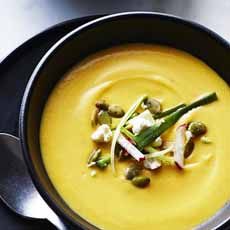
    Today’s tip was inspired by Botanica, a new vegetarian-focused restaurant in Los Angeles (photo #3).

    Take your favorite chunky soup and add the salad on top, lightly dressed with oil plus vinegar, lemon, lime or orange juice.

    What kind of salad?

    Whatever you like, as long as its lightweight. Tomatoes or anything heavy will sink, and only work with a very shallow bowl of soup.

    Here’s our list:

  • Baby greens
  • Fresh herbs (we like basil, chives, dill, sage—whatever complements the soup)
  • Something for color: bell pepper (small dice), corn kernels, radish slices
  • Croutons
  •  
    Leave off the other logical contenders—broccoli florets, cheese, pepitas, e.g., and make this topping about the salad.
     
     
    THE HISTORY OF SOUP

    The history of soup is almost as old as the history of cooking. First: discover fire. You can place raw food over flames or on the hot embers. Then, invent a vessel in which to cook a liquid.

    Add water to the container, toss in whatever vegetables you’ve foraged, cook it over the fire, and voilà, soup: a hot, nutritious meal.

    The first containers for cooking over the fire were cleaned out animal hides. By the Neolithic era, rough pottery had appeared; but the pots could not withstand the direct heat of the fire. Instead, heated stones were tossed in to raise the temperature of the water and cook the food.

    By then Bronze age, at metal cauldrons appeared in the Mediterranean, and spread. This was a tipping point:

  • The round shape enabled the flames to curl up around the sides, so the food cooked faster.
  • The level of heat was controlled by how close to the fire the pot was placed. Food could be boiled rapidly over a high fire or simmered slowly in the hot ashes at the edge of the hearth.
     
    Here’s more on the evolution in cookware.

    Even in the evolved Greco-Roman times, travelers could not be certain of finding food. All travelers, including soldiers, had to carry their own dried ingredients to boiled into soups. Biscotti—twice-baked, dry rusks,—were invented in Roman times to add convenience and variety to the on-the-road fare.

    The very concept of the modern restaurant is based on soup. Restoratifs—meaning something that restores health, strength or a feeling of well-being, and in this case a hearty bowl of soup, is the basis of “restaurant.” Public restaurants with tables and menus first emerged in 18th century Paris, adding to the choice of fare from food stands and public markets.

    The word soup is itself the basis for supper, and the verb “to sup.” Soup derives from the post-classical Latin verb suppare, to soak in a liquid.

  •  

    Salad Topped Soup

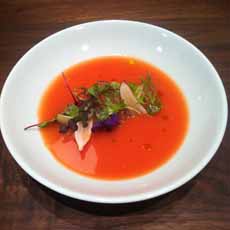
    Salad-Topped Gazpacho

    Salad-Topped Soup

    Soup With Salad Garnish
    [1] A nice garnish, but hardly a salad. Here’s the recipe from Sunset magazine. [2] Clear gazpacho topped with salad, a twist from the creative chef Scott Conant. [3] Go big or go home with those greens: a “real” salad atop the soup at Botanica Restaurant in LA. Everything on the menu is equally wonderful. [4] This handsome labor of love is from Apples And Butter. Here’s the recipe.

     
    Poor Man’s Dinner

    Soup was the evening meal of the less affluent, who poured broth onto yesterday’s bread (the ancestor of modern soup croutons) and added whatever else they had.

    The affluent had soup, too, but they didn’t need it to make stale bread palatable. It began to be fashionable to serve the liquid broth on its own (consommé), and many different types of soup began to evolve. By the early 18th century, a bowl of soup assumed its present-day role as the first course of a meal. [source]

    Soup evolved into the categories of soup we know today (the chef Escoffier was first to categorized all French soups).

    The 19th century saw portable soups: canned or dehydrated, soups. These supplied cowboy chuck wagons, the military, wagon trains and other travelers, as well as the home pantry.

    The late 20th century brought us microwave-ready soup in disposable containers. One can only guess what science will produce going forward.

    Whatever it is, it needs a garnish!
     
    MORE ON SOUP GARNISHES

  • Garnishes For 20 Favorite Soups
  • Garnish Glamour
  • Leftover Grains As Soup Garnish
  • Seafood Soup Garnishes
  • Drizzled Soup Garnishes
  •  
    Also check out the different types of soup in our Soup Glossary.


    Comments off


    © Copyright 2005-2026 Lifestyle Direct, Inc. All rights reserved. All images are copyrighted to their respective owners.