THE NIBBLE BLOG: Products, Recipes & Trends In Specialty Foods


Also visit our main website, TheNibble.com.

RECIPE: Shrimp, Corn & Zucchini Flatbread

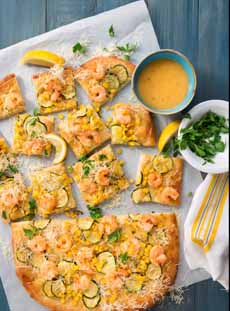
Shrimp Flatbread
[[1] Shrimp and zucchini flatbread (photo © SeaPak).

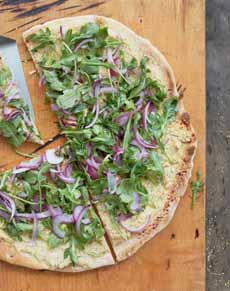
Arugula Pizza
[2] No matter what type of pizza or flatbread, we toss fresh baby arugula on top when it emerges from the oven (photo © Purple Carrot).


Shrimp is America’s favorite in the fish and shellfish category. Of the 15.5 pounds consumed by Americans each year, shrimp accounts for 4 pounds.

(Dudes: 15.5 pounds per capita per year is way too low. Americans eat nearly 50 billion burgers a year, which translates to three burgers a week for every single person. That’s a lot of beef.!)

For National Shrimp Day, May 10th, we whipped up this easy shrimp flatbread using frozen Shrimp Scampi from SeaPak.

Nicely seasoned in a butter, garlic, and red pepper sauce, you don’t need to add any more flavor to the shrimp.

One way to enjoy shrimp, more often, and more affordably, is to look to the freezer section.

While we always buy fresh shrimp for, say, a shrimp cocktail or plateau de fruits de mer.

But in a multi-ingredient dish—like this flatbread, coconut beer batter shrimp, shrimp fra diavolo, shrimp pad thai, shrimp salad sandwich, and so on—where the shrimp is integrated with other flavors—the frozen shrimp can do just as nicely.

> The history of flatbread.
 
 
RECIPE: SHRIMP, CORN AND ZUCCHINI FLATBREAD

Prep time is 15 minutes; cook time is 15 minutes.

Ingredients For 6 Snack Servings Or Two Lunches/Dinners

  • 1 12-ounce package of SeaPak Shrimp Scampi
  • ½ cup frozen or canned corn kernels
  • 1 small zucchini, sliced
  • Bench flour*
  • 1 16-ounce ball of pizza dough (fresh or frozen/thawed)
  • Cooking spray
  • ½ cup shredded parmesan cheese
  • Optional: ½ cup shredded mozzarella
  • 1 lemon
  • Optional garnish: baby arugula, fresh basil
  •  
    ________________

    *Bench flour is simply flour sprinkled on the work surface (once upon a time called a work bench).

     
    Preparation

    1. PREHEAT the oven to 450°F. Prepare the frozen scampi according to package instructions (7 minutes in a skillet). Add the corn and zucchini to the pan and stir occasionally.

    2. LIGHTLY flour a work surface and press the dough into a large rectangle.

    3. TURN a baking sheet upside down (so the bottom is facing up) and spray with non-stick cooking spray. Transfer dough to the bottom (sprayed side) of the baking sheet. Use some of the sauce from the scampi to brush over the top of the dough, and pierce the dough with a fork to avoid large air bubbles.

    4. BAKE for 12-15 minutes. In the last 5 minutes of baking, remove the pan from the oven, cover with the optional mozzarella, and use a slotted spoon to drain the shrimp mixture, reserving the scampi sauce in the pot. Spread the mixture over the flatbread. Top with the shredded parmesan cheese and return to the oven. Bake until cheese begins to melt.

    5. SLICE the lemon and squeeze half into the scampi sauce. Pour into a small bowl to use for a flatbread drizzle, dipping sauce, or even a salad dressing.

    6. TOP the pizza with the arugula or basil and bring it to the table.


    CHECK OUT WHAT’S HAPPENING ON OUR HOME PAGE, THENIBBLE.COM.


    Comments off

    RECIPE: Bacon-Wrapped Shrimp

    May 10th is National Shrimp Day.

    We could easily be happy with plate of boiled jumbo shrimp, a lemon wedge and a bit of seafood sauce.

    But this recipe for bacon-wrapped shrimp, sent to us by Zatarain’s, wins the nostalgia vote.

    It took us back decades to our parent’ cocktail parties, when bacon-wrapped shrimp and bacon-wrapped dates, or a rumkai—were de rigeur.

    Those with more basic tastes drank bourbon or scotch on the rocks. Few people were home mixologists Drinks of whiskey mixed with club soda or ginger ale were served on the rocks in highball (tall) or lowball (short, a.k.a. rocks) glasses.

    There was no American craft beer in those days, or even wine (except for gourmets who drank it as apéritifs and with meals at European restaurants). No one had even had a tequila drink, unless they’d been to Mexico.

    And there was no National Shrimp Day.

    But we have it all now. So, we’re turning on the broiler and making a pile of bacon-wrapped shrimp. Who’s in?

    RECIPE: ZESTY BACON WRAPPED SHRIMP

    In New Orleans, cooks add a Creole spin to this retro shrimp appetizer. You can prepare it in the morning and pop it in the oven later in the day. Find more shrimp at McCormick.com/Zatarains.

    You can have it as an appetizer, or make a dinner of it. Prep time is 10 minutes, cook time is 20 minutes.

    Ingredients For 8 Two-Piece Appetizer Servings
    —Or—
    2-3 Dinner Servings

  • 16 jumbo shrimp, peeled and de-veined, tails left on
  • 16 slices bacon
  • Zatarain’s Creole Seasoning
  •    

    Bacon-Wrapped Shrimp

    Zatarain's Creole Seasoning

    [1] Bacon-wrapped shrimp from Zatarain’s. [2] Zatarain’s Creole Seasoning; photo courtesy Flour On My Face, who uses it in a Crockpot Jambalaya recipe.

     
    Preparation

    1. PREHEAT the oven to 450°F. Line baking pan with foil and place flat baking rack in the pan.

    2. WRAP each shrimp with 1 slice of bacon, lightly sprinkle with Creole seasoning and place the shrimp on the rack, seasoning side down. Sprinkle all the tops with the seasoning as well. Let stand 15 minutes

    3. BAKE 15 to 20 minutes or until the bacon is crisp around the edges and the shrimp turn pink. Serve warm.


    Angels On Horseback

    Devils On Horseback

    Rumaki
    The predecessors of bacon-wrapped shrimp: [3] Angels On Horseback, bacon-wrapped oysters. Here’s a recipe from the Wealden Times. [4] Devils On Horseback. Here’s a recipe from Martha Stewart Living. [5] Rumaki, bacon-wrapped water chestnuts. Here’s a recipe from Goldilocks Kitchen.


    RECIPE: CREOLE SEASONING

    If you don’t have Creole seasoning, it’s easy to make your own. This recipe makes much more than you need for the chicken salad, but you can cut it down or use the extra in other recipes, from eggs to burgers.
     
    Ingredients

  • 1/3 cup paprika
  • 3 tablespoons dried oregano
  • 3 tablespoons ground black pepper
  • 2 tablespoons dried basil
  • 2 tablespoons salt
  • 1 tablespoon cayenne pepper
  • 1 tablespoon granulated onion
  • 4 teaspoons dried thyme
  • 4 teaspoons granulated garlic
  •  
    Preparation

    1. COMBINE all the spices in a bowl, and stir to combine.

    2. STORE in an airtight container away from light and heat, but use as quickly as possible.
     
     
    WHAT ELSE TO MAKE WITH CREOLE SEASONING

  • Use it as a general seasoning for dips, fish, ketchup, mayonnaise, popcorn, poultry, rice, soup, vinaigrette—even spicy yogurt!
  • Andouille Sausage Pizza
  • Cajun Chicken Salad
  • Gumbalaya (a mash-up of gumbo and jambalaya)
  • Gumbo
  • Jambalaya
  • Hazelnut-Crusted Sea Bass
  • Steamed Mussels
  •  
     
    THE HISTORY OF BACON-WRAPPED SHRIMP

    Nineteenth-century Britain saw the rise in popularity of an appetizer called Angels On Horseback: skewered broiled oysters wrapped in bacon and “riding on slivers of toast.” It was also called Oysters And Bacon and yes, Pigs in Blankets, a recipe now known as mini sausages wrapped in pastry.

    “It’s an excellent lesson in how words, like recipes, change meaning over time,” says etymologist John Ayto in An A to Z of Food and Drink [source].

    The recipe is first documented in the 1888 edition of Mrs. Beeton’s Book of Household Management.

    Devils On Horseback, a later recipe, substituted stuffed prunes for the oysters.

    Fast forward to the other side of the pond. Other foods began to be wrapped in bacon: scallops, shrimp, even stuffed olives and pineapple chunks.

    Another variation, bacon-wrapped chicken liver—rumaki—appeared. The first known reference of rumaki is on the 1941 menu of the Don the Beachcomber restaurant in Palm Springs, California.

     
    Rumaki were skewered water chestnuts and chicken livers, wrapped in bacon and marinated in soy sauce and ginger or brown sugar prior to broiling.

    The restaurant was founded in 1934, and was the beginning of the tiki craze in the U.S.

    Tiki restaurants—an American “interpretation” of Polynesian food and decor—featured a selection of different bites as faux-Hawaiian pupu (hors d’oeuvre).

    A flaming pupu platter of mixed “Polynesian” hors d’oeuvres was a sensation that trickled down to home preparations.

    So where’s the bacon-wrapped shrimp? So far, there’s a missing link.

    We did find a reference to shrimp skewered with a chestnut and a piece of green onion. It isn’t a stretch to think that someone added a bacon wrap…and that the recipe devolved to just the shrimp and bacon.

     
    CAJUN VS. CREOLE: THE DIFFERENCE

    Cajun and Creole are not the same, although people removed from Louisiana often use them without distinction.

  • Creole referred to people who were born to settlers in French Colonial Louisiana, specifically in New Orleans. In the 18th century, Creoles were the descendants of the French and Spanish upper class that ruled the city.
  • Cajuns, on the other hand, emigrated from the Acadia region of Canada, which consisted of present-day New Brunswick, Prince Edward Island and Nova Scotia. They settled in the swampy region of Louisiana that is today known as Acadiana. Their name in French, les Acadians, became shortened in the vernacular to Cajun.
  • Some people think of Creole cuisine as “city food” and Cajun cuisine as “country food.” But to eyeball a dish and tell its provenance, here’s a simple trick: Creole cuisine uses tomatoes and Cajun food typically does not. That’s how to quickly distinguish a Cajun gumbo or jambalaya from a Creole gumbo or jambalaya.
      
  • Comments off

    TIP OF THE DAY: Plateau De Fruits De Mer For Vegetarians & The Seafood Averse

    One of our favorite I-deserve-a-treat meals is a big plateau de fruits de mer (PLAH-toe-duh MARE, platter of fruits of the sea—photo #1): a large pile, nicely arranged, of raw shellfish (clams and oysters in multiple varieties, scallops) and lightly cooked shellfish (crab legs, langoustine, lobster, lump crab meat, mussels, prawns, shrimp).

    Sometimes, in coastal areas, it may include delicacies that are rarely seen inland: abalone, cockles, limpets, periwinkles, sea snails, whelks.

    A plateau de fruits de mer is considered an appetizer and comes in different sizes depending on the number of participants.

    We’ll just have the whole thing as our appetizer and entrée combined—two or three tiers of it. We don’t even need the mignonette sauce and spicy seafood sauce that typically accompany it; just the lemon wedges.

    There are extra points for adding those custardy echinoderm corals* from sea urchins—ideally presented in their dramatic porcupine-spiky shells.

    Sashimi doesn’t count here…not that we wouldn’t be just as happy to eat the contents of a large funamori (sashimi boat—photo #3).

    But let the French serve their beautiful plateaux des fruits de mer and let the Japanese serve their beautiful funamori. It’s more special that way; and as the French say, “Vive la différence.”

    (The Japanese translation is “Vive no ra chigai,” although we’re not certain that the Japanese actually use the phrase.)
     
     
    PLATEAU DE LEGUMES, A VEGETABLE PLATTER

    What if you’re allergic to seafood, a vegetarian, vegan, kosher, unable to eat raw foods, and so forth?

    You can create a kindred dish that we’ll call a plateau des légumes, a tiered platter of gorgeous vegetables (photo #2).

  • Similar to the plateau de mer, it’s a mix of raw and lightly cooked produce.
  • Serve it with two or more dips, including a tart, vinaigrette-type dip and a creamy one.
  • Consider some dipping spices, like berbere, dukkah or ras el hanout†.
  •  
    This inspired idea—serving a melange of raw and cooked vegetables on a tiered tray—is from Botanica, an exciting new vegetarian-focused restaurant in Los Angeles. If you can’t be there, you can still enjoy the riches of their webzine, which is available to everyone.

    We spent hours poring over their Facebook and Instagram photos of beautiful, nutritious, locavore‡ and guilt-free foods for every meal. There was nothing we didn’t want—immediately!

    Whether you go for the seafood or vegetable plateau, either is:

  • Gluten-free
  • Lactose-free
  • Low calorie
  • Low fat
  • Low-Carb
  • Nut-Free
  • Soy-Free
  • Sugar-Free
  •  
    If you decide to buy a tiered tray, you can also use it for cupcakes, cookies and other sweets; tea sandwiches’ and other festive presentations.
     

    FOOD HISTORY: THE ENTRÉE

    In the modern-day U.S. and Canada, an entrée refers to the main dish of dinner. In French cuisine, as well as in the English-speaking world outside of North America, it is a dish served before the main course in a multi-course dinner.

    In French, the word originally denoted the “entry” of the dishes into the dining halls of the wealthy. You can see Medieval paintings and illustrations (here’s one) that they enter with a trumpet fanfare from the musicians’ gallery.

    The procession of servants bearing a large number of dishes was led by by the maître d’hôtel, who carried the tureen. The procession marched around the room, presenting the fare to all diners before beginning to serve the courses [source].

      Plateau de Mer
    [1] Plateau de fruits de mer at The Smith in New York City (photo © The Smith).

    Plateau des Légumes
    [2] An analogous vegetable platter at Botanica in Los Angeles (photo © Botanica).

    Sashimi Funamori
    [3] Funamori: the Japanese version of plateau de mer (photo © Kintarouonsen.co.jp).


    [4] Mixed grilled vegetables (photo © Taste Of Home).


    [5] Grilled vegetables (photo © McCormick).

     
    ________________

    *The corals are also called roe, both terms more appetizing than their biological name: gonads. Both male and female sea urchins have the delectable, edible “sea urchin roe,” which are difficult to gather and thus a pricey delicacy.

    †You can mix your own from any combination of chiles, citrus peel, coriander, cumin, fennel seed, fenugreek, garlic, ginger, nutmeg and peppercorns.

    ‡We acknowledge that it’s easy to cook locavore when you live in the land of perpetually plentiful produce: California.
      

    Comments off


    © Copyright 2005-2026 Lifestyle Direct, Inc. All rights reserved. All images are copyrighted to their respective owners.