|

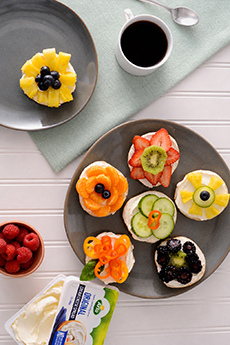
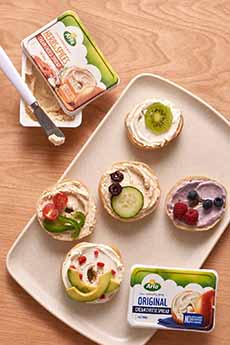
[1] Fruit on bagels? Sure…and you can put it on raisin bagels for a double fruit hit.
[2] Bagel topping ideas from Arla, which makes delicious flavored cream cheeses including Herbs & Spices, Natural, Natural Light and Pineapple, with seasonal specialties (photos © Arla).
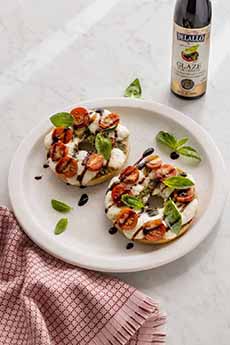
[3] This bagel “Caprese” also works as holiday colors. You can use cream cheese or the classic mozzarella, with a balsamic drizzle (photo © The Nibble).
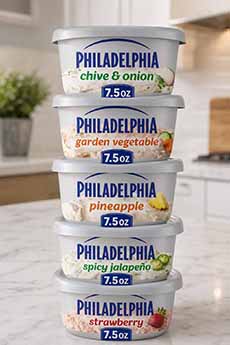
[4] If your time is limited, you can buy flavored cream cheese. Otherwise…(photo © The Nibble)
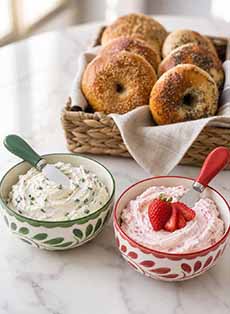
[5] It’s so easy to make your own flavored cream cheese—and save money, too! The recipes are below (photo © The Nibble).
|
|
Updated July 2026
If your idea of brunch includes bagels, it may also include pricey fish:
Herring salad
Sable
Smoked bluefish
Smoked salmon
Smoked sturgeon
Smoked trout
Smoked tuna
Whitefish salad
Other delights of the sea
While we love all of these, they can run up quite a tab at the cash register.
So this article is about how to fill out a bagel buffet for less by leaving out the fish. You can call it a vegetarian bagel buffet.
And if you want to add smoked fish to the ideas below, go for it.
(In college, we could barely afford four ounces of smoked salmon, which amounted to one slice per guest. So added a batch of tuna salad, and it was gobbled up.)
Below:
> A cornucopia of cream cheese.
> Make flavored cream cheese: easy recipes.
> Other spreads for bagels.
> Beyond smoked fish: healthy “new” bagel toppings.
> The year’s 4 bagel holidays.
Elsewhere on The Nibble:
> The history of bagels.
> The year’s 4 bagel holidays.
> A different take: bagel chips and gravlax recipe, and the difference between smoked salmon and gravlax.
> Bagel panzanella salad recipe.
> Recipe: sweet and crunchy cream cheese.
> 3 cream cheese spread recipes: pesto, sundried tomato, and artichoke.
> More bagel recipes.
> Bagel vs. simit, the ur-bagel.
> The history of cream cheese.
> The history of bread.
> The different types of bread: a photo glossary.
> The year’s 20+ bread holidays.
> 30+ ways to use Everything Bagel seasoning.
1. START WITH A CREAM CHEESE BUFFET
Serve plain cream cheese, a savory option (herbs, jalapeño), plus a fruit flavor (blueberry, strawberry).
Of course, there’s no limit to the number of flavors you can have. Flavored cream cheese = yummy fun.
In addition to plain cream cheese, (regular, whipped, reduced fat, plant-based/dairy-free, and lactose-free) Philadelphia Cream Cheese, the world’s #1 brand, has outdone itself creating flavored cream cheese varieties.
Tasty as they are, it’s far less expensive to make your own, and it’s as easy as blending the chopped ingredients into softened cream cheese (recipe below).
As of July 2026 the Philadelphia lineup includes these 20+ varieties. We hope it will inspire you to make your own versions.
Sweet Cream Cheese Flavors
Blueberry
Brown Sugar & Cinnamon
Dairy Free: Strawberry
Honey Butter
Honey Pecan
Peach & Black Cherry
Pineapple
Strawberry
Pumpkin Spice
Reduced Fat: Strawberry
Whipped: Cinnamon Sugar, Mixed Berry, Strawberries & Cream
Savory Cream Cheese Flavors
Chive & Onion
Dairy Free: Chive & Onion,
Garlic & Herb
Reduced Fat: Garden Vegetable
Smoked Salmon
Spicy Jalapeño
Whipped: Chipotle, Chive, French Onion, Garlic & Herb
|
2. RECIPE: MAKE YOUR OWN FLAVORED CREAM CHEESE
For a beautiful dip (photo #5), you just need softened cream cheese, the flavor element (fruit, vegetable), and basic seasonings.
Ingredients
8 ounces full fat cream cheese, softened in a mixing bowl on the counter for 20-30 minutes
3 tablespoons of finely chopped fresh chives
¼ teaspoon of garlic powder
¼ teaspoon of onion powder
Optional: 1 tablespoon Greek yogurt, sour cream, or milk for a softer and fluffier spread
Pinch of salt and black pepper to taste
For strawberry cream cheese, switch the seasonings:
2 tablespoons powdered sugar
1 cup fresh strawberries, hulled and very finely diced
Optional: 1 teaspoon vanilla extract
Preparation
1. BEAT the soft cream with hand mixer, stand mixer, or fork for 1 to 2 minutes until smooth and creamy. Stir in the other ingredients.
2. MIX on low speed just until well combined. Place in a sealed container and let it rest in the fridge for 30 to 60 minutes for the flavors to meld. It will keep for up to 1 week.
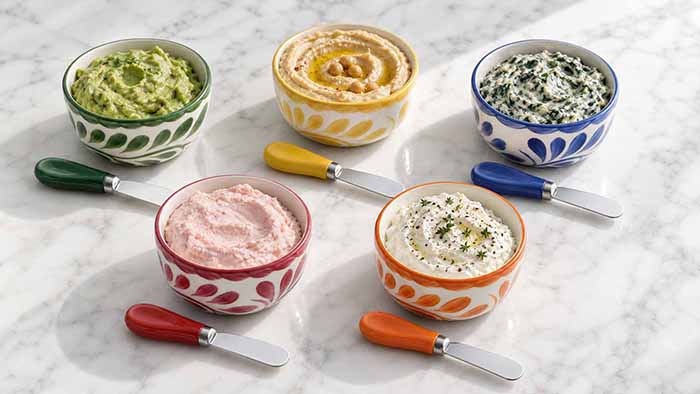
[6] Top row: guacamole, hummus, spinach dip. Bottom row: taramasalata, whipped goat cheese (photo © The Nibble).
3. BEYOND CREAM CHEESE OTHER SPREADS FOR BAGELS
It doesn’t have to be cream cheese. Consider other spreads:
Butter (because someone will ask for it)
Guacamole
Hummus
Pesto
Spinach or onion dip/spread
Taramasalata
Whipped goat cheese or ricotta
Yogurt spreads
This post has made us so hungry, that we’re off to create our own bagel.
Maybe jalapeño cream cheese topped with red bell pepper and pineapple.
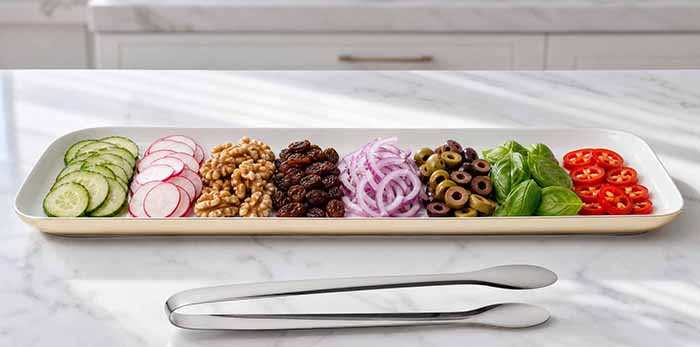
[7] Garnishes: cucumbers, radishes, walnuts, raisins, red onion, olives, basil, jalapeno (photo © The Nibble).
4. THE NEW BAGEL TOPPINGS
In addition to the classics—sliced red onions and tomatoes—add:
Cucumber slices
Dried fruits (blueberries, cherries, cranberries, raisins)
Fresh fruits
Fresh veggies: basil, red bell pepper, scallions, and quick-pickled vegetables
Jalapeño slices
Nuts and seeds
Olives, capers, pickled vegetables
Pickled vegetables
Sliced hard-boiled or scrambled eggs
Head to the market to see what looks good. Buy a variety of bright colors, both sweet (fruit) and savory (veggies).
5. MORE BAGEL HOLIDAYS
January 15: National Bagel Day
February 9: National Bagel & Lox Day
July 26: National Bagelfest Day
December 11: National Have a Bagel Day
CHECK OUT WHAT’S HAPPENING ON OUR HOME PAGE, THENIBBLE.COM.
|