|
How confusing is the verbiage on the front of a box, bag, jar or can of food? Actually, it can be pretty misleading. It’s called marketing: Companies want you to choose their product over the competition, so they do what they can to hype on their packaging (most purchase decisions are made at the “point of sale,” or when looking at options on the shelf).
Hence, each word on the package can help make the sale—whether or not it’s providing accurate information to consumers.
You’d think that with all of the federal regulations and those helpful nutrition labels, it would be easy to know what you are buy. But while the the nutrition label on the back of the package is all facts, we typically respond to what’s on the front. And it can be misleading.
After we reported that products made by Newman’s Own Organics aren’t necessarily organic, we’re taking on these other confusions.
WHOLE GRAINS: MULTIGRAIN VS. WHOLE GRAIN
“Multigrain” may sound like it’s better for you, but it simply means that more than one type of grain is used. Bread flour can be a combination of wheat flour, cracked wheat and oat bran, for example; but none of these is a whole grain. It’s the same with “seven grain bread.” The blend may be flavorful, but that doesn’t mean any of the seven grains is whole grain.
|
|
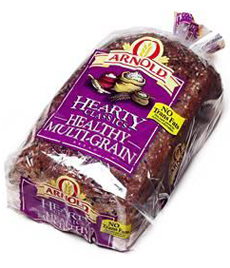
This loaf has some whole grain components—wheat bran, brown rice and oats (plus cane sugar, brown sugar and sucralose). But the main ingredient is still unbleached enriched wheat flour. Look for the seal of the Whole grains Association. |
If you’re looking for whole grain fiber and nutrition with your bread, breakfast cereal, crackers or pasta, be sure the product is all whole grain, or at least that a whole grain leads the list of grains.
“Wheat bread” is not whole grain; it must say “whole wheat.” All of what we call white bread is wheat bread (except gluten-free bread).
Wheat bran, which appears on some ingredients lists, is part of the whole wheat kernel, along with the endosperm and the germ. Each of these components has different nutrition benefits. Refined wheat flour with added wheat bran added isn’t enough; go for the whole wheat.
It’s the same with seeds—normally good additions to bread and crackers, but in such small amounts that they’re no substitute for a whole grain product. We saw one label touting “flax and grains”: What the heck does “grains” mean? It could mean seeds, or it could be marketing.
A dark brown color means nothing: It can be created with molasses. Pumpernickel is made from rye, a whole grain, but most commercial pumpernickel is made from refined flour. Look for 100% rye on the label.
“Enriched,” which appears on bags of white bread, is also misleading. Why is it enriched? Because refining the whole wheat flour into white flour removes most of the vitamins and minerals. Because bread is a key component of our diet, the government ordered some nutrients added back in!
Words like “healthy” or “nutritious” are just marketing: They mean whatever the manufacturer wants them to mean and have no official standing.
You can find gluten free breads made with brown rice flour or a blend of ingredients. Again, look for the words “100% whole grain” on the label.
“Organic” is better for you and the environment, but it doesn’t impact nutrition. It’s better to have non-organic whole grain bread than organic white bread.
Here’s more on what is a whole grain.
|
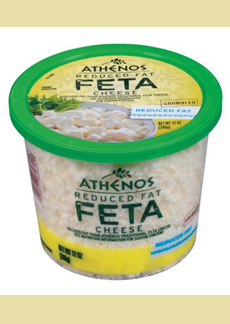
Cheese is delicious, but high in fat. So
reduced fat cheese still has a lot of it. Photo
courtesy Athena. |
|
FIBER
On a related note, whole grains are an excellent source of fiber. Look to switch out refined white flour products—breads, crackers, breakfast cereals, pasta—to more nutritious versions.
The USDA designation “excellent source of fiber” means that there is at least 5 grams of fiber per serving.
A product labeled “good source of fiber” needs at least 2.5 grams of fiber per serving.
“Added fiber” needs to have only 10% more than a comparable product; but it that product doesn’t have much fiber to getin with, then “added” doesn’t mean much.
FAT: REDUCED FAT VS. LOW FAT
The USDA has a strict definition of low fat (also spelled lowfat): The product must have 3 grams or fewer per serving.
To be called “reduced fat” a product must have at least 25% less fat than a regular version of the product (from the same manufacturer or a competitor). But that original product—cheese, for example—could be loaded with fat, so 25% less is still a lot of fat.
Thus, go for low fat over reduced fat, but remember that reduced fat is still not “good for you” food.
|
NITRATES: CURED VS. UNCURED
Nitrites and nitrates are used to preserve processed meats, and to make them look better (pink bacon, ham and franks) and taste better. But they produce a carcinogenic substance, amines, when digested (here’s more on nitrates and nitrites).
Even organic, uncured products still contain nitrates and nitrates—just less of them. Nitrates and nitrates exist naturally in plants and animals and even a naturally cured product, cured with celery powder or celery juice, will contain them. So for long-term health, the best course is to eat fewer cured meats.
SODIUM: REDUCED SODIUM VS. LOW SODIUM
The USDA requires that a product labeled “low sodium” contains 140 mg salt or less per serving. A reduced sodium product needs to be just 25% less than the regular version, which could be loaded.
For example, a can of chicken noodle soup can have 1,622 mg of sodium. Twenty-five percent less than that is still a heck of a lot of salt.
Fresh-packed, canned or frozen, processed foods are loaded with salt. Check the nutrition label and select products that have fewer than 500 grams per serving. Your daily recommended amount of sodium is less than 2400 mg. Here’s more on sodium from the FDA.
SUGAR: SUGAR FREE VS. NO SUGAR ADDED
These are typically products that use only the natural sweetener in the product—sugar free grape jam relying only on the grape sugar, for example—or use noncaloric sweeteners.
“Sugar” refers to any sweetener, including agave, corn syrup, honey, molasses and all other nutritive sweeteners. (Nutritive sweeteners have nutritional value—they produce energy when metabolized by the body. They may or may not be refined.) Check out the different types of sweeteners, both nutritive and non-nutritive (i.e., produced in the lab).
Sugar Free means that the product has less than a half gram of sugar/serving. These are typically the products that use artificial sweeteners.
No Sugar Added could have no sugar added, but could have lots of natural sugar from sweeteners such as fruit concentrate, fruit juice or unsweetened applesauce.
Neither of these options is better or worse than the other.
FINAL TASK
You’ve still got to look at the back of the package. Here’s how to read nutrition labels.
|
|