THE NIBBLE BLOG: Products, Recipes & Trends In Specialty Foods


Also visit our main website, TheNibble.com.

TIP OF THE DAY: Ways To Celebrate American Craft Beer Week

This year, American Craft Beer Week is celebrated from May 14th through 20th. It’s about celebrating the artisan ingredients, and techniques, that make a craft beer so much more tasty and special than a mass brew.

There are more than 6,000 breweries in the U.S., and 99% of them are defined by the Brewers Association as small*, traditional and independent.

One of the problems in Beerland is that the huge global beer companies purchase hot independent beer brands†, and then apply their corporate protocols to chip away at the quality. Two we once enjoyed, Blue Point and Goose Island, simply aren’t as exciting as they used to be.

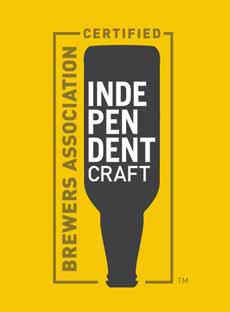
How can you tell if a beer is made by an independent U.S. craft brewer or is part of a global conglomerate? Look for the independent craft brewer seal on the packaging (photo #2).

The independent craft brewer seal was launched in June 2017 by the Brewers Association, the membership organization dedicated to promoting and protecting small and independent craft brewers in the U.S., and publishers of CraftBeer.com.
 
 
7 WAYS TO CELEBRATE CRAFT BEER WEEK

1. Try a new beer style. See if you can find one of the new coffee beers or tea beers, which add coffee or tea to the brew.

2. Get a growler to go and invite some friends.

3. Try new beer and food pairings.

  • Overview
  • Cheese & Beer Pairings
  • Ice Cream & Beer Pairings
  • Pizza & Beer Pairings
  • Sausage & Beer Pairings
  •  
    4. Take a brewery tour. More than 80% of drinking-age Americans live within 10 miles of a brewery, according to the Craft Brewers Association. Find one with their interactive guide to breweries. Or, try a simple browser search for “craft breweries near me.”

    5. Check out how to make a homebrew. It could become your new hobby.

    6. Give a shout-out to your favorite craft beer in social media.

    7. Plan a summer beercation.


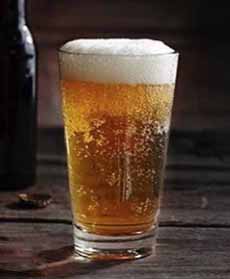
    Glass Of Lager
    [1] Craft lager (photo courtesy Uno).

    Independent Craft Brewers Seal
    [2] This seal establishes that the beer was made by an independent craft brewer (image courtesy Craft Brewers Association).


    Happy American Craft Beer Week to all the small and independent brewers and the everyone who loves great beer.

    If you want to receive communications from the American Craft Beer association, send them your email.
     
     
    BRUSH UP YOUR BEER KNOWLEDGE WITH OUR BEER GLOSSARY.
    ________________

    *There are four different category classifications. A regional brewery is defined by an annual production of 15,000 to 6,000,000 barrels. A microbrewery is one that produces less than 15,000 barrels. The other two categories are brewpubs, which produce the smallest amount, and contract brewing companies, which producer beer for companies that don’t have their own facilities [more].

    †In the space of four years, for example, Anheuser-Busch InBev purchased beloved local breweries like Chicago’s Goose Island, Patchogue, New York’s Blue Point Brewing Co., Bend, Oregon’s 10 Barrel and Seattle’s Elysian Brewing [more].
     
    Craft Beer On Tap

    The beer taps at West End Hall, a beer garden in New York City that sells craft beers on tap and in bottles (photo courtesy West End Hall).


    Comments off

    FOOD 101: Baking Powder History (Where Would We Be Without It?)

    Buttermilk Biscuits
    [1] Fluffy biscuits need baking powder (photo of buttermilk biscuits © Robyn Mackenzie | Fotolia).

    Banana Bread Pancakes
    [2] There would be no fluffy pancakes without baking powder. Here’s the recipe for these Banana Bread Pancakes from The Baker Chick (photo © The Baker Chick).

    Clabber Girl Baking Powder
    [3] Baking powder from Clabber Girl, one of the original brands still going strong—it’s the number-one seller in the U.S. (photo courtesy Handle The Heat).

    Tablespoon Of Baking Powder
    [4] A tablespoon of baking powder. Here’s how to tell if your baking powder and baking soda still have potency, from Still Tasty (photo © Still Tasty).

      May 14th is National Buttermilk Biscuit Day. Head to your grocer’s refrigerator section to buy a tube, or make buttermilk biscuits from scratch.

    Either way, these high-rising biscuits, along with tall layer cakes and fluffy pancakes, owe their height to baking powder. When first patented in 1856, it was a revolutionary product.

    Baking powder is a dry chemical leavening agent, a mixture of an alkaline sodium (e.g. bicarbonate) and a weak acid salt (e.g. cream of tartar).

    When combined with a liquid, the acid-base reaction releases carbon dioxide into the batter or dough, which increases the volume and lightens the texture. This is the definition of a leavener: a substance that creates this chemical reaction.

    It was so important to cooking, that a vicious battle for brand domination in America arose in the latter half of the 19th century. Read about it in Baking Powder Wars: The Cutthroat Food Fight that Revolutionized Cooking.

    > The history of baking soda.

    > The history of leavening.
     
     
    BEFORE THE INVENTION OF BAKING POWDER

    According to a review of the book in Extra Crispy, which begins its story in 1700s colonial America, the mark of a woman’s cooking skill was the quality of her bread. Was it soft or leaden?

    Bread was a large component in Colonial meals. A woman who couldn’t bake a good loaf was not a good woman, wife or mother.

    Yet, housewives had only wild yeast for leavening—an ingredient used since the dawn of baking.

    However, it required that the wild yeast fly through the window and settle on the dough. Commercial yeast from the Fleischmann Brothers would not be sold until 1868 (the history of yeast).

    Desperate housewives experimented with other household options.

  • Smelling salts were hard to dissolve.
  • Ammonia raised the bread, but made the food smell like…ammonia. And so forth, with no success.
  •  
    One day in the late 1700s, some Native Americans shared the technique of leavening bread using pearl ash or pearlash, potash, carbonate of potash, salts of tartar and soda ash. These are the chemical compound potassium carbonate.

    Scoop out the ashes from the fireplace (or use other burned plant material), soak them in water and you get a dilute form of lye. This mixture was used to make soap and gunpowder.

    It turned out to be the best-so-far leavener for baking.
     
     
    BUT WE’RE EATING LYE?

    Some readers will recognize potassium carbonate as the base ingredient of lye. For those wondering about how people can eat lye:

    It works in dilute forms (low concentrations) and is used to make other food products. Olives are traditionally brined in lye water. Pretzels get a lye bath, as do hominy, ramen and nixtimalized corn/masa that is used to make tortillas. The Scandinavian specialty, lutefisk, is soaked in water and lye. O.K.

    However, pearl ash wasn’t perfect. It didn’t dissolve that easily, and wasn’t good for batters that contained ample fat (butter or oil).

    There, it generated a soapy taste, which was no surprise since soap was then a combination of lye solution and fat. So the search continued.
     
     
    THE BIRTH OF BAKING POWDER

    Let’s start with baking soda, the chemical compound sodium bicarbonate.

    We know that as far back as 3500 B.C.E., the ancient Egyptians used a form of it (natron, primarily comprised of sodium carbonate) as a soap-like cleaning agent and in the mummification process.

    Sodium bicarbonate expanded in use: to brush teeth, to wash laundry, as an antacid and more. More recently, it has been turned into a deodorant for self, and fridge and cat litter.

    It’s also a main ingredient in fire extinguishers, which is why consumers are told to dump baking soda on grease fires.

    In 1843, baking soda crossed over to food.

     
    Alfred Bird, a British chemist, used it as the base to make the first baking powder leavener for his wife, who was allergic to yeast [source].

    Around the same time, Dr. Austin Church, an American medical doctor from Connecticut, developed his own version. In 1946 he joined with his brother-in-law John Dwight, who had his own Cow Brand of “aerated salt,” called Dwight’s Saleratus. Salertus is a combination of pearl ash had carbonic acid, which creates potassium bicarbonate.

    The brand eventually became Arm & Hammer Baking Soda.The familiar logo of Vulcan’s* flexed right arm holding the hammer wasn’t added until 1878, after an earlier family venture, Vulcan Spice Mills, which used a similar logo [source].

    Baking powder is a combination of baking soda, also a leavener (sodium bicarbonate), mixed with an acid salt, usually cream of tartar, and cornstarch (as a thickener).

    Baking powder was not just an American phenomenon. It was commercially launched in England in 1843 by Alfred Bird (better known for his invention of Bird’s Custard, an egg-free powder that was reconstituted with water).

    In 1856, a Harvard chemistry professor, Eben Horsford, developed an improved baking powder under the Rumford name, using monocalcium phosphate, a compound he patented. By 1896, the U.S., population 76 million, was using some 120 million pounds of baking powder annually.
     
     
    WHAT ABOUT EGG WHITES?

    French chefs used whisk-whipped egg whites to add lightness to baked goods like sponge cakes, and other foods like mousse.

    But unless you had major upper arm muscles, you waited until the end of the 19th century, when mechanical egg beaters were invented. (The first U.S. patent was in 1859, with an improved version patented in 1870. Cooks had to wait until 1908 for the first electric mixer.)
     
     
    BAKING SODA VS. BAKING POWDER

    Baking soda and baking powder are the two modern leaveners. They’re not interchangeable; they have different additives and strengths. Here’s the difference.
     
     
    FOOD TRIVIA: STALE BREAD

    Because modern food preservatives did not exist, bread quickly became stale.

  • Recipes like bread pudding, bread salad (panzanella) and French toast softened stale bread in liquid.
  • Stale bread was also used to make bread crumbs and to thicken soups like gazpacho.
  • According to the book, some families scrubbed the walls with their rock-hard bread crusts.
  • ________________

    *Vulcan is the Roman god of fire and metalworking. He came to be known as a symbol of industry. Variations of the arm and hammer are used by other companies, universities, and organizations in the U.S. and Europe. It’s on the state flag of Wisconsin and the symbol of the Socialist Labor Party of America. Here’s the history of the arm-and-hammer image.


    CHECK OUT WHAT’S HAPPENING ON OUR HOME PAGE, THENIBBLE.COM.


    Comments off

    FOOD 101: Fruit Cocktail History

    May 13th is National Fruit Cocktail Day.

    We’re all familiar with cans of fruit cocktail from Del Monte, Dole and Libby’s. But who first created it, and why is it called “cocktail?”

    First: There is no alcohol in a conventional fruit cocktail. So why is it called fruit cocktail, instead of simply fruit salad?

    There’s a second definition of “cocktail,” as in shrimp cocktail: “An appetizer made by combining pieces of food, such as fruit or seafood.”

    However, the smart money says that when you’re selling canned fruit, “fruit cocktail” sounds more exciting than “mixed fruits.”

    While fruit cocktail is sold canned, it can be made fresh and served in a coupe glass or other stemmed glass, where it puns on an alcoholic cocktail. Serve fresh fruit salad in a stemmed glass, tossed with some Grand Marnier—one of our mother’s favorite preparations, garnished with a fresh mint leaf—and it’s even more so.

    The USDA actually stipulates the ingredients in canned fruit cocktail. It must contain grapes, peaches, and pineapples; optional maraschino cherries and other fruits are permitted. The percentages are dictated [source]:

  • 30% to 50% diced peaches, any yellow variety
  • 25% to 45% diced pears, any variety
  • 6% to 16% diced pineapple, any variety
  • 6% to 20% whole grapes, any seedless variety
  • Few to no cherry halves, any light sweet or artificial red variety
  •  
    The original fruit cocktail sat in a sugar syrup. More recently, with consumer demands for less sugar, lower-sugar varieties are available in natural fruit juices (“no sugar added,” although fruit juice has natural sugar).

    The difference between fruit cocktail and fruit salad is that the latter contains larger pieces of fruit, while fruit cocktail is diced into like-size pieces.
     
     
    THE HISTORY OF FRUIT COCKTAIL

    Who first named this childhood delight?

    Well: According to ancient Greek philosopher Plato, necessity is the mother of invention.

    The canning industry generally agrees that fruit cocktail was developed as a way make use of the fruit scraps left when bruised or otherwise damaged fruits could not be used in canning.

    Fruit cocktail has been a staple of the canned fruit industry since at least the 1940s, and was one of the most popular products Del Monte produced at the plant, from 1941 until the plant’s closure in 1999.

    What company first came up with the mix of fruits, and named the result “fruit cocktail”, is not absolutely certain.

    Here are the contenders:

  • 1893: Canner J.C. Ainsley of Campbell, California began marketing a canned “fruit salad” in 1893, under the Golden Morn label. According to the Campbell Historical Museum, the fruit salad contained cherries as well as diced fruits. The name was not fruit cocktail; however, the Golden Morn Fruit Cocktail Label below, from the San Jose Museum, purports to be from 1920.
  • 1930: Herbert Gray of San Jose’s Barron-Gray Packing Company. A 1958 article in the journal Canner and Packer, “100 Years of Canning in the West,” credited Gray with invention of fruit cocktail in 1930. Gray himself restated this in an interview with the San Jose Mercury News in 1969.
  • 1938: Calpak’s “new” Fruit Cocktail debuted under the Del Monte label in 1938.
  • TBD: Food science academics give credit for fruit cocktail to Dr. William V. Cruess, a pioneer in the field and professor at U.C. Berkeley from 1911 until 1954. Dr. Cruess’ research focused on the use of fruit culls (culling out the bruised and damaged) and by-products.
  •   Del Monte Fruit Cocktail
    [1] Del Monte Fruit Cocktail, in the modern “no sugar added” recipe. You can still buy it in its original sugar syrup (photo courtesy Del Monte).

    Fruit Cocktail Cupcakes
    [2] Fruit cocktail as a cupcake topper. Here’s the recipe from Yummy.

    Ambrosia Fruit Salad
    [3] Ambrosia, a retro fruit salad popular at ladies’ lunches. It adds mini marshmallows, sliced bananas, shredded coconut and sour cream (the modern take is vanilla yogurt or, eek, Cool Whip) to fruit cocktail. Here’s the recipe from Taste Of Home.

    Fruit Cocktail Fluff
    [4] The advent of Marshmallow Fluff engendered this version of ambrosia. Here’s the recipe from The Kitchen Is My Playground.

     
    It may be that Herbert Gray or Del Monte read his recommendations in a trade article.

    Whomever the father of fruit cocktail may be, consumers were introduced to the product as a stylish dessert suitable for formal dinner parties and entertaining (source).

    In the 1930s, canned foods were appreciated for their convenience and did not have the “not as good as fresh” association that evolved in the 1970s, thanks to the proselytizing of Alice Waters and the evolution of “California cuisine.”

    Take your pick!
     
     
    USES FOR CANNED FRUIT COCKTAIL

    We’re big on fresh fruits and vegetables, but we keep some cans of each in the pantry to use “in a pinch.”

    We admit to keeping canned pineapple chunks in case we run out of fresh melon for our morning cottage cheese or plain yogurt. And there’s always a can of no-sugar-added fruit cocktail for when we’re having a fruit attack, but have no fresh fruit.

    We took a quick survey and found that others we know use canned fruit cocktail:

  • In yogurt.
  • As a sauce for ham.
  • As a topping for frozen yogurt or sorbet.
  • Chopped and added to plain salsa for a quick fruit salsa.
  • As a stuffing for avocado halves.
  • Tossed into dump cake or muffin mix (here’s a recipe for fruit cocktail coffee cake).
  • Added to Stovetop Stuffing.
  • Used to make sweet and sour chicken or pork.
  •  
    And of course…

  • Added to Jell-O.
  •  
    Golden Morn Fruit Cocktail label
    [5] Golden Morn Fruit Cocktail label, ca. 1920 (photo courtesy San Jose Museum).


    Comments off


    © Copyright 2005-2026 Lifestyle Direct, Inc. All rights reserved. All images are copyrighted to their respective owners.