THE NIBBLE BLOG: Products, Recipes & Trends In Specialty Foods


Also visit our main website, TheNibble.com.

TIP OF THE DAY: Our 20+ Favorite Ways To Use Mustard

National Mustard Day is the first Saturday in August—which happens to be today. The holiday was initiated in 1988 by a mustard lover named Jill Sengstock, and was taken under the wing of the National Mustard Museum in 1991. If you’re anywhere near Middleton, Wisconsin, you can join in the day of mustard-centric family activities (or is that family-centric mustard activities?).

Mustard has been cultivated for more than 5,000 years, beginning in India in 3000 B.C.E. It grew wild in the foothills of the Himalayas.

The ancient Greeks and Romans used mustard as a condiment; some actually chewed the mustard seeds with their meat. Egyptian pharoahs were buried with seeds to use in the afterlife.

Fast forward: By the 1400s, mustard had spread through Europe, with each region making its own style.

Mustard came to the U.S. in the 1700s, with European immigrants who established mustard businesses.

The style of the day was strong, spicy and brown, but later, the yellow “ballpark” mustard style was born in the U.S.A. Here’s more history of mustard.


/home/content/p3pnexwpnas01_data02/07/2891007/html/wp content/uploads/5 open jars mailleFB 230

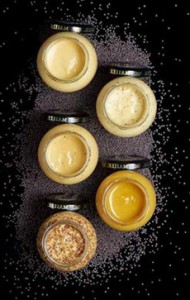
Five of the 20+ types of mustard made
by Maille Mustard.

 
Today, there are dozens of different types of mustard—far beyond the all-American yellow mustard (like French’s), brown mustard (Chinese mustard, like Colman’s), Dijon (like Grey Poupon) and whole grain (like moutarde à l’ancienne—one variety, moutarde de Meaux, is called the “king of mustards” by connoisseurs).

For National Mustard Day, commit to trying any of these you aren’t familiar with, plus a flavored mustard. Beyond honey mustard, look for Roquefort mustard, tarragon mustard and walnut mustard—three of our favorites.
 
 
20+ WAYS TO USE MUSTARD

Beyond hot dogs, burgers and sandwiches, mustard is a natural complement to many foods. Before we start the conventional list, take a look at this first course: gravlax with mustard ice cream. There’s no sugar in the ice cream, just novelty. Think of it as a cold mustard cream sauce!


/home/content/p3pnexwpnas01_data02/07/2891007/html/wp content/uploads/pate ground mustard duseks chicago 230
Pâté with whole grain mustard (also called grainy mustard and in French, moutarde a l’ancienne). Photo courtesy Dusek’s |
Chicago.
 
  • Barbecue: The essential in South Carolina mustard barbecue sauce, and a help to tomato-based barbecue sauces, to cut the sweetness.
  • Butter: Blend mustard with butter and lemon for a compound butter topping for toast, grilled meat or sauteed meat and seafood.
  • Canapés: Spread a base of bread or cucumber with a flavored mustard, then top with cheese, pâté, meat or other ingredients.
  • Charcuterie: As a condiment with bacon, ballotines, confits, galantines, ham, pâtés, sausages and terrines.
  • Cheese: Serve mustard as a condiment with strong cheeses (more about cheese condiments).
  • Chicken: Mustard brightens chicken stews and makes a delicious glaze for chicken breasts and wings.
  • Dip: Serve it straight or mixed with mayonnaise, sour cream or plain yogurt, with crudités, chips, fries and pretzels. Mustard is also an ingredient in beer and Cheddar dips. You can also add it to a Mexican queso dip.
  • Eggs: Mustard adds complexity to deviled eggs. It also makes a delicious sauce for poached eggs.
  • Fish: Sturdy fish like salmon and tuna are wonderful with a mustard crust. As a glaze, brush it on salmon fillets before broiling or on tuna before searing. Here’s a recipe for a mustard glaze for fish.
  • Glaze: In addition to fish, glaze chicken, ham, pork and lamb.
  • Grilled meats: Use mustard as your condiment for meats (including sausages) and poultry.
  • Ground Meat & Seafood: Add a spoonful along with other seasonings, to burgers, crab cake, meat loaf, etc.
  • Mussels: Swirl mustard into lager-steamed mussels and garnish with dill. Here’s a mussels and mustard recipe from Pierre Franey, chef of the legendary (and belated) Le Pavillon restaurant in New York City.
  • Mustard Sauce: Here’s a recipe for mustard sauce.
  • Pan Sauces: After sautéing chicken breasts or searing steaks, whisk the fond (the browned bits at the bottom of the pan) with a splash of wine and a dollop of mustard, into a tasty sauce.
  • Pasta: Add acidity to a cream sauce for pasta with a spoonful of mustard. Make a butter-mustard sauce for noodles with grainy mustard.
  • Potatoes: Add a spoonful of mustard to mashed potatoes. Then top it with crumbled bacon and minced chives or scallions! Add Dijon mustard to a gratin; add a bit to a sour cream or yogurt sauce for potatoes and vegetables.
  • Roasts: To create a beautiful crust for a leg of lamb, pork loin or turkey breast, rub it with an herb mustard before roasting.
  • Salads: Add a spoonful to the “protein” salads—chicken, egg, ham, tuna—and the side salads—cole slaw, potato salad and macaroni salad.
  • Sandwich Spread: Mix mayonnaise with mustard, half and half or to taste. It adds flavor and cuts the calories and fat of the mayo in half.
  • Soup: Add a spoonful to a pot of dull soup.
  • Tartar Sauce: Here’s a zingy recipe from Colman’s.
  • Vinaigrette: A mustard dressing is a classic with salad greens, but it’s also delicious with roasted vegetables (try it with parsnips and turnips!).
  •  
    Thanks to Colman’s Mustard for some of these yummy ideas. Click the link for recipes.
     
     
    > MUSTARD HISTORY
     
     
    > THE DIFFERENT TYPES OF MUSTARD
      

    Comments off

    RECIPE: Reduced Sugar Raspberry Pie

    July 31st is National Raspberry Cake Day. You can make one easily, by using raspberry jam as a filling between two layers, using whipped cream to frost the cake, and decorating the top with fresh raspberries.

    But for calorie counters, substitute the cake for a pie, and make this reduced calorie raspberry pie from Driscoll’s. It replaces some of the sugar with a noncaloric sugar substitute. And August 1st is National Raspberry Cream Pie Day.

    You can add a garnish of whipped cream from an aerosol can. With all the air whipped into the sweetened cream, it has just eight calories per tablespoon.

    For this recipe, prep time is 25 minutes; cook time is 1 hour 5 minutes.

    If you don’t want a reduced-sugar pie, try this raspberry cream pie recipe.

    RECIPE: REDUCED-CALORIE RASPBERRY PIE

    Ingredients For 8 Servings
     
    For The Crust

  • 2 cups all-purpose flour
  • 1/2 teaspoon fine salt
  • 10 tablespoons unsalted butter, chilled and cut into small pieces
  • 1/4 cup vegetable shortening
  • 6 to 8 tablespoons ice water
  •   raspberry-pie-flower-crust-driscolls-230
    Raspberry pie with a leafy crust. Use small cookie cutters to cut leaves from dough scraps. Photo courtesy Driscoll’s.
     
    For The Filling

  • 3 packages (6 ounces each) Driscoll’s raspberries
  • 1/3 cup granulated Splenda (not from individual packets)
  • 1/3 cup dark brown sugar
  • 2 tablespoons lemon juice
  • 1 tablespoon cornstarch
  • 1 teaspoon vanilla extract
  • 1/2 teaspoon ground cinnamon
  • 1/4 teaspoon salt
  • 1/4 teaspoon ground nutmeg
  • 1 large egg, beaten
  •  
    Optional Garnish

  • Aerosol whipped cream
  •  

    raspberries-cartons-MF-jeltovski-230
    Just-picked raspberries. Photo by J. Eltovski | Morguefile.

      Preparation

    1. MAKE the crust: Place the flour and salt in the bowl of a food processor and pulse until combined. Add the butter and shortening and pulse until the mixture resembles coarse crumbs. Add the ater, one tablespoon at a time, and pulse just until the dough comes together (be careful not to over-mix). Pat the dough into a disk and wrap in plastic wrap. Chill at least 1 hour.

    2. MAKE the filling: Roll out the dough on a lightly floured surface into a large circle about 1/4-inch thick. Cut out a 13-inch circle and gently transfer the dough to a 9-1/2-inch pie plate. Fold the edge of dough under the rim of the plate and crimp to make a decorative crust. Place in the freezer for 15 minutes. Cut the remaining dough into various small cutouts, using cookie cutters. (Here’s a set of mini leaf cutters. We use this linzer cookie cutter set with a heart, moon, sun and star.)

    3. PREHEAT the oven to 400°F. Top the pie dough shell with aluminum foil or parchment paper and fill it with pie weights or dried beans. (This large pie weight from Chicago Metallic avoids having to pick up the individual weights or beans.)

     
    4. BAKE the crust for 10 minutes, remove the foil and weights and continue to bake about 10 minutes more or until lightly golden.

    5. REDUCE the oven temperature to 350°F. Place the raspberries, Splenda, brown sugar, lemon juice, cornstarch, vanilla, cinnamon, nutmeg and salt in a medium bowl and stir until evenly combined. Spoon into prebaked crust. Brush crust with beaten egg and top with small cutouts. Brush cutouts with beaten egg.

    6. BAKE for 40 to 45 minutes or until the juices are bubbling and the crust is golden brown. Let cool slightly before serving, or chill completely.
     
    Find more delicious berry recipes at Driscolls.com.
      

    Comments off

    TIP OF THE DAY: Salad Topping For Fish

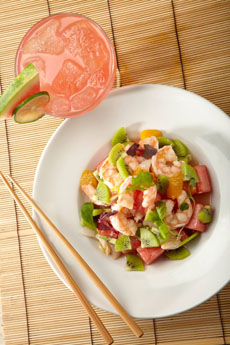
    Today’s tip was inspired by this dish (photo at left) at The Sea Fire Grill, in Manhattan’s Rockefeller Center.

    At its simplest, the tip is: Serve fish fillets—baked, grilled, pan-fried, roasted or sautéed—topped with a salad of baby greens, very lightly dressed in vinaigrette or olive oil and lime juice.
     
    ADD COLOR TO EVERY PLATE OF FOOD

    The salad adds vibrant color to a plate of beige, brown and/or white foods, a longstanding practice of chefs (even if times past, the color was a sprig of parsley). You can add even more color a side of yellow squash, carrots, sautéed heirloom cherry tomatoes or any of these “Rainbow Vegetables.”

    The Sea Grill adds fun and flavor by layering the dish with a south-of-the-border spin:

  • A house-made tortilla shell, filled with corn and bean salad (corn salad recipe).
  • A drizzle of basil olive oil under the tortilla shell.
  •    

    /home/content/p3pnexwpnas01_data02/07/2891007/html/wp content/uploads/salad topped sea bass theseafiregrillFB 230

    Salad-topped grilled black sea bass in a corn salad-filled tortilla bowl. Photo courtesy The Sea Grill | NYC.

  • Dots of balsamic vinegar reduction (or purchased balsamic glaze—check your local Trader Joe’s).
  • Chipotle aïoli (add chipotle powder powder to taste, to this aïoli recipe (aïoli is garlic mayonnaise). You can substitute chile powder for the chipotle, but it won’t have the signature chipotle smokiness.
  •  

    /home/content/p3pnexwpnas01_data02/07/2891007/html/wp content/uploads/sauteed cherry tomatoes leitesculinaria 230
    Sautéed cherry tomatoes are another
    easy way to add color and flavor to a fish
    fillet dish. Here’s a sautéed cherry tomato
    recipe
    from Leite’s Culinaria.


    You don’t need to make tortilla bowls: You can place the fish on top of the corn salad, or substitute cucumber salad, beans/legumes/bean purée, guacamole, rice or other starch, or vegetables/vegetable purée. But if you want to make the bowls, here’s how:

    RECIPE: TORTILLA BOWLS

    1. PREHEAT the oven to 425°F. Lightly spray both sides of 8-inch corn tortillas with nonstick cooking spray.

    2. PRESS each tortilla over a custard cup, ramekin or other oven-safe bowl; crimp to form the fluted bowl shape. Place on a baking sheet.

    3. BAKE for 10 minutes or until the edges are browned. Remove from the oven and cool for 3 minutes. Remove the tortillas from the bowls and cool completely.
     
    For larger tortilla bowls that you can use for entrée salads, purchase burrito-size wraps and drape them over a 1-quart ovenproof bowl (we use Pyrex).


    Comments off

    Make Paella On The Grill, Plus The History Of Paella

    We love paella and don’t make it often enough. So when Fagor wrote to us about their paella pan and included a recipe (below) to make paella on the grill, our ears perked up. Before we get to the recipe, here’s a bit about paella, past and present.

    > National Spanish Paella Day is March 27th, and World Paella Day is September 20th.

    > The grilled paella recipe is below.

    > The year’s 11 Spanish food holidays celebrated in the U.S.

    > We begin with the history of paella.
     
     
    PAELLA HISTORY

    Paella (pronounced pie-AY-ya) originated in Valencia, a region on the Mediterranean (east) coast of Spain. It was originally a peasant dish, made by agricultural laborers who cooked a mixture of rice, snails, and vegetables in the fields. Cooked in a pan over an open fire. it was a communal dish, eaten directly from the pan with wooden spoons.

    Valencianos who lived closer to the coast added local eel plus butter beans (lima beans). Paella is the type of dish that lends itself to adding whatever you have on hand, so can change seasonally. Recipes thus evolved in many directions.
     
     
    MODERN PAELLA

    The paella we know today—saffron rice mixed with chorizo, chicken, and seafood—did not evolve until the late 18th century, when living standards rose affording the use of more expensive ingredients—especially saffron, the world’s costliest spice.

    It’s easy to vary the ingredients to create any type of paella, including vegetarian and vegan recipes. But three main styles developed in the 19th century:

  • Paella Valenciana combines rice, green vegetables, meat (rabbit, chicken, duck), snails, beans and seasoning.
  • Paella de marisco, a seafood paella that replaces meat and snails with seafood, and omits the beans and green vegetables.
  • Paella mixta, a freestyle combination of meat, seafood and vegetables. Note that in the U.S., dishes called “Paella Valenciana” are actually paella mixta, the combination of ingredients preferred by most people.
  •  
    By the mid-1800s, paella included short-grain white rice and a mix of proteins: chicken, duck, rabbit, and snails. Less affluent people often made do with snails alone. The dish was actually a “rice and beans” dish, with a mix of butter beans, Great Northern beans (white beans), and runner beans (green beans).

    Artichokes and tomatoes replaced runner beans in the winter. Spices included garlic, pimentòn (sweet paprika), rosemary, saffron, and salt. The dish was cooked in olive oil.

    The recipe continued to evolve as chorizo, green peas, olives, and roasted red pepper found their way into the dish.

    We’ve seen recipes with chopped chard or escarole, eggplant, fennel, mushrooms, olives, onion, piquillo chiles, red or green bell pepper, snow peas, tomatoes (fresh diced or roasted), and seasonal (spring asparagus and winter squash, e.g.). Some cooks garnish the top of the paella with sliced hard-boiled eggs and lemon wheels.

    The cook’s favorite ingredients were sure to be included. The chef at Soccarat, a group of tapas and paella restaurants in New York City, devised a paella menu that includes:


    [1] Paella mixta on the grill. Mixta means both meat and seafood (photo © Sur La Table).

    /home/content/p3pnexwpnas01_data02/07/2891007/html/wp content/uploads/paella on grill acouplecooks. 230
    [2] Seafood paella on the grill (photo © A Couple Cooks.


    [3] Chorizo and seafood paella; pan from IMUSA (photo © IMUSA).


  • Arroz negro (black rice): calamari, fish, scallops, piquillo peppers and shrimp with squid ink rice.
  • Carne (meat): chicken, chorizo, mushroom sofrito, short ribs and snow peas.
  • De la huerta (from the orchard, i.e., vegetarian*): artichokes, cauliflower, eggplant, snow peas and tomatoes.
  • Fideuà† de mar y montana (ingredients from the sea and mountains): Brussels sprouts, chicken thighs, cuttlefish and shrimp, with noodles instead of rice
  • Langosta (crustacean): lobster, roasted peppers, scallops, shrimp and squid.
  • Pescados y mariscos (fish and seafood): cockles, English peas, mussels, scallops, shrimp, squid and white fish.
  • Socarrat‡ (house signature recipe): beef, chicken, cockles, cuttlefish, fava beans, mussels, shrimp and white fish.
  • Valenciana: asparagus, pork ribs, rabbit, scallions and snails.
  •  


    /home/content/p3pnexwpnas01_data02/07/2891007/html/wp content/uploads/chicken Wm Son paella 230
    [4] Paella is a freestyle dish: Whatever you have on hand can go into the pan. Here, chicken legs and thighs, green beans and corn are included. Our personal favorite combination: a mixto with pimento (red bell pepper in a jar), black and green olives, artichoke hearts and green peas, plus fresh asparagus in the spring (photo © Williams-Sonoma.com).

      RECIPE: PAELLA ON THE GRILL

    This recipe, sent to us by Fagor, takes about 40 minutes. Created by A Couple Cooks, can easily be made as a vegan dish. You can also add the traditional mixto ingredients, chicken thighs and sliced chorizo.

    Ingredients For 4 Servings

  • 15-inch paella pan or any large, shallow, flameproof pan (stainless steel or aluminum preferable)
  • 12 mussels or clams
  • 12 high-quality de-veined shrimp (or substitute cooked chickpeas for a vegetarian version)
  • 4 ounces shiitake mushrooms
  • 1 zucchini
  • ½ head cauliflower or any vegetables of your choice (we used a classic blend of roasted red peppers [pimento], peas and olives)
  • 4 cloves garlic
  • 3 tablespoons olive oil
  • ½ cup tomato purée
  • 5½ cups vegetable broth
  • 2 cups arborio (short grain) rice
  • 1 pinch saffron
  • 2 tablespoons pimentón (Spanish smoked paprika)
  • 1 teaspoon kosher salt
  • Fresh ground pepper
  •  
    Preparation

    1. HEAT the grill to medium-high heat. Prepare the ingredients: Scrub the mussels or clams; place them in a bowl with the shrimp. Slice the zucchini and mushrooms; chop the cauliflower into bite-sized pieces. Place the vegetables in a bowl.

    2. MINCE 4 cloves of garlic and put them in a small bowl with 3 tablespoons olive oil. In a medium bowl, place ½ cup tomato purée and 5½ cups broth; mix to combine. In another bowl, add 2 cups arborio rice, 1 pinch saffron, 2 tablespoons pimentón, 1 teaspoon kosher salt, and a good amount of fresh ground pepper.

    3. ASSEMBLE the paella: Bring the bowls of ingredients and the paella pan to the grill. Prior to cooking, add about 15 briquettes to the fire to keep the temperature up. Place the pan on the grill and add the olive oil and garlic; cook for about 30 seconds. Add the vegetables; cook for about 2 minutes, stirring occasionally. Add the seafood; cook for about 2 minutes, flipping the shrimp once. Pour in the rice and spices so that they cover the pan. Add the broth and purée mixture and stir to combine.

    4. COOK the paella for 20 to 30 minutes, until most of the liquid has evaporated. Cook uncovered on a charcoal grill or with the cover down on a gas grill. Make sure not to stir, since this is when the soccorat develops. (Editor’s note: Soccorat is the rice crust on the bottom of the pan, which some people find very exciting. We personally don’t like hard, crunchy rice).

    5. CHECK to see that the rice on the bottom does not burn; it cooks fairly quickly. Remove the pan from the heat and let sit for about 5 to 10 minutes to cool.
     
     
    WHY BUY A PAELLA PAN?

    Why not make paella in a roasting pan or other vessel you already have?

    You can, of course; but a paella pan is specifically designed for seamless heat conduction and retention. Fagor’s, with a heavyweight and enamel-on-steel design, is a great heat conductor on the grill, oven, or stovetop.

    You can buy it Fagor Paella Pan or at retailers like Bed, Bath & Beyond. Be sure to get the 15-inch size. With a dish like paella, you want to make as much as you can and enjoy the leftovers.

    A paella pan is a versatile piece of cookware that can also be used to make:

  • Eggs and bacon
  • Pancakes
  • Roast chicken (the pan goes from oven to table)
  • Stir-frys (or anything you’d use a wok for)
  • Pizza: grease and flour the pan well or use nonstick spray
  •  
    And the pan easily goes from stove to table (don’t forget a trivet).

    ____________

    *The word vegetariano does exist in Spanish, but there is some poetic license involved with the orchard reference.

    Fideuà denotes the a type of cuisine from Catalonia, the northeastern part of Spain (north of Valencia). The style originated in the 1920s in the city of Gandia, when thin noodles like vermicelli (fideu in the Catalan language) were used instead of rice in the paella. The pasta is broken into short lengths and cooked in the paella pan. There are many variations of it, and it is optionally served with allioli sauce, the traditional Catalan garlic and olive oil sauce. Other examples of the cuisine: calçots—barbecued spring onions with romesco sauce—cured anchovies, embutidos y butifarras (cured meats and sausages), sparkling Cava wine and anything made with the local bolet mushrooms. Canelons, Spanish cannelloni, and Pa amb tomaquèt, bread rubbed with tomato (and sometimes with garlic and olive oil), and Escudella de carn d’olla, is a hearty Catalan stew, round out the list of “must trys” when you’re next in Barcelona.

    Soccorat is the hard, crunchy rice crust that develops on the bottom of the pan from its proximity to the heat. Some people particularly enjoy it.


    CHECK OUT WHAT’S HAPPENING ON OUR HOME PAGE, THENIBBLE.COM.


    Comments off

    Strawberry Cheesecake Pops Recipe & 18 Cheesecake Recipes

    strawberry-lime-cheesecake-pops-kraft-230
    [1] Make frozen strawberry cheesecake pops to celebrate National Cheesecake Day (photos #1 and #3 © Philadelphia Cream Cheese).

    Box Of Fresh Strawberries
    [2] Have a frozen strawberry cheesecake experience without turning on the oven (photo © Good Eggs).

    philadelphia_cream_cheese-box-ps-230
    [3] Cream cheese is an American invention. Cream cheese-based cheesecake owes its popularity to Philadelphia Cream Cheese, which launched in 1872. The brand promoted the recipe on its packages.

    Lime Halves For Cheesecake Pops
    [4] Lime juice and zest add a second flavor note (photo © Lisa Fotios | Pexels).

      July 30th is National Cheesecake Day, and we’re baking our Cheesecake Recipe With Sour Cream Topping, which happens to be our mom’s recipe.

    It’s a heavy cream cheesecake with a sour cream topping that isn’t found often these days—probably because most people don’t want to take the extra step.

    If you don’t want to bake any type of cheesecake, how about these Strawberry-Lime Cheesecake Pops from Philadelphia Cream Cheese?

    They give you a summery cheesecake experience without turning on the oven.

    Not all cheesecakes are sweet, by the way.

    We love savory cheesecakes—basil, blue cheese, corn and provolone, lobster Gruyère, salmon and tuna. Serve one with cocktails, as an appetizer, or as the cheese course with a salad. They’re memorable!

    > There are more cheesecake recipes below.

    > There’s also fun cheesecake trivia below.

    > The history of cheesecake.
     
     
    RECIPE: STRAWBERRY LIME CHEESECAKE POPS

    Ingredients

  • 1-1/2 cups strawberries, divided
  • 1-1/2 packages (12 ounces) Philadelphia Cream Cheese, cubed, then softened
  • 1 tablespoons lime zest and 2 tablespoons juice from 2 limes
  • 1/4 cup sugar
  • 1/2 cup whipping cream (heavy cream)
  • 12 paper or plastic cups, 3 ounces each
  • 12-cup muffin tin
  •  
    Preparation

    1. PLACE a 3-ounce paper or plastic cup in each of the 12 muffin pan cups. Cut each of 3 strawberries into 4 slices; place them in the cups.

    2. PLACE the remaining strawberries in a food processor. Add the cream cheese, lime zest, juice, and sugar; process until smooth. Spoon into a medium bowl.

    3. BEAT the whipping cream in a medium bowl with a mixer on high speed until stiff peaks form. Gently stir into the cream cheese mixture. Spoon into the prepared cups. Tap the cups on the counter to remove any air bubbles.

    4. INSERT a wooden pop stick or a plastic spoon into the center of each cup. If they won’t stand up straight, freeze for an hour and try again.

    5. FREEZE for 4 hours or until firm. Remove the frozen pops from cups just before serving.
     
     
    CHEESECAKE TRIVIA

  • Cheesecake (savory) was popular in ancient Greece. Neufchatel, ricotta, and other soft, fresh cheesecake-friendly cheeses have existed in Europe for centuries, engendering a variety of savory and sweet cheesecake recipes.
  • Cream cheese was invented by accident in New York, in 1872, and was later given the Philadelphia brand name (learn more). In the early 20th century, the company promoted the first cream cheesecake recipe, and an icon was born.
  • Cheesecake is actually a cheese custard pie. There is no cake made with flour, but a bottom crust like an open-face pie.
  • Cheesecake is often served with fresh or cooked fruit. Blueberries, mango, raspberries, and strawberries are fan favorites.
  •  
     
    SCROLL DOWN FOR 18 DELICIOUS CHEESECAKE RECIPES!


    18 DELICIOUS CHEESECAKE RECIPES

    We love cheesecake, and have published quite a few recipes over the years. Here are some of our favorites:

  • Boston Cream Pie Cheesecake recipe
  • Burnt Caramel Cheesecake recipe
  • Chocolate Chunk Cheesecake recipe
  • Chocolate Peanut Butter Cheesecake (recipe) & The History Of Cheesecake
  • Cranberry Cheesecake recipe With Whiskey Buttercream Sauce
  • Easy Blueberry Cheesecake Topping recipe
  • Grand Marnier Mascarpone Cheesecake recipe
  • Individual Cheesecakes With Fresh Orange Or Grapefruit recipe
  • Individual Eggnog Cheesecakes recipe
  • Irish Coffee Cheesecake recipe
  • Irish Cream Liqueur Cheesecake recipe
  • Mango Cheesecake recipe
  • Michael Chiarello’s Mascarpone Cheesecake recipe
  • Milk Chocolate Cheesecake recipe
  • Mocha Pumpkin Cheesecake recipe
  • My Mom’s New York Cheesecake With Sour Cream Topping recipe
  • Pumpkin Mousse Cheesecake with gingersnap crust recipe
  • Red Velvet Cheesecake recipe
  •  
     

    CHECK OUT WHAT’S HAPPENING ON OUR HOME PAGE, THENIBBLE.COM.


    Comments off

    The Nibble Webzine Of Food Adventures
    RSS
    Follow by Email


    © Copyright 2005-2026 Lifestyle Direct, Inc. All rights reserved. All images are copyrighted to their respective owners.