THE NIBBLE BLOG: Products, Recipes & Trends In Specialty Foods


Also visit our main website, TheNibble.com.

FOOD FUN: Kermit Eggplant

Kermit is the name of a small, green eggplant, bred in the U.S. from the round Thai eggplant. It is also known as Garden Egg and Bitter Ball, the latter since they grow bitter the longer they are off the stalk.

But some clever American, probably selling the eggplants or the seeds, gave it the name “Kermit” after Kermit the Frog. They’re adorable, small and green, just like the frog.

A member of the Nightshade Family, Solanaceae (as are the tomato and the potato), Kermit is a variant in the genus and species Solanum melongena, to which all eggplants belong.

These golf ball-size eggplants average 1½”-2″ in diameter (an American golf ball is 1.68 inches).

Kermit and all Thai eggplants differ from other eggplants not only in their size and shape, but also in that they can be eaten raw, and have tender, edible skin.
 
HOW TO EAT KERMIT EGGPLANTS

When you’re Kermit, it’s tasty being green, with quick-cooking, meaty flesh.

  • In Thai dishes they are often halved or quartered before cooking, but can also be cooked whole. They hold their shape well.
  • As they cook in a sauce, such as green or red curry (or marinara, for that matter), they become softer and absorb the flavor of the sauce.
  • Add them to stewed dishes or stir fry them and serve with marinara and Parmesan, or other favorite sauce.
  • Kermits are eaten raw in Thai salads or with nam phrik, a hot and spicy Thai chili paste. One might say that dipping raw Kermits into nam phrik is a form of Thai crudités. Try them that way, and also sliced into your salad.
  •   Kermit Eggplant

    Kermit-characters.wikia-230
    TOP PHOTO: The Kermit eggplant. It’s easy being green. Photo courtesy Foragers City Grocer | New York. BOTTOM PHOTO: The namesake. Photo courtesy Characters.Wikia.com.

     
    KERMIT EGGPLANT RECIPES

    Like other eggplants, Kermits are high in fiber, folate, manganese, potassium, thiamine and vitamin K. They are also low in calories and have no fat or sodium. Two eggplants have 25 calories.

  • Thai Green Curry With Kermit Eggplants Recipe
  • Tomato & Kermit Eggplant Ragu Recipe
  • Stuffed Kermit Eggplants recipe
  •  
    GROW YOUR OWN

    The shelf life of Kermit eggplants is typically shorter than other varieties. Once picked they should be refrigerated in plastic, for no more than 1 week. They become increasingly bitter as they age.

    You may want to try growing them at home. Eggplant is easy to grow, with big yields. You can buy seeds here.
      

    Comments off

    TIP OF THE DAY: Make Mulling Spice Sachets

    Mulling Spice Sachets

    drawstring-tea-bags-amazon-niceshop-230
    TOP PHOTO: Individual sachets are best if only one or two people want a cup. Larger sachets are used to make a 6- or 8-cup pot. Photo courtesy McCormick. BOTTOM PHOTO:
    Empty tea bag “sachets,” used to fill with loose tea, are easier to make although less festive than muslin or netting. You can get them at specialty tea shops or online. Photo courtesy NiceShop. Put leftover mulled beverages in the fridge to enjoy chilled.


    In our last article, we suggested a cider party with a pumpkin layer cake. Here’s a related tip:

    Make mulling spice sachets for mulled cider or wine. They layer the flavors found in spiced tea on top of the base beverage, which is typically warmed cider or wine.

    Make them for family, guests and gifting. Individual sachets are better for gifting; large sachets are better for a pot of cider.

    For gifting and party favors, you can package the sachets in a holiday tin or a Mason jar with a red ribbon. Be sure to add the mulling instructions (below) on the gift tag or insert them into the package.

    To give two individual sachets as small party favors, find a small, colored cellophane bag, a clear or vellum envelope or other gift bag. Include the instructions.

    Prep time is 5 minutes to make an individual sachet, 15 minutes to steep the cider or wine. If you have nimble fingers and have organized your ingredients, you can make three individual sachets or two large ones in 5 minutes.

    Thanks to McCormick for the recipe.

    RECIPE: HOMEMADE MULLING SPICE SACHETS

    Ingredients For 1 Bag/2 Servings

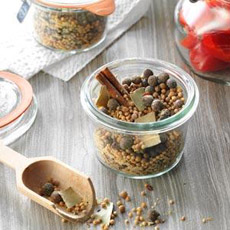
  • 1 cinnamon stick, broken in half
  • 2 whole cloves
  • 2 whole allspice
  • Optional: 2 cardamom pods
  • 2 cups apple cider, hard cider or wine
  • 1/4 teaspoon pure vanilla extract
  • Cheesecloth*, cut into 4″ squares
  • Kitchen string
  •  
    *The easiest option is to purchase drawstring filter bags, used for loose tea (photo at left). Another option: If you can find fine, flexible netting, it makes a prettier sachet but you need to wash it first, to soften it and eliminate any dust it’s picked up along the way.

     
    Preparation

    1. PLACE the spices in the center of a piece of cheesecloth. Tie tightly with long piece of string. Store in an airtight container. That’s it, until you’re ready to mull your beverage. Then…

    2. PLACE the spice sachet in small saucepan. Add the apple cider or wine. Simmer over medium heat 10 to 15 minutes or until fragrant.

    3. DISCARD the spice sachet. Stir in the vanilla. Serve warm or hot.
     

    Ingredients For A Party-Size Mulling Spice Sachet

    1. INCREASE the cinnamon sticks to 4, whole cloves to 2 teaspoons, whole allspice to 1 teaspoon and vanilla to 2 teaspoons.

    2. WRAP in cheesecloth and warm in a pot with 2 quarts (8 cups) of apple cider or wine. You can also use apple juice. The difference is that apple cider is a fresh-squeezed product that needs to be refrigerated; apple juice is processed and homogenized to be shelf stable (no refrigeration needed until after the package has been opened).
      

    Comments off

    RECIPE: Pumpkin Layer Cake & Easy Variations

    This recipe, from blogger Jaclyn at Cooking Classy, reminded us to substitute pumpkin for carrot cake during “pumpkin season.” When baking, we tend to focus too much on family favorites and not enough on new seasonal recipes.

    For this recipe, Jaclyn takes a carrot cake approach to pumpkin cake, adding a seasonal cinnamon accent to carrot cake’s traditional cream cheese frosting. She adds a third cake layer to make the cake more impressive.

    If you love raisins and nuts in a carrot cake, you can add them here, too, either in the batter or in or atop the filling between the layers (for the filling, plan for 1/2 cup of each). You can also add pieces of crystallized ginger in the frosting for a spicy crunch.

    An entertaining idea: Make the cake for a cider party, serving fresh cider and mulled cider with brandy and rum.

    Prep time is 40 minutes, Cook Time: 35 minutes, Total Time: 3 hours

    Find more delicious recipes at CookingClassy.com.

    RECIPE: PUMPKIN LAYER CAKE WITH CREAM CHEESE
    FROSTING

    Ingredients For 16 Servings

  • 2-3/4 cups (390g) all-purpose flour
  • 1 teaspoon baking powder
  • 1 teaspoon baking soda
  • 3/4 teaspoon salt
  • 1 teaspoon ground cinnamon
  • 1/2 teaspoon ground nutmeg
  • 1/2 teaspoon ground ginger
  • 1-1/4 cups (270g) granulated sugar
  • 3/4 cup (172g) packed light-brown sugar
  • 1/2 cup unsalted butter, softened
  • 1/2 cup vegetable or canola oil, divided
  • 4 large eggs
  • 2 teaspoons vanilla extract
  • 1-3/4 cup (424g/15 oz) canned pumpkin purée
  • 1/2 cup milk
  •    
    pumpkin-cake-with-cinnamon-cream-cheese-frosting-cookingclassy-230

    Carrot Cake With Chopped Pecans

    TOP PHOTO: Serve pumpkin pie at a cider party, with regular and mulled cider. Photo courtesy CookingClassy.com. BOTTOM PHOTO: You can garnish the sides of the cake with chopped pecans or walnuts, as shown in this carrot cake from AllenBrothers.com.

     
    For The Frosting

  • 12 ounces cream cheese, softened
  • 3/4 cup butter, softened (Jaclyn used 6 tablespoons salted and 6 tablespoons unsalted butter)
  • 1-1/2 teaspoons ground cinnamon
  • 1/2 teaspoon vanilla extract
  • 4-1/2 to 5 cups powdered sugar
  • Optional inclusions: chopped pecans or walnut, crystallized ginger, raisins or dried cranberries or cherries
  •  
    Optional Garnishes

  • Chopped pecans or walnuts
  • Candy/marzipan pumpkins, acorns or leaves; pomegranate arils
  •  

    Pumpkin Layer Cake

    carrot-cake-meringues-caviarrusse-230

    TOP PHOTO: This pumpkin layer cake adds
    raspberries for a festive effect. You can
    instead add dried cherries, cranberries or
    raisins, pomegranate arils, chopped
    crystallized ginger, or a combination.
    BOTTOM PHOTO: Food fun in the form of a
    deconstructed layer cake, with streusel
    crumble topped with ice cream, and
    decorated with meringue cookies and a
    ribbon of pumpkin pie filling (you can
    substitute caramel sauce). Photo courtesy
    Caviar Russe | NYC.


    Preparation

    1. PREHEAT the oven to 350°F. Butter three 9-inch round cake pans and line the bottoms with parchment paper. Butter the parchment and set the pans aside.

    2. WHISK together the flour, baking powder, baking soda, salt, cinnamon, nutmeg and ginger in a mixing bowl. Whisking for 20 seconds and set aside.

    3. USE the bowl of an electric stand mixer fitted with the paddle attachment, and whip together the butter, granulated sugar, brown sugar and 3 tablespoons of the vegetable oil, until pale and fluffy. Occasionally scrape down the sides and bottom of the bowl, throughout the mixing process. Mix in the remaining 1/4 cup + 1 tablespoon vegetable oil. Blend in the eggs one at a time, adding the vanilla with the last egg.

    4. WHISK together the pumpkin and milk in a bowl or large liquid measuring cup. Working in three separate batches, beginning and ending with the flour mixture, add 1/3 of the flour mixture alternating with half of the pumpkin mixture and mixing just until combined after each addition.

    5. DIVIDE the batter among the three prepared cake pans and smooth the tops with a spatula. Bake until a toothpick inserted into the center of cake comes out clean, about 30-35 minutes. Cool the layers in the pans for 15 minutes, then run a knife around edge to loosen. Invert the layers onto wire racks to cool completely.

    6. PREPARE the frosting while the cake cools. In the bowl of an electric stand mixer fitted with the paddle attachment, whip together the cream cheese and butter until smooth and fluffy. Add the cinnamon, vanilla and powdered sugar and mix on low speed until combined. Then increase the speed to medium and whip until pale and fluffy.

    7. FILL the cake layers with frosting and then frost the top and sides. If you prefer the look of the three-tiered cake with raspberries, at the top of this section, you can save a bit of time with an unfrosted top and sides. If the frosting is runny, cover and refrigerate just until it no longer is runny before spreading on cake.

    8. STORE the cake in an airtight container such as a cake carrier, in the refrigerator; chill for 20 minutes or as long as you want to store the cake. Let it rest at room temperature to eliminate the chill before serving. Chilling the cake firms the frosting and allows for cleaner slices.


    Comments off

    Cauliflower Steak Recipe: Trendy & Delicious

    The recipe for cauliflower steak is below.

    But first, we admit: We are one of those people who has a double grievance during fall and winter. Not only do we grip daylight hours, but we miss the cornucopia of fruits and vegetables from spring and summer.

    Sure, there are asparagus and tomatoes, honeydews and peaches to be had. But as subscribers to locavore and green philosophies, we don’t buy out-of-season produce shipped from other parts of the world.

    The folks in California are gifted with the best produce variety in the nation. It helps that the growing is so long, as is the growing area: 770 miles long.

    We just heard from Good Eggs, San Francisco’s top quality produce provider, that new fall bounty has arrived:

  • Buttercup squash
  • Baby spinach
  • Artichokes
  • Romanesco, the offspring of cauliflower and broccoli rabe (see the photo below)
  • Mexican Sour Gherkins (they look like tiny watermelons)
  •    

    fall-produce-goodeggs-230
    The best fall produce in northern California. Photo courtesy GoodEggs.com.

     
    On the opposite coast, where we live, we find comfort in colored cauliflower and winter squash. But wherever you live, here’s…

    HOW TO FIND THE BEST PRODUCE

  • Know what’s in season locally. Click your state on this map from Fresh Everyday Produce.
  • Go to farmers markets. Here’s the USDA’s list of farmers markets in the U.S.
  • Patronize stores that have better produce. Our closest supermarket is fine for the dairy and packaged food, but the produce often is wilting so we go elsewhere.
  • Be willing to shop at multiple stores. The specialty supermarket where we buy produce carries an inferior brand of strawberries. We eat lots of strawberries year-round, so we go to yet another store that does carry our brand (Driscolls).
  • Ask the chefs at independent restaurants for advice. They typically have favorite farmers markets and specialty grocers.
  • Recognize that if you live in the northern climes, January and February will be bleak. After the new year, we’ll provide tips on how to cope.
  •  
    YOUR FUN FOOD ASSIGNMENT

    1. Ask 10 foodies and/or chefs in your area where the best produce can be found. You don’t have to ask them all in one week, of course. But anytime the topic of good food comes up in conversation, ask!

    2. Find a seasonal fruit or vegetable and do something different and exciting with it. To give you a leg up, the next section has a recipe for our latest veggie fancy: cauliflower steaks. You can make them with endless variations of seasonings and sauces, and we’ve included six of our favorite variations.


    multicolored-cauliflower-nourishtheroots-230
    [2] Some jewels of fall: colored cauliflower. In the front is romanesco, a cultivar bred from cauliflower and broccoli rabe, a.k.a. rapini (photo © NourishTheRoots.com).

    cauliflower-steaks-olive-tomato-epicurious-230r
    [3] Cauliflower steak with Italian accents. Here’s the recipe (photo © Epicurious).


    CAULIFLOWER STEAKS

    Since the summer, cauliflower steak has been trending at almost every restaurant we go visit, as a vegetarian/vegan/paleo/low-calorie/whatever option. It can also be served on top of your favorite whole grain, as a first course or entrée, or atop a bed of greens as a salad course. It’s especially fun with a purple cauliflower!

    A whole head of cauliflower is sliced into “steaks,” which are variously seasoned and roasted.

    Ingredients

  • 1 tablespoon lemon juice
  • 2 cloves garlic, crushed
  • 1 large head cauliflower (about 3 pounds)
  • Salt and pepper to taste
  • Extra virgin olive oil
  • Garnish: 2 tablespoons fresh parsley or other herb, finely
    chopped
  •  
    Preparation

    1. PREHEAT the oven to 375°F. Line a baking sheet with parchment paper or a Silpat.

    2. COMBINE the lemon juice and garlic in a small bowl. Set aside momentarily.

    3. REMOVE the leaves and bottom core of a head of cauliflower lengthwise into 3/4-inch-thick slices. Season both sides with salt and pepper to taste and arrange in a single layer on the prepared baking sheet. Brush the tops with the lemon juice-garlic mixture. Roast 40 minutes or until golden and tender. Sprinkle with parsley and serve.

    4. USE the remaining cauliflower pieces in salads raw or pickled, or steam/microwave them for another occasion.
     
    Variations

    Turn this spare basic recipe into more flavorful cauliflower steaks. Use your favorite international flavors as seasonings and sauces. For example:

  • Chinese cauliflower steaks: Eliminate the salt, brush steaks with soy sauce instead of lemon juice, top with minced garlic, garnish with fresh chives.
  • Indian cauliflower steaks: Season with ground cumin, coriander and optional curry powder instead of garlic, salt and pepper; garnish with fresh cilantro.
  • Italian cauliflower steaks #1: Use garlic-flavored olive oil and top the cauliflower with minced garlic before roasting. Place cooked steaks atop pesto, or atop marinara sauce seasoned with some oregano. Garnish with sliced black olives.
  • Italian cauliflower steaks #2: Make the basic recipe. After roasting, sprinkle with 2 tablespoons balsamic vinegar and 1/2 cup shredded Parmesan. Return to the oven for another 5 minutes or until the cheese is melted.
  • Japanese cauliflower steaks: Use 1/2 olive oil, 1/2 toasted sesame oil or wasabi oil, and garnish with toasted sesame seeds, grated fresh ginger and/or fresh chives.
  • Mexican cauliflower steaks: Replace the lemon juice with lime juice. Serve on a bed of black beans or pinto beans and top with warmed salsa. Garnish with cilantro and optional crumbled queso fresco.
  •   

    Comments off

    Pumpkin Custard Baked In A Pumpkin & The First Thanksgiving

    We’ll soon celebrate Thanksgiving, a remembrance of a harvest feast that took place 394 years ago. Pumpkin may have been served at the Pilgrims’ first harvest feast, but it wasn’t pumpkin pie. The pumpkin pie we know and love first appears in cookbooks in the early 19th century.

    After a horrific first winter that saw their community reduced by half, the settlers had yet to construct ovens for baking. Even if there had been butter and shortening to spare, pie crusts wouldn’t have cooked evenly over an open fire.

    But there may have been a pumpkin custard, which could be cooked in its own vessel—the pumpkin shell. Our tip today is: See if you can fit it into your Thanksgiving menu; and if not, enjoy it in advance of the big day.

    Before we go on to the recipe below, here are some tidbits from Scholastic.com.

    The website has a terrific account on the Pilgrims and the first “Thanksgiving” (it wasn’t called that until much later). It expands on snippets taught in school and follows the dual stories of both the Pilgrims and the Wampanoag natives who helped them. The re-enactment videos and photography bring the story to life in a fresh new way.

    If some family and guests have an hour to kill on Thanksgiving Day, send everyone to the site. It will make the feast so much more meaningful.
     
     
    THE FIRST THANKSGIVING

    The Pilgrims, 102 adults and children set sail for Virginia on September 6, 1620. The Mayflower was thrown off course by storms, and landed at Cape Cod 56 days later, on November 11th. The party made their way to the settlement they called Plimouth as winter set in, arriving on Christmas Day. Already weakened by their travel voyage, half of the passengers failed to survive the first few months of a bitter winter.


    Custard-Filled-Pumpkin-soufflebombay-230
    [1] Pumpkin custard baked in a pumpkin. The recipe is below (photo © Souffle Bombay).

    sugarpumpkin-artofthehome-230
    [2] A sugar pumpkin, the best size and shape for this recipe (photo © Art Of The Home.

     
    During those winter months, it was very difficult to find food and build shelters. Fortunately, the local native people, called Wampanoag, shared their knowledge and helped the colonists survive.

    Ten months after they arrived the settlers had constructed seven cottages, a common meeting house and three storehouses for the food from their first harvest. The Wampanoag Squanto taught the settlers how to plant native crops like corn and squash.

    Our national holiday commemorates the feast held in the autumn of 1621 to celebrate the colony’s first successful harvest. It was considered a harvest celebration, and was not called Thanksgiving. The “thanksgiving” concept was applied in the 19th century by scholars studying that period; and the Thanksgiving holiday, setting the last Thursday of November “as a day of Thanksgiving and Praise,” was proclaimed by President Abraham Lincoln in 1863.
     
     
    WHAT DID THE PILGRIMS EAT AT THE “FIRST THANKSGIVING?”

    What did they eat? There’s only one surviving written account of the feast, which mentions neither turkey nor pumpkin, although we know both were plentiful locally. There were no cranberries† and no potatoes, mashed or sweet. Here’s what we do know:

  • Waterfowl were plentiful in the Massachusetts Bay area. Men could go out and shoot as much duck and geese as they liked. The women would pluck them and roast them over the fireplaces in their cottages.
  • Children would grind corn into cornmeal which was then made into porridge called samp (think oatmeal made from corn).
  • For their first harvest feast, the Wampanoag leader, Massasoit, sent 5 warriors to hunt five deer as a gift to the colonists. Venison was a favorite Wampanoag food.
  • The duck and venison were likely accompanied by cabbage, corn, onions, squash (including pumpkin) and seafood. Mussels clung to the rocks along the shore—easy pickings.
  • The 1621 feast lasted about a week, spanning several meals and games for both children and adults. Sometimes the Wampanoag and Pilgrims dined together, sometimes apart.
  •  
    _______________

    *The Native Americans probably couldn’t sweeten them enough to be tasty. Instead, they used cranberries for red dye.


    pumpkin-apple-pies-leaf-decor-ws-230
    [3] A traditional pumpkin pie, made in a pie plate with a crust, didn’t appear until the early 19th century. This pie is decorated with small cookies in seasonal shapes (photo © Williams Sonoma).

    mini-pumpkins-for-creme-brulee-spoonforkbacon-230
    [4] You can also bake the custard in small individual pumpkins (photo ©y Spoon Fork Bacon).

      RECIPE: PUMPKIN CUSTARD, BAKED IN A PUMPKIN

    According to some accounts, the English settlers hollowed out pumpkins and filled the shells with milk, honey and spices to make a custard. They baked the filled pumpkin in the hot ashes of the fireplace. You, fortunately, have an oven.

    This recipe creates an impressive dessert that happens to be gluten free. You can also make a savory custard version to serve as a side. Here’s an assortment of savory custard recipes.

    Note that this isn’t “pumpkin custard” but a conventional custard baked inside a pumpkin. You can make a pumpkin custard by adding pumpkin purée to the custard recipe. Here’s one pumpkin custard recipe; there are many others online.
     
    Ingredients For 4-5 Servings

  • 1 small pumpkin†
  • 3/4 cup sugar
  • 3 large eggs plus 4 egg yolks
  • 1/2 tablespoon vanilla bean paste or vanilla extract
  • 2 cups heavy cream
  • 1 teaspoon of cornstarch
  • Pinch of salt
  • ______________
     
    †The pumpkin should be 4-5 inches in height and 18 inches in diameter. Sugar pumpkins are ideal, but if you can’t find a small pumpkin, look for other winter squash in this size range (Hubbard, for example).
     
    Preparation

    1. PREHEAT the oven to 400°F. Prepare the pumpkin as if preparing a jack-o-lantern: Cut off the top leaving the stem intact and scoop out the seeds and pulp. Scoop out enough pulp (pumpkin flesh) for the custard, while leaving a border of pulp to serve along with the finished custard. Place the large bottom portion on a baking sheet. Reserve the top (stem end) for later.

    2. COMBINE the sugar, eggs and vanilla in a mixing bowl and whisk until combined. Add the heavy cream, cornstarch and salt and whisk until fully combined. Pour the mixture into the prepared pumpkin, leaving a 3/4-inch space between the filling and the top of the pumpkin. Bake for 15 minutes; then cover the top of the pumpkin loosely with foil and bake another 15 minutes.

     
    3. LOWER the oven temperature to 375°F, place the top of the pumpkin on the tray and continue to bake for another 15 minutes. Remove the foil and bake an additional 30 minutes, or until a knife inserted into the custard comes out almost clean.

    4. TURN off the oven, allow the pumpkin to cool for an hour, then place it a refrigerator or in your cold garage, loosely covered with plastic wrap or foil. Allow the custard to set 6 hours or overnight. This is a good recipe to assign to a guest, since if you’re making the rest of the dinner, you (a) have your hands full and (b) your fridge is packed.

    5. TO SERVE: Scoop the custard into dessert bowls, scraping the sides to include some of the baked pumpkin.


    Comments off

    The Nibble Webzine Of Food Adventures


    © Copyright 2005-2026 Lifestyle Direct, Inc. All rights reserved. All images are copyrighted to their respective owners.