THE NIBBLE BLOG: Products, Recipes & Trends In Specialty Foods


Also visit our main website, TheNibble.com.

TIP OF THE DAY: How To Chop Herbs

Chopping Parsley

Fresh Cilantro
Top: Be sure that herbs are absolutely dry
before you chop them. Photo courtesy
Williams-Sonoma. Bottom: Remove the
woody stems but keep the green portions.
Photo of cilantro courtesy Good Eggs | San
Francisco.

  Fresh herbs are the avenue to adding a big punch of flavor with few calories to most dishes.

The emphasis is on fresh. While dried herb are a fine stand-by, they don’t deliver the same flavor—and the flavor fades as they age. First…

THE DIFFERENCE BETWEEN HERBS & SPICES

These two terms are often used interchangeably, but that’s inaccurate. There are important differences.

  • Herbs are the leaves of a plant (although stems may also be used). They grow in any climate warm enough to grow vegetables.
  • Spices are from the seeds, roots, fruit or bark, and typically used in dried form. Most originate in tropical or semi-tropical regions.
  •  
    It’s possible for one plant to contain both herb and spice. For example:

  • Cilantro, an herb, is the leaf of the coriander plant; the seeds of the plant, coriander, are a spice.
  • Dill weed, an herb, and dill seed, a spice, come from the same plant.
  •  
    SWEET & SAVORY HERBS

    Most herbs can be used in savory dishes. Think dill, garlic, thyme, oregano, parsley. In addition, there are the so-called sweet herbs, that can be used in both savory and sweet dishes:

  • Chamomile
  • Lavender
  • Lemon Verbena
  • Licorice
  • Mint
  • Rose Geranium
  • Tarragon
  •  
    There are other sweet herb not often found in the U.S., such as sweet cicely (British myrrh). Stevia, an herb, delivers sweetness in addition to licorice notes.
     
    HOW TO CHOP FRESH HERBS

    Here’s what you should know before you grab a sharp chef’s knife and the cutting board:

    1. Be sure the washed herbs are fully dry.

    If they’re just a bit damp, they’ll get mushy when you chop them.

  • While you can use paper towels to pat them dry, the best course is to wash them in advance of when you need them—even a half hour in advance—and let them dry naturally.
  • Don’t have time to let them dry? Gout the hair dryer! No kidding: We’ve done this more than once with big, damp bunches of parsley.
  •  
    Next up: Different herbs require different chopping techniques.


    2. Herbs with edible stems.

    When you throw away the slender stems of herbs like cilantro, dill and parsley, you’re throwing away money. They are just as edible as the leaves.

  • Trim the bottom part of the stems, including any thick portion. If you don’t want to use them in the particular recipe, freeze them for later use in soups, stocks, stir-frys, pestos, minced into plate garnishes, etc. The stems freeze well; delicate leaves, less so.
  • Then, simply chop the stems along with the leaves. Don’t spend any time pulling the leaves off the stems!
  • Green stems from any herb can be cut fine or tossed into anything you’re cooking.
  • Use them in the same way you use bay leaf: When the food is cooked, remove and discard them. Use a spice ball if you like. They are a great addition to sauces, soups and even stir-frys.
  •  
    3. Herbs with big leaves and woody stems.


    Herb Keeper
    You don’t need an herb keeper. To make fresh herbs last longer, use a water glass instead. Add the herbs and cover the glass with a plastic bag.

     
    Big-leaf herbs like basil, mint and sage require a different technique.

  • Start by pulling the leaves from the woody stems.
  • Tear them into pieces, or make a chiffonade: Stack the leaves, roll them into a tight bundle and slice crosswise with a sharp knife.
  • Here’s more on how to chiffonade, plus a video from Le Cordon Bleu.
  •  
    3. Herbs with small leaves and woody stems.

    This group includes oregano, rosemary, tarragon and thyme. The leaves need to be stripped from the stems, but the stems are too woody to use.

  • The “hand technique” includes holding a single sprig at the top, pinching the stem with two fingers, and quickly running your fingers down the stem to remove all the leaves.
  • We prefer to use an herb stripping tool. It’s inexpensive and doesn’t take up much room in the gadget drawer.
  • Check your kitchen scissors; they may have an herb stripper built in to the center section.
  • These are small leaves and easy to chop or mince to desired size.
  •  
    4. Chopping or mincing chives.

    Chives, long and stem-free, are in their own category.

  • If you’re good with a knife you can simply slice them horizontally.
  • For us, it’s faster and neater to use our kitchen scissors.
  •  

    HOW TO STORE FRESH HERBS

    You don’t need an “herb keeper” to store herbs. Simply fill a tall glass with a few inches of fresh water, insert the herbs and cover with a plastic produce bag.

    It’s that easy!


    Comments off

    TIP OF THE DAY: Beef-Buying Tips (What To Ask The Butcher)

    Grilled Bone In Strip Steak
    Lookin’ good: a bone-in strip steak. Photo
    courtesy Remington’s | Chicago.
      We recently were taken to dinner at Michael Jordan’s The Steak House N.Y.C., located on the lovely balcony of historic Grand Central Terminal in the heart of Manhattan.

    We wondered if Executive Chef Cenobio Canalizo would give us some advice on the most important considerations when buying steaks and roasts to cook at home. It’s a big expense, and we want to spend our money wisely.

    He kindly provided us with these…
     
    6 QUESTIONS TO ASK YOUR BUTCHER WHEN BUYING FINE BEEF

    1. Is it wet aged or dry aged?

    Dry-aged beef has a roasted, nutty flavor, while wet-aged beef can taste slightly metallic. Wet-aged beef lacks the depth of flavor of dry-aged, but it can be more tender.

    Chef Canalizo says most chefs will agree that dry-aged has the preferred flavor; it’s also more expensive.


    In wet aging, the muscle (beef) rests in a plastic bag in a refrigerated room. With dry-aged, it hangs to age in the air. When you see the word “aged” followed by a given amount of time, and there is no reference to wet or dry, you can safely assume that it is wet-aged beef.
     
    2. How long was the beef aged?

    Chef Canalizo prefers 21 days of aging. Longer is not always better, he advises. Aging actually causes the meat to decay (a tenderizing process). With too much aging, beef can develop a moldy smell and taste.

    All beef needs at least 3 weeks to start to tenderize. Naturally raised beef needs more than 6 weeks because the animals are more mature when they are processed. The reason most supermarket beef is tougher is because it is not sufficiently aged. (Aging = time = more expense.)
     
    3. Is it corn-fed or grass-fed beef?

    What a steer eats can have a major effect on the nutrient composition of the beef. Grass-fed beef usually contains less total fat than grain-fed beef. Thus, gram for gram, grass-fed beef contains fewer calories.

    According to AuthorityNutrition.com, while grass-fed beef may contain slightly less total fat than grain-fed beef, equally valuable is that it contains a lot more Omega-3 fatty acids and CLA (conjugated linoleic acid), another fatty acid. Both are very beneficial nutrients.


    4. How much fat has been trimmed?

    Chef Canalizo recommends leaving a quarter inch of fat on top of the steak for flavor.

    Many people choose cuts with less fat and less marbling. Marbling is the intermingling or dispersion of fat within the lean, and is a prized feature (that’s why Kobe and Wagyu are the most prized beef in the world).

    The fat adds flavor and helps to tenderize the meat. Also, much of it is “cooked out” before the beef is served.
     
    5. How many ounces is it with the bone?

    Chef Canalizo recommends 14 ounces (bone included) per guest. You should request cuts that are closest to the bone. The meat is sweeter and there’s more flavor.

      Roast Beerf
    Our mom’s special occasion go-to dish: a roast beef. She insisted on USDA Prime, and became friendly with a top butcher. Photo courtesy Niman Ranch.
     
    6. What’s the grade/quality of the meat?

    From top down, the grades of beef are USDA Prime, USDA Choice and USDA Select. Additional grades, not available for consumer purchase, are Standard, Commercial, Utility, Cutter and Canner. These latter grades are used in anything from canned chili to pet food.

    According to the United States Department of Agriculture, a quality grade is a composite evaluation of factors that affect palatability of meat (tenderness, juiciness and flavor).

    These factors include carcass maturity, firmness, texture and color of the lean, and the amount and distribution of marbling within the lean.

    Beef is graded in two ways: quality grades for tenderness, juiciness and flavor; and yield grades for the amount of usable lean meat on the carcass.

    While only the quality grade is important to you as the buyer, you should note that in the yield grade, only 3% of all beef produced in the U.S. is USDA Prime. It’s sold only at top butcher shops and top steak restaurants like Michael Jordan’s.

    If you’re not going for USDA Prime, be sure you’re getting USDA Choice, not USDA Select.


    Comments off

    RECIPE: Turnip Soup

    Turnip Soup
    Today is pretty chilly, so we’re making turnip soup. Photo and recipe courtesy Quinciple.
      Turnips are part of the super-potent cruciferous vegetables* group, from which we try to eat daily. There’s more about the family below.

    We’ve enjoyed mashed, purée, roasted and stir-fried turnips, and we’ve fried and baked them in the manner of sweet potato fries.

    But until now, we never tried turnip soup, a comfort food that can be crowned with garnishes from apples and chives to crumbled bacon and shredded cheese.

    Although the soup looks creamy, there’s no dairy. The rich color and texture come from the gold turnips.

    If you can only find white turnips, you can add a some carrots for color, or just enjoy the pale soup. But gold turnip are noted for their “bonus” flavor, slightly sweet with a nutty nuance of almond.

    The recipe is courtesy Quinciple, a subscription service that delivers the week’s best fresh produce.


    RECIPE: GOLD BALL TURNIP SOUP WITH APPLES

    Ingredients

  • 1 pound gold turnips, washed and peeled
  • 1/2 yellow onion, trimmed
  • 2 tablespoons olive oil
  • Salt and pepper to taste
  • 2 cups chicken or vegetable stock
  • Optional spice: 1/2 teaspoon cumin or dried chile pepper
  • Garnish: ½ apple, thinly sliced†
  • Garnish: 2 tablespoons chopped basil, chives or parsley
  • Garnish: extra virgin olive oil, plain or flavored
  •  
    __________________________________
    *There’s more about the cruciferous family below.

    †Wait until ready to serve to slice the apples, so they don’t brown. Leave the skin on for a touch of color.
     
    Preparation

    1. PREHEAT the oven to 400°F. Cut the turnips and onion into ½” cubes. Toss with two tablespoons of olive oil and season with salt and pepper. Arrange in a single layer on a baking sheet.

    2. ROAST until the turnips are tender, about 15-20 minutes. Purée the roasted turnips and onions with the stock, and add enough water to achieve a smooth consistency.

    3. WARM the soup in a small pan. Taste and adjust the seasonings. To serve, garnish with apple slices, herbs and a drizzle of olive oil.


    GOLD TURNIPS HISTORY

    There are several varieties of gold turnips, heirloom varieties from Europe that were first grown in France in the 1800s.

    In the U.S. they are marketed variously as Baby Gold, Boule D’or (the prized French variety, which translates to “golden ball”), Golden Ball and Golden Globe turnips.

    Gold turnips are a less durable than the common white and purple-white varieties, as they are not a good “cellar vegetable.” This means that they will not maintain their firmness and flavor if stored throughout the winter—a prized feature of turnips, rutabagas and other root vegetables in the days before refrigeration.

    Turnip were cultivated as far back as the Greek Hellenistic Period, 321 B.C.E. to 31 B.C.E. They grow from fall through spring, and can’t tolerate summer heat.
     
    HOW TO USE GOLD TURNIPS

    Gold turnips can replace common turnips in any recipe, and provide more flare due to their color. In fact, they can pretty much be used anywhere carrots are used, as well.

    In addition to cooked recipes, turnips (white and gold) can be eaten raw as crudités and in salads. They can be shredded into a slaw along with cabbage and carrots, and tossed with a Dijon vinaigrette. The leaves can also be eaten raw or cooked.

    Per SpecialtyProduce.com, the flavor is truly transformed and sweetened when they are slow roasted, braised or sautéed in butter.

    Good accents include:

  • Acids: lemon juice and vinegar
  • Apples
  • Bacon
  • Butter and/or cream
  • Cheeses such as Parmesan and Pecorino
  • Herbs: chives, garlic, parsley, tarragon and thyme
  •   Gold Turnips

    Purple Top Turnips
    Top: Gold turnips. Photo © Marie Iannotti | GardeningTheHudsonValley.com. Bottom: Common turnips are all white or white with purple tops. Photo courtesy Good Eggs | San Francisco.


    THE CRUCIFEROUS VEGETABLES FAMILY

    The turnip is a cruciferous vegetable, a member of the Brassicaceae family of cancer-fighting superfoods. They are also called the brassicas, after their family name.

    “Cruciferous” derives from cruciferae, New Latin for “cross-bearing.” It refers to the flowers of these vegetables, which consist of four petals in the shape of a cross.

    The family includes arugula, bok choy, broccoli, Brussels sprouts, cabbage, cauliflower, collard greens, horseradish, kale, kohlrabi, mizuna, mustard greens, radish, rapeseed/canola, rapini (broccoli rabe), rutabaga, tatsoi and turnips.

    Cruciferous vegetables are low in calories and high in fiber, vitamins and minerals. You can’t eat too many of them, but you can overcook them.

    Like broccoli, Brussels sprouts and the rest of the family, cruciferous vegetables contain chemical compounds that, when exposed to heat for a sufficient amount of time, produce hydrogen sulfide (an unpleasant sulfur aroma).

    So take care not to overcook them.


    Comments off

    RECIPE: Pickled Fennel (Fennel Pickles)

    Fennel
    A head of fennel. The white portion is the
    bulb, the feathery green tops/stems are the
    fronds. Photo courtesy Valerie Confections.
     

    We’ve always loved fennel in a salad (like cucumber salad or this Orange-Fennel Salad) or on a crudité plate. But we never thought to pickle it until we saw this recipe from Quinciple, which makes weekly deliveries of the freshest seasonal produce.

    Fennel makes such a charming, crunchy pickle that we began to make it as house gifts. It’s made without sugar, and is low in sodium: a win for everyone!

    Quinciple recommends the pickled fennel in and on:

  • Cheese plates
  • Ham sandwiches (we like it on other sandwiches too, including grilled cheese and burgers)
  • Potato salad (chop it finely)
  • Green salad (add some fresh herbs and use a bit of the pickling liquid as the acid in the dressing)
  •  
    RECIPE: PICKLED FENNEL

    Ingredients For 1 Pint

  • 1 head fennel
  • 2 strips orange zest, neatly sliced
  • ½ teaspoon pink peppercorns
  • ½ cup white wine vinegar (substitute cider vinegar)
  • ½ cup water
  • ¼ teaspoon salt
  •  

    Preparation

    1. CUT off the fennel leaf stalks just above where the bulb ends and the fronds begin. Reserve 3-4 of the prettiest leaf fronds; wash and set aside.

    2. TRIM off the bottom of the bulb and, if bruised, the outer layer. Give the bulbs a quick rinse. Slice them in half lengthwise, then cut the fennel into ¼-inch-wide slices.

    3. PLACE the fennel fronds, zest and peppercorns into a clean pint jar, making sure they are arranged nicely against the glass. Add the fennel slices. Make sure there is ½” of headroom above the fennel.

    4. COMBINE the vinegar, water and salt in a small pot and bring to a boil. Pour the boiling brine over the fennel. Let cool, cover tightly with the lid and place in the fridge. The pickles will keep for about 2 weeks.
     
    FENNEL FACTS

    Fennel is in season from fall to early spring. It’s crunchy like celery, with a slight anise taste.

      Pickled Fennel
    Elegant and yummy fennel pickles. Photo and recipe courtesy Quinciple.
     
    A member of the parsley family, fennel (Foeniculum vulgare) and celery (Petroselinum crispum) are botanical cousins, members of the same order* (Apiales) and family* (Apiaceae). Both are believed to be indigenous to the shores of the Mediterranean, growing wild before they were cultivated.

    Records of fennel’s use date back to about 1500 B.C.E, although it has been enjoyed by mankind for much longer.

    Fennel is highly aromatic and flavorful, with both culinary and medicinal uses. The bulb and stalks resemble celery, the leaves look like dill (Anethum graveolens, also of the same order and family), and the aroma and flavor resemble sweet licorice (Glycyrrhiza glabraa, a totally different order [Fabales] and family [Fabaceae]).

    Fennel can be substituted for celery in recipes when an additional nuance of flavor is desired. We also enjoy it as part of a crudité plate. The fronds make a lovely plate garnish, and can be dried and used as herbs.

    Fennel seeds are a popular spice, for baking, bean dishes, brines, fish, pork, sausages and much more. We especially like them in cole slaw and cucumber salad. Plain and sugar-coated fennel seeds are used as a spice and an after-meal mint in India and Pakistan.
     
    ___________________________________________
    *In case you don’t remember plant taxonomy from high school biology, here’s a refresher.


    Comments off

    TIP OF THE DAY: Make Almond Milk

    Homemade Almond Milk
    Homemade almond milk. Photo courtesy
    Juice Queen.

      Here’s a fun project for the weekend: homemade almond milk. All you need are almonds, water, cheesecloth and a jar.

    Almond milk is a dairy-free milk alternative, favored by the lactose-intolerant, vegans, raw foodists and as a kosher (pareve) milk alternative. Others simply like the creaminess and hints of almond on the palate.

    Almond milk is the number one nondairy milk in the U.S. It can be used anywhere cow’s milk is used, from morning cereal to afternoon smoothies to after-dinner coffee. (Here’s a nutrition comparison.)

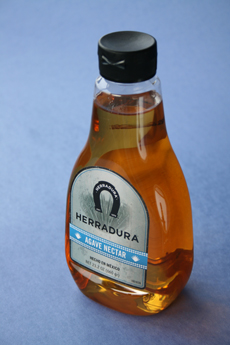
    In just five minutes (plus eight hours soaking time), you can make a batch, From there, you can make flavored almond milk, like vanilla or cocoa. You can add a sweetener of choice—agave, honey, maple syrup, noncaloric sweetener, sugar—or drink it as is (it has its own natural sweetness).

    You can even give a cocoa almond milk kit to a child, useful for everything from Show and Tell to inspiring the joy of cooking.


    But today’s project is making a batch of plain almond milk. Sure, you can buy it ready made. But making your own is not only fun; it tastes a lot better than the manufactured, shelf-stable product, which typically contains additives and preservatives.


    RECIPE: HOMEMADE ALMOND MILK

    Ingredients

  • 2 cups raw almonds
  • Jar
  • Water
  • Cheesecloth
  •  
    Preparation

    1. PLACE the almonds in a large bowl or jar and cover with cold water by at least an inch. Cap the jar or cover the bowl with a dish towel, and let the almonds soak for at least 8 hours and up to 2 days. The almonds will plump as they absorb water. The longer you soak them, the creamier the milk will be. If you plan to soak them for more than 8 hours or overnight, put the bowl in the fridge.

    2. STRAIN the almonds in a colander, thoroughly rinse them with cold water and place them in a blender. Pulse them to break up the almonds. Add 4 cups of water and blend on high until the mixture is very smooth, 2 to 4 minutes. The almonds should break down into a very fine meal and the water should be white and opaque.

    3. PLACE the cheesecloth in a large strainer over a bowl. If you don’t have a strainer, gather the edges of the cheesecloth in one hand so as to create a well. Carefully pour the water and almond mixture into the cheesecloth, taking pains to not let any spill out of the sides. When all of the mixture has been poured…

    4. SQUEEZE the remaining almond meal in the cheesecloth to extract any remaining liquid. You can wring the cheesecloth to get every last drop. See below for what to do with the leftover almond meal. At this point you can taste the almond milk and sweeten to taste. It has natural sweetness, so we don’t add anything more.

    5. STORE the almond milk in an airtight container in the fridge. Since it has no preservatives and isn’t pasteurized, it only keeps for two or three days. Because there are no emulsifiers, the milk can separate. Just shake the bottle.

    If you’ve had commercial almond milk, you’ll be wowed by the fresh flavor.

      Make Almond Milk

    Making Almond Milk
    Top: Soaking the almonds. Bottom: Wringing the last delicious drops from the cheesecloth. Photos and recipe courtesy Good Eggs | San Francisco.

     
    If you’d like a thinner milk, use more water next time; for thicker milk, use less water.

    If you plan to make almond milk regularly, buy a nut milk bag from a health food store or online. It’s easier to work with than cheesecloth.

    HOW TO USE THE LEFTOVER ALMOND MEAL

    You can toss or compost it, of course. But you can also:

  • Add it to oatmeal, muffin batter or smoothies for extra protein.
  • If you want to keep it for future baking, dry it by spreading it onto a baking sheet and baking it in a low oven (275°F to 300°F) until completely dry, 2 to 3 hours. You can then freeze it for up to 6 months.
  •  
    MAKING ALMOND MILK: BLENDER VS. FOOD PROCESSOR

    You can use either a blender or a food processor to make almond milk. The differences:

  • With a blender, the milk has a silkier texture and subtly sweet flavor notes.
  • With a food processor, the milk is a bit thicker with a nuttier flavor. It may contain some the bits of ground almonds.

     
    ALMOND MILK HISTORY

    In the Middle Ages, almond milk was made in Europe to East Asia. It was a staple because it kept longer than cow’s or goat’s milk; and it was appropriate for consumption during Lent and fast days.


  • Comments off

    The Nibble Webzine Of Food Adventures
    RSS
    Follow by Email


    © Copyright 2005-2026 Lifestyle Direct, Inc. All rights reserved. All images are copyrighted to their respective owners.