THE NIBBLE BLOG: Products, Recipes & Trends In Specialty Foods


Also visit our main website, TheNibble.com.

TIP OF THE DAY: Cornish Hen (Cornish Game Hen, Rock Cornish Game Hen)

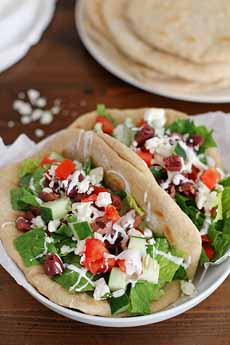
Stuffed Cornish Game Hen
[1] Cranberry and apple-stuffed Cornish hen. Here’s the recipe from Running To The Kitchen.

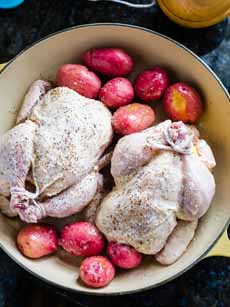
Trussed Cornish Hen
[2] Buttermilk-brined Cornish hen, trussed and ready to roast. Here’s the recipe from Kitchen Confidante.

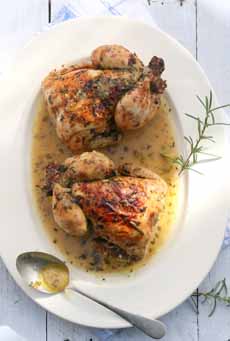
Roast Cornish Hen
[3] Cornish hen roasted with wine and herbs. Here’s the recipe from Drizzle And Dip.

Cornish Game Hen
[4] Cornish hens in the yard (photo courtesy Poultry Chiller).

Tyson Cornish Hen
[5] Tyson’s Cornish hens are sold frozen in grocery stores.


When we were growing up, our Nana roasted a chicken at least twice a week. But on weekends and for special occasions, it was Cornish game hen—now simply called Cornish hen.

  • Cornish hen is a not a game bird, like a guinea hen or a pheasant. “Game” is a misnomer, possibly added by retailers to encourage sales.
  • Cornish hen is not always a hen—males are sold, too.
  • It is a smaller chicken, a cross between the Cornish hen and the Plymouth Rock hen.
  • The Cornish hen sold in the U.S. was bred in Connecticut.
  •  
     
    THE HISTORY OF CORNISH HEN

    The original Cornish chickens are a large-size heritage breed* from the county of Cornwall in England. They are bred for their meat, since they are not prolific egg-layers.

    Cornish chickens, as well as crosses of Cornishes, are the most-used breed in the chicken meat industry. The hens take a long time to mature, requiring more feed/expense until they are ready for harvest.

    The American Cornish hen, also referred to as Rock Cornish hen and Cornish game hen, was bred in Connecticut in 1949 by Te (Alphonsine) Makowsky, who had grown up on a farm in France.

    After her husband retired from his manufacturing company in 1946, the couple moved from Long Island to Connecticut to start a chicken farm. It specialized in African guinea hens.

    After a fire destroyed the barn and the birds in 1949, Te Makowsky began cross-breeding chickens to try to come up with a bird that matures quickly, with an eye towards more breast meat. She came up with the idea of producing a small, plump “specialty” bird.

    Her idea was to breed the Cornish chicken—at the time the most popular breed in the world for broilers—with the American White Plymouth Rock chicken; hence the name Rock Cornish game hen.

    This combination gave her a chicken that could be harvested in less than five weeks, saving money on feed. It was petite—two pounds or less—making each bird one complete serving. It had succulent, tender meat, and a larger proportion of breast meat.

    By the 1950s, the Cornish game hen—which had been meant to be a temporary substitute for the guinea hen—became so popular that orders for it exceeded the guinea hen. [Source]

    Cornish hens have the same nutritional values and flavor as the larger broilers (some find the meat to be a bit milder). These hybrids are now sold as “Cornish hens.” The name “Cornish game hen,” which may have been a marketing description at retailers, has been dropped in favor of accuracy.
     
    Other Specialty Chickens

    Don’t confuse Cornish hens with these varieties:

  • Poussin (poo-SAN), or spring chicken, is a 3- or 4-week-old chicken weighing 16 to 24 ounces. It is very tender since it is harvested so young. The difference between poussin and Cornish hen is that poussin is not a specific breed: It can be any young chicken. Some consumers refer to it as “baby chicken.”
  • Capon, a large castrated rooster that weighs 6 to 10 pounds, butchered at about 6 months of age. Capons have large breasts and more fat than most chickens, making them meaty and flavorful.
  •  
    CHECK OUT THE DIFFERENT PARTS & TYPES OF CHICKEN IN OUR CHICKEN GLOSSARY.
     
     
    WHY MAKE CORNISH HENS?

  • Due to their smaller size, they roast more quickly.
  • They’re affordable yet festive. People love getting their own little chicken.
  • You don’t have to carve: Each person cuts his/her own hen.
  •  
    What To Serve With Them?

    Your favorite sides!

  • Our Nana made a rice pilaf with pecans and a diced, roasted carrot and sweet potato blend with sage.
  • Another favorite was sautéed mushrooms or mushrooms and pearl onions, with a splash of red wine added to the pan.
  • There were also the de rigueur dinner sides of the day: a green salad and a green vegetable (in those days, asparagus, broccoli or green beans).
  • Consider today’s trending foods: couscous or quinoa; broccolini, kale or Swiss chard.
  •  
     
    TYSON’S CORNISH HENS

    While many supermarkets may not carry fresh Cornish hens, check in the freezer section for Tyson Premium Cornish Hens. The all-natural birds have no added hormones, artificial ingredients or preservatives.

     
    Tyson shares these recipes with us:

  • Cranberry-Glazed Cornish Hens With Wild Rice
  • Lemon-Rosemary Cornish Hens
  • Maple Glazed Cornish Hens
  • Parmesan-Mushroom Cornish Hens
  •  
    To cook frozen hens, place them breast side up on rack in shallow roasting pan.

    Roast, uncovered, basting frequently with butter for 1 hour or until the juices run clear when the thickest part of the hen is pierced and temperature on instant read thermometer reaches 180°F.

    If the hen weighs more than 1 pound 2 ounces, roast for an extra 15 minutes.

    ________________

    *Heritage breeds are traditional livestock breeds that have been raised for centuries. In the modern industrial agricultural world, they are not cost-effective, and have been abandoned by mass growers in favor of other breeds or hybrids. Heritage breeds are still raised by small farmers, and are in demand by the finest restaurants.


    Comments off

    PRODUCTS OF THE WEEK: Ready To Eat Quinoa, Yemeni Spices & Reduced-Sugar Dried Berries

    Our three products of the week support new year’s resolutions for better eating. Valentine’s Day is less than a month away, but in the interim, consider:
     
     
    1. ANCIENT HARVEST: MICROWAVEABLE HEAT-AND-EAT QUINOA

    January 16th is National Quinoa Day, so it follows that we’re starting out with this trending grain.

    Many people we know have gotten into quinoa in a big way. While not in the grain family, quinoa is considered a whole grain*, which means it contains all of the essential amino acids†. It’s also gluten-free.

    Some come quinoa the hard way, starting with buying bulk quinoa and washing it. Some buy the seeds pre-washed.

    And others, like us, buy ready to microwave-and-eat quinoa from Ancient Harvest, in four microwavable varieties:

  • Quinoa With Chickpeas & Garlic
  • Quinoa With Lentils & Garlic
  • Quinoa With Salt
  • Quinoa With Southwestern Seasonings
  •  
    There is no easier, quicker, or tastier way to get quinoa on the table for grain bowls, sides, soups or stews.

    Quinoa (Chenopodium quinoa), pronounced KEEN-wa, is the Quechua (Inca) word for “mother grain” or “super grain.” Here’s more about this exceptional food.
     
    Ancient Harvest has a nice selection of supergrains in different formats: different types of uncooked quinoa and quinoa breakfast flakes, supergrain pasta, even supergrain mac and cheese—all gluten free.

    Discover more at AncientHarvest.com.
     
     
    2. PEREG: HAWAIJ SPICE BLEND

    If you enjoy cooking with spice blends like ras-el-hanout and za’atar, and want to try another Middle Eastern spice blend, we introduce you to hawaij (ha-WHY-idge), an ancient spice mixture used in Yemenite cuisine.

    Yemeni immigrants brought the spices to Israel, and hawaij (alternately spelled hawaj, hawaij, hawayji, or hawayej) has become popular in Israeli cooking as well.

    There are actually two distinct varieties of hawaij: one traditionally used in coffees and the other to season soups and other foods.

    WebMD and other health sources cite the blend or cardamom, cinnamon, cumin, ginger and turmeric as outstanding sources of antioxidants, minerals, vitamins and other beneficial nutrients‡.

    Pereg Hawaij Blend for Soup is an aromatic mixture of cumin, turmeric, black pepper, cardamom, and cloves.

  • Use it instead of bouillon cubes or consommé powder to season meat-based or vegetable soups.
  • Try it as a rub for lamb, grilled chicken or fish.
  • Add a healthy pinch to slow-cooker stews.
  • Toss it with some olive oil on vegetables before roasting (great with beets, broccoli, carrots, kale and potatoes,).
  • Mix it with a fruity olive oil for a quick salad dressing, or as a delicate dipping sauce for crusty bread.
  • Spice up chicken with a coat of Hawaij and panko Japanese-style bread crumbs.
  •  
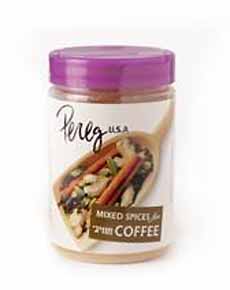
    Pereg Hawaij Blend for Coffee is a warm-spice mixture of ginger, cardamom, cloves, and cinnamon.

  • Add some warm, spiced depth to coffee, tea or hot chocolate.
  •  

    Ready To Eat Quinoa
    [1] Two of the four varieties of Ancient Harvest’s ready-to-eat, microwaveable quinoa varieties.

    Hawaij Pereg
    [2] Pereg introduces a Yemeni spice blend, hawaij, in varieties for coffee and soup.

    Dried Blueberries Reduced Sugar
    Reduced Sugar Dried CherriesReduced Sugar Dried Cherries
    [3] Organic dried blueberries and Montmorency cherries with 50% reduced sugar, from Stoneridge Orchards. Thanks to Snack Gator for the photos.

  • Boost your batter: Replace traditional spices with hawaij in breads and muffins, cakes and other baked desserts, pancakes and waffles.
  • Spice up your smoothie.
  • Sprinkle onto baked apples or poached pears.
  • Add to rice pudding for more flavor than cinnamon alone.
  •  
    If you like playing with flavors, a jar for $5.50 opens up new vistas.

    Find out more at Pereg-Gourmet.com.
     
     
    3. STONERIDGE ORCHARDS: REDUCED-SUGAR DRIED BLUEBERRIES & CHERRIES

    If you snack on dried fruit or add them to salads and baked goods, you may not be aware that some have sugar added to ensure a sweet experience. This is particularly true with dried berries.

    If you care about added sugar, Stoneridge Orchards has a better options for you. The company has introduced its 50% Reduced Sugar product line, beginning with Dried Blueberries and Montmorency Cherries.

    The berries remain rich with fiber and flavor, and preservative-free, gluten/allergen free and non-GMO.

    To achieve 50% less sugar, non-caloric stevia is blended with cane sugar. The berries remain moist and plump: a delectable snack and ingredient.

    For more information, visit StoneridgeOrchards.com.
    ________________

    *Quinoa is not actually a grain (which is a cereal), but the seed of a leafy plant related to beets, chard and spinach. As with those vegetables, you can eat the leaves (although you’re not likely to find them in the U.S.). The part of the quinoa plant that we eat, the seed, is cooked like rice. Quinoa is gluten-free.

    †Amino acids are organic compounds that combine to form proteins. Amino acids and proteins are the building blocks of life. The essential amino acids, a subgroup, cannot be made by the body; they must come from food. The nine essential amino acids are histidine, isoleucine, leucine, lysine, methionine, phenylalanine, threonine, tryptophan and valine.

    ‡Yes, these are healthful ingredients, but you have to injust a lot of them to fight inflammation, aid digestion, lower blood sugar, fend off free radicals, etc.


    Comments off

    RECIPE: Beet & Goat Cheese Appetizer Bites

    Beet & Goat Cheese Appetizer
    [1] Beet and goat cheese with a twist: garlic couscous (photo courtesy Chef Adrianne).

    Pearl Couscous
    [2] Pearl couscous, also called Israeli couscous (photo courtesy The Fitchen, which uses it in this couscous, spinach and mushroom recipe).

    Vermont Creamery Crumbled Goat Cheese
    [3] Vermont Creamery’s crumbled goat cheese saves time (photo courtesy Vermont Creamery).


    Beets and goat cheese are one of our favorite duos. We’re always game for a new recipe.

    This one, a first course, was sent to us by Chef Adrianne Calvo, a creative Miami restaurateur (photo #1).
     
     
    RECIPE: CHEF ADRIANNE’S ROASTED BEETS & GOAT CHEESE WITH GARLIC PEARL COUSCOUS

    Ingredients For 4 Servings

  • 4 organic beets, scrubbed and washed
  • 1 tablespoon canola oil
  • Kosher salt and freshly ground black pepper
  • 1 beet, cut in half
  • 1 cup pearl couscous/Israeli couscous*, cooked to package
    instructions (photo #2)
  • 1 tablespoon garlic slivers
  • 1/4 cup extra virgin olive oil
  • 1 tablespoon parsley, minced
  • 1/4 cup goat cheese, crumbles
  • 1 tablespoon balsamic vinegar
  • Garnish: chives, minced
  •  
    Preparation

    1. PREHEAT the oven to 350°F. Rub the four beets with canola oil and sprinkle with salt and pepper. Wrap each beer tightly with aluminum foil and bake for 1-1/2 hours until fork tender. Meanwhile…

    2. TAKE the last beet and boil half of it in 1 cup water for 30 minutes, or until the liquid becomes thickened. Take the other half and thinly slice it on a mandolin. Bake the slices for 30 minutes to make beet chips. Set aside to use as garnish.

    3. UNWRAP the baked beets and allow them to sit for 45 minutes to 1 hour. In a small sauté pan, add the olive oil over medium heat, and the garlic slivers. Cook stirring often until the garlic begins to brown. Set the pan aside, including the olive oil.

    4. SLICE the cooked beets into 1/4-inch-thick slices. In a large bowl, combine the cooked couscous, garlic and olive oil, parsley, goat cheese crumbles and balsamic vinegar. Toss. Top each beet ring with couscous mixture. Garnish with the beet liquid, beet chips and chives.
     
     
    RECIPE HACKS

    How To Make Goat Cheese Crumbles

    You can purchase a log of fresh goat cheese, but in order for it to crumble you need to leave it in the fridge to dry overnight (be sure your fridge has no ambient aromas). Slice off what you need and put it on a plate. Crumble it with your fingers the next day.

     
    If you like the idea of goat cheese crumbles, leave the whole to dry, sliced in chunks. Crumble it and keep it in an airtight container for a week. You can use it on everything from salads, grains and vegetables to eggs, burgers, pasta and pizza.

    We often use Vermont Creamery’s crumbled goat cheese (photo #3). There are four flavors:

  • Classic
  • Apricot & Thyme
  • Cranberry & Tarragon
  • Tomato & Basil
  •  
    Packaged Beets

    If you don’t want to take the time to cook beets, look for vacuum-packed cooked beets like Love Beets.

    They won’t have the texture and meatiness of roasted beets, and you won’t find large diameters, but they are tasty in of their own.

    Love Beets and other brands also offer flavored beets, such as Honey & Ginger and Sweet Chili.
    ________________

    *Pearl couscous, called Israeli couscous, is similar to regular couscous: pasta granules made from semolina or whole wheat flour. Pearl couscous is larger—the size of pearls—and thus has a slightly chewy texture, similar to barley. The granules are toasted rather than dried, giving it a savory flavor nuance.


    Comments off


    © Copyright 2005-2026 Lifestyle Direct, Inc. All rights reserved. All images are copyrighted to their respective owners.