THE NIBBLE BLOG: Products, Recipes & Trends In Specialty Foods


Also visit our main website, TheNibble.com.

Vary The All-American Cobb With This Thai Cobb Salad Recipe

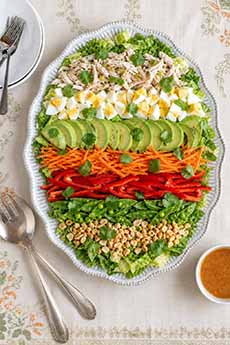
Thai Cobb Salad On A Platter
[1] Our latest version of Cobb Salad has a Thai influence. The recipe follows (photo: The Nibble).

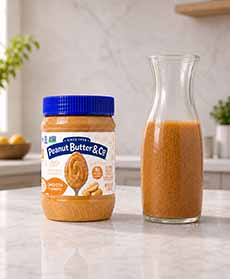
Asian Salad Dressing With Peanut Butter
[2] Add peanut butter to Asian-style sesame dressing for peanut dressing. The recipe follows (photo: The Nibble).

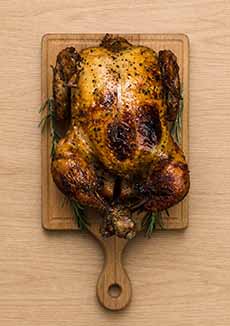
Rotisserie Chicken On A Cutting Board
[3] Pick up a rotisserie chicken (Freepik photo).

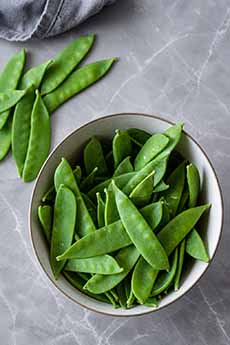
A Bowl Of Snow Peas
[4] Crunchy snow peas are always a treat. We’re happy to have recipe that uses them (photo: The Nibble).


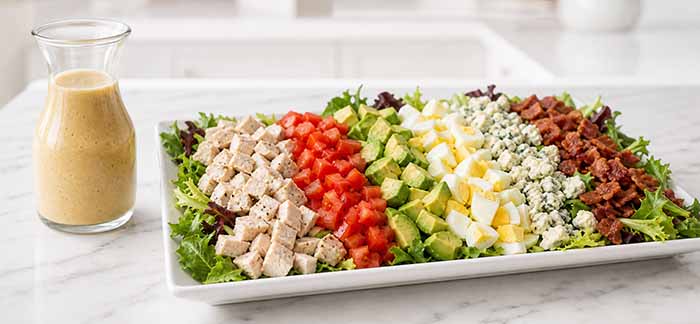
Before National Salad Month (May) draws to a close, we want to give a shout-out to one of our favorites: the Cobb Salad (photo #5).

It’s one of our favorites, and it happened to be an impromptu pull-together using ingredients in the kitchen of the Brown Derby restaurant (the story).

The original combined iceberg lettuce, romaine, avocado, bacon, watercress, chicken breast, a hard-boiled egg, tomatoes, chives, blue cheese, and the “original” French dressing—i.e., a Dijon vinaigrette. See the *footnote for the sad evolution of “French” dressing.

Fun note: The original ingredients can be remembered by the mnemonic EAT COBB, representing the first letters of egg, avocado, tomato, chicken, onion (chives), bacon, and blue cheese.

There are so many variations beyond the original ingredients and dressing, that we’re adding this one to our list: Thai Cobb Salad.

Given our love of Thai peanut sauce (originally from Indonesia, to give credit where it’s due) and Asian salad ingredients—carrots, cilantro, peanuts, red bell pepper—this recipe now competes with variations of the original Cobb for our affections.

Below:

> Thai Cobb Salad recipe.

> Asian salad dressing recipe.

> The origin of America’s “French” dressing.

> More yummy Cobb Salad recipes.

Elsewhere on The Nibble:

> The history of Cobb Salad.

> The history of salad.

> The year’s 40+ salad holidays.
 
 
RECIPE #1: THAI COBB SALAD

Prep time is 15 minutes. You can substitute another protein for the chicken: beef, duck, lamb, pork, grilled tofu or plant-based meat, or turkey.

While this recipe can be made with bottled Asian dressing (Kraft, Trader Joe, etc.), it doesn’t take long to make your own, better-tasting version from scratch (recipe #2).
 
Ingredients For 6 Servings

  • 1 bunch romaine, torn
  • 2 cups shredded rotisserie chicken
  • 3 hard-boiled large eggs, coarsely chopped
  • 1 medium ripe avocado, peeled and thinly sliced
  • 1 medium carrot, shredded
  • 1 medium sweet red pepper, julienned
  • 1 cup fresh snow peas, halved
  • 1/2 cup unsalted peanuts
  • 1/4 cup fresh cilantro leaves
  • 3/4 cup Asian toasted sesame salad dressing
  • 2 tablespoons creamy peanut butter
  •  
    Preparation

    1. PLACE the romaine on a large serving platter. Arrange chicken, eggs, avocado, vegetables and peanuts over romaine; sprinkle with cilantro.

    2. WHISK the salad dressing and peanut butter in a small bowl until smooth. Drizzle over the salad or serve separately in a pitcher or ramekin.
     
     
    RECIPE #2: ASIAN SALAD DRESSING

    We always make a double batch because we love Asian-style dressing, with and without the peanut butter.

    Dark sesame oil provides a much deeper sesame flavor.
     
    Ingredients

  • 1/4 cup soy sauce
  • 1/4 cup rice vinegar
  • 1/4 cup olive oil
  • 1 tablespoon sesame oil
  • 2 tablespoons Dijon mustard
  • 2 tablespoons minced fresh ginger
  • 1/2 teaspoon crushed red pepper flakes
  •  
    Plus

  • 2 tablespoons creamy peanut butter
  •  
    Preparation

    1. PLACE all ingredients except the peanut butter in a jar with a tight-fitting lid; shake well. Whisk in the PB. Refrigerate until serving.

    2. SHAKE the dressing again just before serving.

    TIP: We warm the peanut butter in the microwave for 30 seconds to make it easier to whisk.
     
    MORE COBB SALAD RECIPES

  • Asian Cobb Salad
  • Cobb Sandwich
  • Tex-Mex Cobb Salad
  • Thai Cobb Salad (recipe above)
  • Vegan Cobb Salad
  • Wolfgang Puck’s Lobster Cobb Salad
  •  
    A Platter Of Classic Cobb Salad
    [5] The classic Cobb salad dressing is a tangy mustard vinaigrette made with red wine vinegar, Dijon mustard, lemon juice, garlic, and Worcestershire sauce. It’s the Brown Derby “Old-Fashioned French Dressing” recipe from 1937 and it’s entirely unrelated to the sweet, creamy, orange-colored “French dressing” sold in the U.S. today. See the *footnote for what happened to “French dressing” in America.
     
    ________________
     
    *How “French dressing” became orange glop: Originally in the U.S. during the 19th century, “French dressing” referred to what the French actually used—a simple vinaigrette of oil, vinegar, salt, pepper and sometimes Dijon mustard. Then came the shift in American taste preferences to sweeter foods, including, by the early 20th century, sweeter, thicker, dressings that were more of a sauce. “Plain” vinaigrette became seen as a bit sharp and austere.

    When commercial salad dressings took off beginning in the 1920s, manufacturers created bottled dressings that appealed to mass tastes. They modified “French dressing” into something that emulsified more easily—often with tomato paste or ketchup, hence the orange/red color—and added sugar to meet the desire for sweetness. Unfortunately for the French and francophiles, they chose “French” as the name for a dressing that had no resemblance to the original.

    Calling something “French” brought a cachet that helped sell the product, so the name was co-opted. By mid-century, the orange, sweet, tomato-based version became so common that it defined “French dressing” in the U.S. Interestingly, in 2022 the FDA revoked its Standard of Identity established in 1950, that had legally defined “French dressing” as that orange bottled style. They acknowledged that the term had become meaningless. (However, this also means that any combination of ingredients can be sold as “French dressing.”)
     

    CHECK OUT WHAT’S HAPPENING ON OUR HOME PAGE, THENIBBLE.COM.


    Comments off

    Cherry Tiramisu Recipe & More For Nat’l Cherry Dessert Day

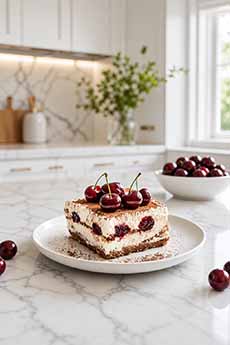
    It was tough deciding what to make for National Cherry Dessert Day (May 26th). But in the end, this cherry tiramisu recipe (photos #1 and #6) was calling our name.

    If your taste buds prefer something less creamy, check out the 25 other cherry recipes that follow.

    Below:

    > Cherry tiramisu recipe.

    > More cherry dessert recipes.

    > The different types of cherry liqueur.

    > More uses for Kirsch.

    Elsewhere on The Nibble:

    > The history of tiramisu.

    > The history of cherries.

    > The two species of cherries: sweet cherries and sour (tart) cherries (and see photo #7, below).

    > The year’s 15+ cherry holidays.

    > What is mascarpone?

    > Cordial, eau-de-vie, liqueur, and schnaps: the difference.
     
     
    RECIPE: CHERRY TIRAMISU

    Plan to make the recipe the night before, to allow the flavors to meld. Note that if you have a glass or ceramic baking dish (photo #8 below), it looks better at the table than a metal baking pan.

    We use Kirsch, a cherry fruit brandy‡ that’s a staple for cheese fondues and cherry desserts. If you’re considering buying a bottle, see the †footnote for what other recipes you can make with it.

    Beyond Kirsch, there are other options for the cherry liqueur, which you’ll see in the section below. If you want to use cherry liqueur but don’t have any, see the *footnote for a hack.

    For a non-alcoholic option, substitute cherry juice for the cherry liqueur (our favorite is Knudsen’s).

    If you can’t get hold of mascarpone, substitute cream cheese. The tiramisu will be slightly tangier but still delicious.
     
    Ingredients

  • 1 pound fresh cherries, pitted, or 3 cups thawed/drained frozen cherries
  • 2 tablespoons sugar
  • 1/4 cup cherry liqueur
  • 2 cups mascarpone cheese
  • 1 cup heavy cream
  • 1/2 cup powdered sugar
  • 1 teaspoon vanilla extract
  • 1 package ladyfingers (approximately 24 pieces)
  • Unsweetened cocoa powder, for dusting
  •  
    Preparation

    1. MAKE the cherry mixture. Combine the cherries, sugar, and cherry liqueur in a bowl. Let the mixture sit for 15-20 minutes to release the juices.

    2. MAKE the mascarpone filling. In a mixing bowl, whip the heavy cream until stiff peaks form. In another bowl, beat the mascarpone, powdered sugar, and vanilla extract until smooth. Gently fold the whipped cream into the mascarpone mixture until fully combined.

    3. LAYER the tiramisu. Dip each ladyfinger briefly into the cherry juices in the bowl. Line the bottom of an 8×8 inch baking dish or pan with a single layer of dipped ladyfingers. Spread half of the mascarpone mixture over the ladyfingers, then add a layer of cherries. Repeat the layers with the remaining ingredients, finishing with mascarpone on top.

    4. COVER the baking dish and refrigerate for at least 4 hours, or preferably overnight. Just before serving, dust the top generously with cocoa powder and garnish with fresh cherries. TIP: If you’re using frozen cherries, soak them in the liqueur overnight for an extra hit of cherry brandy.
     
     
    MORE CHERRY DESSERT RECIPES

    Cakes & Cheesecakes

  • Black Forest Cake
  • Cherry Cheesecake With Chocolate Glaze (photo #3)
  • Cherry Cheesecake Variations
  • Chocolate Cherry Cheesecake
  • Chocolate Cherry Cupcakes
  •  
    Other Cherry Desserts

  • Cherries Jubilee
  • Cherry Nut Dip & Spread
  • Cherry Yogurt Parfait
  •  
    Cookies & Bars

  • Biscotti With Cherry Cheesecake Dip
  • Cherry Almond Rugelach
  • Cherry Brownies
  • Cherry Chocolate Chip Cookies
  • Cherry Lime Shortbread
  •  
    Frozen Desserts

  • Cherry Ice Pops (Popsicles)
  • Cherry Sorbet
  • Cherry Vanilla Ice Cream Sandwiches
  • Honey Ice Cream With A Cherry Swirl
  •  
    Pies, Tarts, Pasties, & Cobblers

  • Cherry Cobbler
  • Cherry Lattice Pie
  • Cherry Meringue Slab Pie
  • Cherry Pie Pops
  • Cherry Tart With Lemon Mascarpone Filling
  • Cherry Turnovers
  • Easy Cherry Pie (photo #2)
  • Homemade Cherry Pie Filling & Topping
  •  


    A Plate Of Cherry Tiramisu
    [1] A yummy cherry tiramisu. The recipe is below and there’s another view of it in photo #7 (photo: The Nibble).

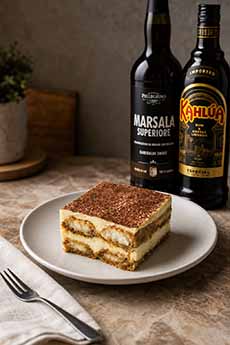
    A Plate Of Classic Tiramisu
    [2] For comparison, the classic tiramisu, which uses Marsala wine to soak the ladyfingers. Some preferred the flavor of coffee liqueur, and substitute it (photo: The Nibble).

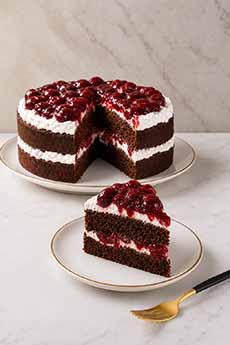
    Black Forest Cake
    [3] The most famous cherry cake is the chocolate-cherry Black Forest Cake from Bavaria, where Kirsch cherry liqueur also originated. Here’s the recipe (photo: The Nibble).

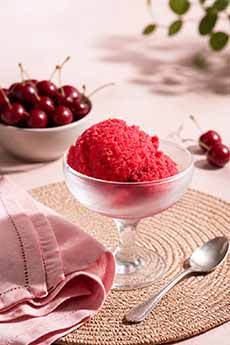
    A Dish Of Cherry Sorbet
    [4] For something lighter, a dish of cherry sorbet. Here’s the recipe (photo: The Nibble).
     
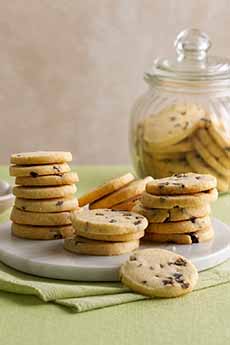
    A Plate Of Cherry Lime Shortbread Cookies
    [5] Delicious with a cup of tea: cherry-lime shortbread cookies. Here’s the recipe (photo: The Nibble).

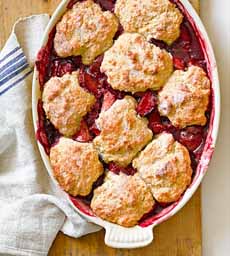
    Cherry Cobbler In A Gratin Pan
    [6] Who wants cherry cobbler? Here’s the recipe (photo: The Nibble).

     
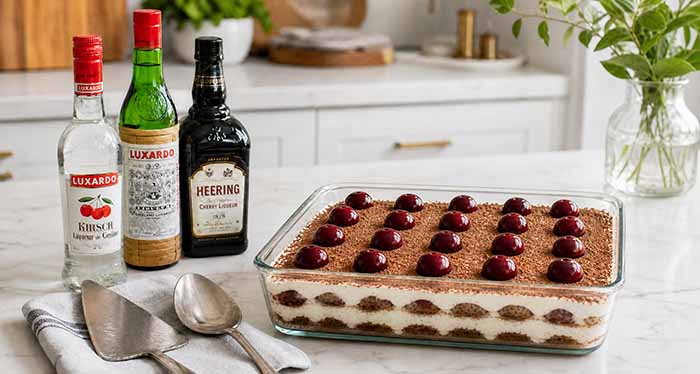
    Cherry Tiramisu With 3 Types Of Cherry Liqueur
    [7] Cherry tiramisu alongside three different types of cherry liqueur: Kirsch, Maraschino liqueur, and Cherry Heering (photo: The Nibble).
     
     
    THE DIFFERENT TYPES OF CHERRY LIQUEUR

    Cherry spirits can be categorized into four distinct styles based on how they are made, their sweetness levels, and their flavor profiles.

    For cooking and baking, we default to Kirsch, because it was the first cherry spirit we purchased decades ago when we began to make cheese fondue.

    You can use any of the following in your recipes, but if you want to serve a glass of liqueur along with dessert, go for a sweet cherry liqueur like Cherry Heering (named for Peter Heering, who created the original recipe in Copenhagen in 1818).

    The other categories are less quaffable drunk straight; they tend to be dry and often have a high level of alcoholic heat.

    1. True Cherry Brandies (Eau-de-Vie)

    These are bone-dry, clear, unsweetened spirits made by fermenting whole cherries (often including the pits) and distilling the juice. They are incredibly aromatic, smelling strongly of ripe fruit, but they taste fiery and dry if you drink them straight.

    Kirsch/Kirschwasser is the most famous version, traditional to Germany, Switzerland, and France’s Alsace region. It’s clear with a subtle, woody, almond bitterness derived from the cherry pits. If you want to go for the best, look for Schwarzwälder Kirschwasse, a Protected Geographical Indication (PGI) that’s distilled specifically in Germany’s Black Forest, i.e., the Schwarzwälder.

    See the ‡footnote for the difference between cherry brandy/eau-de-vie and grape brandy.

    2. Maraschino Liqueurs

    While clear like Kirsch, Maraschino is a liqueur made from sour Marasca cherries, meaning it’s sweetened with sugar syrup after distillation. It has a completely different flavor profile than dark red cherry liqueurs. The fruit and crushed pits are distilled to create a spirit that is herbaceous, complex, and distinctively forward with notes of marzipan, almond, and a touch of funk. It’s relatively dry on the palate despite the sugar content.

    Luxardo (photo #7) is easiest brand to find in our area, but ask at your liquor store. If you like it as a sipping liqueur, there are higher-level brands for “connoisseurs,” including some great premium maraschino liqueurs.

    (If you haven’t already noticed, Marasca cherries are the original “maraschino cherries” that evolved into corn syrup, bright red dye versions in the hands of American producers. Here’s the story.

    3. Sweet Cherry Liqueurs (The “Cherry Brandies”)

    These deep red liqueurs are what most people think of as “cherry brandy.” In most cases, they are made by macerating sweet or sour cherries in a neutral spirit like vodka, or a low-grade brandy, adding sugar, and sometimes infusing warm baking spices like cinnamon or clove.

    Noteworthy brands are Cherry Heering from Denmark, made from Danish Stevens cherries that are macerated with spices and cask-aged for several years; and Guignolet from France. There are simpler, mass-market brands like Bols, DeKuyper, and Hiram Walker.

    4. Regional Infusions & Fortified Styles

    Other parts of Europe make cherry-infused spirits that balance somewhere between a fortified wine, an amaro, and a liqueur. Examples include Ginjinha (or Ginja) from Portugal, made by infusing sour ginja cherries in aguardente (a strong alcohol); Ratafià di Ciliegie from Italy, where fresh cherry juice is mixed directly with alcohol, sugar, and spices like nutmeg or cinnamon; and Vișinată from Romania, made by layering sour cherries and sugar to ferment slightly, before topping it off with vodka or neutral alcohol.
     
    Sour (Tart) & Sweet Cherries
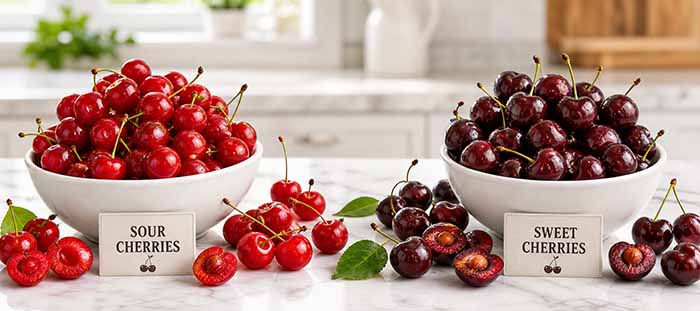
    [8] Sour (tart) cherries and sweet cherries. The former are used in cooking and baking; the latter are “table fruit.” Washington is the top producer of cherries in the U.S., accounting for the vast majority of sweet cherries (like Bing and Rainier). However, Michigan is famously known as the “Cherry Capital of the World, producing roughly 74% of the nation’s sour cherries.
     
    ________________
     
    *If you don’t have cherry liqueur, add some vodka or brandy to cherry juice.
     
    †Uses for Kirsch: As a dry eau de vie rather than a sweet liqueur, Kirsch provides a bright, clear cherry essence and a subtle almond-like nuttiness (from the cherry pits used during distillation) to foods and beverages. Some examples:

    > Desserts: cherry clafoutis, cherries jubilee, chocolate mousse, macédoine de fruits, Swiss Kirschtorte, cherry tiramisu.

    > Savory Dishes: cheese fondue, certain soups, and in the brine or curing process or specific types of German or Swiss hams and sausages.

    > Cocktails: Kirsch adds cherry potency to “short” sipping cocktails. Look up the recipes for Black Forest Gâteau Cocktail (a dessert drink that mimics the flavors of Black Forest Cake), Kirsch Royale (a variation of Kir Royale), The Rose: (a famous vintage cocktail from Harry’s Bar in Paris), and the Swiss Watch.

    ‡What is brandy? This gets complex very quickly, but for the purposes of this article: Brandy is any spirit distilled from a fruit juice or fermented fruit mash. Unlike liqueur, there is no added sugar. Fruit brandy—clear eau-de-vie—is distilled from various fruits except grapes; people often refer to cherry eau-de-vie as cherry brandy. However, if the brandy is distilled from grapes, it is not called eau-de-vie but instead, grape brandy (“brandy” for short). Grape brandy is aged in oak, which provides its amber color—i.e., it is not clear like eau-de-vie.
     

    CHECK OUT WHAT’S HAPPENING ON OUR HOME PAGE, THENIBBLE.COM.


    Comments off

    G. Hughes Sugar Free Ketchup: 5 Calories & A Vinegar Tang

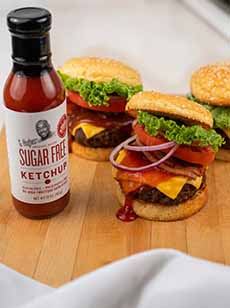
    G Hughes Sugar Free Ketchup With Burgers
    [1] Sugar-free tomato tang on everything from burgers to omelets (photos #1 #2, #3, and #5 © G. Hughes Sauces | Industries Lassonde Inc.).

    G Hughes Sugar Free Ketchup
    [2] We gave bottles to certain friends for the holidays.

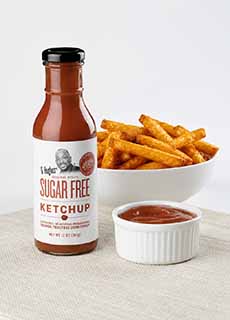
    G Hughes Sugar Free Ketchup With Fries
    [3] America’s #1 favorite ketchup food.

    BBQ Ribs With Ketchup
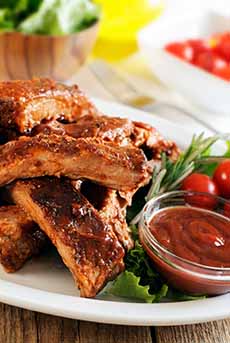
    [4] While there’s already ketchup in most barbecue sauces, some people like to dip their ribs in ketchup (photo © Easy Buy 4U | iStock Photo).

    G Hughes Ketchup Nutrition Label
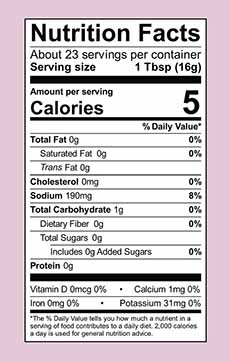
    [5] G. Hughes’ sugar-free ketchup’s Nutrition Facts label, commonly referred to as the nutrition panel, nutrition label, or nutrition box.


    America will consumes a lot of ketchup over Memorial Day Weekend, so we deemed it appropriate to spotlight the sugar-free ketchup we’ve been using for a couple of years: G Hughes Sugar Free Ketchup.

    Why sugar-free? We’re not keto, nor diabetic, nor dieting, nor in any other mode where one might want ketchup made with sucralose (the zero-calorie sweetener branded as Splenda*.

    When we use ketchup, we use a lot of it; and we decided after tasting this product at a trade show that we should cut all that added sugar health professionals warn you about.

    Below:

    > The ketchup quandary: hidden sugar.

    > G. Hughes Zero Sugar Ketchup.

    > The top ways Americans use ketchup.

    Elsewhere on The Nibble:

    > The history of ketchup.

    > 50+ artisan ketchup brand reviews.

    > The year’s 18 condiment holidays: dips, dressings, and sauces.

    > The different artificial sweeteners: a photo glossary.
     
     
    America consumes a lot of ketchup over Memorial Day Weekend, so we deemed it a good time to share the sugar-free ketchup we’ve been using.

    Why sugar-free? We’re neither keto, nor diabetic, nor dieting, nor in any other mode where one might need something sugar-free.

    But when we use ketchup, we use a lot of it; and we decided after tasting G. Hughes Zero Calorie Ketchup at a trade show that we chould cut all that hidden sugar that health professionals warn you about.
     
     
    THE KETCHUP QUANDARY

    Ketchup is one of those foods that seems harmless because we use it in “small” amounts—on fries, burgers, and eggs, among other foods.

    But it’s also a classic example of hidden sugar in processed foods.

    Use enough of it, and the result is that a seemingly savory condiment can quietly become a source of added sugar.

    Added sugar shows up in so many packaged items—bread, sauces, salad dressings, snacks—that “a little here and there” can really add up, on top of the sugar you’re already consuming deliberately in coffee and desserts.
     
     
    We Did The Math

    We looked at the amount of ketchup we ate and found that all of those level tablespoons at 20 calories and 4 grams of total sugar each, easily added up to 100 calories whenever we used ketchup. And we thought:

    Let’s try ketchup with 5 calories per tablespoon and zero grams of total sugar.

    While 20 calories per tablespoon doesn’t seem enormous, why consume sugar we didn’t ask for? Plus, we have to admit that the sweet allure of the ketchup made us eat much more of it.

    That’s why sugar-free ketchup made sense for us.

    Our fries are still our fries, our burger is still our burger; we’re just not automatically pouring extra sugar on top of them.
     
     
    G. HUGHES ZERO SUGAR SAUCES, MARINADES, & SALAD DRESSINGS

    With a mother who was a great cook, Guy Hughes’s own passion for cooking flourished. As an adult, he loved to entertain, and became known for his neighborhood parties and picnics where his zero-sugar homemade sauces were the stars.

    Friends, family, and neighbors asked if he could make sugar-free sauces for them. Encouraged, he started to manufacture them.

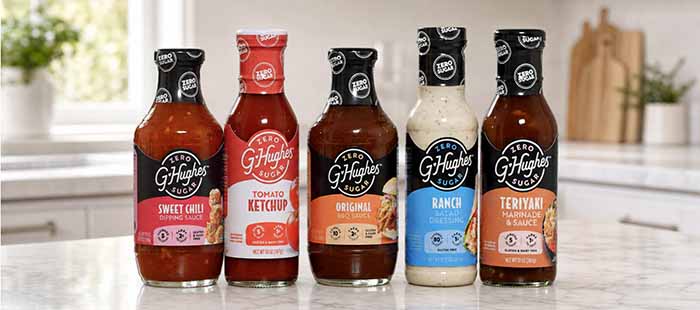
    Today, G. Hughes makes some 50 sauces: barbecue sauces (12 flavors), dipping sauces (12 flavors), marinades (7 flavors), salad dressings (11 flavors), wing sauces (4 flavors), and three spice rubs—all with zero sugar.

    We’ve tasted five of the sauce, and all deliver bold flavor. They’re they’re gluten-free, dairy-free, preservative free, and low carb. The sweetening agent is sucralose, which is marketed commercially as Splenda®.

    The Sugar-Free Ketchup

    Made with vine-ripened tomato concentrate, distilled vinegar, salt, garlic powder and other spices—plus sucralose—the ketchup clocks in at just 5 calories a tablespoon and zero total sugars.

    It’s made with vine-ripened tomato concentrate, distilled vinegar, salt, garlic powder, spices—and the sucralose.

    Unlike the big-brand conventional ketchups that taste like tomatoes and sweetener, G. Hughes tastes like tomatoes and vinegar.

    There’s a puckery tang. Unlike sweet ketchup, the tang adds sophistication. And, we use less of it because we’re not shoveling in the sugar.

    Now, for the contrarian view:

    We came across a review on another food site where the team of reviewers totally trashed G. Hughes ketchup as “the worst ketchup brand” that “completely fails at being edible.”

    “Starting with the color,” the review continues, “it has a weird orange hue to it…The color alone is enough to make you question your purchase because ketchup should never be confused with a bottle of buffalo sauce.”

     
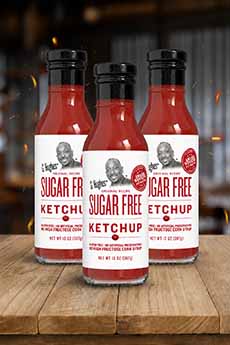
    G Hughes Sugar-Free Condiments
    [6] Some of the G. Hughes line-up (photo: The Nibble).
     
    It further referred to a “gelatinous texture that’s similar to the duck sauce packets at your local Chinese restaurant.”

    Huh? Our G. Hughes ketchup, in color and texture, has been indistinguishable from any conventional ketchup. Those reviewers must have gotten a bottle that sat next to a furnace for too long.

    Try it again, guys.
     
     
    Get Your Sugar-Free Ketchup

    For the nearest bottle:

  • Check the store locator on the company website.
  • Head to Amazon or Walmart.
  •  
    Lunch Buffet: Burgers, Franks, Ribs & More
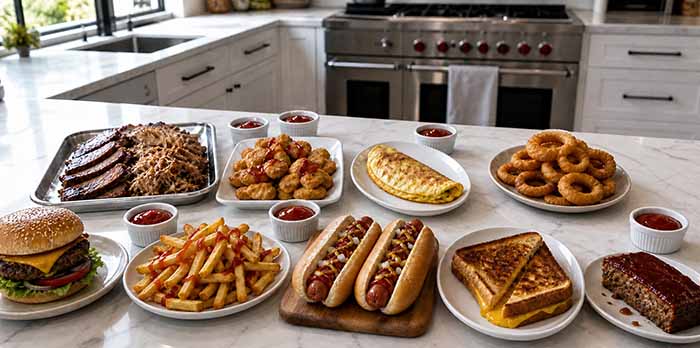
    [7] Please pass the ketchup (photo: The Nibble).
     
    THE TOP WAYS AMERICANS USE KETCHUP

    Most popular foods Americans use ketchup with aren’t much of a surprise, although the “less standard choices” below were not on our list.

    In order of use, we add ketchup to:

  • French fries and other fried potatoes—hash browns, home fries, tater tots, shoestring, etc.
  • Burgers
  • Hot dogs
  • Chicken nuggets / chicken tenders
  • Barbecue
  • Onion rings and other fried sides
  • Meatloaf†, as a glaze or a condiment on the side
  • Eggs & breakfast sandwiches
  • Sandwiches, including grilled cheese
  •  
    Less Standard Choices

  • Dipping (just about anything)
  • Pizza (not “standard,” but common enough—especially among kids)
  • Mac and cheese (again, not standard, but definitely a thing)
  •  
    In the words of Henry James:

    “Americans will eat garbage provided you sprinkle it liberally with ketchup.”
    ________________

    *Splenda is the largest of the sucralose-based brands. Others include Walmart’s Great Value store brand; Signature Select, the private-label brand found at grocery stores like Acme, Albertsons, and Safeway; Canderel Yellow (note that Canderel Original is an aspartame-Acesulfame-K blend and Canderel Stevia Blend has stevia and sucralose). Other market-specific or international brands that use sucralose as their primary ingredient include Nevella, SucraPlus, Sukrana, and Zerocal.

    Sucralose was discovered in 1976 by British food giant Tate & Lyle and researchers at Queen Elizabeth College, University of London. The story is one of the funnier accidents in food manufacturing. While researching new insecticides, Shashikant Phadnis of Queen Elizabeth College misheard the instruction of his advisor, Leslie Hough. Instead of “test” the chemical, he heard “taste” the chemical. So he tasted it—and found it to be extremely sweet (sucralose is 600 times sweeter than sugar).

    Tate & Lyle subsequently developed sucralose-based Splenda® brand products in partnership with Johnson & Johnson subsidiary McNeil Nutritionals. The brand is now owned by Heartland Food Products Group of Indianapolis, Indiana.

    †Ketchup is both a primary ingredient in the barbecue sauce used to baste the meat, and a condiment served alongside the cooked ‘que. Many Americans, especially in casual or home settings, use ketchup as a primary side sauce for grilled or barbecued chicken and pork.
     

    CHECK OUT WHAT’S HAPPENING ON OUR HOME PAGE, THENIBBLE.COM.


    Comments off


    © Copyright 2005-2026 Lifestyle Direct, Inc. All rights reserved. All images are copyrighted to their respective owners.