Vary The All-American Cobb With This Thai Cobb Salad Recipe
|
|
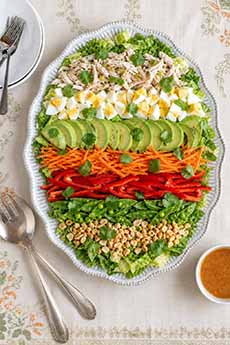
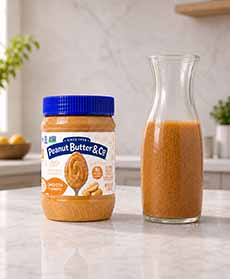
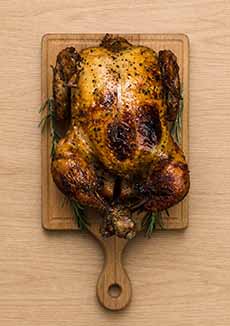
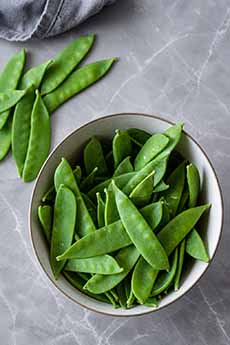
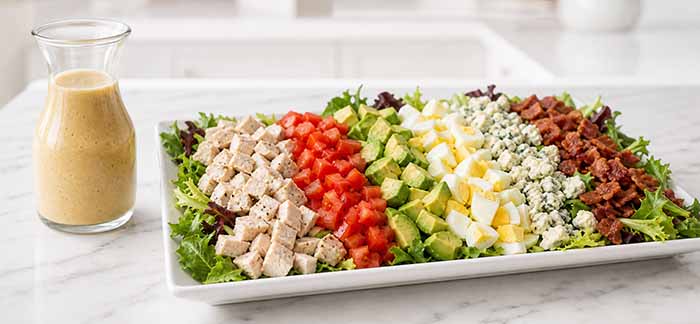
Before National Salad Month (May) draws to a close, we want to give a shout-out to one of our favorites: the Cobb Salad (photo #5). It’s one of our favorites, and it happened to be an impromptu pull-together using ingredients in the kitchen of the Brown Derby restaurant (the story). The original combined iceberg lettuce, romaine, avocado, bacon, watercress, chicken breast, a hard-boiled egg, tomatoes, chives, blue cheese, and the “original” French dressing—i.e., a Dijon vinaigrette. See the *footnote for the sad evolution of “French” dressing. Fun note: The original ingredients can be remembered by the mnemonic EAT COBB, representing the first letters of egg, avocado, tomato, chicken, onion (chives), bacon, and blue cheese. There are so many variations beyond the original ingredients and dressing, that we’re adding this one to our list: Thai Cobb Salad. Given our love of Thai peanut sauce (originally from Indonesia, to give credit where it’s due) and Asian salad ingredients—carrots, cilantro, peanuts, red bell pepper—this recipe now competes with variations of the original Cobb for our affections. Below: > Asian salad dressing recipe. > The origin of America’s “French” dressing. > More yummy Cobb Salad recipes. Elsewhere on The Nibble: > The year’s 40+ salad holidays. Prep time is 15 minutes. You can substitute another protein for the chicken: beef, duck, lamb, pork, grilled tofu or plant-based meat, or turkey. While this recipe can be made with bottled Asian dressing (Kraft, Trader Joe, etc.), it doesn’t take long to make your own, better-tasting version from scratch (recipe #2). 1. PLACE the romaine on a large serving platter. Arrange chicken, eggs, avocado, vegetables and peanuts over romaine; sprinkle with cilantro. 2. WHISK the salad dressing and peanut butter in a small bowl until smooth. Drizzle over the salad or serve separately in a pitcher or ramekin. We always make a double batch because we love Asian-style dressing, with and without the peanut butter. Dark sesame oil provides a much deeper sesame flavor. |
|
|
Preparation 1. PLACE all ingredients except the peanut butter in a jar with a tight-fitting lid; shake well. Whisk in the PB. Refrigerate until serving. 2. SHAKE the dressing again just before serving. TIP: We warm the peanut butter in the microwave for 30 seconds to make it easier to whisk. When commercial salad dressings took off beginning in the 1920s, manufacturers created bottled dressings that appealed to mass tastes. They modified “French dressing” into something that emulsified more easily—often with tomato paste or ketchup, hence the orange/red color—and added sugar to meet the desire for sweetness. Unfortunately for the French and francophiles, they chose “French” as the name for a dressing that had no resemblance to the original. Calling something “French” brought a cachet that helped sell the product, so the name was co-opted. By mid-century, the orange, sweet, tomato-based version became so common that it defined “French dressing” in the U.S. Interestingly, in 2022 the FDA revoked its Standard of Identity established in 1950, that had legally defined “French dressing” as that orange bottled style. They acknowledged that the term had become meaningless. (However, this also means that any combination of ingredients can be sold as “French dressing.”) CHECK OUT WHAT’S HAPPENING ON OUR HOME PAGE, THENIBBLE.COM. |
||