THE NIBBLE BLOG: Products, Recipes & Trends In Specialty Foods


Also visit our main website, TheNibble.com.

RECIPE: S’mores Brownies

S'mores Brownies
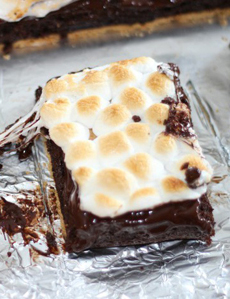
[1] A gooey s’mores brownie. The recipe is below (photo © Burp!).

Classic S'mores
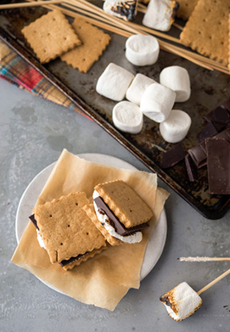
[2] Classic s’mores are a sandwich cookie (photo © Dandies Marshmallows).

Ice Cream S'mores
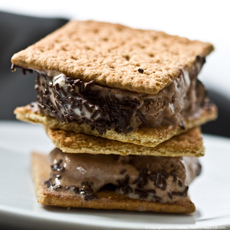
[3] S’mores ice cream sandwiches (photo © Babble).

S'mores Ice Cream Cake
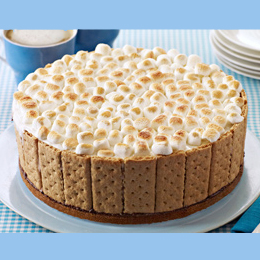
[4] S’mores ice cream cake (photo © Kraft).


National S’mores Day is August 10th. Get ready to celebrate by considering this recipe for S’mores Brownies, and the other creative s’mores recipes below.

The original s’mores were invented as campfire food (here’s the history of s’mores).

But at home, with a stove and oven, there are many variations using the same three ingredients: chocolate, graham crackers and marshmallows.

The brownie recipe (photo #1) is from Paul and Lori Fredrich of Burp!, sent to us by Go Bold With Butter.

A fudgy layer of chocolate is surrounded by crisp graham crackers and topped with browned marshmallows.

The History of Chocolate
The History Of Graham Crackers
The History Of Marshmallows
 
 
RECIPE: S’MORES BROWNIES

Ingredients

  • 9 graham crackers
  • 1-1/2 cups (3 sticks) butter
  • 1-1/4 cups unsweetened natural cocoa powder, sifted
  • 2-1/2 cups granulated sugar
  • 1/2 teaspoon salt
  • 5 large eggs
  • 2 teaspoons vanilla extract
  • 1-=2/3 cups all-purpose flour
  • 6 graham crackers, broken in half
  • 8 ounces dark chocolate, coarsely chopped
  • 3 cups mini marshmallows
  •  
    Preparation

    1. PREHEAT the oven to 325°F. Line 9×13-inch baking pan with non-stick foil or parchment, leaving a 2-inch overlap on the short sides.

    2. LINE the bottom of the pan with graham crackers, breaking them up as needed to fill the bottom of the pan.

    3. PREPARE the brownies: Melt the butter in a large saucepan over medium-low heat. Remove from the heat and whisk in the cocoa powder until smooth. Add the sugar and salt, continuing to whisk until the ingredients are blended.

    4. ADD the eggs one at a time, whisking just until blended. Add the vanilla and stir to combine. With a rubber spatula, gently fold the flour into batter just until incorporated. The batter will be quite thick.

    5. SPOON the batter over the graham crackers and spread gently, taking care not to displace the graham crackers. Bake for 40-45 minutes, or until a toothpick inserted in the center comes out with small bits of brownie sticking to it. Remove the brownies from oven.

    6. PREHEAT the broiler. Sprinkle the pan of brownies with the chocolate pieces. Arrange the graham crackers on top of the chocolate. Top with the marshmallows.

    7. MELT the marshmallows, placing the pan 3-4 inches under broiler for 2-3 minutes. Allow them to brown, but not burn. Cool thoroughly before slicing into bars.

    TIP: The easiest way to cut the brownies cleanly is when they’re fully cooled, using a hot knife for each cut.

    But if you can’t wait to sample their ooey-gooey goodness, we won’t judge.

  • To do this, fill a tall container—a pitcher or vase works well—with hot tap water deep enough to cover the entire blade of your knife.
  • Dip the knife into the hot water, and wipe it dry on a clean towel before making a cut.
  •  
    MORE S’MORES RECIPES

  • Caramel S’mores
  • Cinnamon S’mores With A Cappuccino Cocktail
  • Creative S’mores Recipes
  • Fancy S’mores
  • Gourmet Marshmallow S’mores
  • Grilled Banana S’mores
  • Ice Cream S’mores
  • S’mores Baked Alaska
  • S’mores Cookie Bars
  • S’mores Fondue
  • S’mores Ice Cream Cake
  • S’mores Ice Cream Pie & Cupcakes
  • S’mores Made With Other Types Of Cookies
  • S’mores Mason Jars
  • S’mores Party Bar
  • S’mores Truffles
  • Triscuit S’mores
  •  


    Comments off

    RECIPE: Homemade Blueberry Juice & A Blueberry Daiquiri

    We were shopping a couple of days ago and ran into a blueberry bonanza: four pints for $5.

    We brought them home to figure out what to do with them. Blueberry pie? Blueberry cobbler? Blueberry muffins?

    It was too hot to turn on the oven, so we popped them into the blender and made fresh blueberry juice. Delicious!

    We had friends stopping by for drinks, so it was easy to turn the blueberry juice into cocktails.

    This recipe, from the Blueberry Council, has no added sugar. Summer blueberries are sweet enough.
     
     
    RECIPE: FROZEN BLUEBERRY DAIQUIRI

    Ingredients Per Drink

  • ½ cup frozen or fresh blueberries
  • 1½ ounces light rum
  • 1½ tablespoons lime juice
  • 1 cup crushed ice
  • Optional garnish: a skewer of blueberries or a lime wheel
  •  
    Preparation

    1. PLACE the blueberries, rum and lime juice in a blender. Blend until smooth.

    2. ADD the ice and blend until slushy. Pour into a glass.

    3. GARNISH with blueberries skewered on picks circled with a strip of lime peel, if desired


    Blueberry Daiquiri
    [1] Turn fresh blueberry juice into a blueberry daiquiri (photo © Blueberry Council).

    Carton Of Blueberries
    [2] Turn a windfall of fresh blueberries into blueberry juice (photo © Good Eggs).


    Comments off

    Elote, Mexican Corn On The Cob & Variations For A DIY Party Bar

    Elote - Mexican Corn
    [1] Classic elote: mayo, crumbled cheese, chile powder and lime (photo © Good Eggs).

    A Jar Of Cacique Crema
    [2] Crema, Mexican sour cream, is used to bind the cheese and seasonings to the corn (photo © Cacique).

    Dish Of Mayonnaise
    [3] Mayonnaise is an alternative binder (photo © Viktor | Fotolia).

    A Plate Of Cotija Cheese
    [4] Cotija is one of two cheeses crumbled to garnish elote (photo: The Nibble).

    A Plate Of Queso Fresco Cheese
    [5] Queso fresco, another good crumbling cheese, can be used instead of cotija (photo © The Nibble).

    Tajin Seasoning
    [6] As an alternative to ancho chile powder, Tajín (tah-HEEN) seasoning is a blend of chile powder, lime and salt. You can use it on anything, including buttered toast, fruit salad and ice pops (photo © Tajín).

    Elote Asado - Grilled Corn
    [7] Elotes asados, finished on a grill. If you’re serving multiple topping options, consider cutting the corn cobs in half so guests can manage to try them all (photo © ChefSteps | The Nibble).

    A bunch of fresh cilantro
    [8] Minced cilantro is an optional garnish (photo © Good Eggs).


    Updated July 2026

    Most people look forward to the corn on a cob of summer. So here’s an idea for a cocktail party with family, friends and neighbors: elote—ears of corn, Mexican-style—with Margaritas and non-alcoholic agua fresca.

    Elote (ay-LOW-tay, plural elotes), meaning corn cob, is a popular street food; typically grilled on a stick on the vendor’s cart, then brushed with melted butter or mayonnaise, rolled in cotija or queso fresco crumbles, and dusted with chile powder and salt (photo #1). It’s served with a lime wedge to squeeze over the corn.

    More modern variations use crema (Mexican sour cream—photo #2) instead of the butter or mayo, and liquid cheese instead of the crumbles (please, no canned or liquid cheese!).

    Ready to party? June 11th is National Elote Day, but there’s a whole summer to feast.

    Below:

    > Elote party bar how-to.

    > International street corn recipes.

    > How Mexican crema differs from American sour cream.

    > The history of corn.

    > The history of elote.

    Elsewhere on The Nibble:

    > The year’s 17 corn holidays.

    > The year’s 25+ Mexican and Tex-Mex food holidays.

    > Hispanic-style cheeses and how to use them.
     
     
    HAVE FUN WITH STREET CORN:
    SET UP A DIY ELOTE PARTY BAR

    Classic Toppings

  • Mayonnaise or melted butter
  • Crumbled cotija cheese (photo #3) or queso fresco (photo #4); substitute ricotta salata (here’s more about Hispanic cheeses)
  • Chili powder or Tajín (photo #6)
  • Optional: minced cilantro
  • Lime wedges
  • Grilling sticks*, ice pop sticks* or other skewers
  • Drinks: agua fresca, horchata, Margaritas
  •  
     
    International Street Corn Variations

    If you want to offer options in addition to the classic elote garnishes, here are some variations.

    Group the ingredients by nationality on the DIY table, along with signage indicating the nationality.

    Note that except for Mexican elote, these are flavor ideas we created. They are not served in their designated country.

  • Mexican Elote: grilled corn brushed with butter, crema, or mayonnaise, then rolled cotija (photo #4) or queso fresco crumbles (photo #5), sprinkled with chile powder, optional cilantro†, served with a lime wedge.
  • BBQ Street Corn: grilled corn lightly brushed with barbeque sauce, then rolled in cheddar cheese powder** or shredded cheddar, and dusted with barbecue seasoning‡.
  • French Street Corn: grilled corn lightly brushed with aïoli (garlic mayonnaise), then rolled in goat cheese or blue cheese crumbles and sprinkled with herbes de provence‡‡ or minced fresh parsley.
  • Italian Street Corn: grilled corn lightly brushed with olive oil, then rolled in grated parmesan or asiago, dusted with minced fresh basil and/or dry oregano.
  •  
    > Here’s a complete guide to making elote from ChefSteps.
     
     
    Elote Hacks

  • No grill? If you want to make elotes asados but don’t have a grill, you can char the corn on a gas range. Use tongs to hold the ears of corn directly over the stove top flame, turning to to blister the kernels.
  • No sticks? You don’t need to serve the elote on a stick if you have a lot of corn holders.
  •  
    Watermelon Elote
    [9] Watermelon elote. Serve it as fruit-snack-on-a-stick, on a fruit-and-cheese plate, atop a green salad, and so much more. Here’s the recipe (photo © The Nibble).
     
     
    HOW CREMA DIFFERS FROM SOUR CREAM

    Chart: Crema Vs. Sour Cream
    [10] Chart: The Nibble.

    Mexican crema is similar to American sour cream; but it can do much more. The innate sweetness makes it a natural dip for fruit, a topping for pancakes, a spread for muffins and toast. Just resist the temptation to eat it from the carton.

  • The primary difference is that crema is closer to a heavy cream that has been lightly cultured, whereas American sour cream is a fermented product made from light cream.
  • Crema has a higher fat content and lower acidity. It’s thinner, designed to be drizzled over spicy dishes like tacos or enchiladas to provide a cooling, rich contrast.
  • Sour cream is thickened using bacterial cultures (and sometimes stabilizers like gelatin or cornstarch). It’s much more acidic, making it a better pairing for dishes like chili.
  •  
    Similar Toppings In Europe

  • Crème fraîche (France) is the closest high-end equivalent to sour cream and crema. It has a higher fat content (around 30%–45%), making it much richer and thicker. It’s also much more heat-stable than sour cream, so can be stirred into boiling sauces without curdling.
  • Schmand (Germany) is a specific German variety of sour cream with a fat content around 20%–24%, falling right between American sour cream and French crème fraîche.
  • Smetana (Eastern/Central Europe) is the direct cultural ancestor of American sour cream. It ranges in fat content from 10% to 40% and often has a more pronounced, “cultured,” fermented flavor. It’s used exactly like sour cream.
  •  
     
    A Bowl of Esquites
    [11] When the elote kernels are removed from the cob, the dish is called esquites. Here’s the recipe (photo © Reynolds Brands).


    THE HISTORY OF CORN

    Corn as we know it today is very different from the wild corn that was discovered and cultivated by the peoples living in what is now Mexico. It is a cereal grain, and the original wild grass, called teosinte, had thin sprigs with tiny kernels (see an image here).

    Scientists believe that people in central Mexico developed corn at least 7,000 years ago. Over the millennia, the ears of maize (corn) we know today were bred to be larger and larger, with larger kernels.

    These substantial ears of maize became the staple crop. It spread north into the southwestern U.S. and south to Peru. About 1,000 years ago, as Native Americans migrated north across the continent, they brought corn with them.

    When Columbus “discovered” America, he also “discovered” corn. The sweet corn we enjoy today, which occurred as a spontaneous mutation of field corn, is a family of cultivars of maize that evolved over thousands of years.

    For the biology geeks among us, the genus and species of maize is Zea mays; sweet corn is Zea mays convar. saccharata var. rugosa. Zea is the Greek word for single-grained wheat, and was employed by botanists to name the species of large grasses that have edible components—i.e., the grains.

    Botanically, the grain is a type of fruit called a caryopsis††, composed of the endosperm, germ, and bran (as are other grains such as barley, oats, rice, rye, and sorghum).
     
    A Platter Of Elote
    [12] All set to party (photo © Wisconsin Cheese).
     
     
    THE HISTORY OF ELOTE

    Indigenous peoples domesticated maize from a wild grass called teosinte thousands of years ago, and corn was the lifeblood of Mesoamerican civilizations like the Maya and the Aztecs.

    They also developed nixtamalization—cooking the corn in an alkaline solution like limewater or wood ash, a crucial chemical process that made the grain easier to digest, unlocked nutrients like niacin (although they didn’t understand this at the time), and fundamentally shaped the Mexican diet.

    During this era, corn/maize‡‡‡ was typically consumed daily as tortillas, tamales, or simply boiled or roasted on the cob.

    When Spanish colonizers arrived, they introduced new ingredients that would eventually become essential to make modern elote. This included dairy cattle, which brought cheese (leading to varieties like cotija, queso fresco and other local cheeses) and lime juice (citrus fruits were native to Asia).

    The name “elote” derives from elotitutl in Nahuatl, the language of the Aztecs (still spoken today).
     
    Modern Elote

    The elote we recognize today—slathered in condiments and served on a stick—was established in mid-20th-century Mexico City. As urban areas grew, street vendors (eloteros) looked for fast, portable, and enticing foods to attract customers.

    The elotes (ears of corn) are usually boiled at home and transported wrapped in their husks by the elotero, the vendor.

    Once on the street cart, they can be served hot from the warming drawer, or grilled over a brazier to char some of the kernels (photo #7). These grilled ears are called elotes asados.

    The final ingredient to firm up the recipe was mayonnaise, which exploded in popularity in Mexico during the 1940s and 1950s. Vendors realized its high fat content and creamy texture made it the perfect adhesive for holding salty cheese and spicy chili powder to the hot, charred kernels.

    In Spanish elote literally means corn on the cob, but in English it translates as “Mexican street corn.”

    When cut off the cob and served in a cup with a spoon—often layered with the same ingredients plus a splash of hot cooking broth—the dish is called esquites.

    There is no single word in English for esquites, so it is typically translated as Mexican corn salad or corn in a cup. The name in Spanish also derived from Nahuatl izquitl, meaning “toasted corn”.

    Depending on where you are in Mexico or the U.S., you might hear esquites called something else entirely:

  • Chasca: Common in Aguascalientes.
  • Elote en vaso: Frequently used in Monterrey and throughout the Southwestern United States (Texas, Arizona, etc.).
  • Esquites: The most common term, used in Mexico City and central Mexico.
  • Trolelote: Often used in northern states like Tamaulipas.
  • Vasolote: Literally “corn in a glass,”commonly used in Michoacán and parts of the Pacific Coast.
  •  
    The Components Of Classic Elote

    While specific recipes vary, a traditional street vendor’s setup focuses on a specific balance of sweet, smoky, creamy, salty, and acidic elements.

  • The Base: Sweet white corn (maíz blanco), which is less sugary and more starchy than American yellow sweet corn. It’s typically boiled with epazote (an aromatic Mexican herb) and then briefly grilled for char.
  • The Binder: A generous coating of mayonnaise or crema Agria (Mexican sour cream).
  • The Salt & Funk: Crumbled Cotija cheese, a dry, firm, salty cow’s milk cheese often called the “Parmesan of Mexico.” Funk is the distinct, pungent aroma and deep flavor profiles.
  • The Heat: A dusting of ground chili powder, Cayenne, or a specialized blend like Tajín.
  • The Brightness: A final, aggressive squeeze of fresh lime juice to cut through the richness.
  •  
    ________________

    *If using wood sticks, remember to soak them before adding the corn and grilling.

    Cilantro is not typically offered by street vendors in Mexico, but we like the flavor.

    ††A caryopsys is a dry, one-seeded simple fruit (commonly known as a grain) where the seed coat is tightly fused to the thin fruit wall (pericarp). This makes it impossible to separate the actual fruit from the seed, as can be done with conventional fruits.

    **Cheddar cheese powder is the best way to make cheese corn at home.

    Herbes de Provence are blend of herbs from the France region of Provence. It can include any assortment of bay leaf, chervil, fennel, marjoram, mint, rosemary, summer savory, tarragon and thyme. The commercial blends typically comprise savory, marjoram, rosemary, thyme and sometimes, oregano or lavender.

    ‡‡Recipe for Barbecue Seasoning: Combine 1 tablespoon smoked paprika, 2 teaspoons brown sugar, 1½ teaspoons salt, 1 teaspoon celery salt, 1 teaspoon dry mustard, 1 teaspoon garlic powder, ½ teaspoon black pepper.

    ‡‡‡Corn and maize are two different names for the same plant species, Zea mays. The primary difference lies in geography, linguistics, and technical usage. In North America, the “corn” is most common. In most other parts of the world, including the U.K. and many English-speaking countries in the Southern Hemisphere, maize is the standard term. Maize is the preferred term used by botanists, scientists, and international agricultural organizations.

    Often, professional people use “corn” when discussing the edible vegetable on the table, such as sweet corn, popcorn, or corn on the cob. “Maize” is more frequently used when discussing the crop on a global trade scale or for industrial purposes, such as the production of grain, silage, or ethanol.
     

    CHECK OUT WHAT’S HAPPENING ON OUR HOME PAGE, THENIBBLE.COM.


    Comments off


    © Copyright 2005-2026 Lifestyle Direct, Inc. All rights reserved. All images are copyrighted to their respective owners.