THE NIBBLE BLOG: Products, Recipes & Trends In Specialty Foods


Also visit our main website, TheNibble.com.

How To Store Fruits & Vegetables – Keep Produce Fresher Longer


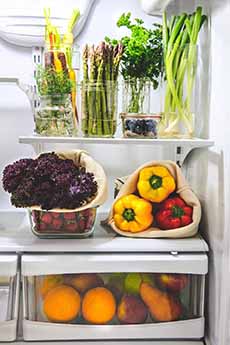
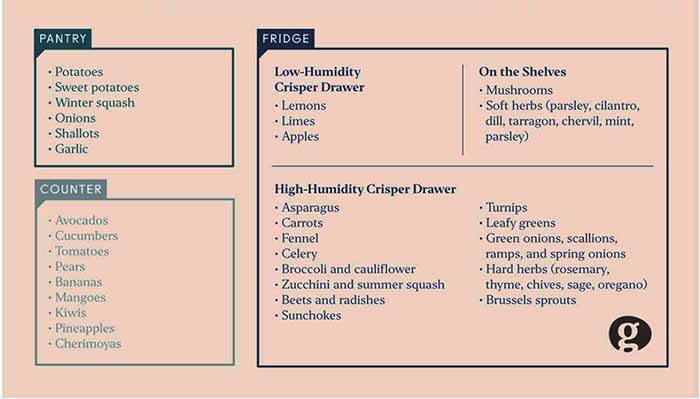
[1] What goes into the fridge: the crisper drawer and on the shelves (photos 1 to 3 © Good Eggs).


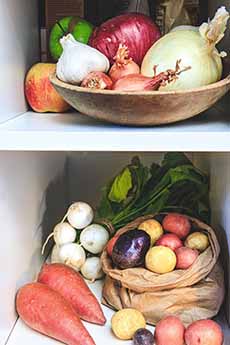
[2] What goes into the pantry.


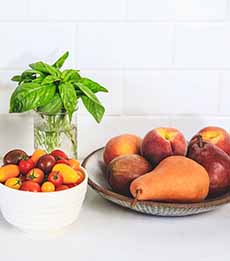
[3] What goes on the countertop.

Breakfast Radishes
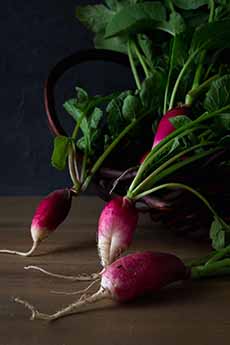
[4] Radishes go into the high humidity crisper drawer (photo © Amber Engle | Unsplash).


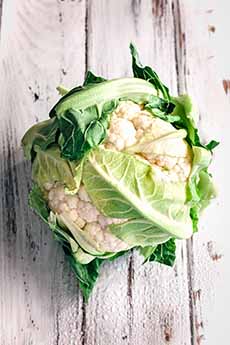
[5] Cauliflower goes into the high humidity crisper drawer (photo © Jennifer Schmidt | Unsplash).

Three Lemons One Squeezed
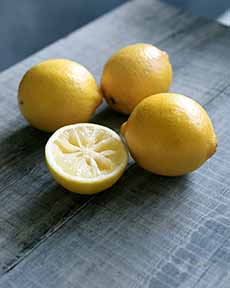
[6] Lemons and limes go into the low humidity crisper drawer (photo © Caroline Attwood | Unsplash).

King Trumpet Mushrooms
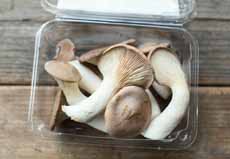
[7] Store mushrooms on refrigerator shelves (photo of king trumpet mushrooms © Good Eggs).


Properly stored produce cuts down on food waste and wasted money. These tips from Good Eggs will keep your fruits and veggies fresher, longer.

Note that this is just a summary.

  • Read the full article here. It provides tips for how you should wrap each item before placing it in the fridge.
  • Download an infographic to keep on your fridge.
  •  
     
    GENERAL TIPS TO STORE FRUITS & VEGETABLES

    Don’ts

  • DON’T wash fruits and vegetables until you’re ready to use them. Washing removes natural protective barriers and introduces moisture, which encourages the growth of bacteria and mold.
  • DON’T feel pressured to wrap fruits and vegetables in plastic. Biodegradable bags are better because they’re more breathable. Check out reusable beeswax wraps too.
  • DON’T put everything in your fridge. Nnot all fruits and vegetables need to be refrigerated. See the “Counter” section below.
  •  
    Do’s

  • DO remove greens from root vegetables like carrots, radishes, and beets. But don’t throw those greens out: You can use them in sautés and pestos.
  • DO remove any fasteners, like twisty ties or rubber bands. Let that produce breathe!
  • DO store fruits and vegetables separately, since many fruits emit ethylene gas as they ripen, which will cause other produce in close proximity to spoil faster.
  •  
     
    WHERE TO STORE FRUITS & VEGETABLES

    The choices are refrigerator, pantry and countertop.

    Refrigerator

    The crisper drawers at the bottom of the fridge are made to store fruits and vegetables. If your fridge has controls that let you open and close the crisper vents that help manage humidity and the effects of ethylene gas:

  • Open one set of vents all the way to increase airflow and create create a low-humidity environment.
  • Keep the other set of vents closed to create a high-humidity drawer.
  •  
    Here’s what goes in each part of the fridge.

    Low Humidity Crisper Drawer

    Low humidity slows ripening, while the open vent allows ethylene gas to escape before it spoils the produce you keep there.

  • Apples
  • Lemons and limes
  •  
    High Humidity Crisper Drawer

  • Asparagus
  • Beets and radishes
  • Broccoli and cauliflower
  • Brussels sprouts
  • Carrots
  • Celery
  • Fennel
  • Green onions, ramps, scallions, spring onions
  • Hard herbs: chives, oregano, rosemary, sage, thyme
  • Tropical fruits: cherimoyas, kiwis, mangoes, pineapples, ripened at room temperature
  • Turnips and leafy greens
  • Sunchokes
  • Zucchini and summer squash
  •  
    Refrigerator Shelves

  • Berries: blackberries, blueberries, raspberries, strawberries
  • Cherries
  • Mushrooms
  • Peppers
  • Soft herbs: cilantro, dill, mint, parsley, tarragon
  •  
    Countertop

  • Avocados
  • Bananas
  • Basil: with roots in a glass of water
  • Cucumbers
  • Eggplant
  • Melons (barely ripened; into the fridge when ripe)
  • Oranges and grapefruit
  • Pears
  • Persimmons
  • Stone fruits: apricots, nectarines, peaches, plums
  • Tomatoes: ripened
  •  
    Pantry

  • Garlic, onions, shallots
  • Pomegranates
  • Potatoes and sweet potatoes
  • Winter squash
  •  
     
    FRUITS & VEGETABLES STORAGE SUMMARY


    REMEMBER TO HEAD TO GOOD EGGS FOR THE DETAILS ON HOW TO STORE EACH ITEM.

    Aluminum foil? Container with water? Covered container with holes? Damp paper towels? Loose plastic bags? Sealed plastic bag? Other storage?

    Knowing how to wrap the produce is as important as knowing where to store it.


    Comments off

    FOOD FUN: Make Your Own Goat Cheese

    Looking for an activity for yourself or for kids?

    Like goat cheese?

    You’re in luck. Belle Chevre, award-winning cheesemakers and one of our favorites, has added DIY cheese kits to their line of fresh goat cheeses.

    The kits have everything you need to make a log of goat cheese or a bowl of fromage blanc.

    While not all cheese is easy to make—you need an aging room, for example—fresh cheeses can be made at home.

    There are two kits: Original and Kids, each just $12.00.

    It’s so easy (and fun!) to make your own goat cheese at home.

    The cheesemaking kit has everything you need to make goat cheese in your own kitchen.

    In just a few hours, and with only about ten minutes of active kitchen time, you will be rolling your own chevre logs or mixing a bowl of freshy-fresh fromage blanc.

    Once you start making it, you may just want to expand your repertoire to other fresh cheeses. In fact, Here’s a recipe to make fromage blanc at home.
     
     
    MORE ABOUT GOAT CHEESE

    Belle Chevre Flavored Goat Cream Cheese Review

    Decorated Goat Cheese Logs

    Goat Cheese For Breakfast

    Ways To Use Fresh Goat Cheese

    Food & Wine Pairing With Goat Cheese

    Why Goat Cheese Is Different
     
     
    MORE ABOUT FROMAGE BLANC

    Fromage Blanc As A Soup Garnish

    Fromage Blanc Vs. Quark

    Substituting Fromage Blanc For Fraîche


    [1] Belle Chevre’s goat cheese-making kit (all photos © Belle Chevre).


    [2] You can make one goat cheese log.


    [3] Or, you can make a bowl of fromage blanc.


    Comments off

    TIP OF THE DAY: Pasta Nests For Easter


    [1] A close-up on pasta nests. These were made with carbonara ingredients (both photos © DeLallo).


    [2] Get out your muffin pan!


    [3] Capellini (angel hair) pasta nests. You can get them online from DeLallo.


    For Easter—or anytime you’re looking for some food fun—these pasta nests are a festive way to enjoy one of America’s favorite foods.

    The nests are simply ribbon pasta like angel hair, rolled into a bird’s nest form while the pasta is still fresh.

    The Italian word is sformatini*, but it’s easier to call them nests. Names can vary by region. For example:

  • Rummo, a pasta maker in Campania, calls them nidi di semola (semolina nests).
  • Their egg pasta nests are called mattassine all’uovo, egg pasta nests (we couldn’t find a translation for mattassine).
  •  
    While this recipe makes mini-nests in muffin cups, you can make plate-size nests as well. You can find pasta nests in larger widths, like fettuccine and spaghetti, etc. If you can’t find the nests, cook regular pasta and use the hack below.

    Nests are not a traditional pasta dish. They only appear in recent cookbooks, made with any combination of ingredients.

  • Cheese (ricotta is a good filler)
  • Meats or seafood, cubed, diced or shredded
  • Sauces
  • Vegetables (bell peppers, cherry tomatoes, chopped fresh tomatoes, mushrooms, onions, peas, etc.)
  • Garnishes (anchovies, baby arugula, capers, fresh herbs, olives, etc.)
  •  
    The only limits are your palate and your creativity.
     
     
    RECIPE: PASTA CARBONARA NESTS

    This recipe, from DeLallo, turns Spaghetti Carbonara into a bird’s nest, with a few substitutions (like angel hair pasta/capellini for the spaghetti).

    Ingredients

  • Butter for greasing pan
  • 2 (8.82-ounce) packaged DeLallo Capellini Nests Pasta
  • 2 tablespoons extra virgin olive oil
  • 1 pound pancetta, cut into 1/4″ cubes
  • 1/2 cup heavy cream
  • 3/4 cup freshly grated parmigiano reggiano, divided
  • 1/4 teaspoon ground nutmeg
  • 1/4 teaspoon paprika
  • 12 quail eggs
  • 2 tablespoons fresh chives, chopped
  • Salt and pepper to taste
  •  
    Preparation

    1. PREHEAT the oven to 425°. Lightly butter a 12-cup muffin pan.

    2. HEAT the oil in a large skillet over medium-high heat. Add the pancetta and cook until golden brown, about 6 minutes. Set aside.

    3. BRING a large pot of salted water to a boil. With a slotted spoon, gently lower the pasta nests into the boiling water. They will cook fairly quickly, about three minutes. Gently remove them, tapping off excess water on the rim of the pot, and place them in the muffin cups.

     
    4. STIR together in a large bowl, the cream, 1/2 cup cheese, nutmeg and paprika. Season with salt and pepper to taste.

    5. SCOOP the pasta from the hot water with a slotted spoon and place it directly into the cream mixture. Stir gently to coat. If the cream begins to clump, add a little of the hot pasta cooking water. Let sit for 5 minutes and place in the muffin cups.

    6. CREATE a small indentation in the center of each nest and sprinkle in the remaining cheese among the nests. Sprinkle the remaining sauce over the top, and add the pancetta bits around the rim.

    7. BAKE the nests until they become golden and bubbly, about 10 minutes. Remove the muffin pan from the oven. Reduce the oven temperature to 350°F.

    8. CRACK a quail egg into each nest and bake for another minute. Once cooked, remove the pan from the oven and allow it to cool for 5 minutes. Remove from the pan and serve garnished with the chopped olives.

    If You Don’t Have Nests: A Hack

    1. COOK the ribbon pasta—angel hair/capellini, fettuccine, linguine, spaghetti—according to package directions, to al dente.

    2. USE tongs to transfer a small amount of the pasta mixture into each muffin cup, forming a spiral as you place it. Arrange to form a nest shape. Do the same if you are cooking regular pasta ribbons, and need to form a nest in a bowl or on a plate.

    _______________

    *Sformatini also refers to other foods. In Tuscany, for example, it refers to a savory flan.


    Comments off


    © Copyright 2005-2026 Lifestyle Direct, Inc. All rights reserved. All images are copyrighted to their respective owners.