THE NIBBLE BLOG: Products, Recipes & Trends In Specialty Foods


Also visit our main website, TheNibble.com.

TOP PICK OF THE WEEK: Balkan Bites Bureks

Sometimes the food adventure takes you to new countries and new cuisines. You may discover new must-have favorites.

That’s what happened to us with bureks (BOO-rek, also spelled börek and other variations), when we discovered Balkan Bites, a New York-based family business that bakes bureks from generations-old recipes handed down from great-great grandmothers in Albania. (More about them below.)

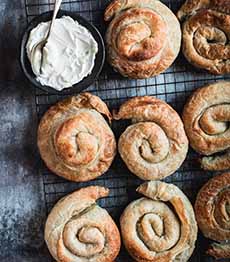
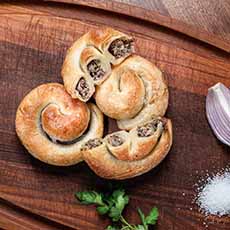
Bureks a Southeast European comfort foods a portable stuffed phyllo swirl.

Delicate pastries made of thin, flaky hand-stretched phyllo dough, traditionally they are filled with cheese, meat or vegetables—or a combination.

Modern bakers have created sweet options as well: everything from the classic cinnamon-sugar, sweetened cheese and sweetened yogurt, to Nutella.

Bureks may be prepared in a large sheet pan and cut into portions after baking, like baklava; or as individual pastries.
 
 
WHO EATS BUREKS?

For centuries, burek had been the food of nomads and wanderers: carried in knapsacks from Beijing to Barcelona, from Modena to the Maghreb, cooked over campfires.

So delicious, however, borek found its way onto the table of khans and kings. It is a culinary witness to generations of migration, conquest and displacement.

Here’s more on the history of borek.

Working their way into the diet of everyday folks, bureks have long been served as a popular street food, a home snack or a part of a sit-down meal.

They’re part of the cuisines of the former Ottoman Empire: the Balkans* (image #8), the South Caucasus, the Levant, North Africa and other parts of Eastern Europe and Western Asia.

Originally introduced by the nomadic Turks of Central Asia, the flaky phyllo swirl travelled across borders for centuries, adopting different names and shapes [source].

The Southern Slavic cuisines make derivatives of the burek. And it’s also Jewish comfort food—though not European Jewish but eastern Jewish.

  • Burek is part of the Mizrahi and Sephardic Jewish traditions.
  • They have been enthusiastically adopted by the Ottoman Jewish communities.
  • They have been described, along with boyoz de pan and bulemas, as forming “the trio of preeminent Ottoman Jewish pastries” [source].
  •  
    For breakfast, lunch, appetizer or dessert, there’s a reason to eat bureks. You can even have them as a main course with a green salad.

    In the Balkans, burek is traditionally eaten with a side of yogurt or ajvar, a roasted pepper spread that goes with everything.

    It’s “the ketchup of the Balkans,” says Balkan Bites (you can make it or buy it online).
     

    BALKAN BITES BUREKS

    Balkan Bites sells frozen, ready to bake bureks, in packages of four (photo #7), that make a delicious snack or an easy meal for the whole family.

    Frozen bureks last for one year in the freezer.

    At Balkan Bites, everything is made from scratch. The phyllo dough uses unbleached flour, extra virgin olive oil, real butter “and a lot of love, says Balkan Bites.”

    “We believe in simple, high-quality ingredients and we never use palm oil, soybean oil, or margarine.”

    We pop one into the oven for a snack, or heat more for a meal of different flavors of burek.

    It’s easy cut them in half and share the flavors.

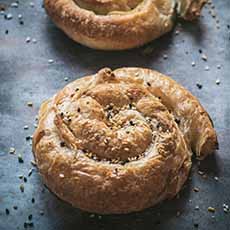
    While the top of the börek is occasionally sprinkled with sesame or nigella† seeds, or both (photo #3).

    But Balkan Bites expands the traditional menu with these combinations:

  • Beef & Onion
  • Cheese Medley
  • Mushroom & Goat Cheese (photo #4)
  • Potato & Onion
  • Pumpkin Spice (photo #6)
  • Spinach & Cheese
  •  
    …and for dessert:

  • Nutella (photo #5)
  •  
    Serve them with:

  • Olives
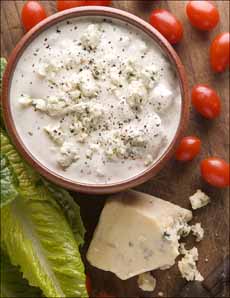
  • Yogurt dip/spread (photo #1)
  • Ajvar (here’s a recipe, or buy it online)
  •  
    …and our American additions:

  • Crudités: bell peppers, cherry tomatoes, mushrooms, scallions
  • Green salad
  •  
    Is it time to treat yourself to something special?
     
     
    >> GET BALKAN BITES HERE.

    Please note that if you search online, there’s a London company with the url BalkanBites.COM. This is BalkanBites.CO.

    ________________

    *The Balkans is a geographic area that lies on the southeastern edge of Europe. Known for its diverse cultures, traditions, and ethnicities, it is the shared love of food, like the Burek, that brings people together.

    †Nigella seeds are often incorrectly referred to as black caraway, black cumin, fennel flower and onion seeds, among others. However, nigella (kalonji in Hindi) is none of these.

    While it is not an aromatic spice—it has just a hint of savory scent—it is very flavorful. Nigella seeds have an oregano-like quality with herbaceous notes, a slight bitterness and a warm, toasted-onion flavor.

    They are as adaptable as most spices. Add them salads, sauces and as a garnish for soups and other foods [source].


    [1] Bureks are often served with yogurt (above) and ajvar roasted pepper dip (below—all photos © Balkan Bites).


    [2] Bureks with ajvar, “the ketchup of the Balkans.” You can buy it or make it, and make it as smooth or chunky, as mild or hot as you like.


    [3] Bureks with the classic topping of nigella and sesame seeds.


    [4] Mushroom-Onion Burek.


    [5] Nutella Burek.


    [6] Pumpkin Spice Burek.


    [7] Balkan Bureks arrive frozen. Each package contains four bureks.


    [8] The Balkans.


    Comments off

    RECIPE: Baked Fries With Ras El Hanout

    Baked Fries With Ras El Hanout Sauce
    [1] Moroccan-spiced baked fries (photos #1 and #4 © Idaho Potato Commission)


    [2] Ras el hanout, the famed Moroccan spice blend (photo © Silk Road Spices).


    [3] The ras el hanout spices are blended, then ground. This mix includes allspice, black peppercorns, cardamom, cinnamon, cloves, coriander, crushed red pepper flakes, cumin, hibiscus, lavender, mustard seed and star anise. (photo © Spice & Tea).

    Idaho Potatoes
    [4] The types of Idaho potatoes. Idaho russets are on the bottom row.


    [5] Broiled Salmon with Ras El Hanout Spiced Butter. Here’s the recipe (photo © The Kitchn).


    [5] How about some grilled Moroccan Chicken? Here’s the recipe (photo © Feasting At Home).


    For Cook Something Bold & Pungent Day (November 9th), we made these oven-baked fries flavored with the Moroccan spice blend, ras el hanout (photo #1, recipe below).

    While ras el hanout is piquant rather than pungent (here’s the difference), it fit the bill—especially since the spice blend was augmented with garlic, paprika and cilantro.
     
     
    WHAT IS RAS EL HANOUT

    As just mentioned, ras el hanout is a Moroccan spice blend; it is also used in Algeria and Tunisia.

    The name translates as “top of the shop,” i.e., the best.

    There is no one recipe for ras el hanout: Every spice merchant has a proprietary recipe, and the cooks who buy the spices debate who has the best version.

    The mixture often includes 30 or more of a spice merchant’s best ingredients: whole spices, dried roots and leaves, ground together.

  • Some of the ingredients can be local to the area: ash berries, chufa, cubeb berries, galangal, grains of paradise, long pepper, orris root, monk’s pepper and rose petals.
  • More familiar ingredients (in the U.S.) can include anise, cardamom, cayenne and other chiles, cinnamon, coriander, fennel, fenugreek, ginger, lavender, nutmeg, mace, pepper, saffron, sweet and hot paprika, and turmeric.
  •  
    The complex blend delivers many subtle undercurrents of floral, peppery and sweet.
     
     
    HOW TO USE RAS EL HANOUT

    Traditional uses include as a dry rub or marinade for grilled meats, in starches (couscous, potatoes, rice) and traditional Moroccan dishes like b’stilla and tagines.

    You’ll find many uses for it. As with all blends, a bonus benefit is that you don’t have to measure out multiple seasonings.

    We use ras el hanout on many things:

  • Compound butter
  • Cooked cauliflower and other vegetables
  • Dips
  • Greek yogurt to eat straight from the carton or as a sauce
  • Lamb and pork
  • Rice and other grains to dips and flavoring to grains
  • Pasta and pizza
  •  
     
    BUY IT OR MAKE IT

    If you don’t want to buy a jar, here’s a recipe from food writer Marc Bittman:

  • Toast and grind 4 teaspoons each coriander seeds and cumin seeds. Combine with 2 teaspoons each ground cinnamon, ginger, paprika, turmeric and salt; add 2 tablespoons ground pepper.
  • For a hotter blend, add cayenne, crushed red pepper flakes or whatever dried chiles you have on hand.
  • We suggest dry-frying the spices in a hot pan for a few minutes, to release the full flavor before grinding.
  • It’s a stripped-down version, but feel free to add what you like—you have 22 more slots available!
  •  
    Thanks to the Idaho Potato Commission for this recipe. If you love potatoes, check out the myriad of creative potato recipes on their website.
     

    RECIPE: BAKED FRENCH FRIES WITH RAS EL HANOUT SEASONING

    This recipe was developed by Tina Dawson of Love Is In My Tummy for the Idaho Potato Commission.

    Ingredients

  • 2 large Russet Idaho® potatoes
  • 1 tablespoon + 1 teaspoon ras-el-hanout spice blend
  • 1 teaspoon fresh ginger, grated
  • 1 teaspoon paprika
  • ¼ teaspoon ground turmeric
  • 2 cloves of garlic, grated
  • 3 tablespoon vegetable oil
  • Salt to taste
  • Garnish: 2-3 sprigs fresh cilantro, chopped
  • Condiments: ketchup, dip or other condiment of choice
  •  
    Preparation

    1. PEEL and slice each potato vertically in half. Take one half, then slice it vertically in half again to reduce the thickness. Flip it on the flat side, and slice again into 4 fry-shaped pieces. Repeat with all the potatoes.

    2. IMMERSE the chopped potatoes in water for 20-30 minutes. This step is essential to removing the starch, making for a crispier fry.

    3. RINSE the potatoes until the water runs clear. Drain. Using paper towels or a clean kitchen towel, dab until the excess moisture is removed. Transfer to a clean, dry bowl.

    4. PREHEAT the oven to 425°F (220°C). Position the baking rack to the lowest position and another rack to the slot just above it.

    5. COMBINE the potatoes with the rest of the ingredients except the cilantro. Toss to coat the spices evenly over the potatoes. Arrange in a single layer on a large baking tray or two medium trays (you may line the tray(s) with foil to make clean-up easier).

    6. BAKE for 30 minutes. Halfway during baking, swap the top and bottom trays, and flip the fries. Once the time is up and the fries are crisp…

    7. REMOVE from the oven, toss with chopped cilantro and serve immediately with condiment(s) choice.
     
     
    > THE DIFFERENT TYPES OF POTATOES


    Comments off

    It’s Easy To Make Popovers With This Classic Popover Recipe

    Popovers have always been a special food to us.

    Light and airy, they can be part of the bread basket for almost any meal.

    Bread lover that we are, we can make a meal just of popovers and a pot of tea.

  • Eat them plain, with butter, with jam—with any type of sweet or savory toppings.
  • Have them at brunch or tea time.
  • Enjoy them British-style, as Yorkshire pudding, with roast beef, pot roast, or anything that comes with pan drippings or gravy.
  •  
    The recipe is below, but first:

    > National Blueberry Popover Day is March 10th.

    > National Raspberry Popover Day is May 3rd.

    > National Cherry Popover Day is September 1st.

    > The history of popovers.
     
     
    THE DIFFERENCE BETWEEN POPOVERS & YORKSHIRE PUDDING

  • Popovers are light rolls. They are the American version of Yorkshire Pudding, a batter pudding made in England since the 17th century [source]. Both use the same egg batter.
  • Popovers are named for their notability to “pop over” the specialty tins in which they are baked. The wells are tall, tapered, and greased with butter.
  • Yorkshire puddings, baked in muffin tins, have flat tops. The wells are greased with the drippings (beef fat) from the roast they are accompanying.
  •  
     
    WHY DON’T WE EAT MORE POPOVERS?

    For something so delicious and easy to make, why don’t we eat more of them? Is it because they (in theory) require a special pan?

    Even our Mom, a baker extraordinaire who had more bakeware than one could count, didn’t have popovers in her repertoire.

    Instead, she relished them at Sunday brunch and afternoon tea at a restaurant that brought a heaping basket of them to the table.

    How the sight of that basket full of hot popovers filled our hearts!

    Over the years, we delighted in finding restaurants that made popovers.

    One of our favorite neighborhood places served them with strawberry butter. It didn’t get better than that. But oh, the line of people waiting for tables.

    And then, alas, they lost their lease and closed (R.I.P., beloved Popover Café).

    The Harvard Club in New York City makes them, and we’ve wangled as many lunch invitations as we can from friends who are members.

    But now, the choice is obvious:
     
     
    BUY A PAN!

    One day we wandered into Williams Sonoma on one of those “just browsing” visits—the kind that that end in a large bill for impulse purchases.

    It was there that we encountered our popover pan. Soon, we were churning out our own popovers.

    They are so easy to make, that we figuratively kicked ourself for the years we went without popovers.

    Why buy a 6-cup pan over a 12-cup pan?

    While the first answer is, how many do you need, there is also the size of the popover.

  • The 12-cup pans have slightly smaller wells.
  • For example, the Chicago Metallic 6-up has wells of 2.75 inches by 2.25 inches; the 12-cup wells are 2.25 inches by 2 inches.
  • There are also larger pans, but these tend to be foodservice quality (and price).
  •  
    Don’t worry about having too many popovers.

  • Leftover popovers can be reheated in a 425°F oven for 8 minutes.
  • They can also be frozen after baking and reheated frozen in a 425°F oven for 10 minutes.
  • Along the same lines, you can make the popovers ahead of time, then reheat them in a 425°F oven for 8 minutes.
  •  
     
    DO YOU REALLY NEED A POPOVER PAN?

    Can’t you use a muffin tin?

    Sure, a muffin pan will bake popovers just fine. But…

    A popover pan will give you taller popovers with a more defined “mushroom” top.

    The popovers from a muffin tin will taste the same, but the popovers will have flat tops and won’t be dramatic-looking.

    See additional uses for a popover pan, below.
     
     
    RECIPE: TENDER POPOVERS

    “Watching popovers ‘pop’ is always a thrill,” says Vermont Creamery, which provided this recipe.

    “Just don’t open the oven door!”

    Vermont Creamery’s popover recipe is particularly easy because it doesn’t have the long and complicated resting time in the fridge.

    Prep time is 10 minutes. Bake time is 35-40 minutes.
     
     
    Ingredients For 12 Popovers

  • 1/4 cup Vermont Creamery Sea Salt Cultured Butter 82% Butterfat* or substitute, melted
  • 6 large eggs, room temperature
  • 2-1/2 cups whole milk, room temperature
  • 2-1/2 cups all-purpose flour
  • 1/2 teaspoon salt
  • Optional: 1 tablespoon fresh herbs of choice
  • Condiments for serving: bacon jam, honey, preserves, softened butter (plain or compound [flavored] butter),
  •  
    Preparation

    1. PREHEAT the oven to 450°F; place the rack in the middle. Pour the melted butter into wells of 12 popover pan cups.

    2. BEAT the eggs in bowl at high speed, scraping the bowl often. Beat for 2 minutes or until foamy, light and lemon-colored. Add milk and; continue beating for 1 minute. Add the flour and salt; beat until well mixed.

    3. POUR the batter into the prepared popover pan. Bake on the middle oven rack for 15 minutes.

    4. REDUCE the oven temperature to 350°F. Do not open the oven door! Continue baking for 20-25 minutes or until the popovers are a deep golden brown.

    5. REMOVE from the oven. Insert a knife into each popover to allow steam to escape. Serve immediately with condiments of choice.
     

    OTHER USES FOR A POPOVER PAN

  • Meatloaf. Individual meat loaves cook faster than a whole loaf, and look cute on the plate.
  • Yorkshire Puddings. Serve them with your roasts. All you need to do to be “authentic” is to grease the popover pan wells with the drippings. We add minced fresh herbs.
  • Make it easy by keeping rendered beef and chicken fat drippings in the fridge to add flavor wherever appropriate. We also keep a jar of bacon grease.
  • Profiteroles: Slice the popovers in half and fill them with ice cream, berries and sauce (caramel, chocolate, fruit). It’s faux profiteroles!
  • Individual Charlottes. Line the wells with buttered bread (brioche is ideal) or ladyfingers, fill with a fruit and custard, top with more bread and bake.
  • Individual Quiches. Also, individual “anything” you’d like to try.
  •  
     
    > THE HISTORY OF POPOVERS

    > THE DIFFERENT TYPES OF BREAD


    [1] Buttery, brown popovers, ready to eat. This 12-cup popover pan is from Chicago Metallic (photo © #1 and #3 Chicago Metallic Bakeware).


    [2] The simple ingredients to make popovers (photo © Vermont Creamery).


    [3] A 6-cup popover pan from Chicago Metallic.


    [4] A popover pan with bright red swagger, from Neiman Marcus (photo © Neiman Marcus).


    [5] Here’s a recipe for cherry popovers. In the off season, you can make them with frozen cherries or other frozen berries (photo © Elephantine BLog [now closed]).


    [6] Food fun: These popovers are turned into a deconstructed version of the classic British dish, Roast Beef With Yorkshire Pudding (photo © Betsy Live | Salt & Honey Caterers).

    Filled Popovers
    [7] Twice-baked popovers are baked, cut open and filled with bacon and scrambled eggs. Then, they—re baked some more (photo © King Arthur Flour, recipe no longer available).


    [8] You can flavor popovers with herbs, and add grated cheese, too (photo © Nordicware).

     
    ___________________

    *This is our favorite butter—so good we can slice it and eat it like cheese.


    CHECK OUT WHAT’S HAPPENING ON OUR HOME PAGE, THENIBBLE.COM.


    Comments off


    © Copyright 2005-2026 Lifestyle Direct, Inc. All rights reserved. All images are copyrighted to their respective owners.