THE NIBBLE BLOG: Products, Recipes & Trends In Specialty Foods


Also visit our main website, TheNibble.com.

Caramel Corn Recipes For National Caramel Corn Day


[1] Make your own caramel corn (photos #1, #2, #3 and #6 © The Popcorn Board).

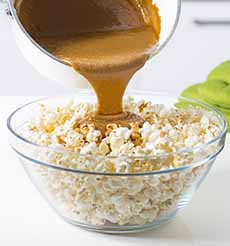
Pouring Caramel On Popcorn
[2] You can buy the popcorn if you wish, but be sure to make your own caramel.

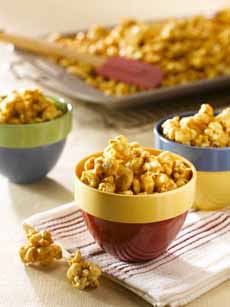
A Bowl Of Caramel Corn
[3] The result: dee-licious!


[4] Use caramel corn as a garnish on pies, cakes and cupcakes. This one uses a pecan pie from Edwards Desserts that you garnish yourself. Here’s the recipe (photo © Edwards Desserts).


[5] You can get as fancy as you like, as with this caramel corn garnish on elegant chocolate ganache (photo © Heliot Steak House | London).


[6] Caramel corn ice cream sandwich. Here’s the recipe.


April 6th is National Caramel Corn Day. To make your own caramel, and pour it over your own warm popcorn, is so much more delicious than buying caramel corn.

Try it!

Below:

> The recipe for caramel corn.

> More popcorn recipes.

> The history of caramel corn.

Elsewhere on The Nibble:

> The history of popcorn.

> The history of caramel.

> Why popcorn pops.

April 6th is National Caramel Corn Day. To make your own caramel, and pour it over your own warm popcorn, is so much more delicious than buying caramel corn.

Try it!

Below:

> The recipe for caramel corn.

> There are more popcorn recipes below.

> The history of caramel corn.

Elsewhere on The Nibble:

> The history of popcorn.

> The history of caramel.

> Why popcorn pops.

> Pairing wine with different popcorn flavors.
 
 
RECIPE: CARAMEL CORN
 
Ingredients For 2.5 Quarts

  • 3 quarts popped popcorn
  • 1 cup packed brown sugar
  • 1/2 cup butter (1 stick), diced
  • 1/4 cup corn syrup
  • 1/2 teaspoon salt
  • 1/2 teaspoon baking soda*
  • Cooking spray
  •  
    Preparation

    1. PLACE the popcorn in a large bowl. Remove any unpopped kernels.

    2. SPRAY a large baking sheet with cooking spray; set aside.

    3. ADD to a large, deep pot the brown sugar, butter, corn syrup and salt. Stir over medium heat until well blended. Increase the heat and bring to a boil. Allow to boil for 5 minutes. DO NOT STIR!

    4. REMOVE the pan from the heat and stir in the baking soda (the mixture will foam*). Quickly stir popcorn into hot mixture until completely coated.

    5. SPREAD onto the prepared baking sheet and allow to cool. Break into smaller pieces. Serve immediately or store in an airtight container.
     
     
    THE HISTORY OF CARAMEL CORN

    While Colonials enjoyed kettle corn (CHECK!), with both salt and sugar used to season the popcorn, caramel popcorn may be the creation of brothers Frederick and Louis Rueckheim, who immigrated to Chicago from Germany.

    In 1870, they opened a popcorn store and began to experiment with specialty flavors and toppings. One recipe, a mix of popcorn, peanuts and molasses, became a hit.

    The story is that a customer, upon sampling the flavor in the store, exclaimed “That’s a crackerjack!”

    The term meant, and still means, “exceptionally good.” The name stuck.

    An early version of Cracker Jack was introduced at the Chicago World’s Fair in 1893.

    Louis Rueckheim created a process that kept the molasses-covered popcorn kernels from sticking together [source].

    In 1896, the brothers registered the trademark Cracker Jack®, and began to mass produce the product.

    The popularity of Cracker Jack led others to experiment with popcorn and syrups, which led to the creation of caramel corn [source]

    Today, commercial caramel popcorn is made by mixing a sugar solution or sometimes molasses (the Cracker Jack ingredient), and heating it until the mixture caramelizes. It then is blended with the popcorn.

    The recipe above is quite literal: homemade caramel—the real deal—is poured over the popcorn.
     
     
    MORE POPCORN RECIPES

  • Cheese Popcorn, Curry Popcorn, Wasabi Popcorn
  • Chocolate Cranberry Toffee Popcorn
  • Chocolate Drizzle Popcorn
  • Cinnamon Chocolate Popcorn
  • Cranberry Popcorn
  • Kale Popcorn Recipes
  • Maple Pumpkin Spice Popcorn
  • Parmesan Popcorn & Jalapeño Popcorn
  • Popcorn Ball Ice Cream Sandwiches
  • Popcorn Garnishes: Sweet & Savory
  • Popcorn Ice Cream
  • Popcorn Meat Loaf
  • Popcorn Party Bar
  • Popcorn Peanut Brittle
  • Popcorn Salad
  • Popcorn Salad Garnishes
  • Pumpkin Spice Popcorn
  • Popcorn Squares
  • Sage Or Rosemary Popcorn
  • S’mores Popcorn
  • Triple Caramel Popcorn Fudge
  • White Chocolate Peppermint Popcorn
  • White Chocolate Popcorn
  •  
    ________________

    *Baking soda is added to create tiny carbon dioxide air bubbles, which creates the foaming. Once the caramel has cooled on the popcorn, the air bubbles inside the caramel create a softer texture.
     

    CHECK OUT WHAT’S HAPPENING ON OUR HOME PAGE, THENIBBLE.COM.


    Comments off

    RECIPE: A New Kind Of Grilled Cheese Sandwich With Halloumi

    April is National Grilled Cheese Month.

    We’ve seen many different ways to make a grilled cheese sandwich, including bread-free, low-carb versions that substitute sliced portabello mushrooms or ham—a bread-free ham and cheese sandwich, grilled on a panini press.

    Today we present another option: a grilled cheese sandwich where halloumi cheese (photo #2) is substituted for the bread.

    Halloumi, a semisoft cheese that originated in Cyprus, keeps its shape when fried.

    Thus, use sliced halloumi cheese instead of bread, and fill it with what you’d normally put in a grilled cheese sandwich, and grill it.

    It’s a reverse grilled cheese sandwich!

    > Here’s more about halloumi cheese.

    The recipe follows, but first:

    > How to make a grilled cheese sandwich.

    > The history of cheese.

    > The different types of cheese: a photo glossary.

    > The year’s 30 cheese holidays.

    Below:

    > Grilled halloumi sandwich recipe.

    > Selecting the bread for your halloumi sandwich.

    > The history of halloumi cheese.

    > Other non-melting cheeses.

    > The year’s 16 Greek food holidays.
     
    Halloumi Sandwich On A Baguette
    [7] Halloumi on a baguette with arugula, sun-dried tomatoes, and olives (Gemini photo).
     
     
    WHAT BREAD SHOULD YOU CHOOSE FOR YOUR
    GRILLED HALLOUMI SANDWICH?

    Halloumi is a grilled cheese sandwich using cheese that warms without melting. The outside remains firm while the inside is warm and soft.

    As with all grilled cheese, the outer sides of the bread are greasy with butter, since the sandwich has been fried in a pan or on a griddle.

    While many native users pick the halves up with their fingers—with a napkin on the side—the neatest way is to eat them with a knife and fork.
     
    What Bread Should You Choose?

    A halloumi sandwich pairs well with bread that complements the cheese’s salty, savory flavor and slightly chewy texture. Here are some great bread options, in alphabetical order, with suggested layering ingredients:

  • Baguette’s crisp crust and soft interior provide excellent contrast to chewy halloumi. Mediterranean-style toppings: arugula, sun-dried tomatoes, and olives (photo #7).
  • Brioche’s slightly sweet, buttery flavor contrasts beautifully with salty halloumi. Gourmet toppings: caramelized onions and a dollop of fig jam.
  • Ciabatta’s airy, crusty texture holds up well to the richness of halloumi. Its firm structure works well for panini-style sandwiches too. Hearty toppings: arugula, roasted vegetables, and a balsamic glaze.
  • Flatbread other than pita: Thin and pliable flatbreads are ideal for rolling or folding around halloumi and fresh herbs. Refreshing toppings: mint, parsley, and a squeeze of lemon for a light wrap.
  • Pita is the classic Mediterranean choice. Soft and slightly chewy, it’s perfect for wrapping grilled halloumi with fresh veggies and sauces. Mediterranean toppings: tomatoes, cucumbers, and a drizzle of tzatziki or tahini.
  • Sourdough’s tangy flavor balances the saltiness of halloumi, and its firm structure works well for panini-style sandwiches as well. California-style toppings: avocado, spinach, and a touch of chili jam or honey.
  • Whole grain or multigrain bread delivers nutty, hearty flavor that complements the richness of halloumi while adding texture. Mediterranean-style toppings: hummus and roasted red peppers.
  •  
     
    RECIPE: HALLOUMI SANDWICH

    You can make this sandwich with halloumi or any of the other non-melting cheeses
     
    Ingredients

  • Halloumi
  • Bread of choice
  • Fillings (vegetables, greens, condiments—see list below)
  • Sauces or toppings (hummus, tzatziki, pesto, chili jam)
  • Optional sides: fries and/or green salad with ingredients of choice (including from the list below), lemon juice-olive oil vinaigrette
  •  
    Preparation

    1. PREPARE the bread. Use it fresh, or lightly toast it for added texture.

    2. SLICE the halloumi into 1/4-inch thick pieces.

    3. HEAT a non-stick pan or grill over medium heat (no oil is needed, but a light drizzle can be used if desired). Cook the halloumi for 1–2 minutes on each side until golden brown and slightly crispy.

    4. PLACE the grilled halloumi on the bottom piece of bread (or on the flatbread), followed by the toppings. Add the sauces and the top slice of bread.
     
     
    Fillings For Halloumi Grilled Cheese

  • Fruit, dried: cherries, cranberries, currants, dates, figs, raisins
  • Fruit, fresh: berries, figs, thinly sliced apples, peaches, pears
  • Greens: arugula, baby spinach, watercress
  • Meats: bacon, chicken/turkey, ham, lamb, salami, sausage
  • Onions: caramelized or pickled
  • Vegetables: grilled or sauteed bell peppers, mushrooms
  • Tomatoes: fresh/sliced, sundried, pesto, pickled
  •  
    Are you ready for your sandwich? Yum!


    [1] Make a grilled cheese sandwich with halloumi, yanni or paneer instead of bread (photo © Urban Village Restaurant | Lone Tree, Colorado | Flavor & The Menu).

    Grilled Halloumi Cheese
    [2] Grilled halloumi cheese. It is eaten with a fork (photo © Ina Peters | iStock Photo).


    [3] Figs, fresh or dried, are delicious with halloumi and just about any cheese (photo of black mission figs © Good Eggs).

    Halloumi & Grilled Vegetable Sandwich
    [4] Another approach to halloumi: open-face sandwiches (tartines in French). This one tops a slice of toast topped with ribbons of hummus, roasted vegetables (the dark strips are portobello mushrooms), grilled halloumi, and pesto (photo © Yulia Khlebnikov | Unsplash).

    Roasted Halloumi With Cherry Tomatoes & Chimichurri
    [5] Roasted halloumi with black olive tapenade, roasted cherry tomatoes, and chimichurri sauce. Here’s the recipe (photo © Sherri Silver | Unsplash).

    Breaded Halloumi Sticks With Marinara
    [6] Instead of mozzarella sticks, how about halloumi sticks (photo © Raelle Cameron | Unsplash)?


    Halloumi & Arugula On Sweet Potato Toast
    [8] A different halloumi sandwich: arugula halloumi tartines on sweet potato toast. Here’s the recipe (photo © Sherri Silver | Unsplash).


    THE HISTORY OF HALLOUMI CHEESE

    Halloumi cheese is deeply rooted in the Eastern Mediterranean, particularly in Cyprus, where it is considered a national treasure. Its origins date back centuries, and its unique characteristics and production methods have made it a staple in the region’s cuisine.

    Halloumi is known for its high melting point, which enables it to be grilled or fried without losing its shape. This phenomenon is due to its production process, where the curds are cooked at a high temperature and then folded

    The name halloumi is believed to derive from the Greek word almi, meaning brine or salt water, which reflects the cheese’s preservation method in brine. In Arabic, the cheese is called ḥallūm.

    Historical records suggest that it was being made in Cyprus as early as the Byzantine period (395–1453 C.E.), though the exact date of its creation is unclear.

    Production spread across the Eastern Mediterranean, including regions of the Middle East, Greece, and Turkey. Its popularity grew due to its long shelf life and versatility, making it a valuable food source.
     
    Traditional Production

    Traditionally, halloumi was made from a mixture of sheep’s and goat’s milks, which were abundant in Cyprus. Cow’s milk became a more common addition in modern times due to increased availability.

    Halloumi production was traditionally a family affair, with recipes and techniques passed down through generations. It was often made in large quantities and stored in brine for long-term availability. It was also a key source of protein in rural communities.

    Not surprisingly, halloumi became a central part of Cypriot culture and cuisine, often served as a meze (appetizer) or paired with watermelon in the summer.
     
    Halloumi Today

    Today, halloumi is celebrated worldwide for its distinctive taste and texture. While it remains a symbol of Cypriot heritage, its popularity has transcended borders, making it a beloved ingredient in global cuisine.

    In recent decades, halloumi has gained international recognition, becoming a popular cheese in Europe, North America, and beyond. Its versatility and unique texture have made it a favorite for grilling, frying, and adding to salads or sandwiches.

    In 2021, the European Union granted halloumi PDO status (Protected Designation of Origin), officially recognizing it as a product of Cyprus.

    This designation ensures that authentic halloumi must be produced in Cyprus using traditional methods, honoring its ancient roots, plus specific proportions of sheep’s, goat’s, and cow’s milks.

    (Some information via Abacus.ai.)

     
    Cheese Board With Halloumi
    [9] Add grilled halloumi to your cheese board. It’s grilled and golden in the center of the platter above (photo © Alexander F. Ungerer | Unsplash).
     
     
    OTHER CHEESES THAT DON’T MELT

    There are other cheeses around the world that, like halloumi, can be heated without melting. These cheeses have a high melting point due to their unique composition and production methods, cooking the curds at high temperatures to create a firm texture, which allows the cheeses to retain their shape when grilled, fried, or baked.

    The chemistry that enables this to happen:

  • High protein content. The proteins form a strong network that resists breaking down under heat.
  • Low fat content. Low fat means that the cheese is less likely to liquefy when heated.
  • Low moisture content. Cheeses with less water are firmer and more heat-resistant.
  • Brining. Some of these cheeses undergo brining during production, which alters their structure and makes them more heat-stable.
  •  
    In Western countries, some of these cheeses are simply labeled “grilling cheese.” These are often inspired by halloumi but can’t be called halloumi because of the P.D.O. which requires that authentic halloumi be made in Cyprus.

    But other countries make cheeses that proudly bear their names.

  • Chechil (Armenia and Eastern Europe): This stringy, brined cheese is often smoked. Its dense, fibrous texture and the brining process make it resistant to melting. POPULAR USE: Grilled or eaten as a snack with beer.
  • Juustoleipä (Finland): Also known as leipäjuusto or Finnish squeaky cheese, this traditional cheese is made from cow, goat, or reindeer milk. It’s baked during production, giving it a browned crust. Its high protein and low fat content, along with the baking process, make it heat-resistant. Use: Often warmed and served with cloudberry jam.
  • Kefalotyri (Greece): This hard, salty cheese made from sheep’s or goat’s milk is similar to halloumi, but aged longer. Its dense, firm texture and low moisture content make it ideal for grilling or frying. POPULAR USE: Saganaki, a Greek dish where the cheese is fried and served with lemon.
  • Manouri (Greece): This semi-soft Greek cheese is made from the whey by-product of feta production, often mixed with cream. Its high protein content and firm texture allow it to be grilled or baked without melting. POPULAR USE: Grilled or used in desserts and salads.
  • Nabulsi (Middle East): This salty, brined cheese from the Levant region is similar to halloumi. Its high salt content and firm texture allow it to be fried or grilled without melting. POPULAR USE: Fried and served as a breakfast dish or dessert.
  • Paneer (India): A staple in Indian cuisine, this fresh (non-aged) cheese is made from curdled milk and an acid like lemon juice or vinegar. It has a high protein and low fat content, and is not aged or fermented, which prevents it from melting when heated. POPULAR USE: Palak paneer (spinach curry with paneer) or grilled as vegetarian kebabs.
  • Provolone Valpadana (Italy): This semi-hard cheese is aged to varying degrees: 10 to 90 days for mild and creamy, 90 days to 12 months or more for sharp and tangy. When made in a specific way, the aging process and firm texture allow it to hold its shape when heated. POPULAR USE: Grilled or pan-fried as a topping or snack.
  • Queso Fresco (Latin America): This fresh, crumbly cheese is popular in Latin American cuisine. Like paneer, it has a high protein content and low fat, which prevents it from melting. POPULAR USE: Crumbled over dishes or lightly grilled.
  • Queso Panela (Mexico): Often referred to as “grilling cheese” in Mexico, this fresh, white cheese has a low fat content and high moisture level that allow it to hold its shape when heated. POPULAR USE: Grilled or fried and served as a snack or a topping for tacos and salads.
  • Yagli Tulum (Turkey): Unique among this group, this semi-hard cheese is aged in goat or sheep skin sacks. This aging process and low moisture content make it heat-resistant. POPULAR USE: Grilled or crumbled over dishes.
  • Yanni (Middle East): Yanni is a semi-soft, Mediterranean-style cheese that originated in the Middle East, inspired by halloumi cheese. It has a subtle, buttery, and slightly tangy profile—a mild tanginess, significantly less than feta. POPULAR USE: Pan-fried for a quick appetizer or snack, cubed into salads (regular or grilled), grilled for sandwiches and wraps, casseroles, or as a topping for other dishes.
  •  
     
    THE YEAR’S 16 GREEK FOOD HOLIDAYS

  • January 6: National Loukoumades Day
  • National January 23: Galaktoboureko Day*
  • February 22: National Tzatziki Day
  • March 29: National Pita Day
  • February-March-April: Clean Monday, the first day of the Greek Orthodox Lent, when taramasalata is traditionally eaten†
  • February-March-April, Thursday before Lent: Tsiknopempti, a holiday often associated with grilling and souvlaki†
  • May 13: National Hummus Day
  • June 1: National Olive Day
  • June 14: National/International Feta Day
  • July 28: World Spanakopita Day
  • September 1: National Gyro Day
  • September 17: National Greek Salad Day
  • September 30: National Olive Oil Day/National Extra Virgin Olive Oil Day
  • November 9: National Greek Yogurt Day
  • November 17: National Baklava Day
  • December 12: National Ambrosia Day‡
  •  
    Plus

  • March: Greek-American Heritage Month
  • March 25: Greek Independence Day
  • March-April-May: Orthodox Easter†
  • July 2: National Anisette Day (Greek ouzo is a type of anisette)
  • August 17: National Eggplant Day (if you want to celebrate babaganoush)
  •  
    ________________

    *There is no officially recognized Galaktoboureko Day, but some people celebrate it on January 23rd, coinciding with National Pie Day.

    Greek Orthodox Lent typically begins in late February, March, or early April, depending on the date of Orthodox Easter for that year. Clean Monday (the start of Lent) is always 48 days before Orthodox Easter. Thus, if Orthodox Easter falls in April, Lent begins in late February or early March. If Orthodox Easter falls in May, Lent begins in late March or early April.

    National Ambrosia Day on December 12 celebrates a Greek mythological food, “ambrosia”, also known as the “food of the gods”. Ambrosia was considered divine, representing immortality, vitality, and the favor of the gods. The Greeks believed that anyone who consumed ambrosia would become immortal. It was often described as fragrant, sweet, and heavenly, but of course, its form and ingredients were not provided.

    So from whence came the American dessert known as ambrosia? From the home of some educated person. The earliest known recipes for ambrosia appeared in American cookbooks in the 1860s, simple fruit salads typically consisting of fresh oranges, grated coconut, and sometimes sugar. Over time, additional ingredients were added, such as fresh or canned pineapple, whipped cream or sour cream, nuts, and other fruits like bananas, cherries, and grapes. Marshmallows were introduced in the early 20th century. The dish became a popular dessert at potlucks, holidays, and family gatherings, especially in the South.

    The name was likely chosen to emphasize the dish’s sweetness, exotic ingredients, and luxurious appeal, drawing a parallel to the mythical food of the gods in Greek mythology. The modern execution, so often canned fruits and maraschino cherries folded into whipped topping, does not honor the original—whatever that may have been.


    CHECK OUT WHAT’S HAPPENING ON OUR HOME PAGE, THENIBBLE.COM.


    Comments off

    Lamb Pizza With Leftover Lamb, Plus All The Lamb Holidays


    [1] Use leftover lamb to make lamb flatbread or pizza (photos #1 and #2 © True Aussie Beef & Lamb).


    [2] No pizza pan? No problem: Make flatbreads.


    [3] Shredded mozzarella cheese (photo © Kiboka | Panther Media)


    [4] See below for why you should use pizza sauce instead of pasta sauce (photo © Sonoma Gourmet).

    Bottle Of Maille Dijon Mustard
    [5] Dijon mustard is a secret weapon in the kitchen. Its acidity, emulsifying properties, and tangy flavor make it perfect for elevating breadcrumb crusts, cheese dips/sauces/mac, creamy pan sauces, eggs (deviled, omelet, scrambled), glazes, marinades, vinaigrettes and other dressings: (photo © Maille).

    Flat Leaf Parsley
    [6] Flat leaf parsley, a.k.a. Italian parsley, as opposed to curly, a.k.a. French, parsley (photo © Good Eggs).


    There are many things to make with leftover lamb, from panini and grilled cheese (try lamb and Brie) to Tex-Mex (burritos, quesadillas, tostadas) to stir-fries and Middle Eastern dishes (including pita sandwiches with tzatziki or minted yogurt).

    This year, inspired by True Aussie Beef & Lamb, we’re making a lamb pizza.

    Note that the more rare the cooked lamb is, the better, since it will cook more in the oven atop the pizza.

    We’re serving ours with an arugula salad.

    NOTE: If you don’t have a pizza pan and prefer to make flatbread in a regular pan (as shown in photos #1 and #2), see the instructions below.

    Below:

    > Lamb pizza recipe.

    > Pizza sauce vs. pasta (spaghetti) sauce.

    > Shredded vs. grated cheese.

    > The year’s 7 lamb holidays.

    Elsewhere on The Nibble:

    > The different cuts of lamb: a photo glossary. How many cuts have you had?
     
     
    RECIPE: LAMB PIZZA

    Ingredients For A 10-Inch Pie

    For The Pie

  • 1 10-inch crust or dough
  • 1 cup pizza sauce (see pizza sauce vs. pasta sauce difference below)
  • 2 cups shredded mozzarella cheese
  • Cornmeal for pan
  •  
    For The Lamb Topping

  • 10 or more* small, thin lamb slices
  • 2 tablespoons vegetable oil
  • 2 tablespoons parmesan cheese, grated
  • 1/2 teaspoon salt
  • 1 tablespoon Dijon mustard
  • 1 tablespoon fresh Italian parsley† leaves, chopped
  • 1 tablespoon fresh rosemary leaves, chopped
  • 1 tablespoon fresh thyme leaves, chopped
  • 1 clove garlic
  • 1 tablespoon fennel seeds
  • 1 teaspoon crushed red pepper flakes
  •  
    Preparation

    1. PREHEAT the oven to 450°F. Sprinkle the pizza pan with cornmeal to prevent the crust from sticking.

    2. COMBINE in a large bowl the the lamb, oil, parmesan, salt, mustard, parsley, thyme, garlic, fennel and red pepper flakes.

    3. ROLL out the crust (as required) and top with the pizza sauce. Sprinkle with the mozzarella on each pizza. Spread the lamb loin mixture atop the mozzarella.

    4. BAKE for 15 minutes. When the cheese is bubbling and just starting to turn golden, remove the pie and place on a cutting board. Allow to cool for 3 or 4 minutes before slicing, then serve immediately.

    For Flatbreads

    Use four 8- to 10-inch pitas or naan flatbreads.

    Line a large baking pan(s) with parchment and divide the ingredients among the flatbreads. You will need more slices of lamb.
     
     
    THE DIFFERENCE BETWEEN PIZZA SAUCE & PASTA SAUCE (SPAGHETTI SAUCE)

    You can substitute one for the other, but there’s a reason that “pizza sauce” is sold.

    1. Thinner Vs. Thicker Consistency. Pasta sauce is thinner. Pizza sauce usually has a thicker consistency. This helps to keep the sauce from running off the dough.

    2. Precooked Vs. Uncooked. The tomatoes in pasta sauce are precooked (simmered). Pizza sauce isn’t cooked. Thus, after baking in the oven, the pizza sauce should have a brighter tomato flavor than a cooked-again pasta sauce.

    3. Seasoned Vs. Unseasoned. Pasta sauce is flavored with herbs (basil, garlic, oregano, e.g.), spice (e.g. chili flakes) and/or cheese. Pizza sauce is not flavored, since herbs and other toppings will be added on top of the mozzarella.
     
     
    GRATED VS. SHREDDED CHEESE

    Both can be created with a single box grater; or with individual grating tools like Microplane.

    Grated cheese (or other grated food) is rubbed against a sharp, abrasive surface, the openings sized to create tiny fragments (to the point of being powdery). The cheese needs to be dry and hard, so as not to get get stuck in the tiny holes. Parmesan is an example.

    Shredded cheese is produced with larger openings that are shaped to produce strips of cheese. The original meaning of “shred” meant “to cut in long strips.” Soft and semisoft cheeses work best here, such as cheddar and mozzarella, because a dry cheese will crack and crumble. However, hard foods with moisture, such as carrots, can be shredded easily.
     
     
    THE 7 YEAR’S LAMB HOLIDAYS

  • January 25: National Roast Leg of Lamb Day
  • May 24: National Lamb Day (New Zealand)
  • April: Easter Sunday (Moving Date)‡
  • May: Eid al-Adha / Festival of the Sacrifice (Moving Date)‡‡
  • July, 2nd Friday: World Kebab Day
  • September 1: National Gyro Day
  • November 14: National Shepherd’s Pie Day
  •  
    _______________

    *You can use more or less lamb. An analogy: There are typically 10 slices of pepperoni spaced out on a 10-inch pie.

    Flat leaf parsley is also known as Italian parsley. Curly parsley is also called French parsley.

    Easter Sunday is the first Sunday after the full moon that occurs on or after the spring equinox. If the full Moon falls on a Sunday then Easter is the next Sunday. In the Gregorian calendar, used by most Western nations, Easter can fall on any Sunday between March 22 and April 25. Orthodox Easter, on the other hand, is calculated based on the Julian calendar, which usually results in a later Easter date—sometimes up to 5 weeks after Western Easter.

    Orthodox Easter is primarily celebrated in countries with large Eastern Orthodox populations across Central and Europe, Eastern Europe, the Middle East, and sub-Saharan Africa. Major observing countries include:

    >Europe: Russia, Ukraine, Greece, Serbia, Belarus, Bulgaria, Romania, Georgia, Albania, Cyprus, Montenegro, Kosovo, Bosnia and Herzegovina, and North Macedonia.

    >The Middle East: Egypt, Lebanon, Syria, and Sudan (largely Coptic and Antiochian Orthodox communities).

    > Africa: Ethiopia and Eritrea (celebrated as Fasika or Coptic Easter).

    ‡‡Eid al-Adha is celebrated on the 10th day of Dhu al-Hijjah, the twelfth month of the Islamic lunar calendar, lasting 4 days. It’s the largest lamb holiday in the world. Families traditionally slaughter an animal—most commonly a sheep or goat—to share with family, friends, and the less fortunate.
     

    CHECK OUT WHAT’S HAPPENING ON OUR HOME PAGE, THENIBBLE.COM.


    Comments off


    © Copyright 2005-2026 Lifestyle Direct, Inc. All rights reserved. All images are copyrighted to their respective owners.