THE NIBBLE BLOG: Products, Recipes & Trends In Specialty Foods


Also visit our main website, TheNibble.com.

Gourmet Easter Chocolate: Ukranian Easter Egg Designs


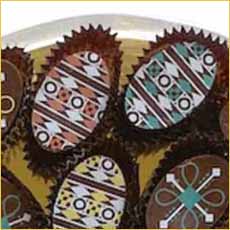
[1] Chocolate Easter eggs with traditional Ukranian Easter egg designs (all photos © Chocolat Moderne).


[2] A close-up of the Easter egg designs.


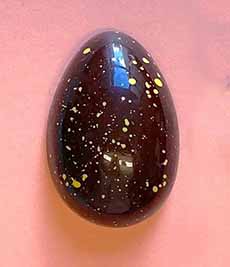
[3] Other options include speckled, hand-painted Easter eggs.


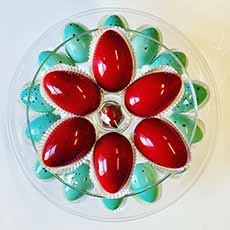
[4] Bright red eggs, a tradition in the Eastern Orthodox church. The red represents the blood and sacrifice of Christ on the cross, and the egg symbolizes rebirth.


One of our favorite artisan chocolatiers, Chocolat Moderne, has created a Ukrainian Easter Egg Collection to show support and empathy to Ukraine (photo #1). For lovers of gourmet Easter chocolate, this is one way to show your support.

Ten percent of proceeds will be donated to World Central Kitchen, a relief fund founded in 2010 by Chef Jose Andrés to deliver relief to disaster areas via quality cooked meals.

The organization has served one million meals to families across Ukraine, Poland, Romania, Moldova, and Hungary, and additional meals to Cambodia, Cuba, Dominican Republic, Haiti, Nicaragua, Peru, Uganda, and Zambia.
 
 
THE UKRANIAN COLLECTION: PURSUIT OF HAPPINESS


The Pursuit of Happiness bonbons are petite, filled dark chocolate topped with renditions of Ukrainian Easter art designs (photo #2).  

Chocolat Moderne Easter Eggs blend traditional and innovative flavors. The ingredients are all-natural and the chocolate is the finest couverture from Valrhona.

The collection contains six flavors (all gluten-free):

  • Anise in Wonderland: Refreshing soft caramel infused with anise seed.
  • Berry Bohemian: Caramel with strawberry and raspberry purée.
  • Cocoa Cabana: Milk chocolate ganache with roasted cocoa nibs.
  • Coconut Coast: White ganache with coconut milk and toasted coconut.
  • Peanut Pizzazz: Crunchy salted peanut and milk chocolate praliné.
  • Macadamia Republic: Crunchy salted macadamia and white chocolate praliné.
  •  
    Although it was originally created as part of the company’s seasonal collection, Chocolat Moderne will continue to sell The Pursuit of Happiness and donate to the World Central Kitchen beyond Easter.  

  • The 8-piece set is $17.95.
  • 24-piece set (photo #1) is $49.00.
  •  
     
    MORE DELUXE EASTER EGG COLLECTIONS

    In addition to The Pursuit of Happiness, Chocolat Moderne offers five additional Easter Egg Collections, available in dark and milk chocolate.

  • The Abstract Collection with eggs that are speckled and splashed with three vibrant accent colors.
  • The Fauvergé Collection with splashy and colorful abandon in the style of Fauvism.
  • The Milk Chocolate Collection of beautiful hand-painted eggs in milk chocolate.
  • The Greek Collection available through Greek Orthodox Easter with fillings inspired by Greek delicacies.
  • The Vegan Collection, for dairy-free enjoyment.
  •  
    Each of these beautifully-designed collections can be purchased until April 29th at ChocolatModerne.com, h www.chocolatmoderne.com or in person at their shop at 27 West 20th Street in New York City. Prices range from $12 for one egg to $33 for three eggs, and $65.00 for a six-piece gift box.

    Whatever you get, we promise it will be delicious.


    CHECK OUT WHAT’S HAPPENING ON OUR HOME PAGE, THENIBBLE.COM.


    Comments off

    Sweet & Savory Waffle Recipes For National Waffle Day

    March 25th is International Waffle Day (also called World Waffle Day), a holiday with religious significance in Denmark, Norway, and Sweden. March 25th is the Feast of the Annunciation, upon which waffles are typically eaten.

    The day celebrates waffles and their history, and we’ve got sweet and savory waffle recipes below—for breakfast, lunch, dinner, and dessert.

    First, a fun fact: The religious aspect to Waffle Day occurred because the Swedish Vårfrudagen, meaning “Our Lady’s Day” (the Feast of the Annunciation*), sounds similar to Våffeldagen (“waffle day”) when spoken quickly. Over time, Swedes began calling March 25th Waffle Day, and celebrating by eating waffles.

    The pun engendered a nationwide act of devotion to the Virgin even as far back as the 17th century. Both Catholics and Lutherans indulge in eating waffles [source].

    Denmark and Norway joined in.

    In the U.S., Waffle Day is August 24th.
     
     
    > Waffle History
     
    > Waffle Iron History

    > The Different Types Of Waffles

    > How To Make Better Waffles

    > 10 Additional Uses For A Waffle Iron
     
     
    READY FOR SOME DELICIOUS WAFFLE RECIPES?

    Savory Waffles

  • Chicken & Waffles
  • Chicken & Waffles With Frozen Waffles
  • Ham & Cheddar Waffles
  • Mashed Potato Waffles With Scallions & Sour Cream
  • Pizza Waffles
  • Pumpkin Waffles
  • Savory Mashed Potato Waffles
  • Savory Waffle Recipe Ideas
  • Scrambled Egg Waffle Sandwich With Garlic-Infused Honey
  • Spiced Stout Waffles
  • Thanksgiving Sausage Stuffing Turned Into Waffles
  • Waffle Eggs Benedict
  •  
    Also: Waffles Benedict: Eggs Benedict with waffles instead of an English muffin.
     
    Sweet Waffles

    It’s easy to make a waffle sundae with any flavor of ice cream, topped with whipped cream, nuts, and optional dessert sauces. Here are some of our other favorite sweet waffle recipes:

  • Cheesecake Waffles & Key Lime Mousse Waffles
  • Fudge Waffles
  • Gingerbread Waffles
  • Hot Fudge Sundae Bar With Waffles
  • Peanut Butter & Jelly Waffles
  • Pumpkin Dessert Waffles With Spiced Whipped Cream
  • Waffle Cakes
  • Waffle Ice Cream Sandwiches
  • Waffle Sandwich Cones
  •  


    ________________

    *More feasts on the Catholic liturgical calendar: almond biscotti on the Feast of St. Francis’ Transitus (October 3rd), hot-cross buns on St. Clair’s feast day (August 11th), sfinge (zeppole) on St. Joseph’s feast Day (March 19th), honey cakes on St. Abigail’s feast day (February 11th), chocolates on St. Valentine’s Day (February 14th), croissants on Our Lady of the Rosary and anniversary of the Battle of Lepanto (October 7th), and cuccia porridge (a sweet, rice pudding-like mixture of wheatberries in ricotta) on St. Lucy’s feast day (December 13th) [source].


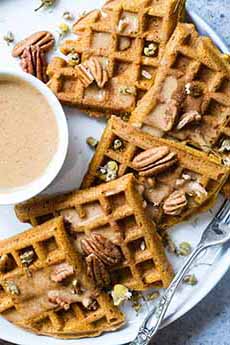
    [1] Pecans or pistachios can gracesavory waffles or sweet waffles. For sweet waffles, caramelize the nuts (photo © Taylor Kiser | Unsplash).


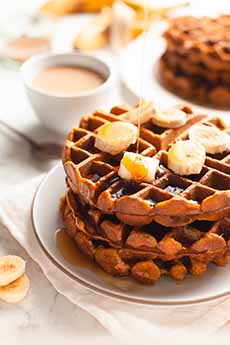
    [2] Pumpkin pancakes with sliced bananas (photo © Colavita).


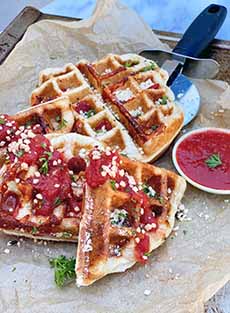
    [3] Pizza waffles. Here’s the recipe (photo © Emily Ellyn).

    Fancy Chicken & Waffles
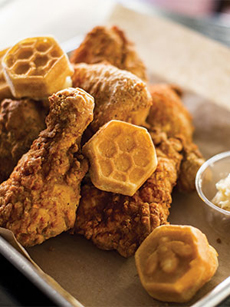
    [4] Don’t forget chicken and waffles—for breakfast, brunch, lunch, or dinner (photo © Honey Butter Fried Chicken | Chicago).


    CHECK OUT WHAT’S HAPPENING ON OUR HOME PAGE, THENIBBLE.COM.


    Comments off

    Gourmet Chocolate Easter Eggs For Your Easter Basket


    [1] These shimmering Easter eggs are filled with chocolate ganache. They are currently available online (photo © Markham + Fitz).


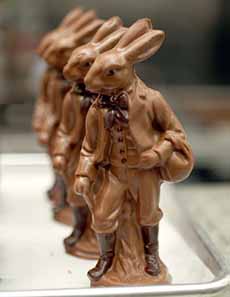
    [2] Your local artisan chocolatier may sell beautiful rabbits like this one from Woodhouse Chocolate. This style is no longer available, but check out this rabbit couple on a motorcycle and this white rabbit with an umbrella (photo © Woodhouse Chocolate).


    [3] This beautiful Easter egg comes in a variety of flavors, including Dulce de Leche, Milk Chocolate with Sea Salt, Milk Chocolate Pão de Mel (after a Brazilian dessert made with honey and spices), and Two Rivers single origin 70% cacao (photo © Mission Chocolate).


    [4] This stunner from Parisian confectioner Pierre Hermé is our favorite from Easter past, but check out this year’s sculpted chocolate Easter eggs (photo © Pierre Hermé).


    [5] An elegant bunny sold out quickly, but check your local artisan chocolatiers for equally elegant options (photo © Chocolat By Adam Turoni).


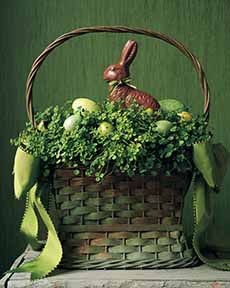
    [6] A beautiful Easter basket designed for a sophisticated grown-up. Here are 21 more designs from Martha Stewart (photo © Martha Stewart).


    [7] We also love a moss Easter basket. It can be filled with seasonal items year-round. We keep ours on the table near the front door for keys, gloves, etc. (photo © Good Housekeeping).


    Ah, the days when we were satisfied with a Cadbury buttercream Easter egg, available at just about any store that sold chocolate. Today, only gourmet chocolate Easter eggs please our palate.

    Take these gourmet chocolate Easter eggs (photo #1) from Markham + Fitz Chocolate Makers in Bentonville, Arkansas (birthplace and headquarters of Walmart).

    Two University of Arkansas alumni pooled their savings in 2014 to buy their first pieces of chocolate-making equipment.

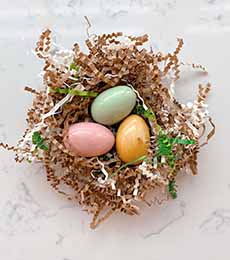
    The result: beautiful chocolate of the highest quality. Their Easter BonBons are shiny examples of the artisan’s craft: colored chocolate shells with different fillings:

  • Golden Egg: Peanut Butter + Marshmallow, coated in 60% Colombian dark chocolate.
  • Green Egg: Apricot + Basil in 60% Colombian dark chocolate ganache & coat.
  • Pink Egg: Caramel + Cracked Cacao, coated in 70% Dominican Republic dark chocolate.
  •  
    All are gluten- and soy-free. Golden Egg is also dairy-free.

    Easter BonBons are sold in boxes of 15 (BYO nest). Get yours at MarkhamAndFitz.com.
     
     
    THE HISTORY OF EASTER CANDY & THE EASTER BASKET

    Easter is the second-bestselling candy holiday in America after Halloween—and Easter candy is often much better than that which is collected by trick-or-treating.

    While spring lamb, dyed eggs, and hot cross buns all trace their origins to the pagan spring festivals of ancient times, candy is a newcomer, dating back just to the 1800s.

    It was then that European candy-makers first hand-crafted chocolate eggs for the holiday. They were wildly popular.

    Each Easter in our youth, we’d look forward to an Easter basket chock-full of candy: chocolate eggs filled with buttercream and marzipan, chocolate bunnies, jelly beans, marshmallow chicks, and other goodies, nestled in shredded paper “grass” and tied with a big bow.

    Children around the world received Easter baskets like this. As the tradition evolved, even adults got Easter gifts.

    But how did the tradition begin? Let’s start way back.

    To ancient cultures, the spring equinox marked the transition from the cold, dark days of winter to the warmer, sunny days of spring.

    Farmers planted their crops (most people were farmers or hunters, or otherwise relied on those who were) and prayed to their gods for a bountiful harvest.

    There would be rituals and festivities honoring the gods. Anglo-Saxons, for example, held feasts in honor of the goddess of spring and fertility, Eostre. The Christian holiday of Easter was named for her.

    In early Christianity, fasting was common practice. The tradition of Lent evolved, a fasting period leading up to Easter.

    As Christianity spread through Western Europe from the fifth through 12th centuries, the observance of Lent did as well [source].

    As some Christians gave up sweets as their Lenten sacrifice, the return to eating them after 40 days without it was a nice reward. The stage was set for Easter sweets.

    Easter basket. The symbolism of the basket stretches back thousands of years prior to the Easter celebration of the Ressurection of Jesus Christ.

    In an eighth-century book “The Reckoning of Time,” Eostre was depicted cradling a woven basket in the crook of her arm—the beginning of the Easter basket tradition.

    The concept of Easter baskets and the Easter bunny (called Easter hare, Osterhase, in German) was brought to America in the 18th century by German immigrants.

    Easter baskets began a widespread tradition in the late 19th century, around the same time as the German “Osterhase” became the Easter Bunny.

    Easter eggs. Eggs have historically been mythological motifs for new life. Ancient Egyptians, Asians, and Greeks all believed in the premise of the world being born from a cosmic egg.

    According to many sources, the Christian custom of Easter eggs was adopted from Persian tradition following the early Christians of Mesopotamia, who stained them red in memory of the blood of Christ.

    When they are cracked open, the eggs are said to represent Jesus’ emergence from the tomb and His resurrection.

    The Christian Church officially adopted the custom [source].

    Easter rabbit. The Easter Bunny has been the recognizable symbol of Easter since the 1700s [source].

    Originally called a hare, from medieval times the prolific rabbit was a symbol of fertility.

    German immigrants continued the concept of the egg-delivering white hare, along with the tradition that children would prepare nests in which the hare could leave brightly colored eggs.

    The rabbit’s Easter morning deliveries expanded to include chocolate and other types of candy and gifts, while decorated baskets replaced nests [source 1] [source 2].

    Jelly beans. The modern jelly bean is believed to have been invented in the U.S., sometime after 1850. Due to its egg shape and festive colors, it became an Easter tradition in the 1930s. Here’s the history of jelly beans.

    Easter egg hunt. The custom of the Easter egg hunt comes from Germany. Its origins may date to the late 16th century, when the Protestant reformer Martin Luther organized egg hunts for his congregation.

    The men would hide the eggs for the women and children to find [source].

    In Germany and then in the U.S., children would leave out stockings and hats to be filled by the Easter Bunny. Children also built nests out of leaves and sticks.

    This brought the tradition outdoors—and later engendered the Easter egg hunt in the U.S. [source].
     
     
    MODERN EASTER CANDY

    German immigrants were also the originators of the candy Easter egg, which was first made of sugar and pastry in the mid-1800s.

    Candy eggs became wildly popular in the mid-1800s.

    By the late 1800s, U.S. candy makers sold hollow and filled chocolate eggs, jelly eggs, and exquisite panorama sugar eggs, hollow egg-shaped sugar shell with an open end that revealed an Easter panorama made from paper [source].

    By the early 20th century, improvements in equipment and processes led chocolate makers to produce Easter candy on a much larger scale: molded rabbits, birds, nests, and other designs appeared.

    Soon, Easter candies of every description were being mass-produced: rabbits and chicks in every pose, for starters, became Easter basket staples, and affordable to most consumers.

    Malted milk eggs, peanut butter eggs, marshmallow eggs, white chocolate carrots colored orange…so many Easter treats, so little time.

    The early 20th century also saw jelly beans be added to the Easter basket.

    While chocolate-covered marshmallow eggs had existed for some time, in 1953, Peeps marshmallow chicks in yellow and white debuted in Brooklyn.

    With the 21st century, big snack brands got the message and began to produce, for example, Almond Joy, Cadbury, Hershey’s, M&Ms, Nerds, Oreos, Reese’s and Tootsie Rolls in Easter colors and/or wrappers.

    And the rest is history (although our history is to stick with artisan chocolate).
     
     
    ________________

    *We’re not totally snobby. While we dislike most mass-marketed chocolate because it’s overly sweet, we have two exceptions: York Peppermint Patties and Twix bars.


    CHECK OUT WHAT’S HAPPENING ON OUR HOME PAGE, THENIBBLE.COM.


    Comments off


    © Copyright 2005-2026 Lifestyle Direct, Inc. All rights reserved. All images are copyrighted to their respective owners.