THE NIBBLE BLOG: Products, Recipes & Trends In Specialty Foods


Also visit our main website, TheNibble.com.

TIP OF THE DAY: Bake A Savory Pie For National “Pi” Day


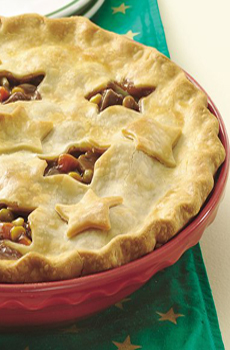
Make this delicious beef pot pie. Photo and
recipe courtesy BettyCrocker.com.
  Remember your high school math: Pi (3.14159) is the ratio of a circle’s circumference to its diameter.

Math geeks have declared 3.14 (March 14th) Pi Day. But we’re adopting it as “Pie Day”; and why not, since a pie is a circle, and you can use pi and the diameter of your pie plate to calculate the circumference. (Lame or a good excuse to bake a pie? You be the judge).

Why bake a savory pie instead of a sweet one? The original pies were savory. Fruit pies and other sweet versions did not evolve until the 1300s and later.

There are plenty of delicious savory pies, from that American favorite, pot pie, to British steak and Stilton pie. To celebrate St. Patrick’s Day, how about a beef and Guinness pie?

 
A BRIEF HISTORY OF PIE

The ancient Egyptians, who were great bread bakers, also worked out the details of early pastry. But don’t salivate at the thought of it: Until relatively recently, the pastry was tough, inedible and used as a cooking vessel. Pie was a savory dish scooped from the crust—more like a casserole.

 
In the millennia before baking pans were invented, a dough of flour and water paste was wrapped around meat or fish to soak up the juices as it cooked. Pastry as we now know it was developed in the Middle East (a baklava, made of phyllo dough layered with nuts and honey, was brought to Mediterranean Europe by the Muslims and Greek seamen around the 7th century.

What about those noted gourmands, the Romans? Greek and Roman pastry did not progress as far as it could have because both cultures used oil, not butter, which can’t create a stiff pastry. It wasn’t until much later, in medieval Northern Europe, that the traditional use of lard and butter instead of oil for cooking hastened the development of other pastry types.

The Renaissance saw a pie-baking boom in England, but still they were meat pies, including the legacies of shepherd’s pie (lamb and vegetables) and cottage pie (beef and vegetable). Both have a mashed potato top instead of top crust.

By the 17th century, flaky and puff pastries were in use, developed by French and Italian Renaissance chefs. Pastry began to become highly decorated, with pastry chefs working intricate patterns on the crusts.


PIE BAKING TIPS

  • BEST PIE PLATE: We prefer ovenproof glass pie plates. Not only do they conduct heat well, but it’s easy to see if the bottom crust is golden.
  • MORE FLAVORFUL CRUSTS: Make your crusts more delicious by seasoning them. Great choices include fresh-ground pepper, fresh herbs (start with basil or rosemary), ground nuts, lemon zest, sesame or other seeds (including mustard seeds) and smoked paprika.
  • USE SHORTCUTS: You don’t have to make a from-scratch pie. Take a look at this easy chicken pot pie recipe.
  •  
    CHECK OUT ALL THE DIFFERENT TYPES OF PIES IN OUR PIE & PASTRY GLOSSARY.

     
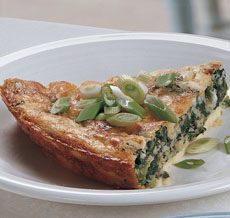
    Easy spinach and Parmesan pie. Photo and recipe courtesy BettyCrocker.com.


    Comments off

    TIP OF THE DAY: How To Find The Best Baguette


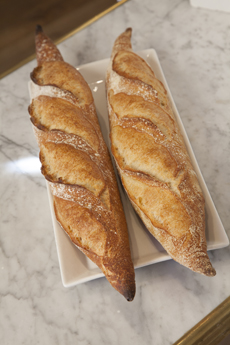
    Beautiful baguettes from Maison Kayser in
    New York City. The artistic flair of the bakers
    adds to the visual appeal, but the taste’s
    the thing. Photo courtesy Maison Kayser.
      There’s a lot of bad bread in America: spongy, flavorless, aroma-less, a waste of carbs masquerading as “good bread.” This is especially true when you have expectations for a specialty loaf like a baguette.

    The longest of loaves, a baguette is narrow with a very crusty, amber-colored outside and a delicate, tender crumb (inside). A baguette is three or four inches in diameter and can be up to a yard long, although it is typically about two feet in length. (See our Bread glossary for the different types of bread, including the different types of French bread).

    If you live in a large city, you can buy a baguette in any food-centric neighborhood. But is it great, passable or merely “masquerading” as a baguette?

    This article is a tutorial from Maison Kayser, a boulangerie and pâtisserie* that has people standing in line for its baguettes in Paris and at a number of global outposts.

    “Good bread doesn’t lie,” says founder Eric Kayser. “It says everything about the quality of its ingredients and the know-how of its creator.”

    Executive master baker Yann Ledoux of Maison Kayser in New York City gave us this valuable lesson in understanding great baguettes:

     
    INGREDIENTS

    All ingredients are not created equal, even when they’re as seemingly simple as flour, water, salt and levain (sourdough starter). (There’s more about Maison Kayser’s levain and flour later in this article.)

    And all training is not equal: The best bread bakers have extensive training from masters, and bring their own passion and commitment to quality and to creating loaves that lead to lines of customers snaking around the corner.

    Ledoux attributes these percentages to the creation of a great baguette:

  • Water:† 5%
  • Levain (sourdough starter): 15%
  • Flour: 30%
  • Kneading/Technique: 30%
  • Fermentation Time: 15%
  • Other (mixer and oven): 5%
  •  
    *A boulangerie is a bread bakery, a pâtisserie is a pastry shop. Traditionally in France, the two crafts are separate, as each requires a different artisan skill set.

    †Each municipal water supply imparts unique undertones of flavor.

    HOW TO BUY THE BEST BAGUETTE

    You can tell a lot just by looking at the baguette. If you want to follow this lesson closely, pick up all the different baguettes you can and compare them to each other. You can turn it into a wine and cheese party and demonstrate this information.

    Start By Looking

    A Great Baguette

  • The shape says a great deal, says Ledoux. The perfect baguette should have enough shape and volume (enough air inside the baguette). It should not collapse (flatten) when you hold it to slice it.
  • The loaf should be straight, but not flat.
  • The loaf should be golden (we like to think “amber”) in color.
  •  
    A Mediocre Baguette

  • The loaf will not have a good shape (for example a flat or bloated shape). Cracked sides indicate a lack of fermentation time.
  • It will be pale in color and not the rich golden amber-brown color it should be.
  • An overtly moist crumb is wrong the baguette too chewy.
  • The use of commercial yeast combined with reduced fermentation time (faster production) will yield baguettes that are lacking in flavor, and that will quickly dry out and become very hard.
  •  

    THE TEXTBOOK PERFECT CRUST & CRUMB

    Bread is divided into the external crust and the internal crumb. Cut a six-inch piece from the baguette in half and examine the crumb.

    Crumb

    The perfect crumb should have small air holes that are present consistently throughout the baguette. It should have a certain level of elasticity, so when you press it with your fingers it always returns to its original shape and form. If it does not return, it is because the crumb is either too dense (not fermented enough), too moist (not baked enough) or too hard (not fresh enough).

    The texture of the crumb should have a creamy color, taste and smell of hazelnut and have a hint of acidity that brings a balance and enhances the flavors within the baguette.

    If the holes in the bread are vastly varied in size, if the color is cream rather than white, if you can smell the delicious aroma of the levain and hear a crisp crunch while squeezing the crust, then (voilà!) you have the best baguette.

     
    The inside, called the crumb, of a great baguette. Photo courtesy Maison Kayser..
     
    Crust

    The crust should have a beautiful consistent golden brown (amber) color throughout the entire baguette, except at the scoring, where the color is slightly lighter.
    Sourdough Starter (Levain)

    What sets a great baguette apart is the use of homemade, mineral-rich, natural liquid levain, which achieves a richer balance and flavor than commercially purchased starters. At Maison Kayser there is no commercial yeast or pre-mixed dough arriving in freezer containers from Paris: Everything is made from scratch on the spot.

    Although baking with liquid levain is a timely process, it is an essential element of a true artisanal, hands-on process to enable the sourdough to reach its full potential. At Maison Kayser, the liquid levain is constantly monitored by a trained baker and tested for acidity, texture and aroma. As a result, the baguette has a stronger flavor, a slight hazelnut taste in the crumb and an appealing—we say “beguiling”—aroma. As importantly, the baguette made with liquid levain bestows a longer shelf life (how often has the afternoon’s baguette become brick-hard by evening?).

    Baker’s secret: In addition to the organic flour sourced in upstate New York, Maison Kayser uses a little bit of Gaude flour imported from France. Made from roasted corn, Gaude gives the bread the nutty, sourdough flavor and creamy, yellowish hue, rather than the stark white of too many American baguettes.

    Fermentation

    “Greatness cannot be rushed,” says Yann Ledoux, and the best baguette doesn’t rush things. The proper method involves a longer and slower fermentation or rising of the dough. Each of Maison Kayser’s baguettes takes 12 hours from mixing to baking.

    Artistry

    Great bakers enjoy creating a “signature” baguette. Eric Kayser likes to create different signature baguettes based on the neighborhoods in which his bakeries are located. For example:

  • For his Bakery Boulevard Malesherbes in Paris, Eric Kayser created the Baguette Malesherbes, which is shorter with square ends. This makes it easier for the busy working folk to carry home after at the end of the work day.
  • For the Upper East Side‡ of New York City, Yann Ledoux created the Epi-East Side Baguette, with a twisted end (see the photo above). The neighborhood is full of stay-at-home moms. This embellishment makes it easy for moms to break off a piece of baguette for their young-un(s).
  •  
    FOOD TRIVIA

    While it is the longest loaf, baguette means “a small rod” in French.

    ‡Maison Kayser is located at 1294 Third Avenue, between 74th and 75th Streets.
      

    Comments off

    TIP OF THE DAY: Versatile Sautéed Apples


    Sauteed apples: simple to make for every
    meal. Photo by Martia Punts | Dreamstime.
      Sauteed apples couldn’t be easier to make—just brown them in butter. They add a lift to any meal:

  • Breakfast: As a topping for pancakes, waffles or porridge
  • Lunch: For “apple pie yogurt,” with plain or flavored yogurt and optional granola, nuts and/or seeds
  • Dinner: As a side with roast chicken, ham or pork chops
  • Snack or Dessert: As a topping for ice cream or frozen yogurt, or with a dab of whipped cream.
  •  

    Also consider adding diced apples to a sautéed Brussels sprouts recipe. The two flavors and textures are very complementary.

     
    EASY SAUTÉED APPLES RECIPE

    Ingredients

  • 3 tablespoons butter
  • 4 Granny Smith or other baking apples, peeled, cored, and cut* into thick slices or dice†
  • 1/2 teaspoon cinnamon
  • Dash nutmeg
  • 1 tablespoon brown sugar
  • Optional: 1/4 cup dried cherries, cranberries, raisins or sultanas (or combination)
  •  
    *Toss sliced apples with lemon juice to keep them from turning brown.

    †Slices are more elegant for side dishes, dice are easier to toss yogurt and ice cream.


    Preparation

    1. MELT butter in a large nonstick skillet; do not brown.

    2. ADD apples. Cook over medium high heat for 5 minutes or until the apples soften and are just beginning to change color. Stir often. Add cinnamon, nutmeg and dried fruit.

    3. ADD the sugar and continue cooking, stirring often, for 3 minutes or until the apples begin to caramelize at the edges.

    VARIATION FOR SIDE DISH

    If serving as a side with meats, you can:

  • Substitute olive oil for the butter
  • Season with a dash of salt and pepper
  • Add 1 tablespoon balsamic vinegar to Step 2 above
  •  
    Make “apple pie” yogurt. Photo courtesy Stix Mediterranean Grill | New York City.
     
    FOR A THICKER SAUCE

    We like the recipe as is. But if you think you’d like a thicker sauce:

    1. COMBINE 1 tablespoon cornstarch and 1/2 cup cold water. Prior to adding spices and sugar, stir into the apples.

    2. ADD spices and sugar and bring to a simmer; reduce heat and simmer for about 3 to 5 minutes, stirring occasionally.
      

    Comments off

    Easy Homemade Peanut Brittle Recipe With Irish Whiskey

    A Dish Of Homemade Peanut Brittle
    [1] Homemade peanut brittle (photo © Janet Hudson | Wikipedia).

    A Bowl Of Shelled Peanuts
    [2] Try not to eat all the peanuts out of the bowl (photo © J. Irkaejc | Panther Media).

    A bottle of Slane Irish Whiskey in front of a whiskey cask.
    [3] Sip some Irish whiskey with your brittle (photos #3 and #4 © Slane Irish Whiskey).

    Iced Coffee With Irish Whiskey
    [4] Or, add some whiskey to hot or iced coffee or tea.


    You’ve never made peanut brittle before? It’s time: March is National Peanut Month.

    We’re presenting a recipe from chef Mark Dowling of LearnToCook.com, a website dedicated to getting the whole family in the kitchen with easy video recipes showcasing the basics of cooking.

    His easy recipe for peanut brittle is below. Chef Dowling was kind enough to take the time to create our special request: a variation for St. Patrick’s Day that adds a touch of Irish whiskey.

    For other occasions, you can substitute the spirit of your choice; and use whatever nuts you like. (We love pistachio brittle.)

    You can keep the recipe kid-friendly by enhancing it with seeds (flax, pepita/pumpkin, and/or sesame seeds), mini chocolate chips, crumbled bacon, or chile heat.

    The recipe follows, but first:

    > National Popcorn Day is January 19th.

    > National Peanut Brittle Day is January 26th.

    > National Candy Day is November 4th.

    > A recipe for popcorn peanut brittle (it rocks!).

    > The history of peanut brittle.

    > The history of popcorn.

    > The history of peanuts.

    > The history of candy.
     
     
    EASY PEANUT BRITTLE RECIPE

    Ingredients For 5 Pounds Of Brittle

  • 4 cups granulated sugar
  • 16 ounces light corn syrup
  • 8 ounces water OR replace with 8 ounces Irish whiskey or other spirit
  • 4 ounces butter
  • 5 cups raw peanuts
  • 1 tablespoon baking soda
  • Candy thermometer, preferably a clip-on
  •  
    Preparation

    1. COARSELY CHOP the nuts. Sift baking soda to eliminate any lumps.

    2. BUTTER two cookie sheet trays/half sheet pans and set aside.

    3. PLACE sugar, corn syrup, water, OR optional whiskey and butter in a saucepan. Bring to a boil over medium-high heat, stirring regularly to avoid scorching. Clip a candy thermometer to the side of the pot.

    4. REDUCE heat to medium and continue boiling steadily until the mixture reaches 275°F. This might take about 35 minutes. Stir frequently. When you reach 275°F…

    5. SIR in the nuts. Then continue to cook over low heat. Keep stirring regularly. At this stage, you want the mixture to reach 295°F, the “hard crack stage.” It might take another 15 minutes to get there, but keep a close eye on the thermometer so it doesn’t overcook!

    6. REMOVE the pan from the heat and remove the thermometer.

    7. SPRINKLE in baking soda; stir thoroughly to combine. POUR immediately onto the buttered sheet pans. Use two forks to lift up and separate the mixture as it cools.

    8. COOL thoroughly overnight. Then break up as desired and store in an airtight container.

    Adults only: Sip some Irish whiskey as you enjoy your whiskey brittle.


    CHECK OUT WHAT’S HAPPENING ON OUR HOME PAGE, THENIBBLE.COM.


    Comments off

    TIP OF THE DAY: Granola Ice Cream Sandwich


    A new take on the ice cream sandwich. Photo
    courtesy Thrive ice cream.
     

    Since we’re missing an hour of sleep due to Daylight Savings Time, today’s tip is short and sweet: Make granola ice cream sandwiches.

    The idea was inspired by this photo from Thrive Frozen Nutrition ice cream.. It substitutes healthier granola for the cookie portion of an ice cream sandwich.
    GRANOLA ICE CREAM SANDWICH RECIPE

    Ingredients

  • Ice cream
  • Granola
  •  

    Preparation

    1. PLACE granola on a plate.

    2. REMOVE ice cream from container and cut into half-inch slices (or thicker).

    3. DIP both sides of ice cream slices into granola. Wrap in plastic wrap or wax paper and freeze.

     
    Variations

  • Substitute another dry cereal for the granola.
  • Add or substitute chopped nuts.
  • Add dried berries or other dried fruit.
  • Add mini chocolate chips, mini M&Ms or other candies.
  •  
    Enjoy!


    Comments off

    The Nibble Webzine Of Food Adventures
    RSS
    Follow by Email


    © Copyright 2005-2026 Lifestyle Direct, Inc. All rights reserved. All images are copyrighted to their respective owners.