THE NIBBLE BLOG: Products, Recipes & Trends In Specialty Foods


Also visit our main website, TheNibble.com.

Recipe For Roasted Garlic, A Healthy Garnish

Baked Garlic

Roast Garlic
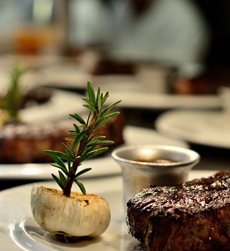
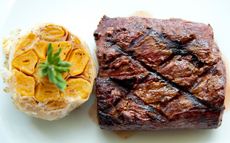
[1] and [2] A bulb of roasted garlic is a delicious accompaniment to grilled meats (photos © Sushi Roku Katana | West Hollywood.


Originating more than 6,000 years ago in central Asia, garlic took the culinary world by storm, spreading from culture to culture. It is used in cuisines on all the world’s continents and is one of America’s most popular herbs*.

A member of the onion genus, Allium (the Latin word for garlic), garlic’s cousins include chives, green onions/scallions, leeks, onions, and shallots. Its botanical family, Amaryllidaceae, comprises flowering plants, most grown from bulbs (including, not surprisingly, the amaryllis).

Garlic is not only a delicious flavor to many people; it is also one of the healthiest foods you can eat. It can lower blood pressure and cholesterol levels, boost the immune system, and may even fight Alzheimer’s and other forms of dementia.

Here’s more on the health benefits of garlic.

The most common use of garlic involves crushing or mincing a few cloves and adding the raw garlic to a recipe. But you can cook entire bulbs or whole cloves of garlic as a side or a garnish to please your favorite garlic lovers.

There are two principal ways to do this, each delivering different flavors and textures. Roasting an entire head of garlic is the simpler of the methods.

Both produce a rich, sweet, mellow flavor that appeals even to people who don’t like the flavor of garlic in recipes.
_________________________________________

*An herb is a plant that is used to flavor or scent other foods.

 
RECIPE #1: ROASTED GARLIC

A head of roasted garlic is served as a hearty side with roasted meats and poultry.

  • You can scoop it from the head with a utensil, or squeeze it from the cloves onto bread or toasts—a different approach to garlic bread!
  • You can give each garlic lover his/her own roasted garlic head/bulb, or share a number of bulbs at the table.
  •  
    Preparation

    1. PREHEAT the oven to 350°F.

    2. CREATE a “hinge” on the top of the garlic bulb/head by slicing horizontally into it. Stop before you cut completely through. Then close the hinge and wrap the entire head in aluminum foil.

    3. PLACE the packet in the oven and bake for at least 45 minutes. It’s ready when you can squeeze the bottom of the bulb and the sweet, caramel-colored garlic oozes out the top.


    RECIPE #2: GARLIC CONFIT

    Confit is a method of preservation whereby a food (usually meat, as in duck confit) is cooked slowly in fat. It is then submerged and stored in the fat, where it will last for months.

    You can adapt the technique to garlic. Using peeled garlic cloves instead of the whole bulb, the confit method develops a flavor similar to roasting, but is more conducive to using as a garnish.

    Use the garlic confit as a topping or side garnish for meat, poultry and grilled fish; with eggs; to top burgers and sandwiches; as part of a condiment tray with pickles; or any way that inspires you.

    The garlic-flavored oil that remains in the dish after cooking is a quick flavor booster in almost any recipe that requires oil—including a vinaigrette for the meal’s salad course, or bread-dipping, or marinades. We like to use it in mashed potatoes and to cook eggs.

    You can freeze or refrigerate the confit for future use, so don’t hesitate to make a large batch at once. Bring some to garlic-loving friends.
     
    Preparation

    1. PREHEAT the oven to 225°F.

    2. PEEL the garlic cloves: First soak the unpeeled cloves in cold water for five minutes to loosen the skin. Slice off the root and tip with a sharp paring knife, then use the tip to lift off the papery skin.

    3. PLACE the peeled garlic cloves in an oven-safe dish with high sides, then cover completely with olive oil. You can also add aromatics to the oil—chives, parsley, rosemary, sage, tarragon, thyme—lemon zest, or chiles.

    4. COVER and bake for at least an hour, or until the cloves become soft enough to squish between your fingers. Remove from the oven and drain the oil into an airtight jar or other container. Store in the fridge.


    Roasted Garlic
    [1] Garlic confit, glistening cloves roasted in olive oil (photo © Apronclad.com

    Russian Red Garlic
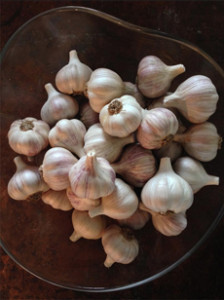
    [2] Beautiful Russian Red garlic (photo © Chef Seamus Mullen | Facebook).


    CHECK OUT WHAT’S HAPPENING ON OUR HOME PAGE, THENIBBLE.COM.


    Comments off

    FOOD FUN: Why Ask Why? Food Trivia

    Water Crackers

    Red Stripe Peppermints
    Top: Crackers have pin holes so the air
    escapes and they don’t rise. Photo courtesy
    PantryPacker.com. Bottom: A checmical in
    mint tricks the brain info feeling coolness.
    Photo by Jeffrey Collingwood | SXC.

      Here are some fun food facts adapted from TodayIFoundOut.com

    Why Chiles Taste Hot

    The heat in chiles comes from a colorless, odorless chemical called capsaicin, which is found mostly in the seeds and ribs of the chiles.

    Capsaicin binds with certain sensory neurons in the mouth to trick the body into thinking it is burning—although no physical burning takes place. Details.
     
    Why Crackers Have Holes

    The holes allow steam to escape during cooking, which keeps the crackers flat. Otherwise, they’d rise like a biscuit.

    Adding holes is an art: If they are too close together, too much steam/moisture escapes and the crackers will be dry and hard. If the holes are too far apart, parts of the cracker will rise. Details.
     
    Why Milk Is White

    Milk is composed of 87% water and 13% solids—fat and proteins. The chief protein is casein, which comprises some 80% of the proteins in milk. The casein proteins and some of the fats deflect light, which results in milk being fairly opaque and appearing white to our eyes. Details.
     
    Why Mint Tastes Cold

    Menthol, a chemical in mint, binds with cold-sensitive receptors and tricks the brain into thinking that you are feeling a cold sensation. In fact, everything is the same temperature as it was pre-menthol. Details.


    Why Onions Make Your Eyes Water

    Onions absorb sulfur from the soil. When chopped, the cells are broken and release enzymes which react with the sulfur. When this substance comes in contact with the moisture in the eye, it triggers a burning sensation, which then engenders tears.

    Sweet onions grow in low-sulphur soil, which is why they don’t emit fumes when cut. Details.
     
    Why Popcorn Pops

    Popcorn is the only variety of corn that will pop. When the kernels are heated up, the water inside begins to steam. Eventually, the pressure of the steam gets so great that the shell bursts. When some kernels remain unpopped, it is likely that they are low in moisture. Details.

     
    Why Swiss Cheese Has Holes

    Some of the microbes added to the milk in the cheese-making process produce significant amounts of lactic acid, which is consumed by other microbes. These microbes produce carbon dioxide as a byproduct, which creates bubbles within the cheese.

    Rather than pressing them out, the cheese makers leave them as a distinctive feature of the cheese. Details.


    Red Onions

    Popcorn Kernels
    Top: The sulphur in onions makes your eyes water. Photo courtesy Burpee. Bottom: Popcorn is the only corn kernel that pops. Photo courtesy Belle Chevre.


    Comments off

    RECIPE: Collard Wraps

    Tuna Collard Wrap

    Hummus Collard Wrap

    Collard Wrap
    Top: tuna-collard wrap from Happy Bellies
    with cooked spinach, grated carrots and
    diced avocado. Center: hummus-collard wrap from The Pomelo Blog, with ham, tomato,
    cucumber and sprouts. Bottom: For
    portability or neater eating, tie a piece of
    parchment or wax paper around the wrap.
    Photo of Reuben collard wrap courtesy Spring
    Vegan
    .


    A few days ago, with the announcement of the new USDA Nutrition Guidelines, we mentioned collard wraps as a better-for-you sandwich option that fit right in.

    HOW TO BUILD A COLLARD WRAP

    There are two basic ways to make a collard wrap:

  • Simply cut off the stem (you can save it for salad or steaming) and trim down or remove the spine so the leaf will lie flat. If you remove the spine, you simply overlap both sides of the leaf, and fill and roll as if it were a whole leaf.
  • We like to first blanch or lightly steam the leaves to make them more flexible and easier to both roll and bite.
  • Whether or not you blanch, place the leaf underside-up, load the ingredients on one side of the underside, and roll like a burrito: Fold up the bottom, fold in the sides and roll. Here’s a video.
  •  
    Like any wrap or other sandwich, the creativity is up to you. You can simply roll up egg or tuna salad in the collard, or use a variety of different ingredients for layered flavors and textures. You can also accent your wrap with a dipping sauce.

  • Collard wraps can be vegetarian or vegan, or rolled with eggs, fish/seafood, meat or poultry.
  • Proteins can be main ingredients or accents: cheese, chopped nuts, fish/seafood, legumes (beans, lentils), meat, seeds, seitan/tofu, sprouts, whole grains
  • Vegetables: mashed/puréed, pickled, raw, roasted, steamed
  • Condiments: barbecue sauce, chili sauce, cranberry sauce, guacamole, horseradish sauce, hummus, ketchup, mayonnaise/aïoli, mustard, nut butter, pesto, pickle relish, salsa, tahini, tapenade, Thai peanut sauce, vinaigrette or other salad dressing, yogurt or any dip or spread.
  • Spices: You can sprinkle the fillings with any spice, from curry to sesame seed.
  • Herbs: You can add dry or fresh herbs (we like fresh basil, chives, cilantro, dill, ginger, horseradish, mint and parsley).
  • Fruit: You can add sweet notes with fresh or dried fruit.
  • Heat: If you prefer heat to sweet, add red chili flakes, diced jalapeño and/or a splash of hot sauce.
  • Zest: If you have fresh lemons and limes, grate in some zest.
  •  
    While they don’t get as much press as collard wraps, Swiss chard and Savoy cabbage make equally good wraps.

     
    RECIPE: REUBEN COLLARD WRAP

    We adapted this wrap idea from Spring Vegan, which made it as a vegan wrap. We used actual corned beef and Swiss cheese, the fundamentals of a Reuben Sandwich.

    Ingredients

  • Collard leaves
  • Corned beef or vegan substitute
  • Swiss cheese or Swiss-style soy cheese
  • Russian dressing
  • Optional: Sliced tomato
  •  
    Preparation

    1. REMOVE the stems from the collards, blanch them, let them cool.

    2. ADD the ingredients to the collard leaf and roll up as you would would a burrito.


    RECIPE: RAW COLLARD WRAP

    This recipe, for a classic raw vegetable wrap, is from Urban Remedy. However, we do prefer our sesame seeds toasted (how to toast seeds).

    Ingredients Per Sandwich

  • 1 collard leaf, stem and rib removed
  • 1 sheet of raw nori (toasted seaweed sheets)
  • ¼ cucumber, julienned
  • 1 carrot, julienned, grated or shredded
  • ¼ avocado, cut in long strips
  • Optional vegetables: green onions, red bell pepper, sprouts
  • ¼ cup raw sesame seeds
  • Optional: 2 tablespoons hummus
  • ¼ teaspoon sea salt or seasoned salt
  • Optional: Asian chili sauce, peanut sauce, ponzu or soy sauce for dipping
  •  
    Preparation

    1. PLACE the nori sheet on a dry cutting board. Pat the collard leaf as dry as possible, and lay it atop the nori.

    2. PLACE the carrots, cucumber, avocado and sesame seeds on one end of the collard leaf. If using hummus, spread it on the leaf before adding the vegetables. Sprinkle the vegetables with salt.

    3. ROLL the leaf tightly, starting at the end with the vegetables. Eat it like a Japanese hand roll. If you haven’t used hummus, you can dip the roll in chili sauce, peanut sauce or soy sauce for moisture and flavor.

      Egg Wrap With Collard

    Purple Collard Greens
    Top: Make an egg wrap with fried, hard-boiled or scrambled eggs. Photo courtesy Pancake Warriors. Bottom: purple collard greens (the stems are purplish) from Good Eggs.


    Comments off


    © Copyright 2005-2026 Lifestyle Direct, Inc. All rights reserved. All images are copyrighted to their respective owners.