THE NIBBLE BLOG: Products, Recipes & Trends In Specialty Foods


Also visit our main website, TheNibble.com.

NEWS: Get Your Latte At Burger King

Would you like a latte with that burger?

Has America gone latte crazy? If not, why would Burger King add a 12-ounce “coffeehouse latte” to its menu?

Enough with the questions:

Starting today, you can kick-start your morning or take your coffee break at Burger King. The menu includes caramel, mocha, plain and vanilla lattes in regular and nonfat varieties. The lattes are brewed with 100% Latin American arabica espresso from Seattle’s Best Coffee.

The suggested retail price starts at $2.29, but for a limited time, you can try them for just $1.00.
It’s time to round up the gang and head to BK for your coffee break!


Coffeehouse lattes are now on the menu at Burger King. Photo courtesy Burger King.


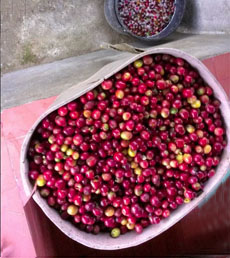
Coffee cherries. Photo courtesy
CounterCultureCoffee.com.
 

WHAT’S A LATTE?

Caffe latte, called latte (LAH-tay) for short, is a shot of espresso with steamed milk in a 3:1 ratio of milk to espresso. In France and Italy, it is a breakfast drink. In America it also serves as the base for flavored lattes, where a sweet syrup is added in any variety of flavors—caramel, hazelnut, mocha, vanilla and a long list of specialty flavors.

See all the different types of espresso drinks in our Espresso Glossary.
COFFEE 101: COFFEE CHERRIES

The fruits of the coffee tree are called cherries, and you can see why in the photo: They look just like Queen Anne cherries. Other varieties can be solid red or burgundy.


Inside the fruit are two seeds: the coffee beans. The seeds are a pale green color, and turn brown when they are roasted.

There’s a sweet, sticky pulp surrounding the seeds that tastes like a delicate blend of watermelon and hibiscus. But this is not an eating fruit: Most of the cherry interior is taken up by the seeds.

Thank goodness: Otherwise, we’d need to buy even more tiny beans to make a cup of coffee.
  

Comments off

TIP OF THE DAY: Enjoy Pasta More Often


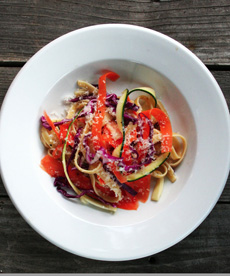
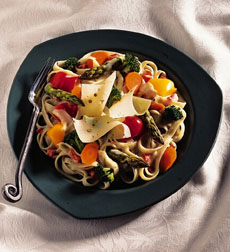
Add lots of veggies to make pasta a healthy
dish. Photo courtesy Wisconsin Milk
Marketing Board.
 

It’s National Nutrition Month, so we’re giving some credit to a food that’s often on the “avoid” list: pasta.

Jackie Newgent, RD, CDN and a consultant to Barilla pasta, has pointed out a few facts that should be of interest to any pasta lover. The good news is, you can and should incorporate pasta into your diet regularly. The only trick is to be sure that the recipe and the portion size confirm to approved guidelines for “healthy pasta.”

PASTA ALONE DOES NOT ADD POUNDS

Excess calories create excess fat, not healthy portions of pasta. Pasta is a good complex carbohydrate food. Several studies have shown that a balance of carbohydrates, protein and fat are crucial for maintaining a healthy weight and reducing risk of diseases. A 2009 study from Harvard School of Public Health and Pennington Biomedical Research Center found that reduced calorie diets with carbohydrates ranging from 35%-65% of the diet were equally effective for weight loss as other diet options.*

 
The key to enjoying healthy pasta dishes is the recipe:

  • Add nutrient-rich pasta “partners” to the recipe that are high in fiber or protein and low in unhealthy fats: beans, fresh herbs, lean poultry, seafood and vegetables.
  • Load up on the veggies. Pasta provides a delicious base to incorporate more vegetables into one’s eating plan.
  • Skip the heavy cream sauces loaded with calories and cholesterol and use a tomato sauce, pesto or olive oil and garlic.
  • Look beyond enriched white flour pasta to better-for-you whole-wheat pasta, and take a look at Barilla Veggie, a line of pastas made with 25% purèed vegetables. There’s one full serving of vegetables in each 3.5 ounce portion. It’s a great way to sneak veggie servings to those who avoid their vegetables.
  •  
    PORTION SIZE = 2 BASEBALLS

    The other key to a healthy pasta meal is keeping portions right-sized. A healthy portion is one to two cups of cooked pasta, the size of up to two baseballs. Use these two tricks:

  • Serve the pasta in a smaller bowl or on a smaller plate to make it look like a larger portion. Take a look at these wide-rim pasta bowls: They’re just the thing. And you can use them for portion control with far more than pasta.
  • Extend the portion size with vegetables. Make one-third to one-half of the dish steamed or sautéed vegetables: asparagus, bell peppers, broccoli, carrots, cherry tomatoes or diced tomatoes, mushrooms, peas, squash, zucchini and/or other favorites. Pasta Primavera is the perfect way to enjoy pasta.
  •  
    PASTA IS LOW SODIUM & CALORIE FRIENDLY

    A one- to two-cup serving of cooked pasta is calorie friendly (about 200 calories), low in fat (about 1 gram, with no saturated or trans fats), cholesterol free and low in sodium (unless you add salt to the cooking water).

    You can build toward your recommended daily 47g of whole grains with whole grain pasta. Whole wheat pasta has 4g or more fiber per two-ounces of dry pasta. Check the label: Some brands, enriched with flax seeds, have double that.

    Pasta is a cornerstone of one of the world’s healthiest diets, the “Mediterranean Diet” of Italy, which nutritionists consider to be one of the world’s best ways to eat.


    AL DENTE PASTA KEEPS YOU FULLER LONGER

    According to Oldways, a non-profit organization that promotes healthy eating, and the International Pasta Organization, there’s a reason not to overcook pasta: Cooking pasta to al dente, still slightly firm, allows you to reap the full benefits of pasta’s already strong ability to increase satiety, delaying hunger pangs and providing fuel for working muscles long after meals.

    Due to the special protein structure of traditional pasta dough, pasta has a low to medium glycemic index (GI) value depending on cut, which means that the body digests it more slowly than most other carbohydrates. That’s true for pasta that’s made from either soft or hard wheat.†
    PASTA IS A SUSTAINABLE FOOD

    Plant based foods, including fruits, vegetables, grains and pasta, are beneficial for our bodies while also providing the smallest environmental impact.‡

     
    Chef Michael O’Boyle of Chicken Fried Gourmet does pasta the best way: 1/3 pasta, 2/3 veggies. Photo courtesy ChickenFriedGourmet.com.
     

    So you know what you’ve got to do: Use a dairy-free sauce, add lots of veggies and measure your pasta portion size. And enjoy pasta as often as you like.

    *Source: New England Journal of Medicine, 26 February 2009; 360(9):859-73.

    †Source: Oldways.org.

    ‡Source: Barilla Center for Food and Nutrition, Enabling Sustainable Food Choices The Double Pyramid.


    Comments off

    TIP OF THE DAY: Green Shots For St. Patrick’s Day


    Line up the green shots for St. Patrick’s Day. Photo by Kasia Biel | Dreamstime.
     

    If you’ve been too busy to prep for St. Patrick’s Day, you can still toast with something special. Depending on what you have at home, you can serve a bright green:

  • Chocolate Mint Shot: Half green creme de menthe, half clear creme de cacao
  • Minty Green Shot: Half green creme de menthe, half gin, tequila or vodka
  • Assorted Shots: absinthe, Apple Pucker, creme de menthe, green chartreuse, green Bols (peppermint), Midori
  • Straight Shots: gin, tequila or vodka colored with green food coloring
  •  
    IRISH COFFEE & IRISH HOT CHOCOLATE

    They aren’t green, but they sure taste good. Here are the recipes.
     
    Sláinte!


    Comments off

    FOOD 101: What’s The Deal With GMOs In Food

    There’s a lot of press about avoiding GMOs, genetically modified (GM) organisms. You may have been eating genetically modified food for years without knowing it. The Environmental Working Group conservatively estimates that each American consumes about 190 pounds of GM foods every year. The U.S. regulatory system is set up to deal with GM-related problems only after they occur.

    GMOs refer to any living thing—animal or plant—that has had its genetic material altered in some way by science (it’s called biotechnology). This is different from selective breeding, a time-honored practice where crops or livestock are selectively bred by horticulturists to improve the variety (to withstand heat, for instance).

    Instead, GMOs are the result of manipulation in a laboratory whereby segments of DNA are spliced, rearranged or removed altogether. It can create what are called “Franken-foods”: fish genes can be spliced into fruit, for example.

    Some of this article is adapted from one written by Shelley Stonebrook for Care2.com. Here is the original article.


    Chances are, your supermarket tomatoes have been genetically modified. Photo courtesy Domain-Image.com.

     
    THE GMOs IN YOUR LIFE

    From cereal and crackers to baking mixes, veggie burgers, milk and cheese, GMOs have been appearing, unannounced, in supermarkets—without much study into their long-term health effects on humans. Included on the list of top 20 genetically modified foods are bananas, corn, potatoes, rice, soy, squash, sugar beets and tomatoes.

    The leading GMO crops in America: beets, canola, corn, papaya, soy and zucchini are likely to be GMO.(Olive and safflower oils are moist likely to be non-GMO.)

    And now, the world’s first GMO animal—farmed salmon—is ready for market. It is now awaiting approval from the FDA, which concluded in December that the fish it would be as safe to eat as conventional salmon. Read the full article in the New York Times.


    Who knew that zucchini was a major GMO crop? To avoid GMOs, shop at natural foods markets like Whole Foods, where even the non-organic produce is non-GMO. Photo courtesy Whole Foods Market.
     

    Here are four issues that can impact your family’s health:

  • Allergies: Genetic engineering can increase the levels of a naturally occurring allergen already present in a food, or insert allergenic properties into a food that did not previously contain them. It can also result in brand new allergens.
  • Antibiotic Resistance: Genetic engineers use antibiotics to guide experiments. The surviving cells are antibiotic-resistant, which tells engineers that the cells have taken up the foreign gene. Overuse of antibiotics can potentially cause the development of antibiotic-resistant pathogens that affect humans.
  • Pesticide Exposure: The majority of GM crops in cultivation are engineered to contain a gene for pesticide resistance, so that pesticides can kill weeds without endangering the crop. However, this increases human exposure to pesticides.
  • Unpredictability and the Unknown: GM crops have been linked to health problems as diverse as Alzheimer’s disease, cancer, diabetes and reproductive damage. Concerned scientists have been outspoken about these risks.
  •  

    WHAT CAN YOU DO ABOUT IT?

  • Take action against GMO foods. Choose organic foods wherever possible (certified organic products cannot contain GMOs). Buy at farmers markets and upport farms that refuse to grow GMO foods.
  • Pressure your lawmakers to force agriculture companies to label GMOs. Right now, you don’t know what you’re buying. You have the right to know what you’re feeding your family. It’s unlikely that GMO products will be banned, but they can at least be identified.
  • Get active. Advocacy groups such as Greenpeace and World Wildlife Fund have concerns that risks of GM food have not been adequately identified and managed, and have questioned the objectivity of regulatory authorities. Look for an anti-GMO group in your area and see how you can help.
  •  
    Hopefully, soon we’ll see products stamped with the Non-GMO Project Verified logo.


    Comments off

    RECIPE: Avocado Potato Salad


    Avocado potato salad. Photo courtesy
    AvocadoCentral.com.
     

    Like guacamole? Like potato salad?

    Combine the two concepts in this Hass Avocado and Red Potato Salad Recipe from Avocado Central. The green accents are festive for St. Patrick’s Day, although this recipe rocks from Super Bowl Sunday through Christmas (when you can add sliced red cherry tomatoes for a red-and-green effect).

    As we showed yesterday in the Corned Beef & Cabbage Potato Salad recipe, you can add a tantalizing twist to traditional potato salad by incorporating non-traditional ingredients. If you have a favorite unusual potato salad recipe, let us know!
    Prep Time: 15 minutes
    Serves: 8

     
    AVOCADO POTATO SALAD RECIPE

    Ingredients

  • 2 pounds red potatoes, cut into 1-inch cubes
  • 1 cup mayonnaise (you can use low-fat mayonnaise)
  • 5 teaspoon cider vinegar
  • 2 teaspoon Dijon-style mustard
  • 3/4 teaspoon. ground black pepper
  • 3/4 teaspoon salt
  • 4 green onions, sliced
  • 2 large* ripe Hass avocados, seeded, peeled and chopped into 1/2-inch pieces
  •  
    *A large avocado averages about 8 ounces. If using smaller or larger size avocados adjust the quantity accordingly.

     
    Preparation

    1. PLACE potatoes in a medium pan and cover with water. Bring water to a boil and cook potatoes for about 15 minutes or until just tender when pierced with a fork. Drain well and transfer to a bowl.

    2. COMBINE mayonnaise, vinegar, mustard, salt and pepper. Add dressing and green onions to potatoes and gently toss. Stir in avocados.

    3. REFRIGERATE for 4 hours or overnight to allow flavors to blend.


    Comments off

    The Nibble Webzine Of Food Adventures
    RSS
    Follow by Email


    © Copyright 2005-2026 Lifestyle Direct, Inc. All rights reserved. All images are copyrighted to their respective owners.