THE NIBBLE BLOG: Products, Recipes & Trends In Specialty Foods


Also visit our main website, TheNibble.com.

TIP OF THE DAY: Sparkling Water & Espresso

The chaser, a time-honored custom of alcohol consumption, is glass of water or a milder beverage consumed immediately after a strong drink. The term developed around 1897 from the French chasser, to chase.

But it took some etymological evolution to create the chaser we know today. Originally, the term referred to a drink of liquor consumed to kill the aftertaste of coffee or tobacco.

Say hello to the reverse of the modern chaser: There is no term for it, so we’re calling it a “leader” (leading is the reverse of chasing). It’s a glass of sparkling water served before a coffee or liquor, to clear the palate.

We didn’t invent the idea: It came to us from Ferrarelle, Italy’s favorite naturally sparkling mineral water, which is readily available across the U.S.

Ferrarelle caught the trend from Italian baristas.

 
Enjoy a “leader” of sparkling water before your espresso. Espresso cup courtesy Illy. Photo by Elvira Kalviste | THE NIBBLE.
 
Baristas, who want to deliver a perfect espresso experience, have found that serving a small glass of sparkling water first, cleanses and enlivens the palate. The thousands of tiny bubbles help wake up the senses, and the dissolved minerals in the water can add a new taste dimension to an espresso.

The trend seems to have begun in coffee bars in Milan, Italy. Order an espresso and a small glass of sparkling water appears first.

So, be the trendsetter in your crowd. You may even teach your local barista a thing or two.
 
WANT TO KNOW MORE ABOUT ESPRESSO & ESPRESSO-BASED DRINKS?

Check out our Espresso Glossary. You’ll discover the different types of espresso drinks and the history of espresso.


Comments off

COCKTAILS: Save Calories With VitaFrute From VeeV


Ready to drink, VitaFrute lower calorie
cocktails reduce the sugar calories in
cocktails. Photo courtesy VeeV Spirits.
 

Typical mixed drinks can pack on the calories. The standard 1.5 ounce serving of 80-proof alcohol has 96 calories, which seems reasonable. But start to add mixers:

  • Cranberry juice cocktail (8 oz.): 136 calories
  • Light orange juice (8 oz.): 50 calories
  • Orange juice (6 oz.): 84 calories
  • Soft drink (cola, 7-Up, etc., 8 oz.): 100 calories, 25g sugar
  • Piña colada mix (6 ounces): 130 calories, 25g sugar
  •  
    But there are calorie-saving solutions:

     
    LOOK FOR REDUCED CALORIE READY-MADE COCKTAILS

    One easy way to control a sweet cocktail while controlling the calories is the new line of VitaFrute cocktails from VeeV Spirits, in Margarita, Organic Lemonade and Organic Cosmopolitan. The base spirit is VeeV, the world’s first spirit made from the superfruit açaí.

     
    Sweetened with low-glycemic agave nectar, cocktails are under 125 calories per serving. By comparison, a four-ounce glass of wine has 125-150 calories.

    The suggested retail price of VitaFrute is $13.99 to $14.99 per bottle. Learn more about VeeV spirit and VitaFrute cocktails at VeeVLife.com.

    Here are more tips to cut back on the calories in cocktails:

    HOW TO REDUCE THE CALORIES IN MIXED DRINKS

  • If you can, choose savory, not sweet, cocktails, such as the popular Bloody Mary and Martini.
  • Use calorie-free flavored club soda instead a soft drink mixer (lemon seltzer instead of 7-Up, for example).
  • Use club soda and bitters, or diet ginger ale, instead of ginger ale; and use the diet versions of other soda mixers (cola, lemon-lime, tonic water, etc.).
  • Use “light” or diet mixers: eight ounces of light cranberry juice have 40 calories, light lemonade has 5 calories, diet soda or diet tonic water has 0 calories.
  • Avoid premade cocktail mixes; there’s sugar hidden in everything, including spicy Bloody Mary mix.
  • Look at coffee- and tea-based cocktails such as a Chai Tea Martini or Espresso Martini; coffee and tea have zero calories.
  •  

  • Use low glycemic agave nectar or noncaloric sweeteners to sweeten cocktails.
  • Use sugar-free, calorie-free syrups from DaVinci or Torani to sweeten and flavor cocktails.
  • Try sugar-free mixers. We’ve tried Baja Bob’s Margarita and Sweet ‘n’ Sour mixes, but find that we prefer agave nectar and fresh lime juice for a Margarita, and fresh lemon juice and agave for a Whiskey Sour; .5 ounce of lemon or lime juice has just 10 calories.
  • Use fresh fruit and herb garnishes to add flavor and eye appeal.
  • Avoid creamy cocktails, whether dairy cream (Brandy Alexander, White Russian) or cream of coconut (Piña Colada). Substitute coconut water to add coconut flavor to a cocktail, or use coconut-infused vodka (see our next tip).
  •  


    VeeV, the açaí-based mother spirit of VitaFrute cocktails.


  • Try infused vodkas straight instead of a similarly-flavored mixed drink; UV Vodka has every flavor under the rainbow including chocolate, and Skyy Infusions’ 12 infused vodkas are a NIBBLE favorite (Pineapple vodka is our replacement of choice for the high-calorie Piña Colada). The infusions add no calories.
  • Dilute your cocktail with club soda or sparkling water (we’ve been enjoying wine spritzers since we were old enough to drink) to half and half, with a squeeze of lime juice.
  •  
    Finally, our favorite calorie-saving cocktail strategy:

  • Alternate cocktails with no- or low-calorie “mocktails”: noncaloric or low-calorie drinks, from club soda with bitters to a Virgin Mary.
  •  
    If you’ve got additional tips, use the Contact Us link to send them in!


    Comments off

    RECIPE: Flavorful Tofu Salad Dressing With Salsa Verde


    [1] Tofu salsa verde makes a delicious salad dressing and all-around condiment (photo © House Foods).

    Tofu Cubes
    [2] Cubes of fresh tofu (photo © Kamala Bright | Unsplash).

    Green Sauce-Salsa Verde For Lampredotto Sandwich
    [3] Salsa verde (Gemini Photo).

    A Bunch Of Curly Parsley
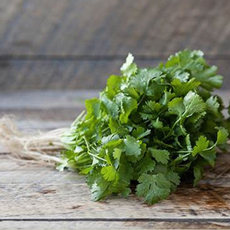
    [4] Parsley is the base for Old World, or European, salsa verde. Mexican salsa verde, made with tomatillos and chiles, is a culinary cousin.


    We’re in an Asian state of mind today; in addition to this homemade ramen soup recipe, we whipped up a green salad with a salsa verde tofu dressing.

    Tofu is a wonderful ingredient for salad dressing, adding protein and fiber to a condiment that typically has neither.

    This recipe was created by Debi Mazar and Gabriele Corcos, stars of Cooking Channel’s show Extra Virgin. They used House Foods Organic Soft Tofu, but you can use any soft/silken tofu.

    Below:

    > Recipe: romaine hearts salad with tofu salsa verde.

    > What is salsa verde?

    Elsewhere on The Nibble:

    > What is tofu?

    > Tofu health benefits.

    > More tofu recipes.

    > The history of tofu.

    > The year’s 6 soy food holidays.

    > The year’s 11 Japanese food holidays.

    > The different types of salsa.
     
     
    ABOUT SALSA VERDE

    First, there are two different basic salsas verde. Both are green sauces. The one used in this recipe is the European herbed-based sauce; we’ll designate it Old World or herb-based salsa verde. The other is the New World, tomatillo-based salsa verde, using the small green fruit that’s native to the Aztec Empire. See the comparison chart below.
     
     
    Old World Salsa Verde

    Old World salsa verde is a cold, rustic sauce/dressing with a base of parsley plus anchovies, capers, garlic, olive oil, onion, parsley, vinegar, and sometimes, mustard. The parsley gives the sauce its green tint.

    The concept for the family of herb-based cold sauces common in Italy (salsa verde), France (sauce verte), and Germany (Grüne Sosse [Soße]) likely originated in the Near East more than 2,000 years old.

    Historical evidence suggests that the basic formula—pounding fresh herbs with oil and vinegar—originated in ancient-day Levant and Mesopotamia*.

    The Roman Legions encountered these aromatic herb pastes during their Eastern campaigns and brought the concept home, where it became a staple for preserving and flavoring meats. From there it traveled to other parts of what is now Europe.

    Today salsa verde is used as a condiment or dipping sauce for meats, fish, poultry, or vegetables. It’s a great accent to many dishes; and because it’s so flavorful, you can cut back on added salt.

  • In some regions, cubed bread is soaked in vinegar and then blended with the other ingredients, creating an emulsion somewhat similar to a vinaigrette.
  • Another variation, gremolata, is the traditional accompaniment to osso bucco, the popular braised veal shank dish.
  • Our favorite uses: a condiment with meat (from lamb, pork or rib roast to veal and venison), poultry, pasta, potatoes and other vegetables (we love it with sautéed string beans) or salad.
  •  
    The recipe follows.
     
     
    New World Salsa Verde

    Another salsa verde was developed halfway around the world, also around 2,000 years ago, in the Aztec Empire (modern Mexico). The base ingredient is the tomatillo, a green berry that is not related to the red tomato but is sometimes called field tomato or husk tomato.

    The Aztecs called the sauce miltomatl (Nahuatl [Aztec language] for the husked berry (“tomatillo” and “salsa verde” were bestowed much later by the Spanish).

    Tomatillos, green chiles, and squash seeds were ground into a sauce that was served as a sophisticated condiment with seafood, turkey, and venison.

     
    This and other sauces were documented by Spanish physician Francisco Hernández and missionary Bernardino de Sahagún in the 1500s, noting how essential they were to the local diet.

    In 1571, the Spanish priest Alonso de Molina officially applied the word salsa (Spanish for sauce) to these condiments. The Spanish also:

  • Introduced European herbs like cilantro and onions to the recipe.
  • Exported the tomatillo to Europe and Asia (although it never gained the same foothold there as the red tomato).
  •  
    Types Of Mexican Salsa Verde
     
    As Mexican cuisine evolved, salsa verde was created in different styles based on how the tomatillos were prepared:

  • Cruda (raw): The tomatillos are ground fresh, resulting in a bright, sharp, and acidic flavor.
  • Cocida (boiled): The tomatillos are boiled to mellow their tartness and create a smoother, sweeter sauce.
  • Asada (roasted): The tomatillos and other ingredients are charred on a comal (griddle), adding a smoky depth. This version is a staple of Central and Southern Mexican street food.
  •  
    Salsa verde didn’t become common in the U.S. until the mid-20th century, as Tex-Mex cuisine spread nationwide.

    In 1941, the La Victoria company in Los Angeles introduced the first commercially bottled green taco and enchilada sauces to the American market.

    The New Mexico style of salsa verde originated in New Mexico, where salsa verde often refers to a sauce made with the local Hatch green chiles (roasted) rather than with tomatillos.
     
    Salsa Verde Comparison Chart
    Gemini Chart.
     
     
    HEARTS OF ROMAINE SALAD WITH TOFU SALSA VERDE (SALAD DRESSING)

    In this recipe, Debi and Gabriele substitute tofu for the olive oil.

    Dressing Ingredients

  • 1/2 package (14 ounces) soft (silken) tofu
  • 1/3 cup parsley leaves, roughly chopped
  • 2 tablespoons capers (packed in vinegar)
  • 2 oil-packed anchovies
  • 1 clove garlic, peeled
  • Juice of 1/2 lemon
  • Kosher salt and freshly ground black pepper
  • 3 hearts of romaine, chopped, and any other desired salad ingredients
  •  
    Preparation

    1. COMBINE tofu, parsley, capers, anchovies, garlic, and lemon juice in a food processor and blend until smooth.

    2. PLACE romaine and other salad ingredients in a large bowl and toss with salsa verde. Leftover dressing can be kept refrigerated in a covered container for 2 days.

    VARIATION: To make this recipe vegetarian/vegan, replace the anchovies with 2 more teaspoons of capers.

    Find more delicious recipes with tofu at House-Foods.com.
     
    Italian Salsa Verde & Crudites
    [5] Salsa verde can also be a dip for crudités (Abacus Photo).

    ________________

    *The Levant is an English term that first appeared in 1497. It originally referred to the “Mediterranean lands east of Italy.” The historical area comprises modern-day Iraq, Israel, Jordan, Lebanon, Palestine and Syria. Among other popular foods, Levantine cuisine gave birth to baklava, balafel, kebabs, mezze (including tabbouleh, hummus and baba ghanoush), pita and za’atar, among other dishes that are enjoyed in the U.S. and around the world.

    Mesopotamia was located further east, centered between the Tigris and Euphrates rivers. Together, the Levant and Mesopotamia formed the two main parts of the Fertile Crescent.

    Mesopotamia primarily comprised modern-day Iraq and parts of eastern Syria and southeastern Turkey. The two regions were separated by the Syrian Desert. A historical note: The Assyrians, from northern Mesopotamia, eventually conquered and controlled the Levant.
     

    CHECK OUT WHAT’S HAPPENING ON OUR HOME PAGE, THENIBBLE.COM.


    Comments off

    TIP OF THE DAY: Homemade Ramen Noodle Soup

    Homemade ramen soup Photo courtesy
    MalaysianKitchenNYC.com.


    Packaged ramen soups are popular with some people because they’re inexpensive yet tasty.

    And salty. There’s much more much salt in packaged ramen soups than is good for you. One label we checked had 1434mg of sodium which is 60% of your Daily Value of salt; and if you eat the whole package (two servings), you’ve exceeded your Daily Value.*

    So here’s an easy solution: Make your own ramen soup. It’s easy, and you can make as large a batch as you like. It’s also a great catch-all for leftover pasta, meats and veggies. Just follow this recipe template:

    Choose Your Base

    Buy beef, chicken or vegetable broth or stock, preferably low sodium. If you like to make your own stock, by all means, use it. If you find yourself with pork bones, make pork stock.

    Taste your stock; if it needs a bit more salt, use low sodium soy sauce.

     
    Choose Your Ramen (Pasta)

    You can select any pasta width or shape, from slender angel hair to flat fettuccine to round spaghetti or spaghettini. There’s no reason why you can’t use very wide pasta, like papparadelle, or nonwheat pasta such as rice noodles or cellophane noodles. (See our Pasta Glossary for the different types of pasta).

    Even though ramen is a noodle soup, if you’re carb counting, you can leave out the pasta altogether and add more veggies.


    Choose Your Protein

    Protein is one of the standard ramen toppings, but we like to break it out from the vegetable toppings.

    As mentioned earlier, ramen soup is a great way to use leftovers: cooked ground meat; fish or seafood including sliced fish cake (kamaboko, a type of surimi, Japanese processed seafood that includes imitation crab leg); sliced beef, lamb or pork; a soft- or hard-cooked egg or tofu.

    Customize the recipe to your preferences (every recipe!). There’s no reason that you can’t use a combination of proteins.

    Choose Your Toppings

    You’re the cook and the consumer, so add whatever toppings appeal to you. Consider bamboo shoots, bean sprouts, bell pepper, cabbage, corn, mushrooms, pickled ginger or plums, seaweed or spinach and thin-sliced scallions.

     
    Get artistic with your toppings. Photo courtesy Haru Restaurant | NYC.
     
    Any cooked or raw vegetable that appeals to you can become a soup topping. You’ve got leftover broccoli? Toss it in!

    Choose Your Seasonings

    We feel strongly about adding fresh herbs to every dish. For Asian soups, we particularly like basil and lemongrass, but don’t leave out the parsley that’s hanging out in the produce drawer.

    If you like heat, add thin-sliced of your favorite chile. For more depth of flavor in the broth, add a spoonful of miso paste.

    Add Some Color

    We also like a touch of color to every dish. While it isn’t traditional, try a garnish of finely-diced red bell pepper or hot red chile.
     
    WHAT EXACTLY IS RAMEN?

    Ramen is a Japanese noodle dish made with Chinese-style wheat noodles (as opposed to rice noodles), served in a meat- or fish-based broth. It’s a meal in a bowl, often enjoyed for lunch.

    Toppings vary widely based on local preferences. Every region in Japan has its own variation of ramen, from the tonkotsu (pork bone broth) ramen of Kyushu, Japan’s southernmost prefecture, to the miso ramen of Hokkaido at the opposite end of the archipelago.

    Ramen is of Chinese origin, but there is debate over the etymology of the word. One of several theories is that ramen is the Japanese pronunciation of the Chinese word lamian, meaning “hand-pulled noodles.”

    *Daily Value nutrient targets, set by the government, vary by age, gender and calorie intake. For adults under 50, the Daily Value for sodium is 2300 mg/day. As long as we’re on the topic, other DVs to watch include cholesterol, 300 mg/day; fiber, 25 g/day for women, 38 g/day for men; saturated fat, 10% of total calorie intake. It is worth noting that for sodium, cholesterol and saturated fat, eating less than the DV is beneficial; for fiber, eating more is beneficial.


    Comments off

    RECIPE: Colorful Beet Dip


    A colorful and yummy beet dip. Photo
    courtesy Dole.com.


    We love beets in every form: baked, Harvard, pickled, beet ravioli, steamed beats, soup (borscht is Russian beet soup), in gourmet appetizer recipes, in green salads, with goat cheese and endive…even beet ice cream (substitute beets in a strawberry ice cream recipe) and beet cake (food trivia: the original—and best—red velvet cake recipes got their red hue from beets, not food color).

    You can even enjoy beet juice in cocktails: a beet Martini or this beet Mojito, for example.

    Now, here’s another way to enjoy beets: as a dip with crudités or a bread spread. The recipe is courtesy Dole Foods.

    It’s a beautiful color for Easter or any other festive occasion.


    BEET DIP & SPREAD

    Ingredients

  • 1/2 pound red beets (1 large), peeled and coarsely chopped
  • 1 large scallion, chopped
  • 1/4 cup (packed) chopped fresh spinach
  • 8 ounces nonfat cream cheese
  • 2 teaspoons freshly squeezed lemon juice
  • 1/4 teaspoon salt
  • 2 teaspoons snipped chives
  •  
    Beet dip with cucumber ribbons on skewers. Photo courtesy Dole.com.
     
    Preparation

    1. PULSE beets in bowl or food processor wuth scallion and spinach, until finely chopped.

    2. ADD cream cheese, lemon juice and salt, and process until well-blended, leaving some texture in dip. Transfer to bowl and stir in chives.

    3. SERVE as a dip with crudités or as a spread on toasted french bread.


    Comments off

    The Nibble Webzine Of Food Adventures


    © Copyright 2005-2026 Lifestyle Direct, Inc. All rights reserved. All images are copyrighted to their respective owners.