THE NIBBLE BLOG: Products, Recipes & Trends In Specialty Foods


Also visit our main website, TheNibble.com.

Issei Mochi Gummies For The Lunar New Year & Beyond

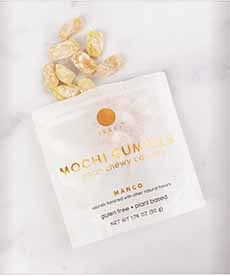
A package of Issei Mochi Gummies in Mango flavor
[1] Issei Mochi Gummies, all natural, vegan, and delicious (photos #1 through #5 © Issei).

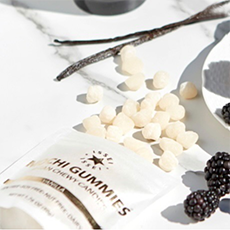
Vanilla Mochi Gummies
[2] Vanilla Mochi Gummies. The small packages are portion-controlled and great for small treats and gift bags.

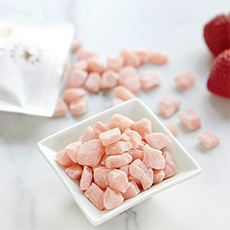
A dish of strawberry Mochi Gummies
[3] Set out a dish with after-dinner coffee.

Mochi Gummies decorating a birthday cupcake with a candle
[4] Founder Mika Shino uses mochi to decorate a mini birthday cake.

Mochi Gummies garnish an ice cream cone.
[5] How about a mochi ice cream cone?

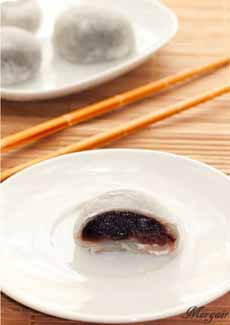
Daifuku Mochi Filled With Red Bean Paste
[6] Daifuku (sweet) mochi filled with red bean paste (photo © Morager | Deviant Art).

Daifuku Mochi On Platter
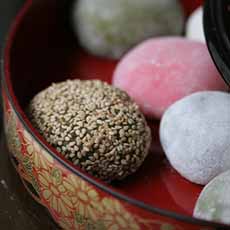
[7] Daifuku mochi filled with sesame paste and other flavors (photo © Globe Trotter Diaries).

A Platter Of Ice Cream Mochi
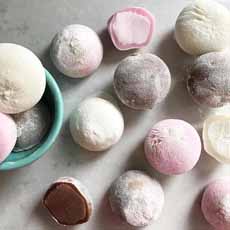
[8] Ice cream mochi from My/Mochi are available in 18 flavors (photo © My/Mochi).

Mochi On A Stick
[9] Ice cream mochi on a stick. Is it a mochi ice cream pop or a mochi ice cream kebab (photo © Dee Dee Paris | Delphine Desneiges)?


The Lunar New Year is approaching, ushering in the Year of the Dragon on February 10th. There are many ways to celebrate, but one way is to treat your family and friends to Issei Mochi Gummies, our Top Pick Of The Week.

> What is the Lunar New Year?

As you’ll read below, the original mochi, which approximate the Japanese version of a rice-dough jelly donut, date back thousands of years, and were initially a sacred foo for the gods.

Or as the company describes them: soft, chewy, pillowy, somewhere between a gummy bear and a marshmallow; small, bite-sized versions of Japanese mochi.

Issei Mochi Gummies, gummy candy made with rice flour, the first of its kind. It’s a fusion of Japanese culture with German candy innovation (the history of gummy candy).

Issei means “first star” or “one life” in Japanese, but it also refers to first generation Japanese immigrants in the U.S.

In the latter meaning, the word symbolizes the earnest hope for immigrants who want to bring the best of their heritage to their new home in America.

And Issei Mochi Gummies have done just that.

Mochi Gummies embraces the ancient Japanese tradition of mochi, a beloved rice-based confection with centuries—if not millennia—of history.

They were created by a mom who wanted to wanted to turn her children’s favorite candy—gummies—into something all natural, without artificial ingredients or animal-derived gelatin.

The result is a delight, currently available in four flavors that are all-natural, gluten-free, dairy-free, kosher, non GMO, and vegan:

  • Mango
  • Sour Watermelon (exclusive to Sprouts)
  • Strawberry
  • Vanilla
  •  
    The packaging is quite elegant, nice enough to add to a gift bag for adults, or for little gifties for friends, co-workers, and other people whom you’d like to treat.

    We’re already planning to give the Strawberry flavor for Valentine’s Day, the whole assortment for Mother’s Day and stocking stuffers, and every occasion in-between.
     
     
    GET YOUR MOCHI GUMMIES

    Issei Mochi Gummies are available:

  • At Whole Foods Market, Sprouts Farmers Markets, and other fine grocers
  • On Amazon
  • From the Mochi Gummies website, MochiGummies.com
  •  
    > And check out recipes for the Lunar New Year, below.
     
     
    WHAT ARE MOCHI?

    The exact origin of mochi is unknown, although it is believed to have originated during the Jomon period (ca. 14,000–300 B.C.E.), when the Japanese people first began to cultivate rice.

    Thus, mochi (which is both the singular and plural form of the noun), have been part of the food culture of Japan.

    The first recorded mention of mochi is in the Nihon Shoki (the Chronicles Of Japan), a Japanese historical text from the 8th century.

    Before they became a snack, mochi were considered a sacred food for the gods, with worshipers bringing neatly piled mounds of decorated mochi to Shinto shrines as offerings to the gods for the New Year.

    They were initially consumed during religious ceremonies and festivals. Mochitsuki, the traditional mochi-pounding ceremony, became a symbolic activity during the New Year celebrations.

    (And what a laborious task it was! Electric mochi makers are commonly used today.)

    Mochi symbolize longevity, well-being and prosperity. It thus became a food for celebrations, gatherings, and expressions of gratitude.

    It also became an energy food: from the battlefield, where it was easy for samurai to carry and prepare; to the farm, consumed by Japanese farmers to increase stamina on cold days.

    The traditional mochi (photo #7) are soft pastry-like mounds made with pounded* rice dough and spring water, steamed and served at room temperature or warm.

  • They’re filled with red bean (adzuki) paste or other fruit-flavored bean paste (we think of them as a Japanese version of the jelly donut).
  • Peanut and sesame pastes became additional flavors (photo #8).
  • The rice dough surrounding the center is naturally white, but over time creative cooks turned them into pastel-colored dough and beautiful fruit, flower, and animal shapes.
  •  
     
    MODERN MOCHI

    Japanese enjoy mochi as Americans might enjoy a cookie or two, and the more beautiful creations are impressive enough to be served as a fine dessert, or to offer guests with a cup of tea.

    Varieties of mochi evolved, both sweet and savory. For example:

  • Daifuku: Mochi filled with sweetened red bean paste or other sweet fillings.
  • Kirimochi: Cut mochi often grilled or used in soups.
  • Isobemochi: Mochi coated with a sweet soy sauce and wrapped in seaweed.
  • Zoni: A soup with mochi, traditionally eaten during the New Year.
  •  
    Then came ice cream mochi, invented in the early 1990s by a Los Angeles couple who created Mochi Doki. Here’s the story.

    And now, there are mochi gummies.

    Enjoy them!
     
     
    MORE RECIPES FOR THE LUNAR NEW YEAR

    Here are traditional good luck foods for the Lunar New Year, including some of these:

  • Asian Wings
  • Chinese Egg Rolls
  • Chinese Long Beans
  • Chinese Tea Leaf Eggs
  • Chinese Steamed Dumplings With A Twist (Buffalo-Style)
  • Easy Scallion Pancakes
  • Egg Drop Soup
  • Fortune Cookies
  • Ginger Fried Rice From Chef Jean-Georges Vongerichten
  • Korean Bibimbap
  • Peking Duck
  • The Most Popular Chinese Dishes In The U.S.
  • Pork & Apricot Fried Rice
  • Pork & Potato Stew With Red Cooking, A Traditional Chinese Braising Technique
  • Potstickers & Potsticker Dumpling Salad
  • Yusheng, Raw Fish Salad
  •  
    Plus, while not an authentic Asian drink like sochu, to start we have some cocktails:

  • Ginger Joy Cocktail
  • Ginger Vodka Cocktails
  • Lychee Liqueur Cocktails
  • Saké Sangria
  •  
    For dessert we have:

  • Green Tea Fortune Cookie Cake
  • Lady M Azuki Bean Mille Crepes Cake (for purchase)
  •  
    ________________
     
    *We think of mochi as glutinous rice (sticky rice) pounded into submission (or into Play-Doh). Luckily, modern manufacturers have introduced sweet glutinous rice flour, sold as mochiko flour, so pounding is no longer necessary.


    CHECK OUT WHAT’S HAPPENING ON OUR HOME PAGE, THENIBBLE.COM.


    Comments off

    Recipe: Italian Pasta Salad with Hot Sopressata Salami

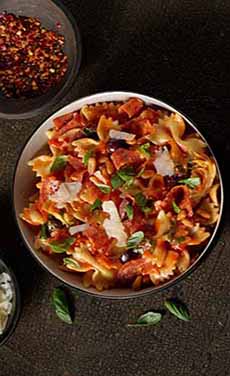
    January 16th is International Hot & Spicy Day, and we found a new recipe that worked for lunch and dinner: Zesty Italian Pasta Salad with Hot Sopressata (photo #1).

    > Here’s an explanation of salame vs. salume, the different types of salami, and more.

    > September 7th is National Salami Day.

    > The recipe is below. But first:
     
     
    WHAT IS SOPRESSATA?

    Sopressata is dry-cured pork salami, made in both mild and spicy styles. It’s one of the most popular Italian salami types in the U.S., second only to the classic Genoa salame [source].

    Sopressata (also spelled soppressata, sopresseta, soprasata and sopresatta) is made from coarsely ground pork sausage, typically lean pork cuts like the shoulder, loin, and/or ham scraps and the best lard (although some producers and regions use fattier meat/less desirable cuts).

    The combined lean meat and lard create a luscious salami texture that “melts in your mouth.”

    The ground meat is variously seasoned. The ingredients, flavor, and texture of soppressata vary based on region, with flavors that range from sweet to savory.

    Every family had—and today, every manufacturer has—its own spice proportions.

  • Seasonings can include basil, chiles, fennel, garlic, and/or oregano, salt, and whole black peppercorns.
  • Hot or spicy sopressata contains hot chile pepper, sweet sopressata contains only cayenne, and white sopressata contains only black pepper.
  • Those who prefer a sweeter profile add cinnamon and rosemary.
  •  
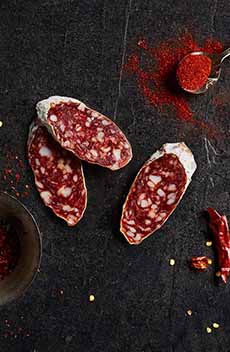
    Stylistically among salume, sopressata is made in a uniquely flattened shape (photo #2).

    The result is that the slices are oblong, rather than round.
     
     
    The History Of Sopressata

    This type of salami first appeared sometime during the 18th century, in the south of Italy. It was popular in the regions of Abruzzo, Basilicata, Calabria, Campania, and Puglia.

    Today, sopressata di Calabria is stamped with the Protected Designation of Origin (Denominazione di Origine Protetta “DOP”) status [source].

    The north has its own versions. Sopressa or sopressa Veneta are larger format versions of sopressata.

    In the Veneto, the northeast corner of Italy†, while they often using the same signature spice blend, some producers leave out the garlic [source].
     
     
    Get To Know Sopressata

    Sopressata is great alone as a snack with beer or wine, on a charcuterie board, in a sandwich, and in sauces and dishes like the pasta salad recipe below.

    To get to know sopressata, try versions from different regions and producers, and look for the variety of sweet and spicy notes.

    For example, The DOP Sopressa made in Vincenza uses lean cuts and is much spicier than the Calabrian variety.

    In contrast, the sopressa made in Tuscany uses fattier and leftover parts of the pig [source].
     
     
    RECIPE: ZESTY ITALIAN PASTA SALAD
    WITH HOT SOPPRESSATA

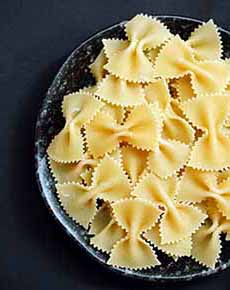
    This cold pasta recipe was created by Columbus Craft Meats. Bow-tie pasta (farfalle in Italian) are topped with strips of spicy hot sopressata salame, marinated artichoke hearts, kalamata olives, toasted pine nuts, shaved Parmesan cheese and fresh basil leaves lend zing, complementary textures and a delightful nutty taste.

    The recipe’s dressing is a bit more interesting than the traditional vinaigrette.

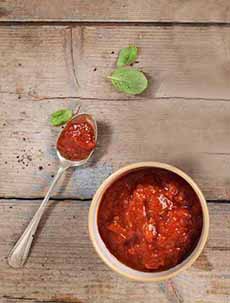
    Here, marinara sauce is blended with red wine vinegar, Dijon mustard, and crushed red pepper.

    Prep time is 20 minutes.
     
    Ingredients For 4 Servings

    For The Dressing

  • 3/4 cups marinara sauce
  • 1/2 cups basil leaves, packed
  • 1/4 cup red wine vinegar
  • 1 tablespoon Dijon mustard
  • 2 garlic cloves
  • 3/4 cup olive oil
  • 1 teaspoon salt
  • 1/2 teaspoon freshly-ground black pepper
  • 1/2 teaspoons crushed red pepper
  •  
    For The Salad

  • 8 ounces bow-tie pasta, cooked and drained
  • 4 ounces sliced COLUMBUS® Hot Sopressata Salami, cut into strips
  • 1 cup chopped marinated artichoke hearts
  • 1/2 cup pitted Kalamata olives, halved
  • 1/4 cups toasted pine nuts
  • Garnish fresh small basil leaves, or torn larger leaves
  • Garnish shaved* Parmesan cheese
  •  
    Preparation

    1. MAKE the dressing. In blender cup, place the dressing ingredients and blend until smooth. Set aside.

    2. TOSS together in large bowl the pasta, salami, artichoke hearts, olives and pine nuts. Drizzle with the dressing. Toss to coat.

    3. GARNISH with basil and cheese.
     
     
    MORE SOPPRESSATA RECIPES

  • Submarine Sandwich
  • Sweet Potato Pizza With Caramelized Onion, Soppressata & Balsamic Glaze
  •  

    A boel of Butterfly Farfalle Pasta Salad With Hot Sopressata
    [1] Pasta salad with hot sopressata. The recipe is below (photos #1 and #2 © Columbus Craft Meats).

    Sliced Hot Sopressata Salami
    [2] Sliced hot sopressata salami.

    A Bowl Of Plain Cooked Farfalle Pasta (Butterfly Pasta)
    [3] A bowl of farfalle pasta. You can see why they are called butterfly pasta in English (photo © Klaus Nielsen | Pexels).

    Bowl Of Marinara Sauce
    [4] Use your favorite marinara sauce as a base for the dressing (photo © St. Pierre USA | Facebook).

    Kalamata Olives On A Wood Cutting Board
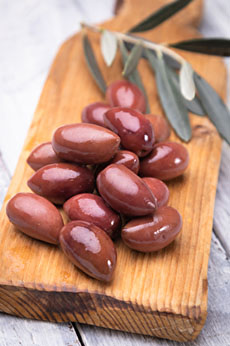
    [5] Kalamata olives (photo © I. Gordutina | Panther Media).

    A Spoon Of Crushed Red Pepper Flakes
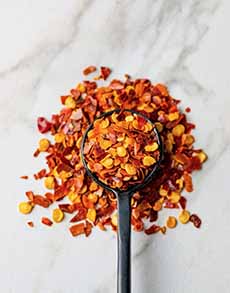
    [6] Crushed red pepper flakes add heat to the crushed red pepper in the hot sopressata (photo Savory Spice Shop).


    ________________
     
    *Freshly shaved ribbons of Parmesan, made with a vegetable peeler, are more visually appealing than grated Parmesan. Of course, you can substitute the latter.

    †The Veneto region’s capital is Venice, and the largest city is Verona.


    CHECK OUT WHAT’S HAPPENING ON OUR HOME PAGE, THENIBBLE.COM.


    Comments off

    Hot & Spicy Congee Recipe For International Hot & Spicy Day

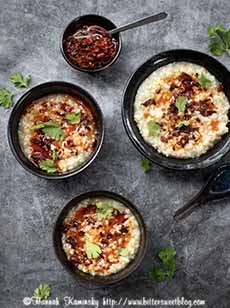
    Hot and spicy congee with chili crisp
    [1] Hot and spicy congee with chili crunch. The recipe is below (photo © Hannah Kaminsky | Bittersweet Blog).

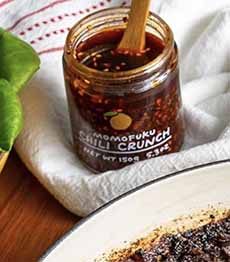
    A jar of Momofuku Chili Crunch spicy condiment
    [2] Chili crunch gives heat to this recipe. It’s become a popular ingredient, found in Asian stores as well as general grocers, including Trader Joe’s. This one is available on Amazon (photo © Momofuku).

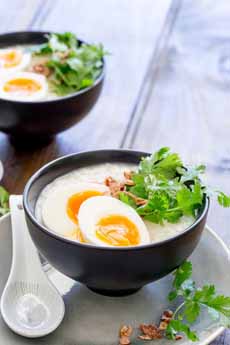
    Congee With Boiled Egg
    [3] Plain congee with a boiled egg. Here’s the recipe (photo © Sprinkles and Sprouts).

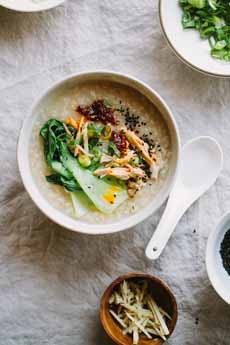
    Ginger Chicken Congee made with brown rice
    [4] This ginger chicken congee is made with brown rice. Here’s the recipe (photo © Honest Cooking).

    Seafood Congee
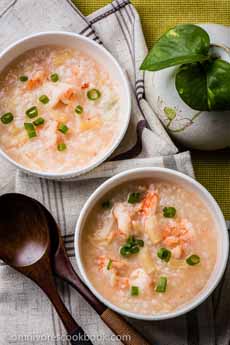
    [5] Seafood congee adds shrimp and scallops. Here’s the recipe (photo © Omnivore’s Cookbook).


    Have you ever eaten something that was spicy enough to wake the dead? Then try the Hot & Spicy Congee recipe below.

    O.K., maybe waking the dead is an exaggeration. But though not for the weak of stomach, this recipe works for cold or flu season, and might be just what the doctor ordered: a hot and spicy alterative to Jewish chicken soup.

    Just in time for International Hot & Spicy Day, January 16th, our colleague Hannah Kaminsky of Bittersweet Blog turned creamy, hearty, and soothing, classic congee (Chinese rice porridge) into something befitting the holiday.

    The dish gets a spicy upgrade with a generous spoonful of chili crisp (a.k.a. chili crunch), an ingredient that’s been “discovered” in the U.S. over the past few years.

    This easy-to-make dish is something spicy for breakfast, a side dish with flair, or as a main course like risotto, topped with shrimp, tofu, or other protein—even beans.

    Toppings for congee are entirely up to the eater. Like risotto, the creamy rice porridge is, as Hannah says, “a gracious base for anything your heart desires.”

    She’s a big fan of shiitake mushrooms paired with congee. “Add textural contrast,” she says, “with toasted pine nuts or slivered almonds.”

    But the chili crunch, she advises, is “what transforms a bowl of mush into a downright addictive meal,” which she can eat straight from the jar.

    And by the way, this spicy congee recipe is also helper when you’re feeling under the weather. Read more below.

    > The history of congee is also below.
     
     
    ABOUT CHILI CRISP

    Chili crisp, also known as chili crunch, is a Chinese condiment that consists of fried garlic, onions, shallots, and chili flakes in oil. It was first made by Lao Gan Ma, a Chinese food company known for its chili sauce products.

    The exact origin of chili crisp is a crisp tale as well.

    Back in 1989, Lao Gan Ma’s founder, Tao Huabi, was an illiterate widow raising two sons in a rural village in Guizhou Province, one of the poorest regions in China’s southwest.

    She ran a food truck and sold tofu cold noodles. She offered her homemade chile sauces for dipping.

    Before long, she noticed that customers preferred her chile sauces over her tofu and noodles. And so, in 1996, the Lao Gan Ma brand was born. The name means old godmother.

    More than two decades later, Tao has a reported net worth of $1.9 billion, making her one of the richest women in China. Here’s more about it.
     
     
    RECIPE: SPICY CHILI CRISP / CHILI CRUNCH CONGEE 

    Total prep and cook time is 1 hour.
     
    Ingredients For 3-4 Servings

  • 1/2 cup sushi rice
  • 4 cups chicken or vegetable stock
  • 1/2 teaspoon salt
  • 1/2-Inch fresh ginger, peeled and finely minced
  • 2 cloves garlic, minced
  • 1 1/2 teaspoons soy sauce
  • 3-4 tablespoons Chili Crisp
  • Garnish: 2 tablespoons fresh cilantro, chopped
  •  
    Preparation

    1. COMBINE the rice, stock, salt, ginger garlic, and soy sauce in a medium saucepan. Bring the mixture to a boil, then reduce the heat to a low simmer. Stir occasionally so that the rice doesn’t clump or stick to the bottom.

    2. SIMMER for about 1 hour, or until the rice is fully cooked and the congee is thick and creamy. Ladle into bowls and top with chili crisp and cilantro, as desired. Enjoy hot.

    The congee will continue to thicken as it cools. Adjust with additional stock or water if needed to achieve your desired consistency.
     
     
    THE HISTORY OF CONGEE 

    Congee, rice porridge, has a long history and is a staple food in many Asian countries. The dish has its roots in China and has been consumed for millennia.

    Congee traces its origins back to ancient China, where it was considered a nutritious and easily digestible food. The earliest records of congee consumption date back to the Zhou Dynasty (1046–256 B.V.E.). It was initially used as a medicinal food to treat digestive ailments.

    It is also mentioned in the Chinese Record of Rites of the first century C.E., and noted in Pliny’s account of India circa 77 C.E.

    Over time, congee spread to other Asian countries, including Japan, Korea, Vietnam, and Thailand. Each region developed its own variations of the dish, incorporating local ingredients and flavors. For example:

  • In China, you may find savory congees with ingredients like preserved eggs, pickled vegetables, or meats.
  • In contrast, in Japan, okayu is a type of congee often served with toppings like pickled plums or seaweed.
  •  
    While the dish is associated with East Asian cuisine, the word “congee” itself has its origins in the Tamil kanji (also the Telugu and Kannada gañji, the Malayalan kanni and the Urdu ganji), from kanjī, “boilings,” referring to the water in which rice has been cooked [source].
     
     
    Medicinal Uses Of Congee 

    Congee was and is often prescribed by traditional Chinese medicine practitioners for its healing properties.

    The soft porridge is easy on the digestive system and recommended for people recovering from illnesses.

    Thus, it’s not only a common breakfast dish and comfort food, but is also consumed during times of discomfort.
     
     
    Modern Congee 

    Congee continues to evolve from its deep historical roots. Modern variations include sweet congees, with ingredients like red beans or fruit.

    Whatever the topping, congee remains a versatile and beloved dish, appreciated for its simplicity and adaptability, across Asia and beyond.
     
     
    THE HEALTH BENEFITS OF CAPSAICIN 

    Hot chile peppers have genuine medicinal properties thanks to their characteristic burn from capsaicin, the compound responsible.

  • For short term pain relief, biting into a blisteringly hot food releases endorphins, creating a mild “high” and dampening other discomforting sensations, like headaches, joint pain, and beyond.
  • Chile peppers are great for improving heart health! Studies have shown they can reduce inflammation, lower cholesterol, and increase blood flow.
  • Stress less with a calming dose of B-complex vitamins such as niacin, pyridoxine (vitamin B-6), riboflavin and thiamin (vitamin B-1). Deficiencies in these vitamins can lead to added anxiety or trouble regulating moods over time.
  •  
    Have tissues handy, because this stuff will clear out your sinuses and ease congestion.

    Plus, capsaicin has antibacterial properties which are effective in fighting and preventing chronic sinus infections.


    CHECK OUT WHAT’S HAPPENING ON OUR HOME PAGE, THENIBBLE.COM.


    Comments off


    © Copyright 2005-2026 Lifestyle Direct, Inc. All rights reserved. All images are copyrighted to their respective owners.