|
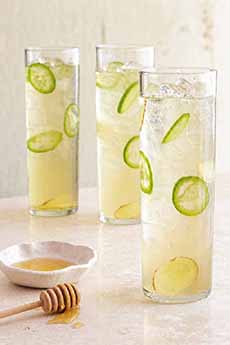
[1] It’s easy add a hit of extra flavor to lemonade, from lavender to peach. Here it’s sweet heat: jalapeño slices with honey as a sweetener (photo © The Nibble).

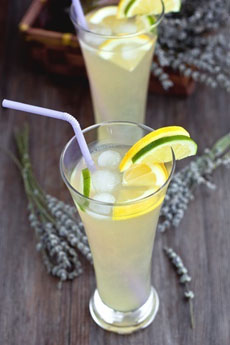
[2] It’s easy to add a nuance of flavor to lemonade. Our favorites are ginger, lavender and lemongrass (photo © Edith Frincu | Dreamstime).
[3] After you juice the lemons, cut the peel into strips for garnish (photo © Corn Next).
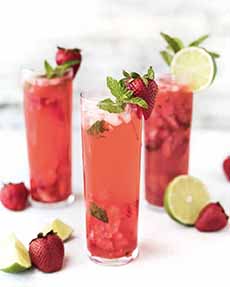
[4] Add your favorite diced fruit or fruit purée. Berry and mango are very popular (photo © Koe Kombucha [now closed]).
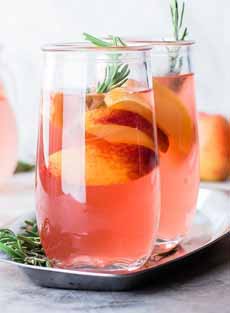
[5] Summer is the perfect time for peach lemonade, here garnished with a sprig of rosemary (photo © Flavor & The Menu).
|
Updated July 2026
July 23rd is National Refreshment Day and August 20th is National Lemonade Day.
While lemonade is indeed refreshing, if the only lemonade you drink comes from a bottle, you’ve never experienced just how much more refreshing real lemonade is.
Bottled lemonades are not only pasteurized, but typically use reconstituted lemon juice. If you’ve ever tasted bottled lemon juice, you know that the flavor is simply not bright and lemony like fresh-squeezed lemon juice.
Lemonade “made from concentrate” and sold like orange juice is the far better choice, as are cans of frozen lemonade and limeade concentrate.
But the best choice of all is to squeeze fresh lemons. It takes just five minutes to make a single glass, and you can adjust the sweetening to your own taste.
It’s the same with limeade.
PARTY IDEA: Get the gang together for a lemonade party. You can make the different varieties, or assign different flavors to your friends.
Below:
> Lemonade or limeade recipe.
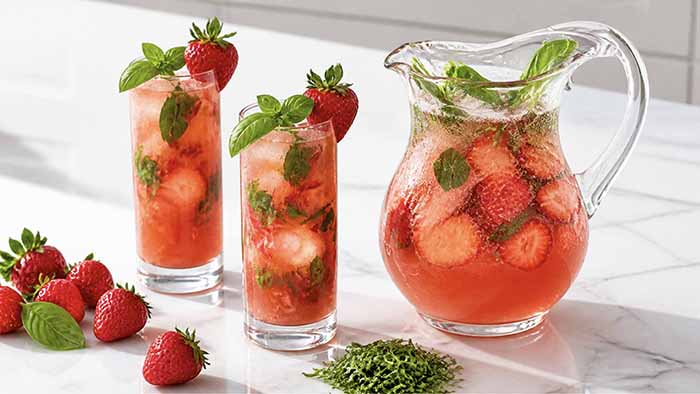
> Strawberry-basil lemonade recipe.
> Recipe tips and party tips.
> More lemonade and limeade recipes.
Elsewhere on The Nibble:
> The best hydrating drinks.
> How to add spicy heat to lemonade.
> The different types of lemons: a photo glossary.
> The different types of limes: a photo glossary.
> The different types of sugar and other sweeteners: a photo glossary.
> The history of lemonade.
> The history of lemons.
> The history of limes.
> The year’s 45+ citrus holidays.
1. RECIPE: CLASSIC LEMONADE OR LIMEADE
You don’t want ice cubes to dilute your lemonade. Ideally, freeze lemonade or a complementary fruit juice (we especially like blueberry and watermelon) in ice cube trays so regular ice cubes won’t dilute the flavor. And keep the lemonade as chilled as possible to use fewer cubes.
You can also use this recipe to make fresh limeade.
Ingredients For 15 Glasses
1.5 cups fresh-squeezed lemon or lime juice (6 large lemons)
6 cups cold water
1 cup of table sugar or equivalent sweetener
Ice
Optional garnish: berries, cherries, lemon wheel, mint leaves, sprig of herbs, watermelon cubes
Optional: straws
Ingredients For 1 Glass Of Lemonade
2 tablespoons sugar or equivalent sweetener
1/4 cup hot water
3 tablespoons fresh-squeezed lemon juice
3/4 cup cold water
Ice
Preparation
1. MAKE the optional lemonade ice cubes a half day in advance or the night before. For the ice cubes, we save time by reconstituting frozen lemonade concentrate instead of making lemonade from scratch. When ready to make the lemonade…
2. ROLL room temperature lemons on the counter top before squeezing. This maximizes the juice output.
3. PREPARE the superfine sugar if you’re using granulated sugar. If you don’t have a box of superfine sugar, simply pulse regular table sugar to a superfine consistency in a food processor. The time you spend to do this is more than offset by the time it will take to get table sugar to dissolve.
Another technique for dissolving table sugar is to boil the water several hours in advance, stir in the sugar to dissolve, and chill.
4. COMBINE the water, lemon juice and three-quarters of the sweetener in a pitcher; mix thoroughly. Taste and adjust the sweetness bit by bit. Your goal is to keep the fresh lemon flavor first and foremost, and not make sugar the first thing you taste. It’s better to under-sweeten than over-sweeten: People can always add more sweetener to suit their individual tastes.
5. ADD ice to the glasses, fill with lemonade and garnish. Ideally, chill the lemonade prior to serving so it will be cold and require less ice.
6. ADD the garnish: Slice extra lemons or contrasting limes into wheels, and cut notches so they sit on rim of glasses. You can also notch watermelon cubes or strawberries, place blueberries or raspberries on a cocktail pick, add a sprig of lavender or rosemary, etc.
|