THE NIBBLE BLOG: Products, Recipes & Trends In Specialty Foods


Also visit our main website, TheNibble.com.

TIP OF THE DAY: Congee, China’s Favorite Breakfast

Many Asians start their day with a warm bowl of congee.

If you’re a fan of Cream Of Rice or Cream of Wheat porridges, you’re a lock to enjoy the rice-based Chinese version.

This traditional Chinese dish has evolved from gruel to porridge* to a porridge mixed with bits of protein (chicken, pork, shrimp) and vegetables (green onion, peas) to a spread of “DIY congee,” where the table is laden with dishes of condiments to tailor the dish to one’s taste.

Congee can be as simple as a plain bowl of porridge, or as complex as the condiments and toppings allow. More luxurious versions cook the grain in chicken broth rather than water.

It is easy to digest and very simple to cook.

Plan to make it for breakfast or brunch, lunch or late dinner; serve as a DIY spread for a special meal (see the garnish options below); and reheat any leftovers on subsequent days.
 
 
THE HISTORY OF CONGEE

Congee (CON-gee with a soft “g”) is an ancient dish, made in China for thousands of years from uncooked rice and boiling water.

The Book of Zhou (published 636 C.E.) says that the mythical Emperor Huang Di (2698–2598 B.C.E., mythical dates) was first to cook congee made from millet—or, we guess, his cooks did it, since we can’t imagine an emperor standing over a stove. This is considered the earliest reference to congee. [source]

Tobie Meyer-Fong, associate professor at Johns Hopkins University who researches late imperial China and Chinese cuisine, has found references that date congee to the Han dynasty, circa 206 B.C.E. to 220 C.E. Eileen Yin-Fei Lo, author of Chinese cookbooks, maintains that congee dates to approximately 1,000 B.C.E., during the Zhou dynasty. [source]

Today it is eaten throughout Asia (known by different names), in Burma, China, Korea, India, Indonesia, Japan, Malaysia, Nepal, Thailand, Tibetan, Vietnam and elsewhere.

The name in Chinese, which means the watery one, derives from the Tamil language of India, where kanji refers to the water in which rice has been boiled.

It can be part of a meal, but is most often served as the main dish of the meal (and often, the only dish).

Congee can be made in a pot or in a rice cooker. Some rice cookers even have a congee setting, for households who want to cook the rice overnight.
 
 
RECIPE: SIMPLE CONGEE

Ingredients For 6 Servings

  • 5-½ cups water
  • 4 cups low-sodium chicken broth
  • 1 cup uncooked jasmine or long grain rice
  • 1 teaspoon salt
  • 1 1-inch piece peeled fresh ginger, cut into 4 slices
  • 3 cups diced or shredded cooked chicken (e.g., from a purchased rotisserie)
  • Optional garnishes: chopped green onions, chopped fresh cilantro leaves, julienne-cut peeled fresh ginger, soy sauce
  •  
    Preparation

    1. PLACE the water, broth, rice, salt and ginger in a large pot set over medium-high heat. Bring to a boil. Continue boiling, uncovered, for 15 minutes, stirring occasionally.

    2. REDUCE the heat to medium low, cover and cook for 40 minutes longer, until the porridge has a creamy consistency, stirring occasionally.

    3. REMOVE from heat the and keep warm. Discard the ginger pieces. Stir the chicken into the soup. Serve garnished with the green onions, cilantro, julienne-cut ginger and soy sauce, or let people garnish their own.

    You can serve congee family-style, from a casserole-type dish, or bring individual bowls to the table.
     
     
    CONGEE GARNISHES: CREATE YOUR OWN CONGEE MASTERPIECE

    For a party, offer as many as you like. At home, serve half a dozen options (including the soy sauce); but keep rotating them each time you serve congee, so it’s never the same dish.

    Traditional

  • Black sesame seeds
  • Cilantro, chopped
  • Chili oil, sesame oil
  • Dried shrimp, cuttlefish, fish, scallops
  • Fried garlic
  • Julienned or shredded ginger root
  • Preserved eggs, quail eggs
  • Sautéed bok choy or other greens (Chinese broccoli, napa cabbage)
  • Sliced scallions
  • Soy sauce
  • Sriracha or other hot sauce
  • Youtiao (Chinese crullers)
  •  
    Non-Traditional Garnishes

  • Asian chilli sauce
  • Bean sprouts or other sprouts
  • Black pepper
  • Caramelized onions
  • Chinese sausage or chicken sausage
  • Chopped prunes or dates
  • Cooked shrimp, cuttlefish/squid, fish, scallops
  • Cracklings
  • Crispy shallots
  • Green peas, snow peas, sugar snap peas, edamame
  • Grilled or fried shishito peppers, fresh sliced jalapeño
  • Kimchi, Japanese pickled vegetables, sliced radishes
  • Parsley, shredded basil or shiso
  • Peanuts or cashews, raw or salted
  • Sautéed greens (chard, collards, mustard, spinach)
  • Seasonal: asparagus, corn, fiddlehead ferns, ramps, scapes
  •   Simple Congee
    [1] Simple congee looks just like Cream Of Rice, except it’s served savory, not with milk and sugar! Here’s the recipe from The Spruce.

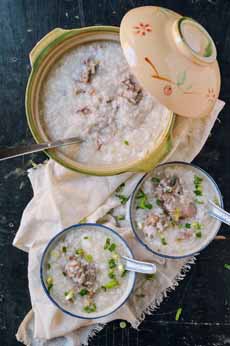
    Congee With Pork & Scallions
    [2] Congee With Pork & Scallions (here’s the recipe from The Woks Of Life.

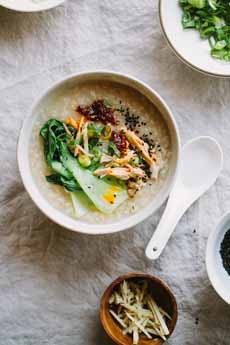
    Ginger Chicken Congee
    [3] This Ginger Chicken Congee is made with brown rice. Here’s the recipe from Honest Cooking

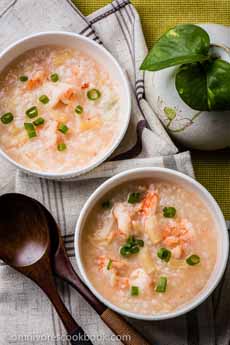
    Seafood Congee
    [4] Seafood Congee. Here’s the recipe from Omnivore’s Cookbook.

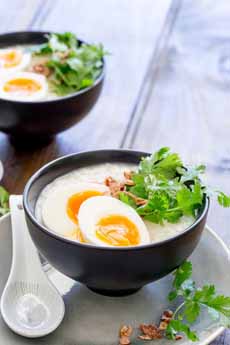
    Congee With Boiled Egg
    [5] A soft-boiled egg, crispy shallots and cilantro top this congee. Here’s the recipe from Sprinkles And Sprouts.

  • Proteins, diced or shredded: chicken, lamb, ham, pork, pork belly/lardons, rare sliced beef, tofu
  • Sautéed mushrooms
  • Soft-boiled egg
  •  
    Plus

  • Try it with other grains, such as brown rice, Cream Of Wheat, grits or cracked grains (bulgur, couscous, polenta. Or, do as Emperor Huang Di, and try millet.
  • Be creative and enjoy!
  •  
     
    ________________

    *Gruel is a cereal—based food—typically made from oats, rice, rye or wheat—boiled in milk or water. It is a thinner version of porridge. Some gruels are so thin that they are drunk rather than eaten. It is a food that is eaten every day, easy to digest, and thus also used during an illness. It is usually the first non-milk food given to infants, a food for the elderly and those with dental or stomach problems, and above all, comfort food. Some people call congee a soup.


    CHECK OUT WHAT’S HAPPENING ON OUR HOME PAGE, THENIBBLE.COM.


    Comments off

    TIP OF THE DAY: Breakfast Salad Recipes

    Breakfast Salad
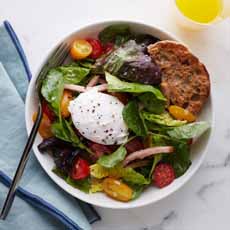
    [1] Bacon and egg over Caesar Salad. The recipe links are below (photos #1, #2, and #3 © Food Network.

    Breakfast Salad
    [2] Deconstructed Eggs Benedict: poached egg, julienned Canadian bacon and English muffin crouton atop a mixed green salad.

    Granola Breakfast Salad
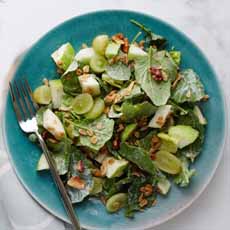
    [3] Romaine, apples and grapes with a honey-yogurt dressing, topped with granola.

    Blueberry & Orange Breakfast Salad
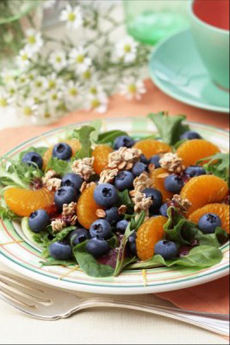
    [4] Blueberry and mandarin breakfast salad (photo © Blueberry Council).


    We first heard of breakfast salad in 2014. Someone sent us a recipe, but it got lost in the shuffle.

    In the ensuing two-plus years, the concept has spread. So if you’re ready to move on from the last breakfast trend—overnight oats—here’s a roundup of the latest.
     
     
    WHAT IS BREAKFAST SALAD?

    Breakfast salad is a fusion of conventional breakfast items with salad greens or other raw or cooked vegetables. Example: bacon and eggs on a lettuce wedge, or yogurt and fresh fruit salad atop mesclun greens.

    For years we’ve served what we never thought to call “breakfast salad”: an omelet topped with lightly dressed baby arugula and watercress.

    And for brunch, a poached egg on top of a frisée salad with lardons, or on top of a Caesar salad, is another favorite, adding more protein to both.

    So we decided to take a look at what other people were eating for breakfast. We found:

  • Some were following the breakfast food-and-greens or vegetables concept.
  • Some were serving up fresh fruit atop greens.
  • Some were throwing an egg on top of a grain bowl.
  • Some were featuring luncheon salads (Cobb, spinach-egg-bacon) for breakfast.
  • Some were medleys of cooked vegetables (bell peppers, potatoes, root vegetables) with chickpeas for protein.
  • Some were featuring sandwich ingredients (smoked salmon and avocado) atop greens.
  • Some served what we would call side salads breakfast salads (diced squash and pomegranate arils atop greens, with some almond butter in the dressing).
  • Some tossed greens atop avocado toast.
  • Some even featured a liquid salad, i.e., a green smoothie.
  •  
     
    BREAKFAST SALAD RECIPES

    We decided to go purist. Here are some recipes that fit our bill of breakfast salad fare:

  • Bacon & Egg Breakfast Caesar Salad, the egg yolk served cooked on top of the salad instead of raw in the traditional Caesar dressing.
  • Blueberry & Orange Breakfast Salad
  • Egg, Sausage & Avocado Breakfast Salad.
  • Eggs Benedict Breakfast Salad, deconstructed Eggs Benedict.
  • Frisée Salad With Eggs & Bacon (what’s frisée and another recipe).
  • Greens, Grapes & Granola Breakfast Salad, romaine, apples and grapes tossed with a yogurt dressing and garnished with granola.
  • Grilled Wedge Salad With Fried Egg & Cranberry Feta Cheese.
  • Potato, Chickpea, & Egg Breakfast Salad
  • Quinoa, Ham & Pepper Breakfast Salad, a Western Omelet deconstructed on top of quinoa (or greens, if you prefer).
  •  
     
    Do you have a favorite breakfast salad recipe? Please share!

    And feel free to eat breakfast salad for lunch or dinner. The concept is no different from an omelet or any luncheon salad.


    CHECK OUT WHAT’S HAPPENING ON OUR HOME PAGE, THENIBBLE.COM.


    Comments off

    TIP OF THE DAY: Find A CSA & A CSF

    National Farmers Day is October 12th, and National CSA Day, a floating holiday, is the last Friday in February.

    CSAs deserve as much attention as they can get, so today’s tip is help yourself, help a small family farmer:

    Head to the CSA DAY website and find a CSA near you.

    You can also check on LocalHarvest.org.

    If you currently browse farmers’ markets for the best local produce, the next step is to join a CSA and have the farmers’ market come to you (not literally).

    WHAT’S A CSA

    CSA stands for community-supported agriculture, which is a direct-to-customer business model for farmers.

    The concept originated in Europe and Asia in the 1980s as an alternative financing arrangement, to help sustain small-scale farmers.

    It was first adopted in the USA by some biodynamic farmers in Massachusetts, in the mid-1980s. They coined the term CSA.

    The concept spread, and more and more food enthusiasts became excited to have the freshest produce while supporting local small farmers.

    In a CSA, farmers and consumers bypass commercial supply lines (middlemen, warehouse storage) and deal directly with each other.
     
     
    HOW A CSA WORKS

    In a CSA, the consumer buys a share of a farm’s output in the form of a weekly (or biweekly) box filled with freshly harvested produce.

    In the traditional CSA model, participants pay for a season’s worth of produce (called a membership or a subscription), in advance. The CSA member then receives a box of fruits and vegetables every week throughout the harvesting season.

    This model helps stabilize the farm’s income. It’s a boon for small family farms, which get ash in hand to run the farm when they most need it (in advance having something to harvest and sell). The farmer commits to giving the best to a committed set of customers.

    In return, members receive a weekly box of locally-grown produce. The contents differ each week and members never know what they’ll get, but seasonal harvests root vegetables in the fall, tomatoes, and berries in the summer, etc.

    Some people join a CSA for the freshest fruits and vegetables, to support local farmers, and to know where their food comes from. Each farmer selects his/her own model, but in general:

  • You can buy a whole-share or a half-share.
  • You can get weekly or biweekly boxes.
  • With some farmers, the members can pick and choose what they want in the box).
  • Some farmers offer add-on farm products like bread, eggs, honey, and flowers.
  • Members can cancel at any time.
  • Some farmers invite members to visit and help work the farm.
  • Some farmers drop off the boxes at central locations in the community; others can deliver to homes and offices.
  • Shares are reasonable, generally about $30, depending on region.
  •  
     
    CSF: A CSA FOR SEAFOOD

    There are also CSFs—community-supported fisheries—that use the CSA model to support their small, local fisheries. Use this locator to find one near you.

    Members support sustainable, transparent supply chains of ethically sourced or captured fish.


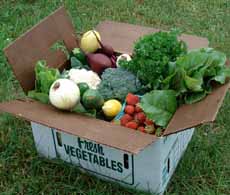
    CSA Box
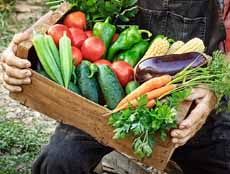
    [1] Farmers pick what’s ready, shortly before delivery (photo © Halas Farm).

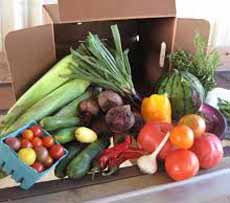
    CSA Box
    [2] Boxes get packed and labeled at the farm, then trucked to the delivery spots (photo © Driftless Organics).

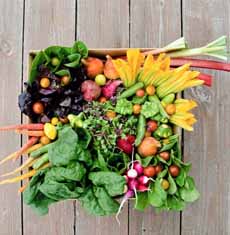
    CSA Box
    [3] You open the box, and decide what to make with the week’s bounty (photos #3 and #4 © Urban Tilth and The Chef’s Garden).

    CSA Box
    [4] Enjoy the beauty as well as the fresh flavor.

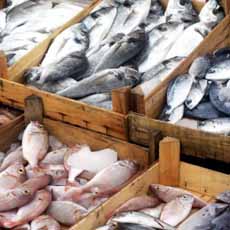
    Fresh-Caught Fish
    [5] A similar concept for fish delivers the fresh catch (photo © Inhabitat | Shutterstock).

     
    As with CSAs, you get the most local, most fresh products: “from dock to dish,” as the motto goes.

    Here’s more about CSFs.
     
     
    CSAs: HOW YOU BENEFIT

  • You get the freshest food: pulled from the ground or off the tree right before you get it. It hasn’t been sitting in cold storage or traveling for weeks by boat.
  • You get organic produce (not all farms are organic), and non-GMO varieties.
  • You become more green by keeping down your total food miles.
  • You make a conscious choice to support the small farmers, which keeps open farmland in your area.
  • You become part of a community with reverence for the land.
     
    The fun aspects include:

  • The surprise of what’s in the box.
  • The impetus to try foods you normally don’t buy.
  •  
    And if there’s something in the box that you absolutely won’t eat, score points by gifting fresh produce to a neighbor, teacher, etc.


    CHECK OUT WHAT’S HAPPENING ON OUR HOME PAGE, THENIBBLE.COM.


    Comments off


    © Copyright 2005-2026 Lifestyle Direct, Inc. All rights reserved. All images are copyrighted to their respective owners.