THE NIBBLE BLOG: Products, Recipes & Trends In Specialty Foods


Also visit our main website, TheNibble.com.

TIP OF THE DAY: Sweet Or Savory Popcorn Garnish

Before it was a popular snack, popcorn was a whole grain food. In Colonial times, it was eaten in a bowl with milk or cream, like modern puffed rice and other puffed cereal grains.

In the 18th century, after the corn harvest, farmers would toss corn kernels, some fat and a little molasses into a cast iron pot. Voilà: the first kettle corn. (Today, special popcorn strains create big, fluffy kernels.)

By the 1840s, corn popping had become a popular recreational activity in the U.S. By the 1870s, popcorn was sold in grocery stores and at concession stands at circuses, carnivals and fairs. The first commercial popcorn machine was invented in 1885; by the early 1920s, popcorn machines turned out hot buttered corn at most movie theaters.

Here’s the history of popcorn.

Considered a humble food accessible to all, it now used by fine chefs as a garnish for both sweet and savory food.
 
 
THE HUMBLE SNACK BECOMES FANCY FARE

Recently we featured an elegant savory corn custard, made from fresh corn and garnished with popcorn.

   
/home/content/p3pnexwpnas01_data02/07/2891007/html/wp content/uploads/popcorn garnish mac and cheese 230
Add some whole grain popcorn to your mac and cheese,perhaps flavored garlic or jalapeño. Photo: DK.
 
But a recipe doesn’t have to be made from corn—or be savory—to dazzle with a popcorn garnish. You can use popcorn as a fun food garnish.

While a popcorn garnish is not yet ubiquitous, it has long been a standard on cheese and beer soup. Here’s a recipe from Emeril Lagasse, who makes spicy popcorn for the garnish. But if you don’t have the time, plain popcorn works just fine.

Any thick soup—bean, lentil, vegetable—is ready to wear a popcorn garnish; as is a bowl of chili.
 
 
USE PLAIN OR FLAVORED POPCORN

A second level of fun in using a popcorn garnish: You can flavor the popcorn to complement the dish. Just a sample of popcorn flavors you can pair:

  • Savory flavors: bacon-chive, garlic, herb, jalapeño, mustard, parmesan-rosemary, sesame, truffle
  • Sweet flavors: caramel/salted caramel, chocolate, cinnamon-sugar, maple, peanut butter, peppermint, pineapple-coconut
  •  
    If there’s a flavor you want, just toss it with popcorn. Here are 50 ways to season plain popcorn.

    You can also coat the popcorn in chocolate, or use purchased popcorn: chocolate-covered, chocolate-peppermint or maple for the holidays, and so forth.


    /home/content/p3pnexwpnas01_data02/07/2891007/html/wp content/uploads/Carrot cake with Caramel and Popcorn honestcooking 230
    Use caramel corn or a popcorn/pecan praline mix to top a cheesecake or (shown above) a carrot cake. Here’s the recipe. Photo courtesy MyKitchenStories.com.au.
     

    WAYS TO USE A POPCORN GARNISH

    Beverages: Hot chocolate, on a cocktail pick, on milkshakes

  • Breakfast: Grits or other hot cereal with sweet or savory corn (cheese popcorn on cheese grits, anyone?), pancakes and waffles with caramel corn, yogurt and cottage cheese with sweet or savory popcorn
  • Lunch/Dinner: Chicken breasts, chili, fish fillets, mac and cheese, soups, salads, grains, stews
  • Desserts: Crème brûlée, cupcakes, ice cream (here’s actual popcorn ice cream), layer cake, pudding (especially popcorn pudding)
  •  
    If you’re not yet convinced, here’s a simple way to try out popcorn garnishes:

    The next time you roll down the supermarket snack aisle, check out the popcorn selection. Buy a savory (plain salted popcorn) and a sweet variety (caramel corn or kettle corn) and start using them as garnishes.
     
    _______________________
    *Leave off the butter and sugar, and season with spices or herbs, and you’ve got a fiber-filled, healthful snack.


    Comments off

    TIP OF THE DAY: Uses For Artichoke Hearts Beyond Spinach & Artichoke Dip

    March 16th is National Artichoke Hearts Day. Yes, there’s a holiday for just about everything: Here are the food holidays.

    If you shop at a club store, you may run across large cans of artichoke hearts or artichoke pieces, nicely priced. There are also occasional sales on regular formats (13.85 ounce cans). Grab them!

    Should you grab marinated or plain? It’s a toss-up.

    Canned artichokes, packed in water, are more bland out of the can, but fine for dips, soups and other recipes where you don’t want the vinaigrette that comes with marinated artichoke hearts.

    Marinated artichoke hearts are marinated in white vinegar and cheaper oil: soybean, sunflower or lower-quality olive oil.

    If your palate notices the difference, you’re better off marinating your own, adding salt and spices to taste. They’re best in antipastos, salads and on sandwiches.

    If you score a jumbo size, what should you do with all that artichoke?

    The good news is that artichokes are low in calories: a 14 ounce can has 165 calories. So use them wherever and whenever.

    Here’s a starter list. A recipe for spinach artichoke dip (with a few calories) is below.
     
     
    > THE HISTORY OF ARTICHOKES
     
     
    14 WAYS TO USE ARTICHOKE HEARTS

  • Antipasto: Create a platter with marinated artichokes, cheese, pimento (roasted red peppers), salami, olives, etc.
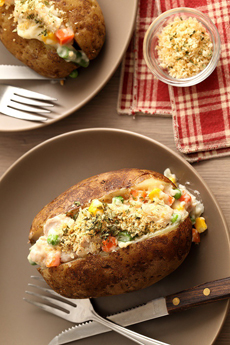
  • Baked Potato: Check out this recipe.
  • Crostini: Combine plain or marinated chopped artichoke hearts with seasoned ricotta (lemon zest, pepper, salt) and spread on grilled or toasted bread. Or, first spread the seasoned ricotta on the bread and top with a whole or sliced artichoke.
  • Dips: Artichoke dips are very popular. There are three recipes below—with crab, gorgonzola and sundried tomatoes.
  • Fish topping: Do a quick sauté of plain artichoke hearts in olive oil with halved cherry/grape tomatoes, minced garlic and olives. Or, make a more intense sauce with brown butter, capers and sage.
  • Grains: Add plain artichoke hearts to cooked whole grains (barley, couscous, brown rice, quinoa, etc.), either hot or a grain salad. Mix with other ingredients of choice, from raisins to nuts
  • Gratin: Place plain artichoke hearts in a baking dish, with or without other cooked vegetables; top with shredded Gruyère and breadcrumbs, and bake at 400°F until the cheese is melted and the artichokes are warmed through.
  • Omelet: Toss in plain artichokes alone, with other vegetables and/or with cheese (feta, Gruyère, mozzarella, etc.): an easy, fancy side dish.
  • Pasta and risotto: Mix plain artichoke hearts with chopped or whole artichoke hearts, olives and olive oil or sauce of choice (recipe).
  • Pizza: top with plain artichoke hearts, optional anchovies, capers, olives, red onion, etc.
  • Roasts: Roast the hearts with chicken or lamb (here’s a recipe with lamb).
  • Salads: Add plain or marinated artichoke hearts to a green salad.
  • Sandwiches: Top the main filling with marinated artichoke hearts.
  • Spreads: Add to hummus, or try this artichoke tapenade recipe.
  •    
    /home/content/p3pnexwpnas01_data02/07/2891007/html/wp content/uploads/spinach artichoke thegirlwhoateeverything 230
    [1] The Girl Who Ate Everything uses cream cheese, mayonnaise and sour cream in her spinach and artichoke dip. Here’s her recipe. See ours below.

    Artichoke Baked Potato
    [2] Forget the dip and make an artichoke baked potato. Here’s the recipe (photo © Bonefish Grill).


    [3] How about an artichoke galette: for brunch, lunch or a first course at dinner. Here’s the recipe (photo © DeLallo).


    /home/content/p3pnexwpnas01_data02/07/2891007/html/wp content/uploads/can roland artichoke hearts 2301
    [4] Use canned, unmarinated artichoke hearts in recipes where you don’t want the soybean oil—and often, a lot of salt (photo © Roland Foods).
     

    THE HISTORY OF SPINACH & ARTICHOKE DIP
     
    Spinach and artichoke dip can be served hot or cold, in a bowl or in a hollowed-out bread bowl (use a round loaf), along with crackers, pita chips, toasts and crudités.

    Spinach and artichoke dip is one of the most popular dips in the U.S., so it’s surprising that we can’t find information on its origin. If you know it, please let us know.

    Our mom recalls that in the 1950s or 1960s, a recipe appeared on the containers of mayonnaise or sour cream, and possibly on packages of Knorr or Lipton dry soup mixes, both of which featured spinach dip with sour cream, mayonnaise and chopped water chestnuts. Such recipes were typically developed by home economists employed by food producers, to encourage popular new ways to use their products.

    Mom’s recipe, transferred from the package to an index card, is below.

    Some recipes include cream cheese, Parmesan or other cheese. We prefer the a less cheesy cold dip but do like grated Emmental or Gruyère cheese in the hot dip.


    RECIPE: SPINACH & ARTICHOKE DIP

    Ingredients

  • 1 box frozen chopped spinach, defrosted, drained and squeezed
  • 1/2 cup sour cream
  • 2 tablespoons mayonnaise
  • 1 clove garlic, minced
  • 1 lemon, juiced (and zested if desired)
  • 2 tablespoons chopped green onion and/or parsley
  • Salt and freshly ground black pepper
  • Optional: a few dashes of nutmeg or Worcestershire Sauce
  • Optional for hot dip: grated Emmental, Fontina, Gruyère, Jarlsberg or similar cheese
  • 1 cup artichoke hearts, drained and quartered (we use canned)
  •  
    Plus

  • Baguette slices, crackers, pita chips/wedges, toast points, tortilla chips, etc.
  •  
    Preparation

    1. DRAIN the spinach in a strainer and press with the back of a large spoon to press out the remaining water. Further blot with paper towels if needed.

    2. COMBINE the spinach in a food processor with the sour cream, mayonnaise, garlic, lemon juice and optional zest and nutmeg; blend. Taste and season with salt and pepper to taste.

    3. ADD the artichokes and pulse a few times. For a cold dip, refrigerate spread in a tightly-capped container for several hours or overnight, to enable the flavors to blend.

    4. FOR A HOT DIP: Preheat oven to 375°F. Blend in the grated cheese and fresh-ground black pepper. Place in an oven-proof dish, top with more grated cheese and bake at until golden brown, about 15–20 minutes.
     
     
    MORE DIP RECIPES

  • Artichoke Dip With Sundried Tomatoes
  • Creamy Artichoke Dip With Gorgonzola & Fontina
  • Hot Crab & Artichoke Dip
  •   

    Comments off

    FOOD HOLIDAY: Pimp Your Cheeseburger

    It used to be that a cheeseburger was just a cheeseburger: a patty and a slice of cheese—usually American, Cheddar or Swiss—and maybe a garnish of pickles. Then some inspired person added a slice of bacon. And those were the options for decades.

    But cheeseburgers have evolved into more complex creations with endless possibilities.

    We’ve been slammed with pitches for creative cheeseburger ideas for National Cheeseburger Day, September 18th. We don’t even know that these ideas are out-of-the-box. We think they’re the new box.

    Some of the ideas that have come our way:

  • URBO, a huge new gourmet venue in the New York City theatre district, suggested a Brie Burger (dry aged beef, Brie and pear mostardo) and a Caprese Burger (dry aged beef, mozzarella, beefsteak tomato and fresh basil).
  • Maria Bernardis of Greekalicious suggested a lamb burger with feta cheese and yogurt sauce in toasted pita.
  • The Cheesecake Factory suggested a Memphis Burger, beef topped with American cheese, barbecue and slaw.
  •    
    /home/content/p3pnexwpnas01_data02/07/2891007/html/wp content/uploads/pimento cheeseburger gardeniaNYC 2301

    A cheeseburger with pimento cheese from Gardenia Restaurant in New York City is delicious, but pretty simple compared to the other ideas we received.

  • Bull City Burger topped a beef patty with a sausage patty, Swiss cheese and pickles.
  • The Palm topped a patty with Gruyère, roasted red bell pepper and a slice of prosciutto.
  • Omaha Steaks suggested pimento cheese under the patty, sliced avocado and salsa on top.
  • Umami Burger tops a cheeseburger with a salad (photo below).
  •  

    /home/content/p3pnexwpnas01_data02/07/2891007/html/wp content/uploads/salad burger umamiburgerhdsoneatsFB 2301
    A Salad Burger with Swiss on the bottom (photo © Umami Burger).
     
  • Hudson Eats has a fried egg-topped burger with Gruyère, baby arugula and frizzled onions.
  • Martin’s Famous Pastry Shop suggests Swiss cheese and caramelized onions on one of their potato rolls.
  • The Munchery suggested Swiss, bacon and a grilled pineapple slice.
  • Vegetarian suggestions included portobello mushrooms with feta cheese and chickpea burgers with smoked mozzarella.
  •  
     

    AND THERE’S MORE!

    Head to CheeseAndBurger.com for many more ideas.

    Check out our master list of 40+ burger recipe ideas.

    Who invented the burger, and who transformed it into a cheeseburger? Much of the credit is lost to history, although here’s what we do know about the history of the burger.

    And if you’ve created a new cheeseburger recipe, let us know.


    Comments off

    TIP OF THE DAY: Grenache (Garnacha) For Fall & Winter

    The third Friday of September—the 18th this year—is International Grenache Day. With its high alcohol content and spicy notes, it’s an excellent wine for autumn and winter food pairings (see below).

    Grenache (gruh-NOSH) in French, Garnacha in Spanish, is easy to grow and thus one of the most widely planted red wine grape varieties in the world. Because pure Grenache wines (monovarietals) tend to lack acid, tannin and rich color, the grape is often blended with other varietals. For red Grenache, these are chiefly:

  • Mourvèdre and Syrah in France and Australia.
  • Tempranillo in Spain.
  • However, if you want a pure Grenache, you can find it.
  •  
    There are also white Grenaches and rosé Grenaches. Noteworthy examples of the latter are Tavel from the Côtes du Rhône of France and the rosés of the Navarra region of Spain.

    The high sugar levels of Grenache make it good for fortified wines, as well. It is used in most Australian fortified wines and in the Port-like red vins doux naturels of Roussillon, France such as Banyuls, Maury and Rasteau.

    Today, narrow down your options and try a red Grenache or Garnacha. What should you try it with?


    /home/content/p3pnexwpnas01_data02/07/2891007/html/wp content/uploads/garnacha sematadesign shutterstock230

    A glass of Grenache. It’s hard to tell Grenache by its color, since most are blended with other grapes. A Grenache blend with Syrah or Temperanillo, for example, will be much more purple than a 100% Grenache. Photo courtesy Semata.

     
    FOOD PAIRINGS WITH RED GRENACHE

    Red Grenache is a versatile wine, even though—as with any wine—its flavors vary, depending on where the grapes are grown, the soil and microclimate characteristics and diverse winemaking styles among producers.

    But red Grenache is generally spicy* with raspberry or strawberry notes. As the wine ages, leather and tar flavors can emerge.

    Pair red Grenache with:

  • Fall and winter dishes: braises, casseroles, roasts, roast turkey and stews (beef, fish, lamb, pork, poultry, veal).
  • Hearty regional fare: classic French bistro dishes, Indian curries, Moroccan tagines, paprika/pimenton-spiced dishes (great with goulash), Portuguese and Spanish country dishes.
  • Vegetarian dishes: bean- and lentil-based dishes, casseroles, cooked tomatoes and eggplant.
  • Smoky foods: barbecue and other smoked meats and related dishes like pork and beans. For smoky pairings, try lighter, affordable Garnachas from Spain.
  • Comfort foods: burgers, mac and cheese, pizza.
  • Strong aged cheeses: blue, cheddar and washed rind cheeses, for example.
  •  
    *In wine, “spicy” refers to flavors such as anise, cardamom, cinnamon, clove, ginger, mint, nutmeg and pepper. Some grapes—and the wines made from them—are naturally spicy: Grenache, Malbec, Petite Sirah, Syrah and Zinfandel. New oak barrels also impart spicy notes.


    /home/content/p3pnexwpnas01_data02/07/2891007/html/wp content/uploads/beaucastel jacquesperrin skinner 230
    One of our favorite grenache blends, Chateau de Beaucastel from the Châteauneuf-du-Pape region of the Rhone. Châteauneuf-du-Pape reds tend to be earthy and gamy flavors, with hints of tar and leather: big, lush wines that are terrific with roast beef or lamb. Photo courtesy Skinner Inc.
      FOOD PAIRINGS WITH WHITE GRENACHE

  • Artichokes
  • Charcuterie
  • Cheese dishes: fondue, gratin, soufflé
  • Paella
  • Seafood dishes
  • Tataki, tartare and sushi (especially stronger flavors, like
    salmon and tuna)
  •  
    FOOD PAIRINGS WITH FORTIFIED GRENACHE

  • Chocolate and chocolate desserts
  • Figs and blue cheese (one of our favorite cheese courses)
  •  
    THE HISTORY OF GRENACHE

    Garnacha most likely originated in the Aragon region of northern Spain. In the 12th century it spread to Catalonia and other regions under the Crown of Aragon.

    When the Roussillon region was annexed by France, Garnacha became Grenache, and the grape was planted in Languedoc and the Southern Rhone region. The latter is the home of perhaps the world’s greatest grenache blend, the A.O.C.† Châteauneuf-du-Pape.

     
    †Appellation d’origine contrôlée (AOC), or controlled designation of origin, is the French certification granted to certain wines, cheeses, and other agricultural products made in specific geographical areas, from local ingredients and according to time-honored artisanal practices. The terroir of the region and the artisan techniques assure the authenticity of the product.


    Comments off

    Types Of Emmental, The Real “Swiss Cheese”

    The U.S. is not known for its food sophistication, knowledge, or accuracy. Errors surround the most popular foods. Today’s focus is one of them, “Swiss cheese.”

    There is no Swiss product called “Swiss cheese,” just as there is no “French cheese,” “Italian cheese,” and so forth. It’s a generic reference, like “French wine” or “Italian wine.” (Yes, there is Swiss wine, but you have to go there to try it. Nearly all is drunk domestically, with less than 2% exported, mainly to Germany.)

    Swiss cheese is the generic name used in the United States for several related varieties of cheese, originally made in Switzerland. Emmentaler is the cheese Americans think of as the generic Swiss cheese. While Americans believe that Swiss cheese has holes, properly known as eyes, not all kinds of Swiss cheese do.
     
     
    THE TYPES OF SWISS CHEESE

    There are 450 known Swiss cheeses, classified into five categories: extra-hard, hard, semi-hard, semi-soft and soft. Cow’s milk is used in 99% of the cheeses produced. Examples include:

  • Extra-Hard Swiss Cheese: Sbrinz
  • Hard Swiss Cheese: Emmentaler, Gruyère/Greyerzer, Sapsago and Vacherin Fribourgeois
  • Semi-Hard Swiss Cheese: Appenzeller, Bündner Bergkäse, Mutschli, Raclette cheese, Tête de Moine, Tilsiter
  • Semi-Soft Swiss Cheese: Vacherin Mont d’Or
  • Soft Swiss Cheese: Gala
  •  
    We suggest assembling examples of the five different styles—or at least, examples of the hard cheeses—for an educational “This Is Swiss Cheese!” tasting party.

    The Swiss cheese variety with the big eyes—the holes—is Emmental, also spelled Emmentaler, Emmenthal or Emmenthaler, and pronounced without the “h” (i.e., em-en-TAL, em-en-TAL-er).

    You may want to pick some up for tomorrow, National Cheeseburger Day. But today, we’ll focus on the glories of Emmental.
     
     
    EMMENTAL HISTORY

    Flavorful and imposing in size, the Swiss consider Emmental to be the king of the Swiss cheeses. It takes its name from the valley of the river Emme, in the canton of Bern*, also the home of Bern, the capital city of Switzerland.

    Emmental cheese production traces its origins to the 13th century. Emmentaler AOC is produced by some 200 dairies, from the fresh, raw milk of cows fed on valley grass. The milk accounts for the superior flavor of Emmenthal versus American reproductions:

    The milk from American factory cheeses (as opposed to artisan cheeses) typically comes from feedlot cows, who don’t graze and are fed commercial feed. Their milk does not have the flavor of milk from cows who graze on grass. Swiss milk is also rBgh/rBst-free, and genetically modified ingredients and any additives are forbidden.

    Around 12 liters (12.6 quarts) of milk are needed to produce one kilo (2.2 pounds) of cheese. The round wheels of cheese have a diameter of 80 to 100 centimeters (31-39 inches—that’s more than three feet wide!), and weigh in at 75 to 120 kg (163-265 pounds). Yes, they’re heavy lifting.
     
     
    THE FLAVOR OF EMMENTAL

    The taste and texture differentiate quality Emmental from rubbery American imitations.

  • Emmental, aged for a minimum of 4 months (and up to 14 months or longer for the most prized cheeses), has a smooth, pale-yellow rind.
  • Like many Swiss mountain cheeses†, Emmental has a cooked, pressed paste (interior), which gives it a smooth, slightly springy texture—a flexible, pliant paste with a lovely deep yellow color from the use of raw milk.
  • In a well-aged Emmental, the aroma is sweet with tones of fresh-cut hay. The flavor is fruity with an intense finish.
  •  
     
    WHAT ABOUT THOSE BIG EYES?

    While other Swiss mountain cheeses have eyes, Emmental has the largest. The holes range from cherry size to walnut size.

    The eyes develop from the bacteria used in the production of Emmentaler cheese: Streptococcus thermophilis, Lactobacillus and Propionibacter shermani.

    In a late stage of cheese production, P. shermani consumes the lactic acid excreted by the other two bacteria, and releases carbon dioxide gas. This forms the bubbles that appear to be “holes” when the cheese is sliced. The cheese industry calls these holes or tunnels “eyes.” Swiss cheese without eyes is known as “blind.”


    [1] Don’t call it “Swiss cheese.” It’s name is Emmental (photo © Emmental Tourismus).

    /home/content/p3pnexwpnas01_data02/07/2891007/html/wp content/uploads/emmental ig 230
    [2] While different cheeses develop eyes (holes), Emmental is the style that develops large holes that make Americans think “Swiss cheese” (photo © iGourmet) .


    [3] Emmental is made in huge wheels that require extra-long knives to slice (photo © Imgur).

    /home/content/p3pnexwpnas01_data02/07/2891007/html/wp content/uploads/Emmentaler wheel emmental.ch 230
    [4] Emmental wheels weigh 163 to 265 pounds (photo © iGourmet).

    smoked-salmon-quiche-230r
    [5] Smoked salmon quiche with Emmental cheese (photo © Mackenzie Ltd.


    TYPES OF EMMENTAL & HOW TO USE THEM

    Emmentaler AOC is sold in different stages of maturity, for different culinary purposes and palates.

  • Classic. The nutty, mild “classic” is matured for at least 4 months. It is used for sandwiches, gratins and other recipes such as fondue, omelets and quiches. It’s an excellent melting cheese—try an Emmental grilled cheese sandwich.
  • Reserve. The distinctly spicy “réserve” is matured for at least 8 months. It develops deeper flavors, for those who want a more nuanced table cheese.
  • Cave-Matured. The very aromatic “cave-matured” Emmental is matured for a minimum of one year. It is the finest table cheese, delivering all the sensory components of a great Emmental.
  •  
    Be sure you are buying Swiss Emmental. Although it is an AOC cheese, originally, the denomination “Emmental” was not protected. Thus, there are French Emmentals, Bavarian Emmentals, even Finnish Emmentals.
     
     
    HOW DID EMMENTAL BECOME “SWISS CHEESE” IN AMERICA?

    The original starter culture for Emmental was brought from Switzerland to Wisconsin in the 1850s, by immigrant Swiss cheesemakers, who recreated the cheese from their homeland. The American version of Emmentaler became known as “Swiss” cheese by the locals—perhaps because “Swiss” was easier to say than “Emmental.”


    Alas.
     
    ________________

    *A canton is analogous to an American state. There are 26 cantons in Switzerland.

    †Also called Alpine cheeses, the term “mountain cheeses” refers to large, firm wheels made in the Swiss mountains (the Alps). These wheels are well-aged and full-flavored, often sprinkled with holes (some quite small). Appenzeller, Emmental, Gruyère, Hoch Ybrig, Raclette (four different cheeses), Sbrinz, Stanser Fladä, Tête de Moine and Vacherin Fribourgeois are examples. Mountain cheeses are not restricted to Switzerland, but to any mountains. Here’s more about mountain cheese.


    Comments off

    The Nibble Webzine Of Food Adventures
    RSS
    Follow by Email


    © Copyright 2005-2026 Lifestyle Direct, Inc. All rights reserved. All images are copyrighted to their respective owners.