THE NIBBLE BLOG: Products, Recipes & Trends In Specialty Foods


Also visit our main website, TheNibble.com.

Bananas Foster Recipe: Use It As A Topping & Garnish

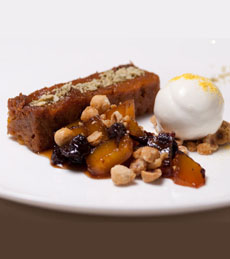
As a lover of both chocolate cake and Bananas Foster, we were inspired by the creative use of Bananas Foster at Davio’s Italian Steakhouse in Boston (see photo). It’s traditionally used to top ice cream.

It’s a most delicious addition. At Davio’s, a slice of flourless chocolate cake is topped with a slice of caramelized banana. But you can adapt the idea to almost any dessert.

A chocolate base (or other dark color) is best to contrast the beige banana; but it will be delectable on anything. (It was a hit at THE NIBBLE on top of homemade chocolate pudding.)

> The recipe is below.

> Also below: how to flambée.

But first, for your consideration:

> The history of bananas and the year’s 10 banana holidays.

> America’s favorite banana dishes.

> The history of dessert.

And a bit more culinary history…
 
 
THE HISTORY OF BANANAS FOSTER

Bananas Foster is a more elaborate version of caramelized bananas. Sliced bananas are sautéed in butter with brown sugar, banana liqueur and Grand Marnier (orange-infused brandy) or rum.

It is then flambéed at the table for a dramatic effect, and spooned over vanilla ice cream.

For the flame-averse: While igniting the dish tableside is dramatic both at a restaurant and at home, it isn’t necessary.

The original Bananas Foster recipe was created in 1951 by Paul Blangé (1900-1977), the executive chef at Brennan’s in New Orleans. The dish was named in honor of Richard Foster, a regular customer and friend of restaurant owner Owen Brennan, Sr.

It is one of the flambé desserts that also include Crêpes Suzette and Cherries Jubilee. Savory dishes are also flamed at the table, from Steak Diane to Veal Marsala. Here’s a list of flambé recipes. Note, though, that the technique has long gone out of style.

But how did it come into style?


/home/content/p3pnexwpnas01_data02/07/2891007/html/wp content/uploads/flourless cake caramelized banana daviosbboston 230
[1] Two great desserts in one at Davio’s in Boston: Bananas Foster atop a piece of chocolate cake (photo © Davio’s).

Bananas Foster With Vanilla Ice Cream
[2] Classic Bananas Foster, à la mode (Gemini Photo).


THE MODERN HISTORY OF FLAMBÉ FOOD

Flambé (it means flamed in French), is a cooking procedure in which alcohol is warmed and then added to a hot pan, where it is lit to create a burst of flames. The alcohol burns off shortly and the flames die out.

While the practice of igniting food for dramatic flair can be traced to 14th century Moors, modern flambéing became popular only in the late 19th century, and by accident.

According to his memoir, in 1895 at the Café de Paris in Monte Carlo, 14-year-old Henri Charpentier (1880-1961), an assistant waiter, accidentally set fire to the liqueur in the pan of crêpes he was preparing. At the time, many foods were prepared tableside. The guests happened to be Albert Edward, the Prince of Wales (the future King Edward VII) and some friends. According to the memoir:

“It was quite by accident as I worked in front of a chafing dish that the cordials caught fire. I thought I was ruined. The Prince and his friends were waiting. How could I begin all over? I tasted it. It was, I thought, the most delicious melody of sweet flavors I had every tasted. I still think so. That accident of the flame was precisely what was needed to bring all those various instruments into one harmony of taste.

The dish was served, and the Prince liked it.

“He ate the pancakes with a fork; but he used a spoon to capture the remaining syrup. He asked me the name of that which he had eaten with so much relish. I told him it was to be called Crêpes Princesse. He recognized that the pancake controlled the gender and that this was a compliment designed for him; but he protested with mock ferocity that there was a lady present. She was alert and rose to her feet and holding her little skirt wide with her hands she made him a curtsey. ‘Will you,’ said His Majesty, ‘change Crêpes Princesse to Crêpes Suzette?’ Thus was born and baptized this confection, one taste of which, I really believe, would reform a cannibal into a civilized gentleman. The next day I received a present from the Prince, a jeweled ring, a panama hat and a cane.”

___________________

SOURCE: Life A La Henri – Being The Memories of Henri Charpentier, by Henri Charpentier and Boyden Sparkes, The Modern Library, New York, 2001 Paperback Edition. Originally published in 1934 by Simon & Schuster, Inc. Thanks to What’s Cooking America for the reference.


Banana with vanilla ice cream, caramel sauce and hazelnuts
[3] Bananas Foster served banana-split style (photo © Fotolia).

Brennans-Bananas-Foster-brennans-230
[4] Bananas Foster at Brennan’s. We prefer to slice our bananas in chunks (photo © New Orleans Restaurants).

   
RECIPE: BANANAS FOSTER TOPPING & GARNISH

While the Davio’s recipe cuts the banana into a stylish oblong and the photo at right halves the fruit banana-split style. At Brennan’s the long slices are cut in half. We prefer chunks perhaps 3/4-inch thick—easier to spoon over ice cream…and French toast, pancakes and waffles.

Ingredients For 4 Servings

  • 4 firm, ripe bananas
  • 4 tablespoons unsalted butter
  • 1 cup firmly packed light brown sugar
  • 3/4 teaspoon ground cinnamon
  • 1/4 cup banana liqueur
  • 1/2 cup dark rum
  • Optional garnishes: toasted chopped pecans, grated orange
    zest
  •  
    Plus

  • 1 pint vanilla ice cream, or
  • Cake or whatever else you want with your Bananas Foster
  •  
    Preparation

    1. CUT the bananas in half lengthwise and crosswise for a total of 4 pieces each (alternative: cut 3/4″ rounds; you’ll have more than 4 pieces).

    2. MELT the butter in a large skillet over medium heat. Add the brown sugar and cinnamon and cook, stirring until the sugar dissolves (about 2 minutes—this creates a caramel sauce). Add the bananas and cook on both sides until they begin to soften and brown (about 3 minutes).

    3. ADD the banana liqueur and stir to blend into the caramel sauce.

     
    If you want to flambé, follow the instructions below. However, the drama of the flambé works only if the dish is prepared tableside. Otherwise, the drama is lost in the kitchen.

    4. LIFT lift the bananas carefully from the pan and top the four dishes of ice cream; then spoon the sauce over the ice cream and bananas and serve immediately.
     
     
    HOW TO FLAMBÉ

    Here’s a video on how to flambé from QVC chef David Venable. Tips:
     

  • Liquors and liqueurs that are 80-109 proof are best to ignite. Don’t try to ignite a higher proof; they are highly flammable.
  • The liquor must be warmed to about 130°F before adding to the pan. (Keep it well below the boiling point. Boiling will burn off the alcohol, and it will not ignite.) This is generally done by holding the liquor, in a spoon, over a candle or other flame.
  • Always remove the pan from the heat source before adding the liquor to avoid burning yourself.
  • Vigorously shaking the pan usually extinguishes the flame, but if you’re just learning, keep a pot lid nearby in case you need to smother the flames.
  •  
    A Plate Of Bananas Foster
    [5] You can use Bananas Foster to top pound cake, or just enjoy it plain like this—no garnish necessary (Abacus Photo).
     

    CHECK OUT WHAT’S HAPPENING ON OUR HOME PAGE, THENIBBLE.COM.


    Comments off

    RECIPE: White Chocolate Pumpkin Fondue

    For pumpkin season, treat everyone to this White Chocolate Pumpkin Pie Chocolate Fondue from The Melting Pot, with a few modifications from THE NIBBLE.

    Why not make it this weekend? Don’t like to cook? Find the nearest Melting Pot.

    > The history of chocolate fondue is below.

    > Chocolate fondue recipes.

    > A year of fondue holidays.
     
     
    RECIPE: WHITE CHOCOLATE PUMPKIN FONDUE

    Ingredients For The Fondue

  • 8 ounces white chocolate, chopped (look for Green & Black’s, Lindt or other premium brand)
  • 1 tablespoon heavy cream
  • 1 heaping teaspoon pumpkin purée (not pumpkin pie filling)
  • 1-1/2 teaspoons Bacardi 151 Rum*
  • Pinch nutmeg
  • Optional: chopped graham crackers or white chocolate shavings
  •  
    For The Dippers

  • Cake cubes: blondies, brownies, doughnut holes or pieces, loaf cakes (carrot, chocolate, pound)
  • Cookies: amaretti, biscotti, graham crackers, granola bars, lady fingers, meringues, shortbread fingers, tea biscuits
  • Dried fruits: apples, apricots, dates, figs, mangoes, prunes
  • Fresh fruits: apples, bananas, grapes. mandarins/oranges, pears, pineapple, strawberries
  •  
    _______________

    *Bacardi 151 is a brand of highly alcoholic rum, named for its alcohol proof level of 151 (75.5% alcohol by volume or A.B.V.). This is about double the alcohol of conventional rum (35%–40% A.B.V.). You can substitute a liqueur instead; see Step 3 below.

      White Chocolate Pumpkin Fondue
    [1] White chocolate pumpkin fondue, garnished with white chocolate shavings. Photo courtesy The Melting Pot.

    Chocolate Fondue With Fruit & Cake For Dipping
    [2] The first dessert fondue was invented in New York City by a Swiss chef. See the history of chocolate fondue below (photo © Dairy Farmers Of Wisconsin).

    Preparation

    1. PLACE the chocolate and cream in the top of a double boiler pot over medium heat, stirring constantly so as not to scorch the chocolate. Alternatively, melt in the microwave in 45 second increments, stirring after each one.

    2. POUR the melted chocolate into a fondue pot. Add the pumpkin purée, blending gently. Taste and add more pumpkin if you like.

    3. ADD the rum to the pot and light with a long match or fireplace lighter. As the rum burns away, carefully stir the mixture together. If you don’t want to purchase 151 rum or flambé, stir the equivalent amount of orange liqueur into the melted chocolate and blend.

    4. SPRINKLE the nutmeg into the pot and gently fold in. The Melting Pot garnishes the top of the fondue with chopped graham crackers, but we prefer to use the graham crackers as dippers.
     
     
    THE HISTORY OF CHOCOLATE FONDUE:
    WHO INVENTED DESSERT FONDUE?

    Konrad Egli, a Swiss chef and restaurateur (nicknamed Konni), invented chocolate fondue in the 1960s at his midtown Manhattan restaurant, Chalet Suisse.

    Egli created chocolate fondue as a promotion for the Swiss chocolate bar Toblerone, which was introduced to the U.S. at the 1964 World’s Fair in New York.

    The company wanted to expand the knowledge of their chocolate, and after some consideration, Egli hit on the idea of using it to make something equally new and exciting: a sweet fondue. It was on the menu by 1966.

    It caught on like wildfire [source].

    It was not his first fondue innovation: Egli had previously introduced fondue bourguignonne (beef fondue) at the restaurant, in 1956.

    His original recipe included creamy Swiss Toblerone chocolate and kirsch, a German cherry brandy. Here’s close to the original recipe.

    Earlier references, starting in the 1930s, refer to types of chocolate mousse or chocolate cake as “chocolate fondue.”

    But since “fondue” is French for “melted,” the only true chocolate fondue is the pot of melted chocolate created by Egli, from those Toblerone bars.


    CHECK OUT WHAT’S HAPPENING ON OUR HOME PAGE, THENIBBLE.COM.


    Comments off

    TIP OF THE DAY: International Nachos For National Nachos Day

    Nachos
    [1] Classic nachos (photo by Chee Hong | Wikipedia).

    spicy-tuna-tartare-nachos-RAsushi-orlando-230
    [2] International style: Japanese nachos, made with rice chips and spicy tuna (photo © RA Sushi).


    Today is National Nacho Day, and our tip is: Go where no Mexican nacho has gone.

    The appeal of Tex-Mex nachos—crunchy, creamy, spicy—cannot be denied.

    But how about fusion nachos, with culinary accents (crunchy, creamy, spicy) from the world’s favorite cuisines? Below you’ll find 13 types of chips in addition to classic tortilla chips, plus recipes for 15 different “international” nachos beyond Mexican. But first…
     
     
    THE HISTORY OF NACHOS

    Nachos are an example of necessity being the mother of invention.

    As the story goes, in 1943 a group of Army wives from Fort Duncan, in Eagle Pass, Texas, had gone just across the border to Piedras Negros, Mexico, on a shopping trip.

    By the time they arrived at the Victory Club restaurant for a meal, the kitchen was closed.

    But the accommodating maître d’hôtel, Ignacio “Nacho” Anaya (Nacho is a nickname for Ignacio), threw together a snack for the ladies from what was available in the kitchen: tortillas and cheese.

    He cut the tortillas into triangles and fried them, added shredded Cheddar cheese, quickly heated them to melt the cheese, and garnished the dish with sliced jalapeño chiles.

    When asked what the tasty dish was called, he answered, “Nacho’s especiales,” Nacho’s Special. (Food trivia: In Mexico, nachos are called totopos, the local word for tortilla chips).

    The dish quickly spread throughout Texas and the Southwest. The first known appearance of the word “nachos” in English dates to 1950, from the book. A Taste of Texas. [Source]


    WHAT’S IN TEX-MEX NACHOS?

    In the beginning, nachos were a simple dish as Ignacio made them: tortilla chips, shredded melted cheese, and jalapeños.

    But as time marched on, so did nachos, leading to “loaded” Tex-Mex nacho options with:

  • Beans: black beans, pinto beans, refried beans, chili con carne, chile con queso.
  • Condiments: garlic, hot sauce, lime, olives, pickles.
  • Meat: carne asada, chicken, chorizo, ground beef, sliced steak.
  • Salsa and dressings: cooked salsa, guacamole, pico de gallo, ranch dressing, salsa fresca, sour cream (see the different types of salsa).
  • Vegetables: chive, cilantro, diced tomato, elote (grilled corn), jalapeño, lettuce, onion, scallion.
  •  
    And while these ingredients offer a huge number of combinations, why not look outside Central American ingredients to international combinations. First…
     
     
    PICK A BASE CHIP

    Step away from tortilla chips (a.k.a. taco chips) or other corn chips. There are lots of different chips to be had, representing all corners of the world. Pick your base, and it will inspire the toppings.

  • Bagel chips
  • Bean chips
  • Cassava/yucca chips
  • Flavored tortilla chips (taco chips)
  • Kale chips
  • Lentil chips
  • Pasta chips
  • Pita chips
  • Plantain chips
  • Potato or sweet potato chips
  • Rice chips
  • Soy crisps
  • Vegetable chips (e.g. beet, lotus root, yucca)
  •  

     
    INTERNATIONAL NACHOS

    Top the base chip with the main ingredients and cheese, melt the shredded cheese under the broiler or with a kitchen torch, and top with the sauces and garnishes.

  • American Nachos: potato chips, popcorn, sliced hot dogs, dill pickles or relish, shredded American cheese, onion dip.
  • Barbecue Nachos: tortilla chips, barbecued pork, melted cheese, barbecue sauce, and sliced jalapeños.
  • California Nachos: vegetable chips, kale chips, guacamole, shredded Monterey Jack cheese, sprouts.
  • French Nachos: French fries, goat cheese, crème fraîche, frizzled onions.
  • German Nachos: potato chips, munster cheese, sliced sausage, caramelized onions (or sauerkraut, if you want a pucker).
  • Greek Nachos: pita chips, mini lamb meatballs, crumbled feta cheese, shredded saganaki (melting cheese; substitute mozzarella), sliced pepperoncini, tzatziki, kalamata olives.
  • Hawaiian Nachos: plantain chips or sweet potato chips, kalua pork (smoky; made from a whole, slow-roasted pig), melted cheese, barbecue sauce, diced pineapple.
  • Healthy Nachos: vegetable chips, roasted vegetables or jarred pimentos, fat-free plain Greek yogurt, salsa fresca.
  • Indian Nachos: lentil chips, shawarma (spit-grilled meat) with Indian spices, raita, green peas.
  • Irish Nachos: Fried potato slices topped with corned beef, shredded Irish cheddar, cooked bacon, lettuce, chopped tomatoes and scallions.
  •   /home/content/p3pnexwpnas01 data02/07/2891007/html/wp content/uploads/Oyster Nachos zagat 230
    [3] “Pacific” nachos with oysters (photo © Zagat).

    bbq-pork-nachos-supermancooks-230
    [4] Barbecue pork nachos (photo © Superman Cooks).

  • Italian Nachos: pasta chips, Italian sausage or pepperoni, sweet peppers, marinara sauce and shredded mozzarella and chili flakes.
  • Japanese Nachos: rice chips, cooked or raw fish/seafood, wasabi-accented plain yogurt or sour cream, shichimi togarashi (Japanese seven-spice blend).
  • Jewish Nachos: bagel chips, chopped herring, sour cream, dill.
  • Middle Eastern Nachos: pita chips, grilled meat or vegetables, hummus, plain yogurt.
  • Pacific Nachos: Crispy wontons, cornmeal-crusted fried oysters (substitute any seafood), shredded Swiss, cocktail sauce or tartar sauce.
  •  
     
    MORE TAKES ON NACHOS

    Beyond the chip, here are other spins on nachos:

  • Baked potato nachos recipe
  • Nacho stuffed shells recipe
  • Naked nachos recipe
  •  
     

    CHECK OUT WHAT’S HAPPENING ON OUR HOME PAGE, THENIBBLE.COM.


    Comments off

    Stuffed Acorn Squash Recipe For National Acorn Squash Day

    Whole Acorn Squash
    [1] Whole acorn squash (photos #1 and #2 © Good Eggs).

    /home/content/p3pnexwpnas01 data02/07/2891007/html/wp content/uploads/acorn whole halved 230

    [2] Halved and seeded acorn squash.

      Last night we were out with a group of friends, the majority of whom ordered healthy roast vegetable plates for dinner. Roasting vegetables at home arose as a topic, and surprise:

    While most of us roasted sliced root vegetables, only two baked halved acorn or butternut squash.

    The reason given: It’s difficult (and scary) to cut the hard squash with a knife. So they purchased already-peeled and diced squash.

    Anyone with a sharp knife and a degree of caution can cut open a hard squash. Do not be intimidated by a vegetable!

    Sharpen your knife and watch this video.

    When you get comfortable with the process, you don’t even need to cut off the ends. We prefer to leave them on for aesthetic appeal and use this technique—a rocking knife motion—to slice the squash in half.

    Now there’s nothing wrong with baking the squash halves with a bit of butter or oil, salt, and pepper—or a drizzle of maple syrup.

    But baked stuff squash is such a festive dish. You can stuff it with absolutely anything, from grains to other vegetables, as a first course or a vegetarian entrée. It’s a great Meatless Monday dish, but you can also add sausage or other meat.

    One squash serves two people. The following recipe is from QVC’s chef David Venable.

    The photo of the recipe is below the preparation instructions.

    Mark your calendars: September 7th is National Acorn Squash Day.

    > The history of squash is below.

    > So is some squash trivia!

    > Acorn vs. butternut squash.

    > Check out the different types of squash.

    > More acorn squash recipes.


    RECIPE: BAKED STUFFED ACORN SQUASH

    This recipe uses wild rice, but you can use barley, brown rice, quinoa, or another grain.

    Want a different filling? Here are more ingredients for stuffed squash.

    Ingredients For 4 Servings

  • 2 acorn squash, halved lengthwise and seeded
  • Salt and pepper
  •  
    For The Stuffing

  • 1 tablespoon olive oil, plus more for coating squash
  • 1/2 onion, diced
  • 1 stalk of celery, diced
  • 3/4 cup chicken or vegetable stock
  • 3/4 cup dry stuffing mix
  • 1/2 cup dried cranberries
  • 1 bag (8.8 ounces) precooked long grain and wild rice blend
  • 1/2 cups grated Gruyère, Cheddar or substitute*
  • 1/2 cup pecans, lightly toasted and chopped
  •  
    _________________

    *Semi-firm cheese or semi-hard cheeses include American Swiss, Appenzeller, Asiago, Beaufort, Caciotta, Caerphilly, Cantal, Cheshire, Colby, Comte, Emmental, Fontina, Gloucester, Gjetost, Jarlsberg, Caserri, Manchego, Tête de Moine and Tomme d’Abondance, among others.
     
    Preparation

    1. PREHEAT the oven to 350°F. Lightly oil and season the flesh of each squash with salt and pepper. Place the halves flesh-side down on a baking sheet. Bake for about 45 minutes or until fork tender. While the squash is baking…

    2. MAKE the stuffing. Add 1 tablespoon oil to a skillet over medium heat, and sauté the onion and celery until cooked through, about 5-7 minutes. Add the chicken stock and bring the mixture to a simmer. Add the stuffing mix and cranberries. Stir and remove the pan from the heat. When the stuffing has cooled slightly…

    3. SPOON it into a medium-sized bowl and add the rice, cheese, and pecans. Mix until combined. When the squash has finished baking…

    4. TURN each squash half flesh-side up and spoon the stuffing into the cavity. Bake for about 30 minutes, or until the stuffing is heated through and is golden brown on top.
     
    TIP: Whole acorn squash can be stored for up to a month in a cool, dry spot. Only cooked or cut acorn squash should be refrigerated.


    THE HISTORY OF ACORN SQUASH

    Squash is indigenous to Central and South America. It was introduced to the Spanish conquistadors in Mexico and to the English settlers in Virginia and Massachusetts.

    It was easy to grow and hardy enough to store for months, providing a nutritious dietary staple throughout the winter.

    Acorn squash (Curcubita pepo, var. turbinata) is so called because its shape resembles an acorn. The most common variety is dark green in color, often with a splotch of orange on the side or top. Some varieties are variegated (multi-color) and newer varieties include the yellow Golden Acorn squash and white-skinned varieties.

    Like the other popular winter squash, butternut squash, the skin of acorn squash is thick and hard, and it is an effort to peel it.

    But either squash is easily cut in half with a large, sharp knife. It can then be baked, plain, or stuffed with grain, meat, or vegetable mixtures.
     
     
    EATING ACORN SQUASH

    Acorn squash is smaller than butternut squash (acorn is one to two pounds, four to seven inches long), and half of an acorn makes a convenient individual portion. It is similar in flavor to butternut.

    While acorn squash is most commonly baked, it can also be microwaved, sautéed, or steamed.

  • The seeds of the squash are toasted and eaten. (Trivia: Initially, the seeds were eaten instead of the flesh until plumper-fleshed varieties were bred.)
  • The yellow trumpet flowers that are produced before the squash is fully developed are also edible. They are stuffed and considered a delicacy.
  •   Stuffed Bake Acorn Squash
    [3] Stuffed acorn squash, the recipe above (photo © QVC).

    quinoa-stuffed-acorn-squash-smellslikebrownies-230sq
    [4] Go trendy: Stuff acorn squash with quinoa and kale. Here’s a recipe from Smells Like Brownies.

  • The green tops, about three inches’ worth from the end of the squash, are also edible (but not the prickly stem). Squash greens are a popular vegetable in the Philippines. Unless you grow your own or your local farmer doesn’t remove them, you aren’t likely to see them for sale in the U.S.
  • Squash in salads. Don’t hesitate to add cooked squash to green salads, grains, omelets, and any place you’d like another level of flavor and color.
  •  
    Acorn squash is a good source of dietary fiber and potassium, with smaller amounts of vitamins C and B, magnesium, and manganese. Surprisingly, because of the color of the flesh, it is not a good source of beta-carotene.
     

    SQUASH TRIVIA

  • The word “squash” comes from the Wampanoag Native American word, askutasquash, meaning “eaten raw or uncooked.” This may refer to the summer squash varieties, yellow squash, and zucchini, which can be enjoyed raw. Summer squash, which belongs to the same genus and species as most winter squash, are small, quick-growing varieties that are eaten before the rinds and seeds begin to harden.
  • There are three species of squash, all native to the Americas. Curcubita pepo includes acorn, butternut, pumpkin, summer squashes, and others. Curcubita moschata, represented by the Cushaw, Japanese Pie, Large Cheese Pumpkins, and Winter Crookneck Squashes arose, like Cucurbita pepo, in Mexico and Central America. Both were and are important food, ranking next to maize and beans. Curcubita maxima, includes Boston Marrow, Delicious, Hubbard, Marblehead, and Turks Turban, and apparently originated near the Andes, or in certain Andean valleys.
  • Before the arrival of Europeans, Curcubita pepo, Curcubita moschata had been carried to all parts of North America that were conducive to growth. Many Native American tribes, particularly in the West, still grow a diversity of hardy squashes and pumpkins not to be found in our markets.
  • Squash was unknown in the Old World until the 16th century, brought back by the returning conquistadors. The oldest known print record of it is dated 1591.
  • Much of canned pumpkin consists of Curcubita moschata squash, not from the jack-o-lantern variety of pumpkin. The best commercially canned varieties are Boston Marrow and Delicious varieties. The flesh of these varieties is much richer and more nutritious than that of pumpkin.
  •  
    [Source]


    CHECK OUT WHAT’S HAPPENING ON OUR HOME PAGE, THENIBBLE.COM.


    Comments off

    TIP OF THE DAY: Thanksgiving Turkey Varieties

    broad-breasted-white-porterturkeys-230

    /home/content/p3pnexwpnas01 data02/07/2891007/html/wp content/uploads/larryprice natwildturkeyfed 230
    TOP PHOTO: Broad Breasted White,
    America’s supermarket turkey. Photo
    courtesy Porter Turkeys. BOTTOM PHOTO:
    What the Pilgrims ate: the original wild
    turkey, a streamlined physique. Photo by
    Larry Price | National Wild Turkey
    Federation.

      The turkey is a native American bird. As everyone who went to grade school here knows, it was enjoyed by the Pilgrims and their Wampanoag Native American neighbors at a dinner at the Plimouth Plantation, Massachusetts in 1621.

    (Plimouth is how the Pilgrims spelled it. In the 17th century, there was no standardization of spelling. The modern town is spellled Plymouth, but the historical site retains its original spelling.)

    A celebration of the settlers’ first harvest, this harvest feast was later called “The First Thanksgiving” by 18th-century scholars. The name stuck. Check out more about it below.

    Fast forward almost 400 years, and we’re consuming 400 million turkeys a year. Ninety-nine percent of them are Broad Breasted Whites, a breed with short legs and a huge breast, bred to meet Americans’ overwhelming taste for white meat.

    As much as we gobble up those big birds, there’s been rumbling that they’re dry, tasteless, and bear no relation whatsoever to that enjoyed by our forefathers (or even our grandparents).

    Is that true? We share our notes from a tasting test in the next section. But the choices become confusing, and we’ve addressed them: heirloom versus heritage, wild versus heirloom, and supermarket turkey versus the world.
     
    HERITAGE TURKEYS

    More than 10 breeds are classified as heritage turkeys: Auburn, Buff, Black, Bourbon Red, Narragansett, Royal Palm, Slate, Standard Bronze and Midget White. These were bred long ago from the original wild turkey.

    Much of the ancient breeding stock survived on family farms, kept as show birds, consumed by the farm families and available in tiny quantities in the locale.

    But it’s not all deliciousness in Heritage Turkeyland. According to LivestockConservancy.org, the Jersey Buff and Midget White are on the critical extinction list; the Narragansett is on the Threatened list; and the Bourbon Red, Royal Palm, Slate and Standard Bronze are on the Watch list. However…

     
    Over the past two decades, as heritage breeds have been “reclaimed” by chefs, expansion of certain heritage breeds has ensured that there’s enough heritage turkey for everyone who wants one.

    Does that mean you should reach for the Butterball and forget heritage breeds? Not at all!
     
    TURKEY VARIETIES FOR YOUR CONSIDERATION

    Thanks to Whole Foods for helping to explain these choices. All of Whole Foods Markets’ turkeys come from farms that have been certified by the third-party verified 5-Step Animal Welfare Rating System. They are raised with no antibiotics, no added hormones and no animal bi-products in their feed.

  • Classic Antibiotic-Free Turkeys. These are Broad Breasted Whites (see top photo above) raised with no antibiotics. They are the perennial customer favorite at Whole Foods Markets. “They offer a trifecta of flavor, quality and value,” says Whole Foods.
  • Organic Turkeys. In addition to being raised without the use of antibiotics, organic turkeys are raised on farms that have been certified organic according to USDA Organic Standards (only certified organic feed, processing and packaging allowed).
  • Heritage Turkeys. These birds are raised slowly and traditionally. They’re old breeds with a more robust turkey flavor, and are typically a bit smaller (usually up to 14 pounds) than classic antibiotic free birds. One reason for their smaller size is that, unlike the majority of today’s commercial breeds, heritage turkeys are single breasted like their wild ancestor.
  •  
    WHAT ABOUT THE BUTTERBALL?

    Our mother was a Butterball loyalist, and made terrific turkey with moist breast meat, using her various techniques that included brining and covering the breast with foil. If you want an ultra moist turkey, but don’t want to do the brining at home, buy a hand-brined bird that’s ready to roast. (NOTE: Remember not to stuff a brined bird because the stuffing will be too salty.)

    A few years ago, we were invited to a tasting of different roast turkeys at a prominent culinary school. Except for the Butterball, which was frozen, the birds were fresh.

    We liked Butterball the best! Here are our tasting notes, with the counsel that it isn’t truly scientific since we didn’t repeat the test. And, birds from different farms could easily yield different results.

  • Organic Turkey. The white meat was pebbly, papery. The dark meat was pink, moist, very tasty.
  • Butterball Turkey. The meatiest breast and drumsticks. Excellent texture and taste, a very “birdy” flavor (what we have come to recognize as great turkey flavor) and classic white meat. The dark meat is darker in color and a little chewier than the organic turkey, but a lovely, pure, excellent flavor. The interesting thing about this bird is that the white meat and dark meat flavors are not at extremes: White meat lovers should enjoy the dark meat, and dark meat lovers should enjoy the white meat. Note that Butterball is a brand, and not all Broad Breasted White turkeys are branded.
  • Heritage Bourbon Red Turkey. A smaller, broad breast with lots of breast meat but smaller drumsticks. The meat was chewy all over without a lot of flavor. The dark meat is very dark; moist but just too chewy with no other payoff.
  • Heritage Standard Bronze Turkey. The meat was chewy, but not as chewy as the Heritage Bourbon Red. The dark meat was moist, the white meat O.K.
  • Wild Turkey. This scrawny, elongated bird looks like a champion marathon runner (see the photo above). There was almost no meat on the upper breast, but it had big thighs. Surprisingly, both white and dark meat were very tender. I wish it had more “birdy” flavor.
  •  
    The next two varieties were included in our taste test; but to be fair, they were at the end of the tasting, and we were all turkeyed out. We were stuffed and predisposed not to like anything else.

  • Heirloom Turkey. Dating back to the early 1920s-1930s, heirloom turkeys were bred to strike a balance between the wild, robust flavor of the heritage breeds, and the mild flavor then (and still) preferred by consumers. They were bred to be double breasted, to provide more white meat than heritage turkeys.
  • Kosher Turkeys. Rabbinical inspectors check each bird to ensure that it is of the highest quality and processed in accordance with the kosher standards of cleanliness, purity and wholesomeness. You can find both conventional and organic kosher birds. TIP: Hold the salt! Kosher turkeys have already been salted. And don’t brine or you’ll have an overly salty bird.
  •  
    So what should you do? The decision is yours. You can go with what you enjoyed last year, or try something new.

    Tip: If you’re feeding a large group or want white meat leftovers, pick up an extra organic turkey breast to make sure you have plenty of white meat to go around.


    THE REAL THANKSGIVING FACTS

    It is a little-known fact that the three-day feast celebrated by the Pilgrims and Wampanoag natives, which we purportedly replicate on the fourth Thursday of each November, was never again repeated in Plimouth Plantation; nor was it deemed by the colonists to be a “Thanksgiving feast.”

    In fact, days of thanksgiving observed by the Pilgrims were devoted to prayer, not feasting. So we are not replicating the Pilgrims’ Thanksgiving Day each year.

    That term was bestowed by academics researching the topic in the 18th century.

    We know that in 1621, the governor of Plimoth Plantation sent four men fowling, and “they four in one day shot as much fowl.” Perhaps it was turkey, perhaps duck, which was also plentiful in the area. The one written record dies not specify.

    We also know that the native Wampanoag guests killed five deer. About ninety of them attended, and the feast lasted for three days.
     
    A Treasure Trove Of Thanksgiving History

    There’s much to know about the Pilgrims and the Wampanoag People that we never learned in school. But Scholastic.com has the best site we’ve seen on the history of Thanksgiving. We love it!

    If people are waiting around for dinner, send them here.

    President Abraham Lincoln declared the first national Thanksgiving Day in 1863, and created the holiday observed since on the fourth Thursday of November.

      iGourmet-roast-turkey-platter-230sq

    nat-turkey-fed-kumquats-cranberries
    Platter garnishing ideas: TOP PHOTO. Add some veggies to the plater. We raw prefer cherry tomatoes and baby pattypan squash, which add color, don’t take away from the cooked fare and can be enjoyed the next day. Photo courtesy iGourmet. BOTTOM PHOTO: Keep it simple with kumquats and whole uncooked cranberries. Photo courtesy National Turkey Federation.


    Comments off

    The Nibble Webzine Of Food Adventures
    RSS
    Follow by Email


    © Copyright 2005-2026 Lifestyle Direct, Inc. All rights reserved. All images are copyrighted to their respective owners.