THE NIBBLE BLOG: Products, Recipes & Trends In Specialty Foods


Also visit our main website, TheNibble.com.

TIP OF THE DAY: The New Bloody Mary Garnishes

Aquavit Bloody Mary
[1] Aquavit Bloody Mary with beets, a half-sour pickle spear, and fresh dill; photo © Flavor & The Menu.

Bloody Mary Crab Claw
[2] Mary garnished with crab claw and dilly beans from Ramos House.

Garnished Bloody Mary
[3] Surf and Turf Bloody Mary with bacon and shrimp, plus an antipasto skewer and, as a nod to the past, a celery stalk. From The Wayfarer | NYC.


As if everyone who drinks didn’t have enough on New Year’s Eve, January 1st is National Bloody Mary Day. Each year we feature a different Bloody Mary recipe.

Some time ago we read about a famed Bloody Mary served at Ramos House in San Juan Capistrano, California.

It was made with shochu instead of vodka, lower-proof and lower in calories. It was garnished with lots of dilly beans (pickled green beans) and a crab claw.

So today’s tip is: Move past the celery stalk to more interesting Bloody Mary garnishes.
 
 
RECIPE: ADAPTED FROM THE RAMOS HOUSE
BLOODY MARY RECIPE

Ingredients For 2.25 Quarts

  • 1 liter tomato juice*
  • .5 liter clam juice*
  • 1 bottle (750ml) vodka
  • 1 ounce prepared horseradish (from the refrigerator section
    of your market)
  • 1.5 ounces hot sauce
  • 1/4 tablespoon ground pepper
  • 6 tablespoons Worcestershire sauce
  • 1 ounce lemon juice
  • Zest of 1-1/2 lemons
  • 6 tablespoons minced garlic
  • Garnish: crab claws, lobster claws or shrimp; dilly beans and/or pickled asparagus†
  • Optional garnishes: bacon strips and/or “antipasto skewers” (a cheese cube, grape tomato mozzarella ball, olive, pickled onion, sausage chunk or other antipasto ingredients—see bottom photo above)
  • Optional: ice cubes
  • Optional: cocktail straws‡
  •  
    Preparation

    1. COMBINE ingredients (except for garnishes) in a pitcher and chill before serving.

    2. FILL glasses with ice cubes, as desired. We prefer to pre-chill the drink rather than dilute it with ice cubes. Another option: Make the ice cubes from tomato juice.

    3. POUR into tall glasses, 3/4 full. Arrange the garnishes on top.
     
     
    _______________________________________________

    *Mott’s Clamato Juice is packed with HFCS—so sweet you could churn it into sorbet (see our review). It’s easy to mix plain tomato juice with plain clam juice.

    †We buy Tillen Farms’ Crispy Dilly Beans and Crispy Asparagus by the case, but you can pickle your own vegetables in just an hour or two. Here’s how to pickle vegetables.

    ‡If you pack the top with garnishes, a straw makes it easy to get to the drink below. How about these red cocktail straws? You can also provide inexpensive bamboo cocktail forks if your guests are too formal to eat the garnish with their fingers.

     
    MORE BLOODY MARYS

  • Bloody Mary Drink Bar Or Cart
  • Bloody Mary Ice Pops
  • Bloody Mary History
  • Bloody Mary Variations: Bloody Bull, Bloody Maria, Danish Mary, Highland Mary, Russian Mary
    and numerous others
  • BLT Bloody Mary
  • Deconstructed Bloody Mary
  • Michelada
  • More Bloody Mary Garnishes
  •  
    If you have a favorite Bloody Mary creation, please share.
     
    HAPPY NEW YEAR FROM THE NIBBLE!


    CHECK OUT WHAT’S HAPPENING ON OUR HOME PAGE, THENIBBLE.COM.


    Comments off

    Eggnog History: Know Your Eggnog!

    Eggnog or egg nog is a descendant of milk-and-wine punches that had long been part of European celebrations when colonists arrived in the Americas. Rum, a New World distillation, enabled a spirited substitution for the wine. And eggnog history?

    Eggnog became a popular wintertime drink throughout Colonial America. Then as now, people loved the rich, spicy, alcoholic brew.

    President George Washington was quite a fan of eggnog. His own recipe, which included rye whiskey, rum, and sherry, was reputed to be so stiff a drink that only the most courageous could down it.

    Brandy joined rum in the basic recipe much later—as part of a book promotion! In the 1820s, Pierce Egan wrote a novel called “Life of London: or Days and Nights of Jerry Hawthorne, Esq. and His Elegant Friend Corinthian Tom.” You can pick up a copy on Amazon.

    Just as today’s mixologists and publicists know how to generate buzz with a new cocktail, Egan created a variation of eggnog he called the “Tom and Jerry.”

    The half ounce of brandy he added to the basic recipe furthered egg nog’s popularity—and fortunately, the original name prevailed. Here’s more about the Tom and Jerry.

    December 24th is National Eggnog Day.
     
     
    FROM THE BEGINNING: A PARTY DRINK

    The research site InDepthInfo.com notes that “Egg nog, in the 1800s, was nearly always made in large quantities and nearly always used as a social drink.

    “It was commonly served at holiday parties and it was noted by an English visitor in 1866, [that] ‘Christmas is not properly observed unless you brew egg nogg for all comers; everybody calls on everybody else; and each call is celebrated by a solemn egg-nogging…It is made cold and is drunk cold and is to be commended.’”

    Baltimore initiated a tradition where young men made the rounds of their friends on New Year’s Day, enjoying a bracing cup of eggnog at each home. The more homes one visited, the more “braced” one became.

    It was considered a feat to actually finish one’s rounds. How times change! Aside from today’s attitudes toward moderation, would anyone give up football to continue the tradition?
     
     
    HOW EGGNOG GOT ITS NAME

       
    Cup Of Eggnog
    [1] Eggnog served old-school, in a fancy punch cup (photo © AllWhitesEggWhites.com).

    Glass Of Eggnog
    [2] No punch bowl? Serve eggnog in a juice glass, rocks glass, Martini glass, or whatever you have (photo © Wisconsin Milk Marketing Board).


    As with most things in the murky past, there are different stories on the origins of eggnog. The “egg” part is easy: There are eggs in the recipe (along with sugar, rum, milk, whiskey/bourbon/rum/brandy, heavy cream, vanilla, and ground nutmeg).

    The two contenders for the “nog” portion:

  • In England and Colonial America, grog* was slang for rum. Thus the description of the beverage, “egg-and-grog,” could be corrupted to egg‘n’grog and then to egg nog and its more modern spelling, eggnog.
  • A nog is a small mug or cup. It was used to serve drinks at tables in taverns (while drinks beside the fire were served in tankards). It is much easier to see how an egg-based drink in a noggin would become egg nog.
  •  
    Regardless, the unusual charm of the name only enhances the rich charm of the beverage. Now if we only could do something about those calories!
     
    _______________

    *The term grog is named after Old Grog, the nickname of Edward Vernon (1684-1757), a British admiral who ordered that diluted rum be served to his sailors. The nickname is derived from grogram, after his habit of wearing a grogram cloak—a coarse fabric made of silk, mohair, wool, or a blend of them. Isn’t etymology fascinating?


    Egg Nog & Cookies
    [3] A glass of eggnog served with eggnog wreath cookies (photo © Wisconsin Milk Marketing Board).
     

    MORE EGG NOG RECIPES: EGGNOG VARIATIONS

    Conventional eggnog recipes vary by the type of spirits used, or how elaborate they get, from topping with simple whipped cream to ice cream and chocolate shavings. If you don’t have a family eggnog recipe, ask your friends. Or take a look at these:

  • Classic Rum Eggnog Recipe
  • Chocolate Eggnog Recipe
  • Coconut Eggnog Recipe
  • Diet Eggnog Recipe
  •  
    If you don’t want classic eggnog, how about an eggnog cocktail? Here are two:

  • Eggnog Martini Recipe
  • Eggnog White Russian Recipe
  •  
    EGGNOG FOR BREAKFAST

  • Eggnog French Toast Recipe #1
  • Eggnog French Toast Recipe #2
  •  
    EGGNOG FOR DESSERT

    For the holidays, serve one or more eggnog desserts. Start with eggnog ice cream from your grocer, and continue on to:

  • Eggnog Crumble Bars Recipe
  • Eggnog Mini Bundts Recipe
  • Eggnog Mini Cheesecakes Recipe
  • Eggnog Panna Cotta Recipe Recipe
  • Eggnog Pound Cake Recipe
  • Eggnog Truffles Recipe
  • Eggnog Whipped Cream Recipe
  • Eggnog Wreath Cookies Recipe
  • White Chocolate Eggnog Fudge Recipe
  •  
    If you have a favorite eggnog recipe, please share!

    And HAPPY NEW YEAR from THE NIBBLE.


    CHECK OUT WHAT’S HAPPENING ON OUR HOME PAGE, THENIBBLE.COM.


    Comments off

    TIP OF THE DAY: Buying Champagne For New Year’s Eve

    If you’re headed to the store to buy Champagne for New Year’s Eve, there are a lot of choices. Where should you start?

    We’ve written a lot about lower-cost sparkling wines like Asti Spumante, Cava, Crémant and Prosecco. Our Top Pick Of The Week is Yellow Tail from Australia. All are delicious bubblies, worthy of toasting the new year.

    But if you want to toast the New Year with Champagne, here are some money-saving tips.

    You Don’t Need To Purchase A Vintage Champagne

    There are two categories of Champagne: vintage and non-vintage. By law in the Champagne region of France, a vintage year can be declared only when the grapes contain a specific level of sweetness, which varies from year to year. Even in a given year, the sugar levels (called brix) can vary from vineyard to vineyard.

    With a vintage bottling, the year will prominently appear on the label. Otherwise, no year is given, and the Champagne is nonvintage.

  • A vintage year means that all the grapes used to make that wine came from that particular year’s harvest.
  •   Champagne Flute

    For a classic toast: a flute of Champagne. Photo courtesy Champagne flute.

  • Vintage Champagne represents only about 10% of the total production of the region. On average, producers will declare a vintage in three out of every ten years. Each producer declares for its own house; there is no “regional decree.” In great-weather years, almost every house can declare a vintage.
  • When no vintage year is declared, the Champagne is known as nonvintage wine, although a more accurate term would be multivintage, since wines from different years are blended to create the signature house style (le style de la maison, a consistent taste from year to year). Nonvintage Champagnes are not inferior to vintage ones; they’re just different.
  •  

    Vintage Champagnes Are More Expensive Than Nonvintage Champagnes

    Of the Champagnes shown below, Pol Roger (puhl roe-ZHAY) nonvintage is about $40 a bottle. The current vintage on store shelves, 2006, sells for more than $100. Big difference!

    This is due to key factors in both marketing and production. The first is supply and demand. There are more than three times as many nonvintage years as vintage years. Vintage bottlings are considered more prestigious, creating greater demand.

    Production factors also justify the higher price for vintage Champagnes. For nonvintage Champagnes, the law requires a minimum aging time of 15 months after the commencement of the second fermentation (where the bubbles are created by added yeast that eat added sugar). For vintage years, a minimum of three years of aging is required.

    However, in vintage years, most Champagne houses will age their wines even longer. Riper grapes have longer aging potential; aging develops more layers of flavor and complexity. The wine still needs to age after it’s bottled (see the next section). It costs more to finance and manage the inventory, and that expense is reflected in higher prices, along with supply and demand.


    Pol Roger Champagne Label

    /home/content/p3pnexwpnas01 data02/07/2891007/html/wp content/uploads/pol roger vintage2000 230
    TOP PHOTO: The label of nonvintage Pol Roger Champagne. BOTTOM PHOTO: The
    label of vintage Champagne, in this case the
    2000 vintage, which, due to the need for
    longer aging, should be drinking very well in
    2015.


    An Important Note About Aging

    Vintage Champagnes typically need to be laid down for at least 10 years, and ideally for 15 or 20 years, to develop their great nuances. The vintner constructs the wine to last for the long run.

    While the vintage wines can be drunk when they’re released for retail sales, knowledgeable buyers don’t plan to drink a current vintage anytime soon.

    For all the celebrities and others who spend big at restaurants and clubs on newly-released vintages of Roderer Cristal or Dom Pérignon, for example: This is wine infanticide. The wine is drinkable to be sure, but much more simplistic than it will be when fully developed. It’s better to enjoy a nonvintage wine than a too-young vintage,

    Nonvintage wine, on the other hand, is ready to drink as soon as it is released. Yes, it will develop more with a few years of bottle aging, but don’t hesitate to pop the cork right now.

     
    Don’t Be Afraid To Buy Champagnes You’ve Never Heard Of

    Smaller Champagne houses don’t spend money on marketing and cost less than the “name brands.” However, a Champagne you’ve never heard of can be even more delicious to you than the brands you know.

    A number of years ago, on a recommendation from wine expert Robert Parker, we purchased and went crazy for a $35 bottle of Egly-Ouriet, a smaller producer we’d never heard of. Most buyers have still never heard of it, and it remains very well priced.

    You may find that “unknown” Champagne houses—Betrand Devavry, Jacques Selosse, Paul Dethune and Vilmart, for example—are sparkling treasures.

    If you have style preferences—for example, if you prefer a fuller bodied Pinot Noir-based Champagne rather than a lighter “blanc de blancs” made only with Chardonnay grapes—let the wine clerk make a recommendation.

     
    Only True Connoisseurs Can Tell The Difference Between Vintage And Nonvintage

    Only Champagne connoisseurs—those who drink a lot of it and have the expertise to analyze what they’re drinking—can tell you if a glass of Champagne served blind holds a vintage or a nonvintage.

    We still remember when we were taken to dinner years ago, by a Wall Streeter who ate and drank “the best” almost nightly. He ordered a bottle of vintage Veuve Cliquot, but the waiter returned with a bottle of the nonvintage and apologized that they were sold out of the vintage.

    My friend scoffed and snorted at the thought of nonvintage Champagne, and chose another brand with a year on the label. Net net, a little learning is a dangerous thing. If you like Veuve Cliquot, you like vintage and nonvintage alike.

    So the final word is:

  • If you know what you like and want to save money, buy the nonvintage version.
  • If you don’t know what you like, ask the wine clerk to point out the great values.
  •   

    Comments off

    Make A Hoppin’ John Recipe On New Year’s Day For Good Luck

    It’s a Southern tradition to eat black-eyed peas on New Year’s Day for prosperity in the new year, especially in a recipe called Hoppin’ John.

    The tradition may actually stem from an ancient Sephardic Jewish custom of eating them on Rosh Hashanah, the Jewish new year.

    This “good luck” tradition is recorded in the Babylonian Talmud, compiled circa 500 C.E., and includes other good luck foods such as beets, dates, leeks and spinach. This custom is still followed by Israeli Jews and Sephardic Jews the world over.

    Black-eyed peas are also called black-eyed beans, because they are a subspecies of the cowpea, called a pea but botanical a bean (here’s the difference). The beans are beige with a black “eye” on one side.

    Beans are a nutritional powerhouse as well as a very economical source of protein. Making an effort to have them on New Year’s Day may give you more luck, in the form of adding beans at least once a week to your diet.

    Beans can be enjoyed in a cold bean salad or mixed into a green salad, as a hot bean side or main dish, puréed into a dip and made into soup. There are even bean desserts; you may have encountered red bean ice cream and topping at Japanese restaurants (they’re azuki beans, sometimes mistranslated as adzuki beans).

    The recipe follows.

    > Check out the history of Hoppin’ John below.

    > Check out the different types of beans and rice in our photo glossary.
     
     
    “LUCKY” RECIPE: HAM WITH BLACK-EYED PEAS & COLLARD GREENS

    Black-eyed peas and other beans are typically sold dried, and must be soaked a day in advance before cooking. Here’s a tip: rinsing the soaking water every few hours removes the compounds that cause flatulence in some people!

    You can also buy pre-soaked black-eyed peas and even pre-steamed back-eyed peas, ready to heat and eat. But these will cost more than buying dried beans.

    This recipe takes 15-20 minutes of active prep time, plus several hours of passive soaking time. See the photo below for your finished meal.

    Make Hoppin’ John as a hearty side with your favorite protein and a green salad. Here’s a Hoppin’ John recipe, plus a list of other “good luck” foods.
     
    Ingredients For 6 Servings

  • 12 ounces black-eyed peas
  • 2 bay leaves
  • 1 white onion, diced
  • Pinch of chile flakes
  • 2 bunches of collard greens or substitute*
  • 24 ounces or more ham†
  • Dijon mustard
  • 1 tube of biscuit dough (or make biscuits from scratch)
  • Lemon half or wedges
  • Olive oil
  • Salt and pepper
  •  
    For Serving

  • Butter for the biscuits
  • Dijon mustard for the ham
  •  
    __________________

    *Collard greens are a member of the cruciferous vegetable family, Brassicaceae, which includes broccoli, cauliflower and other commonly-enjoyed, anti-carcinogenic vegetables. Collards are most similar to kale, although bok choy and mustard greens are also good substitutes. Food trivia: Collards contain as much calcium as milk!

    †A typical serving is 4 ounces of ham per person. If your group likes larger portions, plan accordingly.
    __________________

    Preparation

    You can do the first two steps a day or two before you serve the dish.

    1. PLACE the dried beans in a large pot and cover them with cold water. Soak them overnight; if you forget, you can soak them for at least 4 hours the day of preparation. When done soaking, strain the beans in a colander, rinse the pot, return the beans to the pot and cover them with fresh water.

    2. ADD 2 bay leaves to the pot and set it over high heat. When the water reaches a rolling boil, turn the heat down to a simmer and cover the pot with a lid.

    Cook for 45 to 60 minutes, until the beans are velvety tender but not mushy. Dip a mug into the pot and reserve a bit of the starchy cooking liquid; then strain the beans and set aside.

    3. PREHEAT the oven to 350°F. Prepare a baking sheet with parchment paper and place the biscuits on the sheet. While the oven is preheating, slice the ham to 1/2″ thickness as desired: full slices, ham fingers, etc. When the oven is ready…

    4. BAKE the biscuits for about 30 minutes or per package directions, until they’re golden brown. Meanwhile…

    5. HEAT 3 tablespoons of olive oil, more as needed, in a heavy-bottom pan. When the oil is hot, add the onions and a pinch of chile flakes and cook for about 5-7 minutes, until they’re softened and translucent.

    6. ADD the collard greens and turn the heat down to medium. Cook the greens and the onions together, occasionally tossing with tongs, for 10-12 minutes, until the greens are soft and tender.

    7. ADD the beans to the pan and cook together for a few minutes, until the beans have warmed through. It it seems too dry, add a tablespoon or two of the reserved cooking water instead of more olive oil.


    Hoppin John
    [1] A Hoppin’ John recipe from Bon Appetit (photo © Condé Nast).

    Hoppin John
    [2] Food fun: Hoppin’ John in a baked potato—but make it a sweet potato instead (photo © Hannah Kaminsky | Bittersweet Blog).

    black-eyed-peas-iSt20474723-c-ViktorLugovskoy-230r
    [3] Black-eyed peas are actually beans. Peas and beans are both members of the same botanical family, Fabaceae, but belong to different genuses. Here’s the surprise: Peas and beans are actually fruits in botanical taxonomy, since they contain seeds and developed from the ovary of a flower. (photo © Viktor Lugovskoy | iStock Photo).

    Collard Greens Raw
    [4] Leafy collard greens, a cruciferous vegetable, can also be used for wraps (photo © Good Eggs).

    Ham, Collards, Black-Eyed Peas
    [5] For good luck, have black-eyed peas with collards and ham for brunch, lunch, or dinner on January 1st (photo and recipe © Good Eggs).

     
    Remove from the heat and season with a squeeze or two of lemon, plus a few pinches of salt and pepper to taste.
     
    THE HISTORY OF HOPPIN’ JOHN

    Hoppin’ John, also known as Carolina peas and rice, is a rice and beans dish that’s part of the cuisine of the Southern U.S. A traditional Southern dish of black-eyed peas, pork, and vegetables served over rice, is considered a classic soul food dish.

    The dish originated in the colonial era with the Gullah people, descendants of enslaved West and Central Africans who were brought to the coastal regions of Florida, Georgia, North Carolina, and South Carolina. They are known for preserving many of their African cultural traditions, including their language, food, music, and crafts.

    The earliest written reference to Hoppin’ John appears in American cookbooks from the 1840s, though the dish itself was being made long before then. It was published in Sarah Rutledge’s “The Carolina Housewife” in 1847 [source: Claude.ai 2025-02-03].

    Hoppin’ John was originally a Lowcountry one-pot dish (the Lowcountry is the lowest part of South Carolina’s coastline, with much of the area at or below sea level).

    Similar dishes are found in regions with a significant African-origin demographic like Louisiana red beans and rice. The Carolina version is known for the addition of bacon and other kinds of pork.

    Some recipes substitute ham hock, fatback, or country sausage for the conventional bacon; some add green peas, a splash of vinegar and/or favorite spices.
     
     
    Who Was Hoppin’ John?

    While there may never have been an eponymous John who gave his name to the dish, there are several theories about how the name came about.

  • Some sources suggest it came from a limping man who sold peas and rice on the streets of Charleston.
  • Others link it to the French term pois à pigeon (pigeon peas), which could have been anglicized to Hoppin’ John.”
  • Yet another theory relates to children hopping around the dinner table in anticipation of the dish.
  •  
     
    Why Is Hoppin’ John A Good Luck Food?

    The dish is traditionally enjoyed on New Year’s Eve or New Year’s Day to usher in a year of prosperity. It combines several good luck foods: beans, greens, pork and rice.

  • Peas are symbolic of pennies or coins, and a coin is sometimes added to the pot or left under the dinner bowls.
  • Collard greens, mustard greens, turnip greens, chard, kale, cabbage and similar leafy green vegetables served along with this dish are supposed to further add to the wealth, since they are the color of money.
  • Cornbread, another traditional Southern food that’s the color of gold, can also be served to represent wealth.
  •  
    On the day after New Year’s Day, leftover Hoppin’ John is called Skippin’ Jenny to further demonstrate one’s frugality, bringing a hope for an even better chance of prosperity in the New Year.

    Similar New World dishes of rice and beans include arroz de fríjol cabecita negra, the Colombian equivalent of Hoppin’ John; arroz con gandules, the Puerto Rican equivalent; gallo pinto the equivalent dish of Costa Rica and Nicaragua; pabellón criollo, a similar dish in Venezuela that includes shredded beef, and platillo Moros y Cristianos, the Cuban equivalent.

    While rice and bean dishes abound worldwide, a similar dish is eaten in Italy on Saint Sylvester’s Day, to celebrate the New Year [source].


    CHECK OUT WHAT’S HAPPENING ON OUR HOME PAGE, THENIBBLE.COM.


    Comments off

    TIP OF THE DAY: Berries In Champagne

    For an easy, light dessert to cap off your New Year’s Eve dinner, we nominate berries marinated in Champagne or other sparkling wine.

    Some sparkling wines are vinified to be sweet (see below). But if you can’t find one, or have dry sparkling wine on hand, you can mix it with a bit of agave (a great low-glycemic sweetener) or honey to sweeten the marinade.

    You can also use simple syrup if you have it on hand. It’s more difficult to dissolve sugar; but if that’s all you have, pulse it to a superfine consistency in a food processor.

    If you sweeten the marinade, note that agave is twice as sweet as honey and sugar, so you need less of it. Agave is like honey in sweetness and viscosity, but without the unique honey flavor.

    Final tip: Champagne is expensive, so for the marinade you can substitute a more affordable sweet wine like Moscato. It can be found for just $8 or $9 a bottle. Splurge on a sweet-style Champagne to serve with the berries; or continue on with the Moscato.

       
    /home/content/p3pnexwpnas01_data02/07/2891007/html/wp content/uploads/berries whipped cream truwhip 230
    Marinate berries for 30 minutes before serving. Photo courtesy TruWhip.
     

    RECIPE: CHAMPAGNE MARINATED BERRIES

    Ingredients For 8 Servings

  • 1/2 cup sweeter-style Champagne or other sparkling wine
  • Optional: agave or honey to taste
  • 2 pints berries—ideally assorted raspberries, sliced strawberries, and whatever else tastes good
    seasonally
  • 2 cups whipped cream (substitute 8 ounces mascarpone)
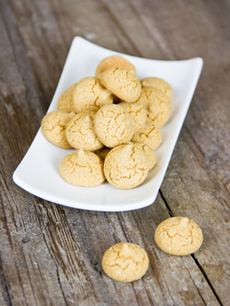
  • Optional garnish: 8 amaretti cookies, coarsely crumbled
  •  
    Preparation

    1. COMBINE the Champagne and agave in a large bowl. Add the berries; toss gently to combine. Cover and chill for 30 minutes or longer.

    2. PLACE 3/4 cup berry mixture in each of 8 bowls. Top each serving with 1/4 cup whipped cream or a dab of mascarpone. Divide the crushed amaretti cookies among servings.


    Brut Champagne

    Veuve Cliquot Demi Sec Champagne
    TOP PHOTO: Brut Champagne is the most
    commonly-purchased style, but it’s too dry
    and acidic to go well with desserts. BOTTOM
    PHOTO: Instead, look for a demi-sec
    Champagne, which has more residual sugar
    to match the sweetness of the dessert.


    THE SEVEN LEVELS OF SWEETNESS IN CHAMPAGNE

    Champagne is made in seven styles, or levels, of sweetness. The sweetness comes from a step in the secondary fermentation of Champagne, when the bubbles are created. The process is called dosage (doe-SAZH): a small amount of sugar is added into the wine bottles before they are corked. The sugar also reduces the tartness/acidity of the wine.

  • Primary fermentation of Champagne: In the classic méthode champenoise used to make Champagne, Cava and American sparkling wines, the primary, or alcoholic, fermentation of the wine transforms the grape must (the pressed juice of the grapes) into wine. Natural yeast consumes the natural grape sugars, producing alcohol and carbon dioxide.
  • Secondary fermentation of Champagne: To create a secondary fermentation, the dosage is added to the wine. The the added yeasts eat the added sugar, again creating alcohol and carbon dioxide.
  •  
    Based on the amount of sugar in the dosage, the seven levels of sweetness based on residual sugar (what’s left after the secondary fermentation) are:

  • Brut Nature/Brut Zero: 0-3 g/l* residual sugar
  • Extra Brut: 0-6 g/l residual sugar
  • Brut: 0-12 g/l residual sugar
  • Extra Dry†: 12-17 g/l residual sugar
  • Dry: 17-32 g/l RS residual sugar
  • Demi-Sec: 32-50 g/l residual sugar
  • Doux: 50+ g/l residual sugar
  •  
    ________________________________________
    *Grams per liter.

    †It’s a paradox in the Champagne industry that “dry” indicates a sweeter wine; as do sec (which means dry in French) and demi-sec. Doux, the sweetest style of Champagne, does mean sweet.


    Comments off

    The Nibble Webzine Of Food Adventures
    RSS
    Follow by Email


    © Copyright 2005-2025 Lifestyle Direct, Inc. All rights reserved. All images are copyrighted to their respective owners.