THE NIBBLE BLOG: Products, Recipes & Trends In Specialty Foods


Also visit our main website, TheNibble.com.

A Football Calzone Recipe For Super Bowl & Other Game Days

What have you planned for the Super Bowl? How about this Football Calzone: layers of pizza crust topped with pepperoni, sauce, and mozzarella.

It was created by Beth of HungryHappenings.com for Tablespoon.com, part of Pillsbury. Beth says that it’s “super simple” to make and recommends it as a hearty appetizer.

First, you’ll need a Wilton First And Ten Football Pan. Made for cakes, it’s also happy to bake your calzone.

A calzone is essentially a “pocket pizza”: It has the same ingredients as pizza, but the crust is folded over, similar to an empanada or turnover.

You also can stuff more ounces of ingredients into a calzone than you can add to a pizza crust. Although Beth doesn’t include ricotta in this recipe, we love to pile in ricotta as well as mozzarella.

While many calzones are individual “hand pies,” this calzone is big enough for a dozen football fans.
 
 
RECIPE: FOOTBALL CALZONE

Prep time is 20 minutes, and cook time is 20 minutes. Here are step-by-step photos and instructions.

Ingredients For 12 Servings

  • Cooking spray
  • 4 tubes Pillsbury refrigerated thin pizza crust
  • 3 ounces pepperoni, sliced
  • 3 cups mozzarella cheese, shredded
  • 1-1/2 cups pizza sauce
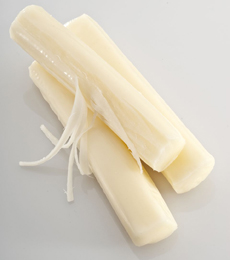
  • 1 string cheese
  •  
    Preparation

    1. PREHEAT the oven to 425°F. Spray a football-shaped cake pan with cooking spray.

    2. UNROLL 2 of the pizza crusts onto the baking sheets and bake for 8-10 minutes, until golden brown. Remove from the oven and cut football shapes out of crusts, one larger than the other, which will fit inside the Wilton football cake pan.

    Tip: First cut a football shape from parchment, check the size against the pan, and use it as a cutting template.

    3. UNROLL and drape the third tube of pizza dough over the inside of the football pan. Sprinkle on 1/3 of the pepperoni, cheese, and sauce. Top with the smaller football crust.

    4. SPRINKLE on 1/3 of the remaining pepperoni, cheese, and sauce. Top it with the larger football-shaped crust. Sprinkle on the remaining pepperoni, cheese, and sauce.

    5. UNROLL and drape the fourth tube of pizza dough over the top of the pan. Cut off the dough around the edge of the pan and pinch the dough together along the edge.

    6. BAKE for 15 minutes. Then turn the oven off, cover the calzone with foil, and leave in the oven for 5 minutes. Meanwhile, cut the string cheese to create the laces of the football.

    7. REMOVE the calzone from the oven and un-mold it onto a serving platter. Add “laces” of string cheese. Serve hot.

      Football Pizza
    [1 & 2] This football calzone feeds 12 (photos #1 and #2 © Tablespoon.com).

    string-cheese-daytondailynews-shutterstock_46018177-230
    [3] Use string cheese for the football laces (photo © Dayton Daily News).

    Football Calzone Recipe
    [4] How about some mini Buffalo Chicken football calzones? Here’s the recipe (photo © Pillsbury).


    CHECK OUT WHAT’S HAPPENING ON OUR HOME PAGE, THENIBBLE.COM.


    Comments off

    TOP PICK OF THE WEEK: Rebel Fish Salmon Fillets

    THE NIBBLE has always written about better-for-you foods. But each January, when people make their resolutions to eat better in the new year, we declare it Healthy Food Month.

    In January, we don’t tempt you with gourmet potato chips, artisan chocolates or lemon meringue pie. Instead, we show that it really is easy to find or make delicious foods that are good for you.

    Take salmon. We all should eat more of it; but buying fresh fish or defrosting frozen fish, then cooking it, takes time and planning. You have to cook the fresh or defrosted fish in a day, before it starts to go “fishy” and deteriorates.

    (NOTE: Do not thaw frozen seafood at room temperature; it enables bacteria to multiply. Instead, thaw it in the fridge, allowing one to two hours per pound; or defrost it in the microwave right before cooking).
     
    BETTER EATING WITH REBEL FISH

    We have become very fond of Rebel Fish, the first U.S. branded line of fresh salmon that comes prepackaged with seasoning packets.

    Always fresh, never frozen and of very high quality, the product should become an instant favorite with consumers. A scrumptious fish fillet can be cooked in 90 seconds. It’s all natural: no artificial flavors or preservatives.

    The founders of Rebel Fish believe that we would eat more fresh fish if it were easier to buy and prepare. They’ve made it super easy.

  • The salmon is packaged in an innovative way that preserves freshness. The shelf life is 7 days or longer.
  • The fillet rests in a plastic tray inside the outer carton. All one need do is roll back the plastic and place the tray in the microwave. It’s fool-proof.
  • It can be cooked on the stove top or in the oven, but you can’t beat the 90-second microwave technique.
  •  
    The result: moist, silky, flaky salmon that’s the best we’ve ever cooked at home. We don’t even use the seasonings. We prefer the fish plain (that’s how tasty it is), or with a touch of freshly-ground pepper.
     
    WHAT YOU GET

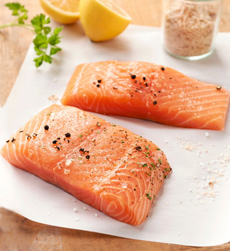
    Inside each Rebel Fish carton is a 6-ounce salmon fillet and a packet of seasoning that you can sprinkle on it. Choices include:

  • Barbeque
  • Cajun Blackened (our favorite)
  • Cilantro Lime
  • Lemon Pepper Herb
  • Maple Mesquite
  • Smoked Sea Salt
  • Thai Chili
  •    

    Rebel Fish Packages

    Raw Salmon Fillets

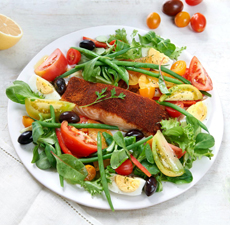
    Grilled Salmon Nicoise
    Top: Each flavor is packaged in a different bright color. Second: What’s in the package? One six-ounce salmon fillet and a seasoning packet. Bottom: A 90-second cooked filet atop salad greens. All photos courtesy Rebel Fish.

     
    The only difference is the seasoning packet. Frankly, the blends are not our cup of tea—too complicated, with (egad!) added sugar. We, and likely most retailers, would prefer only one SKU (stock keeping unit*, more in the footnote at the bottom).
     
    The MSRP is $5.99 per serving. We’re more than happy to pay it.
    ___________________________
    *SKU, stock keeping unit, is a retailer identification that allows a product to be tracked for inventory purposes. Each size, flavor, etc. has a different SKU. Thus, the six different flavors of Rebel Fish require six SKUs.


    Grilled Salmon With Bowtie Pasta

    /home/content/p3pnexwpnas01 data02/07/2891007/html/wp content/uploads/salmon on vegetable bed rebelfish 230

    Salmon With Mixed Vegetables
    Top: Salmon atop bow tie pasta. Middle:
    With a Mexican influence: corn kernels, diced
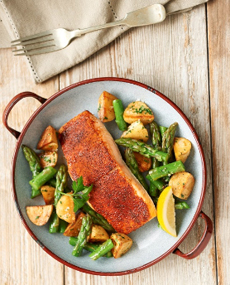
    bell pepper and crumbled cotija cheese. Bottom: With asparagus and baby potatoes. Photos courtesy Rebel Fish.

      WHERE DOES THE SALMON COME FROM?

    Rebel Fish salmon is raised in pristine Pacific Ocean waters. It is farmed rather than wild, but the fish are isolated and contained in a pure environment that nearly replicates the wild and may be even better: guaranteed food, clean water, space and habitat without predators.

    Conditions are ideal for producing premium salmon with great flavor and delicate texture. Farming ensures a reliable year-round supply of fresh salmon.

    Rebel Fish salmon are nurtured throughout their natural growth cycle to ensure their welfare, as well as to guarantee high quality. State-of-the-art, stress-free farming practices are both sustainable and healthier for the fish.

    The program is SQF certified, which assures wholesale buyers and retail customers that food has been produced, processed and handled according to the highest standards.

    SQF is a food safety program that is recognized globally for food safety certification, and is the only program that the Global Food Safety Initiative (GFSI) endorses for food production, manufacturing, storage and distribution agencies.

    The brand’s parent company is Marine Harvest Group, the world’s leading seafood company and largest producer of farmed salmon, with top certification.
     
    SALMON NUTRITION

    Farmed salmon is as nutritious as wild salmon. In fact, a recent study by the U.S. Department of Agriculture revealed that farmed salmon typically has more omega-3† fatty acids than wild salmon.

    Note that actual amounts can fluctuate as they are influenced by factors such as species of salmon, water temperature, type and availability of food, and stage of maturity. One big difference is that farmers can create consistent levels of omega-3s in their salmon by controlling the amount and composition of the feed to produce consistently nutritious salmon.

    Rebel Fish Salmon is an excellent source of protein and vitamin D that contains natural omega-3 fatty acids in addition to other critical vitamins and minerals including iron, zinc, and vitamins A and B. The American Heart Association recommends eating fish, especially fatty fish such as salmon, at least twice a week to ensure you get plenty of heart-healthy omega 3 fatty acids.
     
    What about the name? The company says that it encourages consumers to “rebel against the ordinary” when it comes to meal preparation.

     
    ____________________________________
    †Omega-3 fatty acids are healthy fats that may promote brain development, heart health and may also reduce the risk of chronic disease. Seafood is a natural source of two healthy omega-3 fatty acids: docosahexaenoic acid (DHA) and eicosapentaenoic acid (EPA). Since our bodies cannot make omega-3, it’s important to regularly include them in our diets. The American Heart Association recommends that adults have two servings of omega 3 per week to maintain optimal health benefits.
      

    Comments off

    RECIPE: Easy Roasted Spiced Carrots

    Love roasted root vegetables? Who doesn’t!

    Turn a humble bag of carrots into delicious roasted carrots, spiced and fragrant with cinnamon, cumin and ginger.

    RECIPE: CUMIN-SPICED ROASTED CARROTS

    Ingredients

  • 1 pound carrots
  • 1 tablespoon olive oil
  • 1/2 teaspoon ground cumin
  • 1/2 teaspoon ground cinnamon
  • 1 pinch ground ginger
  • Salt and pepper to taste
  •  
    Preparation

    1. PREHEAT the oven to 400°F.

    2. DICE the carrots into ½-inch thick pieces. Leave the skin on as desired.

    2. MIX all ingredients together and bake at 400°F for 15-20 minutes, or until golden brown.
     
    WHAT IS CUMIN?

    Cumin is the dried seed of the herb Cuminum cyminum, a member of the parsley family. Its botanical family, Apiaceae, is also known as the celery or carrot family, a family of mostly aromatic plants with hollow stems.

    Caraway and dill are also members of the family.

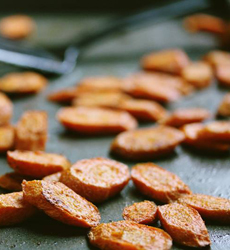
      Cumin Spiced Carrots

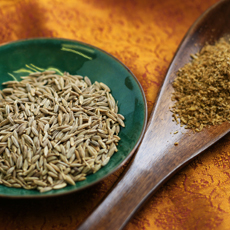
    Cumin
    Top: Cumin-spiced carrots from Evolution Fresh. Bottom: Whole and ground cumin seeds. Photo courtesy Silk Road Spices.

     
    Cumin grew wild from the east Mediterranean to India, and is common in the cuisines of those areas. Seeds excavated in Syria have been dated to the second millennium B.C.E. Cumin seeds are also found in ancient Egyptian archaeological sites.

    Flavorful and aromatic, cumin was popular throughout the ancient world.

  • It is mentioned in both the Old Testament (Isaiah 28:27) and the New Testament (Matthew 23:23) of the Bible.
  • The ancient Greeks kept cumin in a container on the dining table, much as we keep pepper today.
  • Cumin was also used heavily in ancient Roman cuisine.
  • In India, it has been used for millennia as an ingredient and is part of curry powder and garam masala spice blends.
  • It is also added to other spice blends, including achiote, adobo, bahaarat, chili powder and sofrito.
     
    Cumin was brought to the New World by Spanish and Portuguese colonists, and has become a popular ingredient in Latin American cuisines.

    Several different varieties of cumin are cultivated today, the most popular of which are are black and green cumin.
      

  • Comments off

    Pinata Apples & The Top 10 Apple Varieties

    Pinata Apple
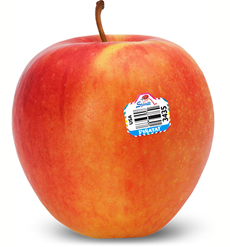
    [1] The Piñata apple from Stemilt is a crisp, juicy eating apple (photo © Stemilt).
    Apple Compote
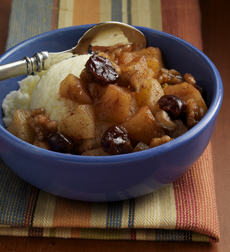
    [2] Try it in a warm compote, plain or with ice cream (photo © Ziploc).

    Sauteed Apples
    [3] It’s also a great cooking apple. We love sautéed apples with a pork roast or ham (photo © Williams Sonoma).
    Applesauce Bar
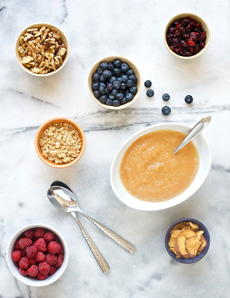
    [4] Is there anything better than homemade applesauce (photo © U.S. Apples)?

    Apple  Pie
    [5] Perhaps everyone’s favorite way to eat apples: apple pie (photo © Wisconsin Milk Marketing Board).


    It’s the last day of January. How are you doing on those new year’s resolutions? If you’re like most food lovers, you haven’t done as well as you’d like with regard to eating more of the better-for-you foods.

    So here’s what may be the easiest resolution of all: an apple a day. Not because it keeps the doctor away, but because they’re yummy. And new varieties are always coming onto the market.

    Take the Piñata apple. Named Apple of the Year in Germany in 2001, it caught the notice of U.S. growers and is now available nationwide. The name Piñata comes from combining syllables of the apple’s two European names, Pinova and Sonata. Pinova is the cultivar of apple trees that produce Piñata apples.

    Why do we need a new apple? Don’t we have enough Delicious, Gala, Granny Smith, Honeycrisp, McIntosh, etc. etc. etc.?

    The answer is marketing. Food-oriented folk are always looking for something new, and retailers want to give it to them. We remember rushing to try the first Gala apples* and the first Honeycrisps*.
     
     
    HOW TO CREATE A NEW APPLE VARIETY

    Apple varieties take decades to develop. They are typically developed at university agricultural schools, although independent companies and individual growers may also develop them.

    First, existing varieties need to be cross-bred, or mutations need to be propagated. The Piñata originated way back in 1970, after researchers in Germany crossed three varieties: the Golden Delicious, Cox’s Orange Pippin and the Duchess of Oldenburg, an Orange Pippin variety from 18th century Russia. (The latter two provide the vibrant orange-ish hue to the peel). You want a new apple not only to taste special, but to look special, too.
     
    The root stock is tested in different soils and climates to determine where the sweetest fruit will grow. Then, the saplings need to be planted.

  • In every phase of development, it takes 5 to 8 years for a tree to bear fruit. (One tree yields 4 to 5 bushels of apples per year.)
  • Development takes much longer than you’d think. From its start in 1970, the Piñata was first released in 1986 to European growers. Some varieties take even longer. Honeycrisps were first developed in 1960, but not released commercially until 1991.
  • Before it purchases the right to grow the apples from the developer, a grower needs to test the apple in its own orchards: another 5 to 8 years of growing, which may or may not produce the apple qualities the grower is hoping for.
  •  
    Then, the apple variety must be licensed from the developers, and a name chosen and trademarked. Licensing is how the developer gets paid back for years of development.

  • In the U.S., Stemilt Growers in Washington holds the exclusive rights to grow and market Piñata apples. Why “Piñata?” In English, Piñata sounds more alluring than Pinova.
  • The grower plants the stock and waits, yes, 5 to 8 years for the first commercial crop.
  • Only then does a new variety make its way to your market. Hopefully, you’ll appreciate its long journey and enjoy each bite even more.
  •  
     
    PIÑATA APPLE FACTS

    The Piñata apple thrives in eastern Washington’s arid climate and is quickly becoming one of the most sought-after apples, thanks to its unique tropical flavor and culinary attributes.

    The stripy red skin over an orange background has eye appeal. The flesh has a blend of high sugar and high acid levels, producing a welcome tangy taste.

    The apple is super crispy and juicy. Its classic apple flavors are complemented by nuances of tropical fruits.

    Piñata is one of the most versatile apples on the market. Its crisp bite and great flavor make it ideal for eating out-of-hand, while its thin skin and fine-grained flesh make it a delight in salads and baking.

    Use Piñata apples any way you like: baking, cooking, juicing, salads and snacking (known as hand fruit in the industry). Here are recipes from the grower. You can also download their e-book of savory soups and sides recipes.

    The season for Piñata apples is November through May. So what are you waiting for?
     
    Here’s more about Piñata apples from the grower at Stemilt.com.

    And if you want to know what an apple a day does for your health and well-being, here’s the scoop from the U.S. Apple Association.


    THE TOP 10 APPLES IN THE U.S.

    According to the U.S. Apple Association, the 10 most popular apples in the U.S. based on sales are, in order, Red Delicious, Gala, Golden Delicious, Granny Smith, Fuji, McIntosh, Honeycrisp, Rome, Empire and Cripps Pink (Pink Lady).

    Of course, the popularity is retailer-driven. Retailers want to buy varieties that will sell, and customers can only buy what the retailer has. Personally, we’d like to see fewer Delicious apples (they haven’t been exciting in a long time) and more new varieties.

    But keep those apples handy, whatever the variety, and you won’t even notice that they are helping you with your better-eating resolutions.
     
    ________________________________________

    *Gala apples are a cross between Golden Delicious and Kidd’s Orange Red, first planted in New Zealand in the 1930s. In turn, it was bred into dozens of other varieties, including the Royal Gala and the Scarlett Apple. Honeycrisps are a hybrid of Macoun and Honeygold varieties, were developed at the University of Minnesota in 1960. They were patented in 1988 and released commercially in 1991.
      

    Comments off

    TIP OF THE DAY: Snow Cream (Snow Ice Cream)

    AN ANCIENT TREAT

    Although the crank ice cream freezer wasn’t invented until 1843, and the first large-scale commercial ice cream plant in 1851, research shows that ice cream was first created in the cold regions of China more than 4,000 years ago. There, milk and cream, perhaps some overcooked rice, and spices were packed in snow to harden.

    Fruit ices were also developed, prepared with fruit juices, honey and aromatic spices. Snow and saltpeter served as an ancient ice cream maker to freeze ingredients in a container.

    Through trade routes, the frozen desserts were introduced to Persia about 2,500 years ago. The Persians called the frozen concoction sharbat, “fruit ice” in Arabic and the origin of sherbet, sorbet and sorbetto.

    Alexander the Great, who battled the Persians for 10 years before finally toppling the Persian Empire in 330 B.C.E., discovered fruit “ices” sweetened with honey and chilled with snow. He returned to Greece with the knowledge; and within three centuries, Emperor Nero was serving fruit juices mixed with honey and snow at his banquets.

    Here’s more on the history of ice cream.

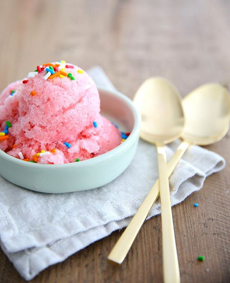
    Turn history into fun: With the next fresh snowfall, you, too can make sharbat—or snow ice cream, also called snow cream. Transport yourself back to ancient China, or to Alexander the Great’s conquest of Persia. (Nero’s banquets? Maybe not so safe!)

    First up is a simple recipe from Julie Blanner for strawberry snow cream, ready in just three minutes.

    RECIPE: SNOW ICE CREAM (SNOW CREAM)

    Ingredients

  • 1/4 cup Strawberry Nesquik*
  • 1/4 cup milk
  • 2 cups clean snow
  • Optional garnish: fresh or frozen/thawed strawberries
  •  
    *Instead of Nesquik, you can purée frozen strawberries and add sweetener as desired.

     
    Preparation

    1. COMBINE the Nesquik and milk, and pour over the snow. Blend as desired.
     
    RECIPE: SHARBAT

    Ingredients

  • 1/2 cup fruit juice
  • 2 cups clean snow
  • Optional sweetener: agave or honey
  •  
    Prepare as above.
     
    Variations

  • Sweeteners: try whatever you like, from honey and maple syrup to lower-glycemic sweeteners like agave and sucralose (Splenda).
  • Flavors: Instead of fruit or juice, add an extract to the snow: coffee, lemon, mint, vanilla, etc.
  •  

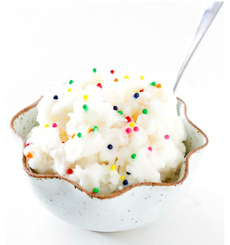
    Ice Cream

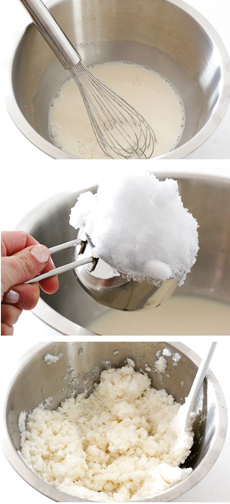
    Making Snow Cream

    /home/content/p3pnexwpnas01 data02/07/2891007/html/wp content/uploads/snow ice cream strawberry julieblanner 230
    Top photos: An ancient recipe with modern decorations, and the preparation process, from GimmeSomeOven.com. Bottom: Strawberry snow ice cream from Julie Blanner.

  • Milk type: You can use almond milk, coconut milk, soy milk, and other nondairy options; and can add more flavor with the flavored varieties (chocolate, coffee, green tea, vanilla, etc.).
  •  
    DIFFERENT TYPES OF FROZEN DESSERTS

    Ice cream and sorbet are just two types of frozen desserts. Discover more in our Frozen Desserts Glossary
      

    Comments off

    The Nibble Webzine Of Food Adventures


    © Copyright 2005-2026 Lifestyle Direct, Inc. All rights reserved. All images are copyrighted to their respective owners.