THE NIBBLE BLOG: Products, Recipes & Trends In Specialty Foods


Also visit our main website, TheNibble.com.

Michelle’s Maccs: Gourmet Coconut Macaroons In 17 Flavors!

If you’re looking for an especially tasty gift for someone who loves coconut, you can’t do better than Michelle’s Maccs.

They handmade, gourmet treats are gluten-free, egg-free and nut-free (except for Hazelnut and Peanut Butter, which are baked in dedicated pans).

All-natural and enrobed in one of the world’s finest couverture chocolate, Belgium’s Callebaut, they’re baked to order.

We are in heaven with each bite.
 
 
EXCEPTIONAL FLAVORS
 
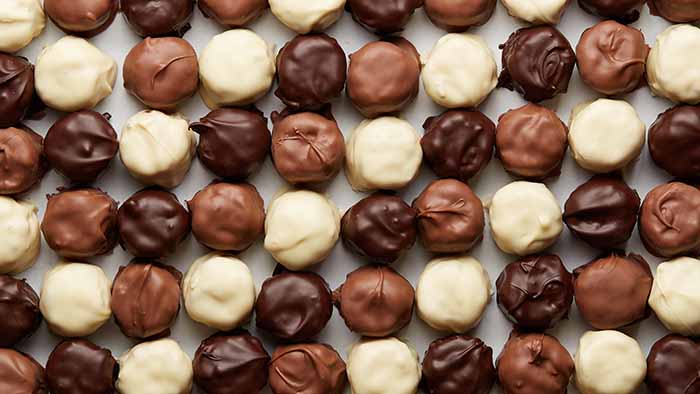
There are the basics with plain coconut (photo #5):

  • Simple Dark Maccs
  • Simple Milk Maccs
  • Simple White Maccs
  •  
    And these may be the best “classics” you’ll ever taste.

    Yet Michelle is a master at flavoring macaroons, which leads to the challenge:

    How can one select from all these great flavors? Two solutions:

  • You can build your own dozen.
  • Select a variety pack with the 12 original flavors.
  • Four-packs of different flavors.
  • A subscription!
  •  
    Even so, if you’re a connoisseur of everything delicious—but not wealthy enough to buy everything at once—you’ve got to prioritize. In alphabetical order, take your pick:

  • Amarena Cherry Maccs
  • Chocolate Chocolate Maccs
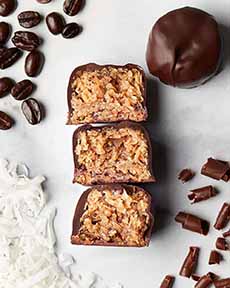
  • Espresso Maccs (photo #3)
  • Hazelnut Maccs
  • Key Lime Maccs
  • Macadamia Maccs
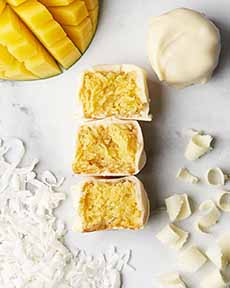
  • Mango Maccs (photo #2)
  • Orange Zest Maccs
  • Peanut Butter Maccs
  • Piña Colada Maccs
  • Pumpkin Pie Maccs
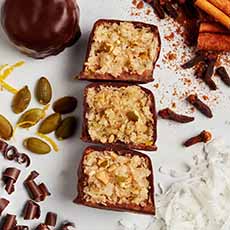
  • Pumpkin Spice Maccs (photo #4)
  • Raspberry Blackout Maccs (photo #5)
  • Salted Caramel Maccs (photo #1)
  •  
    PARTY IDEA: For Mother’s Day, Father’s Day, or any party time: How To Pair Macaroon Flavors & Beer.
     
    GET YOUR MICHELLE’S MACCS!

    They’re sold in packs of 4 or 12.

    And they can be customized for parties and special events.

    Use code GIFT4MOM at checkout for complimentary gift packaging (choose the gift option and then apply the code).

    The line is certified kosher by United Kosher Supervision (UKS).

    > Head to MichellesMaccs.com.

    Note: Michelle advises that the macaroons should be eaten within a week. Otherwise refrigerate them.

    They can also be frozen, if you’re a one-piece-a-day enthusiast, as we are.

    From our experience, you can keep them for longer than a week in the fridge, without freezing. The coconut becomes less moist, but they’re still delicious.
     
     
    > The history of macaroons and macarons, and how they differ.

    > The history of cookies.

    > The 11 basic cookie styles.

    > The different types of cookies: a photo glossary.

    > The year’s 44 cookie holidays (National Macaroon Day is May 31st).

    > How to keep cookies fresher for longer.


    Salted Caramel Macaroons
    [1] Salted caramel macaroons (all photos © Michelle’s Maccs).

    Mango Macaroons
    [2] Mango Maccs are a tropical flavor duo.

    Espresso Macaroons
    [3] Espresso Maccs.

    Pumpkin Spice Macaroons
    [4] Pumpkin Spice Macaroons.

    Raspberry Chocolate Macaroons
    [5] Raspberry Blackout Macaroons.

     
    Chocolate-Enrobed Macaroons
    [6] “Simple” Maccs mean that the coconut is sweetened but not flavored.


    CHECK OUT WHAT’S HAPPENING ON OUR HOME PAGE, THENIBBLE.COM.


    Comments off

    Sauvignon Blanc From Sonoma-Cutrer: For You, For Gifts

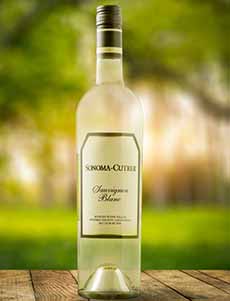
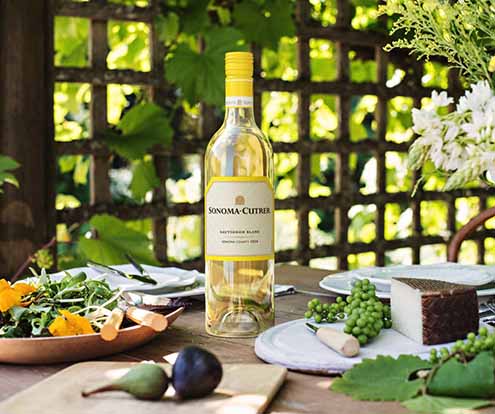
    Bottle Of Sonoma-Cutrer Sauvignon Blanc
    [1] Sonoma-Cutrer’s Sauvignon Blanc from Sonoma County grapes (photos #1 and #5 © Sonoma-Cutrer).

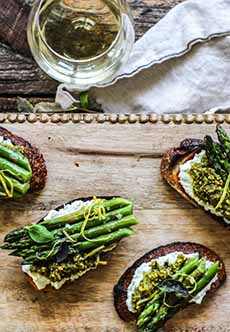
    Asparagus-Ricotta Tartines
    [2] The grassiness of Sauvignon Blanc pairs beautifully with asparagus (photo © California Wine Institute).

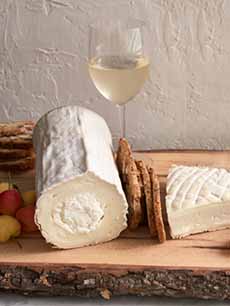
    Goat Cheeses & Glass Of Sauvignon Blanc
    [3] A pairing made in heaven: goat cheese and Sauvignon Blanc (photo © Fromages From Europe).

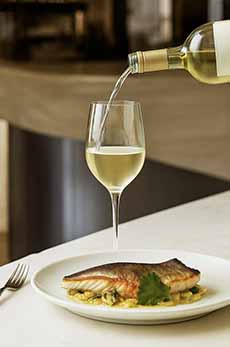
    Broiled Fish With Glass Of Sauvignon Blanc
    [4] It’s delish with white-flesh fish (photo © Stella 34 Trattoria | Macy’s NYC).


    The first vintage of Sonoma-Cutrer Chardonnay Russian River Ranches* was launched in 1981. We had our first bottle of it in 1983, and it was love at the first buttery Burgundy-ish sip. It has won many fans and numerous awards in the ensuing years.

    More Chardonnay vineyards were added. In 2002, Russian River Valley Pinot Noir was added.

    Russian River Valley Sauvignon Blanc was a limited release in the early 2014, and received such positive feedback that it became part of the permanent line.

    Last year saw the launch of Sonoma County Sauvignon Blanc, made from grapes grown in various vineyards across Sonoma County.

    The 2024 vintage was just released and we scored a bottle, which is only available at the winery or on the website. Total production was small: just 300 cases.

    Bottled in early February 2023 and ready to drink now, the wine will sell quickly.

    When the weather gets warm, heavier foods get traded for lighter ones, and so do the wines.

    So for a welcome Mother’s Day or Father’s Day gift for a Sauvignon Blanc fan, head to SonomaCutrer.com and stake your claim (that’s California Gold Rush talk, but it seems to be appropriate here).

    The flavors and aromas are classic, sure to please the savvy Sauvignon Blanc fan.

    The aromas yield lime and grassiness (i.e., fresh cut green grass). Super-noses may detect lychee, guava, pineapple, and rose, with an ever so slight minerality.

    On the palate there’s more lime, plus melon and passionfruit. There’s a lovely acid backbone, crisp and balanced. The body and alcohol level are both medium, which is good for Sauvignon Blanc.

    Bottle Of Sauvignon Blanc With French Snacks
    [5] Sauvignon Blanc with a light lunch: a salad with beets and a cheese plate.
     
     
    MORE TO KNOW ABOUT SAUVIGNON BLANC

    The Sauvignon Blanc grape produces refreshing, dry, white wines with one of two key flavor profiles: grapefruit/citrus or grassy/herbaceous, depending on the terroir†. Both are delicious.

    The wine is known for high acidity, light to medium body and medium alcohol. It is most often unoaked.

    It is also very affordable, with bottles available from around $10, many in the $12 to $15 range, and the finest of the breed (such as Sancerre’s Ladoucette Comte Lafond) in the $35 to $45 range.

    By comparison, Chablis is double the price, with Grüner Veltliner in the middle. (If you like white wines such as Chablis and Grüner Veltliner, you’ll likely be a fan of Sauvignon Blanc.)

    Its acid backbone complements everything from plateaux de fruits de mer (raw seafood platters) and grilled chicken and fish to buttery sauces and rich cheeses.

    The grape was first cultivated in the Loire Valley of France, and the Loire’s great chèvres (goat cheeses), are the wine’s most popular cheese pairings.

    > Styles of Sauvignon Blanc by world regions.

    > The history of Sauvignon Blanc.

    > Sauvignon Blanc food pairings.

    > The six noble grapes.

    > The history of wine.

     
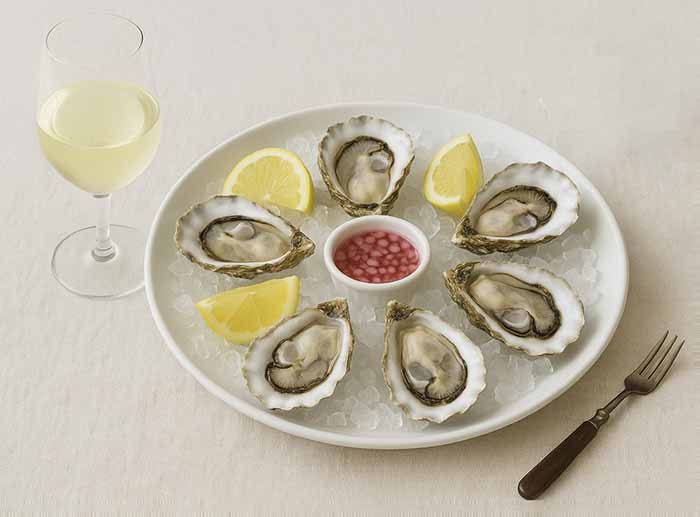
    Oysters On The Half Shell With A Glass Of Sauvignon Blanc
    [6] Another perfect pairing: oysters on the half shell and Sauvignon Blanc (image created by ChatGPT 20225-04-24).
     
     
    ________________
     
    *The Russian River Valley is a distinct American Viticultural Area (A.V.A.) within Sonoma County. Centered around the Russian River in the center of the County, the region is well-known for growing fine Chardonnay and Pinot Noir grapes on the rolling hills and valleys surrounding the river.

    †Pronounced tuhr-WAH, terroir is the French expression for sense of place, the unique environment in which something grows—its specific soil composition and microclimate. Microclimate includes temperature, amount of sunshine and rain. The flavor nuances of agricultural products, from grapes to olives to milk to cacao, is a function of its terroir.


    CHECK OUT WHAT’S HAPPENING ON OUR HOME PAGE, THENIBBLE.COM.


    Comments off

    Chickpea Salad Sandwich Recipe On Ezekiel Bread: Delicious!

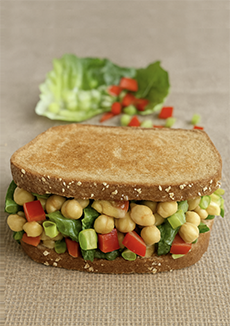
    We never would have thought to make chickpea salad as a sandwich filling. But as we were considering lunch options a couple off days ago, we recalled that it was National Chickpea Day, and that we had this recipe to try from the Grain Foods Foundation.

    It took just 5 minutes to chop and mix; toasting the bread was the most time-consuming part.

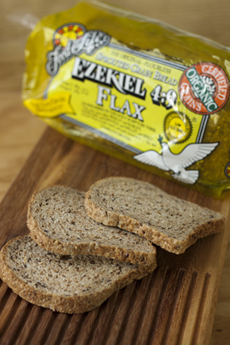
    The recipe specifies whole wheat bread, but we’ve switched from whole-grain to Ezekiel bread (photo #2), which is not only more flavorful, but even better for you.
     
     
    > Check out Ezekiel Bread, below.

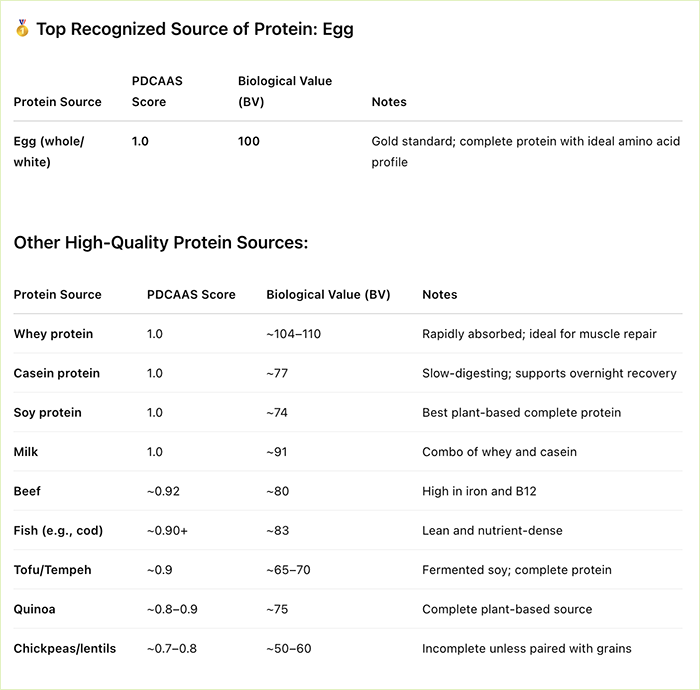
    > The top 10 sources of protein (which include chickpeas), below.

    > The history of chickpeas and how the chickpea got its name.

    > Are chickpeas peas or beans?

    > More chickpea recipes.

    > The different beans, grains, legumes: a photo glossary.

    > The difference between legumes, pulses, and beans.
     
     
    RECIPE: CHICKPEA SALAD SANDWICH
     
    Ingredients For 4 Sandwiches

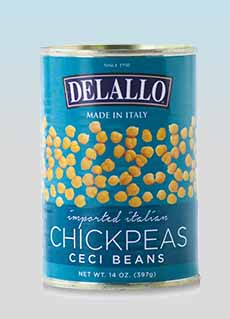
  • 1 can (15 ounces) low sodium chickpeas, rinsed and drained
  • 2 tablespoons mayonnaise
  • 1 tablespoon lemon juice
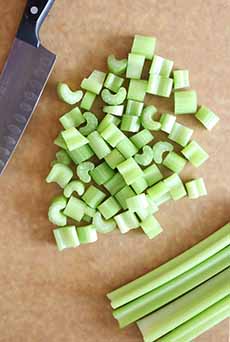
  • ½ cup celery chopped
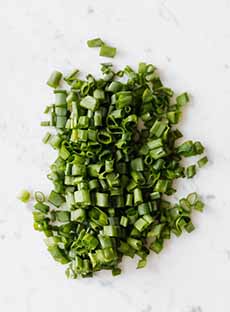
  • ½ cup scallions (or onion of choice)**, finely sliced
  • ½ cup red bell pepper, chopped
  • ¼ teaspoon curry powder
  • Salt and pepper to taste
  • 4 lettuce leaves
  • 8 slices whole wheat, Ezekiel bread, or substitute, toasted
  •  
    Preparation

    1. COMBINE the chickpeas, mayonnaise and lemon juice in medium bowl and mash with fork.

    2. STIR in the celery, scallion, curry powder, and bell pepper. Season to taste with salt and pepper.

    3. LAYER lettuce leaves and chickpea mixture between slices of toast.
     
     
    ABOUT EZEKIEL BREAD

    Most people think of bread as carbs, and they’re right. But Ezekiel bread is almost a miracle: It’s bread that’s also a high quality protein† and a powerhouse of nutrition, including all the amino acids and/including omega 3 and 6 essential fatty acids that are vital to health and body function.

    We first discovered Ezekiel 4:9® Sprouted Flax Bread (photo #2) when we created THE NIBBLE’s Bread Glossary.

    Traditionally Ezekiel bread was enjoyed by people who pursue a healthy diet. They had to bake the bread or buy it in health food stores.

    We, however, think that Ezekiel bread is ready for the mainstream: for the bread basket, sandwiches and toast.
     
     
    So What Exactly Is EzekielBread?

    Ezekiel bread is a healthful, exceptionally nutritious bread made from a combination of sprouted grains and legumes: barley, beans, lentils, millet, spelt and wheat.

    Depending on the recipe, flax and other seeds can be included. Each baker can tailor his/her own recipe.

    The name and the ingredients come from Ezekiel 4:9 in the Old Testament:

    “Take also unto thee wheat, and barley, and beans, and lentils, and millet, and spelt, and put them in one vessel, and make bread of it….”

    Ezekiel 4:9 bread, called Ezekiel bread for short, is rich in protein, vitamins, minerals, amino acids and natural fiber with no added fat.

    Think of a delicious whole grain loaf, amped up. Anyone who enjoys a flavorful piece of bread will love it.
     
     
    Food For Life Brand Ezekiel Bread

    Food For Life is a company that makes traditional Ezekiel 4:9 sprouted whole grain bread (photo #2) as well as variations: Cinnamon Raisin Flax (flourless, gluten-free and delicious), Low Sodium Sesame, and other sprouted grain breads including Genesis 1:29® Bread (see below).

    Their Ezekiel bread is low-glycemic, diabetic-friendly, pH-balanced and kosher-certified. Each thick slice has 80 calories and contains 90mg of omega 3, 5g of protein, 4g of dietary fiber, 0g sugar and 18 amino acids.

    The breads are all natural, made with filtered water, and are free of additives and preservatives, added fat, or artificial flavors and colors. They are certified organic by Quality Assurance International (QAI).
     
     
    Why Is Ezekiel Bread Better For You?

    When the six grains and legumes are sprouted and combined, a complete protein is created that closely parallels the high quality protein found in eggs and other high-protein foods (photo #7).

    In fact, Ezekiel bread is 84.3% as efficient as the highest-recognized source of protein, egg (see the chart, image #8, below). Through an exclusive sprouting process, enzymes are activated and cause the grains to become living and nutrient-dense while enhancing digestibility.

    The combination of the 6 grains, legumes and seeds creates a complete protein containing all 9 essential amino acids. The ingredients reduce the calories and carbohydrates found in the original grains.

    Unlike commercial breads that are “enriched” and “fortified” to restore vitamins and nutrients that are lost during processing method, Ezekiel 4:9 Sprouted Flax Bread is naturally flavorful and nutritious.

    Genesis 1:29 Bread has a cornucopia of seeds and grains, inspired by Genesis 1:29††: “Then God said, ‘I give you every seed-bearing plant on the face of the whole earth and every tree that has fruit with seed in it. They will be yours for food.’ ”

    If the mix from Food For Life doesn’t contain “every seed-bearing plant on the face of the whole earth…,” it sure has good number of them†. As you can imagine, it’s a highly nutritious loaf.

    Go Biblical with your bread. You’ll be healthier for it—and happier too, with these great-tasting loaves.


    Chickpea Salad Sandwich
    [1] Packed with protein,fiber, and easily vegan (with vegan mayo): Have a chickpea salad sandwich (photo © Grain Foods Foundation).

    Loaf Of Ezekiel Bread
    [2] Big tip: Try Ezekiel bread. It’s delicious and so much healthier. There’s no flour; whole, certified organic grains, beans, and seeds are sprouted in water. There’s more about it below (photo © The Nibble).

    A Can Of Chickpeas
    [3] Look for low-sodium chickpeas to save on the salt (photo © DeLallo).

    Chopped scallions on a cutting board
    [4] You can substitute another type of onion for the scallions (photo © Karolina Grabowska | Pexels).

    Diced Celery On A Cutting Board
    [5] Celery is a standard crunchy filler for salads. For a more sophisticated flavor, substitute fennel (next photo) a close relative‡ (photo © Duda Fresh).

    Sliced Fennel On A Cutting Board
    [6] The stalks of fennel resemble those of celery, but fennel brings more flavor and aroma to the table. See the differences in the footnote‡ below (photo © Kyocera | Facebook).

     
    Best Sources Of Protein Chart
    [7] What’s the best protein you can eat? These are the top sources of protein (chart via ChatGPT 2025-04-24).
     
    ________________
     
    *If you don’t like/don’t have curry powder, substitute a combination of dried oregano or thyme, ground cumin, and lemon zest. Other options:

    > Dijon mustard, fresh or dried dill, parsley, or tarragon, and a splash of lemon juice or vinegar.

    > Minced garlic with chopped capers, olives, or sun-dried tomatoes.

    **If you don’t have scallions, substitute chives or red onion. If you don’t like onion, substitute cucumber.

    †A high quality protein is a food that provides complete protein: all the amino acids that comprise the building blocks of protein. Eating beans or legumes alone, for example, is not enough; it must be paired with rice or other grain to achieve a complete protein combination.

    ††Food For Life best 1:29 Bread includes amaranth and chia from Central and South America, barley from Israel, black quinoa from the mountains of Peru, brown rice and spelt from the Far East, corn from Mexico, flax and rye from Northern Europe, kamut from Egypt, teff from the highlands of Ethiopia, millet and sorghum from the plains of Africa, pumpkin seeds from the Mediterranean, sesame seeds from the Near East, soy from China, unprocessed bran from Montana and sunflower seeds from the Dakotas.

    ‡Celery and fennel share a family tree: Both belong to the Apiaceae colloquially called the carrot or parsley family, which includes many other aromatic herbs and vegetables such as anise, dill, caraway, coriander, and cumin. The tree branches at the genus level: Apium graveolens for celery and Foeniculum vulgare for fennel.

    Fennel has all the crunch of celery but with a light anise flavor and aroma. Both are completely edible: stalks, leaves, seeds, and in the case of fennel, bulbs and fronds. The difference between leaves and fronds:

    A frond is a type of leaf, but not all leaves are fronds. Leaves come in all shapes and sizes—broad, narrow, round, spiky. Familiar flat leaves are basil and spinach leaves. A frond is a specialized type of leaf that is lacy or feathery, such as the fronds of dill and fennel. Ferns and palm trees are other examples of fronds.


    CHECK OUT WHAT’S HAPPENING ON OUR HOME PAGE, THENIBBLE.COM.


    Comments off


    © Copyright 2005-2026 Lifestyle Direct, Inc. All rights reserved. All images are copyrighted to their respective owners.