|
It may have won five gold medals in prestigious beer competitions, but do we want to get posted to social media drinking a glass emblazoned with a Nitwit decal (photo #1)?
This writer is just not of the right generation to want to be associated with “nitwit.” A nitwit is a stupid, incompetent person: a dimwit, doofus, half-wit. No thanks!
> Here’s how the ale got its name.
We’ll tell you more about Nitwit ale in a second, but we also want you to check out:
> The history of beer.
> The history of witbier (below).
> The difference between beer and ale (below).
> The different types of beer: a photo glossary.
> All the beer holidays (there are 38).
> The second week in May is American Craft Beer Week!
WHAT IS WITBIER
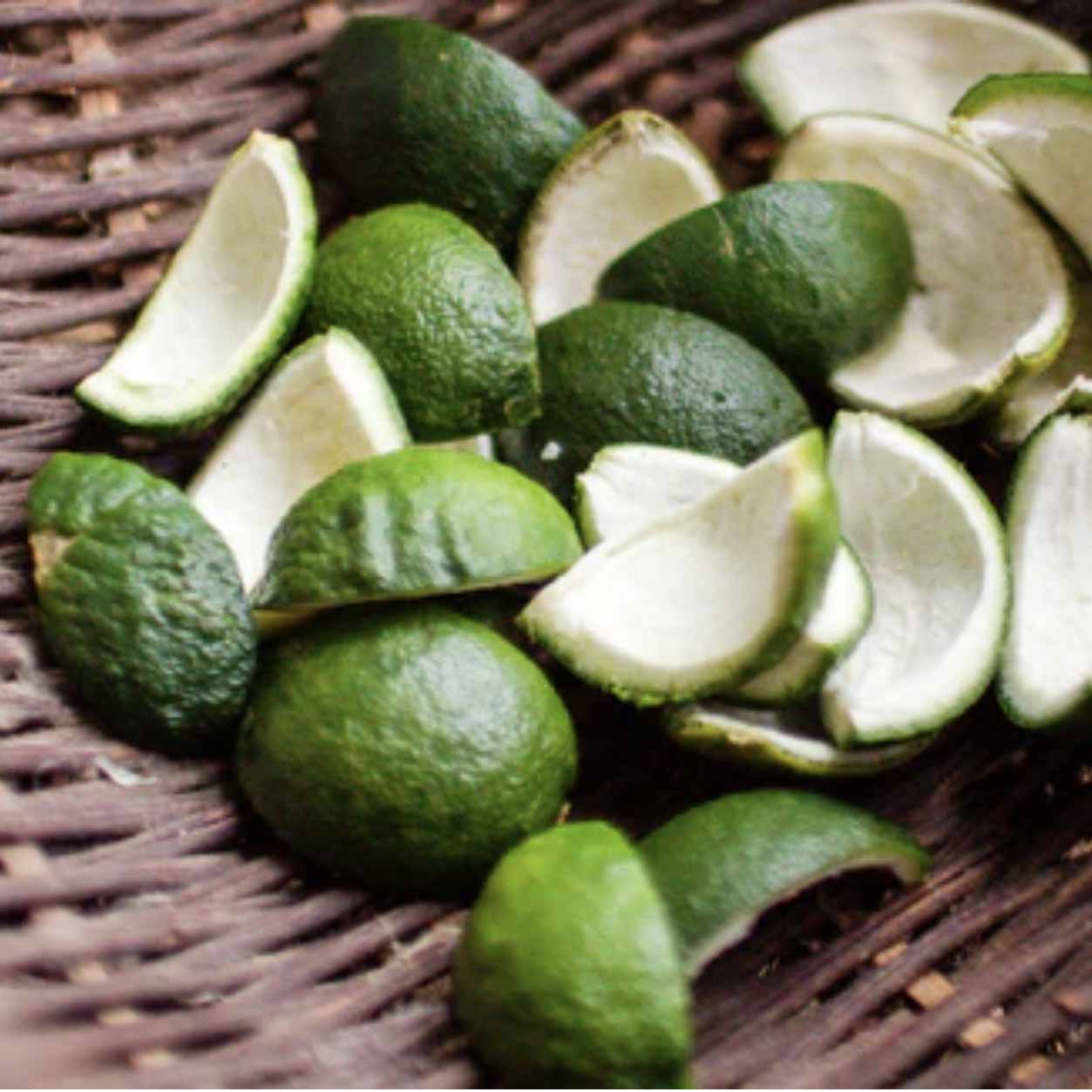
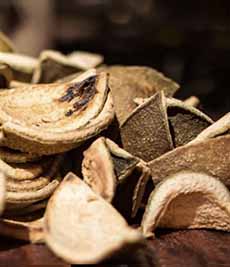
Witbier is a traditional Belgian-style wheat beer that’s pale, cloudy (unfiltered and thus cloudy from suspended yeast and wheat proteins), pale, and subtly flavored with spices—typically coriander and Curaçao orange peel.
The name means white beer in Dutch*.
Light-bodied, it’s brewed for easy drinking in warmer weather—nothing too bitter, heavy, or sour. (Some contemporary brewers make it in the winter.)
It’s also a session beer, brewed at lower alcohol levels (typically 4% to 5% A.B.V. or less) so that one can drink more of it in a single drinking session without becoming overly intoxicated or palate-fatigued.
Session beers were initially made so workingmen could have a few at lunch and return to work unimpaired. In those days, the water supply could be unsafe, there were no soft drinks, and no iced drinks in warm weather, except for the wealthy (the history of ice for iced drinks).
So if a light, refreshing, citrussy beer appeals, this beer’s for you. It can be an ale, a subcategory of beer, as well.
> The difference between beer and ale is below.
ABOUT NITWIT® WHITE ALE
It may be a nitwit, but it won a gold medal in the Belgian-Style Wit category at the North American Beer Awards.
BJ’s Restaurants
The most awarded seasonal beer brewed by BJ’s Restaurant & Brewhouse, Nitwit® White Ale, returned last month.
It’s a spring special, so if you’re a witbier lover, head to your nearest BJ’s.
This 5-time gold medal-winning Belgian-style witbier is brewed with coriander and orange peel, delivering a refreshing citrus aroma, a smooth wheat character, and a crisp, dry finish.
Light on the palate with a 4.7% A.B.V. and just 9 I.B.U.s (i.e., very low bitterness), you can enjoy it with just about any dish. (Or with no dish whatsoever—it’s a session beer.)
Available nationwide at BJ’s Restaurant & Brewhouse Nit Wit® White Ale is on tap in a 16-ounce pour and cans (where legally available) while supplies last.
It’s earned top honors from the Great American Beer Festival and North American Beer Awards, so maybe we do have to head out for a glass.
BJ’s CRAFT BEERS
BJ’s Restaurant & Brewhouse, founded in 1978 in Santa Ana, California, became is own brewer in 1998. In 27 years, it’s created 11 award-winning signature beers and cider, which are served on tap.
In addition to the core line, the restaurant releases some 10 rotating seasonal beers throughout the year, so craft beer fans can enjoy a refreshing change of pace.
BJ’s operates six breweries in five different states. Their Boulder, Colorado brewery is the mother ship for ingenuity—their experimental brewhouse.
More than 150 beers are created and tested each year, and only a select few are released nationally.
Ever wonder which beers would pair best with your food?
Each BJ’s restaurant is staffed with a BJ’s Brew Genius, a beer expert who leads the restaurant team in learning about the beers they serve.
Like a sommelier, the Beer Genius can make recommendations for the best beer-and-food pairings, tell you about BJ’s brewing process, and even discuss other popular beers and brewers in the craft beer industry. Wow!
THE HISTORY OF WITBIER
Witbier originated in the Middle Ages in the region that is now Belgium, particularly around the town of Hoegaarden in the Flemish Brabant area.
The village was founded in 981, and beer was brewed from the onset. But the witbier style appeared in the 1300s (if not earlier), when brewers began creating beers using wheat, herbs, and spices rather than barley and hops†.
The use of these botanicals predated the widespread adoption of hops as a preservative in beer, and gave witbier a very distinctive flavor profile.
Hoegaarden brewers weren’t the first to make beer with wheat and spices. Wheat has been used in brewing since ancient times by the Egyptians, Babylonians, and other early civilizations.
In medieval Europe, brewing with wheat was common in several regions, particularly in what is now Germany, where weissbier (another wheat beer style, also meaning white beer) has an equally long history.
Brewing with spices was standard practice throughout Europe before the widespread adoption of hops†. Roughly from medieval times until the 15th-16th centuries, gruit beers were the standard.
Gruit was a mixture of herbs and spices used both for flavoring and as a preservative. Common gruit ingredients included bog myrtle, caraway, heather, ginger, juniper berries, and yarrow, among many others.
What made the Hoegaarden witbier distinct from other Belgian beers of the time was their specific combination of ingredients, particularly the coriander and orange peel (plus optional botanicals added by the particular brewer), and the continuation of medieval brewing methods that while other region moved toward hopped beer styles.
These early wheat beers were cloudy or “white” in appearance, giving them their name. The cloudiness comes from the high protein content of wheat and the yeast remaining in suspension in the unfiltered beer.
The Near Extinction and Revival Of Witbier
Tastes change, and by the mid-20th century, witbier had almost completely disappeared from production. The last traditional witbier brewer in Hoegaarden closed in 1957, and the style seemed headed for extinction.
Enter a milkman named Pierre Celis (photo #12), a Hoegaarden resident who had worked at the last remaining witbier brewery as a young man. In 1965, he decided to revive the style.
He established a small brewery in town and began brewing witbier according to traditional methods. His Hoegaarden Wit became immensely popular and was singlehandedly responsible for saving the style from vanishing. Here’s more about it.
In the 1980s, Celis sold his brewery to a group that would eventually become Anheuser-Busch InBev, the world’s largest brewer, headquartered in Leuven, Belgium.
Later, Celis moved to Austin, Texas where he founded Celis Brewery and introduced witbier to American audiences. Here’s more about him.
In 2000 the brewery was sold to Miller Brewing Company and eventually shut down. Some 20 years later, in a strong craft beer market, his daughter Christine chose to preserve her father’s legacy.
Several years after her father’s passing, in 2017, she opened a new Celis Brewery in Austin, Texas, using Pierre’s original recipes, yeast strains, and brewing techniques.
The Growth Of Witbier
The craft beer revolution of the late 20th and early 21st centuries has seen a significant resurgence in witbier’s popularity. Today, numerous breweries around the world produce versions of witbier. Many add their own twists to the traditional recipe.
Witbier remains an important part of Belgian brewing culture and has influenced wheat beer styles globally. Its refreshing character and approachable flavor profile have made it particularly popular as a summer beverage.
The story of witbier demonstrates how traditional beer styles can nearly disappear but be revived through the passion of dedicated individuals, ultimately finding new audiences around the world.
Several American breweries have created successful interpretations of the Belgian witbier style. Some examples:
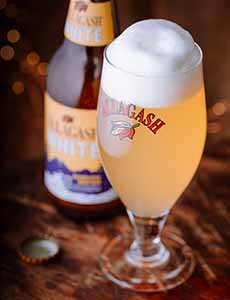
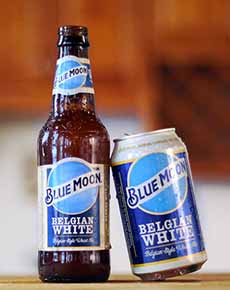
National Brands: Allagash White, brewed since 1995 (photo #2); Blue Moon Belgian White, created in 1995 (photo #5); and Samuel Adams Cold Snap, so named because it’s sold in January through March, created in 2014 (photo #4).
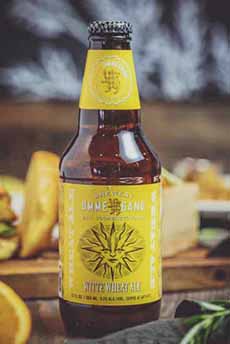
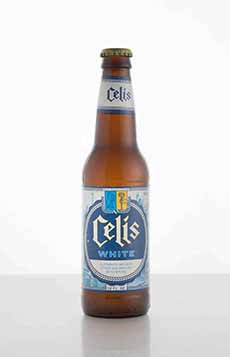
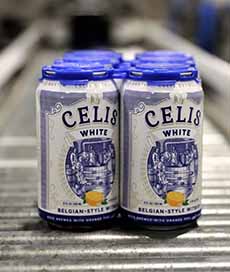
Regional Brands: Avery White Rascal (Colorado), Bell’s Winter White Ale (Michigan, a winter seasonal), Celis White, the heritage brand (Texas, photos #10 and #11), Lost Coast Great White (California), and Ommegang White Ale (New York).
THE WITBIER GLASS
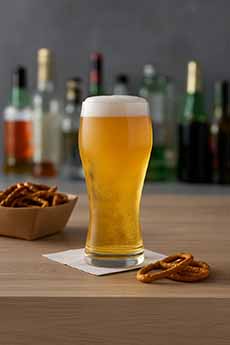
The witbier glass (photo #6), tall and curvy, traces its roots to Belgium and Germany. The shape was specifically designed to enhance the drinking experience of wheat beers like Belgian witbier and German Hefeweizen.
The shape is an adaptation of French and Belgian café tumblers, often made of thick glass and used for a variety of beverages. In the 19th and early 20th centuries, the style found its way to Belgium’s witbier regions, Brabant and Wallonia.
As mentioned above, witbier was almost extinct In the mid-20th century. With the revival by Pierre Celis of Hoegaarden in the 1960s, people sought a glass shape to better highlight the beer’s cloudy appearance and aromatic qualities.
The witbier glass was made tall to showcase the hazy, pale color and effervescence, yet wide enough to support a thick head of foam. Its model was the German Weizenbier glass—even taller and more curvaceous.
THE DIFFERENCE BETWEEN BEER & ALE
The terms beer and ale are often used interchangeably, but they actually refer to different things. In brief:
Beer is the broad category that includes all fermented grain-based alcoholic beverages made primarily with malted barley, hops, yeast, and water.
Ale is a subcategory of beer, defined by the type of yeast and fermentation process used.
Beer
Beer is one of the oldest of alcoholic beverages, with archaeological evidence dating to about 3000 B.C.E. The ancient Egyptians were good home-brewers.
Beer is made by brewing and fermenting cereals (the Egyptians used wheat; today malted barley is most commonly used), usually with the addition of hops as both a flavoring agent and stabilizer).
For much of its history, beer was a home brew or was brewed for sale at monasteries. Not until late medieval times did it become a commercial product.
Beer is now made by large-scale manufacturers in almost every industrialized country (though today’s beers are lower in alcohol content than their predecessors). The craft beer movement began in the U.S. in the early 1980s.
The word beer comes from Middle English ber, from Old English beor, and probably from Latin bibere, to drink.
Ale
Ale is a beer made in a cask or bottle with top-fermenting yeast (the same way Champagne is carbonated), which gives the beer a fruitiness. Because of the living yeast, ales are sometimes cloudy and have a slightly yeasty character.
Ales are easier and less expensive to brew than lager beers, which require precision in the brewing plus cold storage before they are ready to sell.
They are produced in a wide variety of colors, palates and strengths: Bitter, Brown Ale, India Pale Ale, Light Ale, Red Ale, etc.
The state liquor authorities of some American states wrongly apply the term “ale” to indicate brews of more than 4% alcohol.
|
|
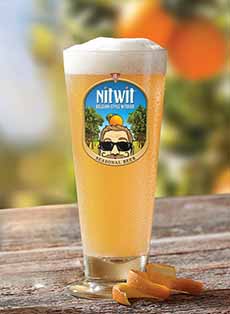
[1] BJ’s award-winning Nitwit White Ale.

[2] Among store brands, Allagash white beer is considered the gold standard for American witbier (photo © Allagash Brewing Company).
[3] Ommegang White Ale is faithful to traditional Belgian witbier style (photo © Brewery Ommegang).
[4] Samuel Adams Cold Snap is a strategic seasonal release designed to bridge the winter-to-spring transition. Unlike traditional witbiers that focus on coriander and orange peel, Cold Snap uses a blend of 10 spices, including anise, nutmeg, and plum, which gives it a warmer, spiced character suited to cooler weather (photo © Boston Beer Company).
[5] Blue Moon Belgian White, a national brand owned by Molson Coors, helped popularize the style in the U.S. and remains a “gateway” witbier. It’s made in the original Belgian White plus Blue Moon Extra (higher alcohol), Blue Moon Light, and Blue Moon Non-Alcoholic Belgian White (photo © Blue Moon Brewing Company).
[6] The specially-shaped witbier glass was designed in the early 20th century, to accentuate the beer’s signature flavors and aromas (photo © Libbey Glass).
[7] In beer brewing, whole coriander, the seeds of the cilantro herb, are used to impart a citrusy, slightly spicy flavor. Also shown, ground coriander seeds (photo © Silk Road Spices).
[8] The peel of the Curaçao orange (a.k.a. laraha) is green before drying but is gray when dried (photos #8 and #9 © Senior & Co.).
[9] The dried orange peel is what goes into the vat.
[10] A bottle of Celis white beer, brewed in Austin, Texas (photo © Craft Beer And Brewing).
[11] A Celis six-pack rolling down the assembly line.
[12] Pierre Celis and daughter Christine: Thank you! (photo © Austin American-Statesman).
|