THE NIBBLE BLOG: Products, Recipes & Trends In Specialty Foods


Also visit our main website, TheNibble.com.

Gnocchi Carbonara Recipe For National Carbonara Day

April 6th is National Carbonara Day, a creamy pasta dish beloved both here, in Italy, and anywhere else where a creamy Parmesan/Pecorino sauce can be made.

This recipe, created by from Plays Well With Butter, was shared with us by DeLallo, a great source for the finest Italian products—and recipes.

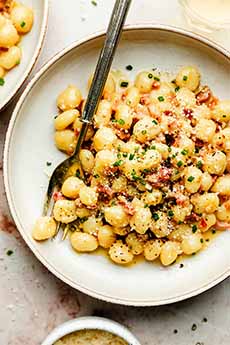
Instead of the spaghetti used in the classic recipe, pillowy potato gnocchi dumplings add texture and flavor, tossed with crispy pancetta, garlic, and a sauce of grated Parmesan and egg yolks.

It comes together in just 20 minutes.Finish with lemon zest and chives for a quick and cozy carbonara dinner.

If you like this recipe as much as we do, remember that the 29th of every month is Gnocchi Day in Argentina—a good reason to keep making it.

> The classic Carbonara recipe and with more carbonara recipes.

> The history of Spaghetti Carbonara.

> The history of gnocchi.

> The history of pasta.

> The different types of pasta: a photo glossary.

> The year’s 20 pasta holidays

> Wine pairings with carbonara are below.
 
 
RECIPE: GNOCCHI CARBONARA

You can substitute any shape of pasta here, but the best are the more substantial shapes: the corkscrew shapes (cavatappi, fusilli, gemelli, rotini), bell shapes (campanelle, gigli,trompetti) and generally fun shapes like ruote (wagon wheels) and recchiette (little ears).

Prep time is 10 minutes and cook time is 10 minutes.

If you don’t have both Parmesan and Pecorino cheeses, use the one you have.

While Pecorino Romano is the traditional cheese for Spaghetti Carbonara, some prefer use a blend of Pecorino and Parmesan to balance the flavors.

Pecorino has a sharp, salty tang, while Parmesan adding a less salty, nuttier flavor.

> The different Italian grating cheeses.
 
 
Ingredients For 2 Servings

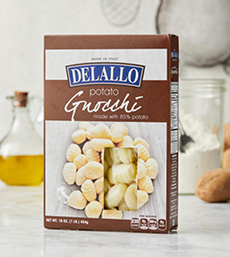
  • 6 ounces potato gnocchi
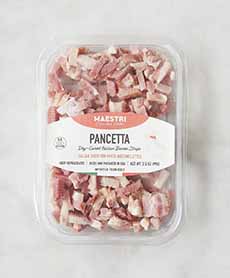
  • 4 ounces pancetta, diced
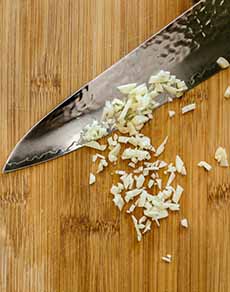
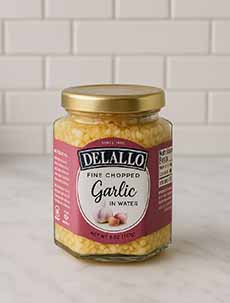
  • 3 cloves garlic, finely chopped or grated
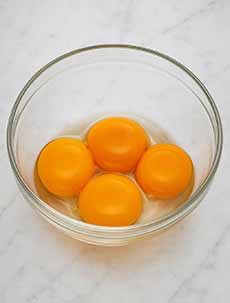
  • 4 large egg yolks
  • ¼ cup finely grated domestic Pecorino or Pecorino Romano cheese
  • ¼ cup finely grated domestic Parmesan or Parmigiano Reggiano cheese (the difference)
  • ½ teaspoon freshly ground black pepper
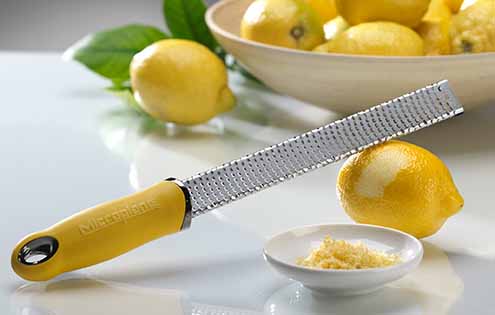
  • Zest of 1 lemon
  • Optional garnishes: extra grated cheese, finely chopped chives, ground black pepper, and a drizzle of extra virgin olive oil
  •  
    Preparation
     
    Jess Larson of @PlaysWellWithButter, the author of the recipe, wants you to read through the entire recipe before you begin to cook.

    “Carbonara is a time-sensitive dish that comes together quickly once all the components are ready,” she says. “It’s helpful to already have a sense of the process once you begin cooking.”

    So measure, chop, and otherwise prepare the ingredients. Then:

    1. BRING a large pot of water to a boil. Generously season the boiling water with salt.

    2. RENDER* the pancetta in a large nonstick skillet over medium heat. Cook, stirring occasionally, until the fat renders and the pancetta becomes golden and crispy, about 5 minutes. Add in the chopped garlic.

    3. COOK, stirring constantly to prevent burning, for 1 minute more, until the garlic is slightly softened and very fragrant. Remove from the heat immediately and set the skillet aside.

    4. PREPARE the carbonara sauce egg mixture: Add the egg yolks and grated cheeses to a large mixing bowl. Generously season with freshly cracked black pepper and whisk to combine. The mixture will be thick. Set aside.

    5. BOIL the gnocchi. Use your hands to break apart the individual pieces as needed before adding to the pot. Cook 3-4 minutes, stirring occasionally to prevent sticking, until the gnocchi float to the top of the pot. Reserve 1 cup of the starchy water, then drain the gnocchi.

    6. TRANSFER the cooked gnocchi to the skillet with the rendered pancetta and garlic. While whisking constantly, pour about ¼ cup of the reserved starchy water into the carbonara sauce egg mixture. The hot water should loosen the egg mixture and begin to melt the cheeses.

    7. TRANSFER the egg mixture to the skillet with the gnocchi, tossing well to combine. Return the skillet to medium-low heat. Continue to stir and toss, adding additional starchy water little by little, until the gnocchi carbonara sauce is glossy and coats the dumplings well.

    8. FINISH the dish by tossing in the lemon zest. Remove from the heat.

    9. TO SERVE: Divide the gnocchi into two pasta bowls. Top with extra grated cheese, finely chopped chives, ground black pepper, and a drizzle of extra virgin olive oil as desired. Serve immediately.
     
     
    WINE PAIRINGS WITH CARBONARA

    Italy offers excellent red and white options. You want a wine with good acidity to cut through the richness of the sauce.

  • Italian White Wine: A dry, crisp white wine with good acidity, like Frascati or Soave, is a great pairing. Sparkling wines are add charm to the dining experience.
  • For whites from territories worldwide, look to lighter-bodied unoaked, Chardonnay, Pinot Grigio, Sauvignon Blanc, and sparklers.
  • Italian Red Wine: Select a light-to-medium-bodied red wine with high acidity, such as Barbera, Pinot Noir, Valpolicella.
  • For reds from territories worldwide, Pinot Noir is a good pick. In the middle ground: rosé.
  •  
     
    Zesting A Lemon
    [8] While it may seem unusual to some, a bit of lemon zest brings exciting flavor to the dish (photo © Microplane).


    A Plate Of Gnocchi Carbonara
    [1] Gnocchi Carbonara (photos #1, #2, #5 © DeLallo).

    A Box Of Delallo Gnocchi
    [2] Start with a pound of potato gnocchi.

    A package of Maestri brand diced pancetta
    [3] We can buy pre-diced pancetta, saving time (photo © Murray’s Cheese).

    Chopped Garlic
    [4] Chopped garlic (photo © RDNE Stock Project | Pexels).

    Jar Of Chopped Garlic
    [5] You can save time and effort by purchasing garlic that’s already finely chopped (photos #5, #6 and #7 created with ChatGPT 2025-04-06).

    Bowl Of Egg Yolks
    [6] Egg yolks combine with grated cheese to create the rich sauce.

    Wedges Of Pecorino & Parmesan Cheeses
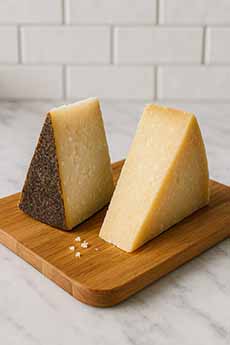
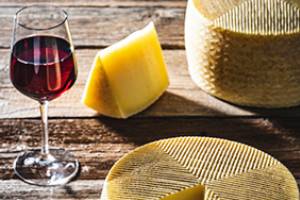
    [7] Pecorino Romano on the left and Parmigiano Reggiano on the right. Trivia: The traditional black coating on Pecorino Romano is a food-safe “paint,” often a mixture of clay, grapeseed oil, and carbon black (a powder), used to differentiate it from other cheeses. Scrape it off before using the rind (e.g. to flavor soups and stews), as it can impart a black color.

     
    ________________
     
    *Rendering fat is the process of melting and clarify animal fat, typically through slow cooking. The process separates the fat from impurities and water, resulting in a shelf-stable, usable fat for cooking and long-term storage. Examples include lard, rendered pork fat; schmaltz, rendered chicken fat; and tallow, rendered beef fat. Here’s a video of rendering pancetta.


    CHECK OUT WHAT’S HAPPENING ON OUR HOME PAGE, THENIBBLE.COM.


    Comments off

    Easy Caramel Sauce Recipe & Delicious Ways To Use It

    Rosemary Caramel With Shortbread
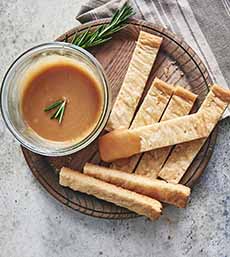
    [1] Salted rosemary caramel sauce, served with shortbread for dipping. The caramel recipe is below (photos #1, #3, © King Arthur Baking).

    Pure Cane Sugar For Mint Lemonade
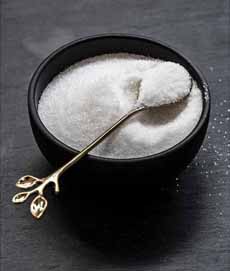
    [2] To make the caramel, start with granulated sugar (photo © Hannah Kaminsky | Bittersweet Blog).

    Bottle Of Wood's Boiled Apple Cider
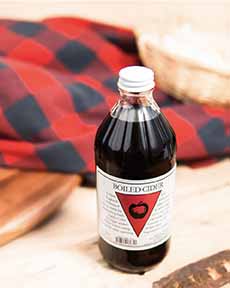
    [3] Boiled cider goes into the caramel sauce to add deeper, more complex flavor than traditional caramel. Here’s how to use it at every meal (photo © Cheese And Wine Traders).

    Heavy Cream Cartons
    [4] Heavy cream goes into the pan (photo © Dairy Farmers Of Wisconsin).

    A package of Plugra butter
    [5] A few tablespoons of butter (photo © DeLaurenti).

    Salt Shaker
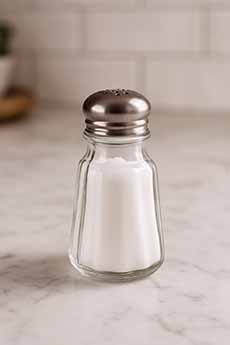
    [6] A bit of salt (photo generated by ChatGPT 2025-04-25).

    Bunch Of Fresh Rosemary
    [7] And finally, fragrant fresh rosemary. See other uses for it in the footnote* below (photo © Burpee).

    Cheesecake With Caramel Sauce
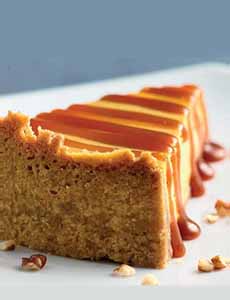
    [8] Cheesecake with caramel sauce: an easy road to glamour.

    Caramel Sundae
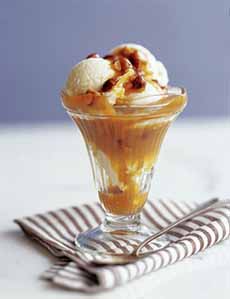
    [9] A classic caramel sundae (photo © National Honey Board).

    Pancakes With Nuts & Caramel Sauce
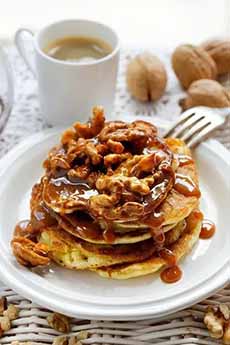
    [10] Breakfast or dessert: pancakes topped with toasted nuts and caramel sauce (photo © Umami Information Center).

    Caramel Nut Torte
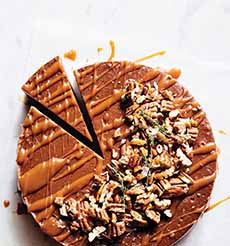
    [11] A plain nut torte gets the glam treatment with toasted nuts and honey.

    Caramel Brownie Sundae
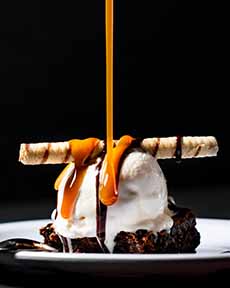
    [12] This is so easy to put together from store-bought brownies, ice cream, caramel sauce, and rolled wafer cookies (photo © Kobby Mendez | Unsplash).


    We stayed home and made caramel sauce today, because April 5th is National Caramel Day. We could have made caramel candy, but having made salted caramelsfor so many years, we decided to get with the trend and make salted caramel sauce.

    The caramel sauce recipe below, from King Arthur Baking, adds another layer of flavor with a sprig of fresh rosemary.

    Caramel sauce is just about the easiest thing you can make. It will be ready to eat in 10 minutes. Give it a bit of time to cool down if you want to pour it over ice cream.

    > Otherwise, check out all the uses for caramel sauce below.

    Caramel sauce is made from the same ingredients as caramel candy. The best recipes are simply cream, butter, sugar, and flavoring such as vanilla—although cayenne, coffee, lavender, maple, and pretty much anything you feel like can be used.

    Salt can be added to make salted caramel sauce; chocolate can be added to make chocolate caramel.

    At room temperature, a good sauce will be almost as thick as caramel candy, and can be eaten from the jar as “spoon candy.” We often enjoy it that way.

    Caramel sauce (as opposed to caramel syrup) thickens at room temperature and needs to be heated to become pourable.

    We’ll get to the recipe in a minute, but first:

    > More uses for caramel sauce, below.

    > The different types of dessert sauces: a photo glossary.

    > The year’s 15 caramel, butterscotch, and toffee holidays, below

    > The history of caramel.

    > More uses for fresh rosemary, below.
     
     
    RECIPE: SALTED ROSEMARY CARAMEL SAUCE

    Ingredients

  • 3/4 cup (149g) granulated sugar
  • 2 tablespoons (43g) boiled cider
  • 1/2 cup (113g) heavy cream
  • 2 tablespoons (28g) butter
  • 1/4 teaspoon table salt
  • 1 sprig (4″) fresh rosemary
  •  
    Preparation

    1. COMBINE all the ingredients in a medium, heavy-bottomed saucepan. The syrup will bubble up during cooking, so use a pan that holds at least 1 quart. Stir briefly to combine.

    2. PLACE the pan over medium heat and cook, stirring occasionally, until the sugar dissolves. From this point on, swirl the pan instead of stirring; this will help prevent crystals from forming and making the sauce grainy.

    3. CONTINUE to cook over medium heat without stirring until the mixture reaches 230°F when measured with a digital or candy thermometer. Watch carefully—do not walk away—while the caramel is simmering: It can quickly climb in temperature near the end of the cooking process.

    4. REMOVE the pan from the heat. Let the sauce cool for a few minutes before straining it into a heatproof container to remove the rosemary. Don’t worry if the sauce seems thin; it will thicken as it cools.

    You are now ready to enjoy a spoonful, and to use the sauce as we’ve demonstrated in the photos—just for starters.

    Store caramel in the refrigerator in an airtight container. It can remain for many weeks. Reheat briefly before serving.
     
     
    USES FOR CARAMEL SAUCE

    Caramel sauce is incredibly versatile! Here are some delicious ways to use it:
     
    Caramel For Dessert

  • Drizzle over ice cream or a whole-hog sundae.
  • Use as a topping for cake—carrot cake, cheesecake, pound cake and other loaf cakes.
  • Yogurt dessert parfait: layer Greek yogurt with chocolate chips and berries, and drizzle with caramel sauce.
  •  
    Caramel At Breakfast

  • Drizzle over French toast, pancakes, or waffles.
  • Sweeten on toast or bagels (especially with cream cheese).
  • Stir into oatmeal or plain yogurt.
  •  
    Caramel Beverages

  • Flavor cold brews, lattes, mochas.
  • Add to hot chocolate or warm milk.
  • Use in milkshakes.
  •  
    Caramel Snacks

  • A filling for sandwich cookies.
  • Dip apple, banana, or pear slices and strawberries.
  • Dip pretzels and shortbread cookies.
  • Make a sweet dip by blending caramel into mascarpone, ricotta, or yogurt.
  •  
    Caramel & Cheese

    As a cheese condiment, pair caramel with:

  • Brie and Camembert: Caramel’s sweetness enhances their creamy mildness and subtle mushroom undertones.
  • Caramelly cheeses: aged Gouda, Alpine cheeses, Gjetost†, and Gruyère are known for their caramel notes.
  • Cream cheese, goat cheese, and mascarpone: caramel turns their milky richness into caramel cheesecake filling.
  • Aged Cheddar: The sharper the Cheddars, the more sophisticated the sweet-savory pairing.
  • Blue Cheese: The saltiness and pungency of blue cheese creates a complex, adventurous contrast with the sweet, buttery caramel.
  •  
     
    THE DIFFERENCES BETWEEN CARAMEL SAUCE, BUTTERSCOTCH SAUCE, TOFFEE SAUCE & DULCE DE LECHE

    These dessert sauces are similar and usually interchangeable, but have distinct differences in ingredients and flavor profiles:

    Caramel Sauces

  • Method: Made by heating sugar until it melts and browns.
  • Ingredients: Cream, butter, and vanilla, added after the sugar caramelizes.
  • Flavor: A rich, sweet flavor with slight bitterness from the caramelized sugar.
  • Color: Medium amber.
  • Texture: Smooth, pourable when heated.
  •  
    Butterscotch Sauce

  • Method: Made by cooking brown sugar (not caramelized white sugar) with butter.
  • Ingredients: Cream, vanilla, and sometimes a pinch of salt.
  • Flavor: A distinctive buttery flavor with notes of molasses from the brown sugar.
  • Color: Lighter golden-amber.
  • Texture: Often slightly thinner than caramel sauce.
  •  
    And despite its name, butterscotch contains no Scotch whisky. The name derives from “scotched” (scorched) butter.
     
    Toffee Sauce

  • Method: Similar to butterscotch but cooked longer and to a higher temperature.
  • Ingredients: Brown sugar, butter, and cream.
  • Flavor: A deeper, more intense flavor with stronger butter notes, sometimes with a hint of nuttiness.
  • Color: Often cooked until slightly thicker and darker than butterscotch.
  • Texture: Can be slightly chewier or thicker at room temperature.
  •  
    Dulce de Leche Sauce

  • Method: Made by simmering sweetened condensed milk (or milk and sugar) for hours until the milk proteins caramelize.
  • Ingredients:
  • Flavor: A distinctive milk caramel flavor.
  • Color: Deeper tan to light brown.
  • Texture: Thicker and more spreadable than the others.
  •  
    The key difference between dulce de leche and cajeta is the type of milk used. The former is made with cow’s milk and the latter is made with goat’s milk.
     
     
    15 CARAMEL, BUTTERSCOTCH & TOFFEE HOLIDAYS

  • January 8: National English Toffee Day
  • January 23: International Sticky Toffee Pudding Day
  • January 26: National Blonde Brownie (Butterscotch Brownie) Day
  • February 15: National I Want Butterscotch Day
  • February 21: National Sticky Bun Day
  • March 19: National Chocolate Caramel Day
  • April 5: National Caramel Day
  • April 6: National Caramel Popcorn Day
  • May 9: National Butterscotch Brownie Day
  • July 8: National Ice Cream Sundae Day
  • September 15: National Butterscotch Cinnamon Pie Day
  • September 19: National Butterscotch Pudding Day
  • October: National Caramel Month
  • ​October 31: National Caramel Apple Day
  • November 25: National Parfait Day
  •  
    ________________
     
    *More uses for fresh rosemary: Beyond its primary use as a seasoning for meat, poultry, and seafood; in vegetable and grain dishes and stuffing; in breads, crackers; and on eggs and pizza; and as a popcorn seasoning; there’s a wealth of opportunity to use this lovely herb.
    > Infuse into honey, olive oil, salt, sugar, vinegar.
    > Add to cold drinks: herb water and plain sparkling water, lemonade, limeade.
    > Add to condiments: dips, ketchup, mayonnaise, mustard.
    > Make tea herbal tea or syrup.
    > Use as skewers.
    > Make compound butter and pesto.
    > Add to sweet baked goods, including cookies, muffins, and olive oil cake.
    > Add to homemade jams and jellies.
    > Make herb ice cubes for cocktails, soft drinks, and juices.
    > You can also freeze the sprigs for future use.
     
    *Gjetost is a Norwegian cheese also known as Brunost, some people do not believe upon tasting it that Gjetost is a cheese. It tastes just like caramel—but with the consistency of Cheddar.
     
     
    Vanilla Ice Cream With Caramel Sauce
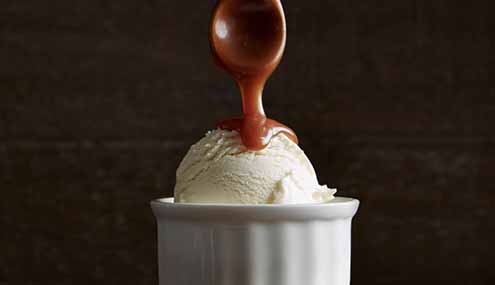
    [13] Since you’ve gotten all the way to the end, treat yourself to a little snack (photo © Eclat Chocolate).


    CHECK OUT WHAT’S HAPPENING ON OUR HOME PAGE, THENIBBLE.COM.


    Comments off

    Weekend Baking: Chocolate Macadamia Macaroon Cookies

    Why is it that we only think of baking macaroons around Passover?

    This cookie, composed of coconut and egg whites, was created by Italian Jews for the eight days of Passover, because it has no flour or leavening (which cannot be eaten during the observance). The recipe was introduced to other European Jews and became popular as a year-round sweet.

    The recipe takes only 35 minutes from start to finish. Bake them now and store them in an airtight tin. They also freeze well.

    And they’re gluten-free!

    > The year’s 44 cookie holidays

    > The history of macaroons.

    > The history of cookies.

    > The 11 basic cookie categories.

    > The different types of cookies: a photo glossary.

    > The year’s 44 cookie holidays.
     
     
    RECIPE: CHOCOLATE MACADAMIA MACAROONS

    Thanks to Taste Of Home for this recipe, which was developed by Darlene Brenden, Salem, Oregon and tested by Taste of Home Test Kitchen.

    Prep time is 20 minutes and cook time is 15 minutes. We recommend making a double batch, because these little bites will disappear quickly.

    Our personal indulgence is to use fine baking chips or chocolate bars rather than packaged chocolate chips; although we do use Guittard chips regularly.

     
    Ingredients For 18 Cookies

  • 2 cups sweetened shredded coconut
  • 1/2 cup finely chopped macadamia nuts
  • 1/3 cup sugar
  • 3 tablespoons cocoa powder (see below)
  • 2 tablespoons all-purpose flour
  • Pinch salt
  • 2 large egg whites, room temperature, lightly beaten
  • 1 tablespoon light corn syrup
  • 1 teaspoon vanilla extract
  • 4 ounces semisweet chocolate, melted
  •  
    Preparation

    1. PREHEAT the oven to 325°F. In a large bowl, mix the first 6 ingredients. Then stir in the egg whites, corn syrup, and vanilla and blend well.

    2. DROP the dough by the tablespoonful onto greased baking sheets, 2 inches apart. Bake until the cookies areset and dry to the touch, 15-20 minutes.

    3. COOL in the pans for 5 minutes. Remove to wire racks to cool completely.

    4. DIP half of each cookie into melted chocolate, allowing the excess to drip off. Place on waxed paper and let stand until set.

    Coconut macaroons will last up to 1 week stored in an airtight container. You can freeze them for up to 3 months by placing them in layers separated by parchment or wax paper.
     
     
    BAKING WITH NATURAL VS. DUTCHED (DUTCH PROCESS) COCOA POWDER

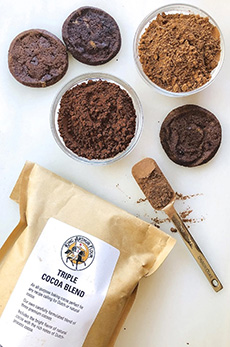
    There are two basic types of cocoa powder, natural, which is untreated, and Dutched, which is treated with alkalai (photo #3).

    Dutched chocolate, or Dutch process chocolate, is a deeper brown color, which leads most people to think that it is richer and has more chocolate flavor.

    However, the alkali added to Dutched cocoa changes the pH of the cocoa to make it milder in flavor than natural cocoa, not deeper.

    In 1828, Coenrad Johannes van Houten, the same engineer who developed the hydraulic press that created cocoa powder by crushing the nibs to separate the fat (cocoa butter), developed the process of treating the nibs with alkaline salts (alkali)* to neutralize the acidity and bitterness prior to crushing.

    Van Houten was Dutch, so the process became known as Dutch process, or Dutching.
     
     
    Are They Interchangeable?

    You should not substitute these two types of cocoas in baking when a recipe specifically calls for one type. While both will make a nice cup of cocoa, the leavening in a recipe will vary because of the differing acidities.

    Recipes that specify the type of cocoa powder are have been designed for that type. Using the wrong type can affect the rise and texture of the baked good.

    It the recipe is not specific, like the one above, you can use either. It doesn’t matter in the macaroon recipe, because there is no leavening (baking soda, baking powder) to react with the acidity.
     
     
    HERE’S A COMPARISON OF BOTH TYPES

    Natural Cocoa Powder

  • Acidic: Natural acidity reacts with baking soda to create carbon dioxide, which helps baked goods rise.
  • Flavor: A more complex and potentially more bitter chocolate flavor.
  • Color: Yellowish-brown, lighter in color than Dutch-processed cocoa.
  • Best Use: Recipes that include baking soda, as the acidity of the cocoa powder will react with the soda to create lift.
  •  
    Dutch-Processed Cocoa Powder

  • Alkalized: Dutch-processed cocoa powder has been treated with an alkaline agent, reducing its acidity.
  • Flavor: Smoother, less bitter, and more intense chocolate flavor.
  • Color: Dark brown, noticeably darker than natural cocoa powder.
  • Best Use: Recipes that call for baking powder, as it won’t react with the soda and the pH is already neutralized.
  •  
    > Here’s more about cocoa powder production.


    Chocolate Macaroons
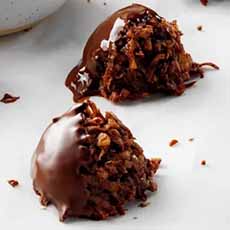
    [1] Chocolate macaroons, dipped in chocolate. The recipe is below (photo © Taste Of Home).

    Shredded Coconut In a Bowl
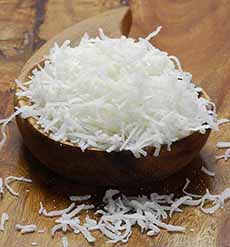
    [2] Don’t use old coconut that’s been lying around. You need recently-shredded coconut that’s still moist (photo © Gourmet Food World).

    Cocoa Powder
    [3] Should you use natural or Dutched cocoa powder? See the discussion below (photo © King Arthur Baking).

    A Bowl Of Macadamia Nuts
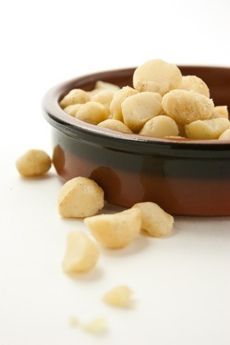
    [4] Coconut macaroons typically don’t contain nuts. Along with the cocoa, macadamia nuts add a special touch. If you prefer, you can substitute almonds (photo © iStock Photo).

    A Bowl Of Chocolate Chips
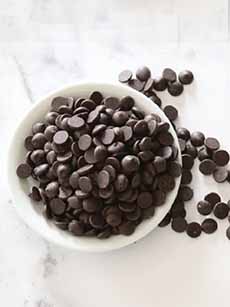
    [5] If you’re melting chocolate chips for dipping, use a top brand like Callebaut or Guittard (photo © Cocoa Dolce).

    Chocolate Dipped Macaroons
    [6] Many macaroons are prepared without any chocolate garnish, but we’re definitely in the “dip it in chocolate” camp (photo © McCormick).


    CHECK OUT WHAT’S HAPPENING ON OUR HOME PAGE, THENIBBLE.COM.


    Comments off


    © Copyright 2005-2026 Lifestyle Direct, Inc. All rights reserved. All images are copyrighted to their respective owners.