|

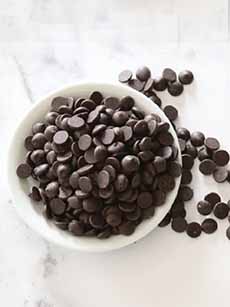
[1] A bowl of top-quality chocolate chips from Callebaut. See all the ways to use them here (photo © Coco Dolce).
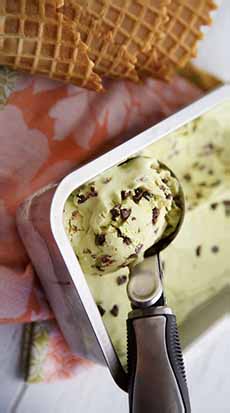
[2a] Chocolate chip ice cream is one of our favorite ways to use chocolate chips, whether the ice cream is chocolate, coffee, cherry, mint, raspberry, or vanilla. Here’s the recipe for this mint chip ice cream (photo © McCormick).
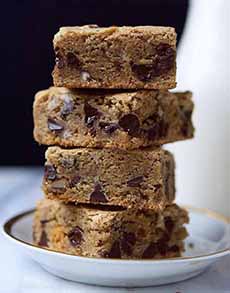
[2b] Another of our favorite ways to enjoy chocolate chips: in blondies (photo © King Arthur Baking | Instagram).
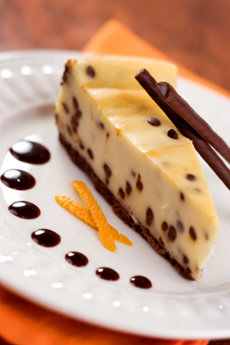
[3] It’s a definite yes to chocolate chip cheesecake (photo © Kelly Cline | iStock Photo).
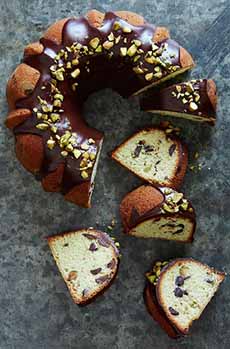
[4] Ditto for pistachio chocolate chip pound cake, in graceful Bundt form (photo © King Arthur Baking).
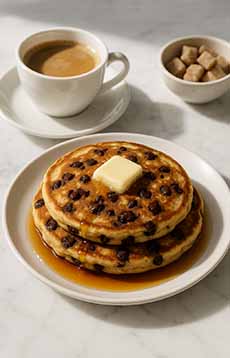
[5] It’s a classic: chocolate chip pancakes (photo ChatGPT).
[6] What makes a peanut butter and banana sandwich better? Chocolate chips (photo ChatGPT)!
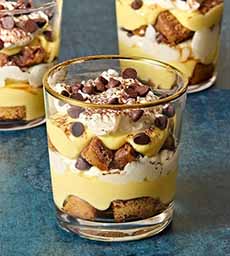
[7] Use chocolate chips to garnish any dessert. Here, it’s tiramisu pudding parfait (photo © Julia Hartbeck | Taste Of Home).
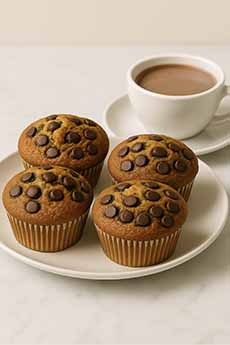
[8] Chocolate makes muffins and scones that much more delicious (photo ChatGPT).
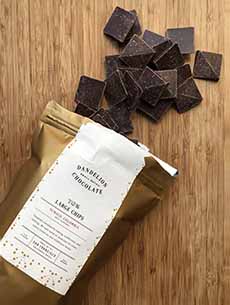
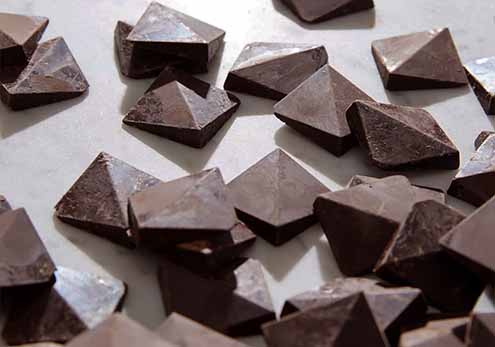
[9] Are these large pyramids chocolate chips, chocolate chunks, or a hybrid category? An innovation from Dandelion Chocolate, we’ll give you the skinny below (photo © Rachel Askinisi | Business Insider).
[10] Chocolate chips vs. chocolate chunks. See which you should use depending on what you’re making (photo ChatGPT).
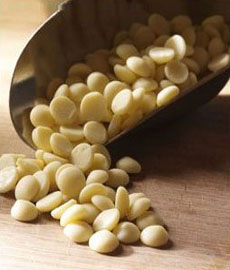
[11] White chocolate chips from Callebaut (photo Lake Champlain Chocolates).
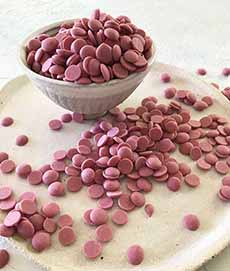
[12] Ruby chocolate chips from Callebaut (photo Lake Champlain Chocolates).
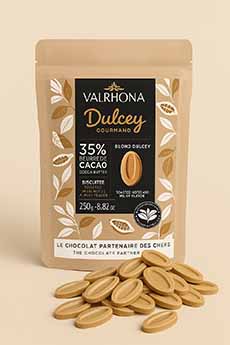
[13] Dulcey disks from Valrhona. Callebaut makes similar product, which they call Gold, and also a Caramel disk(photo © Valrhona).
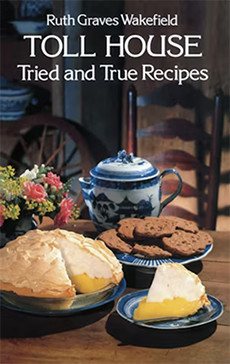
[14] The original Toll House Inn cookbook, still available (photo © Dover Publications).
|
|
May 15th is National Chocolate Chip Day. Not National Chocolate Chip Cookie Day—that’s August 4th.
You can do many things with chocolate chips in addition to baking cookies. We have a bunch of suggestions for you.
And we’re going to introduce you to a very special type of chocolate chip from Dandelion Chocolate (photos #9 and #15), and tell you the history of the chocolate chip, and the differernce between chocolate chips and chocolate chunks.
First, a little Chocolate 101:
> Chocolate terms: a photo glossary.
> The history of chocolate.
> The history of white chocolate (photo #11).
>The history of ruby chocolate (photo #12).
> The history of Dulcey (blonde) chocolate (photo #13).
[15] A specially engineered chocolate chip from Dandelion Chocolate. Read all about them below (photo © Dandelion Chocolate).
SOME OF THE MANY WAYS TO USE CHOCOLATE CHIPS
Chocolate chips are delightfully versatile. Here are just some ways to use them:
Baking
Brownies, blondies, granola bars, and other bars: Fold into the batter (photo #2b).
Cakes: Mix into the batter, into the filling, or as a garnish atop the icing (photo #4).
Cheesecakes and cupcakes: Mix into the batter and/or use for garnishing (photo #3).
Cookies—not just the classic chocolate chip cookie, but variations like oatmeal chocolate chip and peanut butter chocolate chip.
Inclusions in muffins (photo #8), scones, quick breads (banana bread, pumpkin bread, zucchini bread, etc.), bagels, breads, croissants, and breakfast pastries.
Candy
Chocolate bark and bonbons: garnish (especially with mini chips) along with nuts, fruits, seeds, etc.
Coating and dipping: Melt chips to dip fruit, pretzels, or marshmallows.
Any chocolate candy, e.g. fudge and truffles: Mix into fudge, or melt the chips for the base.
Trail mix.
Frozen Desserts
Ice cream: Stir into homemade or softened store-bought ice cream (photo #2a).
Ice cream sandwiches: Press into the sides of ice cream and other cookie sandwiches.
Frozen yogurt and ice pops: Mix in mini chips, especially into cherry, chocolate, coffee, and vanilla flavors.
Breakfast
French toast: Make stuffed French toast with a cream cheese, mascarpone, or ricotta filling studded with chocolate chips.
Granola and other cold cereals: add in.
Oatmeal and other hot porridge: Stir in while hot for melted chocolate swirls, or use as a garnish.
Pancakes and waffles: Fold into the batter or sprinkle on top as a garnish (photo #5).
Smoothie bowl: Garnish the top.
Beverages
Hot beverages: Melt chips into hot chocolate, add them to hot mocha or coffee, sprinkle atop a whipped cream garnish.
Milkshakes: Stir chips into a thick shake for bites of chocolate.
More
Desserts: Melt into fondue, use as a garnish for any dessert, mix into ricotta for cannoli filling (you can just eat the filling), mix into mascarpone for a sinfully rich pudding (photo #7).
Sandwiches: peanut butter, banana, chocolate chips (photo #6); or a cream cheese or mascarpone sandwich with chocolate chips.
Chocolate fix: Eat a tablespoon of chips for a quick chocolate fix.
Cheese: Roll a goat cheese log in mini chips. Serve with graham crackers, wheatmeal (digestive), or other sweet biscuits.
CHOCOLATE CHIPS VS. CHOCOLATE CHUNKS: THE DIFFERENCE
Is there a difference to using chocolate chips versus chocolate chunks? Yes!
Aside from shape, the main differences between chocolate chips and chocolate chunks come down to:
Melting: Chocolate chunks are larger and rectangular, so provide a larger pop of chocolate. However, unlike the teardrop-shaped chips which are designed to hold their shape when baking, the chunks may create pockets instead of holding their shape (not that there’s anything wrong with that!).
Ingredients: Chocolate chips contain stabilizers like soy lecithin or added emulsifiers. They may contain less cocoa butter so they keep their shape when baked—but this also gives them a waxier texture compared to higher-end chunks.
Quality: Chocolate chunks are often made of better quality couverture, with a higher cocoa butter content and fewer stabilizers. This gives them a better melt and flavor.
Why Bakers chose one over the other:
Cookies: chips have more structure, chunks are more gooey.
Brownies, blondies, and other bars: Chunks provide a better melt and flavor distribution.
Cakes and muffins: Chips offer less sinkage and more even flavor distribution.
Dipping or coating: Chunks melt evenly.
Check the package label to see that you’re buying real chocolate chips. Imitation chocolate chips have vegetable oil instead of cocoa butter (and are less expensive).
When you want the best:
The top brands of chocolate chunks are Callebaut, Guittard, and Valrhona. They also make chips.
Trader Joe’s High-End Private Label also has quality chocolate chunks, believed to be from Callebaut.
For a good semisweet chunk without soy lecithin, try Enjoy Life Mega Chocolate Chunks.
The best brands of chocolate chips include Callebaut, Guittard, Michel Cluizel, Scharffen Berger, Scharffen Berger, Trader Joe’s, and Valrhona, and an honorable mention to Ghirardelli.
Except when we need a chips that isn’t made in chunk form (e.g. peanut butter chips, white chocolate chips—photo #11), we prefer chocolate chunks in cookies for a simple reason: more chocolate in each bite!
PRODUCT FOCUS: DANDELION CHOCOLATE CHIPS
If they look large in the photo (#9, #15) they are! At one-inch square, from Dandelion Chocolate of San Francisco, they weigh in at a substantial 3.5 grams each.
In comparison, a single Nestlé chocolate morsel typically weighs about 1.4 grams/0.05 ounces. (The mini chocolate chips are smaller and their chocolate chunks are larger and weigh more per piece.)
To appreciate what Dandelion has achieved. you have to brush up on is origin chocolate: the term used to specify chocolate made from beans from a single origin. In the case of Dandelion, those origins include Colombia, Ecuador, Honduras, Tanzania, and Uganda.
Like all agricultural products, each displays the flavors of its terroir. Just like coffee beans, wine grapes, olive oil, etc.
So do you prefer the cacao flavors of South America—fruity and floral—or the flavors of Africa—richer, darker flavors, with notes of cinnamon, fig, and berries? Check the options and decide.
> Here’s what you need to know about single origin chocolate.
Why Was A Special Pyramid/Diamond Shape Created?
These custom-made pyramid chips were modeled after the hand-piped chips the Dandelion kitchen team would make for the giant cookies sold in their cafés.
They used to use chocolate chunks, but one customer, a Tesla engineer named Remy Labesque thought he could come up with something better. In 2020, he shared his idea for a better shape that would function perfectly in a large cookie.
He worked with Dandelion to create their signature chip: one inches square at the flat bottom, rising to a peak in the center, that reminds one of a pyramid or diamond.
As you can see in photos #9, it’s quite different from the traditional teardrop-shaped chips/morsels. Labesque created a unique pyramid-like structure featuring two tapered edges and a flat bottom.
Two of the bottom edges are thin and taper off while the other two are slightly thicker. The engineer explains that this is how the big chips are able to melt evenly. The design wasn’t an aesthetic choice, it was functional.
The flat bottom was engineered to melt more evenly on the tongue, providing a better tasting experience.
The sharp edges were designed to offer an initial intense flavor hit, while the thicker center provided a more substantial chocolate experience.
Get Your Dandelion Chocolate Chips
> Head to the company website and do a search, so you can see all five varieties.
THE HISTORY OF CHOCOLATE CHIPS
Chocolate chips were invented by accident in 1937 by Ruth Graves Wakefield, who owned the Toll House Inn in Whitman, Massachusetts.
She was making Butter Drop Do cookies—a simple butter cookie recipe that dates to colonial times. She wanted to add chocolate.
She cut a Nestlé semi-sweet chocolate bar into small pieces, expecting the pieces to melt in the oven and create chocolate cookies. Instead, the pieces retained their shape, creating the first chocolate chip cookies—or Toll House cookies, as she named them.
The Toll House cookies became popular at the inn, and the recipe began to spread. She published it in a cookbook called “Toll House Tried and True Recipes” in 1936 (you can get a paperback version on Amazon-—photo #14).
As the cookies gained popularity, sales of Nestlé’s semi-sweet chocolate bars increased significantly in the New England area.
Recognizing the business opportunity, Nestlé approached Wakefield in 1939 to strike a deal. They purchased the rights to use her recipe and the Toll House name on their packaging. In exchange, Wakefield reportedly received:
A lifetime supply of Nestlé chocolate.
A consulting fee (some sources indicate it was a symbolic $1—she clearly didn’t consult a lawyer).
Nestlé’s Morsels Arrive
After concluding the deal, Nestlé began producing chocolate chips specifically designed for baking, eliminating the need for consumers to chop chocolate bars themselves. In 1940, they introduced Nestlé Toll House Real Semi-Sweet Chocolate Morsels.
Nestlé’s decision to make chocolate chips in a teardrop or morsel shape rather than the pieces obtained from chopping a chocolate bar was driven by practical considerations:
Manufacturing efficiency: The teardrop shape could be more easily mass-produced in a consistent size using industrial equipment.
Melting properties: The teardrop shape, with its tapered end and rounded bottom, creates an optimal balance for chocolate chips in baking. They partially melt but maintain their general shape and distribution throughout the cookie.
Performance: The teardrop shape has a higher surface-to-volume ratio than simple cubes or rectangles, affecting how the chocolate interacts with dough and melts in the mouth when eating the baked product.
Brand identity: The special shape helped establish to establish chocolate morsels/chips as a specific ingredient.
Convenience: The consistent size and shape meant bakers could count on uniform distribution and reliable results in their recipes, unlike hand-chopped chocolate pieces which varied in size.
The Evolution Of Chocolate Chips
Chocolate chunks, as a distinct square or rectangular product, were first marketed to consumers in the early 1940s to avoid manual chopping.
Chunks delivered a more substantial taste and a change from the uniformity of traditional chips. Within a decade or so, chocolate chunks had become a staple in baking aisles
In the 1950s and 1960s, chocolate chips and chunks became a staple in American pantries.
By the 1970s, Americans were chip-happy enough to market numerous options. Currently, you can find:
Chocolate chips: dark chocolate, milk chocolate, mint chocolate, semisweet chocolate (the original), white chocolate, and peanut butter (a mix of PB and milk chocolate), mini chips, jumbo chips, and chocolate chunks.
Flavors that don’t contain chocolate: butterscotch, caramel, funfetti.
Different limited edition and seasonal flavors from Nestlé and others: Bailey’s Irish Cream, maple, mint, pumpkin spice, salted caramel, s’mores.
In fact, you can make any flavor of chip your heart desires. Here’s how.
(Note: Always read the ingredients label. If it contains cocoa butter, it’s chocolate, even if there are no cocoa solids (e.g., white chocolate).
Nestlé deliberately called their product morsels. Early recipes, including Wakefield’s original, often described the process as adding “chocolate broken into bits” or “pieces of chocolate.”
(By the way, you can get her cookbook—see photo #14.)
So who was first to call them “chocolate chips?”
There is no aha! moment. The term emerged gradually in popular usage, likely developing organically among home bakers.
By the mid-1940s, the term “chocolate chip cookies” was becoming commonplace in cookbooks and newspaper recipe columns. This suggests the term was already in the vernacular.
By the 1950s, “chocolate chip cookies” was standard, regardless of whether Nestlé’s Morsels or another brand was used.
The second decade of the 21st century saw the introduction of ruby chocolate (photo #12), created by Barry Callebaut in 2017. The pink-hued chocolate is made from specially processed ruby cocoa beans. It has a fruity, slightly tart flavor.
Ruby is the first new chocolate category since white chocolate was introduced in the 1930s. (The first dark chocolate bar was introduced in 1847, and milk chocolate in 1875 or 1876.) Here’s more about ruby.
Dulcey (photo #13 or blonde, chocolate came earlier, in 2012—an accident caused when a chocolatier left the heater on under white chocolate for too long.
See the footnote† for why Dulcey/blonde/gold chocolate isn’t its own category.
The new product produces caramel notes, and is so delicious that we wonder what’s next! In the interim, here’s more about Dulcey.
It isn’t yet made in chips, but you can purchase the baking disks.
|