THE NIBBLE BLOG: Products, Recipes & Trends In Specialty Foods


Also visit our main website, TheNibble.com.

Once Again Brand Flavored Almond Butter & Cashew Butter Gifts

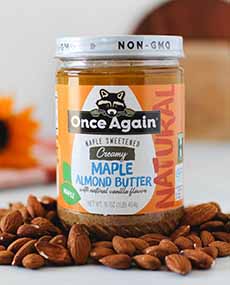
A Jar Of Once Again Maple Almond Butter
[1] Once Again Maple Almond Butter has additional notes of vanilla. Both almond and cashew butters are also available unflavored (all photos © Once Again).

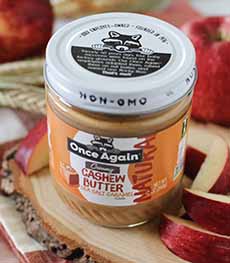
A Jar Of Once Again Cashew Butter
[2] Once Again Caramel Sea Salt Cashew Butter.

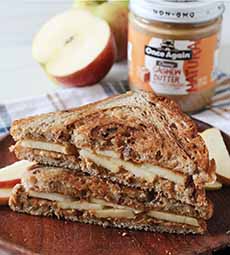
A Cashew Butter Sandwich On Toast
[3] Delicious: a cashew butter and apple sandwich on raisin toast.

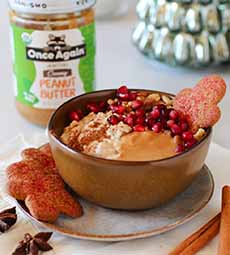
Holiday Oatmeal With Pomegranate & Spices
[4] Holiday oatmeal. The recipe is below.


We’ve been getting emails this past week from readers wanting recommendations on healthy stocking stuffers and party favors. Our family never gave out a “family gift” to everyone at dinner, but it appears that other families do.

So here’s the first of two recommendations: Once Again brand nut and seed butters.

While Once Again has a substantial variety of nut and seed butters, both salted and unsalted, for the holidays, we recommend the flavored butters.

We eat them year-round, from the jar, when we need a treat.

In addition to sandwiches, they add special flavor to:

  • Beverages: hot chocolate, shakes, smoothies
  • Breakfast: oatmeal and other breakfast cereals, pancakes, toast, waffles, yogurt
  • Baked Goods: cakes, cookies, muffins, and others
  • Candy: Corn Flakes candy, fudge, truffles
  • Dessert Sauces
  • Dips & Spreads
  • Salad dressings: creamy or vinaigrette
  • Savory sauces: for curries, grain bowls, grilled meats, roast vegetables (recipes)
  •  
    There are scores of yummy recipes on the website.
     
     
    GET YOUR ONCE AGAIN NUT BUTTERS

    Buy them from OnceAgain.com.

    Or buy them locally: Here’s a store locator.
     
     
    > The history of almonds.

    > The history of cashew nuts.

    > The history of peanut butter, the granddaddy of all American nut and seed butters.
     
     
    RECIPE: HOLIDAY OATMEAL

    See photo #4.
     
    Ingredients For 2 Small Or 1 Large Serving

  • 1 cup rolled oats
  • 1-1/2 cups water
  • 1/2 cup milk
  • 1/2 cup Greek yogurt
  • 1 teaspoon ground gingerbread spice or pumpkin pie spice
  • 1 tablespoon Once Again nut butter of choice
  • 1/2 teaspoon vanilla extract
  • 2 tablespoon maple syrup
  • Garnish: nut butter drizzle, pomegranate arils (seeds), ground cinnamon, and a gingerbread man
  •  
    Preparation

    1. COMBINE oats and water, and bring to a boil until most of the liquid is absorbed.

    2. REDUCE the heat to low and add the milk and yogurt.
     
     
    TIP

    When the jar is running low, make overnight oats or a smoothie in the jar.

    If you have pets, they’ll be happy to lick the jar clean.

     
    ABOUT ONCE AGAIN

    Once Again was founded by Jeremy Thaler and Constance Potter in 1976, with the purchase of a small, used coffee roaster which they used to roast bulk nuts in their basement.

    Five years later, their success enabled the company to purchase and renovate a turn-of-the-century silk mill in Nunda, New York. The brand’s mascot, Rocky Racoon*, was one of four baby raccoons found living on the property.

    In 2004, the company opened an additional 27,000-square foot, state-of-the-art production facility. In 2006, Once Again became 100% employee-owned.

    In 2007, Once Again introduced the first organic-stabilized Peanut Butter in the U.S. Today, the line includes

  • Nut Butters: Almond Butter, Cashew Butter, Peanut Butter
  • Seed Butters: Sunflower Butter, Sunflower Hemp Butter, Tahini
  • Snacks: Graham Cracker Sandwiches, Squeeze Packs
  •  
    We love them all.

    Discover more at OnceAgain.com.
     
    ________________
     
    The Beatles beat them to it, releasing “Rocky Raccoon” in 1968.


    CHECK OUT WHAT’S HAPPENING ON OUR HOME PAGE, THENIBBLE.COM.


    Comments off

    Absenthe Brand Absinthe For The Creative People In Your Life

    Do you need a special gift for a creative person? How about a bottle of absinthe (photo #1), a green spirit (it’s not a liqueur, as it has no added sugar) that’s distilled from herbs and botanicals?

    That person should also like licorice. Absinthe is an anise-flavored‡ spirit (check out the difference between anise and licorice in the ‡footnote below).

    Absinthe is derived from several plants, including the flowers and leaves of Artemisia absinthium*, grand wormwood (also called common wormwood), an herb that contains a controversial chemical compound, thujone.

    Wormwood has long been demonized for alleged destructive consequences to the mind and body. It was blamed blackouts, pass-outs, hallucinations, and bizarre behavior. (It is a known convulsant when consumed in extremely high doses [source]).

    It was withdrawn from the market due to the belief that thujone created the psychological and physical health problems associated with it: irresponsible or erratic behavior, withdrawal, dependence, brain damage, and increases in mental illness and suicide [source].

    However, contemporary analysis indicates that the chemical thujone in wormwood was present in such minute quantities in properly distilled absinthe as to cause little psychoactive effect.

    Modern science blames acute alcohol poisoning from drinking twelve to twenty shots a day.

    Yes, science clued us in, more than 100 years after the ingredient was banned, that the villain was not wormwood but alcoholism.

    But before science proved the error of thinking, absinthe was banned: in Belgium in 1905, Switzerland in 1908, The Netherlands in 1910, France and the U.S. in 1912 (the U.S. Pure Food Board called it “one of the worst enemies of man, and if we can keep the people of the United States from becoming slaves to this demon, we will do it” [source], in Italy in 1913, in France in 1915, and in Germany in 1923.

    With time comes progress. In 1988, European Council Directive No. 88/388/EEC allowed certain levels of thujone in foodstuffs. The time was right to lift the ban on absinthe.

    But you know how slowly bureaucracies move. The ban on absinthe was lifted in the U.S. in 2007, in France not until 2011.

    This makes a good story to go along with the gift. There are many articles about the ban online. Just print out your favorite and include it with the bottle.
     
     
    HOW ABOUT AN ABSINTHE PARTY?

    There’s actually a National Absinthe Day, celebrated on March 5th to commemorate the day the U.S. lifted the ban.

    In addition to straight shots, like in the old days, you can find many absinthe cocktail recipes online.

    For food:

  • Absinthe pairs well with rich foods like cheese platters, charcuterie boards, olives, grilled meats, hearty seafood (mahi-mahi, tuna, salmon, swordfish), and for dessert, anyching dark chocolate, cheesecake, or fresh pineapple.
  • And of course, serve a salad of the darkest green vegetables you can find (arugula, Castelvetrano olives, edamame (soybeans), herbs (basil, cilantro, dill, parsley), green beans, kale, peas (green peas, snow peas, sugar snap peas), and watercress.
  • Use a dressing without vinegar (it would clash with the absinthe): Caesar, ranch, tahini, even Thai-style peanut dressing.
  • Or you can simply use infused olive oil—basil, garlic, or even one of the chile-based flavors.
  • Or make a vinaigrette with your EVOO of choice plus rice vinegar—the mildest vinegar, with a hint of sweetness.
  • Other foods to work into a party menu are pizza and spicy pasta.
  • You can even go with one of these hearty egg dishes for brunch.
  •  
     
    THE STUFF THAT DREAMS ARE MADE OF?

    While post-ban absinthe contains much less thujone than pre-ban varieties—a fraction of the 100+ mg/l in the days of old—drinkers will not fall into a dreamlike state as did the the drinkers of old (unless they drink way too much and simply fall asleep).

    There is one exception, made in the Czech Republic at the old strength—and for the highest price (photo #5).

    In addition to wormwood, absinthe was (and is) also distilled from green anise, sweet fennel, other medicinal and culinary herbs, and other plants, including flowers.

  • Fennel, green anise, and grand wormwood are the essential ingredients (sometimes called the “holy trinity”).
  • The other plants are used for coloring and flavor.
  •  
    Keep reading: Lots of good stuff that follows including:

    > The history of absinthe.

    > The absinthe ritual (how to drink absinthe—photos #3 and #4).

    > The Absente brand of absinthe (photos #1 and #2).

    > Famous absinthe drinkers.
     
     
    DRINKING 101: ABSINTHE IS A SPIRIT, NOT A LIQUEUR

    Absinthe is classified as a spirit because it is traditionally distilled and bottled without added sugar.

    With liqueurs, once the base spirit has been distilled, sugar (and other flavorings) is then added according to achieve the desired level of sweetness.

    There’s no sugar in absinthe. It’s bitter, and that’s why the ritual of drinking it includes dripping water over a sugar cube (see photos #3 and #4).

    However, because of its bright green color and herbal flavor, people tend to think of absinthe as a liqueur. Even some liquor stores and reputable publications call it a liqueur! But now, you know better.

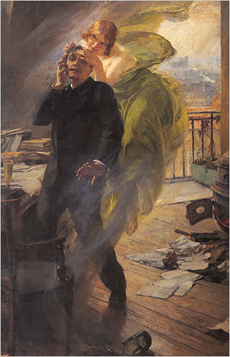
    Because of its green tint and the “magical” effect that seemed to inspire creativity, the spirit became nicknamed La Fée Verte (see paintings of The Green Fairy in photos #9 and #22).
     
     
    A BIT OF ABSINTHE HISTORY

    While absinthe was created for medicinal use in 1792, the earliest recorded use of medical wormwood can be found in the Ebers Papyrus, an Egyptian medical papyrus from 1550 B.C.E. and the most extensive known record of ancient Egyptian medicine [source].

    More than three millennia later, the wormwood-based absinthe (named by its inventor after the Greek word for wormwood, apsinthion), was developed by a retired French physician, Dr. Pierre Ordinaire.

    Originally from the Franche-Comté region of France, Dr. Ordinaire went into self-exile after the French Revolution for political reasons. He settled over the border in the small Swiss town of Couvet, in the Val-de-Travers district of the canton of Neuchâtel.

    It was there that he created a patent medicine††, the elixir absinthe, in 1782, using local botanicals.

    Wormwood, a key ingredient, was plentiful in the icy Val-de-Travers region of Switzerland where he lived.

    The story goes that he traveled the Val de Travers on his horse to sell his absinthe as an all-purpose cure-all for everything from anemia to flatulence. Some customers did say that it cured their ailments [source].
     
     
    Post Mortem

    When Dr. Ordinaire died, most stories say, the recipe was bequeathed to his two housekeepers, the Henriod sisters, who produced it from from their home and sold it to pharmacies in the area [source].

    On the other hand, one of their ancestors, Kate Henriott-Jauw, author of Alchemy, Alewives, and Alchemy, writes that the sisters had long been creating medicinal tinctures and tisanes for the villagers [source].

    The plot thickens here. While some sources say that Dr. Ordinaire supposedly passed his recipe on to the sisters on his deathbed, others suggest that the sisters developed absinthe themselves. If the latter is true, then how did Dr. Ordinaire get involved?

    One possible explanation: The women were wary of promoting what had become a popular cure-all because of the ever-possible accusation of witchcraft, a criminal offense that was still used in the 20th century to prosecute spiritualists and Gypsies. It wasn’t repealed until 1951.

    So in this alternate scenario, they approached the good doctor.

    “His charming nature, good looks, and respectable title of Doctor were well embraced and he proved to be a most natural salesman,” notes Ms. Henriott-Jauw. In fact:

    “His credibility and successful promotions led to the purchasing of said recipe by a French businessman, Major Dubied.”

    The truth is out there, Special Agent Fox Mulder reminds us. And Dr. Ordinaire remains credited with being the first to sell absinthe.
     
     
    The Next Phase: Mass Production

    In 1797, the Henriod sisters sold their recipe to a Frenchman, Major Daniel-Henri Dubied, born in Couvet to a family of lace merchants. That same year, his daughter Emilie married Henri-Louis Perrenoud (he later changed the spelling to Pernod) son of a local distiller, Abraham-Louis Perrenoud.

    In 1798 the Major, his sons Marcellin and Constant, and his new son-in-law Henri-Louis Pernod, opened the first commercial absinthe distillery, in Couvet: Dubied Père et Fils. The mission was production of absinthe as a recreational alcohol.

    Some sources say that Abraham-Louis Perrenoud established the first commercial absinthe distillery in 1794 to produce an alcoholic beverage, as opposed to a medicinal cure [source].

    But whoever was first, the medical elixir became a popular recreational drink: People loved the taste and the effect.

    Pernod had learned distillation from his father. He took over Dubied Père et Fils and built a larger distillery in Pontarlier, France, just across the Swiss border. Moving enabled the distiller to avoid the high tariffs placed on liquor imported into France.

    At this time, Henri-Louis changed the spelling of his surname to Pernod and renamed the company Pernod Fils.

    Due to his choice of location, the small community of Pontarlier eventually became the world center of absinthe production, home to 28 commercial absinthe distilleries [source].

    Mass production in Pontarlier enabled the price of absinthe to drop significantly and the market expanded [source].

    In 1827, Pernod’s son J. Édouard took the reins the company and increased distribution, significantly to North and South America.

    After absinthe was banned in France in 1915, Pernod pivoted to create an anise-flavored liqueur called Pernod Anise. It had a similar licorice-like flavor profile as absinthe but was wormwood free.
     
     
    Pastis: The Next Evolution

    In 1932 Paul Ricard, a young man from Marseille who worked in his family’s wine business, learned about pastis, a regional anise-flavored herbal liqueur.

    He made his own version from an old family recipe, using ingredients like star anise, fennel, licorice, and other aromatic plants.

    He invented the brand name Pastis‡‡‡‡, and it quickly became the market leader in anise/licorice-flavored drinks, overtaking other brands including Pernod Anise.

    Pastis is usually served diluted with water, which makes it cloudy. Sound familiar?
     
     
    Modern Pernod

    Today the company is called Pernod Ricard, known for its anise liqueur, Pastis.

    After the thujone ban was lifted, it returned to producing absinthe as well. In 2001, Pernod Ricard released an absinthe claimed to be “inspired by the old formula.”

    The Pernod and Ricard companies merged in 1975, creating Pernod Ricard. Today it’s the second-largest distiller in the world, behind Diageo.

    Back to the 19th century…
     
     
    L’Heure Vert (The Green Hour: The Original Happy Hour?)

    The green spirit rapidly traveled from the south of France to the café tables of Montmartre in Paris. Dr. Ordinaire’s tasty tipple quenched the throats of artists, musicians, writers and poets alike, becoming the drink of choice for the bohemians‡‡‡ of Paris during La Belle Époque‡‡.

    From there, absinthe became ubiquitous in bars, cafés, and cabarets, popular among all social classes. It became common practice for a wide array of people to enjoy a glass of the now-trending and affordable Absinthe Ordinaire after work.

    This gave rise to “L’Heure Verte” (The Green Hour) at 5 p.m. (that’s 17 hours on Europe’s 24-hour notation, called military time in the U.S.). Drinkers of all sorts headed to a café for a glass.

    Like today, cafés were the place to socialize, and cafés were filled with drinkers and their glasses of the verdant liquor.
     
     
    A Wartime Preventative & A Wine Substitute

    During the Franco-Algerian War (1830-1847), French soldiers were given absinthe to prevent fevers, malaria, and dysentery (wormwood is believed to act as a mild antiparasitic).

    When the war ended, the soldiers returned to France with a taste for absinthe.

    The spirit’s popularity was even more enhanced by the unfortunate results of the phylloxera plagues of the 1860s and 1880s.

    These tiny insect pests attack grapevines worldwide, feeding on the roots and killing the vines. They decimated European vineyards, creating massive wine shortages across most of the grape-growing regions on the Continent—not just France, but Germany, Hungary, Italy, Portugal, and Spain.

    In the absence of wine, absinthe became France’s most fashionable drink—the “national drink” of the late 19th century. Less expensive than wine, it was affordable enough to be the tipple of choice among the poor as well.

    Absinthe crossed the pond to the U.S. It was consumed in most large cities in the U.S., but New Orleans became its American center because of the large French population of French.

    So much absinthe was consumed in New Orleans that Europeans nicknamed the city “the little Paris of North America.”

    The Old Absinthe House, on Bourbon Street was the city’s most popular meeting place for absintheurs, including such luminaries as Ernest Hemingway, Mark Twain, and Oscar Wilde [source].

    It’s still open. Stop in for an Absinthe Frappe.

    Trivia: The modern American “Happy Hour,” where alcohol was consumed (earlier “happy hours” were not alcoholic events), didn’t begin until Prohibition (the history of Happy Hour).
     
     
    The Heyday Of Absinthe

    Absinthe was most popular in the late 19th and early 20th centuries, especially in France, where 1890s were known as the Absinthe Decade.

    During its peak in 1910, the French consumed a staggering 36 million liters of absinthe per year.

    By 1913, the French were consuming 60 liters of absinthe per person [source].

    But unscrupulous producers of poor quality, and sometimes even toxic, absinthe, together with the demon thujone and a highly publicized Swiss murder case, turned public opinion against absinthe.

    That, along with the growing temperance movement, led to its downfall.
     
     
    THE ABSINTHE RITUAL

    In France, people traditionally diluted absinthe with cold water and sugar to make to make the bitterness of the wormwood more palatable.

    They still do. This is known as the “absinthe ritual.”

    Water is slowly dripped over a sugar cube on a small silver slotted spoon. It creates a cloudy mixture called a “louche,” which refers to the milky, cloudy appearance that absinthe takes on when water is added to it.

  • Adding water lowered the alcohol content.
  • Sugar helped to counteract the bitterness, making it more palatable to drink.
  • When water is slowly added to absinthe, it causes the liquid to become cloudy and milky, a process called “louching” (photos #3 and #4).
  •  
    You can purchase reproductions of all of the authentic accoutrements (glasses, spoons, grilles, decanters, fountains, etc.) online. See photos #17 through #21.
     
    Why did (and do) people drink absinthe if it’s so bitter?

    First, the intense bitterness of wormwood and other herbs† made it sought after as an aperitif, meant to stimulate digestion before a meal.

    (Campari, Cynar, and Fernet-Branca, brands widely sold today, are made for the same reason.)

    Before modern medicine, when science did not understand how to solve many medical issues and often made things worse (e.g. bloodletting).

    Digestive issues from stomach aches to constipation were rampant, especially among the affluent, who ate rich diets with minimal fiber.

    Second, the drinking experience is as much about the preparation ritual as the flavor.

    The ritualistic preparation is part of its attraction. The cloudy transformation in color and texture created by the sugar and water (called the “louche”) has an appealing visual effect.

    The water is needed because of the high alcohol content, which makes it difficult for sugar will to dissolve simply by tossing into the glass.

    These were the days before granulated sugar. Sugar was processed from cane juice and molded into tall cones. People needed to shave off the amount of sugar they needed (the history of sugar).

    Fortunally for absinthe drinkers, sugar cubes were created in 1841 by Jakub Kryštof Rad (in what is now the Czech Republic).
     
     
    ABOUT ABSENTE BRAND ABSINTHE

    Absente is made with a nine herbs and botanicals, including green anise, lemon balm, peppermint, star anise, and wormwood. The brand uses southern wormwood (southernwood, Artemisia abrotanum) and which is less bitter than grand/common wormwood, Artemisia absinthium, the traditional species.

    Produced in the South of France, Absente follows one of the oldest-known absinthe recipes, using the finest artisanal distillation method.

    Distilled to 110 proof (55% A.B.V.), Absente 110 is an overproof**** spirit, the same absinthe proof drunk by poets and artists 150 years ago. You can find it for $60 a bottle.

    It has an intense, light, fresh, floral aromas, and a well-balanced, complex palate with subtle flavors of anise/licorice, peppermint, and spice. The finish is spicy and bitter.

  • There’s also Grand Absente 138, which is 138 proof, for around $90.
  • The entry level from this brand is Absente Ordinaire. You can find it for $30 a bottle, although we’ve also seen it for double that. It’s named after the Dr. Ordinaire.
  • Truthfully, we recommend paying a bit more for the 110 proof.
  •  
    Today’s absinthe is still distilled from wormwood and therefore contains thujone; but when the ban was lifted in 1999, the U.S. Bureau of Alcohol, Tobacco, Firearms, and Explosives limited the thujone content to 10 milligrams per liter. Drinking too much modern-day absinthe can cause drunkenness, but you won’t hallucinate The Green Fairy (photo #10).
     
     
    ABSINTHE & THE ARTS: FAMOUS CONSUMERS OF ABSINTHE

    According to an account on the BBC website, it’s hard to overstate the cultural impact of absinthe.

    From 1859, when Édouard Manet’s painting “The Absinthe Drinker” (photo #7) shocked the annual Salon de Paris, to 1914, when Pablo Picasso created his painted bronze sculpture, The Glass of Absinthe (photo #16), absinthe was a character in art as well as a presence in the glass.

    During La Belle Époque‡‡, The Green Fairy—nicknamed after its vibrant color—was the drink of choice for so many writers and artists in Paris that five o’clock was known as L’Heure Verte.

    The Green Hour was perhaps the original happy hour when cafes filled with drinkers sitting with glasses of the verdant liquor. An overload of absinthe created an assortment of visions, hallucinations dream-like states that filtered into the artistic work of artists.

    According to the BBC, absinthe shaped Symbolism, Surrealism, Modernism, Impressionism, Post-Impressionism and Cubism.

    Dozens of artists painted absinthe drinkers and the ritual paraphernalia: a glass, slotted spoon, sugar cubes, and fountains dripping cold water to dilute the spirit [source].

    Here are some of the prominent artists and writers who were captivated by The Green Fairy.

  • Charles Baudelaire (poet), who used laudanum and opium in addition to absinthe.
  • Lewis Carroll (a novelist and poet) was a notable drinker of absinthe, which he valued for its stimulating effects on his artistry.
  • Edgar Degas (painter) was a drinker of absinthe, but knew its dangers. His painting, “Dans un Café” (“In a Café”), photo #8, is seen as a denunciation of the dangers of absinthe.
  • Paul Gauguin (painter) consumed large quantities of absinthe, with some art historians attributing his bold use of flat color to its influence.
  • Ernest Hemingway (novelist) continued to drink absinthe despite its ban in many parts of the western world. He featured it in a number of his works, including “For Whom The Bell Tolls” and “Death in the Afternoon.” He created a cocktail called by the latter name: “Pour one jigger of absinthe into a champagne glass. Add iced Champagne until it attains the proper opalescent milkiness. Drink three to five of these slowly” [source].
  • Alfred Jarry (dramatist and novelist) drank his absinthe straight.
  • James Joyce (novelist), an alcoholic, was an absinthe drinker and used absinthe as a symbol in “Ulysses,” intrinsically connected to Stephen Dedalus as a bohemian artist. His [common-law] wife Nora eventually convinced him to switch to wine, but he subsequently became addicted to cocaine and morphine.
  •  

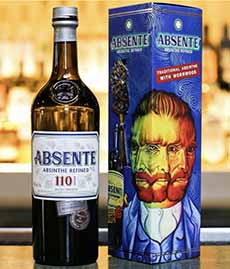
    Absente Absinthe With Vincent Van Gogh's Portrait
    [1] Absente, 110 proof, is the leading brand of absinthe. While we love Van Gogh on the package, we wish he was on the label, too. Read about Absente below (photos #1 and #2 © Crillon Importers).
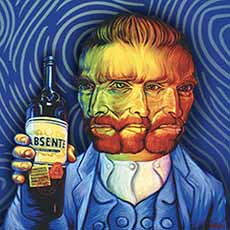
    Van Gogh Portrait On Absente Package
    [2] Van Gogh painted between 35 and 40 self-portraits during his career, but none like this!
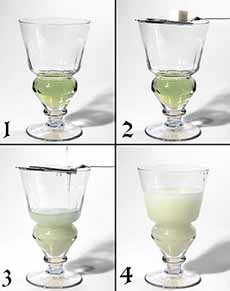
    The Absinthe Ritual
    [3] The absinthe ritual: adding sugar and water. Check out the details > below (photo © Eric Litton | Wikipedia).
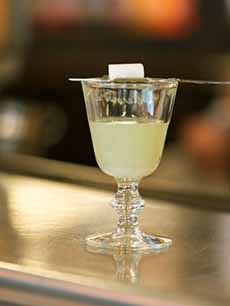
    A glass of absinthe "le louche"
    [4] La louche: After cold water is poured over a sugar, the color and the texture of the drink are changed (photo © Pernod-Ricard).
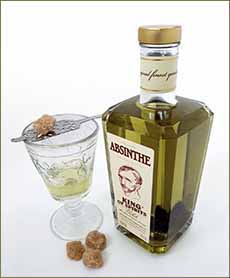
    A bottle of Mansinthe Absinthe
    [5] The one modern absinthe made at the old strengh is King of Spirits Gold Absinthe, which has 100mg of thujone/l. The original absinthes had 100mg or more (photo © Original Absinthe).
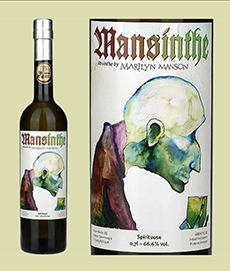
    A Bottle Of Mansinthe Absinthe
    [6] Or perhaps you’d prefer a bottle of Marilyn Manson’s Mansinthe, 138 proof (photo © Mansinthe).
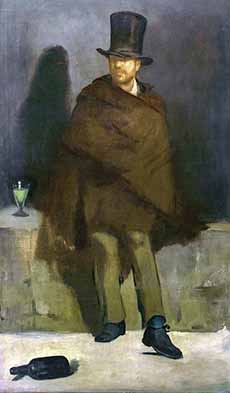
    Edouard Manet Painting The Absinthe Drinker
    [7] “The Absinthe Drinker #6,” painted by Édouard Manet around 1859, is one of the earliest paintings to show absinthe (public domain).
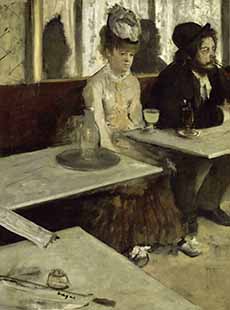
    Edgar Degas 'In The Cafe'
    [8] “Dans un Café” (“In a Café”),” painted by Edgar Degas in 1873 (public domain).
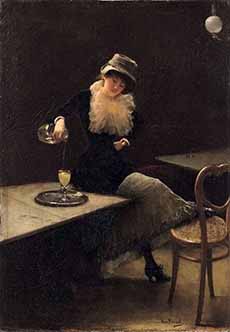
    L'Absinthe, Oil Painting By Jean Beraud,1882
    [9] L’Absinthe, 1882, by Jean Béraud. Béraud painted numerous canvases featuring absinthe (public domain).
    La Muse Verte painting by Albert Maignan
    [10] “La Muse Verte,” absinthe’s Green Fairy, painted by Albert Maignan in 1885 (public domain).
    Van Gogh: Cafe Table with Absinthe (1887)
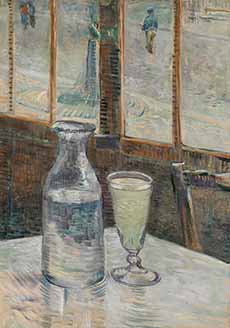
    [11] “Cafe Table with Absinthe,” painted by Vincent Van Gogh in 1887 (public domain).
    Absinthe Painting by Toulouse-Lautrec
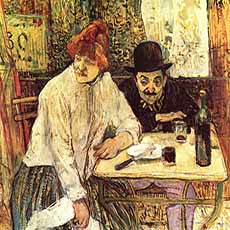
    [12] “At The Café La Mie,” painted by Henri de Toulouse-Lautrec in 1893 (public domain).
    Monsieur Boileau At The Cafe, Toulouse-Lautrec, 1893
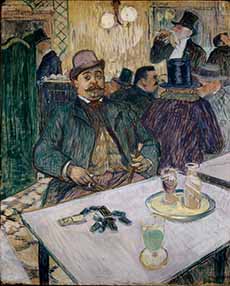
    [13] “Monsieur Boileau At The Café,” painted by Henri de Toulouse-Lautrec in 1893 (public domain).
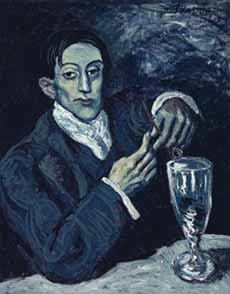
    Picasso, The Absinthe Drinker
    [14] The Absinthe Drinker, a.k.a. Portrait of Angel Fernandez de Soto, 1903, just one of Picasso’s subjects painted with a glass of absinthe (public domain).
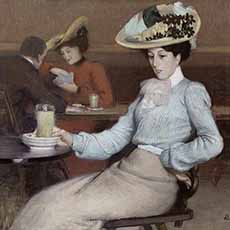
    The Absinthe Drinker by Gustav Poetzsch
    [15] L’élégante au Verre d’Absinthe, An Elegant Woman With A Glass Of Absinthe, a 1905 oil by Gustav Poetzsch (public domain).
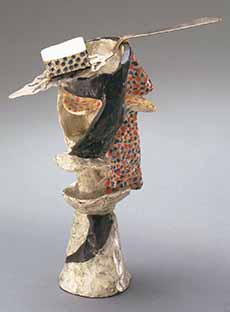
    Picasso Sculpture: Glass Of Absinthe
    [16] Pablo Picasso’s painted bronze sculpture, “Glass Of Absinthe,” 1914 (photo The Museum of Modern Art, © 2015 Estate of Pablo Picasso / Artists Rights Society (ARS).
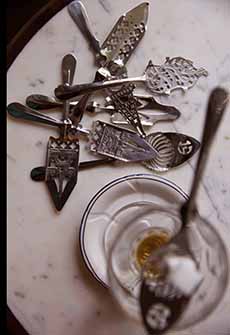
    Absinthe Spoons
    [17] Maison Absinthe carries more than 25 reproductions of 19th-century absinthe spoons (photo © Maison Absinthe).
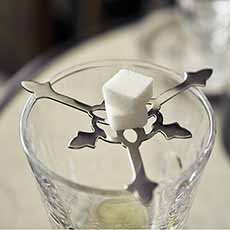
    Absinthe Grille Holding Two Sugar Cubes
    [18] In addition to dripping water over sugar cubes on spoons, decorative grilles were created in designs from classic to delightful—such as thie elephant head (photo © Maison Absinthe).
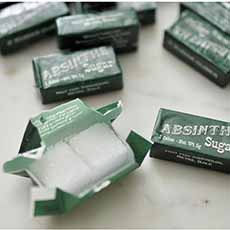
    Absinthe Sugar Cubes, Wrapped In Packs Of 2 Cubes
    [19] Sugar cubes, two to a pack from Maison Absinthe. Some people use three!(public domain).
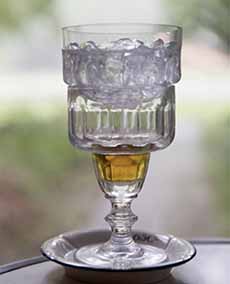
    Absinthe Verse Eau For Dripping Water Through Ice
    [20] This verse eau, or “pour water,” is a device that sits atop a glass of absinthe. It’s filled with ice and sugar. Water is dripped in, ensuring that the drink is as cold as possible.
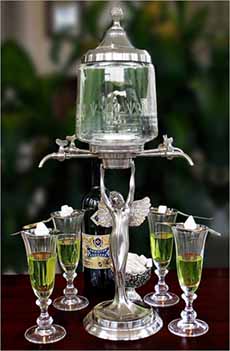
    An Absinthe Fountain, which holds the spirit with spouts for dripping it into glasses.
    [21] In stylish venues, ice water was dripped over the sugar cubes from an elegant absinthe fountain. (photo © Absinthe On The Net).

  • Edouard Manet’s (painter), first major painting was of a rag-picker consuming absinthe, “Le Buveur d’Absinthe” (The Absinthe Drinker—photo #7). He was one of the first painters of absinthe. We have not discovered if he drank it, but his teacher called the painting an “abomination”: “My poor friend, you are the absinthe drinker. It is you who have lost your moral sense” [source].
  • Pablo Picasso occasionally drank absinthe and depicted the liquor in five paintings and six bronze sculptures (see photos #14 and #16.
  • Arthur Rimbaud (poet) combined absinthe with hashish.
  • Edgar Allan Poe (writer), an alcoholic who died young, drank his share of absinthe.
  • Henri de Toulouse-Lautrec (painter) drank lots of absinthe and suffered from alcoholism throughout his adult life (see photos #12 and #13).
  • Paul Verlaine (poet) was addicted to absinthe.
  • Vincent van Gogh (painter) drank large amounts of absinthe, likely causing his instability, psychosis, and ultimate suicide. He may have cut off his ear during over-consumption of absinthe (see photo #11).
  • Émile Zola (novelist) was a notorious absinthe drinker.
  •  
     
    Who Was The Biggest Drinker?

    It can’t be scientifically measured, but we do love this anecdote about Toulouse-Lautrec:

    “Toulouse-Lautrec’s pictures were described by Gustave Moreau as ‘painted entirely in absinthe’; he would stop at every bar in Montmartre in order to étouffer un perroquet (choke a parrot), in the slang of the period; and he had a specially made hollow walking-stick which held an emergency half-litre stash of absinthe and a tiny shot glass.” [source]

    In defense of Oscar Wilde: Please note that the dramatist is often mentioned as one of the great absinthe drinkers. However, there are no direct sources to confirm this. No references to absinthe can be found in any of Wilde’s works or letters.

    Today’s Absinthe Celebrity: The goth rocker Marilyn Manson, known for drinking absinthe, launched his own brand, Mansinthe, in 2007 (photo #6).

    It’s an overproof, made in Switzerland at 133 proof, 66.5% A.B.V. Yes, you can buy it.
     
     
    REJECTED BY POLITE SOCIETY

    In 1859, Édouard Manet submitted his painting, The Absinthe Drinker (photo #7), to the annual Salon de Paris. One of the earliest-known depictions of absinthe in art, it a shocked the art world and was rejected by the Salon. Only one of some 50 members, Eugène Delacrox, voted for its inclusion.

    Why the rejection? The main objections were the topic and size.

  • Absinthe was a drink that was considered by genteel society to be morally degenerate and addictive.
  • The painting, 71.1 inches high by 41.6 inches wide, was a heroic (life-sized) canvas depicting a low-life subject, an alcoholic (paintings of the depraved were unprecedented at the time).
  •  
    But as P.T. Barnum, the 19th century circus owner proposed, “all publicity is good publicity.” Even negative publicity can be beneficial by increasing awareness and sparking conversation. Manet’s rejection generated a lot of press, and thus curiosity about, absinthe.

    Absinthe art continued; some of our favorite examples appear in photos #7 through #16 at the right, plus #22 below.

    In 1914, Pablo Picasso created a bronze sculpture, The Glass of Absinthe, which he then painted [photo #16].
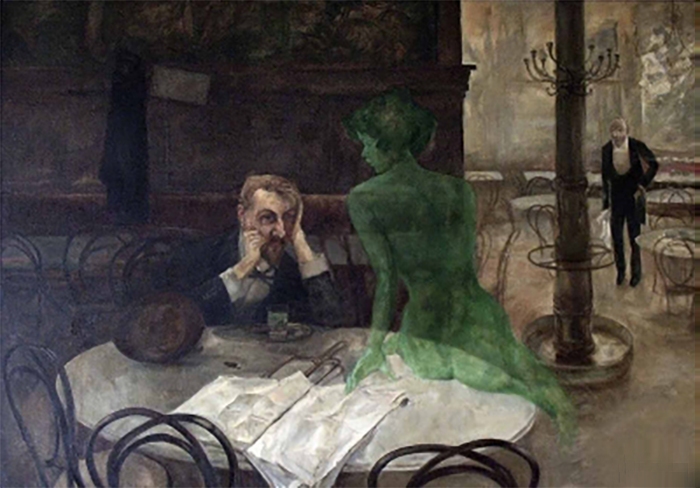
    Viktor Oliva, The Absinthe Drinker (painting)
    [22] In 1901, Czech painter Viktor Oliva created our favorite rendition, illustrating a man hallucinating with The Green Fairy. the phenomenon was known as “The Green Fairy,” a euphemism for the hallucinogenic effects of the absinthe. Among all the Parisian bohemians‡‡‡ who hung out in Parisian cafes around the turn of the century, he was a true “Bohemian,” in that he hailed from the region of Bohemia, now part of the Czech Republic.


    CHECK OUT WHAT’S HAPPENING ON OUR HOME PAGE, THENIBBLE.COM.


    ________________
     
    *This genus of Artemisia is native to North Africa and temperate regions of Eurasia. It comprises hardy herbaceous plants and shrubs, which contain essential oils that include the powerful chemical compounds for which wormwood is known. Other familiar species include include common mugwort (A. vulgaris), big sagebrush (A. tridentata), A. annua (sagewort), and [surprise!] tarragon (A. dracunculus), the herb.

    Sage and sage oil, from a completely different botanical family (Lamiaceae, genus Salvia, species officinalis), contain thujone. To make sage tea, you can use 1 tablespoon (15 grams) of fresh sage leaves in a cup of water. The EU has limited the amount of thujone from sage a food product may contain to 25mg/kg. That would equal 50g sage leaves in 1 kg prepared food [source0.

    Tarragon contains a very small amount of thujone, considered negligible and not a cause for concern in culinary quantities. Other, less common herbs also contain thujone.

    **The term muse comes from the Greek word mousai, which refers to the nine goddesses of the arts and sciences in Greek mythology.

    ***The cloudiness occurs because the components with poor water solubility—especially anise, fennel, and star anise—drop out of solution and cloud the drink. The preparation typically contains 1 part absinthe to 3–5 parts water.

    Note that “louche” (pronounced loosh) has other meanings. The word derives from the Latin luscus, meaning blind in one eye or having poor sight. The first meaning of the French louche, is squinting or cross-eyed. From this evolved the adjective louche, meaning decadent, dubious, fishy, shady, or sinister. For some reason we could not uncover, “la louche” is the word for a ladle.

    ****An overproof spirit contains more than 50% alcohol by volume (A.B.V.), which is higher than the standard 40% A.B.V. for most spirits sold in the U.S. Overproof spirits are also known as barrel strength or cask strength.

    Other edible members of the Asteraceae family (commonly known as the chrysanthemum family) include artichoke, burdock, chicory, chamomile, chrysanthemum, dandelion, endive, ironweed, lettuce, salsify, and sunflower. Chamomile, chrysanthemum, and ironweed are used to brew homeopathic teas.

    ††A patent medicine is a non-prescription medicine that is sold directly to consumers as a cure-all for a variety of ailments. Other examples of patent medicines that became popular drinks and still exist today:
    > Angostura bitters, originally a stomach aid.
    > Coca-Cola, marketed as a patent medicine that cured many diseases, including morphine addiction, indigestion, and nerve disorders.
    > Fletcher’s Castoria, now known as Fletcher’s Laxative.
    > Luden’s Cough Drops: now known as Luden’s Throat Drops.
    > Lydia E. Pinkham’s Vegetable Compound, an herbal medicine used by women to relieve menstrual and menopausal discomfort, now known as Lydia Pinkham Herbal Supplement.
    > Pepsi-Cola, originally sold as a digestive aid. The name comes from the Greek word for digestion.
    > Sanatogen, invented as a “brain tonic” and “nerve revitalizer” for depression, now the brand name for vitamins and supplements.

    The difference between anise and licorice: The two share a similar flavor and aroma, but they are unrelated plants from different botanical families. different plants with distinct origins. Anise, Pimpinella anisum, belongs to the carrot family Apiaceae, while licorice belongs to the pea family, Fabaceae.

    Both anise and licorice have a sweet, slightly spicy, and aromatic flavor often described as licorice-like due to the presence of anethole, a bioactive compound and flavoring agent found in the essential oils of many plants. Both anise and licorice contain it, along with basil, caraway, chervil, fennel, star anise, tarragon, and others. The next time you taste any of these latter herbs and spices, look for the anise/licorice flavor.

    Another key difference between anise and licorice: Anise is the seed of the flowering anise plant, while licorice flavoring is obtained from the root of the licorice plant.

    ‡‡La Belle Époque (The Pretty Era) was a worldwide phenomenon. In Paris took place from 1871 to 1914, from the end of the Franco-Prussian War to the outbreak of World War I. It is regarded as Europe’s Golden Age. Paris saw the construction of the Eiffel Tower, the Paris Metro, and the completion of the Paris Opera. Great artists like Toulouse-Lautrec and Renoir. In less than fifty years, Europe witnessed vast developments on the political, socio-economic, cultural, and technological fronts. This transformative era received its name, La Belle Époque, in retrospect from a person whose name is lost to history. The retrospective looked at the era of peace and prosperity following the horrors of the Franco-Prussian War, innocent of the oncoming of the even more horrible World War I.

    Prominent artists of this post-Impressionist time include Jean Béraud, Émile Bernard, Giovanni Boldini, Pierre Bonnard, Maurice Denis, Paul César Helleu, Paul Gauguin, Henri Matisse, Gustave Moreau, Alphonse Mucha, Odilon Redon, Auguste Rodin, Henri Rousseau, Henri de Toulouse-Lautrec, and Édouard Vuillard.

    Notable writers were Paul Bourget, Colette, Alain-Fournier, Anatole France, André Gide, Joris-Karl Huysmans, Alfred Jarry, Jean Jaurès, Stéphane Mallarmé, Guy de Maupassant, Charles Péguy, Marcel Proust, and Émile Zola. While not French, we must add to this list the German Thomas Mann.

    Poets and playrights: Guillaume Apollinaire, Charles Baudelaire, Georges Feydeau, Arthur Rimbaud, and Paul Verlaine.

    Musicians: Emmerich Kálmán, Franz Lehár, Johann Strauss III, Francesco Paolo Tosti and classical musicians Lili Boulanger, Claude Debussy, Frederick Delius, Gabriel Fauré, César Franck, Edvard Grieg, Jules Massenet, Maurice Ravel, Camille Saint-Saëns, Erik Satie, and Igor Stravinsky.

    Dance: Loie Fuller, Sergei Diaghilev’s Ballets Russes with Vaslav Nijinsky.

    ‡‡‡The Bohemians of Paris were a group of young artists, writers, musicians, actors, and intellectuals who lived in Paris in the 19th century, many in Montmartre, near the Moulin Rouge. The term “Bohemian” was first used in Paris judgmentally, to describe Roma people (p.k.a. gypsies), vilified outsiders from conventional society, who many thought came from Bohemia, a part of the Austro-Hungarian region (now in the Czech Republic).

    This was a misconception. The Roma people did not originate in Bohemia. They are believed to have come from the Indian subcontinent, migrating westward through Europe over time. The artistic types of Montmarte, similarly perceived as outsiders from conventional society, were also given equally judgementally to them. The name became romanticized by the artists.

    ‡‡‡‡Ricard named drink Pastis from a portmanteau of the Provençal “pastisson” and Italian “pasticcio,” both meaning “mixture” [source].


    Comments off

    Blue Diamond Almonds In Frosted Brownie & Snickerdoodle

    A can of Blue Diamond Frosted Brownie Almonds
    [1] Frosted Brownie Almonds are dusted with cocoa powder and brown sugar (all photos except #4 © Blue Diamond).

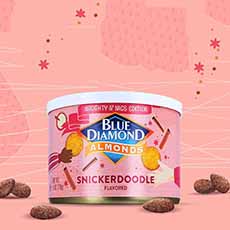
    A can of Blue Diamond Snickerdoodle Almonds
    [2] Snickerdoodle Almonds are dusted with cinnamon and sugar.

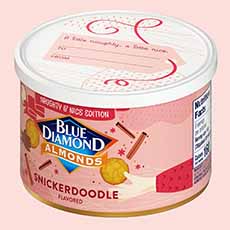
    A can of Blue Diamond Snickerdoodle Almonds
    [3] Just write the name of the recipient on the label.

    A Bowl Of Rice Cracker Snack Mix
    [4] Our favorite way to add saltiness to a sweet snack mix. See the snack mix recipe below (photo by Elvira Kalviste © The Nibble).


    When you’re the world’s leading almond marketer and processor, you have to keep up your game. And this holiday season, Blue Diamond almonds have done it again.

    Blue Diamond has two limited-edition sweet holiday flavors that make great snacks and stocking stuffers.

    Not to mention their year-round flavored almonds that always hit the spot, and are a better-for-you snack (they’re one of “Magnificent Seven” heart-healthy nuts).
     
     
    SWEET HOLIDAY ALMONDS

    Blue Diamond Frosted Brownie Almonds. New this year, is a unique, festive treat that combines the flavors of rich chocolate and creamy frosting with the signature crunch of almonds creating an irresistible holiday snack (see our recipe below).

    Warning: These are impossible to resist. Not just as snacks, but brilliant on ice cream, with a cup of hot chocolate, and as part of a holiday snack mix with

    Blue Diamond Snickerdoodle Almonds, a symphony of cinnamon and sugar, returns for its third holiday season due to consumer demand.

    You can find the 6-ounce cans at major retailers and on Amazon.

    > Check out the savory flavors of Blue Diamond almonds, below.

    > The history of almonds.

    > The history of brownies.

    > The history of snickerdoodles.
     
     
    SNACKING & BEYOND: MORE WAYS TO USE THE HOLIDAY ALMONDS

  • Baking: Add to batter and dough for cookies, cakes, granola bars, muffin, Rice Krispie Treats, and more.
  • Breakfast: Garnish hot or cold cereal, pancakes, waffles, yogurt.
  • Candy: Add into homemade chocolate bark.
  • Dessert: Garnish ice cream, mousse, pudding.
  • Snack: Make a sweet holiday snack mix (recipe below) or trail mix. Check out our holiday snack mix recipe below.
  •  
    We especially like either flavor chopped in half and replaced the nuts in the Toll House cookie recipe.
     
     
    MAKE A HOLIDAY SNACK MIX

    Choose from these ingredients to make your own signature mix. You can make it all sweet, or add salty ingredients.

    Sweet Ingredients

  • Candy: candy cane chips, mini marshmallows, toffee bits
  • Chocolate: Guittard baking chips in your choice of flavors: butterscotch, Choc-Au-Lait (vanilla, a.k.a. white chocolate chips), milk chocolate, mint; mini non-pareils.
  • Cereal: Pumpkin Spice Cheerios, Rice Chex, Cocoa Pebbles, CinnaGraham Toast Crunch
  • Dried Fruit: apple chips, banana chips, chopped apricots and pineapple, crystallized ginger*, dried cranberries, sultanas (golden raisins)
  •  
    Salty Ingredients

  • Candy: sea salt caramels and sea salt chocolate (chopped as desired).
  • Nuts: salted nuts of choice, including Blue Diamond savory flavors (below).
  • Snacks: Asian rice crackers (photo #4), Cheez-Its, Goldfish, mini pretzels, popcorn (especially a savory flavor).
  •  
     
    BLUE DIAMOND SAVORY ALMOND FLAVORS

    You can find most of these flavors year-round, along with regular mixed nuts and low-sodium options:

    Classic Flavors: Blueberry, Chile ‘n Lime, Dark Chocolate Flavored, Honey Butter, Honey Roasted, Ranch, Sea Salt, Smokehouse, Toasted Coconut, plus others.

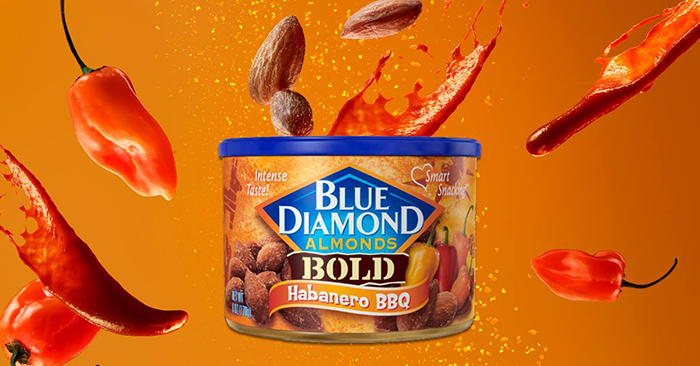
    Bold Flavors: Elote Mexican Street Corn, Habanero BBQ (photo #5, below), Korean BBQ, Salt ’n Vinegar, Spicy Dill Pickle, Sriracha, Sweet Thai Chili.

    Extreme Flavors: Carolina Reaper, Cayenne Pepper, Ghost Pepper.
     
     
    ALMOND NUTRITION
    Remember that while salt and sugar are change the game a bit, almonds have great nutrition.

  • Overall: Almonds are a good source of protein, fiber, and healthy fats, and they contain many vitamins and minerals, including calcium, magnesium, potassium, phosphorus, and vitamins E and B9 (folate.
  • Strong bones: Calcium and phosphorus are good for bone health.
  • Heart health: They’re one of “Magnificent Seven” heart-healthy nuts). The monounsaturated fats can help maintain healthy levels of HDL cholesterol, the “good” cholesterol.
  • They can also help lower LDL cholesterol, the “bad” cholesterol.
  • Blood sugar: Almonds seem to help curb blood sugar spikes after meals (key for people with high blood sugar and diabetes).
  • GI Tract: Recent research suggests that almonds may help protect the health and immunity of the gastrointestinal tract.
  •  
    The USDA Dietary Guidelines for Americans recommend eating one ounce of almonds (or other heart-healthy nuts) daily, about 23 almonds.


    CHECK OUT WHAT’S HAPPENING ON OUR HOME PAGE, THENIBBLE.COM.


    A tin of Habanero BBQ Almonds
    [5] How hot can they get? Check out Blue Diamond almonds in Carolina Reaper, Cayenne Pepper, and Ghost Pepper.
     
    ________________
     
    *Crystallized ginger is not a fruit, but made is from ginger root, an herb. The root is cooked in sweet syrup and rolled in sugar. It can be considered candy because crystallized means the same as candied.


    Comments off

    Cheeky Cocktails Espresso Syrup, in Regular & Decaf

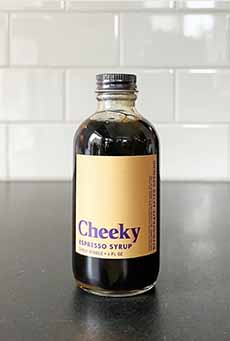
    We love this gift for people who drink decaf coffee: Cheeky Decaf Espresso Syrup. It delivers the rich, bold flavors of espresso without the caffeine kick*.

    Want the buzz? There’s also a regular, caffeinated, version.

    Espresso syrup is an easy way to make anything from:

  • Beverages, e.g. coffee milk, hot mocha.
  • Cocktails: e.g. Black Russian, Dark & Stormy, Espresso Martini.
  • Desserts
  • See all the uses below.
  •  
    Cheeky syrup—any flavor—is a premium product. Yes, there are other coffee syrups on the market, but Cheeky is all natural—there are zero artificial flavors, colors, or preservatives, and no corn syrup.

  • It’s made with cane sugar, plus decaf coffee* (processed using the Mountain Water Method), water, and gum arabic†.
  • Other coffee syrup brands are made with caramel color, coffee extract, corn syrup, high fructose corn syrup, and potassium sorbate (a synthetically produced chemical additive).
  •  
    Below:

    > Espresso Martini recipe.

    > More uses for espresso syrup.

    > Why there are coffee beans in an Espresso Martini and sambucca.

    > The history of the espresso bean as a cocktail garnish.


    USES FOR ESPRESSO SYRUP

    Espresso and coffee syrups* can be used in many ways, including:

  • Baked goods: Use espresso syrup as a substitute for sugar or to add coffee flavor to desserts like cakes and cookies.
  • Beverages: Add more coffee flavor to hot or iced coffee drinks like cappuccino, latte, and iced coffee.
  • Cocktails and mocktails: Add espresso flavor to cocktails and mocktails. Check out these recipes for coffee cocktails and coffee mocktails.
  • Coffee ice cubes: Mix some syrup with water and freeze in an ice cube tray. The melting cubes won’t dilute the flavor of an espresso or coffee drink.
  • Dessert toppings: Mix coffee syrup in heavy cream for whipped cream, or with mascarpone to make a luscious dessert toppings that tastes like tiramisu.
  • Hot Chocolate : Add some syrup to hot chocolate to make “hot mocha.”
  • Ice cream: Drizzle coffee syrup over ice cream. Add chocolate-covered espresso beans and whipped cream for a sundae.
  • Maple syrup substitute: Use espresso syrup on pancakes and waffles instead of maple syrup. Or combine both syrups for a coffee-maple sensation.
  • Poached fruit or compote: Replace some of the sugar with an equal amount of syrup (recipe) or similarly use it to glaze fruits.
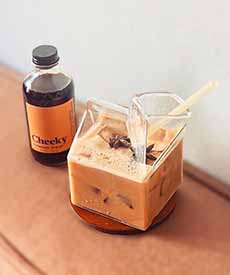
  • Rhode Island Coffee Milk: Add the syrup to milk, similar to chocolate milk. Coffee milk is Rhode Island’s official state drink. It can be served hot or cold.**
  • Yogurt: Add coffee syrup to plain yogurt or mix a bit (because the syrup is already sweet) into other yogurt flavors (banana, chocolate, coffee, vanilla).
  •  
     
    GET YOUR CHEEKY ESPRESSO SYRUP

    Both decaf and regular are available in three sizes:

  • 2-ounce bottle: makes 2 cocktails
  • 4-ounce bottle: makes 8+ cocktails
  • 16-ounce bottle: makes 32+ cocktails
  •  
    Head to CheekyCocktails.co for decaf, regular, and numerous other premium syrups and cocktail juices.
     
     
    RECIPE: SLEEPY GIRL DECAF ESPRESSO MARTINI

    The classic Espresso Martini is made with vodka and coffee liqueur, such as Kahlùa or Patron XO Café.

    Why not espresso liqueur? There are very few of them with good retail distribution. You have to hunt down smaller brands online. See the footnote ‡‡.

    However, coffee liqueurs contain caffeine. Cheeky Decaf Espresso Syrup is a solution for the caffeine-averse.

    To make a batch of four cocktails, see the footnote‡ below.
     
    Ingredients Per Drink

  • 1 ounce Cheeky Decaf Espresso Syrup
  • 2 ounce Grey Goose Vodka (or substitute)
  • Garnish: coffee beans for garnish
  • Ice cubes
  •  
    Preparation

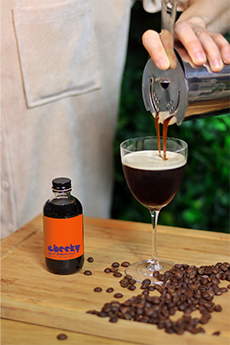
    1. ADD the ice, espresso syrup, and vodka to a cocktail shaker and shake vigorously.

    2. STRAIN into a Martini or Coupe glass.

    3. GARNISH with 3 coffee beans for good luck.
     
    Why good luck? Why do three coffee beans garnish an Espresso Martini?

  • Each bean represents a specific blessing: health, wealth, and happiness.
  • The number three itself is often considered a lucky number signifying balance and completeness across various cultures.
  • The practice originated in Italian folklore, where the three beans in a glass of Sambuca coffee liqueur were said to be a toast to good fortune.
  • As the Espresso Martini became popular, bartenders adopted the tradition of placing three coffee beans on top, continuing the symbolic gesture of wishing good luck to the drinker.
  •  
     
    THE HISTORY OF THE ESPRESSO BEAN AS COCKTAIL GARNISH

    The tradition of garnishing Espresso Martinis with coffee beans can be traced back to Italy, the birthplace of espresso and a culture steeped in coffee heritage.

    It began in the 1950s when sambuca, an anise liqueur, became a fashionable after-dinner drink, typically served with after-dinner coffee.

    A garnish of three coffee beans was added to the glass of sambuca, a practice called “con la mosca” meaning “with the fly,” the coffee beans said to resemble flies in the drink. (Not the most appetizing of references!)

    The espresso martini was invented in the late 1980s. It was originally called the Vodka Espresso and then the Pharmaceutical Stimulant, because it the espresso component was energizing.
     
    When the Espresso Martini became trendy, bartenders ported over the coffee bean garnish.

    You can eat the beans if you like—it’s a personal preference. We enjoy crunching on them.

    If you’d like to use chocolate-covered coffee beans, so much the better! If you need to make your own with decaffeinated espresso beans, here’s a recipe.

    > The history of the Espresso Martini.

    > The history of the Martini.

    > The history of espresso.

    > The different types of espresso: a photo glossary.


    A Bottle Of Cheeky Cocktails Espresso Syrup
    [1] The decaf version is a real find. The espresso syrup is also made in regular, caffeinated (photo © Audrey Claire Cook).

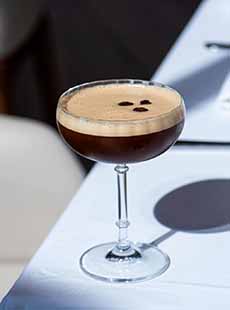
    Espresso Martini
    [2] An Espresso Martini in a coupe glass. You can use a Martini glass, of course (photo #4) (photo © Gabi Porter | Kástra Elión Vodka).

    A glass of coffee milk
    [3] Make Rhode Island Coffee Milk, Rhode Island’s official state drink. If you want a set of these fun milk carton glasses, head here (photos #3 and #4 © Cheeky Cocktails).

    An Espresso Martini
    [4] The Sleepy Girl Espresso Martini: no caffeine here! Shown with a 2-ounce bottle of Cheeky Decaf Espresso Syrup, which makes two cocktails—and is a fun party favor or stocking stuffer (photo © Cheeky Cocktails).

    Chocolate Covered Coffee Beans
    [5] Typically, one chocolate-covered coffee bean has about 12mg of caffeine, from both the bean and the chocolate. But you can buy decaf beans and make your own with this recipe (photo © All Recipes).

    Espresso Martini In A Coupe Glass
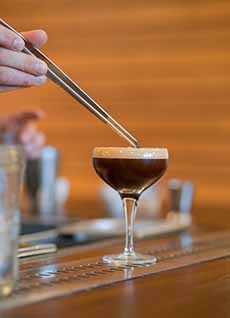
    [6] The secret to getting the coffee beans perfectly aligned: tweezers (photo © Tim Durand | Pexels).

    Espresso Martini Garnished With Espresso Beans
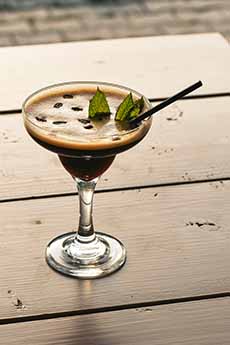
    [6] Too many flies in the ointment—er, moscas in the Martini. Does that mean they cancel out the good luck (photo © Marilena Baltzaki | Pexels)?


    ABOUT CHEEKY COCKTAILS

    Cheeky’s founder, April Wachtel, was teaching cocktail classes at the Astor Center in New York City and working as a brand ambassador for Bacardi. She realized her students wanted to make bar-quality craft cocktails at home but couldn’t access some of the essential ingredients.

    Craft cocktail bartenders made all their ingredients from scratch, and no brand sold shelf-stable versions made with real bar recipes. citrus juices (not from concentrate and without preservatives) and standard bar syrups like simple syrup and ginger syrup.

    As craft cocktail programs began trending in the 1980s—started by Dale Degroff at the Rainbow Room in New York City—the “everything from scratch” model could not keep up. Mixology programs struggled with consistency, labor, cost, and speed of service.

    April launched a solution for consumers and professional bartenders in 2015. It evolved into Cheeky, which launched in 2020 (the first wave of COVID).

    The line is currently served in bars at four-star hotels, stadiums, and resorts. It ships nationally within the U.S. and Canada, and to Australia, France, Germany, and the U.K.

    You can find it in boutiques, gourmet grocers, and liquor stores in 44 states.

    Check out the Cheeky Cocktails website for all their cocktail syrups, including a nine-flavor sampler.

    ________________

    *The caffeine in decaf: Note that any decaffeinated coffee always contains trace amounts of caffeine. Cheeky Decaf Espresso Syrup contains roughly 10mg of caffeine per ounce. By comparison, their regular Espresso Syrup has 40mg per ounce. A standard cup of coffee contains roughly 70-200mg of caffeine per cup. People who cannot consume even a tiny amount of caffeine for medical reasons should not drink this or any other decaf product. Cheeky uses Nicaraguan coffee beans by roasted Café Integral, a small batch specialty coffee roaster nearby in Brooklyn, New York.

    The main difference between coffee syrup and espresso syrup is that espresso syrup contains more caffeine. It can contain up to 40 mg of caffeine per ounce, while coffee syrup typically contains around 10 mg per tablespoon.

    Cheeky Cocktail’s regular espresso syrup has about 40mg of caffeine per ounce. The decaf option has about 10mg of caffeine per ounce.

    The caffeine in coffee liqueur may vary depending on the brand, but most contain minimal amounts of caffeine, usually around 10 mg per 100 ml.

    The caffeine in chocolate-covered coffee beans is typically, one chocolate covered coffee bean has about 12mg of caffeine source].

    **Rhode Island Coffee Milk recipe: Start with two tablespoons of syrup in 8 ounces of milk. You can make it sweeter as you prefer. The drink became a staple in Rhode Island in the early 20th century. In 1993 it became the official state drink of Rhode Island [source]. While it isn’t part of the recipe, we like a garnish of whipped cream and shaved chocolate, or a scoop of vanilla ice cream.
     
    Gum arabic is a natural product, widely used in food and beverages as a stabilizer, emulsifier, and thickener. It also acts as a flavor fixative. It’s also known as acacia gum or Senegal gum, and there are references to al-samgh al-‘arabi in the Middle East as early as the 9th century C.E.

    The sap is harvested commercially in Africa from different species of wild Acacia trees. It is harvested from Senegal to Somalia, but Sudan contributes bout 70% of the global supply.

    ††High fructose corn syrup (HFCS) is a processed sweetener made from corn starch that is linked to obesity, fatty liver disease and Type 2 diabetes.can be bad for your health in many ways. Most prominent is an increased risk of developing type 2 diabetes. This is because your body has to produce too much insulin to respond to the sugar in the syrup.

    To make a batch of Espresso Martinis: Mix 4 ounces of espresso syrup & 8 ounces of vodka. Shake over ice and strain into 4 Martini or Coupe glasses with the coffee bean garnish.

    ‡‡Espresso, not coffee, liqueurs: Only two of these are brands we’d heard of. Some of the brands include Atomic Black Espresso Liqueur, Borghetti Caffe Espresso Liqueur, Fratelli Vincenzi Italian Espresso Liqueur, Galliano Espresso Liqueur, Grind Espresso Shot Liqueur, Independent Spirits Espresso Liqueur, J.F. Haden’s Espresso Liqueur, Luxardo Espresso Liqueur, St. Elder Natural Espresso Coffee Liqueur and Simplicity Spirits Espresso Liqueur.


    CHECK OUT WHAT’S HAPPENING ON OUR HOME PAGE, THENIBBLE.COM.


    Comments off

    Instant Delicious Entertaining With Columbus Charcuterie

    Italian Charcuterie Board
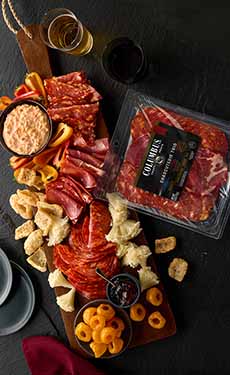
    [1] Tour Of Italy Tasting Board: Everything comes in one package, ready to serve.

    Charcuterie Board
    [2] Rustic Charcuterie Trio (in the package) with additional purchased items: cheese, crackers, mini crackers, mini bell peppers and dip, preserves, yellow peppadews. The board uses two packages (all photos © Columbus Craft Meats).

    2 Bags Of Gourmet Nuts From Columbus Craft Meats
    [3] Two of the four flavors of gourmet nuts.

    Charcuterie {;atter
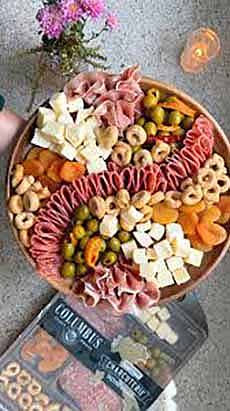
    [4] Marissa Mullen, creator of the Cheese By Numbers Method and author of That Cheese Plate Will Change Your Life: Creative Gatherings and Self-Care with the Cheese By Numbers Method and That Cheese Plate Wants to Party, used two Charcuterie Tasting Board packages to create this beauty.

    Pink & Red Charcuterie Board
    [5] For Valentine’s Day: think pink (and red).


    Columbus Craft Meats is a producer of fine charcuterie and deli meats that offers a variety of products for charcuterie* boards.

    For the holidays or entertaining at any time of the year, there’s a lot of tasty fare to make entertaining easier.

    The company, which was founded in 1917 in San Francisco†, is one of our favorites, using only premium cuts of meat that are deftly seasoned.

    Although the products are carried by large retailers, the quality can compete with artisanal cured meats.

    > Check out the wine pairings below.

    > The history of charcuterie, also below, along with the history of refrigeration.

    Why the history of refrigeration? Because charcuterie was a way of preserving meats before the advent of the home ice box.
     
     
    COLUMBUS CRAFT MEATS READY-TO-SERVE TASTING BOARDS

    While you can buy individual packages of charcuterie and design your own board (see the next section), busy people can simply buy a curated package tasting board package, and present a gourmet experience effortlessly.

    It’s as easy as peeling off the top of the package and placing the compartmentalized package atop a board, platter, or plate (photo #1).

    And, you can have a package for lunch, at home or on the go.

    There are two Columbus Tasting Boards and we love them both. We often have one for lunch, and two more modest eaters can split one.

  • Charcuterie Tasting Board combines Italian dry salame (the singular form in Italian; the plural is salami), Calabrese salame, white Cheddar cheese, Castelvetrano olives, La Panzanella multigrain crackers, and dark chocolate covered cranberries.
  • Tour Of Italy Tasting Board has prosciutto, Calabrese salame, Asiago cheese, olives flavored with orange peel, taralli crackers, and dried apricots.
  •  
     
    COLUMBUS CRAFT MEATS CHARCUTERIE TRIOS: 3 DIFFERENT MEATS

    If you don’t want the whole shebang of a Tasting Board, you can opt for one or both Columbus Charcuterie Trios—each with three different types of meat—and supply your own accoutrements (photo #2).

    We admit to buying a lot of both Trio assortments, and not necessarily for guests (more about that in a moment).

  • Rustic Charcuterie Trio combines sopressata salame, prosciutto, and uncured coppa (photo #2).
  • Bold Charcuterie Trio spices things up with more robust options: hot sopressata, uncured hot coppa, and uncured chorizo (photos #1 and #4).
  •  
    We often turn a Trio package into a gourmet hoagie on a crusty roll, adding cheese (fontina, ricotta salata, or Taleggio), roasted red peppers or tomato, shredded lettuce, giardiniera‡‡ (pickled vegetables) or peppadews, and Dijon mustard or our own homemade version of mostarda‡.
     
     
    COLUMBUS CRAFT MEATS CRAFT NUTS

    In addition to serving these special flavored nuts to guests, they make great stocking stuffers and inclusions to foodie gift bags throughout the year (photo #3).

    Crafted to complementing the charcuterie, these crunchy gourmet nuts adds a sophisticated touch to any charcuterie board (or for plain snacking or serving with cocktails). They include:

  • Caramelized Pecans: brown butter caramel adds a lightly sweet, toasty, buttery flavor.
  • Hot Honey Mezcal Cashews: sweet and spicy cashews with a smoky, earthy undertone from actual mezcal.
  • Mocha Cashews: hints of coffee and chocolate, deliver a sweet and slightly roasted flavor.
  • Parmesan Rosemary Marcona Almonds: buttery almonds coated in aged Parmesan cheese and fragrant rosemary. Our personal favorite: rich, cheesy, herbaceous.
  •  
    Beyond snacks, we use the nuts as garnishes: on salads instead of croutons, on grains, on roasted vegetables and stews, on hummus and other dips and spreads.

    The first three flavors also work as dessert garnishes, on everything from ice cream to cheesecake to fruit salad. Chop them if you like (particularly to garnish mousse and pudding).

    Not to mention breakfast: garnish hot or cold cereal, pancakes and waffles, yogurt and cottage cheese.
     
     
    GET YOUR COLUMBUS CRAFT MEATS

    Columbus Craft Meats products are available at supermarkets nationwide, including Albertsons, Costco, Cost Plus, HyVee, Kroger, Safeway, Target, Trader Joe’s, and others.

    Here’s a store locator.

    You can also find online purveyors.
     
     
    WINE PAIRINGS FOR CHARCUTERIE

    Many wines from different countries pair well with charcuterie. Offer your guests a selection.

    White Wines

  • Dry, light-bodied wines: Pinot Grigio/Pinot Gris, Rosé, Sauvignon Blanc.
  • Dry, fruity whites: Semillon, Viogner.
  • Medium- to full-bodied white wines aged in oak**: Chardonnay, Chenin Blanc, Viognier, White Bordeaux (made from Sauvignon Blanc, Semillon, or a combination).
  • Sparkling wines: Such as Champagne, Prosecco, and Cava and other sparkers.
  • Sweet wines: Late Harvest Riesling, Port, Sauternes.
  •  
    Red Wines

  • Light to medium-bodied fruity red wines: Grenache, Pinot Noir.
  • Medium to full-bodied red wines: Cabernet Franc, Cabernet Sauvignon (both found in Bordeaux Blends), Grenache (in Rhone wines Châteauneuf-du-Pape and Cotes du Rhone), Merlot, Tempranillo (Rioja).
  • Sweet wines: Brachetto d’Acqui, Lambrusco, Port.
  •  
     
    THE HISTORY OF CHARCUTERIE

    The history of charcuterie begins in ancient times, when people cured meats with salt and spices or by smoking, to extend their shelf life.

    In the millennia before refrigeration, this was essential and practiced by cultures around the world. But it was in medieval France that charcuterie became a specialized craft. A guild of charcutiers (pork butchers) was established in the 15th century.

    The word “charcuterie” comes from the French words “chair” (flesh) and “cuit” (cooked).

    These charcutiers improved upon existing methods for curing, fermenting, and smoking. They developed strict regulations for meat preparation, and created new techniques to make pâtés, sausages, and terrines.

    A guild for charcutiers was was formally established in France in 1475. Guilds were an early form of professional association, with different guilds established for different trades. (The charcutiers guild was separate from the butchers guild††.)

    There were craft guilds and merchant guilds. Guilds protected the interests of the craftsmen and merchants, and ensured fair competition.

  • Craft guilds consisted of artisans and craftsmen-architects, bakers, blacksmiths, butchers, dyers, goldsmiths, leatherworkers, masons, metalsmiths, painters, soapmakers, and weavers, for example.
  • Craft guilds served to regulate the quality of the craftsmen’s work.
  • Merchant guilds represented the traders and merchants in the field.
  •  
    From France, charcuterie techniques spread across Europe, with each region developing unique curing and preparation styles.

     
    By the 18th century, charcuterie had become a well-established culinary art.

    Classic charcuterie focused on the preservation of meats before the advent of refrigeration. Charcutiers created ballotines, confits, cured meats, galantines, pâtés, rillettes, sausages, and terrines. They were enjoyed simply, often with just bread and mustard; although a more elaborate spread of cheeses and other preserved foods, such as pickled fruits and vegetables, could also be served.

    Modern charcuterie is often designed for entertaining, focusing on aesthetic appeal and diverse flavors. Aesthetic and artistic presentations on boards or platters include not just the meats, but artisanal cheeses, breads and crackers, fruits, nuts, vegetables and dips, pickled vegetables, and even sweets like preserves, honeycomb, mini cookies, nougat, chocolates, and fudge.
     
     
    THE HISTORY OF REFRIGERATION

    In the millennia before mechanical refrigeration was available, in areas that had cold winters with ice, wealthy people would have ice harvested from lakes and rivers, and store it in ice houses, dug underground or in caves and lined with straw and sawdust for insulation. Packed snow and ice could be preserved for month

    In warmer climates, like Ancient Rome, the wealthy had snow and ice brought from the mountaintops. It was shipped to even warmer climates, like Persia, by barge, packed in straw and sawdust. (The oldest known ice house, a fancy structure built by a king in Persia, dates from about 1700 B.C.E.)

    In some hot countries like Egypt and Egypt, scientists figured out the process of evaporative cooling. Water placed in shallow trays during cool tropical nights will evaporate rapidly and can cause ice to form in the trays, even if the ambient air does not fall to freezing temperatures.

    The first known artificial refrigeration was demonstrated by William Cullen at the University of Glasgow in 1748. Cullen boiled ethyl ether into a vacuum (see more in the footnote*** below). But like many scientists, he was not a businessman; he was just “in it for the science,” and did not pursue commercial development.

    His experiment demonstrated how rapid evaporation of a liquid under reduced pressure could produce cooling, laying the foundation for modern refrigeration techniques. His work significantly influenced future innovations in the field.
     
     
    The Beginnings Of The Refrigeration

    In 1805 an American inventor, Oliver Evans, designed the first refrigeration machine that used water vapor instead of liquid water. Evans never constructed his machine, but one using a similar concept was built by an American physician, John Gorrie, in 1844 [source].

    In the interim, the first vapor-compression refrigeration system was invented by Jacob Perkins, an American inventor, mechanical engineer and physicist, in 1834, using ether in a closed cycle to create cooling effect. (It was actually an ice machine that created ice using ether as a coolant.)

    The fundamental methods of mechanical refrigeration were only discovered in the middle of the 19th century.

    In 1850 James Harrison developed mechanical refrigeration for industrial use. It was first used to create refrigerated ships to transport meat internationally.

    Breweries and meatpacking industries adopted early refrigeration technologies and refrigerated railroad cards were created.
     
     
    Early Refrigeration For Business & Home

    The first ice box was created in 1802 by Thomas Moore, a Maryland farmer and inventor. He insulated a wood box with rabbit fur and packed it with ice to keep dairy products cold during transportation to market.

    This innovation significantly improved food preservation. By the 1830s, commercial ice boxes had become more common, made of wood, with a tin or zinc lining replacing the rabbit fur.

    It used large blocks of ice harvested from frozen lakes and rivers, with blocks stored for warmer weather. As the blocks melted in the ice box, they required regular ice replacement by ice merchants.

    Widespread wooden ice boxes for home use became common in the 1840s, lined with zinc or tin and insulated with materials like sawdust or cork to keep the ice blocks cool. It would be another 80 years before the debut of the electric refrigerator.

    Ice boxes became affordable for most middle-class American households beginning around 1880, thanks to:

  • Reduced manufacturing costs due to industrialization and mass production techniques.
  • The growth of urban ice delivery networks along with declining ice prices due to improved production and transportation.
  •  
    By the 1900s, a typical ice box cost from $5-$15—approximately $150-$450 in today’s dollars—making them affordable to many middle-class and working-class families.

    Ice boxes were widespread in American homes until electric refrigerators were introduced and the prices came down.
     
     
    The First Electric Refrigerators

    The first electric refrigerator for home use, called the Domelre (for Domestic Electric Refrigerator), was introduced in 1913, invented by an American Engineer, Frederick William Wolf Jr. of Fort Wayne, Indiana. His mode consisted of a unit that was mounted on top of an ice box [source].

    It was followed by more advanced models like the Frigidaire in 1918, the first self-contained refrigerator (i.e., a unit that contains all of its components, such as the evaporator and condenser, within the unit itself).

    In 1914, Nathaniel B. Wales, an engineer from Detroit, introduced the idea for a practical electric refrigeration unit which later became the basis for the Kelvinator. By 1923, Kelvinator had 80% of the market for electric refrigerators****.

    A self-contained refrigerator, with a compressor on the bottom of the cabinet, was invented in 1916 by Alfred Mellowes. His company was purchased in 1918 by William C. Durant, founder of General Motors who began mass producing refrigerators under his new division, Frigidaire (from which comes the nickname, “fridge.”

    In 1927, General Electric mass-produced the Monitor-Top‡‡‡ refrigerator.

    These early models were expensive, affordable only by more affluent consumers. They cost around $300-$400, equivalent to $4,500-$6,000 in today’s dollars.

    But prices ultimately came down, and by the mid-1940s, refrigerators were a standard appliance in most American households.

    It should be noted that the first refrigerants used were ammonia and sulfur dioxide—which were toxic and occasionally leaked out.

    In 1928 they were replaced by a safer refrigerant, Freon, developed by Charles Kettering and Thomas Midgley Jr. of General Motors.

    Freon is a colorless, odorless, non-flammable gas that turns into a liquid when cooled or compressed.

    It became the standard refrigerant for home refrigerators until the 1970s, when environmental concerns about chlorofluorocarbons (CFCs were found to have created a hole in the ozone layer) led to a switch to hydrochlorofluorocarbons (HCFCs) and then to hydrofluorocarbons (HFCs), before switching to the more environmentally friendly refrigerants isobutane and propane in 2020.
     
     
    The Modern Refrigerator

    Environmentally friendly refrigerators began to appear in the late 1990s, driven by growing environmental awareness and regulations.

    While the first smart refrigerator was introduced by LG in 2000, featuring a digital LCD screen and basic internet connectivity, truly advanced models emerged around 2011-2014, with Samsung and LG leading the innovation.

    These models included features like internal cameras, Wi-Fi connectivity, touchscreens, and the ability to track food inventory and expiration dates.

    And yes, there’s an app for that. Mobile phones can be use to check food inventory, set expiration date reminders, display recipes, create shopping lists, adjust temperature settings, and receive maintenance alerts.

    What’s next? Emerging refrigerator technologies are likely to focus on AI-powered food management, predictive grocery ordering, personalized nutrition recommendations, solar-powered cooling systems, and much more [source: Claude.ai, December 5, 2024].
     
     
    ________________
     
    *Charcuterie is a French term that refers to the art of preparing and presenting cured and cooked meats. The techniques and spices used to cure and age the meats originated in 15th century as a way to preserve meat before refrigeration, and created numerous varieties.

    Charcuterie plates/boards often include an assortment of ham/prosciutto, sausage, salami (English/French; salumi is Italian), and other cured meats, served with cheese, fruits (especially grapes, small apples like Lady and Rockit, and dried fruits like apricots and figs), bread/crackers/breadsticks/toasts, and other accompaniments (e.g. gherkins and other pickled vegetables, nuts, sweet spreads (honey, pepper jelly, preserves), even sweets like chocolate- or cocoa-covered nuts, chocolate-covered pretzels, nougat/torrone, and toffee.

    **Not all wines are aged in oak barrels. Some are aged in steel, which has a leaner flavor profile. Check with your wine store clerk.

    ***Here’s how Cullen performed his groundbreaking experiment:
    > He used a vacuum pump to lower the pressure over a container of ether, a highly volatile liquid.
    > When the pressure was reduced, the ether began to evaporate rapidly. Evaporation requires energy, which the ether absorbed in the form of heat from its surroundings, causing the temperature in the container to drop.
    > Cullen placed water near the ether. The heat absorption during evaporation cooled the surrounding water enough to freeze it, showcasing refrigeration by artificial means (i.e., no need for freezing cold weather).

    ***Kelvinator, a division of American Motors, introduced the first auto-defrost models along with shelves on the inside of their doors and special compartments for frozen juice containers in the freezer. It also pioneered the side-by-side refrigerator freezer in the mid-1950s. In the 1960s, Kelvinator introduced models with “picture frame doors,” allowing owners to decorate their refrigerators to match the décor of their kitchens [source].

    Columbus Craft Meats was purchased 100 years later (in 2017) by Hormel Foods.

    ††Charcutiers and butchers: the difference. Butchers focus on slaughtering animals and selling raw meat. Charcutiers specialize in processing and preserving raw meat, using curing, smoking, or other techniques to extend the shelf life.

    There are numerous varieties of mostarda. We prefer to make our own, because we want more tangy mustard and less sweet syrup. For our quickie version, we mix blanched dried fruits (cherries, cranberries, raisins, sultanas) into honey mustard, and spread it on the bread. Here’s a more traditional mostarda recipe.

    ‡‡Giardiniera is a pickled vegetable relish typically made with a mix of carrots, cauliflower, celery, and peppers, sometimes with olives, marinated in vinegar and oil. Here’s more about it.

    ‡‡‡The refrigerator was called Monitor-Top because the compressor was mounted on top of the cabinet, making it resemble the shape of the Civil War-era ironclad warship, the USS Monitor.


    CHECK OUT WHAT’S HAPPENING ON OUR HOME PAGE, THENIBBLE.COM.


    Comments off

    The Nibble Webzine Of Food Adventures
    RSS
    Follow by Email


    © Copyright 2005-2025 Lifestyle Direct, Inc. All rights reserved. All images are copyrighted to their respective owners.