THE NIBBLE BLOG: Products, Recipes & Trends In Specialty Foods


Also visit our main website, TheNibble.com.

BLT Eggs Benedict Recipe With Bacon, Lettuce & Tomato


[1] Combine Eggs Benedict with a BLT, and add some avocado (both photos © First Watch).

First Watch Cookbook

[2] The First Watch Cookbook. Get it here.

Arugula
[3] Arugula substitutes for the conventional iceberg or romaine lettuce (photo © Park Seed).


The classic breakfast favorite, Eggs Benedict, consists of an English muffin topped with Canadian bacon, a poached egg and hollandaise sauce.

It’s often garnished with chopped chives.

April 16th is National Eggs Benedict Day, June 3rd is National Egg Day, and April is National BLT Month.

What could be more appropriate than an Eggs Benedict BLT?

The idea is from the First Watch cookbook: Yeah, It’s Fresh, the debut cookbook from First Watch, a breakfast, brunch and lunch restaurant with 200 locations in 26 states.

> See more Eggs Benedict recipes below.

> The history of Eggs Benedict.
 
> The history of the BLT.
 
> More BLT recipes.
 
 
RECIPE: BLT EGG BENEDICT

Ingredients For 1 Serving

For The Hollandaise Sauce

  • 4 egg yolks
  • 1 tablespoon fresh lemon juice
  • 1/2 cup unsalted butter, melted
  • 1/2 teaspoon hot sauce or less to taste
  • 1/4 teaspoon salt
  •  
    For The Benedict

  • 1/2 slice ciabatta (about 6″ x 3″)—substitute Italian bread or French bread
  • 2 slices crispy bacon
  • 2 slices fresh tomato, beefsteak or large heirloom
  • 2 poached eggs
  • 1/4 cup hollandaise sauce
  • 1/2 cup arugula
  • 1 tablespoon lemon white balsamic vinaigrette (recipe below)
  • 2 avocado slices
  • Garnishes: freshly chopped chives and parsley
  •  
    For The Lemon White Balsamic Vinaigrette

  • 2 tablespoons extra virgin olive oil
  • 1 teaspoon white balsamic vinegar
  • 2 tablespoons lemon juice
  • Optional: 1/2 teaspoon Dijon mustard
  • Salt and pepper to taste
  •  
    This vinaigrette can be used on salad, or anywhere a vinaigrette is called for.

    > What is white balsamic vinegar?

     
    Preparation

    1. MAKE the hollandaise sauce. Whisk the egg yolks and lemon juice together vigorously in a small stainless-steel bowl, and place over a pan of simmering water (180°F to 200°F).

    2. CONTINUE to whisk, making sure the eggs do not get too hot (or they will begin to cook). Slowly add the melted butter, whisking vigorously the entire time, until the sauce doubles in volume.

    3. REMOVE from the heat; add the hot sauce and salt. Keep warm until ready to serve.

    4. TOAST the ciabatta until it is brown. Top with the bacon and tomato. Place the eggs on top of the tomato, then top with hollandaise sauce.

    5. COMBINE the arugula and dressing in a small bowl. Don’t do this in advance because the arugula will wilt.

    6. TOP the Eggs Benedict with the dressed arugula, avocado and fresh herbs, and serve.
     

    MORE EGGS BENEDICT RECIPES

    Here are updated versions of the Eggs Benedict recipe; but don’t forget Classic Eggs Benedict.

  • Comfort Food Mash-Up: Grilled Cheese Eggs Benedict.
  • Custom Eggs Benedict: Mix & Match Your Favorite Ingredients
  • Bread-Free Eggs Benedict #1: Portobello Eggs Benedict.
  • Bread-Free Eggs Benedict #2: Corned Beef Hash Eggs Benedict
  • For Beef Lovers: Filet Mignon Eggs Benedict.
  • Fusion Food: Grilled Cheese Eggs Benedict
  • Go All-American: Burger Eggs Benedict.
  • Have Some Luxury: Surf & Turf Eggs Benedict (lobster and filet mignon).
  • Make It Down-Home: Corned Beef Hash Eggs Benedict.
  • Scandinavian Inspiration: Icelandic Eggs Benedict, with smoked salmon and skyr.
  •  
     

    CHECK OUT WHAT’S HAPPENING ON OUR HOME PAGE, THENIBBLE.COM.


    Comments off

    TIP OF THE DAY: Cake & Wine Pairings

    Recently we received a delightful pitch from Zola, a wedding planning and registry website, for an article on pairing wines and mocktails with wedding cakes.

    While it’s terrific information for anyone ordering a wedding cake, it’s also great for cake lovers in general.

    Be it birthday, anniversary, baby shower, holiday dinner, or any occasion to have a great piece of cake, we share their recommendations with you.

    The original article has much more information, including mocktail pairings and recipes for people who don’t drink wine. There’s a recipe for each type of cake. Read the full article on Zola.com.
     
     
    1. Vanilla Cake and Riesling

    Vanilla cake is a wedding favorite and goes beautifully with a Riesling. An off-dry Riesling, Kabinett*, is sweet enough to compete, but won’t overpower the cake’s flavor.
     
     
    2. Chocolate Cake and Amarone

    Amarone is very similar to Port, a classic dessert wine. This full-bodied red wine has a rich chocolate flavor, with spiced and coffee undertones. While it’s an international favorite, it’s on the expensive side. If you’re on a budget, a Ripasso is a good substitute.
     
     
    3. Funfetti Cake and Sparkling Rosé

    What’s better for a funfetti cake than a pink wine: rosé. Look for one on the sweeter side (here’s more about the types of rosé). Its bubbling strawberry flavor matches the sweetness of the vanilla cake and the mood of the funfetti. Try the sparkling rose from Martini (formerly Martini & Rossi) and Yellowtail: both around $12 pe bottle.
     
     
    4. Lemon Raspberry Cake and Prosecco

    Prosecco is a light sparkling wine with tangy citrus notes, so it’s a natural choice for a refreshing lemon and raspberry cake. The delicate flavors of the cake are enhanced by the Prosecco’s bubbles. Here’s more about Prosecco.
     
     
    5. Pink Champagne Cake and Chardonnay

    An unoaked Chardonnay from a warm climate (Australia, California, New Zealand, South Africa) is ripe with sweet fruit flavors. It’s a perfect match for the strawberry flavor in a pink champagne cake, with a bright flavor to match the champagne in the cake. The higher acidity pairs well with a meringue buttercream icing.
     
     
    6. Piña Colada Cake and Riesling

    Citrus and wine is a tough combination, but a sweet Riesling is just the match. German Rieslings* hold ripe notes that pair well with tropical fruit like pineapple and coconut. Specifically, you’ll want the Trockenbeerenauslese (troh-ken-beer-en-OUSE-lay-suh). Wine people say TBA for short. But these tend to be very pricey. Look at the two other sweet Rieslings below.
     
     
    7. Red Velvet Cake and Cabernet Sauvignon

    Rich and delicious red velvet is made for a Cabernet Sauvignon. Both have cocoa flavors, and the wine has a secondary vanilla note that complements the cream cheese frosting. Choose a Cabernet Sauvignon with good fruit and medium tannins (ask at your wine store).
     
     
    8. Chocolate Hazelnut Cake and Tawny Port

    Ports are well-loved dessert wines from the Portugal, and are a natural pairing with anything chocolate (including a box of chocolates). Specifically look for Tawny Port. Its primary notes are caramel and hazelnut, with secondary berry and mocha flavors. (Here are the different types of Port.)
     
     
    9. Coffee and Cream Cake and Madeira

    Madeira is another great Portuguese sweet wine, showcasing almond, caramel and coffee notes. A coffee and cream cake is a strong match with Madeira’s similar richness, warmth and flavor profile.
     
     
    10. Cookies and Cream Cake and Pinot Noir

    The cream in this cake can be hard to pair, but Pinot Noir is a the best choice to match the sweet chocolate and cream. Choose a Pinot Noir that has strong fruit and mild-to-medium tannins (ask at your wine store).
     
     
    11. Spice Cake and Pinot Gris

    Pinot Gris (PEE-no GREE) has apple and pear fruit notes, so it works well with a spiced dessert. It carries its own sweet spice flavors, making it the perfect companion for a spice cake. Look for a fruity and sweet Pinot Gris from Alsace.
     
     
    12. Caramel Apple Cake and Port

    A Tawny Port with cinnamon and caramel flavors is a wonderful match. You can brighten the cake’s flavor with a White Port, which has notes of baked apple and roasted nuts.
     
     
    13. S’Mores Cake and Fruit Wine

    A fruit wine (non-grape), crisp and delicious, is a great contrast to the warm and gooey marshmallow and chocolate of a s’more. It helps balance the richness of the cake while matching its sweetness. While there are numerous fruit wines, look for a Pomegranate wine from Israel.


    [1] Pair vanilla cake with Riesling (photo © Alexandra Golovac | Unsplash).

    Chocolate Layer Cake
    [2] Chocolate cake is great with Amarone. Here’s the recipe from King Arthur Flour (photo © King Arthur Flour).


    [3] Serve lemon raspberry cake with Prosecco. Here’s the recipe from King Arthur Flour (photo © King Arthur Flour).


    [4] Red velvet cake is a great match with Amarone. You can purchase this cake from Williams-Sonoma (photo © Williams-Sonoma).


    [5] Chocolate hazelnut cake begs for a Tawny Port. Here’s the recipe from Style Sweet (photo © Style Sweet).


    > BEYOND CAKE: CHECK OUT THESE WINE PAIRINGS WITH DIFFERENT DESSERTS <

    > CHECK OUT THE DIFFERENT TYPES OF CAKE IN OUR CAKE GLOSSARY <
     
     
    ________________
    *The different types of German Riesling are ranked by level of sweetness:

  • Trocken (TROH-ken): dry
  • Kabinett (cab-in-NET): dry to off-dry
  • Spätlese (SHPAT-lay-suh): sweet
  • Auslese (OUSE-lay-suh): sweeter
  • Beerenauslese ((BEER-en-OUSE-lay-suh): very sweet
  • Trockenbeerenauslese (TROH-ken-beer-en-OUSE-lay-suh): super sweet (a glass of it could be a dessert in itself)
  •   

    Comments off

    RECIPE: Chocolate Pecan Turtles For National Pecan Day


    [1] In just 90 minutes, you can turn out two dozen Turtles (recipe and photo © Baker By Nature).


    [2] John and Kira’s makes “Tortoises”: six maple pecan and six cinnamon cashew in a beautiful gift box. Get them here (photo © John and Kira’s).


    [3] Milk Chocolate Turtles were made by Edward Marc Chocolatier (photo © Edward Marc Chocolatier).


    [4] Enstrom Turtles have lots of caramel. Get them here (photo © Enstrom).


    [5] Whole pecans and the nutmeats inside (photo © American Pecan Council).


    April 14th is National Pecan Day.

    In just 90 minutes, you can make these Dark Chocolate Salted Caramel Pecan Turtles, a candy that originated in 1916 (the history is below).

    The recipe was submitted by Ashley Manila of Baker by Nature, and shared with us by the American Pecan Council.

    Sign up for Ashley’s recipe mailings. Your mouth will water at the photos alone.
     
     
    RECIPE: CHOCOLATE PECAN TURTLES

    Ingredients For 24 Turtles

  • 4 cups fresh pecan halves
  • 1/2 cup unsalted butter
  • 1 cup granulated sugar
  • 1/2 cup corn syrup
  • 3/4 cup sweetened condensed milk
  • 1/2 teaspoon fine sea salt
  • 8 ounces dark chocolate, roughly chopped (the better the chocolate, the better the result)
  • Optional: flaky sea salt, for sprinkling
  •  
    Preparation

    1. TOAST the pecans. Preheat oven to 350°F. Spread the pecans on a baking sheet and toast them for 6 minutes, shaking the pan halfway through. Remove from the oven and set aside to cool for a few minutes.

    2. LINE two large baking sheets with parchment paper. Lightly grease the parchment paper with nonstick spray. Arrange the toasted pecans on the prepared sheets in star-shaped groups of 5 (one “head,” four “feet”. Set aside until needed.

    3. MAKE the caramel. Melt the butter in a medium sized saucepan over medium heat. Once melted, add the granulated sugar, corn syrup, sweetened condensed milk, and salt. Cook, stirring frequently, until the mixture reaches 235°F on a candy thermometer. Remove from the heat and vigorously whisk the mixture for 30 seconds. Set aside for 5 minutes (it’s best to set a timer). After five minutes…

    4. USING a medium cookie scoop, spoon level mounds of the caramel over each nut cluster, aiming to drop it in the center of the cluster. Set aside while you melt the chocolate.

    5. CREATE a double boiler. Fill a medium pot 1/3 full with water and bring it to a low simmer over medium heat. Get a heatproof bowl that will fit snugly on top of the pan, but will not touch the simmering water.

    6. REDUCE the heat to low and add the chopped chocolate into the heatproof bowl. Heat until the chocolate is completely melted, stirring occasionally with a silicone spatula. Once the chocolate is completely melted, stir the mixture smooth; then carefully remove the bowl from the heat.

    7. SPOON about 1 tablespoon of the melted chocolate over each caramel pecan cluster, again aiming to drop it into the center of the cluster. Set aside, at room temperature, until the chocolate has set, about 1 hour. Store in an airtight container at room temperature, for up to 1 week.
     

    THE HISTORY OF CHOCOLATE PECAN TURTLES

    No doubt, there were combinations of chocolate, pecans and caramel before the invention of Turtles.

    But it was in 1916 in Chicago that confectioner George DeMet created the Turtle.

    Back then, peanuts were the nut of choice in most candies. So when DeMet made a round chocolate-caramel patty and used pecan halves to make the head and feet, it was a double innovation (turtle shape, pecan nuts).

    The name Turtle was later copyrighted by the company.

    While the original turtle prevailed for years, these days confectioners create more flavor varieties than DeMet could have imagined.

    Today you can find almond, cashew, hazelnut, milk chocolate, white chocolate and sea salt caramel. If you can’t find what you want, use the recipe above as a template to create your own.

    Today DeMets is owned by Yildiz Holding, which sells more than 81 million candy products each year. They use 7,000 tons of chocolate coating and 13,000 tons of nuts (source).


    Comments off

    TIP OF THE DAY: Creamed Honey For Toast & Much More

    WHAT IS CREAMED HONEY?

    Creamed honey is crystallized honey, that can be spread like jam. It is also called cream honey and honey creme.

    Almost all honey crystallizes over time; the time frame depends on the particular type of nectar from which the bees gathered the pollen (photo #7).

    The higher amount of sugar a particular nectar has, the sooner it will crystallize.

    If your jar of regular honey has crystallized (photo #6), you can enjoy it that way or microwave it back to its amber form. There is nothing wrong with a jar that crystallizes. In fact:

  • Crystallization of honey actually preserves the flavor and quality characteristics of the honey.
  • Some raw honey recipes can be easier to make with partially or fully-crystallized honey.
  • Crystallized honey also tastes richer. When the honey is in a crystallized state it takes longer to melt on your tongue, allowing all of your taste buds to activate and pick up on the subtleties (source).
  •  
    There are two types of creamed honey:

  • Raw Creamed Honey: This is unprocessed honey made from a nectar that will crystallize naturally into a thick, creamy consistency. This honey is grainier than processed creamed honey, but the graininess is part of its charm (photo #1).
  • Processed Creamed Honey: Companies can whip any honey into a creamy state with a smooth and silky consistency. The texture is obtained through a controlled crystallization process that produces very fine uniform crystals, as opposed to the larger crystals in natural (raw) creamed honey (photos #2, #3, #4, #5).
  •  
    Processed honeys are still 100% honey (read the ingredients list).

    Both raw and processed creamed honeys are a perfect bread spread.
     
     
    HOW TO USE CREAMED HONEY

    Honey has a place at breakfast, lunch, dinner and snack time. Here are 30 different ways we use honey.

    Everyone has favorite uses for honey, from a cup of tea to a peanut butter and banana sandwich.

  • Bread: We use it as a toast and biscuit and bread spread and as spoon candy (we can’t stop eating it out of the jar).
  • Also For Breakfast: Stir or drizzle it into yogurt and oatmeal, spread it on pancakes and French toast, and top a breakfast bowl.
  • Sandwich Spread: Use with sweet-and-salty ingredients, such as prosciutto, pear and parmesan; cheddar and apple, with or without ham; grilled cheese; peanut butter and banana.
  • Snacks: a dip for apple slices and pretzels, popcorn drizzle, a spoonful or two from the jar.
  • Dinner: Use it on baked squash, as a glaze for pork chops and salmon, in marinades and sauces, as a sweet potato topping.
  • Condiment: On a cheese plate.
  • Dessert: A cookie spread for butter cookies, chocolate cookies and graham crackers; a dollop for angel food cake or a loaf cake/bread.
  •  
    Honey For Gifting

    Creamed honey also has a place in a gift box or as a stocking stuffer. Anyone with a sweet tooth will welcome it.
     
     
    FLAVORED CREAMED HONEYS

    There are plain creamed honeys, raw and processed. But an equally delicious category is flavored creamed honeys.

    Bumbleberry Farms sells different types of honey; but the most special are the creamed honeys.

    Processed into a silky spread or dip, the current flavors include:

  • Cinnamon Stick Honey Cream Spread
  • Dark Chocolate Honey Cream Spread
  • Sea Salt Caramel Honey Cream Spread
  • Sweet Maple Honey Cream Spread
  •  
    Find them at BumbleberryFarms.com.

    Sleeping Bear Farms sells lemon creamed honey.

    Anthony’s Beehive has creamed honey in Original, Peanut Butter and Raspberry.

    Apiterra has a raw honey gift set of Raw Honey, Raw Honey with Green Matcha and Raw Honey with Turmeric & Ginger.
     
    Limited Edition has creamed honey in Apple Spice, Cinnamon, Dark Chocolate Pecan, Jalapeño, Peach Amaretto, Pecan, Praline and Raspberry Pecan. You can find them on Amazon.
     
     
    HONEY FOR EVERY OCCASION

  • Anytime gifts for honey and candy lovers
  • Assorted gift boxes
  • Easter baskets
  • Party favors
  • Stocking stuffers
  • Teacher gifts
  • Valentine’s Day and Mother’s Day
  •  
     
    MORE ABOUT HONEY

  • The Different Types Of Honey
  • The History Of Honey
  • Pairing Varietal Honeys With Food
  • Storing & Using Honey
  •  


    [1] Raw creamed honey, unprocessed and natural (photo © Bee Raw Honey).


    [2] Cinnamon creamed honey, processed to a silky consistency. Find it at Bumbleberry Farms (photos #2, #3, #4 and #5 © Bumbleberry Farms).


    [3] Sea salt creamed honey with apple slices.


    [4] Sweet maple creamed honey to use with just about anything.


    [5] Dark chocolate and honey, for angel food cake and spoon candy.


    [6] A jar of raw honey can spontaneously crystallize. You can enjoy it as is, or microwave the jar to revert the crystals (photo © Bee Raw Honey).


    [7] A worker bee gathering pollen (photo © Sebastien Rosset | Unsplash).


    Comments off

    How To Store Fruits & Vegetables – Keep Produce Fresher Longer


    [1] What goes into the fridge: the crisper drawer and on the shelves (photos 1 to 3 © Good Eggs).


    [2] What goes into the pantry.


    [3] What goes on the countertop.

    Breakfast Radishes
    [4] Radishes go into the high humidity crisper drawer (photo © Amber Engle | Unsplash).


    [5] Cauliflower goes into the high humidity crisper drawer (photo © Jennifer Schmidt | Unsplash).


    [6] Lemons and limes go into the low humidity crisper drawer (photo © Caroline Attwood | Unsplash).

    King Trumpet Mushrooms
    [7] Store mushrooms on refrigerator shelves (photo of king trumpet mushrooms © Good Eggs).


    Properly stored produce cuts down on food waste and wasted money. These tips from Good Eggs will keep your fruits and veggies fresher, longer.

    Note that this is just a summary.

  • Read the full article here. It provides tips for how you should wrap each item before placing it in the fridge.
  • Download an infographic to keep on your fridge.
  •  
     
    GENERAL TIPS TO STORE FRUITS & VEGETABLES

    Don’ts

  • DON’T wash fruits and vegetables until you’re ready to use them. Washing removes natural protective barriers and introduces moisture, which encourages the growth of bacteria and mold.
  • DON’T feel pressured to wrap fruits and vegetables in plastic. Biodegradable bags are better because they’re more breathable. Check out reusable beeswax wraps too.
  • DON’T put everything in your fridge. Nnot all fruits and vegetables need to be refrigerated. See the “Counter” section below.
  •  
    Do’s

  • DO remove greens from root vegetables like carrots, radishes, and beets. But don’t throw those greens out: You can use them in sautés and pestos.
  • DO remove any fasteners, like twisty ties or rubber bands. Let that produce breathe!
  • DO store fruits and vegetables separately, since many fruits emit ethylene gas as they ripen, which will cause other produce in close proximity to spoil faster.
  •  
     
    WHERE TO STORE FRUITS & VEGETABLES

    The choices are refrigerator, pantry and countertop.

    Refrigerator

    The crisper drawers at the bottom of the fridge are made to store fruits and vegetables. If your fridge has controls that let you open and close the crisper vents that help manage humidity and the effects of ethylene gas:

  • Open one set of vents all the way to increase airflow and create create a low-humidity environment.
  • Keep the other set of vents closed to create a high-humidity drawer.
  •  
    Here’s what goes in each part of the fridge.

    Low Humidity Crisper Drawer

    Low humidity slows ripening, while the open vent allows ethylene gas to escape before it spoils the produce you keep there.

  • Apples
  • Lemons and limes
  •  
    High Humidity Crisper Drawer

  • Asparagus
  • Beets and radishes
  • Broccoli and cauliflower
  • Brussels sprouts
  • Carrots
  • Celery
  • Fennel
  • Green onions, ramps, scallions, spring onions
  • Hard herbs: chives, oregano, rosemary, sage, thyme
  • Tropical fruits: cherimoyas, kiwis, mangoes, pineapples, ripened at room temperature
  • Turnips and leafy greens
  • Sunchokes
  • Zucchini and summer squash
  •  
    Refrigerator Shelves

  • Berries: blackberries, blueberries, raspberries, strawberries
  • Cherries
  • Mushrooms
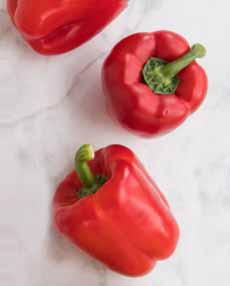
  • Peppers
  • Soft herbs: cilantro, dill, mint, parsley, tarragon
  •  
    Countertop

  • Avocados
  • Bananas
  • Basil: with roots in a glass of water
  • Cucumbers
  • Eggplant
  • Melons (barely ripened; into the fridge when ripe)
  • Oranges and grapefruit
  • Pears
  • Persimmons
  • Stone fruits: apricots, nectarines, peaches, plums
  • Tomatoes: ripened
  •  
    Pantry

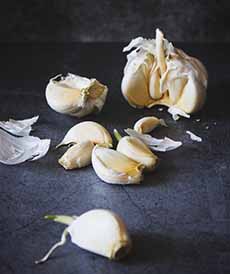
  • Garlic, onions, shallots
  • Pomegranates
  • Potatoes and sweet potatoes
  • Winter squash
  •  
     
    FRUITS & VEGETABLES STORAGE SUMMARY


    REMEMBER TO HEAD TO GOOD EGGS FOR THE DETAILS ON HOW TO STORE EACH ITEM.

    Aluminum foil? Container with water? Covered container with holes? Damp paper towels? Loose plastic bags? Sealed plastic bag? Other storage?

    Knowing how to wrap the produce is as important as knowing where to store it.


    Comments off

    The Nibble Webzine Of Food Adventures
    RSS
    Follow by Email


    © Copyright 2005-2025 Lifestyle Direct, Inc. All rights reserved. All images are copyrighted to their respective owners.