THE NIBBLE BLOG: Products, Recipes & Trends In Specialty Foods


Also visit our main website, TheNibble.com.

For Furmint February Try Furmint, A White Wine From Hungary

February 1st was International Furmint Day. The month is designated Furmint February. But what is Furmint*, many might ask?

It’s a white grape from Hungary, made into a noteworthy white wine.

We knew Furmint as the main white wine grape used in the grape blend for Hungarian’s famous Tokaji (Tokay), but we’d never had any that was bottled as a single varietal.

So we set out to find a few well-regarded to taste with wine friends at a weekend dinner.

This turned out to be a challenge, since Furmint wines appear to be quite rare in the U.S. We ended up buying them online.

So white wine lovers: Let’s all do our part. Try it, share it, and get sales up so more people can get to know this food-friendly, affordable wine.

It’s not a wine that gets much attention in the U.S. Furmint (FUR-mint) is important enough that the world’s best wineglass maker, Riedel, has designed a glass for it (photos #9 and #10).

Before we go further, a bottle of Furmint and a set of glasses would make a welcome gift for a wine connoisseur (by which we mean students of wine as well as experts).

An overview of Furmint (FUR-mint) follows. Also below:

> The history of Furmint.

> The year’s 40+ white wine holidays.

> The white wine varietals.

Also on TheNibble.com:

> All the red wine holidays.
 
 
AN INTRODUCTION TO FURMINT

From Hungary’s Tokaj region, Furmint is a white grape variety most famously known for its role in producing the prized Tokaji Aszú† (TOE-ky ah-ZU) sweet wines from the region. Nobles from all over Europe became fans, with King Louis XIV of France calling it the wine of kings.

Its high acidity and sugar content make the grape perfect for sweet wine production. It’s also thin-skinned and susceptible to the noble rot†, the mold Botrytis cinerea (photo #7).

Botrytis cinerea attacks the grapes and sucks out moisture, which concentrates the grape’s sugars and flavors into a honeylike sweetness and complexity.

Botrytised wines are the apex of sweet wine production, sought after by many for their lush, rich, intense sweetness.

Tokaji Aszú is one of the most famous dessert wines in the world. Like Sauternes, the botrytis brings out complex flavors of honey and apricot; and in the case of Tokaji Aszú, Furmint’s intense minerality as well.

Thus, while traditionally associated with sweet wines, many Hungarian winemakers now produce excellent dry Furmint wines. Food-friendly and refreshing, with high acidity and high minerality, wine aficionados now have the chance to discover dry Furmint.

While our focus here is dry Furmint, let’s start by defining the different types of Furmint wines.
 
 
Four Styles Of Furmint Wines

  • Dry Furmint: These wines are crisp, with high acidity and minerality—like Chablis but with even more acidity. Their minerality is different from Chablis also, often described as having a smoky, flinty quality from the volcanic soils of the Tokaj region, while Chablis has a distinctive “chalk and seashell” minerality from limestone soil that’s rich in clay and marine fossils.
  • Food Pairings: Lighter fruit desserts, blue cheese, foie gras, or as an aperitif. Their fruit gives notes of citrus, green apple, and pear. There are more detailed pairings in the next section.
  • Sparkling Furmint: The sparklers are made in mostly dry (brut) style, although some may have a touch of residual sugar. Winemakers often use the méthode traditionnelle of Champagne. A bubbly version of dry Furmint, they are crisp and refreshing. Enjoy them as an apéritif, and with seafood, fried dishes, and soft cheeses.
  • Food Pairings: As with other sparkling wines: caviar, fresh goat cheese, double-cremes and triple-cremes; shellfish (lobster, oysters, scallops, shrimp); sushi and sashimi, smoked fish.
  • Late Harvest Furmint: This is a sweeter style of Furmint, but lighter than and not nearly as intense as Tokaji Aszú. The grapes are overripe since they are harvested later and there may be a slight amount of botrytis. Its vibrant acidity balances the sweetness.
  • Food Pairings: The pairings are the same as for sweet Furmint and Tokaji Aszú. See them in the footnote†.
  • Sweet Furmint: These are sweet wines made from Furmint, but not necessarily in the manner of Tokaji Aszú. The latter is a specific type of sweet wine made under strict regulations. In other words, while all Tokaji Aszú is made from sweet Furmint, not all sweet Furmint wines are Tokaji Aszú. While the latter are often 60-80% Furmint, winemakers blend in other grapes for added complexity. See the footnote††.
  • Food Pairings: The pairings are the same as for sweet Furmint and Tokaji Aszú. See them in the footnote†.
    These sweet wines are glorious and worth the splurge with the right foods.
  •  
     
    PAIRING DRY FURMINT & FOOD

    The key to pairing food with dry Furmint is to work with its high acidity and complex mineral character. That’s pretty easy with everyday favorites such as:

  • Asian foods: from sushi/sashimi and stir fries to the spicier fare of China, India, and Thailand.
  • Comfort foods: mac and cheese, turkey burgers/cheeseburgers, cheese fondue or other melt.
  • Fried foods: fried chicken, French fries, fish and chips.
  • Grilled and roasted foods: chicken, fish, seafood, veggies.
  • Other favorites: barbecue (with a tangy rather than sweet sauce), Buffalo wings.
  • Pasta: aglio e olio, cacio e pepe, linguine with clam sauce, pasta primavera, pesto—basically, anything not in a red sauce or a cream sauce (like Fettuccine Alfredo).
  • Pizza: arugula, clam/seafood, Margherita, mushroom/truffle, white pizza.
  • Pork: chops or roasts, particularly when prepared with apples or other fruit
  • Vegetarian dishes: avocado toast, salads (especially with cheese like Caesar, Caprese, Cobb, and goat cheese.
  •  
     
    THE HISTORY OF FURMINT WINE

    A wild grape native to Hungary, Furmint has been cultivated in the Tokaj-Hegyalja wine region for centuries, with documented mentions dating back to the 16th century, during tumultuous period of the Ottoman occupation (1541 to 1699 C.E.).

    Ampelographers** believe that it is highly probable that the grape originated there.

    Furmint’s use in Tokaji dessert wines has its first known reference 1635, describing a full-bodied sweet dessert wine made from late-ripened grapes affected by Botrytis cinerea (noble rot).

    Although it was still a dangerous frontier zone exposed to frequent raids, during the Ottoman occupation the Tokaj wine region remained unoccupied and became a sanctuary for wine production and cultural preservation.
     
     
    The Wine Of Kings

    Tokaji Aszú, the sweet wine made from Furmint, gained international acclaim quickly. In the 17th century, it was known as the “wine of kings, king of wines,” a phrase famously attributed to King Louis XIV of France, a lover of Tokaji wines.

    This reputation spread across European royal courts, making it a prestigious quaff among nobility.

    The unique wine-making process involved hand-picking individual botrytized grapes from the cluster, a labor-intensive method that made the wine extremely expensive and rare (not all grapes in a cluster would get botrytis).

    In 1737, the Tokaj wine region became the world’s first classified wine region, predating the Port wine region (Douro Valley, Portugal) in 1756. The famed classification of Bordeaux did not happen until 1855.

    The sweet wine was well established by the late 18th century when, in 1796, the Hungarian politician János Dercsényi described Furmint as the “genuine Tokaji Aszú” grape [source].

    During the Austro-Hungarian Empire (1867 to 1918), Tokaji wines became known as a national treasure and were often used as diplomatic gifts

    The phylloxera epidemic that began in 1863 and lasted for decades nearly destroyed Hungarian vineyards (as well as those in other parts of Europe, Australia, South Africa, and California, as the insect spread).

    The recovery was slow, and wine production in Europe was further disrupted by the two World Wars and communist era.

    While Tokai was produced then, quality was often sacrificed.

    After the fall of communism in 1989, Hungarian winemakers began reviving traditional Furmint production techniques. They started focusing on both the traditional sweet styles and exploring dry Furmint wines, which have gained significant international recognition in recent years.
     
     
    The Emergence Of Dry Furmint Wines

    While Hungary has been producing dry Furmint wines for centuries, it was in small quantities for local consumption. The main focus was where the money was: in the world-famous Tokaji Aszú.

    Dry furmint became widely recognized and commercially significant only recently, in the late 20th and early 21st centuries.

    In the 1990s, after the fall of communism, Hungarian winemakers began experimenting more with dry Furmint, influenced by international demand for food-friendly dry white wines.

    By the early 2000s, top producers like István Szepsy (Szepsy Winery), Disznókő, and Királyudvar began making high-quality dry Furmint wines, proving its potential beyond sweet wines.

    Since then, Tokaj and other regions have developed crisp, mineral-driven dry Furmints, gaining international recognition.

    Dry Furmint is now considered one of Hungary’s flagship white wines, enjoyed both domestically and internationally, with styles ranging from fresh and citrusy to rich and oak-aged.

    They have caught the eye of winemakers in other countries. Plantings appeared in the neighboring countries of Austria and Slovenia.

    There are small plantings in California, Australia, and South Africa as small winemakers experiment with what the grape might do in their regions—where the climate is very different from southern Hungary’s.
     
     
    The Name “Furmint”

    The origin or etymology of “furmint” is not entirely certain, but here are the leading theories—for which there is no evidence:

  • The “Froment” (Wheat) Theory: Some believe that furmint may derive from the French word “froment,” meaning wheat and referring to the grape’s yellowish, wheat-like color when ripe. However, there is no historical link between furmint and French viticulture.
  • Central European Roots: Some believe the name originated in a local or regional dialect††. But again, no definitive evidence, nor is there a connection to any Austrian or German words related to winemaking.
  •  
    The truth is out there…somewhere.


    Furmint White Wine
    [1] A dry Furmint from István Szepsy’s Szepsy Pince (cellar or winery). One of the greatest winemakers in the history of Hungary, Szepsy was instrumental in reviving Tokaj’s reputation post-communism. He was one of the first to refocus on making high-quality dry Furmint wines in addition to the traditional sweet wines. The Szepsy family has been making wine in Tokaj since the late 16th century (photo © 9 Elms Wines).

    Furmint White Wine
    [2] The first records of Disznókő vineyards, one of the most renowned wineries in Tokaj, date back to 1413. By the 18th century, the estate was recognized as a premier Tokaji vineyard. Its modern revival began in 1992, when it was acquired by the French company AXA Millésimes, a wine investment group that restored the winery, modernizing production (photo © Disznoko).

    Furmint Late Harvest Wine
    [3] See the difference in color between the dry Furmint above and this late harvest Furmint, the result of the concentration of sugar and aging (photos #3, #4, #6, and #7 © Disznoko Tokaj | Facebook.

    Glasses Of Sparkling Furmint
    [4] Sparkling Furmint.

    Bottle Of Tokai Wine
    [5] Tokaji Aszú, the king of wines or wine of kings (photo Best Of Hungary).

    Furmint Grapes
    [6] A cluster of furmint grapes, just snipped from the vine.

    Botrytised Grapes
    [7] Grapes attacked by Botrytis cinerea mold dry out like raisins. This concentrates the flavor.

    Vizsla Furmint Wine
    [8] This dry Furmint celebrates the beloved Hungarian Vizsla, one of whom was evidently an army officer. It’s inexpensive and the label makes it a best-seller Here’s more about the wine (photo © Vivino).

    Glass Of Furmint Wine
    [9] The world’s first Furmint glass was designed by the world’s leading wine glass maker, Riedel (photos #8 and #9 © Furmint Glass).

    Furmint Glasses
    [10] Gift a box of two Furmint glasses along with a bottle of furmint.


    A YEAR OF 40+ WHITE WINE HOLIDAYS 

    January 

  • January 10: Champagne And French Fries Day
  •  
     
    February 

  • February: Furmint February
  • February 1st: National Furmint Day
  • February 18th: National/Global Drink Wine Day
  • Last Saturday in February: Open That Bottle Night
  •  
     
    March 

  • March 3rd: National Mulled Wine Day
  • March 13th: National/International Riesling Day
  • March 21: World Vermouth Day
  •  
     
    April 

  • Last Friday in April: National Viognier Day
  •  
     
    May 

  • First Friday in May: International Sauvignon Blanc Day
  • May 9th: National/World Moscato Day
  • May 16th: International Ezerjó Day
  • Thursday Before Memorial Day: National/International Chardonnay Day
  • May 25th: National Wine Day
  •  
     
    June 

  • June, Second Week: National Prosecco Week
  • June, Second Thursday: World Verdejo Day
  • June, Second Saturday: International Drink Chenin Blanc Day
  • June 13th: National Rosé Day (alternately celebrated the Fourth Friday in June)
  • June 20th: Drink Chenin Blanc Day (the grape in Vouvray and Quarts de Chaume)
  • June, 3rd Saturday: English Wine Week Begins
  • June, 4th Friday: International Rosé Day
  •  

    July

  • July, First Week: Sparkling Wine Week
  • July 3: American Sparkling Wine Day
  • July 12: International Cava Day
  • July 25th: National Wine and Cheese Day
  •  
     
    August

  • August 1: Old Vine Day
  • August 1st: International Albariño Day
  • August, First Week: Albariño Week
  • August 4th: National White Wine Day
  •  
     
    September

  • September 1st: International Cap Classique Day
  • September 9th: International Box Wine Day
  •  
     
    October

  • October 6th: National Orange Wine Day
  • October 7th: Mexican Wine Day
  • October 22nd: Austrian Sekt Day
  • October, Fourth Friday: National Champagne Day‡
  •  
     
    December

  • December 5th: Prohibition Repeal Day
  • December 10th: International Tokaji Aszú Day
  • December 16th: International Pinot Meunier Day
  • December 20th: National Sangria Day
  • December 31st: Champagne Day (New Year’s Eve‡)
  •  
     
    Plus 3 Rosé Holidays

  • February 5th: National Rosé Day in Australia and New Zealand
  • June, 2nd Saturday: National Rosé Day***
  • June, 4th Friday: National Rosé Day***
  • July: Dry July
  •  

    WHITE WINE VARIETALS TYPICALLY AVAILABLE IN THE U.S.
  • Albariño
  • Aligoté
  • Alvarinho (Vinho Verde)
  • Chenin Blanc
  • Colombard
  • Fumé Blanc
  • Furmint
  • Gewürztraminer
  • Grüner Veltliner
  • Malvasia
  • Marsanne
  • Moscato
  • Müller-Thurgau
  • Muscadelle
  • Muscadet
  • Muscat
  • Pinot Blanc
  • Pinot Gris/Pinot Grigio
  • Riesling
  • Sauvignon Blanc
  • Sémillon
  • Seyval Blanc
  • Silvanio
  • Trebbiano
  • Verdicchio
  • Viognier
  • Vouvray
  • ________________
     
    *Furmint is capitalized because it is named after a grape variety, not a geographic location. This is in line with the style guidelines followed by the Associated Press and The New York Times. Wines that are not named after the type of grape are not capitalized, such as rosé and sherry.

    **Ampelography is the science of identifying, naming and classifying cultivated grape varieties through detailed analysis of the unique characteristics of the plant.

    ***There are three rosé holidays. JThe second Saturday in June holiday was founded in 2014 by Bodvár House of Rosés, a Swedish brand, as a U.S.-focused promotional holiday. The fourth Friday in June, International Rosé Day, was established in 2018 by the Provence wine region in France, which is essentially the global home of rosé.

    Tokaji Aszú is a sweet dessert wine made primarily from botrytized grapes. Botrytis, a fungus, leaches moisture from the grapes, drying them out, which concentrates the sugars and flavors (photo #7). Hence the nickname, noble rot. Aszú means “dried.” Note that while botrytis is often referred to as “gray mold,” mold is a type of fungus. While the mold first appeared spontaneously in warm, humid conditions, winemakers can now use techniques to encourage its growth.

    When pairing foods with Aszú,the rich, lusciously sweet, high-acid wine making is a versatile pairing wine that works well with sweet, salty, spicy, and umami-rich dishes.
    >Cheese Pairings: blue cheeses (Roquefort, Stilton, Gorgonzola), aged Cheddar or Comté, goat cheese.
    >Savory Pairings: foie gras, duck à l’orange, honey-glazed ham, roast pork with apples, spicy Asian cuisine (Indian, Szechuan, Thai).
    >Dessert Pairings: fruit tarts (apple, apricot, peach, pear), crème brûlée, nut or spice cakes (gingerbread, hazelnut, walnut).
    >Snacks: dark chocolate with sea salt, dried fruits and nuts (almond, apricots, figs, walnuts), (Figs, Apricots, Almonds, Walnuts) – A simple yet elegant match.

    ††The other Hungarian grapes that can be used in a Tokaji blend, hárslevelű and sárga muskotály for added complexity, zéta and kövérszőlő for aroma, and kabar for richness and depth.

    There are two Champagne Days. The first, celebrated on the fourth Friday of October, was created in 2009 by Chris Oggenfuss, a California wine educator. The second, on New Year’s Eve, grew organically.

    ‡‡Cap Classique is a term used in South Africa for méthode traditionelle sparkling wine production. This is the same technique used in Champagne, a labor-intensive process where wine undergoes a secondary fermentation inside the bottle, creating the bubbles.


    CHECK OUT WHAT’S HAPPENING ON OUR HOME PAGE, THENIBBLE.COM.


    Comments off

    The Easiest Chocolate Fondue For Chocolate Fondue Day

    A Pot Of Chocolate Fondue
    [1] Cookies & Cream Dark Chocolate Fondue (photos #1, #2, #3, and #4 © The Melting Pot).

    A Pot Of Milk Chocolate Fondue
    [2] Turtle Milk Chocolate Fondue.

    A Pot Of White Chocolate Fondue
    [3] Fonduefetti White Chocolate Fondue.

    A Pouch Of Chocolate Fondue
    [4] The fondue comes in a pouch of with premium chocolate wafers† and toppings. Each pouch makes five 1/4-cup servings. For larger servings, plan accordingly.

    Fondue Pot Base
    [5] If you don’t have a rechaud or hot plate to keep the fondue warm, see other ways to do it, below (photo © Swissmar).

    Electric Fondue Pot
    [5] If you want to purchase a fondue pot, we recommend an electric one for convenience and safety (photo © Starfrit).

    Bamboo Skewers
    [6] Spear your food with bamboo skewers (photo Boesma | Amazon).


    February 5th is National Chocolate Fondue Day, celebrating a treat that’s easy to make. So why don’t we have it more often? With three new ready-to-heat-and-eat flavors from The Melting Pot, there’s no excuse not to treat yourself.

    February is also National Fondue Month, so there’s plenty of time.

    You don’t need a fondue pot or fondue forks. See how to use what you already have, below.

    The Melting Pot, a restaurant chain specializing in all kinds of fondue, has added an at-home chocolate fondue collection to their at-home cheese fondue options. There are more than 90 locations from coast to coast, and you can own one!

    But you don’t have to leave home to enjoy their fondue. And you don’t have to plan ahead: Just open the packet and melt the chocolate (or cheese) on the stove top or in the microwave.

    Perfect for celebrations, date night, friends-and-family gatherings, Valentine’s Day, or simply to indulge a chocolate craving, these packets are waiting for you to start the party.
     
     
    WHICH DO YOU PREFER?

    You can order a single flavor or one of each.

  • Cookies & Cream Dark Chocolate Fondue, a rich dark chocolate base swirled with marshmallows and topped with cookie crumble. The bolder flavor of dark chocolate is swirled with fluffy marshmallow cream, topped with crunchy cookie crumbles. It’s the warm, melty version of the classic cookies-and-cream experience.
  • Turtle Milk Chocolate Fondue, luxurious blend of milk chocolate with caramel and nuts. Inspired by the classic turtle chocolate-caramel-pecan candy, the fondue delivers a perfect balance of velvety
  • Fonduefetti White Chocolate Fondue, creamy white chocolate melted over a festive ice cream cone crunch, topped with rainbow sprinkles and peanut pieces. The white chocolate base is then topped with a festive mix of ice cream cone crunch, colorful rainbow sprinkles, and pieces of peanut for added texture and a touch of nuttiness.
  •  
    All you need to do is supply the dippers: squares of brownies and cake, fruits, marshmallows, waffles, whatever you’d like to swirl in melted chocolate.

    See our complete list of dippers here.

    Each pouch makes five 1/4-cup servings. For larger servings, plan accordingly.
     
     
    GET YOUR CHOCOLATE FONDUE

    > Head to TheMeltingPot to get yours.

    And not just yours: These delightful packets are welcome any-occasion or hostess gifts.

    And they’re an alternative to the standard box of chocolate for of Valentine’s Day.
     
     
    HOW TO SERVE FONDUE IF YOU DON’T HAVE A FONDUE POT

    It’s easy to melt the fondue on the stove top or in a microwave. Then, typically, the pot of of melted fondue is set atop a brazier with a can of gel fuel (e.g. Sterno) or a tea candle underneath to keep the fondue warm while it is consumed.

    No fondue pot? No problem! Here are a few ways to serve and keep your chocolate fondue (or cheese fondue) warm at the table:

  • Electric Hot Plate: We had forgotten that we owned one until we created this list.
  • Tea Pot Warmer: We also forgot that had a teapot warmer and a supply of tea candles.
  • Slow Cooker: If you have a small slow cooker, set it on “warm” to keep the chocolate melted. You can serve it directly from the slow cooker or transfer portions to a bowl.
  • Thermos: Pre-warm a thermos with boiling water. Refill dessert bowls as needed.
  • Double Boiler/Bain Marie: Bring the double boiler with the melted fondue to the table (on a trivet).
  •  
     
    NO FONDUE FORKS? TRY THESE

  • Skewers: You can use bamboo or metal, but bamboo skewers are inexpensive for a lot of them. Get a long size—about 17″, and soak them in water briefly to prevent splinters.
  • Regular Forks: For a tête-à-tête, any dinner fork will do.
  • Chopsticks: A great use for all the bamboo chopsticks that have piled up from take-out orders.
  •  
     
    A YEAR OF DESSERT HOLIDAYS

    There are 200 of them!

  • Dessert Holidays: January-June.
  • Dessert Holidays: July-December.
  •  
     
    AND MORE!
     
    > An easy from-scratch chocolate fondue recipe.

    > A white chocolate fondue recipe.

    > What to dip into chocolate fondue.

    > Who invented chocolate fondue.


    CHECK OUT WHAT’S HAPPENING ON OUR HOME PAGE, THENIBBLE.COM.


    Comments off

    For Homemade Soup Day: Potato Soup With Your Favorite Cheese

    February 4th is National Homemade Soup Day. If you regularly make soup, you know how rewarding it is—especially when you can cut back on the sodium that overloads purchased soups.

    There are so many soups to make: Just check out our soup glossary.

    If you’re a fan of blue cheese, check out the recipe that follows.

    And if you don’t sing the blues, you can use your cheese of choice. How about Cheddar, Gruyère, Monterey Jack, or any cheese with smoke or heat (e.g. chiles or horseradish)?

    We followed the original recipe, because the garnishes of blue cheese, bacon, and scallions—creating loaded potato soup (as opposed to a loaded baked potato)—called out to us.

    National Homemade Soup Day is just one of 15 soup holidays that has its own “national day.”

    > See the year’s 18 soup and stew holidays below.

    > The different types of potatoes: a photo glossary.

    > The different types of cheese: a photo glossary.

    > The different types of soup: a photo glossary.

    > The history of potatoes.

    > The history of cheese.

    > The history of soup.
     
     
    RECIPE: BLUE CHEESE & POTATO SOUP

    You can make the recipe smooth or chunky. Just use the four pounds of your potato of choice.

    Which potatoes are best for potato soup? It depends on the texture you want.

  • Creamy Soup: For a silky, smooth texture, choose starchy potatoes like russet and Yukon Gold.
  • Chunky Soup: Use waxy potatoes, such as red jacket potatoes or fingerling potatoes.
     
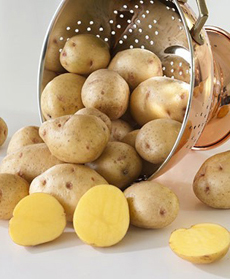
    We used Yukon Gold potatoes and left the skins on, since the skin of any potato contains a significant portion of its fiber, vitamins, and minerals.

    Yukon Golds have thin, smooth skin while a russet has thick, rough skin. Whatever you’re cooking, there’s no need to peel a Yukon Gold. (Bonus: Not peeling saves time.)

    This recipe makes 2-1/2 quarts. Prep time is 15 minutes and cook time is 30 minutes.

    The recipe, by Josh Rink of Milwaukee, Wisconsin, was originally published in Taste Of Home.
     
    Ingredients For 8 Servings

  • 6 medium russet or other potatoes (about 4 pounds), peeled and cubed
  • 3 cups whole milk
  • 1/2 cup heavy whipping cream
  • 2 tablespoons unsalted butter
  • 1 garlic clove, minced
  • 1-1/4 teaspoons kosher salt
  • 1 teaspoon coarsely ground pepper
  • 1/2 teaspoon seasoned salt
  • 6 scallions, thinly sliced
  • Blue cheese or cheese of choice, crumbled
  • Garnishes: crumbled bacon (we used Hormel Crumbled Bacon, photo #4), sliced scallions
     
    Preparation

    1. PLACE the potatoes in a large stockpot or Dutch oven; cover with cold water and bring to a boil. Cook, uncovered, until very tender, 20-25 minutes. Drain well, reserving 1 cup liquid.

    2. RETURN the potatoes to the pot and mash to your desired consistency. Return the pan to heat and add the milk, heavy cream, butter, garlic and seasonings.

    3. HEAT on medium-low until heated through, 5-10 minutes, adding the reserved cooking liquid to thin the soup to your desired consistency.

    4. GARNISH with the cheese, scallions, and bacon.
     
     
    THE YEAR’S 18 SOUP HOLIDAYS

  • January: National Menudo Month
  • January: National Soup Month
  • January 12: National Curried Chicken Day/National Chicken Curry Day
  • January, 3rd Saturday: National Soup Swap Day*
  • February 4: National Homemade Soup Day
  • February 25: National Clam Chowder Day
  • February 28: Global Scouse Day (Liverpool)‡
  • March 3: National Soup It Forward Day†
  • March 30: Turkey Neck Soup Day
  • August 27: Crab Soup Day**
  • October, 1st Full Week: National Curry Week
  • October 19: National Seafood Bisque Day
  • November, 2nd Week: National Split Pea Soup Week
  • November 12: Chicken Soup for the Soul Day
  • November 18: National Vichyssoise Day
  • December 6: National Gazpacho Day
  • December 14: National Bouillabaisse Day
  • December 29: National Pepper Pot Day
  •  
    ________________
     
    *National Soup Swap Day is an occasion where friends and family meet up for a soup party. Typically, everyone brings frozen quarts of homemade soup (enough for each participant) and exchanges it for soup from the others others.

    Knox Gardner of Seattle started the practice of soup swapping with his friends back in the 1990s. Around 2006, the event gained popularity thanks to spread of the idea by bloggers.

    If you’d prefer to turn it into a dining event, where everyone brings a “soup course…well, why not? The host can supply the salad and the bread.


    A Bowl of Blue Cheese Soup
    [1] The featured recipe: potato soup with “fully loaded” garnishes (photo and recipe © Taste Of Home).

    Yukon Gold Potatoes
    [2] We chose Yukon Gold potatoes for the base (photo © Bonnie Plants).

    A bowl of crumbled blue cheese
    [3] Crumbled blue cheese. You can garnish the soup with any cheese you like (photo © Good Eggs).

    Shredded Cheddar Cheese
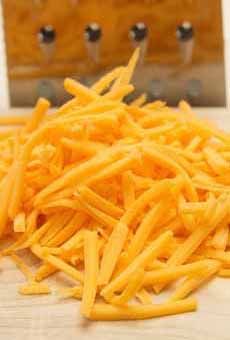
    [4] Shredded Cheddar is a popular soup garnish. If you don’t have time to prepare your own, you can buy it pre-shredded (photo © Darryl Brooks | Dreamstime).

    Chopped scallions on a cutting board
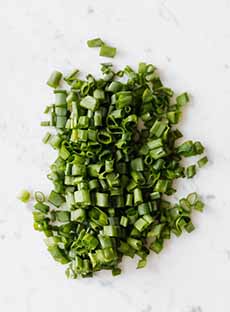
    [5] Chopped scallions. We like plenty of them on our soup (photo © Karolina Grabowska | Pexels).

    A Dish Of Crumbled Bacon
    [6] You can make bacon crumbles, but there days, it’s easier to buy them. They’re shelf-stable, no refrigeration required until you open the package (photos #3 and #4 © Hormel).


    **Crab Soup Day originated in Nicaragua and is also recognized in the U.S. as National Crab Soup Day. In Nicaragua, the day is part of a festival to mark the end of slavery with food, music, and parades. In the U.S., it’s a food-focused holiday for enjoying various types of crab soup, from creamy bisques or hearty chowders.

    National Soup It Forward Day is a day to spread kindness and generosity by sharing a bowl of soup with someone in need—whatever that need may be. Bring a bowl to a family member, friend, or neighbor.

    The event was created in 2018 by a Canadian non-profit organization, Soup Sisters. Founded in 2009 by Sharon Hapton, a Calgary-based businesswoman to feed the needy.

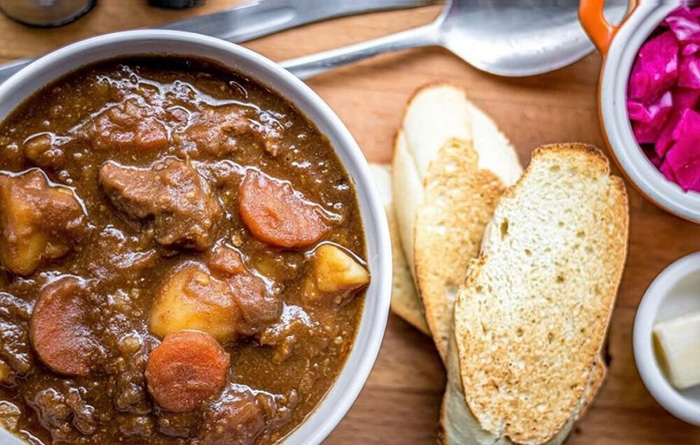
    Global Scouse Day is held on February 28 in Liverpool, England. It celebrates the maritime city’s favorite local dish, scouse, a hearty meat and vegetable stew (photo #7, below). Liverpudlians actually call themselves Scousers! It’s a simple, working-class dish traditionally made with beef or lamb (though “blind scouse” is a meatless version made during leaner times), potatoes, carrots, onions, and sometimes other root vegetables, all slow-cooked together in a thick broth. It’s similar to Irish stew or Lancashire hotpot.

    The dish originated in the 18th or early 19th century, a sailor’s stew brought to Liverpool by sailors from Scandinavia or Northern Europe. The name derives from “lobscouse,” the English adaptation of Scandinavian and Northern European words that describe a similar stew (lapskaus/Norway, lapskojs/Sweden, Labskaus/Germany, skipperlabskovs/Denmark) that was common shipboard fare because it could be made with preserved meat and hardy vegetables that kept well during long voyages.

    Liverpool, a major port city, adopted and adapted the dish, and it became a staple of working-class households because it was filling, economical, and could stretch ingredients to feed large families. Scouse is typically served with pickled red cabbage or beets on the side and crusty bread for dipping. It’s a beloved symbol of Liverpool’s culinary heritage and working-class identity.

    In fact, the term scouser as a reference to someone from Liverpool came into common use in the 1940s. It was originally a derogatory term that implied that the person was so poor that they could afford to eat decent food only once a week and otherwise ate leftovers with boiled potatoes. But Liverpudlians turned the insult into a proud identity.

    Trivia note: Those Scousers, the Beatles, from a working-class Liverpool upbringing, likely enjoyed scouse at home.

    Scouse, A Stew From Liverpool
    [7] Here’s a photo of scouse from Ma Egerton’s Stage Door. Visit it when you get to Liverpool.


    CHECK OUT WHAT’S HAPPENING ON OUR HOME PAGE, THENIBBLE.COM.


    Comments off

    A Warm Eggplant Salad Recipe For A Chilly Winter Day

    Eggplant Salad
    [1] This easy-to-make Warm Eggplant Salad hit the spot on a chilly day. When it’s warm out, enjoy it hot or chilled (recipe and photos #1 and #2 © Hannah Kaminsky | Bittersweet Blog).

    Graffiti Eggplant
    [2] A graffiti eggplant. The variety looks like the fairytale eggplant (photo #4) but the latter is much smaller—a mini size.

    Globe Eggplant
    [3] Solanum melongena is the the most widely cultivated of the five worldwide eggplant species. This purple globe eggplant is the most familiar, but other popular varieties are fairytale, Chinese, graffiti, and Japanese eggplants (photo © Amber Engle | Unsplash).

    A bowl of Fairytale Eggplants
    [4] The fairytale eggplant (photo © Botanica Restaurant | Los Angeles).

    Different Colors Of Cherry Tomatoes
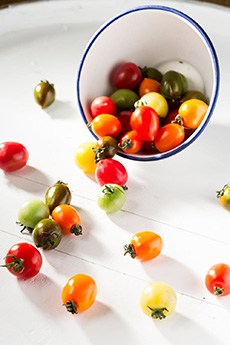
    [5] The right produce departments and farmers markets sell a color mix of cherry or grape tomatoes (photo © Love Food Art | Pexels).

    A bowl of basil leaves
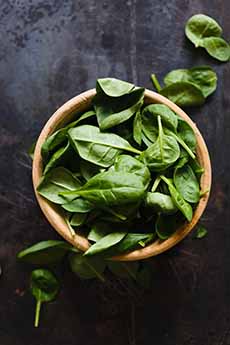
    [6] Bright green basil adds to the color palette of the salad, in addition to its aroma and complex flavor, with notes of anise, mint, and pepper (photo CC0 Public Domain).

    Bowl Of Pine Nuts
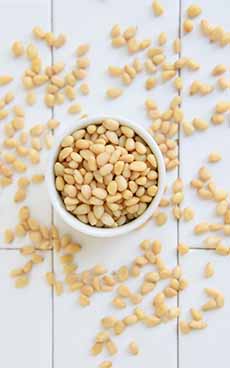
    [7] While pine nuts suit the Italian profile of the recipe, almonds and pistachios have more protein‡‡ and work equally well (photo © Good Eggs).

    A bottle of coconut aminos
    [8] Coconut aminos have less sodium than low sodium soy sauce and are gluten free. There’s more about this great pantry addition at the right (photo © Big Tree).


    “Eggplant and tomatoes, in the dead of winter? Oh no, that’s not very seasonal of me,” said our colleague Hannah Kaminsky of Bittersweet Blog. Then, we went right out and purchased the recipe ingredients for her Warm Eggplant Salad (photo #1) and had a great lunch, with enough left over for tomorrow.”

    She departed from the standard deep purple globe eggplant (photo #3) and opted for graffiti eggplant (photo #2)

    “Graffiti eggplant, tender and silky, pairs perfectly with juicy cherry tomatoes and vibrant fresh basil, offering a burst of flavor that contrasts with the cold season,” says Hannah.

    “I should have just saved this recipe for a few months and pretended it was devised in the warm sunshine of late June…but a little bite of summer in the middle of a dark, cold, winter day might be what we all need.

    “While it may not be the most obvious seasonal choice, in the depths of winter, indulge in a little taste of summer with this indulgent yet simple-to-make dish.”

    The recipe follows, but for your consideration:

    > The history of eggplant.

    > The history of tomatoes.

    > Different types of eggplant.

    > Below: Why use graffiti eggplants?

    > Below: The difference between fruits and vegetables.

    > Below: Why use soy sauce or liquid aminos instead of salt?
     
     
    RECIPE: WARM EGGPLANT SALAD

    It’s worth seeking out graffiti eggplants in a specialty produce market or farmers market.

    Graffiti eggplants, also called Sicilian eggplants, are believed to have originated in Sicily. They are a member of the same genus and species as the familiar globe eggplant, Solanum melongena, which also includes other eggplant subspecies. See the reasons to choose graffiti eggplants, below.
     
    Ingredients

  • 1 medium graffiti eggplant (substitute 1 small globe eggplant)
  • 1 tablespoon olive oil, divided
  • 2 teaspoons liquid aminos or soy sauce (see below)
  • 2 cloves garlic, minced
  • 2 cups cherry tomatoes
  • 1/2 cup fresh basil
  • 1 tablespoon lemon juice
  • 1 tablespoon toasted pine nuts, slivered almonds, or nut of choice
  • Freshly-ground black pepper, to taste
  • Optional: salt may not be needed (see below)
  •  
    Preparation

    1. SLICE the eggplant into 1/4-inch rounds and place them in a large bowl. Drizzle with 1/2 tablespoon of olive oil, liquid aminos or soy sauce, and garlic. Toss to coat, then place the rounds in an even layer on two air fryer sheets lined with foil. Make sure that no pieces are overlapping.

    2. AIR fry one sheet at a time at 400°F for 6 minutes. Flip, then air fry for another 5-6 minutes, until browned and very tender. Meanwhile…

    3. COMBINE the remaining olive oil, cherry tomatoes, basil, lemon juice, and nuts. Gently toss with the cooked eggplant and season with salt and pepper to taste. Transfer to a serving platter and enjoy while still warm.
     
     
    WHY USE GRAFFITI EGGPLANTS?

    There are five key reasons below, but first a bit of interesting botany.

    Eggplants trace their origins to India and Southeast Asia, where they were first domesticated more than 4,000 years ago. They later spread through the Middle East, North Africa, and Europe, reaching Italy and Spain via Arab traders during the Middle Ages.

    They are truly a global food, eaten on every continent. They’re:

  • Versatile: They can be baked, fried, grilled, mashed, roasted, or steamed.
  • Flavor-Flexible: They work well with the spices and sauces of world cuisines.
  • Nutrient-Rich: They’re high in fiber and antioxidants while being low in calories.
  •  
    Their genus, Solanum is commonly known as the “nightshades.” Other genus members include capsicums (bell peppers, chili peppers, and paprika), goji berries, potatoes, tomatillos, tomatoes, and potatoes.

    Two well-known non-foods are belladonna—the famed “deadly nightshade,” a highly toxic plant that has been historically used for medicinal, cosmetic, and even poisonous purposes.

    The other is tobacco, which has its own way of poisoning people.
     
     
    Graffiti Eggplants

    The standard-bearer of the eggplant genus is the most widely cultivated globe eggplant (photo #3), Solanum melongena. Graffiti eggplants are a subspecies, Solanum melongena subsp. melongena.

    Graffiti eggplants likely originated as a natural mutation of globe eggplants. Their characteristic purple-and-white streaked pattern comes from variations in pigmentation, specifically the uneven distribution of anthocyanins.

    (Anthocyanins are the same antioxidants responsible for the blue, purple, and red hues in other fruits and vegetables. And eggplant is botanically a fruit*, even though it’s commonly treated as a vegetable in cooking.)

    A graffiti eggplant brings more to the table than its pretty streaked skin. Here are its advantages over a the standard globe eggplant:

  • Thinner skin: Graffiti eggplants have more delicate, tender skin, eliminating the chewiness that can come from globe eggplants (especially the more mature, larger ones).
  • Thinner skin enables a smoother consistency, desirable in dishes like babaganoush, sauces and purées, and stewed eggplant.
  • Creamier texture: Similarly, the cooked flesh is softer and silkier.
  • Less bitterness: Graffiti eggplants tend to be sweeter than globe eggplants.
  • Lower water content: They don’t need as much salting and draining to remove the bitterness or excess moisture.
  • Texture: If you’re making something like Eggplant Parmesan, the firmer globe eggplant might be the better choice. But for sautés or roasting, try graffiti eggplants.
  •  
     
    LIQUID AMINOS VS. SOY SAUCE VS. SALT

    Liquid aminos (photo #8) are a seasoning sauce, made from coconut or soybeans, that provides a salty, umami-rich flavor similar to soy sauce but with a slightly milder and sweeter taste.

    It contains free amino acids, which are the building blocks of protein, and is often marketed as a healthier alternative to soy sauce.

    Substituting Liquid Aminos For Soy Sauce

  • Liquid Aminos are less salty than soy sauce. They are also gluten-free andsoy-free.
  • Coco aminos have a lower sodium content than low-sodium soy sauce: soy sauce 140–190 mg sodium/teaspoon,
    Bragg Liquid Aminos (from soybeans) 160 mg sodium, coconut aminos (soy-free) 90–130 mg sodium. For a comparison, regular soy sauce has 280–320 mg sodium/teaspoon.
  •  
    How Liquid Aminos Compare to Salt

  • A teaspoon of salt contains about 2,300 mg of sodium! This is the recommended daily limit for sodium intake according to FDA.
  • Thus, using liquid aminos can help reduce overall sodium consumption. It also adds a depth of umami, savory flavor, enhancing dishes more like salt, soy sauce, or tamari.
  • The taste is less sharp and more balanced than pure salt.
  •  
    Substituting Liquid Aminos for Salt

  • Use a 1:1 ratio, or to taste. Note that since it’s a liquid, it may slightly change the moisture content of your dish.
  • Thus, it’s not ideal for baking or dry rubs.
  • It works perfectly in liquid-based recipes, like marinades, sauces, and stir-fries, where it blends in easily.
  •  
     
    ________________
     
    *The difference between fruits and vegetables: In botanical terms, a fruit is the part of a plant that develops from a flower and contains seeds. Eggplants grow from the flower of the plant and contain seeds, making them a fruit by definition. Among the various categories of fruits, eggplants are classified as a berry because they have fleshy pulp and seeds enclosed in a single ovary.

    Why eggplant is considered a vegetable in cooking: In culinary terms, eggplants are used like vegetables because they are savory, not sweet, and commonly cooked in savory dishes like stir-fries, curries, and casseroles.

    Other botanical fruits used as vegetables include tomatoes, peppers, zucchini, and cucumbers [source: Chat GPT 2025-02-04.

    ‡‡Nuts with the most protein: In order of most to least, peanuts, almonds, pistachios, cashews, pine nuts, walnuts, Brazil nuts, hazelnuts, pecans, macadamia nuts [source].


    CHECK OUT WHAT’S HAPPENING ON OUR HOME PAGE, THENIBBLE.COM.


    Comments off

    National Baked Alaska Day & The Original Baked Alaska Recipe

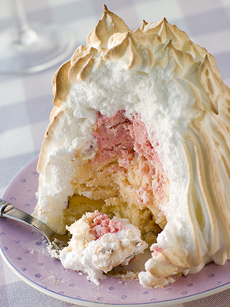
    Baked Alaska
    [1] A dramatic beauty (photo © The Ocean Aire).

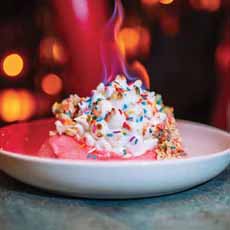
    Flambeed Baked Alaska
    [2] Brandy, rum, or other alcohol is lit in a small cup or spoon and poured over the Baked Alaska (photo © J F Restaurants).

    Baked Alaska Dessert
    [3] The dessert is just as beautiful without flames (photo © Monkey Business | Dreamstime).

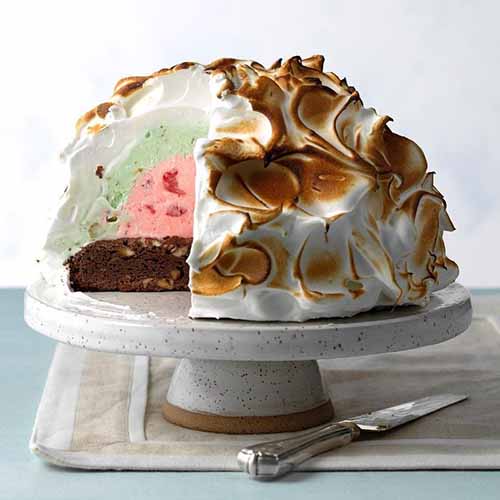
    Baked Alaska with spumoni ice cream flavors
    [4] You can use any flavors of ice cream and sherbet you like. For this Spumoni Baked Alaska, here’s the recipe (photo © Taste of Home).

    Grasshopper Baked Alaska
    [5] Mint lovers: Try Grasshopper Baked Alaska. Here’s the recipe (photo © Taste of Home).

    Mocha Baked Alaska
    [6] For home, we prefer a large Baked Alaska for everyone. But restaurants make individual sizes. However, these individual Mocha Baked Alaskas were made at home. Here’s the recipe (photo © Taste of Home).

    Baked Alaska
    [7] Delmonico’s, home to the first dessert called Baked Alaska, still follows the original recipe, which included apricot compote. Here it’s used as a garnish, with a side of apricot liqueur (photos #7, #8, #9, and #12 © Delmonico’s).

    Baked Alaska
    [8] A close-up on Delmonico’s Baked Alaska.

    Baked Alaska
    [9] You can style the meringue as you wish. Before Delmonico’s used the smooth, modern style above, the Baked Alaska had other designs, including this one.

    Baked Alaska with strawberry sorbet
    [10] This is the prettiest presentation we’ve come across, from Charlie Palmer Steak.

    Ice Cream Trifle
    [11] Pastry chef Franciscoz Migoya eliminated the cake base and made Baked Alaska in a glass bowl. Here are some of his other beautiful creations (photo © Franciscoz Migoya).

    Baked Alaska Ice Cream Cones
    [12] Fun with food: Delmonico’s made Baked Alaska ice cream cones for a special event (photo CY Eats for Delmonico’s | Facebook).

    Baked Alaska
    [13] This is “deconstructed” Baked Alaska: a slice of cake topped with ice cream and meringue, no baking required. Here’s the recipe (photo © Komodo Restaurant | Miami).


    While February 1st is National Baked Alaska Day, it’s relatively easy to make this dazzling dessert anytime you want to impress. Just use store-bought ice cream and pound cake.

    (Over-achievers: churn your own ice cream and bake your own cake.)

    Make a Baked Alaska with this recipe. It’s easy when you use store-bought ice cream and pound cake instead of making/baking your own from scratch.

    > The original Delmonico’s Baked Alaska recipe is below.

    > Here’s the classic Baked Alaska recipe we use (it’s much simpler).

    > A recipe for deconstructed Baked Alaska (photo #13).

    > The history of Baked Alaska is below.

    > The different types of ice cream and frozen desserts: a photo glossary.

    > The history of ice cream.

    > The different types of cakes.
     
     
    But first:
     
     
    WHAT IS BAKED ALASKA?

    Baked Alaska is a masterpiece of chemistry: an ice cream cake topped with meringue and baked in the oven until the meringue browns.

    The concept (and execution) is simple. Ice cream, mounded on a pie plate or in a rectangle, is covered on all sides with slices of sponge cake or pound cake; this is then covered with meringue.

  • The entire dessert is then placed in a 500°F oven just long enough to firm the meringue—three or four minutes.
  • The meringue is an effective insulator, and in the short cooking time needed to finish the dessert, it prevents the frozen ice cream from melting in the hot oven.
  • Various browning methods evolved over time. The propane or butane kitchen torch as we know it today became more common in professional and home kitchens during the 1960s-1970s, alongside the rise of French-influenced cooking in America. However, since this is quite specific historical culinary information, I want to note that I may not be entirely accurate about these dates and you may want to verify them.
     
     
    THE HISTORY OF BAKED ALASKA

    The concept of baked ice cream was developed by the Chinese, who used pastry as the insulator; a Chinese delegation introduced it to Paris in the 19th century.

    In 1804, an American-born military officer, physicist, and inventor Benjamin Thompson Rumford (1753-1814), created the first incarnation of the dessert.

    A loyalist, he had moved to England during the American Revolution and became a British subject.

    The dessert was the by-product of his study of the resistance of stiffly beaten egg whites to the induction of heat. He named the dessert Omelette Surprise. Later versions added sponge cake underneath the ice cream, the recipe that is common today.

    who, as a loyalist during the War of Independence moved to London at the end of the war. Considered a hero for Britain, moved to London, he received a knighthood (and subsequently became Count Rumford).

    In his scientific pursuits, he investigated the heat resistance of beaten egg whites, and demonstrated that beaten egg whites were a better insulator. The trapped air bubbles in the meringue that covers the ice cream create an excellent insulating layer that protects the ice cream from melting when exposed to high heat for a short time.

    Thompson’s dish was named Omelette à la Norvégienne, the Norwegian attribution owing to the “arctic” appearance (the meringue looks like snow) and the frozen ice cream center.

    According to Wikipedia, Omelette Norvégienne, also called Omelette Surprise, was created by a Chef Balzac at the Grand Hôtel in Paris, in 1867—the same year as Delmonico’s version debuted (we could find nothing about Chef Balzac except this entry, so if he did work at the hotel, he was not a famous chef).

    The flambéed version became popular later. The technique ignites brandy/Cognac or other high-proof liquor in a spoon or sauce boat and pours the flaming liquor over the Baked Alaska.

    Some sources suggest this technique gained popularity in the mid-20th century, as tableside flambé became a dramatic trend in fine dining restaurants. While it’s difficult to pinpoint the exact first instance, variations of flambéed desserts were set in flame at tableside.

    Among the first, the spectacle of flaming Crêpes Suzette was already in vogue by the early 1900s, which likely influenced the practice of flambéeing other dishes to engender oohs and aahs.

    Both desserts and savory main courses were flambéed (sometimes, but not always, depending on the restaurant).

  • Flambéed main courses: Beef Stroganoff, Duck à l’Orange (flambéed with Grand Marnier to enhance the orange flavor), Lobster Thermidor, Steak au Poivre, Steak Diane.
  • Flambéed desserts: Baked Alaska, Bananas Foster, Cherries Jubilee, Crêpes Suzette – Thin French pancakes with a sauce of butter, sugar, orange zest, and Grand Marnier, flambéed tableside.
  •  
     
    BAKED ALASKA AT DELMONICO’S

    Delmonico’s Restaurant in New York City took pages from both the Chinese and Benjamin Thompson playbooks, tweaked the recipe, and renamed it named Baked Alaska in honor of the newly-acquired Alaska territory, and the name stuck.

    Delmonico’s is credited as creating the iconic dish called Baked Alaska, although the restaurant’s original recipe was called “Alaska Florida” for its extremes of cold and heat [source].

    Hot and cold elements in a single dish were a “first” in the U.S.

    While the concept existed before, Ranhofer is credited with naming it in 1867 to celebrate the U.S. purchase of Alaska. The new name popularized the dessert.

    His original Baked Alaska consisted of a base of walnut spice cake topped with apricot marmalade, banana ice cream in the center, and a meringue shell that was toasted in the oven.

    Since its inception, Baked Alaska has been one of the bestselling desserts at Delmonico’s, made in individual portions. The restaurant estimates that approximately 7 out of 10 guests choose Baked Alaska for dessert.

    Since its reopening in September 2023, Delmonico’s has also been offering seasonal twists on the dessert.

  • In December, a festive holiday version featured mint ice cream atop chocolate cake with a peppermint meringue.
  • This past fall, the restaurant served a bourbon pecan version.
  • This year on Valentine’s Day, the dessert will turn pink but keep its original flavors of banana gelato, walnut cake, and apricot jam.
  •  
     
    BAKED ALASKA RECIPE: THE OLD VERSUS THE NEW

    The original Omelette Norvégienne (the 19th-century French version of Baked Alaska) differs from modern versions in several ways:

  • Cake base: The original used sponge cake (génoise) as the base. Modern recipes still use sponge cake, but variations may include pound cake or other denser cakes for a firmer structure.
  • Ice cream: The original had a single flavor of ice cream, often vanilla. Many modern versions layer multiple flavors of ice cream or ice cream and sorbet.
  • Browning: Originally, meringue was applied thickly and then either baked briefly in a very hot oven or torched to create a top with golden accents. Today, the use of a kitchen torch is preferred for precision browning.
  • Flambé: The original did not involve flambéing. The focus was on the insulating properties of the meringue. Flambéing began in the early 20th century. While not all restaurants take this step, those that do use alcohol (brandy/Cognac, Grand Marnier, rum) for drama. While most of the alcohol burns off, some flavor remains.
  • Presentation: The original was served simply, without extra enhancements. Today, the plates are often decorated with fruit, fruit sauces, caramel), or elements for artistic presentation.
  •  
     
    DELMONICO’S ORIGINAL BAKED ALASKA RECIPE

    Today’s executive chef at Delmonico’s, Bill Oliva, shared his recipe for Baked Alaska, patterned after the original. This recipe makes 8 individual portions, as opposed to one large cake.
     
    Ingredients For The Walnut Sponge Layer

  • 8 ounces egg yolks
  • 5 ounces sugar
  • 8 ounces egg whites
  • 6 ounces sifted all purpose flour
  • 5 ounces chopped walnuts
  •  
    Preparation For The Walnut Sponge
     
    1. COMBINE the egg yolks with 2 ounces of sugar in the bowl of an electric mixer. Beat at medium speed until thick and light in color. In another bowl…

    2. BEAT the egg whites with the remaining sugar to medium peaks. Gently fold the egg whites into the egg yolk mixture.

    3. FOLD the sifted flour and chopped walnuts into the egg mixture. Spread the batter on a parchment-lined sheet pan and bake at 425°F for 10-15 minutes.

    4. COOL completely cut into 3-inch rounds. Set aside.
     
    Ingredients For The Apricot Compote

    Editor’s note: We purchased a brand of top-quality apricot preserves.

  • 1 pound dried apricots, roughly chopped
  • 2 tablespoons sugar
  • 2 star anise
  • 2 whole cloves
  • 1 vanilla pod split lengthwise
  • 1 ½ cups orange juice
  • 1 ½ cups water
  • Zest of 1 orange
  •  
    Preparation For The Apricot Compote

    Put all compote ingredients into heavy bottom pan and bring mixture to boil. Reduce heat and simmer till apricots are cooked and liquid forms a syrup.
     
    Ingredients For The Banana Ice Cream

  • 1.5 pints milk
  • 1.5 pints heavy cream
  • 12 ounces sugar
  • 10 egg yolks
  • 6 ounces puréed banana
  •  
    Preparation For The Banana Ice Cream

    1. PLACE the milk, cream, half the sugar, and the vanilla bean in a saucepan and bring the mixture to the boiling point.

    2. BLEND the egg yolks with the remaining sugar. Temper the egg yolk mixture into the hot milk mixture.

    3. ADD the banana purée and heat slowly until the mixture thickens to coat the back of a spoon. Strain the mixture and allow it to cool in ice bath. Refrigerate overnight.

    4. PROCESS the mixture according to the instructions of your ice cream machine. Store the ice cream in the freezer until assembly.
     
    Ingredients For The Italian Meringue

  • 1 pound sugar
  • 4 ounces water
  • 8 ounces egg whites
  •  
    Preparation For The Italian Meringue

    1. COMBINE the sugar and water in saucepan and bring the mixture to 240°F on a candy thermometer.

    2. PLACE the egg whites in the bowl of mixer and, when the sugar in the saucepan reaches 230 degrees, start to whip the egg whites into soft peaks.

    3. BEGIN adding the sugar syrup to the egg whites in steady stream, continue to beat until all the sugar syrup has been incorporated into the mixture. Continue to beat until the mixture has smooth consistency and firm peaks.

     
    To Assemble

    1. PREHEAT the oven to 425°F. Place the walnut cake rounds on serving plates and top them with apricot compote.

    2. SCOOP a generous portion of banana ice cream onto the apricot compote.

    3. PLACE the Italian meringue in pastry bag and completely cover the ice cream, walnut cake and compote with meringue.

    4. BAKE for 4 minutes or until the meringue is slightly browned and crispy.

    5. GARNISH if desired and serve. The recipe doesn’t indicate garnishes, but you can see from photos # __ and #__ that edible flowers, swaths of apricot compote, and candied walnuts are used.
     
     
    ________________
     
    *Charles Ranhofer (1836–1899) was a French chef who came to New York and became at Delmonico’s Restaurant in New York City, where he helped shape fine dining in America and joined Delmonico’s in 1862. He worked there for creating famous dishes, including Eggs Benedict, refining what became Lobster Newburg, and Pommes de Terre à la Delmonico.

    Pommes de Terre à la Delmonico is a rich, creamy, and crispy potato preparation, sometimes compared to modern potatoes au gratin or Dauphinoise potatoes, but with its own distinct style. Peeled potatoes are cut into uniform small cubes, parboiled, and sautéed in butter. A rich sauce (cream-based or stock and butter) is added.

    The mixture is transferred to a baking dish, topped with grated Gruyère or Parmesan, and baked until golden and bubbly. Some versions finish with a light dusting of breadcrumbs for extra crispness.

    ‡The U.S. acquired Alaska from Russia in 1867, paying $7.2 million for the territory (less than 2 cents per acre). Despite the initial skepticism and ridicule, the Alaska Purchase would prove to be a wise investment; its vast natural resources, including oil, gold, and minerals, would make it worth well over $500 billion today. Alaska became the 49th state on January 3, 1959 [source].

    ‡‡The history of Delmonico’s: In 1827, at the beginning of New York City’s evolution as the financial center of the world, a small pastry shop at 23 William Street in lower Manhattan was opened by the Delmonico brothers. It sold classic French pastries, fine coffee, chocolates and bonbons, wines and liquors, as well as Havana cigars, was operated by two brothers from Switzerland: Giovanni (John) and Pietro (Peter) Delmonico. Its success led them to purchase a triangular plot of land at the intersection of Beaver, William, and South William Streets where, in 1837, they opened the first fine dining restaurant in the country.

    A third member, nephew Lorenzo Delmonico, joined the business in 1831 at age 19. Lorenzo became instrumental in transforming Delmonico’s from a cafe into America’s first true fine dining restaurant. He was particularly known for his business acumen and for introducing French cuisine and fine dining customs to American restaurant culture.

    Delmonico’s restaurant offered what was then an unheard-of luxury in America: the European custom of private dining rooms, where afforded discriminate entertaining. This made Delmonico’s the place where New York’s elite conducted their business dealings.

    The basement held the restaurant’s treasure, the largest private wine cellar in the city, with an impressive 1,000 bottles of the world’s finest wines. It was said to be the first wine cellar in an American restaurant.

    Other innovations: They were the first American restaurant to allow guests to order from an à la carte menu, rather than eating whatever set meal was being served that day. This was revolutionary at the time. They hired French chefs, most notably Charles Ranhofer, who became one of America’s first celebrity chefs.

    Lorenzo was particularly clever about cultivating an exclusive atmosphere. He maintained a strict dress code and was known to turn away people who weren’t “suitable,” even if they could afford to pay (including refusing admission to Jews and people of color). This exclusivity made Delmonico’s even more desirable to New York’s upper class, and the policy continued after Lorenzo’s death in 1881. The practice remained common at many upscale establishments into the 20th century [source: Claude.ai 2025-02-01].


    CHECK OUT WHAT’S HAPPENING ON OUR HOME PAGE, THENIBBLE.COM.


    It’s much easier to make than you think! Photo by Sergey Kashkin | IST.

    TRIVIA: If you were born in 1959, Baked Alaska was the most popular dessert that year. https://blog.thenibble.com/2024/07/09/the-most-popular-dessert-the-year-you-were-born/

    Read more at: https://www.thenibble.com/reviews/main/ice-cream/baked-alaska.asp

    TIP OF THE DAY: How To Flambé A Dessert

    A Year Of Ice Cream Holidays & America’s Favorite Flavors

    TIP OF THE DAY: 15+ Uses For A Culinary Torch


    Comments off

    The Nibble Webzine Of Food Adventures
    RSS
    Follow by Email


    © Copyright 2005-2025 Lifestyle Direct, Inc. All rights reserved. All images are copyrighted to their respective owners.