THE NIBBLE BLOG: Products, Recipes & Trends In Specialty Foods


Also visit our main website, TheNibble.com.

Mango-Tomatillo Guacamole Recipe For National Mango Day

/home/content/p3pnexwpnas01_data02/07/2891007/html/wp content/uploads/mango tomatillo guacamole chefingridhoffmannFB 230
[1] Mango-Tomatillo Guacamole. The recipe is below photo © Chef Ingrid Hoffmann | Facebook).

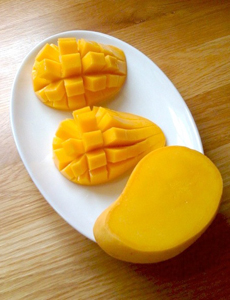
Sliced Mango
[2] Champagne mangoes (their proper name is Ataulfo) are in season from late February to early August. They’re a smaller variety but with a creamier texture—the larger varieties tend to be fibrous (photo © I Love Mangoes).

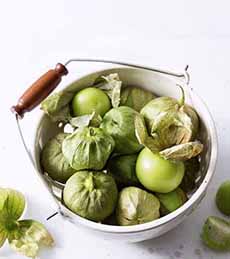
Tomatillos With & Without The Husk
[3] Tomatillos look like cherry tomatoes when they’re out of their husks, but the husks are a dead giveaway that they’re related to gooseberries (photo © Sunbasket).

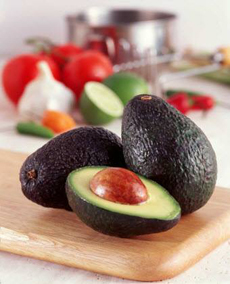
Hass Avocado Whole & Halved
[4] The Hass avocado is a smaller variety, but it has the creamiest flesh that’s perfect for guacamole (photo © Hass Avocado).


July 22nd is National Mango Day. Add some mango to your guacamole with this Mango-Tomatillo Guacamole recipe.

We’ve previously published a recipe for Tomatillo Guacamole, which replaces the red tomatoes in guacamole with green tomatillos.

Although they look like green cherry tomatoes, tomatillos are not green tomatoes but are related to the gooseberry. Here”s the difference between tomatoes and tomatillos.

Now, we add another ingredient to guacamole: diced mango, which adds bites of sweetness. The recipe is courtesy of Chef Ingrid Hoffmann.

The history of mangos is below.

For the plural form, both mangos and mangoes are correct.
 
 
RECIPE: MANGO-TOMATILLO GUACAMOLE

Tortilla chips are a classic pairing, but you can serve this guacamole as a topping or as a side with grilled chicken and fish, as an added layer to sandwiches, burgers, and even hot dogs. Stir some into Greek yogurt for a savory yogurt treat, dip, and sauce.

Why Hass avocadoes? There are larger avocados, but the Hass has the creamiest flesh: perfect for guacamole. Here’s more about them.
 
Ingredients For 2 Cups

  • 2 ripe Hass avocados, halved, seeded, and peeled
  • 2 tomatillos, husked and finely chopped
  • 1 ripe mango, peeled, seeded, and cubed
  • ½ small red onion, finely chopped
  • 1 serrano chile, finely chopped (remove seeds before chopping for less heat)
  • 2 tablespoons fresh cilantro, chopped
  • 1 tablespoon fresh mint leaves, chopped
  • 1½ tablespoons fresh lemon juice
  • Kosher salt
  • Baked tortilla or pita chips, for serving
  •  
    Preparation

    1. MASH the avocados with a fork in a medium bowl, leaving them still a bit chunky.

    2. FOLD in the tomatillos, mango, onion, chile, cilantro, and mint. Add the lemon juice, and gently mix to evenly distribute the ingredients. Season with salt.

    3. LAY a piece of plastic wrap directly on the surface of the guacamole to discourage discoloring, and refrigerate until chilled, at least 1 hour. Serve with the chips for dipping.
     
     
    MANGO HISTORY

    While it may not look like a relative, the mango (Mangifera indica), is a member of the cashew family (Anacardiaceae*). It is one of the most widely cultivated tropical fruits of the tropical world.

    The mango tree is considered indigenous to southern Asia, especially Myanmar and the Assam state of India, and numerous cultivars have been developed. Mangoes are a rich source of vitamins A, C, and D.

    The word “mango” came to the English language from the Portuguese manga, from the Malay mangga.

    Mangoes originated in India more than 4,000 years ago. They spread gradually throughout Asia and then to the rest of the world.

    Due to the mango’s large center seed, the fruit could not be transported by birds and relied on humans to transport them across the world.

    Mangos are a sacred fruit in Buddhism. The spread of Buddhism across Southeast Asia resulted in the spread of mangoes.

    Persians carried mangoes across western Asia and planted seeds in east Africa in the 10th century.

    The Portuguese disovered the fruit when they came to Kerala in 1498 for the spice trade. The tree was not introduced into the Western Hemisphere until about 1700, when it was planted in Brazil.

    From Brazil mangoes spread throughout the Americas. They reached the West Indies about 1740 [source].

    They were first planted in Barbados in 1742 and by the early 19th century were being grown in Mexico. Mangoes were not really grown in the U.S. until the 1800s.

    Mango flavor has been described as a mix of oranges, peaches, and pineapples. Today most mangoes found in American grocery stores are grown in Florida, Mexico, Haiti, and South America. However, Asia grows 75% of all mangoes worldwide. India is the top producer [source].
     
     
    > The history of avocados.

     
    ________________

    *The Anacardiaceae family also includes tasty foods like the Peruvian pepper, pistachio nuts, and the spice sumac. But it also includes poison ivy and poison oak. Here’s more about it.


    CHECK OUT WHAT’S HAPPENING ON OUR HOME PAGE, THENIBBLE.COM.


    Comments off

    Lamington Recipe & Lamington History For National Lamington Day

    Updated July 2026

    July 21st is National Lamington Day. What’s a lamington? It’s a sponge cake dipped in chocolate and topped with desiccated coconut that Australians enjoy at breakfast, afternoon tea, or dessert. A kitchen accident, it is one of Australia’s most famous desserts (the other is the Pavlova).

    The classic lamington can be single squares or layers sandwiched with filling—whipped cream or jam (photo #2). We admit to using both when we made the recipe below!

    Beyond squares, cooks have made lamingtons in the shape of Swiss rolls (photo #4), whoopie pies (photo #6), loaves, and everything in-between.

    The squares are enjoyed as a snack or at any meal of the day, starting with breakfast.

    Considered the national dessert of Australia*, you’re not likely to find lamingtons on the shelf in the U.S. So today’s the day to bake a recipe and invite your friends for tea.

    Below:

    > The history of the lamington.

    > A delicious lamington recipe.

    > What is desiccated coconut?

    Elsewhere on The Nibble:

    > The history of cake.

    > The history of sponge cake.

    > The different types of sponge cake.

    > The different types of cake: a photo glossary.

    > The year’s 55 cake holidays.

     
    Plate Of Lamingtons
    [8] Thanks, Australia, for these delightful cakes (photo ©
    The Nibble).
     
     
    THE HISTORY OF THE LAMINGTON

    The Australian cake was invented due to an accident that happened in Queensland, Australia—the northeastern state of Australia adjacent to the Great Barrier Reef.

    A recipe appeared in the Queensland Country Life newspaper as early as 1900.

    According to Queensland Government House, the lamington was created by the chef of the state’s governor, Lord Lamington, Charles Wallace Alexander Napier Cochrane-Baillie. But it may not be that simple.

    The story is that the governor ordered his favorite yellow sponge cake to be served to guests at Government House in Brisbane. A maid-servant accidentally dropped the cake into melted chocolate.

    When his Lordship was told of the accident, not wanting to waste the cake, he recommended that the cook roll the squares in coconut shavings to make a less messy finger food to eat with afternoon tea. The error was proclaimed magnificent by all [source].

    How do you drop an entire plate of sponge cake squares into melted chocolate? It’s one of those far-fetched stories, but then, that’s how chocolate ganache was invented.

    In addition to National Lamington Day, there is the Australian Lamington Appreciation Society (ALAS, perhaps referring to the need to eat more than one piece at a time), which is committed to the preservation of the lamington and the celebration of Lamington Day.

    However, there is controversy.

    Research in neighboring New Zealand notes the earlier presence of the Wellington, a double-layer sponge dessert, covered in shavings of coconut intended to imitate the snow-capped mountains of New Zealand.

    “What we have here is conclusive evidence that the lamington cake was in fact a product of New Zealand” [source].

    Them’s fightin’ words! And they turn out to be a hoax†.

    And there’s even more shade!

    Lord Lamington was not the most accomplished of governors. Extensive research by the Governors of the Australian Colonies and States produced evidence that Lord Lamington had only “one, single, solitary, positive achievement of any Governor since the First Fleet arrived in 1788,” and that was the creation of the world-famous lamington cake [source].

    Harumph! Having Australia’s favorite cake attributed to you is no mean feat.

    And eating them is the best way to reclaim his good name.

    Lamingtons Today

    Australians love their lamos (if you want to sound local, call it a lamo). The original chocolate lamington has been fashioned into numerous flavors, as well as adapted to cake pops, cheesecakes, ice cream pops, layer cakes, panna cotta, roulades, and whoopie pies, for starters. Here’s an assortment of 20 recipes from Australia.
     
     
    PAUL TULLY’S TRUE-BLUE DELICIOUS AUSSIE LAMINGTON RECIPE

    This recipe is from Paul Tully, a city councilor in Queensland, “a fanatic devotée of the lamington,” and creator of the Australian Lamington Appreciation Society.

    You can make superfine sugar by processing granulated sugar at high speed for 1 to 2 minutes. Stop before the sugar turns into powder. Let the sugar dust settle for 30 seconds, then remove the lid.
     
    Ingredients For The Sponge Cake

  • 3 eggs
  • 1/2 cup butter
  • 1/2 cup superfine sugar
  • 1 teaspoon vanilla extract
  • 1 cup self-raising flour
  • 1/2 cup milk
  •  
    Ingredients For The Chocolate Icing

  • 4 cups powdered (10x, confectioner’s) sugar
  • 1/3 cup cocoa
  • 2 tablespoons butter
  • 1/2 cup milk
  • 4 tablespoons boiling water
  •  
    Plus

  • 3 cups desiccated coconut
  •  
    Preparation

    1. BEAT the eggs well, gradually adding the sugar until dissolved. Add the milk and vanilla extract and then stir in the flour. Whip the butter into the mixture.

    2. POUR the batter into a cake pan or lamington baking dish and bake in a moderate oven of 180 degrees Celsius for 35 minutes. Allow the cake to cool for at least 10 minutes and then stand for 24 hours preferably in the refrigerator, before applying the icing.

    3. MAKE the icing. Stir the cocoa and powdered sugar vigorously in a large bowl. Add the milk, butter, and boiling water, warming the chocolate mixture over very low heat until it has a smooth creamy texture.

    4. CUT the sponge cake into equal two-inch squares. Using a fork or thin skewer, dip each piece into the chocolate mixture, ensuring that the mixture is liberally and evenly applied.

    5. DIP each piece into the desiccated coconut, allowing the lamingtons to cool on a wire tray for several hours.

    By the way, the dessert is so popular that Australians can buy a special lamington pan, a shallow cake pan that’s 30.5 x 20.5 x 2.8 cm. In inches, that’s 12 x 8 x 1 inch.


    Lamington And Coffee
    [1] A classic lamington can be a single layer or a filled “sandwich,” (photo © The Nibble).

    Lamington Flavors
    [2] “Lamos,” for short, are made in a variety of flavors. The pale versions in the photo are dipped in white chocolate (photo © Pham Thanh Dat | Pexels).

    White Chocolate Raspberry Lamingtons
    [3] White chocolate raspberry lamingtons. Here’s the recipe (photo © The Good Oil).

    Lamington Swiss Roll
    [4] Lamingtons are made in as many shapes as there are bakers who want to make them. Here’s the recipe for this lamington Swiss roll (photo © The Loopy Whisk).

    Lamington Layer Cake
    [5] How about a Lamington layer cake or birthday cake? Here’s the recipe (photo © Women’s Weekly Food).

    Lamington Whoopie Pies
    [6] Lamington whoopie pies (photo © The Nibble).

    Desicated Coconut
    [7] Desiccated coconut (photo © The Nibble).

    Freshly-Baked Lamingtons
    [8] Here’s a recipe showing step-by-step from an Aussie specialist (photo © The Scranline).

     
    Lamington Cake Pops
    [9] You can even make lamington cake pops. Here’s the recipe (photo © Women’s Weekly Food).
     
     
    WHAT IS DESICCATED COCONUT?

    Desiccated coconut (photo #7)is fresh coconut flesh that has been shredded or flaked and dried to remove as much moisture as possible. It’s typically unsweetened.

    The term “desiccated” literally means “thoroughly dried out.” Because it’s dry, it absorbs liquids. In lamington making, it absorbs a bit of the chocolate icing as it sets, creating a stable “crust” that prevents the cake from being messy to handle.

    It’s a staple ingredient in baking and confectionery, particularly in Australia and the U.K., and is the defining exterior coating of a lamington. It’s also commonly used in granola, energy balls, and traditional sweets like coconut ice.

  • Unlike the moist sweetened shredded coconut typically used in American baking, desiccated coconut is bone-dry to the touch. This gives it a longer shelf life and a different structural role in recipes.
  • It’s usually processed into very fine grains or tiny shards, rather than the long, stringy strands seen in fresh or sweetened coconut. This fine texture allows it to adhere easily to sticky surfaces, like the chocolate glaze on a lamington.
  •  
    NOTE: If a recipe calls for desiccated coconut and you only have the moist, sweetened shredded type, the results will differ significantly because the extra moisture and sugar can affect the consistency and sweetness of the final product.

    > Check out the different types of coconut and their uses.

    ________________
     
    *While Australia does not have an official “national dessert” codified by law in the same way it has a national anthem or flag, the lamington holds that title by popular acclaim and government recognition. In 2006, the National Trust of Queensland even named the lamington one of Australia’s favorite icons. It is also referred to as the “national cake.”

    In 2014, The Guardian published an April Fools’ Day article claiming that an earlier New Zealand cake called the “Wellington” was the lamington’s ancestor. The story said it was a double-sponge cake covered in coconut—supposedly resembling New Zealand’s snow-capped mountains—and that Lord Lamington encountered it in Wellington before becoming Governor of Queensland. However, although The Guardian later identified that article as an April Fools’ joke, and the “Wellington cake” origin story has since been repeated as though it were real. There is no reliable historical evidence that a Wellington cake existed. So if you want to eat a Wellington, it will have to be Beef Wellington.


    CHECK OUT WHAT’S HAPPENING ON OUR HOME PAGE, THENIBBLE.COM.


    Comments off

    Strawberry Ice Cream Soda Recipe (aka Float) For National Ice Cream Soda Day

    Strawberry Ice Cream Float Recipe
    [1] A special strawberry float from chef David Venable (recipe below—photo courtesy QVC).

    A bottle and glass of Boylan Lemon-Lime Soda
    [2] 7-Up and Sprite are standard lemon-lime sodas, but we go for the best: Boylan’s. It’s all natural, and it shows (photo © Boylan Bottling).

    Orange & Vanilla Ice Cream Soda
    [3] Not a lemon-lime fan? You can make any flavor float with the soda of your choice. Here, orange soda and vanilla ice cream create a “Creamsicle” ice cream soda (photo © Jarritos Mexican Soda | Unsplash).

    Strawberry Milkshake
    [4] A milkshake differs from a float by substituting milk for the soda water, and blending of the ingredients together (photo © Friendship Dairies).

    Strawberry, Chocolate, & Coffee Frappes
    [5] A New England frappe. See how it’s different from a milkshake, below (photo © L.A. Burdick).

    A Dish Of Strawberry Ice Cream
    [6] Want to make your own strawberry ice cream? Here’s a recipe (photo © Straus Family Creamery).


    June 20th is National Ice Cream Soda Day, another word for a float.

    A glass is filled with soda; then scoops of ice cream are added, which have the effect of floating in the soda. Hence: ice cream float. You can add whipped cream, sprinkles and a cherry (similar to photo #1), or just enjoy it au naturel* (photo #3).

    When was the last time you had an ice cream soda?

    Today’s recipe, from QVC’s David Venable, is more layered than most.

    A typical strawberry float is made with strawberry soda pop and two scoops of strawberry ice cream, with an optional garnish of whipped cream and a whole strawberry.

    Before the general availability around 1900-1910†, people got their refreshing soft drinks at soda fountains. Soda water from the fountain tap and strawberry syrup from a pump were used to create the strawberry sodas.

    But the most essential ingredient is strawberry ice cream!

    While the servants of wealthy families had long hand-whipped heavy cream and crushed strawberries in a bowl of ice (the ingredients were combined in a smaller bowl that was nestled in the bowl of ice), the first printed reference to strawberry ice cream dates to 1813.

    It was then that First Lady Dolley Madison served strawberry ice cream in the White House, for the second inauguration banquet of President James Madison.

    In fact, she is credited for originating the flavor [source].

    It took until 1874 for a soda jerk to invent the ice cream soda.

    Below:

    > David Venable’s strawberry ice cream soda recipe.

    > The differences between a frappe, ice cream soda/float, milkshake, malted milk, and smoothie.

    > The year’s 9+ ice cream drink holidays.

    > The history of bottled soft drinks.

    Elsewhere on The Nibble:

    > The history of the ice cream soda.

    > The history of ice cream.

    > The history of strawberries.

    > The year’s 50+ ice cream holidays.

    > National Strawberry Ice Cream Day is January 15th.

    > More strawberry recipes.

    > National Strawberry Day is February 27th.
     
     
    RECIPE: STRAWBERRY ICE CREAM SODA (A.K.A. FLOAT)

    Ingredients For 2 Servings

  • 2 cups lemon-lime soda
  • 2 tablespoons strawberry Jell-O
  • 2-1/2 cups strawberry ice cream
  • 1/2 cup whipped cream topping (we use Cabot’s when we can’t whip from scratch)
  • Garnish: 2 whole strawberries
  •  
    Preparation

    1. STIR together the jam and water in a mixing bowl. Set aside. In another mixing bowl…

    2. STIR together the soda and Jell-O. Set aside.

    3. DIVIDE the strawberry ice cream between two large glasses. Top the ice cream with the soda mixture, then the whipped topping, dividing both evenly between the glasses. Drizzle the jam mixture over the top and garnish each with a whole strawberry.

    > Here are more David Venable Recipes on QVC.
     
     
    FOOD 101: Why are some brands of strawberry ice cream are almost white with red flecks of strawberry, while others are unquestionably pink?

    Red food color is sometimes added to give the strawberry ice cream a deeper color and provide the consumer with a more “strawberry” experience. Good brands don’t add color.
     
     
    THE YEAR’S 9+ ICE CREAM DRINK HOLIDAYS: FLOATS (A.K.A. ICE CREAM SODAS), MILKSHAKES & MALTED MILK

  • April 20: National Chocolate Malt Day
  • May 16: National Strawberry Milkshake Day
  • June 10: National Black Cow Day
  • June 20: National Ice Cream Soda Day
  • June 20: National Vanilla Milkshake Day
  • July 26: National Coffee Milkshake Day
  • August 6: National Root Beer Float Day
  • September 12: National Chocolate Milkshake Day
  • October 7: National Frappe Day
  •  
    Plus, while they’re not ice cream drinks, they’re cousins:

  • June 21: National Smoothie Day
  • October 3: World Smoothie Day
  •  
     
    Now that you know the holidays, do you know the difference between a float, a frappe, a malt, a shake, and a smoothie?

    The answer follows.


    FLOAT, MALTED, MILKSHAKE, SMOOTHIE: THE DIFFERENCE

  • Float: Short for ice cream float, a float is a carbonated soft drink with a scoop of ice cream “floating” in it (photo #1).
  • Frappe: In most of the U.S., a frappe is a milkshake: a blended drink of milk, ice cream, and flavoring. In New England, however, a milkshake is made with just milk and syrup, while a frappe includes ice cream (photo #5).
  • Shake: Short for milkshake, it was originally an alcoholic drink. A print reference in 1885 described it as a “sturdy, healthful eggnog type of drink” made with eggs, whiskey, and flavorings. combines ice cream, milk, and flavoring in a blender (photo #4). The modern milkshake was born in 1922 when a soda jerk at a Chicago Walgreens was inspired to add two scoops of ice cream to a malted milk (milk, chocolate syrup, and malt powder). Because not everyone liked malt, the blender drink was divided into two options: a milkshake (no malt) and malted milk (with ice cream and malt powder)—photo #4.
  • Malt Short for malted milk, a malt is a milkshake with added malt. Malt powder was invented in 1887 as a nutritional supplement for infants!
  • Smoothie is what we think of as a “yogurt milkshake,” a blended drink that substitutes yogurt for ice cream. Smoothies also usually incorporate fruits, vegetables (photo #6). Health-focused recipes boost protein with nut butters or protein powder, seeds (chia, flax), and anti-inflammatory spices like cinnamon, ginger and turmeric.
  •  
     
    4 Glasses Of Smoothies
    [6] A rainbow of smoothies (photo © Sun Basket).
     
    ________________

    *In France, au naturel means cooked or served plainly. When used to refer to people, it means nude.
     
    Bottled soda/soft drinks first appeared in Europe in 1783, with Johann Jacob Schweppe creating the first commercial bottled carbonated mineral water (unflavored soda water). In the U.S., flavored, sweetened carbonated drinks became popular in the early-to-mid 1800s, with mass production of bottled soda water starting around 1835. By roughly 1900–1910, bottled carbonated soft drinks were commercially available to everyday Americans, with the crown cap (1892) and automated bottle production (early 1900s) being the pivotal enabling technologies.

    The Crown Cork Bottle Seal, patented in 1892 by William Painter, a Baltimore machine shop operator, was the first very successful method of keeping the bubbles in the bottle. In 1899, the first patent was issued for a glass blowing machine for the automatic production of glass bottles. In 1899, the creator of Coca-Cola sold the national rights to bottle the drink to Benjamin F. Thomas and Joseph B. Whitehead. They started a national network of bottlers, creating the basic franchising format by which the soft drink industry is still run.

    Thus, by the early 1900s, bottling technology made it possible for soda to be sold in bottles naationwide, and consumed by consumers outside of pharmacies. The 1920s brought six-pack cartons and automatic vending machines; bottled soda was fully mainstream and a grocery staple. Alas, soda fountains began their long, slow decline. As a coda, Prohibition, which began on January 17, 1920, gave the soft drink industry a huge boost as consumers were forced to turn to sodas instead of bars.

    Today, 36% of Americans drink regular carbonated drinks weekly, with 28% drinking diet carbonated drinks. Per-capita carbonated soft drink consumption was about 41.9 gallons per person in 2025 [sources: CDC, Grand View Research, Western Grocer]/


    CHECK OUT WHAT’S HAPPENING ON OUR HOME PAGE, THENIBBLE.COM.


    Comments off


    © Copyright 2005-2026 Lifestyle Direct, Inc. All rights reserved. All images are copyrighted to their respective owners.