|
Our Top Pick Of The Week—and perhaps the Top Pick of our Lifetime—is the celestial liquor-infused ice cream and sorbet from Aubi & Ramsa. It may be National Ice Cream Month, but in any month, these fantasy pints deliver scoops of the greatest joy. We do not exaggerate.
Ice cream is our favorite food, and as a specialty food writer, we have had quite a few “super-premium” and “ultra-premium” ice creams from all over the country. We’ve had other brands of alcohol-infused ice cream†, too.
But Aubi & Ramsa is in a class by itself: a unique line of small-batch, ultra-premium wine- and spirit-infused ice creams* that dazzle beyond belief. Again, we do not exaggerate.
The spirits used are top-shelf: Don Julio Tequila, Hendrick’s Gin, Maker’s Mark Bourbon, Macallan 12 Year Scotch, and Veuve Cliquot Champagne, for example.
Founders Matias Aubi and Rafael Ramirez have created something unique and out-of-this-world. Not only is the base ice cream outstanding, but the infusion of alcohol reaches new heights.
The ice cream and sorbet are prepared using a process that blends in the alcohol so that its taste remains vibrant. There’s plenty of flavor of Bourbon, Cognac, gin, rum, Scotch, tequila, etc.‡‡ dancing on your palate.
Disclaimer: Presently, shipping is only available to California, Florida, New York, and Texas. Is it worth moving for? Well…you can start by taking a vacation to Las Vegas, Miami, Nashville, New York City, or Tampa, where there are Aubi & Ramsa ice cream parlors. Eat as much as you want, then take more back to your hotel room.
THE FLAVORS
The ice creams and sorbets contain 4.9% A.B.V. (ice cream and sorbet won’t freeze solid above 5%). That’s just 9.8 proof, so yes, you can eat and drive.
Of course, these frozen delights include no preservatives or colors; they’re 100% natural. In each, you’ll discover a symphony of flavors.
For those who are hungry to know: The Highland Truffle ice cream, made with Macallan 12-Year Scotch and chocolate bits, is by far the company’s most popular flavor. It was ours, too. It is simply the best chocolate ice cream we will ever have.
The Ice Creams
The ABC Ice Cream: Cognac ice cream blended with Amaretto, Baileys Irish Cream Liqueur, and Remy Martin Cognac‡.
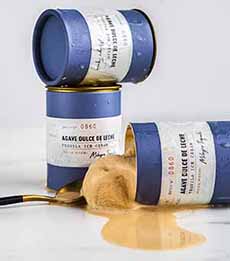
Agave & Dulce de Leche Ice Cream: Dulce de leche ice cream blended with Milagro Reposado Tequila and finished with a caramel swirl (photo #2).
Chocolate & Amaretto Ice Cream: Dutch dark chocolate ice cream blended with Disaronno Originale Amaretto Liqueur and silvered almonds.
Chocolate Azteca Ice Cream: Mexican chocolate ice cream blended with Salvación Mezcal Original and a sprinkle of cinnamon.
Chocolate Hazelnut Martini Ice Cream: Chocolate ice cream blended with Hendrick’s Gin and Frangelico Hazelnut Liqueur.
Coco Loco Ice Cream: Coconut ice cream blended with Don Julio Blanco Tequila and coconut flakes.
Espresso Martini Ice Cream: Coffee ice cream blended with Tanqueray No. Ten Gin and coffee liqueur.
Highland Truffle Ice Cream: Belgian chocolate ice cream blended with The Macallan 12-Year Double Cask Single Malt Scotch Whisky and (delightful!) chocolate bits (photo #2).
Jack & Chocolate Ice Cream: Belgian chocolate ice cream blended with Jack Daniel’s Single Barrel and a dulce de leche swirl.
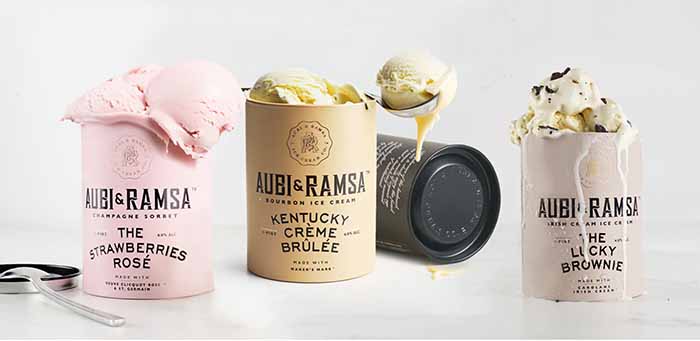
Kentucky Crème Brûlée Ice Cream: Crème brûlée ice cream (think vanilla custard) blended with Maker’s Mark Bourbon and accented with caramelized sugar sprinkles (photo #7).
Key Lime Martini Ice Cream: Key lime ice cream blended with St. George Botanivore Gin and accented with some graham cracker crust.
Lucky Brownie Ice Cream: Irish cream ice cream blended with Carolan’s Irish Cream Liqueur and pieces of organic brownie (photo #7).
Old Fashioned Ice Cream: Bourbon ice cream made with Woodford Reserve Bourbon and Cointreau Triple Sec Liqueur.
Piña Colada Ice Cream: Pineapple and coconut ice cream blended with Diplomático Reserva Exclusiva Rum.
Strawberry Daiquiri Ice Cream: Strawberry ice cream blended with Zacapa No. 23 Centenario Rum.
White Russian Ice Cream: Coffee ice cream blended with Beluga Vodka and St. George Nola Coffee Liqueur.
The Sorbets
Japanese Pearl Drop Sorbet: Raspberry sorbet blended with Veuve Clicquot Champagne, Soto Saké, and Chambord Raspberry Liqueur.
Passion Fruit Margarita Sorbet: Passion fruit sorbet blended with Casamigos Tequila.
Strawberries and Rosé Sorbet: Strawberry sorbet blended with Veuve Cliquot Rosé Champagne and St. Germain Elderflower Liqueur (photo #7).
Tangerine Mimosa Sorbet: Tangerine sorbet blended with Moët et Chandon Imperial Brut.
GET YOUR ICE CREAM & SORBET—NOW!
There are two sizes: 16-ounce pints and 3.7-ounce individual containers. You select which flavors you’d like.
Head to AubiRamsa.com.
THE STORY OF AUBI & RAMSA
Matias Aubi and Rafael Ramsa met while working as creative directors for an advertising agency network. Together they developed the brand’s concept, feel, and look (great job, guys!).
Given how hard it is to get an ice cream business off the ground (it melts!), much less license names from big liquor companies, we take our hat off to them.
And we send them lots of gratitude for their remarkable ice cream.
|
|

[1] The most popular flavor by far, Highland Truffle Ice Cream: Belgian chocolate ice cream blended with The Macallan 12-Year Double Cask Single Malt Scotch Whisky and (delightful!) chocolate chunks.

[2] Agave Dulce de Leche, dulce de leche ice cream blended with Milagro Reposado Tequila and finished with a caramel swirl (all photos © Aubi & Ramsa).
[3] The blissful Strawberries and Rosé Sorbet blends strawberry sorbet with Veuve Cliquot Rosé Champagne and St. Germain Elderflower Liqueur.
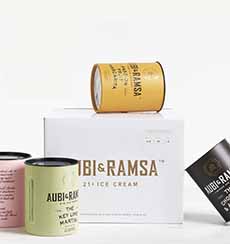
[4] Ice cream and sorbet arrive in lovely white boxes, perfect for gifting.
[5] Our dream ice cream party would be a tub full of individual-size (3.7 ounces) Aubi & Ramsa flavors.
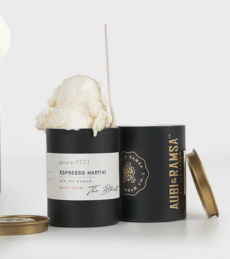
[6] Yes, you can eat your Martini ice cream from a Martini glass—although we are happy to eat it straight from the pint. |
________________
*The brand calls its products “gelato,” but there is no “ultra-premium” gelato. Gelato is less rich than ice cream. See the difference between ice cream and gelato here.
†Mercer’s Wine Ice Cream, Tipsy Scoop, and Wine Cellar Sorbets, for starters.
‡It finally dawned on us that “ABC” derives from A for Amaretto, B for Baileys, and C for Cognac.
‡‡Want to know why some of these spirits are capitalized and others not? Because formal names are capitalized. Bourbon, Cognac, and Tequila are cities or counties; gin and rum are not. So, for example, you would not capitalize “red wine” or “white wine,” but would capitalize a Manhattan cocktail, a Moscow Mule, or a Singapore Sling.
[7] A brand of ice cream and sorbet so good, we cried.
CHECK OUT WHAT’S HAPPENING ON OUR HOME PAGE, THENIBBLE.COM.
|