THE NIBBLE BLOG: Products, Recipes & Trends In Specialty Foods


Also visit our main website, TheNibble.com.

A Year Of Sandwich Holidays For National Sandwich Month

August is National Sandwich Month. While sharing some of our favorite sandwich recipes, we’re also presenting a year of sandwich holidays (below). Plan to celebrate!

The modern European sandwich began in England in 1762 as a portable, convenient finger food. The concept spread over time to countries worldwide, resulting in the stuffed pita pockets of the Middle East to Korean bao, Japanese katsu sando, and Vietnamese bânh mì.

So what exactly is a sandwich? You know what it is, but just for the record:

A classic sandwich comprises two slices of bread with a filling.

The filling can be just about anything but typically consists of cheese, fish, meats, protein salads (chicken, egg, tuna), or vegetarian/vegan ingredients, that are placed between the slices.

The bread can be slices from a loaf or can be a roll (bagel, hamburger roll, hero roll, hot dog roll, kaiser roll, etc.), international bread (baguette, ciabatta, croissant [photo #1], focaccia), flatbread wraps (photo #4), and even non-bread, like lettuce leaves (photo #5).

Within the overall realm of “sandwiches,” there are at least nine sub-categories. Here they are, per our own analysis and breakdown.

Below:

> The different categories of sandwiches.

> The year’s 30 sandwich holidays.
 
Elsewhere on The Nibble:

> The history of the sandwich.

> The different types of sandwiches: a glossary.
 
 
CATEGORIES (TYPES) OF SANDWICHES

Note that within the nine types of sandwiches, the definition of a sandwich as two or more pieces of bread with filling between them varies in the case of open-faced sandwiches, specialty sandwiches, and wraps.

Classic sandwich. Any filling between two slices of bread, a sliced roll, biscuit, croissant, bagel, etc. Two slices of thicker flatbreads, such as focaccia and naan, can make a conventional sandwich. Hero and hoagie sandwiches also fall into this category. So do donuts and waffles substituting for bread, Paula Deen style.

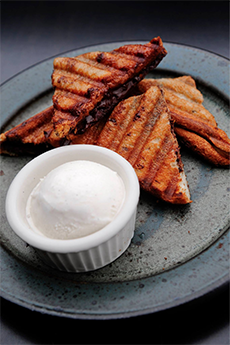
Dessert/sweet sandwich. These include regular sandwiches with sweet fillings: Marshmallow Fluff and jelly or peanut butter, Nutella, and banana and chocolate spread, for example. We’ll add ice cream sandwiches, “frozen sandwiches” which sandwich ice cream betweern thin slices of cake or cookies.

Double-decker sandwich or stacked sandwich. A conventional sandwich with at least three slices of bread. A club sandwich, for example, can be made from three or four slices of bread. A Big Mac is a double-decker sandwich. A Dagwood is the king of stacked sandwiches.

Fried sandwich. A classic sandwich with a filling is dipped into an egg mixture, with or without a breadcrumb coating, and then deep-fried or pan-fried. A Monte Cristo sandwich is an example.

Grilled sandwich. This category includes sandwiches grilled on a flat grill, a wire grill, a grill pan on the stove, or a panini press. The objective is to melt or warm the ingredients. The best example is a grilled cheese sandwich.

Open-faced or open-face sandwich, a.k.a. an open sandwich, tartine in French, and smørrebrød in Danish. It uses only one slice of bread with the filling piled on top. Hot sandwiches such as roast beef and gravy are often served open-faced. Avocado toast, Eggs Benedict, and Welsh rarebit [rabbit] are also open-faced sandwiches, as is the infamous creamed chipped beef on toast. A tostada could be given a pass into this group.

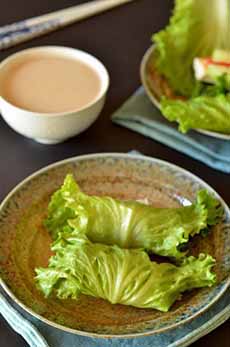
Paleo sandwich. Bread is not part of a paleo diet, so paleo sandwiches use cabbage, collard, or lettuce leaves, or cauliflower patties as their base. Depending on the base, they can be crafted like conventional sandwiches or wraps (photo #5).

Party sandwich or specialty sandwich. This comprises a fancy presentation typically made for parties or afternoon tea. Examples include:

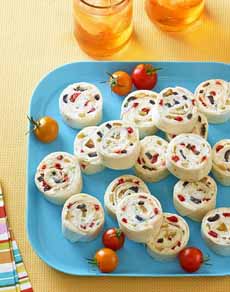
  • Pinwheel or rolled sandwich. It’s made with thin bread or a tortilla base; a thin layer of filling is spread over the entire base. It is then rolled into a tight tube and sliced into rounds. When laid flat, these rounds resemble pinwheels (photo #6).
  • Finger sandwich, tea sandwich, or buffet sandwich. Two bites’ worth of sandwich are cut into shapes from rectangles to triangles to rounds, with the crusts cut off. A checkerboard or mosaic sandwich is made from contrasting squares of white bread and whole wheat or pumpernickel bread. A ribbon sandwich is a layered finger sandwich with multiple fillings and two kinds of bread.
  • Loaf sandwich or sandwich cake. A loaf of bread sliced into two or more layers, filled, and made to look like a frosted layer cake (photo #7).
  •  
    Wrap sandwich. A sandwich filling is rolled in a soft flatbread such as lavash, naan, piadina, pita, or tortilla. Burritos, quesadillas, and tacos can also be considered as part of this group. And, while it isn’t made with bread, a cabbage, collard, or lettuce wrap (photo #5) also belongs here.
     
     
    THE YEAR’S 30 SANDWICH HOLIDAYS
     
    January

  • January 14: National Hot Pastrami Sandwich Day
  •  
    March

  • March 14: National Reuben Sandwich Day
  • March 18: National Sloppy Joe Day
  •  
    April

  • First Thursday: National Burrito Day
  • April 12: National Grilled Cheese Sandwich Day
  •  
    May

  • May: National Hamburger Month
  • May 5: National Hoagie Day
  • Third week: British Sandwich Week*
  • May 28: National Hamburger Day
  •  
    June

  • June 5: National Veggie Burger Day
  • June 12: International Falafel Day
  •  
    July

  • July: National Hot Dog Month
  • July 21: National Hot Dog Day
  •  
    August

  • August: National Sandwich Month
  • August: National Panini Month
  • August 2: National Big Mac Day
  • August 2: National Ice Cream Sandwich Day
  • August 11: National Panini Day
  • August 23: National Cuban Sandwich Day
  •  
    September

  • September 1: National Gyro Day
  • September 14: National Eat A Hoagie Day
  • September 15: National Double Cheeseburger Day
  • September 17: National Monte Cristo Day
  • September 18: National Cheeseburger Day
  • Last Friday: German Butterbrot Day or German Sandwich Day†
  •  
    October

  • October 9: National Submarine-Hoagie-Hero-Grinder Day
  • Third Week In October: National Kraut Sandwich Week
  •  
    November

  • November 3: National/World Sandwich Day
  • November 4: National Submarine Sandwich Day
  • November 9: National Fried Chicken Sandwich Day
  • November, 4th Friday (day after Thanksgiving): National Turkey Sandwich Day
  •  

    Chicken Croissant Sandwich
    [1] A sandwich is a filling in between two slices of bread. That includes rolls and other breads such as croissants (photo © Andrea Roxana | Unsplash).

    [2] There are dessert sandwiches, too, like this chocolate panini served with a side of ice cream (photo © Parma 8200 | Bloomington, MN [alas, permanently closed]).
    Lobster Roll With Potato Chips
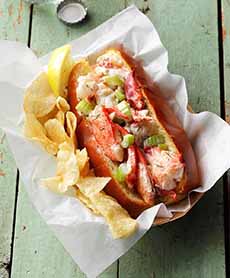
    [3] Lobster rolls are a sandwich, as are hot dogs and burgers (photo © Taste Of Home).

    Turkey Wrap Sandwich
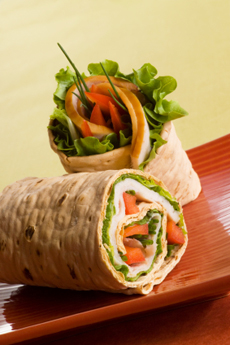
    [4] Wrap sandwiches are easy to make: Just roll the ingredients in a tortilla or other flatbread (photo © Cloud Food | iStock Photo).

    Lettuce Wrap Sandwiches
    [5] Can’t have bread? Make your wrap sandwich with cabbage, collard, or lettuce leaves (photo © Coffee And Quinoa).

    Chicken Cranberry Pinwheel Sandwiches
    [6] Pinwheel sandwiches are fancy party fare (photo © Hidden Valley).

    Party Sandwich Loaf, a sandwich in loaf form that's iced with cream cheese to look like a layer cake.
    [7] A sandwich loaf or party sandwich loaf is a sandwich made from a loaf of bread and iced with cream cheese or other savory to resemble a layer cake. Here’s the recipe for this one (photo © Betty Crocker).

     
    ________________

    *British Sandwich Week is a week-long celebration of “quite possibly the most iconic British culinary invention, the sandwich.” It is essentially a marketing promotion for brands and some feature charitable components. The sandwich industry also holds its Sammies Awards, with winners in numerous categories (e.g. Best New Sandwich, Sandwich Retailer of the Year, Healthy Eating Award Winner).

    †German Sandwich Day celebrates a simple, open-faced German sandwich called a Butterbrot (“buttered bread”). It’s a favorite German snack, consisting of a single slice of high-quality German bread and quality butter, served plain or topped with fresh herbs, sea salt, or something more substantial—e.g. a slice of cheese or meat, cream cheese, jam, honey, or Nutella.


    CHECK OUT WHAT’S HAPPENING ON OUR HOME PAGE, THENIBBLE.COM.


    Comments off

    What Is Albariño, For International Albariño Day

    Glass & Bottle Of Albarino White Wine
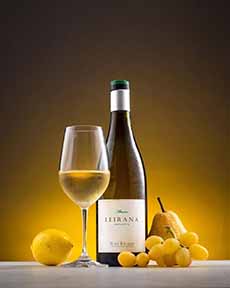
    [1] Uncork a bottle of Albariño, a perfect summer one (photo © Foods & Wines From Spain | Facebook).

    A Glass Of Albarino White Wine From Spain
    [2] Albariño is straw gold in color (photos #2 and #5 © Rías Baixas Wines | Facebook).

    Pouring A Glass Of Albarino Wine From Portugal
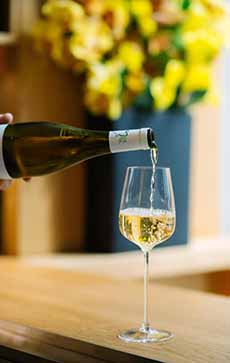
    [3] Pouring a glass of Alvarinho from the Ribiero region of Portugal. Here’s more about it (photo © Follow The Camino).

    A Bottle Of Albarino Wine With Oysters On The Half Shell
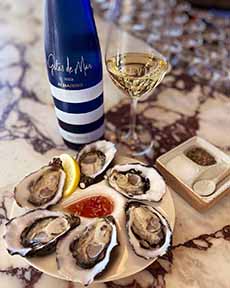
    [4] Instead of a pricey Chablis, try an Albariño with oysters and plats de mer. It’s much more reasonable (photo © Alvin’s Wine Bar | Paradise Point, Queensland, Australia).

    A Cluster Of Albarino Grapes On The Vine
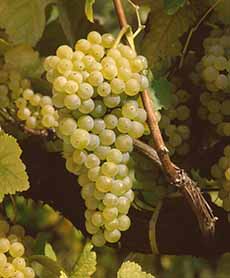
    [5] A cluster of Albariño grapes.

    Deluxe sashimi on a bed of ice.
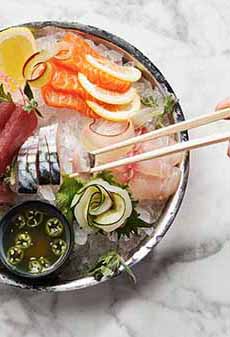
    [6] Pair Albariño with raw fish: ceviche, crudo, poke, sashimi (in photo), sushi, tartare, tiradito


    August 1st is International Albariño Day, celebrating what many consider to be Spain’s premier white wine.

    Albariño (al-bar-EEN-yo) is an aromatic white wine grape that is native to the Northwest Iberian Peninsula.

    Its growing region spans Spain and Portugal (in Portuguese it is spelled Alvarinho [al-var-EEN-yo])*. “Albus” is Latin for white.

    It’s a cool-climate grape, with thick skins that enable it to thrive in cooler weather.

    The vines have great longevity. They can grow to upwards of 300 years of age.

    Albariño’s primary growing regions are:

  • The Rías Baixas section of Galicia in northwest Spain. It’s the world’s largest grower of Albariño (32,500 acres / 13,150 hectares under cultivation).
  • Spain’s Albariño is vinified in a more modern style, crisp and citrusy.
  • The Vinho Verde region of northwest Portugal, where the grape and wine are called Alvarinho. A major portion of the Alvarinho wines is Vinho Verde, named for the region in the far north. Portugal is the second-largest grower of Albariño (14,300 acres / 5,782 hectares).
  • Vinho Verde has more of an “old world” flavor palate: softer with tropical fruit hints [source].
  • California’s Central Coast is a small grower (~300 acres / 121 hectares). There are some Albariño plantings in California’s cool climate regions of Carneros and Edna Valley, and in Oregon and Washington.
  • Much smaller plantings can be found in Australia, Brazil, Chile, New Zealand, and Uruguay. The wine has been growing in popularity in the latter.
  • In a recent Decanter World Wine Awards, medal-winning wines Albariños came from Argentina, France, Moldova, New Zealand, South Africa, Ukraine, the United States, and Uruguay, including a Best in Show (Mar de Frades Finca Monteveiga Albariño from Rías Baixas).
  •  
    Here are more top-scoring wines to try.
     
     
    THE FLAVOR OF ALBARIÑO/ALVARINHO

    Albariño/Alvarinho wines are generally light with bracing acidity. Known as aromatic wines, they offer elegance, complexity, dryness, crispness, and fruit flavors.

    They are low-alcohol wines, with levels ranging between 8.5% to 11.5% A.B.V., and some up to 13%.

    (A.B.V. refers to alcohol by volume, in all alcoholic beverages. Double the A.B.V. to get the proof.)

    Albariño is meant to be consumed young, as its charming aromatics fade all too quickly after bottling. When you get to the three-to-five-year range, drink it up!

    Albariño should always be served chilled but never ice-cold. Low temperatures suppress both the flavors and the aromas of any wine.

    Depending on the terroir†, you’ll find different flavor and aroma profiles in Albariño.

    Flavor. The classic Albariño wines of Iberia usually have exceptional freshness.

    Their flavor profile ranges from tart citrus to stone fruits, with tropical fruit aromas. When you taste the wine, see if you find any of the following:

  • Citrus: Grapefruit, Lemon, Lime
  • Honeydew
  • Honeysuckle
  • Stone Fruit: Apricot, Nectarine, Peach
  •  
    You may find a resemblance to some Sauvignon Blanc wines.

    Some people also liken Albariño to Vermentino, a light-bodied white wine that grows mostly on the Italian island of Sardinia.

    Aroma. On the nose, the grapes yield aromas of almonds, grassiness, stone fruits (especially apricot and peach), and white flowers‡.

    Some compare the aroma to Gewürztraminer and Viognier.

    Depending on the terroir, the wines may also have a nice minerality.

    The wines can also show a subtle salinity (the barest whiff of the sea), owing to their proximity to the Atlantic Ocean (they are “coastal” wines).
     
     
    PAIRING ALBARIÑO WITH FOOD

    With its light body, albariño is considered a warm-weather wine ideal for lighter dishes.

    Since its acid cuts through fat and oil, Albariño can also be a great match with fatty fish like salmon, and even fatty meats like pork belly.

    Consider Albariño for light- to middle-intensity foods. Dishes that feature citrus and/or aromatic herbs are a definite thumbs-up.

    Serve Albariño with:

  • Cheeses:
  • + Fresh cheeses like burrata and chevre (goat cheese)
    + Salty cheeses like blue cheeses and feta
    + Semi-hard cheeses such as Asiago, Cheddar, Colby, Edam, Gouda, and Manchego
    + Soft cheeses like Brie and Camembert
    + Cheese dishes like fondue, raclette, and Welsh rabbit

  • Green salads, Caprese salad, Caesar salad
  • Fried, grilled, poached, and roasted fish (even fish tacos!)
  • Grilled and roasted vegetables
  • Light-colored sauces, fresh green herbs, salsa verde (no rich sauces)
  • Pasta with olive oil or light sauce (cream, garlic, white wine)
  • Raw or cured fish: ceviche, crudo, poke, sashimi, seafood salad, sushi, tartare, tiradito
  • White meats: chicken, pork, rabbit, turkey, white sausage, veal (no heavy preparations)
  • White pizza
  • Risotto, especially seafood and vegetable
  • Shellfish: clams, crab, lobster, mussels, oysters, shrimp
  •  
    If you pour Albariño with one of these courses, it will also serve as a great palate cleanser before serving a heavy meat course.


    THE HISTORY OF ALBARIÑO

    The Albariño grape has been cultivated since ancient Roman times. Albariño grape seeds dating to between the second and fourth centuries C.E. have been found in an old Roman salt mine in Vigo, Galicia.

    Over much of its lifetime, the Albariño grape was primarily used in blends.

    But after the phylloxera outbreaks in the 19th century, the replanted Albariño emerged as a wine in its own right.

    It became known as the primary grape of the Rías Baixas winemaking region in Galicia, Spain, where it comprises around 90% of the grapes grown.

    The grape was long thought to have been brought to the monastery of Armenteira in Galicia by Cluny monks in the 12th century, during their journey along the Camino de Santiago (the Way of St. James).

    However, recent scholarship indicates that the grape is native to Galicia.

    For centuries, the wine was produced by the religious orders, since they were the main owners of the vineyards.

    From Galicia, the cultivation of the grape and the production of Albariño wine spread throughout the Middle Ages to other regions of the Rías Baixas, eventually reaching Portugal [source].

    By the end of the 19th century, following revolutions that swept through Europe, the monasteries’ lands were confiscated and auctioned off.

    By the mid-20th century, the properties began to move from the hands of the nobility to small producer commoners.

    For centuries if not millennia, Albariño/Alvarinho vines could be found casually growing around the trunks of poplar trees and in bushes along the outside margins of fields—a practice that still exists in Portugal’s Vinho Verde region.
     
     
    Albariño In The 20th Century

    In the middle of the 20th century, growers “got serious” and made investments to produce better quality grapes and wines.

    Also in the 20th century, Albariño vines began to be planted in other areas, including Argentina, California, and Chile, and then to France, Moldova, New Zealand, South Africa, Ukraine, and Uruguay.

    While Albariño blends still prevailed through most of the 20th century, in 1986 the Spanish government established the Rías Baixas Denominación de Origen (D.O.).

    As a result, winemakers began to produce varietal Albariño wines, crafted primarily with contemporary European and American tastes in mind: the refreshing light body described above, with flavors of grapefruit, honeydew, lemon zest, nectarine, saline, and a touch of bitterness at the end [source and source].

    In Portugal, however, blends endure. Most Alvarinho is made into Vinho Verde, which is a blend of white grapes, all indigenous to Portugal‡‡.

    So what’s next?

    It’s you, heading to the wine store to buy a few different bottles of Albariño and Vinho Verde for a tasting.
     
     
    ________________

    *The wine is also known as Albarina, Alvarin Blanco, Alvarinha, Alvarinho, Azal Blanco, Galego, and Galeguinho.

    †Terroir, pronounced tur-WAH, is a French agricultural term referring to the unique set of environmental factors in a specific habitat that affects a crop’s qualities. It includes climate, elevation, proximity to a body of water, slant of the land, soil type, and amount of sun. These environmental characteristics give a fruit or vegetable its unique character.

    ‡These aromas can include acacia, gardenia, jasmine, lily of the valley, orange blossom, and tuberose.

    ‡‡The two predominant grapes in Vinho Verde are Alvarinho and Loureiro but can also include Arinto, Azal, Avesso, and Trajadura.


    CHECK OUT WHAT’S HAPPENING ON OUR HOME PAGE, THENIBBLE.COM.


    Comments off

    Watermelon Oysters Recipe For National Watermelon Month

    What are watermelon oysters? They’re a clever combination of oysters that use the rind and the flesh of a watermelon as a garnish. On this last day of National Watermelon Month July, we present them to the sophisticated foodie.

    The recipe, Watermelon Rind Mignonette and Watermelon Granita with Oysters, is ambitious, but the result is palate-exciting.

    The recipe is from the National Watermelon Promotion Board. It was created by Jason Gronlund, Principal and Executive Chef of Jason Gronlund Consulting.

    You have advance notice: National Watermelon Day is August 3rd. National Oyster Day is August 5th.

    > The history of watermelon.

    > The history of oysters.

    > The different types of oysters.
     
     
    RECIPE: WATERMELON OYSTERS (A.K.A. WATERMELON RIND MIGNONETTE & WATERMELON GRANITA WITH OYSTERS

    The watermelon rind mignonette and the watermelon granita add contrasting sweet, heat, and tart flavors to each bite. The recipe uses the whole watermelon.

    It’s very important to have freshly shucked—not pre-shucked—oysters, as the fresh salty liquor in the shell balances against the mignonette and granita.

    The granita and mignonette can be used on freshly shucked clams as well. They’re also great as a dip for fresh cracked crab and lobster.

    If you want to make it in advance, the granita will last for 90 days frozen. The heat can be increased based on your taste level.

    The optional Prosecco* will be delicious served with the oysters.

     
    Ingredients For 24 Oysters

  • 24 oysters on the half shell, freshly shucked
  •  
    For the Watermelon Mignonette

    Mignonette sauce is a classic French condiment for raw oysters, traditionally made with minced shallots, cracked pepper, and vinegar traditionally. This is Chef Gronlund’s take on it.

  • 1 pound watermelon rind, peel removed
  • 4 ounces minced red onion
  • 4 ounces minced red bell pepper
  • 1½ ounces minced jalapeño pepper
  • 1 ounce finely chopped cilantro
  • 1 ounce finely chopped basil
  • 1 cup cold water
  • 1 cup cider vinegar
  • 1 tablespoon kosher salt
  • 3 tablespoon sugar
  • Optional: Prosecco as needed
  •  
    For The Watermelon Granita

  • 8 cup diced watermelon
  • 1 cup jarred Korean ginger tea with honey (it’s a honey jam—you can substitute honey‡)
  • 1 cup yellow Sriracha* sauce†
  • ½ cup sugar
  • ½ cup raspberry vinegar
  •  
    Preparation

    1. MAKE the mignonette. Trim any flesh that remains on the rind. Very finely julienne the rind with a mandoline and finely chop.

    2. COMBINE in a container with a tight-fitting lid, the chopped rind, onion, red pepper, jalapeño, cilantro, basil, water, vinegar, salt, and sugar. Put the lid on and shake gently a few times to blend well and allow the salt and sugar to dissolve. Keep the mignonette chilled to keep the ingredients crisp and preserve the flavor.

    3. MAKE the watermelon granita. Purée the watermelon chunks in a food processor or blender and measure 4 cups of purée for the granita.

    4. PUT the Korean ginger tea in the top of a double boiler to heat. Strain it through fine cheesecloth to remove the citrus rind and ginger chunks. Measure 1 cup of liquid for the granita.

    5. ADD the tea, Sriracha, sugar, and vinegar to the watermelon purée. Whisk the ingredients vigorously to ensure the sugar is dissolved.

    6. FREEZE the mixture in an ice cream machine according to the directions. Or, freeze in a pan as in this granita recipe. Scrape a fork through the mixture every hour or so to make it forms granita crystals.

    7. ASSEMBLE. Immediately before serving, top freshly shucked oysters with 1 tablespoon each of granita and mignonette. Optional: For a fresh bubbly flavor, add a splash of Prosecco onto the oysters.


    Oysters On The Half Shell Topped With Watermelon Granita
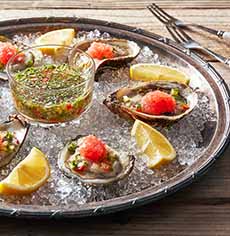
    [1] A dazzling topping for oysters on the half shell (photo Carlos Garcia | © Flavor And The Menu | Styling Peg Blakely).

    Shucking Oysters
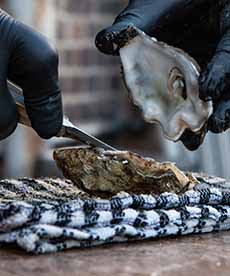
    [2] You’ll need freshly-shucked oysters (photo © Thomas John | Unsplash).

    Bottles of Three Mountains Yellow Sriracha Sauce
    [3] If you can’t find yellow sriracha sauce locally, try Amazon (photo © Three Mountains).

    Thai Yellow Burpa Chiles
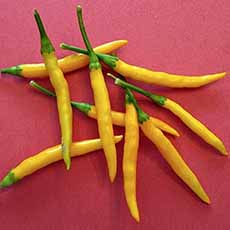
    [4] If you want to grow your own, you can purchase these yellow Thai burapa chiles (photo © Smart Seeds Emporium).

    Jar Of Korean Honey Ginger Tea
    [5] You can use the rest of Korean Honey Ginger Tea in tea, salad dressing, as a bread spread, and anywhere you would use marmalade or jam. If you can’t find it locally, check online (photo © Damtuh).

     
    ________________

    *Sriracha is capitalized because it is the name of the city where the condiment originated. Here’s more about Sriracha sauce. Prosecco is capitalized because it is a region of Italy.

    †Yellow sriracha was created by Three Mountains, a small chili farm in Sriracha, Thailand. It is made from yellow Thai burapa chiles, which have a complex spicy-sweet flavor and rich consistency. It is a little sweeter and less vinegary than the popular Rooster brand Sriracha sauce, with citrus notes.

    ‡Add some lemon and ginger flavor to the honey, with a bit of lemon juice and a dash of ginger.


    CHECK OUT WHAT’S HAPPENING ON OUR HOME PAGE, THENIBBLE.COM.


    Comments off


    © Copyright 2005-2026 Lifestyle Direct, Inc. All rights reserved. All images are copyrighted to their respective owners.