THE NIBBLE BLOG: Products, Recipes & Trends In Specialty Foods


Also visit our main website, TheNibble.com.

Yaza Labneh: A Thick, Delicious Lebanese Spread & Dip

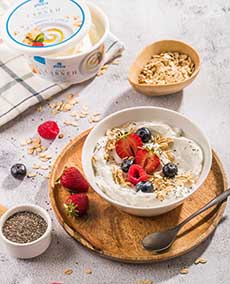
Container Of Yaza Labneh With Bowl Of Labneh & Fruit
[1] Start the day with a bowl of labneh, fruit, and granola (photos #1 through #7 © Yaza Labneh).

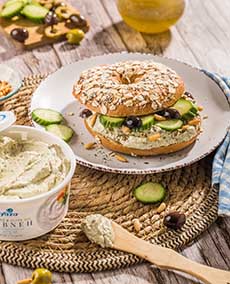
Yaza Za'atar On Bagel
[2] Spread labneh on your bagel. Here, it’s layered with sliced mini cucumbers and pitted olives.

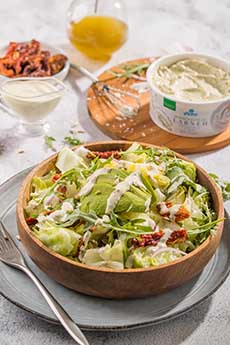
Labneh Salad Dressing On A Green Salad
[3] Blend labneh and olive oil for a creamy salad dressing.

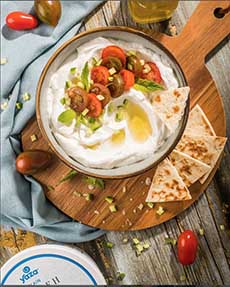
Labneh Dip With Pita Chips
[4] For a snack, top labneh with chopped cucumbers, onions, olives, and tomatoes, and serve with pita or pita chips.

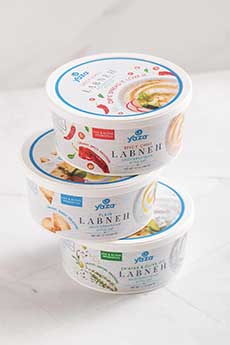
Containers With 3 Flavors Of Yaza Labneh
[5] The three flavors of Yaza Labneh.

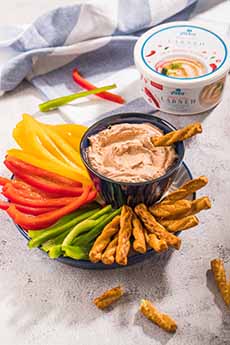
Crudites (raw vegetables) with Spicy Chili Yaza Labneh dip.
[6] Crudités with Spicy Chili Yaza Labneh dip.

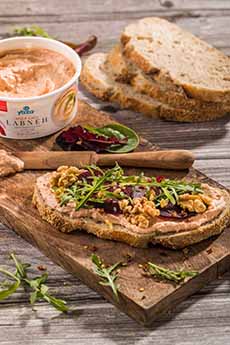
Labneh Sandwich With Beets & Walnuts
[7] A vegan sandwich of Spicy Chili labneh, beets, walnuts, and arugula.

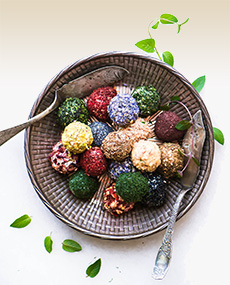
Labneh Balls
[8] These Jewel Box Labneh Balls are a treat for the eyes and palate. Here’s the recipe (photo © A View From Great Island).


Updated August 2026

The Lebanese dip and spread labneh is made by straining Greek yogurt, an already strained yogurt, removing even more liquid. It’s doubly strained yogurt and a thick, creamy base for a spread or dip. It’s almost like a softer cream cheese, without the carrageenan or carob bean gum used to enable the block to be sliced.

In the U.S. it is sometimes referred to as as a “yogurt cheese.” While there are fresh cheeses that look like labneh (fromage frais* is the best example), here’s the difference between yogurt and cheese:

  • Cheese is made by curdling milk, while yogurt is made by fermenting milk with specific bacteria strains.
  • Cheese is high in fat and cholesterol, while yogurt is lower in fat and contains live and active cultures that can improve gut health.
  •  
    Not only is labneh delicious, but it is quite healthy: high in calcium, protein, and probiotics.

    Alternate spellings are labaneh, lebnah, labne, or labni, among other spellings. The word is transliterated from Arabic. Laban is the Arabic word for yogurt. Pronunciation differs, too (see the footnote‡).

    Are you ready to take a bite?
    Below:

    > Yaza labneh, our Top Pick Of The Week.

    > The difference between Lebanese and Turkish Labneh.

    > How to enjoy labneh.

    > The history of labneh.

    > A super-simple recipe to make labneh at home.

    Elsewhere on The Nibble:
     
    > The history of yogurt.

    > The different types of yogurt: a glossary.
     
     
    YAZA LABNEH, OUR TOP PICK OF THE WEEK

    Our Top Pick Of The Week is Yaza Labneh, a new brand. It’s made in the Catskills with cow’s milk from New York State dairy farms.

    And, it’s made in three wonderful flavors: Plain, Spicy Chili, and Za’atar & Olive Oil. The latter two are currently the only flavored labneh brands in the U.S.

    You’ll see za’atar mentioned several times in this article. It’s a staple spice blend of the Middle East, combining sesame seeds (often toasted) and sumac, with dried herbs such as oregano or marjoram and thyme, plus toasted spices like coriander and cumin. Here’s more about it.

    All three flavors are great on bagels, toast, or as dips.

    Yaza† labneh is simply delightful and has become a major part of our dairy consumption.

  • The Plain variety has universal use and is great as a side with spicy foods (when you need a slight cool-down).
  • Za’atar & Olive Oil is nicely herbal and we’ve been enjoying it on bagels and grilled vegetable sandwiches.
  • Spicy Chili brings on the heat. We like it on roll-ups and other sandwiches. Check it out on the beet, walnut, and arugula sandwich in photo #8.
  •  
     
    Get Your Yaza Labneh!

    The brand plans to be a staple in every American home. Traditionally, labneh has been sold in ethnic/specialty stores but it is currently sold in 17 states** with the aim to be in every state.

    As of this writing, Yaza is sold in 17 states: CO, CT, FL, GA, IL, IN, LA, MD, MI, NC, NJ, NY, OH, PA, TN, VA, and WI. The brand is currently in discussion with upscale and mass retailers nationwide.

    > Here’s a store locator.
     
     
    THE DIFFERENCE BETWEEN LEBANESE & TURKISH LABNEH

    There are two types of labneh, Lebanese labneh and Turkish labneh. They are very different.

  • Lebanese labneh like Yaza is strained yogurt with probiotics. It is very healthy, clean, high in protein, and low in fat and calories. The labneh is manually strained using a cheesecloth and is exposed to open-air bacteria, which results in gut-healthy probiotics. The shelf life is typically shorter; in the Middle East, around 21 days.
  • Turkish labneh has more fat and doesn’t have probiotics. It is very close to American cream cheese in taste and nutrition. Because it has no probiotics, the shelf life is between 9 months and 1 year.
  •  
     
    HOW TO ENJOY LABNEH

    Labneh is tangier and creamier than yogurt, and it’s meant to be eaten with savory ingredients. That hasn’t stopped American cooks from turning it into cheesecake, desserts with berries, flan, and even whipped cream.

    But let’s start with classic uses in Lebanon and other Middle Eastern countries:

  • Breakfast: A nutritious breakfast with a drizzle of olive oil, a sprinkling of fresh za’atar, and a side of pita.
  • Appetizer and snack: A dip and spread, in a similar fashion to hummus. Any traditional mezze spread will include at least one type of labneh.
  • Mezze plates: Babaganoush, hummus, labneh, stuffed grape leaves, tabbouleh, taramasalata, tzatziki, and much more. Check out these options.
  • Sauce: With falafel and kibbeh (fried meatballs).
  •  
    To port it over to the typical American diet, labneh is quite versatile:

  • Breakfast: Instead of Greek yogurt, either Lebanese-style (see above) or in a bowl with fruit, honey, and granola (photo #1).
  • As a spread on toast and bagels, instead of cream cheese (photo #2).
  • Lunch and dinner: As a sauce, garnish, or side dish.
  • As a base for salad dressing, blended with olive oil (photo #3).
  • Snacks: Plain or with za’atar and olive oil, with breadsticks, crackers, crudites, pita, or tortilla chips (photo #4).
  • Labneh balls (photo #8), served like mini cheese balls with crackers or salad.
  •  
     
    THE HISTORY OF LABNEH

    The exact origin of yogurt is uncertain, but it is thought to have appeared in Mesopotamia around 5000 B.C.E.

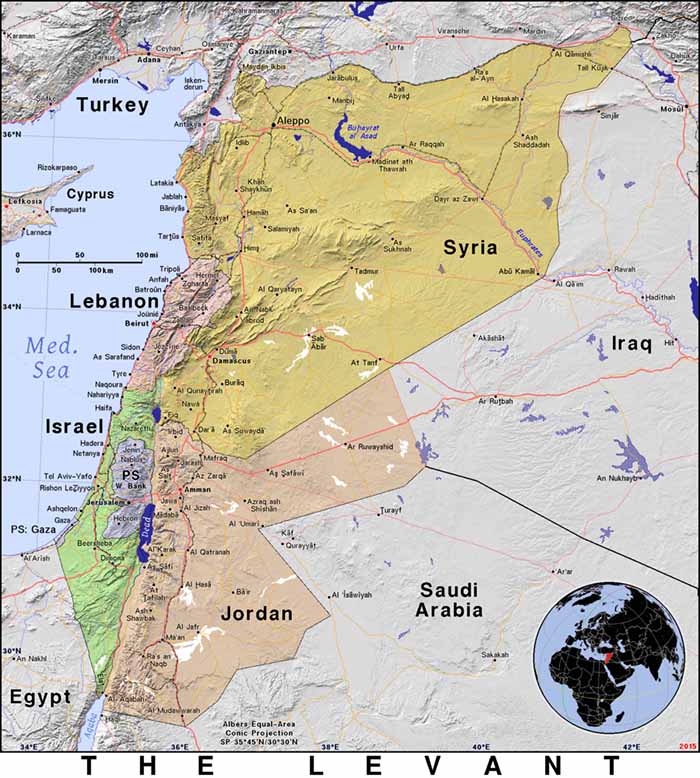
    Cheeses made from strained yogurt have been eaten for thousands of years in the Levant (a large area in the Eastern Mediterranean region of West Asia that comprises modern-day Israel, Jordan, Lebanon, Palestine, Syria, and a small part of southern Turkey—see image #9, below).

    Nomadic Bedouin tribes, who inhabited the Syrian Desert since at least 6000 B.C.E., used labneh as an important source of protein and even had a dry version to carry while traveling (think of modern yogurt powder, that can be reconstituted with water).

    The Armenians are widely credited with introducing labneh throughout much of the Middle East many centuries ago.

    The popularity of labneh grew quickly and before long every culture throughout the Middle East and beyond had developed its own unique version. The main differences between varieties are:

  • The choice of milk. Everything from cow’s, goat’s, sheep’s, and water buffalo’s milk—even camel’s milk—have been used. The choice of milk significantly alters the flavor.
  • The texture. Labneh can be fresh or preserved in olive oil with herbs. It can be rolled into balls for a nice presentation. The balls can also be preserved in olive oil.
  •  
     
    RECIPE: HOMEMADE LABNEH

    Labneh is extremely easy to make, and in Lebanon, almost every family has their own special family recipe and technique. They typically make it from homemade raw milk yogurt, but you can use store-bought Greek yogurt.

    1. SPRINKLE Greek yogurt with a bit of salt.

    2. LINE a colander with cheesecloth, set it over a large bowl, and add the yogurt. Allow it to strain in the refrigerator or a cool room for 24 hours.

    That’s it! Your labneh is ready to eat and will keep, in a tightly covered container, for up to two weeks in the fridge.

     
    But you can also customize the flavor:

    3. MIX IN your favorite herbs, such as fresh or dried chiles, chives, dill, garlic, or parsley.

    We also like to add sliced scallions or blend in a bit of tomato paste.

    Finally, can also form it into balls and preserve it in olive oil, where it will keep for months. Here’s how.
     
     
    Map Of The Levant
    [9] The Levant (image via PAT, Public Domain).
     
    ________________

    *Fromage frais is a light, fresh cheese that originated in France. It looks like Greek yogurt, but it’s technically a cheese. It has a mild, slightly tangy flavor and a smooth, creamy texture. It is often used as a spread or dip, although it can also be used in recipes to substitute for cottage cheese, mascarpone, ricotta, or sour cream. Frûche (pronounced froosh) is another fresh French cheese that has a mild flavor and a smooth, creamy texture. It’s like fromage frais but has a slightly higher fat content and thus is richer.

    **In the Northeast, check Balducci’s, Caraluzzi’s Markets, D’Agostino, Gristedes, King’s Food Markets, Morton Williams, Union Market, and other independent retailers and specialty stores across the nation.

    The brand name, Yaza, is a mashup of taza, meaning fresh in Arabic; meza, the Arabic term for small plates/appetizers; and yogurt, as labneh is strained yogurt. The swirl in our logo mimics how labneh is traditionally presented in a bowl or plate as a dip. Clever!

    The pronunciation differs per country. In Lebanon, it is pronounced LAB-NEH. You may hear LAB-NAH, LOB-NEH, LEB-NAY or other pronunciations across various countries and regions.


    CHECK OUT WHAT’S HAPPENING ON OUR HOME PAGE, THENIBBLE.COM.


    Comments off

    Fall Popcorn: Maple & Pecan Popcorn Recipe

    October is National Popcorn Poppin’ Month. Make your popcorn flavor of the month Old Fashioned Bourbon Maple Popcorn with Pecans.

    Accented with warming flavors of bourbon, orange, and bitters, this maple-glazed popcorn recipe is a fun, cocktail-inspired snack perfect for sharing.

    Serve it with cocktails, or grab a bowl for movie night.

    > Check out the “matching” Maple Old Fashioned recipe below.

    > See more popcorn recipes, both every day and seasonal, including Halloween and the holidays.

    > The history of popcorn.

    > The history of Bourbon.

    > The history of maple syrup.
     
     
    RECIPE: MAPLE PECAN POPCORN

    You can substitute rye or other whiskey for the Bourbon. For a “mocktail” popcorn, substitute non-alcoholic bourbon.

    Ingredients

  • 8 cups popped popcorn
  • 1/2 cup chopped toasted pecans (how to toast nuts)
  • 1/3 cup maple syrup
  • 1 tablespoon Bourbon
  • 2 tablespoons butter
  • 1 tablespoon orange zest
  • Dash of bitters
  •  
    Preparation

    1. PLACE the popcorn and pecans in a large bowl.

    2. COMBINE the maple syrup, bourbon, and butter in a small saucepan set over medium-high heat; bring to a boil. Cook, swirling the pan for 3 to 5 minutes or until the mixture thickens to corn syrup consistency.

    3. STIR in the orange zest and bitters.

    4. DRIZZLE the maple syrup mixture over the popcorn; toss to evenly coat. Cool completely and serve.
     
     
    RECIPE: MAPLE BOURBON OLD FASHIONED
     
    Ingredients Per Drink

  • .5 ounce maple syrup
  • 2 ounces bourbon
  • 4 dashes Angostura bitters
  • Optional garnish: orange peel, brandied cherry
  • Ice
  •  
    Preparation

    1. COMBINE the first three ingredients in a mixing glass and stir to combine.

    2. POUR into a rocks glass over ice. Garnish with orange peel and cherry. The garnishes can be skewered on a cocktail pick.


    CHECK OUT WHAT’S HAPPENING ON OUR HOME PAGE, THENIBBLE.COM.


    A Bowl Of Maple Pecan Popcorn
    [1] Maple pecan popcorn (photo © The Popcorn Board).

    Bottles Of Maple Syrup
    [2] Maple syrup adds a touch of sweetness like kettle corn (photo © Nadine Primeau | Unsplash).

    A Measuring Cup Of Pecan Halves
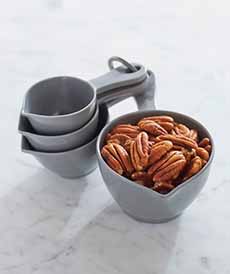
    [3] Toast the pecans. Here’s how (photo © Williams Sonoma).

    Old Fashioned Cocktail
    [4] Have a Maple Bourbon Old Fashioned with your maple pecan popcorn (photo © Adam Jaime | Unsplash).


    Comments off

    An Applejack Cocktail Recipe, What Is Applejack & Its History

    October is National Applejack Month, a brandy distilled from hard cider. We can’t remember the last decade in which we had some, but we’ll remedy that today.

    Below:

    > American applejack vs. Calvados, French apple brandy.

    > Recipe: Jack Rose applejack cocktail.

    > Recipe: The Widow’s Kiss applejack cocktail.

    > The history of applejack.

    > The year’s 6+ applejack and cider holidays.

    Elsewhere on The Nibble:
     
    > What is hard cider?

    > The history of apple cider.

    > The year’s 100+ cocktail and spirit holidays.
     
     
    APPLEJACK VS. CALVADOS (APPLE BRANDY)

    Applejack is a type of brandy produced from apples (i.e., apple brandy).

    The U.S. government standards accord that applejack and apple brandy are the same thing.

    But applejack is different from the most famous apple brandy, Calvados from the Normandy region of France, to which it is often compared.

    The difference: Calvados is made from cider apples, whereas applejack is made from eating apples. Distillers can use:

  • Sweeter varieties: Courtland, Gala Apples, McIntosh, Red Delicious.
  • Tarter varieties: Braeburn, Jonathan, Pink Lady.
  •  
    Here’s more about the apple varieties used to make applejack.

    Applejack is directly related to apple cider; it is a strong alcoholic spirit made from hard cider, which is fermented apple juice. This happens through the process of either freeze-distillation (“jacking”—hence the name) or traditional distillation. Either process increases the alcohol content to make a much stronger drink than hard cider.

    Applejack has been associated with four presidents of the United States:

  • George Washington, who requested the family recipe from Robert Laird, who as a soldier supplied troops with his family’s applejack during the Revolutionary War.
  • Abraham Lincoln, who served it during his brief stint as a tavern keeper in New Salem, Illinois.
  • Franklin D. Roosevelt, who used applejack in the Manhattan cocktails he regularly consumed.
  • Lyndon B. Johnson, who gave a case of applejack to USSR Premier Alexei Kosygin at the 1967 Glassboro Summit Conference source].
  •  
    Applejack is having a renaissance, with craft distillers making their marks. You can see some of them in photos #6, #7, #8, and #9.

    But the first brand sold in America was Laird’s. The history follows.

    Craft applejack isn’t cheap—typically $40 or more per bottle—but it’s worth it. Do avoid the cheaper varieties made with bright-red artificial color and laden with artificial ingredients. Good grenadine—not the cheaper stuff—is essential to making good applejack.

    Tip: Think of applejack as a gift for a hard cider lover.
     
     
    THE HISTORY OF APPLEJACK, AMERICA’S FIRST SPIRIT

    Most people might thank that Bourbon was America’s first spirit, but applejack came first. Bourbon (1789), corn whiskey (moonshine) sometime in the mid-1700s*, and Tennessee whiskey (1825) came after.

    Popular in colonial times, applejack was often made at home until it began to be sold commercially.

    Applejack was once the nation’s most popular drink. America’s earliest cocktail may well have been the apple toddy (photo #10), which is applejack blended with boiling water and demerara sugar syrup [source]. Here’s a recipe, that also includes some sherry.

    It slipped from favor in the 19th and 20th centuries as other spirits grew in popularity—Bourbon and rum in the 19th century and gin, tequila, vodka and whiskey in the 20th.

    But at the beginning, in 1698, Alexander Laird, a County Fife Scotsman, emigrated from Scotland to America with his sons Thomas and William. William settled in Monmouth County, New Jersey.

    William probably was making scotch back in the old country, but here he turned his skills to using the abundant apples of the New World [source].

    Apple brandy was first produced in colonial New Jersey in 1698 by William Laird, a Scots American who may have been a distiller in his Scottish homeland. Now run by the eighth generation of Lairds, until the 2000s it was the country’s only remaining producer of applejack, and continues to dominate applejack production.

    At the time the Laird family began to produce applejack, it was commonly produced at home from cider made after the apple harvest. It was consumed at home and shared with neighbors.

    Back then, Applejack was also imbibed in an unaged form dubbed Jersey Lightning [source].
     
     
    The First Licensed Applejack Distillery

    The first commercial sales of Laird applejack was recorded in the family ledger in 1780.

    That year, after the war, Robert Laird incorporated Laird’s Distillery as the new nation’s first licensed commercial distillery [source].

    However, perhaps because applejack is much less popular than other spirits, it is left off the list of the oldest licensed distilleries in America, much less the first!
     
    In 1920, with the beginning of the Prohibition era, Laird’s was forced to ended the production of liquor and pivoted to produce apple juice.

    But in 1931, John Evans Laird received permission to produce apple brandy for “medicinal purposes” and stockpiled bottles applejack until the repeal of Prohibition in 1933. Then, the company was able to hit the deck running.

    Before 1968, applejack was synonymous with apple brandy. It was only when consumer preferences started moving towards lighter products like vodka and gin that applejack’s distinct identity took shape.

    The Lairds worked with the government to establish a new federal standard for blended apple brandy, and as a result, applejack is now defined as a blend of at least 20% apple distillate with neutral grain spirit that must be aged at least two years in oak [source].

    In 1972 the Laird family launched the Blended Applejack spirit category, to meet meet consumer demand for lighter, lower proof spirits. Laird’s Applejack is now made from a blend of apple brandy (35%) and neutral grain spirits (65%).

    Modern applejack has a mellower flavor than original applejack. Laird’s is still the go-to brand, but today there are several craft distilleries making applejack.

    In the 2010s, a number of smaller craft distilleries began to produce applejack in colder climes: in Michigan (Coppercraft—photo #6), New Hampshire (Old Hampshire—photo #9), New York’s Hudson Valley (Cornelius——photo #7), and Pennsylvania (Eight Oaks—photo #8), among others.

    The name applejack derives from the traditional method of producing the drink, called jacking. It’s the process of freezing fermented cider and then removing the ice, increasing the alcohol content. See the next section to see how it was made.
     
     
    JACKING: HOW APPLEJACK WAS MADE

    Applejack was traditionally produced from the hard cider that was the everyday drink for most Americans in the 18th century. Naturally fermented and low in alcohol, hard cider was safer than well water, cheaper than beer, and easy to make at home.

    Jacking was a low-tech method where spirits were distilled not by the usual method of heating, but by freezing.

    Any household with a supply of hard cider and cold weather could make applejack via freeze distillation.

    Cider produced from the fall harvest was left outside during the winter. Periodically the frozen chunks of ice which had formed were removed, thus concentrating the unfrozen alcohol in the remaining liquid.

    An alternative method involved placing a cask of hard cider in the snow, allowing ice to form on the inside of the cask as the contents began to freeze. Then, the cask was tapped to pour off the still-liquid portion of the contents.

    With each freeze, the water in the cider crystallized into slushy ice. Each time the ice was skimmed off, and the concentration of alcohol grew, until what is left in the barrel reached about 40 proof: the clear spirit that is applejack [source].

    The alcoholic content rose from the fermented cider, at less than 10%, to 25% to 40% in the concentrated alcohol of applejack.

    Because freeze distillation was a low-cost method of production compared to evaporative distillation (which required a still and the burning of firewood to create heat for evaporation), hard cider and applejack were historically easier to produce—although more expensive than grain alcohol [source].

    Modern commercially produced applejack is not produced by jacking but rather by blending two distilled spirits: apple brandy and neutral grain spirit.
     
     
    RECIPE #1: JACK ROSE COCKTAIL

    Perhaps the most famous applejack cocktail is the Jack Rose cocktail. It was created around the turn of the 20th century, and named for its rosy color (from the grenadine).

    Its origin is uncertain, but researchers peg it to either New York or New Jersey, likely made with Laird’s Applejack, made in New Jersey at the oldest licensed distillery in the U.S., established in 1698.

    The cocktail quickly found fans who enjoyed it until the advent of Prohibition.

    It was a favorite cocktail of John Steinbeck and was mentioned by Ernest Hemingway in “The Sun Also Rises.” (1926).

    It remained popular beyond 1948, when it was featured as one of six basic drinks to know in David Embury’s 1948 book “The Fine Art of Mixing Drinks” [source].
     
    Ingredients Per Drink

  • 1-1/2 ounces applejack or apple brandy
  • 3/4 ounce lemon juice, freshly squeezed
  • 1/2 ounce grenadine
  • Ice cubes
  • Garnish: lemon twist
  •  
    Preparation

    1. COMBINE the applejack, lemon juice and grenadine in a cocktail shaker with ice. Shake vigorously until well chilled, 15 to 20 seconds.

    2. STRAIN into a coupe glass, and garnish with a lemon twist.
     
     
    RECIPE #2: THE WIDOW’S KISS

    If you happen to have yellow Chartreuse and Benedictine, you can try this cocktail.

    Ingredients Per Drink

  • 2 ounces applejack or apple brandy
  • ¼ ounce yellow Chartreuse
  • ¼ ounce Benedictine
  • 2 dashes Angostura bitters
  • Ice cubes
  •  
    Preparation

    1. SHAKE all ingredients with ice. Strain into a chilled coupe glass.
     
     
    RECIPE #3: RECIPE #3: JUMPING JACK

    Ingredients Per Drink

  • 1.5 ounces applejack
  • 1 ounce chilled espresso
  • .5 oz. cinnamon syrup)
  •  
    Preparation

    1. SHAKE all ingredients with ice. Strain into a chilled coupe glass.


    Jack Rose Applejack Cocktail In A Coupe Glass
    [1] The Jack Rose cocktail gets its pink color from grenadine. The recipe is below (photo © Williams Sonoma).

    Bottle Of Grenadine From Sonoma Syrup Co.
    [2] For the Jack Rose cocktail, grenadine. Here’s an easy recipe to make your own (photo © Sonoma Syrup Co.).

    Lemons & Ceramic Juicer
    [3] For the Jack Rose cocktail, fresh lemon juice—and a lemon twist as garnish (photo © Deva Williamson | Unsplash).

    Bottle Of Laird's Applejack
    [4] The original applejack brand: Laird’s (photo © Laird And Company).

    Pink Lady Apples
    [5] Pink Lady, one of the newer apple varieties used to make applejack (photo © Good Eggs).

    A Bottle Of Coppercraft Applejack
    [6] Coppercraft Applejack is made in Michigan (photo © Coppercraft Distillery).

    A bottle of Cornelius Applejack
    [7] Cornelius applejack is made in the Hudson Valley of New York State by Harvest Spirits. They also make Distiller’s Reserve Applejack, distilled twice aged for 11 years (photo © Copake Wine Works).

    Bottle Of Eight Oaks Craft Applejack
    [8] Eight Oaks is a newer brand of craft applejack (photo © Jessica Glebe Designs | Eight Oaks Distillery).

    A Bottle of Old Hampshire Applejack
    [9] Old Hampshire Applejack is distilled in New Hampshire (photo © Tamworth Distilling).

    Apple Hot Toddy in a mug with a cinnamon stick.
    [10] An apple hot toddy, perhaps the first American cocktail. Here’s the recipe (photo © US Apple).


    THE YEAR’S 6 APPLEJACK & CIDER HOLIDAYS

  • May, 1st Saturday: National Homebrew Day
  • June 3: World Cider Day
  • September 23: National Apple Cider Vinegar Day
  • September 30: National Hot Mulled Cider Day
  • October: National Applejack Month
  • November 18: National Apple Cider Day
  •  
    Plus:

  • January 6: Apple Tree Day
  • March 11: National Johnny Appleseed Day
  • October: National Apple Month
  • October 21: National Apple Day
  •  
    ________________

    *Corn whiskey was first made sometime in the mid-1700s, by Scottish and Irish immigrants who were familiar with the whiskey-making techniques of their homelands. It was a rustic spirit that was not aged and mostly intended for immediate consumption [source]. The term “moonshine” comes from the fact that illegal spirits were made under the light of the moon, to avoid detection from authorities. They avoided paying the government tax on alcohol, which began shortly after the American Revolution [source].


    CHECK OUT WHAT’S HAPPENING ON OUR HOME PAGE, THENIBBLE.COM.


    Comments off


    © Copyright 2005-2026 Lifestyle Direct, Inc. All rights reserved. All images are copyrighted to their respective owners.