THE NIBBLE BLOG: Products, Recipes & Trends In Specialty Foods


Also visit our main website, TheNibble.com.

For International Pinotage Day: What Is Pinotage?

October 8th is International Pinotage Day. What’s Pinotage, you may inquire? You wouldn’t be alone in asking.

Pinotage is the flagship grape of South Africa, a red wine grape that is native to the country.

The term refers to both the grape and the wine made from that grape.

The history of Pinotage is below, but as a brief introduction, the variety was produced by crossing Pinot Noir and Cinsault*. It’s considered South Africa’s signature wine grape.

In addition to producing varietal† wines, Pinotage is also commonly blended with other varieties, producing what is referred to as a Cape Blend in South Africa.

The grape produces deep red wines with smoky dark fruit flavors and earthy accents of bramble. The wines are high in tannins.

Here are the Wine Enthusiast’s reviews of the top Pinotage wines.

> The history of wine.

> The history of Pinotage is below.

> The world’s major red wines.

> The year’s 45+ red wine holidays.
 
 
THE HISTORY OF PINOTAGE

The Pinotage crossbreed was created in South Africa in 1924 by Abraham Izak Perold, a Ph.D. chemist and the first Professor of Viticulture at Stellenbosch University, in the Western Cape province of South Africa.

He was attempting to combine the best qualities of the robust Hermitage grape (the earlier name for Cinsaut) with the less hardy Pinot Noir, a grape that makes great wine but can be difficult to grow.

Perold planted four seeds from his cross in the garden of his official university residence at Welgevallen Experimental Farm. Then, he apparently forgot about them.

In 1928 Perold left the university to take a job with KWV wine cooperative. The garden became overgrown.

The university sent in a team to clean up the garden. In an instance of being in the right place at the right time, Charlie Niehaus, a young lecturer who knew about the seedlings, happened to pass by. He rescued them from the prospect of the trash heap.

The young plants were moved to Elsenburg Agricultural College, where in 1935, Perold’s successor, C.J. Theron, grafted them onto another rootstock.

Perold saw the newly grafted vines when he visited. The vine that was doing best was selected for propagation and was christened Pinotage.

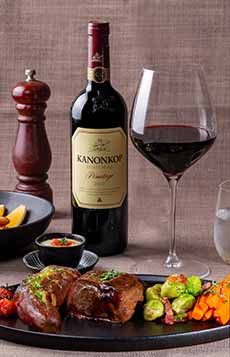
The first Pinotage wine was made in 1941 at Elsenburg. In that same year, Pinotage vines were planted at the Kanonkop Wine Estate, producing wines that can mature up to 25 years and have achieved world fame.

Pinotage began to win awards in South African wine competitions. This early success, and its easy viticulture, prompted a wave of planting during the 1960s.

The wine has had its critics, some calling the wine’s pungent aroma reminiscent of paint, nail polish remover, or burning tar.

The grape has seen its plantings rise with the current fashion in South African wines.

In the post-Apartheid early 1990s, when the world’s wine market opened to South Africa, winemakers ignored Pinotage in favor of more internationally recognized varieties like Cabernet Sauvignon and Syrah [source].
 
 
Pinotage Today

Towards the end of the 20th century, the grape’s fortunes began to turn. By 1997 it commanded higher prices than any other South African grape.

But more than 40 years after completely dismissing the grape, many in the U.K.’s wine trade (one of South Africa’s main export markets) still malign it.

However, perceptions are slowly changing, especially among younger members of the British wine trade [source].

Beyond South Africa, Pinotage is now grown in Brazil, Canada, Germany, Israel, New Zealand, Switzerland, the U.S. (Arizona, California, Michigan, Oregon, and Virginia), and Zimbabwe, and German winemakers have recently begun experimenting with the grape.

Celebrate International Pinotage Day by trying a bottle!

  A Glass Of Pinotage Red Wine With Grilled Venison and Mixed Vegetables
[1] Pinotage with venison. “If ever you meet a cynic who claims that Pinotage cannot make great wines,” says Robert Parker of the Wine Advocate, “then pour them a glass from Kanonkop and they will soon change their mind” (photo © K. Crause | Kanonkop Wine Estate).

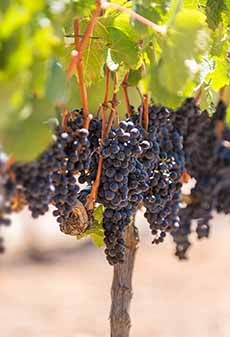
Pinotage grapes hanging on the vine.
[2] Pinotage grapes (photo © Brave New World Wine).

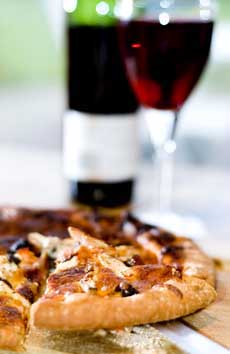
Pinotage Red Wine With A Personal Pizza
[3] Dinner doesn’t have to be fancy: Enjoy Pinotage with a pizza or burger.

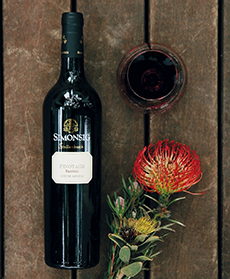
A bottle of Simonsig Pinotage with a glass of the wine.
[4] Another top-rated Pinotage, from Simonsig Wine Estate (photo © Cape Best Shop).

 
________________

*Cinsault, also spelled Cinsaut, is a red wine grape used in Rhône blends and Provençal rosés. The grape itself delivers fresh, punchy reds that are floral, fruity, and somewhat smoky. Its heat tolerance and productivity make it important in the Languedoc-Roussillon region of southern France. It is often blended with other grapes, such as Grenache and Carignan, to add softness and bouquet.

†A varietal wine is a wine made primarily from a single, named grape variety, and that typically displays the name of the variety on the wine label. There are numerous varietal wines, but examples of some of the most popular include Cabernet Sauvignon, Chardonnay, and Merlot.


CHECK OUT WHAT’S HAPPENING ON OUR HOME PAGE, THENIBBLE.COM.


Comments off

Cinnamon Swirl Pumpkin Coffee Cake Recipe: Yummy For Fall

Cinnamon Swirl Pumpkin Coffee Cake
[1] Cinnamon Swirl Pumpkin Coffee Cake: pouring on the glaze (photos #1 and #2 © Baran Bakery.)

Cinnamon Swirl Pumpkin Coffee Cake
[2] The inside is studded with pecans.

A Measuring Cup Of Pecan Halves
[3] Buy the freshest whole pecans and chop them (photo © Williams Sonoma).

Box Of C&H Brown Sugar
[4] Top quality dark brown sugar (photos #4 and #9 © C & H Sugar).
A Tablespoon Of Ground Cinnamon
[5] Cinnamon, ground from cinnamon sticks (photo #9—photos #5 and #6 © McCormick).

Grated Nutmeg With Microplane
[6] You’ll get much better flavor by grating a nut rather than purchasing ground nutmeg.

Whole & Ground Cloves
[7] Whole and ground cloves. For baking, you need ground cloves (photo © Silk Road Spices).

Cans Of Pumpkin Puree
[8] Pumpkin puree. Be sure to purchase purée and not pumpkin pie filling. Here’s a review of 7 brands (photo © The Kitchn).

Box Of C&H Powdered Sugar (Confectioners Sugar)
[9] Turn powdered sugar, milk, and vanilla bean paste into the glaze.

4 Types Of Cinnamon Sticks
[10] The four basic types of cinnamon sticks, from top to bottom: Vietnamese/Saigon, Ceylon, Indonesian/Korintje, Chinese (photo © Alina Kholopova | Alamy).

Cassia Cinnamon Sticks & Ground
[11] Cassia cinnamon (photo © American Heritage Chocolate).

Vietnamese Cinnamon Sticks
[12] Vietnamese (Saigon) cinnamon sticks (photo © King Arthur Baking).


On weekends, we make time to test a new baking recipe. We call it our “weekend baking project,” and friends who are out and about on Sundays know they can stop by for a slice.

This weekend we made a delicious Cinnamon Swirl Pumpkin Coffee Cake with the recipe below (photos #1 and #2).

The recipe was developed by Bernice Baran of Baran Bakery and sent to us by C&H Sugar. The recipe combines canned pumpkin, brown sugar, cinnamon, and pecans to create a rich, seasonal coffee cake that will have everyone asking for seconds.

If you want to turn it into a dessert, make it à la mode with vanilla ice cream and caramel or butterscotch sauce (see the difference between caramel and butterscotch in the footnote* below*).

Check out more wonderful recipes at BaranBakery.com, and enjoy Bernice’s beautiful food photography.

> The history of coffee cake.

> The history of cake.

> The history of cinnamon is below.

> The history of pumpkins.

> The different types of cake: a glossary.

> The different types of sugar: a glossary.
 
 
RECIPE: CINNAMON SWIRL PUMPKIN COFFEE CAKE

Prep time is 10 minutes, and cook time is 45-50 minutes.
 
Ingredients For A 10-Inch Cake

For The Cinnamon Swirl

  • 1 cup pecans, chopped
  • 1 cup dark brown sugar
  • 1 tablespoon cinnamon
  • 1/8 teaspoon salt
  •  
    For The Pumpkin Cake

  • 2 cups all-purpose flour, leveled
  • 1 teaspoon baking soda
  • 2 teaspoons baking powder
  • 1/2 teaspoon salt
  • 2 teaspoons cinnamon
  • 1 teaspoon nutmeg
  • 1 teaspoon cloves
  • 1 teaspoon ginger
  • 4 large eggs, room temperature
  • 1-1/2 cups packed dark brown sugar
  • 3/4 cup vegetable oil
  • 1 can (15 ounces) pumpkin purée
  • 1 teaspoon vanilla
  •  
    For The Glaze

  • 1 cup powdered sugar
  • 2 tablespoons milk
  • 1/2 teaspoon vanilla bean paste†
  •  
    Preparation

    1. MAKE the cake. Preheat the oven to 350°F (177°C) and grease a 10-inch springform pan.

    2. COMBINE all the ingredients for the cinnamon swirl in a medium bowl and set them aside. In another medium bowl…

    3. WHISK together the dry ingredients—flour, baking soda, baking powder, salt, and spices—and set them aside. In a large bowl…

    4. WHISK together the eggs, dark brown sugar, oil, pumpkin purée, and vanilla extract until the mixture is completely smooth.

    5. ADD the dry ingredients to the wet and whisk just until the last streak of flour is combined.

    6. POUR half of the batter into the prepared pan, top with half of the cinnamon swirl filling, repeat with the rest of the batter, and top with the second half of the streusel.

    7. BAKE the coffee cake for about 40-50 minutes, until it springs back when you press on it.

    8. COOL the cake in the pan for at least 30 minutes before removing. While the cake is cooling…

    9. COMBINE all the ingredients for the glaze and mix until smooth. When the cake is finished cooling, pour the glaze over the cake and serve.

    Any leftovers can be frozen, wrapped tightly in plastic. (Additionally, we put the wrapped plastic cake or slices into a freezer bag.)
     
     
    THE HISTORY OF CINNAMON

    Cinnamon was one of the earliest spices to be traded globally (and remember, only the wealthy could afford imported spices).

    Initially, much of the world’s cinnamon came from China, an established trading partner.

  • B.C.E. There is 3000-year-old evidence of cinnamon trading, found during excavations in Tel Dor, Israel. This suggests not only trade in cinnamon but long-range spice trade in general, from the Far East westward [source].
  • In ancient Egypt, the spice was revered for its fragrance and used for embalming and religious practices. It was once more valuable than gold [source].
  • The Romans used cinnamon less as a culinary spice, but as a sacred incense, and burning it at funerals.
  • 13th century (approximate). In medieval Europe, cinnamon was a favorite flavoring at banquets of the wealthy. It was also used as an appetite stimulant, a digestive, an aphrodisiac, a treatment for coughs and sore throats, and in religious rites.
  • For global traders like the Dutch and the Portuguese, spices were considered the most important merchandise; cinnamon was the most important of them all. It was the most profitable product for the Dutch East India Trade Company. [source].
  • 15th century. Because cinnamon was one of the first spices sought by 15th-century European explorers, some say it indirectly led to the discovery of America [source].
  • 16th to 18th centuries. The Dutch and Portuguese brutally fought to control the cinnamon plantations of Ceylon (now Sri Lanka) [source].
  • 21st century. As of 2019, the countries that produce most of the world’s cinnamon are China (50%), Indonesia (28%), Vietnam (13%), and Sri Lanka (8%) source.
  •  
    What Exactly Is Cinnamon?

    Cinnamon is the dried inner bark of various evergreen tree species belonging to the genus Cinnamomum. That botanical name derives from the Hebraic and Arabic word “amomon,” meaning “fragrant spice plant.”

    There are different varieties of culinary cinnamon, and except for Ceylon cinnamon, they are referred to as cassia (here’s the difference).

    Botanically, cinnamon is a member of the Lauraceae (laurel) family (which also includes avocados and bay leaves). There are more than 250 plant species in the Cinnamomum verum genus, with only four important as culinary cinnamon:

  • Ceylon Cinnamon, also known as True Cinnamon (Cinnamomum verum) and Sri Lankan Cinnamon (Cinnamomum zeylanicum), primarily grown in Sri Lanka (Ceylon is the old British colonial name) but also in Southern India and Madagascar.
  • Ceylon cinnamon sticks are multilayered, a roll of numerous thin and fragile sheets of bark. The flavor is delicate and mildly sweet, with a soft aroma. The color is yellowish-tan (see photo #10). It’s the most expensive cinnamon.
  • Ceylon cinnamon is often considered the only “true” cinnamon, with all other types referred to as cassia. However, all four species listed here are botanically classified as cinnamon. Only one is Cinnamomum verum (true cinnamon). The word cassia came to Old English from Latin, probably denoting the wild cinnamon, via Greek from the Hebrew qĕṣī‘āh.
  • Chinese Cinnamon (Cinnamomum cassia and Cinnamomum aromaticum), produced in China and Vietnam. Chinese cinnamon is often sold as chunks of bark rather than in sticks (quills). The bark is thicker than other varieties and it is the darkest color, a gray-brown (see photo #10). You can find it in the form of twigs that have been sliced into small segments. They often have an outer “skin” that resembles tree bark.
  • While cinnamon is used more for baking and desserts in Western cuisines, it is much more common in savory cooking in Asian cuisines. In ancient China, it was primarily valued for spicing and preserving jerky. In contemporary cuisine, it is used in braises, stir-fries, and stews. The whole pieces are typically added to the recipe, to deliver a more subtle flavor than using ground powder [source].
  • Chinese cinnamon is also one of the main ingredients in Five Spice Powder.
  • Indonesian Cinnamon (a.k.a. Korintje cinnamon), Cinnamomum burmannii, Cassia vera, is grown on the Indonesian island of Sumatra, which produces the most cinnamon in the world [source]. Both Vietnamese cinnamon and Indonesian sticks comprise a thick single layer of rough bark, less prone to breakage than Ceylon cinnamon. The color is reddish brown. The flavor is strong and spicy and the aroma is pungent. Unlike Ceylon cinnamon, the stick is difficult to break, which is why you might prefer to purchase it in ground form (but great as a garnish for hot chocolate or mulled cider). Korintje cinnamon is the industry standard for bakers, chefs, and home cooks in the U.S., delivering quality at an affordable price.
  • Vietnamese or Saigon Cinnamon, Cinnamomum loureirii, primarily grown in Vietnam but also in Southern China and Laos. Vietnamese cinnamon and Indonesian sticks tend to be a single thick layer and less prone to breakage; the flavor is strong and spicy and the aroma is pungent. The color is reddish brown (see photo #10). Unlike Ceylon cinnamon, the stick is difficult to break.
  •  
    How Cinnamon Is Processed

    At harvest, the outer bark of the tree is scraped off and then the inner bark is stripped and laid in the sun to dry.

    The bark then curls into cylindrical rolls or “quills” (except for Chinese cinnamon), after which it is cut into sticks.

  • With Ceylon cinnamon, pieces of the bark are then removed and placed inside one another to form the quills (photo #10, long light tan quills second from top).
  • Indonesian and Vietnamese cinnamon dry in one thick quill (photo #10, top and second to bottom).
  • Chinese cinnamon dries in chunks (pieces) of bark (photo #10, bottom.
  •  
     
    When you purchase cinnamon, the jar may or may not state the origin. But if you’re buying sticks, you can now eyeball them and take a guess!

    ________________
     
     
    *The difference between the butterscotch and caramel: Caramel is made with granulated sugar while butterscotch is made with brown sugar. Table sugar (white sugar) is heated and melted until it’s browned. It can be thinned with water, cream, or milk. As its name indicates, butterscotch is made with butter (but no Scotch!). Brown sugar and butter are melted together and cooked, then cream is added. A pinch of salt is added to both caramel and butterscotch. While there is no definitive etymology of the the “scotch” portion of the word, one theory is that “scotch” is a corruption of “scorch,” referring to the melting of the sugar and butter.

    †Vanilla bean paste is valuable in a glaze or whenever you don’t want to water down a preparation by using vanilla extract. However, you can substitute an equal amount of vanilla extract or vanilla powder.


    CHECK OUT WHAT’S HAPPENING ON OUR HOME PAGE, THENIBBLE.COM.


    Comments off

    Curry Pasta Primavera Recipe For National Curry Week

    The first week in October marks the celebration of National Curry Week, a holiday begun in the U.K. 25 years ago. It was founded by a prominent journalist who had fallen in love with curry and wanted to create awareness of the burgeoning Indian restaurant industry, while also raising funds for charity [source].

    Americans may not realize that curry is considered by some to be the “new” national dish of Britain*.

    Number one on the list for many years has been roast beef and Yorkshire pudding, followed closely by fish and chips. Will they be ousted?

    The British Raj—the ruxle of the British Crown in the Indian subcontinent between 1858 and 1947—led to the introduction of Indian cuisine to Britain. Chicken tikka masala and curry became popular dishes.

    According to the organizers of National Curry Week, millions of plates of curries are consumed every week in the U.K.
     
    > The history of rotini (fusilli) is below.

    > The history of pasta.
     
     
    WHY YELLOW PEAS?

    Of course, you can use conventional wheat pasta in the recipe below. But here’s why you might want to try a box of ZENB yellow pea pasta, made in just about any shape you require.

    Yellow pea pasta is gluten-free and diabetic-friendly; equally important, it’s an excellent mimic of wheat pasta. And it helps to promote digestive health.

    Peas are one of the best sources of resistant starch, a form of starch that behaves like fermentable fiber, feeding beneficial bacteria.

    They also stimulate the production of the short-chain fatty acids that help protect against certain cancers, mitigate inflammation, and enhance satiety [source].

    Yes, yellow pea pasta helps to promote digestive health (a key aspect of immunity), but it’s also delicious.

    The brand is gluten-free, vegan, non-GMO, and OU Kosher. The only ingredient is yellow peas (photo #5).
     
     
    RECIPE: GREEN COCONUT CURRY PRIMAVERA WITH ROTINI (FUSILLI)

    This fusion dish combines pasta with vegetable curry—and it’s not just any pasta. It uses yellow pea pasta, which is gluten-free and more nutritious than conventional wheat pasta. The recipe is also vegan.

    Yellow pea pasta is very tasty, and we encourage you to try it.

    The recipe was created by a leader in yellow pea pasta, GENB.

    However, you can use conventional wheat pasta if you like.

    The pasta is mixed with vegetables in a yummy curry sauce and is ready in less than 30 minutes.

    The dish is also low in calories and low in fat. Says ZENB, “It will satisfy your curry and pasta cravings all in one dish!”

    In addition to the vegetables below (zucchini and bell pepper), other vegetables work well in this dish, including broccoli florets, carrots (sliced), cherry tomatoes, and sugar snap peas.

    You can use as many veggies as you like (we used five).

    Prep time is 10 minutes, cook time is 12 minutes.

    > See the difference between rotini and fusilli below.
     
    Ingredients For 2 Servings

  • 2 cups (6 ounces) ZENB rotini pasta made with 100% yellow peas, uncooked
  • 2 cups water
  • 1/2 teaspoon kosher salt
  • 1/2 cup unsweetened lite coconut milk
  • 1 tablespoon green curry paste
  • 1 small zucchini, halved lengthwise, cut into 1/4-inch slices
  • 2 cups bell pepper strips
  • 1/2 cup loosely packed fresh cilantro or basil leaves
  • 1 fresh green chili, thinly sliced
  • 1 lime, cut into wedges
  •  
    Preparation

    1. COMBINE the pasta, water, and salt in a large skillet. Bring to a boil over medium-high heat.

    2. STIR in coconut milk, curry paste, and salt. Continue cooking for 4 to 5 minutes until the sauce is thickened and the pasta is cooked through.

    3. ADD the zucchini and peppers; cook for 3 to 4 minutes or until tender yet still crisp.

    4. GARNISH with fresh herbs and chile slices, and lime wedge on the side.
     
     
    ROTINI VS. FUSILLI

    Rotini are short (two inches long), corkscrew-like shaped pasta. In Italy—actually, everywhere except the U.S. and Canada—they are called fusilli.

    Barilla sells the same product as rotini in the U.S. and fusilli in the U.K.

    It appears that the original corkscrew pasta, fusilli, was renamed rotini in North America. As to why, we were unable to find an answer.

    According to someone who has researched the subject if you ordered rotini in Italy and the rest of the world, no one would know what that was. Here’s more about it.

    Corkscrew pasta shapes are particularly popular with children but are also a great shape to catch sauces in the twists.

    Rotini work with most sauces, and in in pasta salads and baked pasta dishes.
     
     
    THE HISTORY OF FUSILLI

    The corkscrew shape was invented in the Italian region of Campania, likely in Naples.

    Before industrial production capabilities, fusilli were made by wrapping fresh spaghetti around a thin rod or thick wire to dry.

    In fact, the word fusillo is from the Neapolitan dialect and refers to a rod that’s similar to a spindle, made by the blacksmith.

    Later, according to Italia Regina, pasta makers also used knitting needles and the spokes as disused umbrellas.

    The name of the shape derives from fuso†, a spindle or a thin pin on which something turns [source]. Fusilli means “little spindles.”

    Modern, industrial production of fusilli began in 1924.

    Two Italian emigrants in New York, Guido and Aurelio Tanzi, created a machine that produced quality fusilli efficiently. They have become one of the most popular cuts of pasta.

    Here’s more about the history of fusilli.

    In addition to conventional fusilli, there are:

  • A longer version, called Fusilli Napoletani (photo #6), is made by coiling the dough around an actual spindle.
  • There is also a long “buco” version that is hollow inside like bucatini‡‡ (photo #7) source].
  •  
    Their name derives from the Italian word “fuso” or spindle. Fusilli means “little spindles.” This corkscrew pasta is famous for its’ twisty shape.

    As with many short cuts of pasta, the shapes were designed to catch and hold as much sauce as possible.


    Rotini Pasta In Curry Sauce With Vegetables
    [1] Rotini (a.k.a. fusilli) in curry sauce with string beans, sugar snap peas, zucchini, and a garnish of sliced jalapeños (photos #1 and #4 © ZENB).

    A Bowl Of Pasta Salad Made With Rotini Corkscrews
    [2] Rotini/fusilli are a great shape for pasta salad. Here’s the recipe (photo © The Baker Chick).

    A Bowl Of Corkscrew Pasta, aka Fusilli or Rotini
    [3] Multicolor fusilli in plain, spinach, and tomato (photo © Towfiqu Barbhuiya | Pexels).

    Boxes of ZenB Yellow Pea Pasta
    [4] ZENB makes yellow pea pasta in all the major shapes. Here are three of them.

    A Spoon Of Dried Yellow Peas
    [5] Yellow peas used to make the pasta (photo © Just Egg).

    Package Of Fusilli Napoletani Pasta
    [6] Fusilli Napoletani are long corkscrews (photos #6 and #7 © Giusto Sapore).

    Package Of Fusilli Col Buco Pasta
    [7] Fusilli col Buco have a hole running down the interior of the center, like bucatini‡‡. Buco means hole in Italian.

    Bowl Of Fusilli With Curry Sauce
    [8] For an even quicker curry fusilli, mix curry powder in a small bowl with just enough water to make it into a thick gravy. You can add to it with sauteed garlic and onion, and add other veggies as you like (photo © Hannah Kaminsky ! Bittersweet Blog).

     
    ________________

    *The national dish of Ireland is Irish Stew, a thick, hearty dish of mutton, potatoes, and onions. The national dish of Scotland is haggis, a sheep’s stomach stuffed with offal, suet, onions, and oatmeal into a loose sausage. The national dish of Wales is cawl, a stew made from bacon, lamb or beef, cabbage, and leeks [source]. As an aside, no particular food has been designated the national dish of the U.S., possibly because there are simply too many regional foods to choose from. If we had to pick, it would be the burger and fries—specifically, the cheeseburger, which accounts for about 70% of burger sales.

    †Note that there are numerous dialects spoken in different areas of Italy, and they are not typically noted in Italian-English dictionaries.

    ‡Chicken tikka masala is a dish created in the U.K. by British cooks of South Asian origin. Marinated chicken chunks are cooked in a spicy, creamy, bright orange or reddish sauce, the result of food coloring. The coloring—ratan jot, the root of Alkanna tinctoria—is a natural red dye that has no flavor and is used just for visual effect. It has been traditionally used as a food coloring in Indian recipes such as Kashmiri Rogan Josh and Tandoori Chicken.

    ‡‡Bucatini, also known as perciatelli, are a thick spaghetti-like pasta with a hole running through the center. The cut is common throughout Lazio, the region where Rome is located.


    CHECK OUT WHAT’S HAPPENING ON OUR HOME PAGE, THENIBBLE.COM.


    Comments off


    © Copyright 2005-2026 Lifestyle Direct, Inc. All rights reserved. All images are copyrighted to their respective owners.