THE NIBBLE BLOG: Products, Recipes & Trends In Specialty Foods


Also visit our main website, TheNibble.com.

The Best Cooking Oils: Healthy Oils To Use & Oils Not To Use

What oils are in your pantry? Are they the best cooking oils to use? Here’s what you should know from Chef Gerard Viverito, a culinary instructor and Director of Culinary Education for Passionfish, an NGO non-profit organization dedicated to educating people around the globe on issues of sustainability in the seas.

National Healthy Fats Day is March 21st.
 
 
THE 12 COOKING OILS YOU NEED TO KNOW ABOUT

In your mother’s kitchen, the only cooking oil may have been all-purpose vegetable oil, a blend of inexpensive oils. Then came the Mediterranean Diet and the attention paid to its heart-healthy olive oil.

Today, there are more than a dozen options for cooking oil. Don’t be stuck with mom’s ingredients. Use Chef Gerard’s handy guide to determine which cooking oils you need to add to your collection.
 
 
EVERYDAY HEALTHY COOKING FATS

Each of these healthy fats deserves a place in your pantry, says Chef Gerard. (Editor’s note: For higher-flame stovetop cooking, you should also check the smoke point of the oil).

  • Butter. There’s no need to avoid this tasty fat (it isn’t an oil, but we’re giving it a pass). The myth about saturated fat has been busted. Butter is fine to use in moderation for adding flavor to veggies or potatoes.
  • Coconut oil. A tropical oil that is gaining in popularity, coconut oil’s medium-chain fatty acids (also found in grass-fed butter and palm oil) are easily utilized as body fuel, which may help with weight management. Coconut oil’s natural sweetness makes it a great choice for baking.
  • Grapeseed oil. Grapeseed oil has a high smoke point (around 420°F) making it well-suited for things like searing meat and vegetables on the stove, sauteing, stir-frying, and pan-frying. It’s rich in omega-6 fatty acids, which makes it a heart-friendly option.
  • Malaysian palm oil. This up-and-coming healthy tropical oil is a popular replacement for harmful trans fat. This non-GMO, balanced and ultra-nutritious oil can already be found in many of your favorite packaged foods. It tolerates heat extremely well, so it’s an ideal all-purpose cooking oil. All palm oil isn’t the same. Look for Malaysian certified sustainable palm oil; if it isn’t in your supermarket, check the nearest health food store. The Malaysian palm industry adheres to the 3Ps sustainability model.
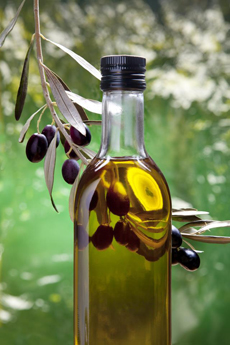
  • Olive oil. Rich in monounsaturated fat, this oil is great for a healthy heart and healthy skin. Use it for salad dressings and drizzling over slices of bread, but don’t use it for high-temperature applications. This healthy oil starts to degrade before you hit 400°F. (Tip: Have at least two tablespoons a day, whether in salad dressing or straight from the spoon.)
  •  
    SPECIAL OCCASION COOKING OILS

    These oils have more limited uses, and often come with a higher price.

  • Avocado oil. Avocado oil is rich in nutrients, because it is extracted from the fruit’s flesh. This process is similar to olive oil and palm oil production. Avocado oil tolerates heat up to 500°F, which makes it great for broiling. You can also find flavored olive oils, delicious on salads and other vegetables, potatoes, and grains.
  • Flaxseed oil. Flaxseed oil is a nutritious yet delicate oil. While many nutrition-focused people want to eat more of it, it begins breaking down at just 225°F so can’t be exposed to heat. The oil is extremely rich in heart-healthy omega-3, but unfortunately, many people find its flavor unappealing. Consider adding a teaspoon of flaxseed oil to your next smoothie to reap its health benefits.
  • Macadamia nut oil. Although more commonly used as a beauty aid, this sweet and buttery oil is good for your health, too. It contains a 1:1 ratio of omega-3 to omega-6 fatty acids. Why is this important? Many health experts believe the Western diet contains too many inflammatory omega-6s. Try macadamia nut oil in salads.
  •  
    If you currently use sunflower oil, consider this:

  • Sunflower oil. Sunflower oil is rich in skin-, brain- and heart-healthy vitamin E tocotrienols. Unfortunately, it’s also high in inflammatory compounds, so instead of cooking with it, it’s better to rub some on your cuticles or use it to smooth your hair. Instead of sunflower oil, get your tocotrienols from Malaysian certified sustainable palm oil, nature’s richest source.
  •  
     
    GENETICALLY MODIFIED OILS

    If you’re trying to avoid genetically modified foods (GMOs), put these oils on your “do not buy” list. More than 90% of these crops are grown using genetically modified seeds.

  • Canola oil
  • Corn oil
  • Cottonseed oil
  • Soybean oil
  •  
    Give all of your current oils the “sniff test.” If they smell musty, they’re ready the recycling bin.

    Replace them with “good oils.”
     
     
    ALL OF THE COOKING OILS

    There are more cooking oils, including the pricey-but-delicious hazelnut, pistachio, and walnut oils; and powerful dark sesame oil, which is delicious when used in moderation. Take a look at the different cooking oils in our Culinary Oils Glossary.

    And check to see if your oil should be kept in the fridge. Some are very hardy and stay well on the shelf for two years; others, less so.


    CHECK OUT WHAT’S HAPPENING ON OUR HOME PAGE, THENIBBLE.COM.


    Olive Oil & Olives
    [1] Heart-healthy olive oil has become a staple in American kitchens. Photo courtesy Flavor-Your-Life.com, a great resource for olive oil lovers.


    [2] Coconut oil. The liquid form is called fractionated coconut oil. They are equally good for cooking, but differ in their fatty acid composition. Here’s the scoop (photo © Dr. Bronner).


    [3] Avocado is a very healthy oil, and also has a high smoke point (photo © Olivado.


    [4] Flaxseed oil is extremely high in heart-healthy omega-3 fatty acids (photo © La Tourangelle).

    Macadamia Nut Oil
    [5] Macadamia and avocado oils are both made in Australia. For the best flavor, look for first cold pressed oils (photo © Brookfarm).


    CHECK OUT WHAT’S HAPPENING ON OUR HOME PAGE, THENIBBLE.COM.


    Comments off

    TOP PICK OF THE WEEK: Soulfully Sweet Great Gluten-Free Cookies

    If you’re looking for a great gluten-free cookie, look no further than Soulfully Sweet.

    You can tell that many, many test batches were baked to find the magic mixture that makes these cookies taste so good.

    With the right mix of ingredients and technique, you can’t tell that baked goods are gluten free. Soulfully Sweet has pulled this off, creating crunchy, very flavorful cookies that easily pass for conventional gourmet cookies.

    The best ingredients are not inexpensive, so don’t be dismayed that a box of eight cookies (2-1/2 inches in diameter) is $10.99, and you’ll want all eight flavors. They are a find for the cookie-lover on a gluten-free diet. Once you taste them, you’ll be happy to give up something else to fit them into your budget.

    We loved every one of the eight flavors:

  • Chocolate Chip Cookies
  • Chocolate Chip Toasted Pecan Cookies
  • Double Chocolate Cookies For Chocoholics
  • Molasses Ginger Cookies With Spice Infusion
  • Oatmeal Cookies With Cherries & Chocolate Chips
  • Oatmeal Raisin Cookies With Toasted Walnuts
  • Orange Cookies With Pistachio & Cranberry Chunks & Orange Essence
  • Peanut Butter Cookies With A Peanut Avalanche
  •  
    In addition to gluten-free, the ingredients are non-GMO, mostly organic* and “virtually” soy-free. The cookies are preservative free and all natural.
     
    A taste is worth a thousand words, so head to SoulfullySweet.com and indulge your cookie passion.
    __________________________________
    *The combination of gluten-free and organic ingredients is often hard to find and very pricey when you do find it. The cookies range from 84% to 90% organic ingredients. This brand doesn’t cut back on the absolute best-tasting gluten-free ingredients, and that, plus the small batch artisanal production, is why the cookies are so expensive.

      Gluten Free Cookies

    Gluten Free Chocolate Chip Cookies

    Gluten Free Chocolate Chocolate Chip Cookies
    Soulfully Sweet cookies in three of the eight flavors: Molasses Ginger, Chocolate Chip and Double Chocolate Chip. Photos courtesy Soulfully Sweet.


    Comments off

    FOOD 101: The First Cultivated Crops, The History Of Agriculture

    Emmer Wheat
    [1] Emmer wheat, one of the eight founder crops (photo © Sortengarten).

    Brown Turkey Figs
    [2] Figs were the first fruit to be cultivated (photos #2 and #3 © Melissa’s Produce).


    All of the plant-based food we eat first grew wild. When man transitioned from packs of nomadic hunter-gatherers to settled villages of farmers, they learned to cultivate the foods that were most important to them.

    This happened some 10,000 or 11,000 years ago, in the Neolithic Age (sometimes referred to as the Agricultural Revolution).

    Man domesticated animals as well; and the stable food supply supported an increasingly large population.

    The Neolithic Age is considered to be the final stage of cultural evolution among prehistoric humans: living together in communities.

    Also called the New Stone Age, it was the period where man developed stone tools by polishing or grinding*, and began to develop crafts such as pottery and weaving.
     
     
    THE FOUNDER CROPS

    After 9500 B.C.E. the eight so-called “founder crops” of agriculture appear in the Fertile Crescent, the land in and around the Tigris and Euphrates rivers.

    That area is now include Mesopotamia, and the Levant*, the eastern coast of the Mediterranean Sea.

    The eight wild crops that were the first to be cultivated were:

  • Cereals: einkorn and emmer wheat (farro)
  • Legumes: bitter vetch (heath pea, a species of pea), chickpeas, hulled barley, lentils, peas
  • Flax (linseed)
  •  
    Although archaeologists believe that wheat was the first crop to be cultivated on a significant scale, all eight crops appear “more or less simultaneously” in sites in the Levant [source].

     
    ____________________________

    *The previous age or period, the Paleolithic, was the age of chipped-stone tools. Following the Neolithic was the Bronze Age, which saw the development of metal tools.

    †The Levant was a large area in southwest Asia: south of the Taurus Mountains, with the Mediterranean Sea as the western boundary, and the north Arabian Desert and Mesopotamia in the east. “Levant” is an English term that first appeared in 1497. It originally referred to the “Mediterranean lands east of Italy.” The historical area comprises modern-day Iraq, Israel, Jordan, Lebanon, Palestine and Syria. Among other popular foods, Levantine cuisine gave birth to baklava, balafel, kebabs, mezze (including tabbouleh, hummus and baba ghanoush), pita and za’atar, among other dishes that are enjoyed in the U.S. and around the world.
    ____________________________

     
    Fig trees follow shortly; or, based on newer evidence, they may have been the first cultivated crop of all.

    Scientists have found remains of figs in Jericho, near the Jordan River in what is now called the West Bank, an area formerly called Palestinian territories and the State of Palestine. They appear to be the earliest known cultivated fruit crop—and perhaps the first cultivated crop anywhere. The figs were dated to 11,400 years ago. As archaeologists continue to unearth new evidence, our knowledge will evolve.

    For example, the latest findings show that the olive was first domesticated in the eastern Mediterranean between 8,000 and 6,000 years ago, following figs as the earliest domesticated fruit.

    Even with the advent of farming, other foods were still gathered wild, including lentils, almonds and pistachios, wild oats and wild barley. No food source was left uneaten!

    Remains of dates have been found on a number of Neolithic sites, particularly in Syria and Egypt. This means that they were being eaten by man as much as 7,000 to 8,000 years ago, although we have no proof that they were cultivated that early. [Source]
     
     
    WHAT ABOUT ANIMALS?

    Sheep and goats were the first domesticated food animals, followed by cattle and pigs. Man’s best friend, the dog, was domesticated in the Paleolithic by hunter-gatherers, some 12,000 years ago.


    HOW DID FARMING BEGIN?

    People collected and planted the seeds of wild plants. Over time, the first farmers learned how much water and sunlight were needed for success. Weeks or months later, when the plants blossomed, they harvested the food crops.

  • Between 9100 and 8600 B.C.E., farming communities built communal brick buildings to store the village’s harvests.
  • By 7000 B.C.E, sowing and harvesting were practiced in Mesopotamia.
  • By 8000 B.C.E., farming was established on the banks of the Nile.
  • Maize was domesticated in west Mexico by 6700 B.C.E. Other New World crops included the potato, the tomato, the chile pepper, squash, several varieties of beans.
  • In parts of Africa, rice and sorghum were domestic by 5000 B.C.E.
  • Evidence of cannabis use by 4000 B.C.E. and domestication by 3000 B.C.E.—in Siberia, no less!
  • In the 6th millennium B.C.E. in the Indus Valley, fertile plains in what are now Pakistan and northwest India, oranges were cultivated; by 4000 B.C.E. there were barley, dates, mangoes, peas, sesame seed and wheat; and by 3500 B.C.E. cotton.
  •  
    In the Far East, domestication occurred separately, but at about the same time.

  • In China, rice was the primary crop instead of wheat. Rice and millet were domesticated by 8000 B.C.E., followed by mung, soy and azuki beans.
  • In New Guinea, ancient Papuan peoples are thought to have begun practicing agriculture around 7000 BCE. They began domesticating sugar cane and root crops.
  •  
     
    And the rest is [agriculture] history!

    > National Agriculture Week (Ag Week) is the 3rd week in March.

    > National Agriculture Day (Ag Day) is the third Tuesday in March.


    Fresh Chickpeas
    [3] Chickpeas (they’re inside the green shell) were a founder crop. Photo courtesy Melissas.com.

    Harvested Green Olives
    [4] Olives were one of the first cultivated foods (photo © Oleamea Extra Virgin Olive Oil).


    CHECK OUT WHAT’S HAPPENING ON OUR HOME PAGE, THENIBBLE.COM.


    Comments off


    © Copyright 2005-2026 Lifestyle Direct, Inc. All rights reserved. All images are copyrighted to their respective owners.