THE NIBBLE BLOG: Products, Recipes & Trends In Specialty Foods


Also visit our main website, TheNibble.com.

PRODUCT: Melogold Grapefruit

If you enjoy grapefruit, consider the Melogold. This hybrid of a pummelo and a white grapefruit is hefty and exotic looking: bigger than large grapefruit, with yellowish green pebbly skin and pale yellow flesh.

Like pummelos (one of the ancestors of modern grapefruit), Melogolds have a thicker rind than regular grapefruit. The flavor is sweet-tart, and the fruit is so low in acid that you don’t need much (if any) sugar. The fruits are almost seedless and are extremely juicy.

And they’re available for just a few months: January through March.

So send yourself—or someone else who likes healthful low-calorie treats—a gift of it from Melissas.com.

Enjoy it as you would any grapefruit: on its own, in a fruit salad or in any grapefruit recipe.


The Melogold, a recent grapefruit hybrid. Photo courtesy Melissas.com.

 
THE HISTORY OF GRAPEFRUIT

America is the world’s largest consumer of grapefruit, with large commercial groves in Arizona, California, Florida and Texas. But the grapefruit’s ancestor, the pummelo (also pomelo, pommelo, pumello, pummello, pumelo and shaddock), comes from far away: It’s native to Malaysia and Indonesia.

Pummelo seeds were brought from the East Indies to the West Indies in 1693 by an English ship commander, one Captain Shaddock. He left the seeds in Barbados, where they were cultivated.

The grapefruit may have been a horticultural accident (a natural hybridization of the pollen from an orange tree) or a deliberate hybridization between the pummelo and the orange. We’ll never know which path the new fruit traveled, but it appeared around 1700. The original grapefruit was small, about the size of an orange.

It was originally called both “forbidden fruit” and the “smaller shaddock,” after Captain Shaddock.

By the end of the 18th century, grapefruit had spread to other Caribbean islands and Jamaica became the center for grapefruit cultivation (today, there is no commercial-scale production left in Barbados).

THE GRAPEFRUIT COMES TO AMERICA

It took more than 125 years—until 1823—for the grapefruit to cross the Caribbean. It arrived in Florida but was not immediately popular; people did not like peeling the thick skin. But the trees thrived, and the fruit’s name evolved based on how it grows: in grapelike clusters.

In 1870, the large, golden clusters on a tree he passed attracted John A. MacDonald, who lived in Orange County, Florida. MacDonald established the first grapefruit nursery. Florida’s first shipment of grapefruits to New York and Philadelphia, in 1885, generated interest and helped create the commercial grapefruit industry. Florida remains the grapefruit center of the world.

By the late 1800s, grapefruit trees were being cultivated in southern Texas; by 1910 they had succeeded in Arizona and California. The pink grapefruit and other varieties were developed. In 1929 a Texas citrus grower discovered a mutated red grapefruit growing on a pink grapefruit tree, which became the Ruby Red cultivar.

THE UGLY COUSIN

In Jamaica, the grapefruit was crossbred with the tangerine to produce the ugli, which is indeed ugly but a sweeter fruit that the locals prefer.


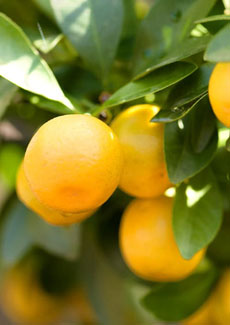
The grapefruit got its American name from
Floridians who noticed that the fruit grew in
clusters like grapes (ginormous grapes).
Photo courtesy U.C. Davis.

  WHO GROWS THE MOST GRAPEFRUIT?

The U.S. leads the world in grapefruit production, followed by China, Mexico, South Africa, India, Israel, Argentina, Turkey, Cuba and Brazil. (Source: FAO Faostat, 2008 figures)

Florida itself was the biggest exporter of grapefruit in the world until the late 1960s, when other countries began to invest in cultivation. Florida produces 75% of U.S. grapefruits, Texas 14% and California 10%, with the final 1% divided among other southern states.
 
HOW TO BUY & STORE GRAPEFRUIT

  • The fruit should be firm and springy. The heavier the grapefruit, the juicier it is.
  • While grapefruits look attractive in a basket on the counter, the best place for them is the refrigerator. A slight chill also brings out more flavor.
  • Don’t buy more than you need: Consume grapefruits within two weeks.
  • While most people don’t think of grapefruit as a hand fruit (something you’d eat out of hand, like an apple), try smaller grapefruits as a snack. They’re no harder to peel than a navel orange!
  •  


    Comments off

    RECIPE: Sautéed Bananas

    Whenever we’re at a Chinese restaurant, we order fried banana for dessert. Whether plain, with whipped cream or ice cream, it’s a sweet and creamy treat.

    Eating a serving of it recently, we reflected on what we loved about it. The answer wasn’t the breading or the deep-fat frying or the even the whipped cream. Even the superior “banana tempura” found at some Japanese restaurants, covered in crunchy panko, wasn’t the answer.

    It was the fruit itself: soft, warm banana.

    The next day we started to experiment with a bunch of ripe bananas in our kitchen, and were satisfied with the results. Instead of fried bananas with caramel or chocolate sauce, we made sautéed bananas—“fried bananas lite.”

    We loved the butter flavor so much that we ended up using half oil, half butter, for an extra hit of flavor.


    Sautéed bananas as a garnish for a chocolate tart. Photo courtesy Arch Rock Fish | Santa Barbara.

    SAUTÉED BANANAS

    Ingredients For 2 Portions

  • 2 medium bananas, cut vertically into ½ inch thick slices or in spears (halved and halved again, as in the photo)
  • 1 tablespoon brown sugar
  • 1 tablespoon oil (or butter or combination)
  • Optional garnish: 1 tablespoon agave nectar, honey or maple syrup
  • Optional garnish: 2 tablespoons chopped pecans, pistachios or walnuts
  • Optional garnish: two tablespoons vanilla ice cream or frozen yogurt
  •  
    Preparation

    1. HEAT oil in a small nonstick pan over medium heat.

    2. ADD banana slices and cook on one side for a 2-3 minutes. Flip, sprinkle with brown sugar and heat for another 1-2 minutes until evenly coated. The bananas should be softened yet hold their shape.

    3. REMOVE from heat, plate and top with optional syrup, ice cream and nuts.


    Comments off

    RECIPE: Low Calorie Seafood Chowder


    Lower calorie “chowder.” Photo courtesy
    Swanson.
     

    We just discussed transforming favorite, calorie-packed recipes with lighter cooking techniques. This recipe for a lower calorie seafood “chowder,” from Swanson’s, substitutes vegetable broth and tomato soup for the cream used in many chowders.

    FOOD 101: Call it what you want, but even with cream, this is not a chowder. Chowders are enriched with salt pork fatback and thickened with flour or crushed soup crackers—two ingredients that define a chowder, but are missing from this recipe. In addition, potatoes as well as other vegetables are typically added to a chowder; this recipe omits the potatoes.

    You can call it “chowder” for marketing purposes (i.e., making the dish sound more exciting to your family). But know in your heart that it’s simply “seafood soup.”

     
    LOWER CALORIE SEAFOOD CHOWDER/SOUP

    Ingredients

  • 1 tablespoon olive oil or vegetable oil
  • 1 medium bulb fennel, trimmed, halved and thinly sliced (about 2 cups)
  • 1 medium onion, chopped (about 1/2 cup)
  • 1 teaspoon dried thyme leaves, crushed
  • 5 cups water
  • 1 3/4 cups Swanson Vegetable Broth
  • 1 can (10 3/4 ounces) Campbell’s Condensed Tomato Soup
  • 1 package (about 10 ounces) frozen whole baby carrots, thawed (about 1-1/2 cups)
  • 1/2 pound fresh or thawed frozen firm white fish fillets (cod, haddock or halibut), cut into 2-inch pieces
  • 1/2 pound fresh large shrimp, shelled and deveined
  • 3/4 pound mussels (about 12), well scrubbed and beards removed
  • Freshly ground black pepper
  •  
    Preparation

    1. HEAT the oil in a 6-quart saucepan over medium heat. Add the fennel, onion and thyme and cook until they’re tender. Stir the water, broth, soup and carrots in the saucepan and heat to a boil.

    2. ADD the fish. Cover and cook over medium heat for 2 minutes. Discard any open or cracked mussels. Add the shrimp and mussels.

    3. COVER and simmer for 3 minutes or until the fish flakes easily with a fork, the shrimp are pink and the mussels open. Discard any mussels that do not open. Sprinkle with black pepper and serve.
     

    KNOW YOUR SOUP

    A brief history of soup and the different types of soup.


    Comments off

    TIP: The Easy Way To Healthier Cooking

    Struggling with that “eat healthier/lose weight” new year’s resolution?

    Nutritionists tell you that you can have your favorite rich foods, just in small portions. One piece of pizza instead of two. One heaping tablespoon of ice cream instead of half a pint.

    But overall, eating healthier means better nutrition and fewer calories. The good news is that even historic “bad eaters” can appreciate the delicious flavors of these other foods. It’s a mind thing.

    So start looking at your favorites an see where you can make revisions. You might want to start with a copy of Cooking Light: The New Way To Cook Light, Fresh Food & Bold Flavors for Today’s Home Cook.

    While there are numerous books in the Cooking Light series, this books starts with the principles of eating lighter:


    Continue to enjoy pasta, but make it whole wheat pasta and 50% “primavera” (half pasta, half vegetables). Photo courtesy Wisconsin Milk Marketing Board.

  • Healthy fats, like olive oil and avocado oil, rather than butter and cream
  • Larger portions of vegetables and more modest portions of meat
  • Whole grains rather than refined ones (white flour, white rice, e.g.)
  •  
    The recipes use “real” ingredients instead of fat-free sour cream, artificial sweeteners, etc.

    They provide more than enough flavor, texture, color and mouthfeel to satisfy everyone at the table.

    The adjustments are easy, the taste results negligible, the overall transition painless. And if you want to lose weight without working at it, this is how!


    The best way to start a new eating regime:
    Read an inspiring, calorie-cutting cookbook like
    this one. Photo courtesy Cooking Light.
      OUR PERSONAL TIPS

  • Substitute nonfat Greek yogurt for sour cream and cream cheese. Whether on a bagel or a burrito, it works!
  • “Pad out” pasta and rice with vegetables. Aim for a half and half ratio, and vary the veggies and the cuts (dice, julienne, circles, etc.) so they don’t get routine.
  • Make exciting salads. A plate of boring greens cries out for caloric dressings. Instead, add other, more flavorful vegetables and a vinaigrette: artichoke hearts, broccoli, capers, edamame, hearts of palm, olives, pimento and/or water chestnuts, for example. When tomato isn’t in season, it’s pretty flavorless—again, crying out for caloric dressings. Substitute grape or cherry tomatoes in red or the more catchy yellow, pimento or sundried tomatoes. And don’t use inexpensive oil and vinegar: treat yourself to the good stuff.
  • Drink lots of water or plain iced tea with meals. The more you drink, the fuller you get. Vary with club soda, flavored unsweetened seltzers and other low calorie options. Drink wine in spritzers (half wine, half club soda).
  •  

  • Enjoy your favorite cake in cubes. We’d rather eat a tiny piece of rich cream cheese cheesecake than a slice of “cheesecake lite.” A solution:
    Bake the cheesecake in a pan, like brownies—shorter than a standard cheesecake. Keep it in the freezer, and cut small squares as needed for a “fix,” or to top a larger dish of mixed berries for dessert.
     
    Send us your favorite tips, and keep working it.


  • Comments off

    TIP OF THE DAY: Uses For Egg Whites

    It must be “egg day” at THE NIBBLE: We just finished an article on the new pullet eggs (“farmer’s eggs”) from Fresh Direct. And now, some suggestions for leftover egg whites.

    More than a few recipes require just the yolk of the egg: custard (including crème brûlée), egg nog, hollandaise sauce, Key lime pie, mayonnaise and pudding, to name a few.

    So what do you do with the leftover whites?

    It’s easy enough to combine them with whole eggs in a scramble or an omelet. You can also toss them into soup that you’re heating, to create the ribbon effect in Chinese egg drop soup. The extra egg white adds more protein, for just 17 calories (per large egg white). You can add one or two extra whites to cake batter.

    But here’s a list we got from About.com years ago, and continue to build on.
     
    Uses For 1 Egg White

  • Add To Frittatas, Omelets Or Scrambles
  • Soufflés (an extra 1-2 whites add to height and volume)
  • Sugared Nuts
  •  

    Add extra egg whites to a regular frittata or omelet. Photo courtesy DeLallo.com.

     
    Uses For 2 Egg Whites

  • Cake Frostings (buttercream, seven-minute frosting and marshmallow frosting)
  • Coconut Macaroons
  • Egg Drop Soup
  • Marshmallows
  •  
    Uses For 3 Egg Whites

  • Egg White Omelet (add spinach and herbs)
  • Lemon Meringue Pie
  • Meringue Cookies
  • Nougat
  •  


    Make meringues: delicious, crunchy,
    cholesterol-free cookies. Photo courtesy
    American Egg Board.
     

    More Egg Whites

  • Angel Food Cake or White Cake
  • Baked Alaska
  • Meringue Topping For Pies/Tarts
  • Pavlovas (meringue cups to hold custard, fruit curd, fresh fruit, mousse, whipped cream, etc.)
  •  
    But what if your goal is to make meringues or angel food cake, and you have leftover yolks?

    That’s another article. Stay tuned.


    Comments off

    The Nibble Webzine Of Food Adventures
    RSS
    Follow by Email


    © Copyright 2005-2026 Lifestyle Direct, Inc. All rights reserved. All images are copyrighted to their respective owners.