|
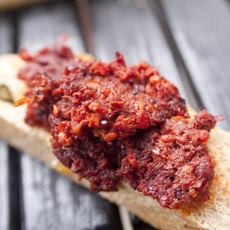
[1] ‘Nduja is traditionally used as a bread spread (photo © Real Food Toronto).

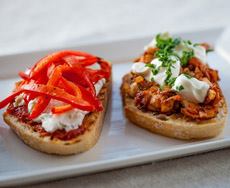
[2] For a fancier presentation, turn it into bruschetta (photo © Great British Chefs).
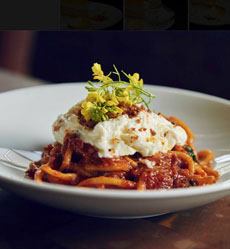
[3] It melts into pasta sauce or on a pizza; or you can sprinkle it as a garnish (a cloud of ricotta tempers the heat; photo © Bestia | LA).
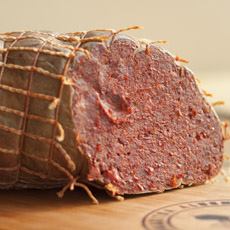
[4] Artisan ‘nduja looks like this (photo © ‘Nduja Artisans).
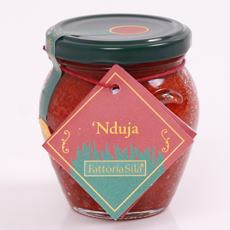
[5] You can find ‘nduja sold in jars (photo © Just So Italian.
|
|
‘Nduja (pronounced in-doo-ya), is a spicy—some say fiery—pork spread from the Calabria region of Italy. Think of it as spreadable hot soppressata or pepperoni with the texture of pâté-like texture.
It is typically made with pork shoulder, belly, and jowl, as well as tripe, roasted chiles, and spices. It is loosely based on the French andouille sausage, developed in the 13th century by the Angevins, from the area of Anjou in western France.
It is typically made with parts of the pig such as the shoulder, belly, and jowl, as well as roasted hot peppers and a mixture of spices. Nduja has a characteristic fiery taste. It is a Calabrian variation of salami, loosely based on the French andouille introduced in the 13th century by the Angevins.
Finally, North American producers of Italian-style salume like La Quercia began to make it. ‘Nduja Artisans in Chicago, which sells online, is the latest American producer we know of.
Over the last couple of years, creative chefs discovered it and found ways to use it. While ‘nduja still has limited distribution nationwide, you can find it in Italian specialty stores including Eataly, in some Whole Foods Markets, and of course, online.
You can use ‘nduja in any meal of the day. We hope it turns into a foodie trend sooner rather than later.
> September 7th is National Salami Day.
> January 16th is International Hot and Spicy Food Day.
‘NDUJA HISTORY
Most historians believe that ‘nduja was created as a poor man’s version of andouille sausage, which arrived in the area at the time Napoleon conquered Naples in 1806.
The folks in the town of Spilinga, in western Calabria (the toe of the boot of southern Italy), made a version with pork fat, ground lung, kidneys, scraps from the head, other trimmings, and some skin, and spiced it with fiery local chilies.
The ground meat was stuffed into a casing (pig intestine) and then smoked, yielding a very robust-flavored salume. Some ’nduja is aged, for even more flavor.
What About The Name?
It looks and sounds unusual (when we first saw it in print, we thought it was an African food).
It’s actually derived from the French word, andouille (on-DWEE), which means sausage.
WAYS TO SERVE ‘NDUJA
‘Nduja has traditionally been served with slices of bread or hearty cheeses. It can spice up just about anything. Because of its high-fat content, it melts into sauces and pizzas.
Consider it:
As bruschetta topping.
Spread on crostini or crackers (the difference between bruschetta and crostini).
On toast, with the ‘nduja at room temperature or warmed.
With an antipasto.
In pasta sauce or as a garnish—add some to marinara sauce (it will melt in), or sprinkled ‘nduja atop pasta or pizza. Use the enhanced sauce for linguine and clams and other favorite recipes.
With Italian cheeses that can stand up to the heat: aged grana padano, crescenza, fontina, montasio, pecorino crotonese, provolone picante, taleggio, etc. See if you can find Pecorino Crotonese.
As a sandwich or burger condiment; or as the main filling in a sandwich (add some giardiniera, lettuce, and tomato).
As a garnish for hearty soups.
In a spicy, meaty vinaigrette: Melt 3 tablespoons ‘nduja with 3 tablespoons olive oil. Whisk into vinegar, 1/3 vinegar to 2/3 flavored oil. Let cool or use warm.
As a flavorful pan fat (augmented with oil as needed), whether to fry eggs or crab cakes, flavor brussels sprouts, sear meat.
Rubbed under the skin of a chicken before roasting.
With grilled, roasted or seared meat or fish (warm the ‘nduja and brush it on just before serving.
As a spicy accent to mild foods: burrata, polenta, ricotta, scrambled eggs, etc. Replace the ham in Eggs Benedict with a layer of ’nduja.
|
|
Anywhere your creativity takes you. How about your version of ‘nduja surf and turf? One Bay Area restaurant, Incanto, uses it in chocolate ice cream (we haven’t seen the recipe, but we immediately thought of savory ice cream, something like frozen mole sauce).
Check out these recipes from Great British Chefs: ‘nduja with clams and squid ink, with grilled salmon, Eggs In Purgatory, even ‘nduja fritters!
Wrapped in plastic, ‘nduja lasts for months in the fridge. In our home, it need only last for a week.
THE ‘NDUJA FESTIVAL
Outside of Calabria, ‘nduja is perhaps the best-known food. Calabrians are so proud of it that they’ve been holding an annual ‘Nduja Festival since 1975. It takes place in Spilinga, on August 8th.
Attendees can taste ‘nduja in numerous ways, surrounded by folk music and traditional entertainments around Monte Poro (Spilinga).
If you decide that ‘nduja is your new favorite food, you may want to book a trip!
________________
*There are different regional styles of soppressata. Here are the different varieties.
†Salume has been Americanized to salami, the term for spiced ground meat, usually pork, stuffed into a casing and cured.
CHECK OUT WHAT’S HAPPENING ON OUR HOME PAGE, THENIBBLE.COM.
|