THE NIBBLE BLOG: Products, Recipes & Trends In Specialty Foods


Also visit our main website, TheNibble.com.

FOOD 101: How To Determine Live & Active Cultures In Frozen Yogurt

pinkberry-coffee-230
[1] At the time of manufacture, there were 10 million or more live and active cultures (photo © Pinkberry).

A Pint Of Cherry Garcia Frozen Yogurt
[2] Cherry Garcia Frozen Yogurt (photo © Ben & Jerry).

Carton Of Kemps Coconut Fudge Frozen Yogurt
[3] Kemps get high grades for the texture of its frozen yogurt (photo © Kemps),

live-active-cultures-seal-natyogassn-230
[4]Look for the seal on boxes and containers. Image courtesy National Yogurt Association.
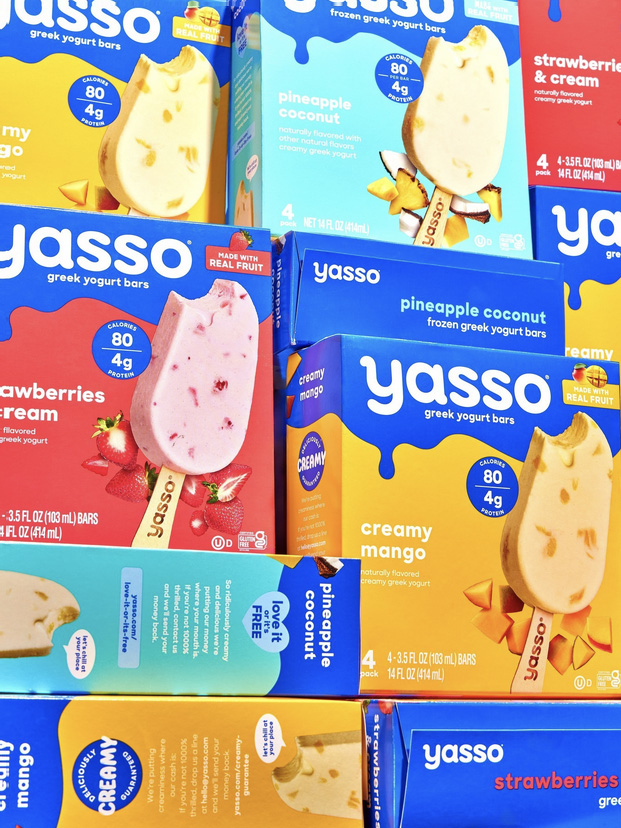
Boxes Of Yasso Frozen Yogurt Pops
[5] Yasso yogurt pops are a Nibble favorite (photo © Yasso).

Mixmi Probiotic Froyo
[6] Can Mixmi deliver the probiotics/active cultures that other brands can’t? See the comment under photo #7 (photos #6 and #7 © Mixmi).


“What happens to the beneficial bacteria in frozen yogurt,” a reader writes. “Does freezing kill them?”

Yes and no. Live culture frozen yogurt maintains the cultures’ benefits because the flash-freezing technique used in the production of frozen yogurt, unlike slow freezing in a freezer, only makes the organisms dormant.

It does not kill them—or at least not all of them, all at once. However, even if a brand is certified as the number of bacteria in frozen yogurt is usually lower than that in the fresh yogurt from which it was made.

Before we continue, elsewhere on The Nibble you’ll find:

> The history of frozen yogurt.

> The history of yogurt.

> The different types of yogurt.

> The different types of frozen desserts: a photo glossary.

> The year’s 50+ ice cream and frozen dessert holidays.
 
 
Yogurt is made by culturing milk with bacterial cultures. The words “live and active cultures” refer to the living organisms, Lactobacillus bulgaricus and Streptococcus thermophilus*, which convert pasteurized milk into yogurt during fermentation. (Note that the milk is pasteurized before culturing in order to remove any harmful bacteria.)

This fermentation process is what creates yogurt, with its unique taste, texture, and healthful attributes. The yogurt cultures—all the strains of bacteria added to the product—make up about 1% of the ingredients.

Not all frozen yogurt has live and active cultures. Just as some manufacturers use different combinations of cultures, frozen yogurts are created with different processes. Some are heat-treated after culturing, which extends the shelf life of fresh yogurt but kills the cultures.

Why should you care about the live organisms? There is preliminary scientific evidence suggesting that live cultures in regular and frozen yogurt can boost your immune system, prevent osteoporosis, and prevent gastrointestinal infections, ultimately helping your digestive system as a whole.

However, unless you can somehow get that frozen yogurt shortly after its manufacture, the cultures may no longer be live.
 
 
WHAT ABOUT PROBIOTICS?
 
In frozen yogurt, active cultures (like L. bulgaricus and S. thermophilus) are the bacteria used to ferment milk into yogurt.

  • Probiotics are specifically chosen strains of live bacteria added for health benefits, such as improved digestion and immunity. While all probiotics are live cultures, not all live cultures provide proven probiotic health benefits. They are often added toward the end of production, and are designed to survive freezing. They may go dormant when frozen and may “wake up” once in the digestive tract, but it is not certain.
  • Active cultures are required to make yogurt, and they create the tangy flavor. However, they might not survive the production process in high enough numbers to provide health benefits.
  •  
    Different yogurt brands, refrigerated and frozen alike, add probiotics, which aid with digestion. Red Mango is one frozen yogurt brand that adds probiotics.

    > Here’s more on probiotics.
     
     
    What About Active Cultures?

    The levels that remain in frozen yogurt depend upon the numbers that were in the fresh yogurt from which it was made, and on the hardiness of the specific cultures that were used. Thus, Some frozen yogurts are better sources of live cultures and/or probiotics than others.

    In order to receive the National Yogurt Association’s Live & Active Cultures seal (image #4)—a voluntary labeling program—frozen yogurt is required to contain at least 10 million cultures per gram at time of manufacture (for fresh yogurt, it is 100 million per gram). The amount was agreed upon by research scientists who participated in studies of the health benefits of live cultures in yogurt products.

    If you like a brand that doesn’t have the seal but want to know what’s inside, look on the brand’s website. If you don’t see it, use the Contact Us form to ask what types of bacteria their product contains and how many live and active cultures are in the finished product.

    But there’s more to consider:
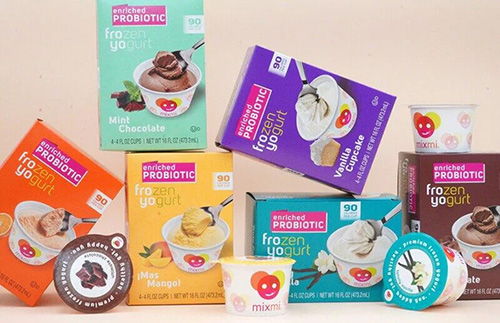
     
    Boxes Of Mixmi Probiotic Froyo
    [7] Mixmi Froyo claims it contains six live and active cultures and delivers “over one BILLION probiotics per serving” but does not clearly publish a consumer-facing “guaranteed at end of shelf life at time of consumption” CFU count (e.g., “≥ X CFU through best-by date”). They do emphasize testing and “live & active cultures,” but that’s not the same as a formal guarantee of the live count at consumption.


  • Some frozen yogurt brands have live and active cultures, but there’s no regulation around how much bacteria must be present in frozen yogurt. There may not be enough in the final product to offer any health benefits if the product was heat-treated after fermentation (which can kill cultures), contains very low or non-viable counts by the time you eat it (storage time/freezing can reduce viability a.k.a. active bacteria), or is made with yogurt flavoring or yogurt powder rather than a truly cultured base.
  • Look for phrases like “live and active cultures,” “contains live cultures,” or a list of organisms such as L. bulgaricus, S. thermophilus, Lactobacillus acidophilus, Bifidobacterium, and other bacteria. However, as noted, even if they are live in the final product, cold storage over time can kill them.
  •  

  • Some products use the aforementioned “Live & Active Cultures” type seal or statement, created in 1993 by The National Yogurt Association (NYA) and now managed by the International Dairy Foods Association (IDFA). It requires frozen yogurt to contain at least 10 million cultures per gram at the time of manufacture, but again, that doesn’t guarantee they’ll be alive unless at the end of the “best buy” date.
  • If purchasing at a soft-serve frozen yogurt shop, ask if the frozen yogurt is made from cultured yogurt with live cultures, and if it heat-treated/pasteurized after culturing. You can also ask if they have an ingredient sheet or allergen/nutrition sheet that mentions live cultures, or look on the brand’s website.
  •  
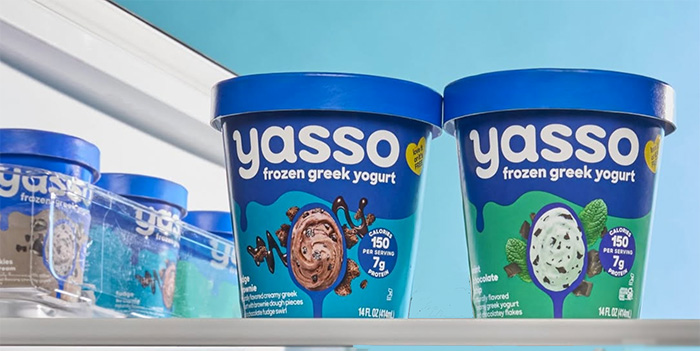
    Pints of Yasso Frozen Yogurt
    [8] Yasso often ranks at the top of supermarket frozen yogurt brands (photo © Yasso).
     
    ______________

    *Other cultures may be added as well, but these are always the first two.
     

    CHECK OUT WHAT’S HAPPENING ON OUR HOME PAGE, THENIBBLE.COM.


    Comments off

    TIP OF THE DAY: Fresh Lychees

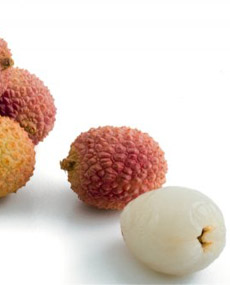
    lychee-baldorfood-230
    A peeled lychee. Photo courtesy Baldor Food.
      Lychee is a a tropical evergreen fruit tree native to southern China. The evergreen grows wild in southern China, northern Vietnam and Cambodia, although there is evidence that it has been cultivated since around 2000 B.C.E.

    Today it grows throughout southeast Asia, notably in southern Japan, India, Pakistan, north Thailand and Vietnam. More recently, the tasty fruit has been planted in California, Florida and Hawaii, ensuring U.S. fans a more reliable supply. Depending on location, the harvest runs from May through September.

    We’ve been coming across it in farmers markets: the skin of different varieties ranges from rosy red to pale dusty rose to golden tan and pale olive green. The paper-thin skin is peeled away to revel the milky white fruit inside. Here’s everything you’d ever want to know about lychee from Purdue School of Agriculture, including how to dry them in the skin.

    The fruit is also transliterated as litchi. Perhaps the more useful information, though, is how to pronounce lychee.

  • In south China, where the fruit originated, Cantonese is the dominant language and in Cantonese the fruit is pronounced LYE-chee. The transliteration from Cantonese is lai chi.
  • In Mandarin, the language of Beijing, however, it is pronounced LEE-chee.
  •  
    Like stone fruits (apricots, peaches, plums and nectarines), the lychee is a drupe, a fruit that has an outer fleshy part that surrounds a large, hard center seed. It has been called a “lychee nut” because the seed/pit looks like a glossy brown nut (it is definitely not a nut). The pit is inedible and slightly poisonous.

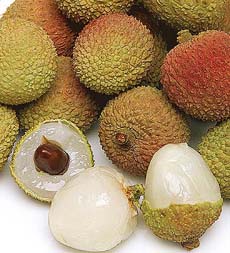
    The typical lychee is about one inch in diameter. The outer covering is a pink-red, roughly-textured rind that is inedible but easily peeled with one’s fingers. The flesh inside is white, translucent and sweet, rich in vitamin C, with a texture somewhat similar to that of a grape. Children liken lychees to “eyeballs,” and you can see why in this photo.

    The fresh fruit has a floral aroma; one account says that the perfume is lost in the process of canning. However, canning adds sugar for a higher level of sweetness, and the organoleptic difference between fresh and canned lychee is not as drastic as, say, with peaches. The canned fruit has more integrity, like canned pineapple.


    BUYING & STORING LYCHEES

    Lychees are extremely perishable. Store in a perforated plastic bag in the fridge for up to a week.

    Or, freeze them whole, with the skin on. When they are defrosted, they’ll be fine. You can even eat them frozen: instant lychee sorbet. (You may have to run the frozen lychees under warm water for a few seconds to soften the skin.)
     
    In China, lychees are enjoyed out-of-hand. In the West, peeled and pitted, they are used in:

  • Baked ham, instead of pineapple rings
  • Canapés, stuffed with goat cheese or cream cheese and pecans
  • Chinese Chicken Salad
  • Cocktails (muddled or puréed with vodka or gin, and as a garnish)
  •   green-lychee-melissas-230
    So delicious; we wish there were less pit and more flesh. Photo courtesy Melissas.com.
  • Eyeballs: Create lychee “eyeballs” for sweet cocktails and mocktails by stuffing the pit hole with blueberries, dried cranberries or pieces of grape. (For a savory cocktail, make a radish eyeball instead.)
  • Fruit Salad (delicious combined with banana, melon, mango, papaya, etc.)
  • Gelatin desserts
  • Green Salad
  • Sorbet
  • Parfaits & Sundaes
  •  
    For an exotic presentation, serve unpeeled lychees in dessert bowls over crushed ice (provide a bowl for the pits).
     
    LYCHEE RECIPES

  • Lychee Panna Cotta Recipe
  • Seared Tuna With Lychee Coulis Recipe
  • Lychee Agua Fresca Recipe
  •  
    There are dozens of recipes at LycheesOnline.com.
     
    LOVE THE FLAVOR OF LYCHEE?

    We find that St. Germain Elderflower Liqueur tastes like lychee (or perhaps it’s that elderflowers taste like lychee). We find it far superior to Soho lychee liqueur.

    Head out to find fresh lychees. Enjoy them today, and freeze some for later.


    Comments off

    RECIPE: Edamame & Corn Salad

    SONY DSC
    Edamame and corn salad. Photo courtesy
    CitronLimette.com.
      Here’s a fusion recipe: Corn is native to America, soybeans are native to Japan. Here, they marry in a sprightly oregano vinaigrette—oregano being native to the Mediterranean region and the Middle East.

    You can make this recipe with frozen or canned corn, but the idea here is to head to the farm stand and buy fresh corn. Save the canned and frozen options for the rest of the year.

    Corn is a whole grain, and edamame, fresh green soybeans, are high in protein and fiber. You can find them in the frozen section of supermarkets. Buy them shelled to save time.

    Prep time is 20 minutes, cook time is 5 minutes. You can substitute beans, peas or diced avocado for the edamame.
     
     
    RECIPE: EDAMAME & CORN SALAD

    Ingredients For 10 2/3 Cup Servings

  • 1 package (16 ounces) frozen shelled edamame
  • 3 ears fresh corn, cooked and kernels cut from cob (2 cups)
  • 1 medium red bell pepper, coarsely chopped
  • 4 green onions, thinly sliced (1/2 cup)
  • 1/4 cup chopped fresh parsley
  • Optional: diced tomatoes
  • Optional: 1/4 teaspoon crushed red pepper
  •  
    For The Oregano Vinaigrette

  • 1/4 cup olive oil
  • 1/4 cup cider vinegar
  • 1 tablespoon oregano leaves
  • 1 teaspoon garlic powder
  • 1 teaspoon sea salt
  • 1/4 teaspoon black pepper
  •  
    Preparation

    1. BRING 2 quarts water to boil in medium saucepan on high heat. Add edamame; cook 4 minutes or until edamame are bright green and tender. Drain and rinse under cold water.

    2. MAKE the vinaigrette. Mix all ingredients in large bowl until well blended.

    3. ADD the edamame, corn, red bell pepper, green onions and parsley; toss well to coat. Cover and refrigerate at least 1 hour to blend flavors. Toss before serving.
     
    Variations

    Enjoy this recipe as a side dish. We also used it to top burgers and franks. The second time we made it, we added a bit of crushed red pepper heat.

    You can use it as the base of a luncheon salad by adding cubed proteins (chicken, grilled tofu, ham, etc.) We cut up a leftover pork chop.


    Comments off

    TIP OF THE DAY: Olive Oil Cake With Your Choice Of Citrus

    Our first encounter with olive oil cake came at a trattoria in our neighborhood. It sounded strange to us: We were raised in a butter culture, with a palate trained to recognize buttery goodness over margarine and cake mixes made with salad oil.

    But, this olive oil and basil cake (also made by the restaurant in an olive oil and rosemary version) was love at first bite. The extra virgin olive oil—not canola or corn oil—donated wonderful flavor. And while cake isn’t exactly a good-for-you food, heart-healthy olive oil instead of cholesterol-laden butter was an excuse to have another piece. (Note, however, that this particular recipe does include some butter.)

    Use a fruity EVOO, not a peppery or grassy one. Fruity means that it tastes olive-y (see the different flavors of olive oil).

    You can make the tangerine marmalade to top the cake, enjoy the cake plain, or serve with berries and a dab of mascarpone or crème fraîche. By all means, add a chiffonade of fresh basil.

    The nine-inch cake serves eight.

    This recipe, by Sarah Copeland, is from The Newlywed Cookbook.

    RECIPE: OLIVE OIL CAKE WITH LEMON, ORANGE OR TANGERINE

    Ingredients

  • 4 large eggs
  • 3/4 cup/150 g sugar
  • 2/3 cup/165 ml extra-virgin olive oil
  • 1/3 cup/75 ml melted unsalted butter
  •    
    olive-oil-cake-newlywedcookbook-230

    It’s not hard to make this delicious olive oil cake (photo © Chronicle Books).

  • Finely grated zest and freshly squeezed juice of 1 tangerine, orange, or lemon
  • 1-1/2 cups/175 g all-purpose/plain flour
  • 1 tablespoon baking powder
  • 3/4 teaspoon fine sea salt or iodized salt
  •  
    For The Tangerine Marmalade

  • 4 large tangerines, Minneolas, lemons, Meyer lemons or Temple oranges, or a mix (about 1-3/4 lbs/800 g)
  • 1 cup/200 g sugar
  •  
    For The Garnish

  • Crème fraîche or whipped cream/double cream
  •  

    bottle-with-tree-flavoryourlife-230
    Who knew: Olive oil tastes just as good as
    butter in certain cakes.FlavorYourLife.com.
      Preparation

    1. PREHEAT the oven to 325°F/165°C/gas 3. Lightly butter a 9-inch/23-cm springform pan with a removable bottom.

    2. COMBINE the eggs and sugar in a large bowl. Beat with an electric mixer on high speed until the eggs are thick and pale yellow, about 3 minutes. Drizzle in the olive oil and melted butter and continue to beat. Fold in the citrus zest and juice.

    3. WHISK together the flour, baking powder, and salt in a separate bowl. Add the dry ingredients gradually to the egg mixture and stir until evenly combined, scraping down the sides of the bowl with a rubber spatula to make sure there are no dry bits at the bottom.

    4. POUR the batter into the prepared pan. Bake until the top is lightly brown, and a skewer inserted into the center comes out clean, 40 to 45 minutes, rotating once during baking to make sure it cooks evenly. Cool the cake on a wire rack for about 10 minutes. When cool enough to handle, remove the pan sides and cool the cake completely on the rack.

     
    5. MAKE the marmalade: Scrub and dry the tangerines and trim off their tops and bottoms. Slice 2 of them as thinly a possible while still keeping their shape, about 1/8 to 1/4 inch (3 to 6 mm) thick, discarding the seeds as they appear. Place the tangerine slices in a small pot with a heavy bottom. Juice the remaining 2 tangerines (you should have a scant cup/240 ml of juice) and pour the juice over the sliced fruit. Set aside for 20 minutes.

    6. COOK the fruit over medium-high heat until the liquid comes to a boil. Decrease the heat slightly and simmer until the tangerine peel is soft, about 20 minutes. Don’t stir: It will destroy the pretty round shape of the citrus.

    7. ADD the sugar and continue cooking until the sugar is dissolved. Cook until thickened and the juice has gelled slightly and is syrupy, about 20 minutes. Remove from the heat and let it cool to room temperature.

    8. ARRANGE the candied citrus slices over the top of the cake, overlapping to make beautiful jeweled tiles of fruit. Drizzle some of the citrus syrup over the slices and allow it to drip down the sides of the cake. Slice and serve with crème fraîche or whipped cream/double cream.


    Comments off

    Tiger Figs & Fresh Fig Compote Recipe

    What to look for in farmers’ markets and specialty produce stores: striped tiger figs. Or, buy them from Melissas.com.

    The Tiger Fig (also called Tiger Stripe fig and Candy Stripe fig) is prized as one of the most flavorful varieties in the marketplace. It is a light yellow, small to medium, pear-shaped fig with unique dark green stripes and crimson red interior fruit. It was bred in 1668, probably from a mutation.

    When fully ripe the fruit has a high sugar content and rich, jam-like texture and consistency. This taste yields a hint of strawberry or raspberry jam.

    You can eat it out of hand, dry it or make preserves. But something this special looking deserves to be showcased as a dessert or cheese course.

  • Serve with a frisée salad.
  • Pair with cheeses—everything from fresh goat cheese to your favorite strong cheeses.
  • Make a light compote to top ice cream or cheesecake (recipe below).
  • Bake a delicious fig tart.
  • Cook with roast chicken or pork.
  • Slice onto a cream cheese or goat cheese sandwich on multigrain or raisin bread.
  •  
    Have a green thumb? Live in the right climate (zones 5-9)? Plant your own tiger fig trees.
     
     
    RECIPE: FRESH FIG COMPOTE

    If the figs are very sweet, you may need only a scant amount of sweetener. You can use the compote as a bread spread and a condiment with sweet or savory foods.

    Ingredients For 2/3 Cup

  • 1 pound fresh figs
  • 1 to 6 tablespoons sugar or honey (or half as much agave)
  • 1/2 cup water
  • 1/4 to 1/2 teaspoon cinnamon
  •  
    Preparation

    1. REMOVE the stems from cleaned figs and cut into quarters. Place figs, sweetener, water and cinnamon in a small saucepan over low heat.

    2. COOK for 30 minutes, stirring occasionally. Remove from heat and stir in butter.

    3. PULSE, using an immersion blender or food processor, until desired consistency is reached. Store in an airtight container in the fridge.
     
     
    FIG FACTS

    Figs do not ripen off the tree, so buy those that are soft to the touch. The skin around stem should have begun to twist and wrinkle.

    Along with olives and grapes, figs are believed to be among the first fruits cultivated by man. Native to Western Asia (the Middle East and the Near East), Ficus carica has been cultivated for more than 5,000 years.


    striped-tiger-figs-melissas-230
    [1] Sweet tiger fig (photo © Melissa’s.

    Frisee Fig Salad
    [2] A frisée salad topped with fresh figs (photo courtesy SXC).

    Fig Crostini
    [3] Fresh fig crostini. Here’s the recipe (photo © Fig & Olive | Facebook).

     
    In order to develop flavor and sweetness, the fruit requires a long, warm season where temperatures regularly exceed 95°F.

    Figs, including the turkey fig, are grown in southern California. Turkey leads the world in fig production.


    Comments off

    The Nibble Webzine Of Food Adventures
    RSS
    Follow by Email


    © Copyright 2005-2026 Lifestyle Direct, Inc. All rights reserved. All images are copyrighted to their respective owners.