THE NIBBLE BLOG: Products, Recipes & Trends In Specialty Foods


Also visit our main website, TheNibble.com.

Pimento Cheese Recipes For Spreads, Pizza Rolls & More

Pimento Cheese Spread Recipe
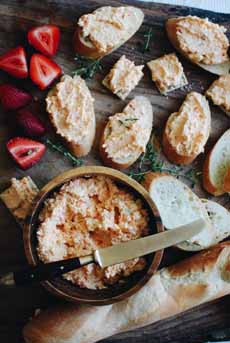
[1] A popular Southern snack: pimento cheese with bread or crackers (photo courtesy Wisconsin Cheese Talk).

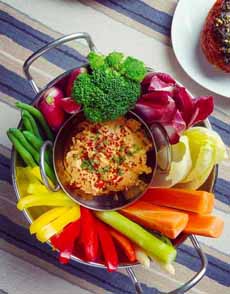
Crudites With Pimento Cheese
[2] Pimento cheese with crudités (photo courtesy 33 Greenwich | NYC).

Roasted Red Peppers
[3] Other subspecies are easily substituted for pimento. They’re sold as generic “roasted red peppers” (photo courtesy Kalyn’s Kitchen).

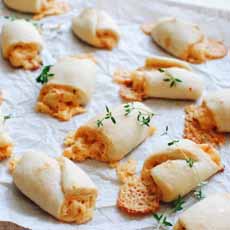
Pimento Cheese Pizza Rolls
[4] These pizza rolls are delicious with wine, beer and cocktails (recipe below, photo courtesy Bev Cooks).


Pimento cheese, long known as a Southern specialty, has been called the caviar of the south.

Yet it was actually a Northern invention: a blend of sharp cheddar with cream cheese, chopped pimento and seasonings.

Here’s the history of pimento cheese, from Robert Moss, a Southern food historian.

No matter which side of the Mason-Dixon line gave birth to pimento cheese, we’re glad it’s here. It was our mom’s favorite way to serve cream cheese, and when we were young that was easy: Philadelphia Brand sold pimento cream cheese.

While Philly is out of the pimento cheese business, you can find other brands on the shelf; or make your own with the recipe below.
 
 
IS IT PIMIENTO OR PIMENTO?

Pimiento (pim-YEN-toe) is the Spanish word for a particular sweet chile pepper similar to a red bell pepper. It’s heart-shaped, about 3 to 4 inches long by 2 to 3 inches wide.

Pimiento is the pepper used to make paprika, and is stuffed into green olives. Its flesh is sweet, succulent and more aromatic than that of the red bell pepper.

Pimento is often bought in jars or cans. Other subspecies are jarred as well, and labeled either with the subspecies (“roasted red piquillo pepper”) or a generic “roasted red peppers.”

But look around and you may find freshly-harvested pimentos: They’re in season from late summer through early fall.

Now to answer the question: Is it pimento or pimiento?

Pimiento is the Spanish spelling, pimento is the Portuguese spelling. According to the Merriam-Webster dictionary, the primary spelling is pimiento, with pimento as a variation.

For English speakers, it’s easier to pronounce by leaving out the “i”; but the choice is yours.
 
 
HOW TO SERVE PIMENTO CHEESE

The versatile spread can be served at breakfast, lunch, dinner, and for hors d’oeuvre and snacking.

From pimento mac and cheese to cheeseburgers to the pizza rolls recipe below, you can substitute pimento cheese anywhere a soft cheese is used.

Here are 20-plus ways to use it, plus a recipe for new-style pimento cheese, substituting mayonnaise for the original cream cheese..

We prefer the original cream cheese-based pimento cheese, used in the pepperjack pimento cheese recipe below.

Pepperjack? What happened to the cheddar?

Jack cheeses are often substituted for the cheddar, and some people use white cheddar. We’ve used Cabot’s Hot Habanero Cheddar or Horseradish Cheddar instead of sharp cheddar.

Just a thought: For for harvest season and Halloween, the more orange the color, the better.

Want even more variety? Here are different pimento cheese recipes from Southern Living.

 
RECIPE #1: PEPPERJACK PIMENTO CHEESE SPREAD

This recipe (photo #4) from Bev Cooks, does double duty as a spread with toasts or crackers. She also uses it in mini pizza rolls.

These are particularly nice to serve with beer, wine or cocktails.

Thanks to Organic Valley cream cheese for sending us the recipe.
 
Ingredients For 1-1/2 Cups

  • 1-1/2 cups (6 ounces) shredded pepper jack cheese (substitute sharp cheddar)
  • 1/2 cup (2 ounces) shredded white cheddar cheese
  • 4 ounces cream cheese, softened
  • 1 jar (4 ounces) diced pimentos, drained
  • 5 dill pickle slices
  • 2 tablespoons dill pickle juice
  • 1 tablespoon pickled jalapeño juice, optional
  • 1 tablespoon mayonnaise
  • Toasted baguette slices or crackers
  • Preparation

    1. PLACE the pepper jack, cheddar, cream cheese, pimentos, pickle slices, pickle juice, jalapeño juice and mayonnaise in a food processor.

    2. COVER and pulse until mixture is a spreadable consistency, about 5-10 pulses. Serve with toasted baguette slices or crackers.

     
    RECIPE #2: PIMENTO CHEESE PIZZA ROLLS

    Create your own twist on pizza rolls: Use the spread recipe above as a filling for store-bought mini pizza dough or crescent roll dough.

    Preparation

    1. ROLL out the dough and top with cheese spread. Roll up. (Cut in half width-wise if using mini pizza dough.)

    2. BAKE according to the dough package directions until the rolls are golden brown.


    Comments off

    TIP OF THE DAY: Fall Pies & Pie Crust Decorations

    What’s your favorite fall pie? We put together this list of popular options.
     
    1. PIE TYPE

    What type of pie do you hanker for? For the autumn season, we particularly like:

  • Apple and apple combinations, such as apple-cranberry and apple-pear
  • Caramel apple, pear, pecan, etc.
  • Cherry pie
  • Maple-nut
  • Maple-pear
  • Pecan and other nut pies (almond, hazelnut, macadamia, walnut)
  • Pumpkin, squash and sweet potato pies
  •  
    You can take any pie you like and tailor it to your aesthetic preferences. Just follow this simple guide.

    2. PIE FORMAT

    Next, pick a shape:

  • Conventional round pie
  • Deep dish pie
  • Galette
  • Hand pie
  • Pan pie
  • Slab pie
  •  
    3. PIE CRUST TYPE

    There are choices beyond the classic flaky pâte brisée. A soft, tender crust, it is made of flour, water and fat, and designed for moist fillings.

    (Pâte sablée, tart dough, makes a harder, cookie-like crust. The fat, typically butter, is creamed together with sugar; then the eggs and flour are added.)

    But step away from the tried-and-true, and consider other choices:

  • Cake batter crust
  • Cereal crusts: corn flakes, granola
  • Cheddar cheese crust
  • Cinnamon roll crust, made with sliced cinnamon roll dough
  • Coconut crust
  • Cream cheese crust
  • Crushed cookie crust: Biscoff, chocolate wafer, graham cracker, gingersnap, oatmeal, shortbread, sugar cookoie, vanilla wafers
  • Dried fruit crust, with chopped dried cherries, cranberries or other fruit(s)
  • Nut and seed crusts, including salted almond and pecan. The nuts or seeds are mixed with flour, but can be all nut for a gluten-free crust.
  • Pretzel crust
  • Surprise crust, with candy (e.g. M&Ms) on the bottom
  • Other flour crust: gluten-free, whole wheat, etc.
  •  
    Note that some fruits, e.g. blood orange, simply go better with a tart crust.
     
    PIE CRUST RIMS

    What type of edge (rim) do you like on your crust? Photo #1 will give you some ideas (there’s a larger version of it below).

  • Braided edge
  • Classic fluted rim/rope crimp
  • Finger crimp
  • Folded/pleated edge
  • Fork tines, parallel, chevron, crosshatch
  • Scallop crust (made with the tip of a spoon)
  •  
    TOP CRUST

    You can add festivity to the top crust with :

      Pie Crust Decorations
    [1] Different crust styles; see them more clearly in the photo below (photo courtesy Sur La Table).

    Cookie-top Pie
    [2] Petticoat tail nut shortbread tops a pumpkin pie (photo courtesy La Brea Bakery).

    Pie Top Cutter
    [3] Pie cutters are available in numerous designs, including holiday themes like pumpkins and snowflakes (photo courtesy Nordicware).

    Braided Pie Crust
    [4] Can’t decide? Go for some of everything, like Judy Kim of The Judy Lab.

  • Cobblestones, squares of dough like those atop cobblers
  • Cookies, either design shapes (leaves, flowers) or petticoat tails (photo #2)
  • Dough appliques
  • Lattices
  • Streusel or nut crumble
  • Stencils (cut-outs—photo #3)
  •  
     
    CHECK OUT OUR PIE GLOSSARY FOR THE DIFFERENT TYPES OF PIES

    Pie Crust Varieties
    Top row: scattered leaf appliques, mini applique edge, lattice. Middle row: applique flowers, classic fluted
    edge, applique leaves. Bottom row: stencil cut, braided edge with leaf applique, full leaf applique top.


    Comments off

    TIP OF THE DAY: Uses For Balsamic Vinegar, Beyond Vinaigrette

    Balsamic Glaze Salmon
    [1] Salmon with balsamic glaze. Here’s the recipe from courtesy Cooking Classy.

    Carrot Soup With Balsamic
    [2] Carrot soup with garnishes, including a splash of balsamic vinegar (photo courtesy Sid Wainer & Sons).

    Balsamic Ice Cream Sundae
    [3] Balsamic syrup tops a sundae of vanilla ice cream and strawberries. Here’s the recipe from Whole Foods Market.

    Pan Sauce
    [4] Add some balsamic to pan sauces. Here’s a recipe from Mom 101.

      Balsamic is our vinegar of choice with salad. We have 10 other vinegars, but when we want rich flavor and low acidity, we always reach for the balsamic. We currently have different ages of traditionale balsamic, condimento balsamic, plus industriale flavored balsamics in blackberry, chocolate, fig and pomegranate (there are numerous other flavors to be had).

    With so much balsamic on the shelf, we’re always looking for new ways to use them. The latest is reduced chocolate balsamic syrup on vanilla and chocolate ice cream, but here are classic uses:

    Use balsamic vinegar as you would use wine, to finish dishes or reduce into glazes and sauces.
     
     
    1. BALSAMIC GLAZE

    If you reduce balsamic vinegar into a syrup, you get balsamic glaze, also called creme balsamica (balsamic cream). It’s a luscious condiment for drizzling over savory or sweet dishes. With its complex flavors—sweet, sour, fruity—at its simplest, it can enhance anything grilled or roasted, including panini and other grilled sandwiches. Even nachos!

    Balsamic syrup is a dessert syrup, too: on ice cream, pound cake, puddings and more.

    Here are dozens of ways to use balsamic glaze, and a simple recipe.
     
     
    2. BRAISES WITH BALSAMIC VINEGAR

    Braising involves searing the food over high heat, then stewing it in a liquid (in a covered pot at a lower temperature).

    Whether you’re braising proteins or vegetables, add a tablespoon of balsamic to the braising liquid. It creates a rich layer of flavor with a hint of sweetness. It waves a magic braised fennel, braised radishes and other veggies.

    It also waves a magic wand over caramelized onions and mushroom ragout.
     
     
    3. MARINADES WITH BALSAMIC VINEGAR

    Balsamic vinegar is a known tenderizer. It imparts a rich, sweet flavor to meat and a cook’s “secret” to tenderize meats. It’s also a star with portabella mushrooms and tofu.

    You can make as simple a marinade as you like. We like this combination:

  • 2/3 cup balsamic vinegar
  • 1/3 cup olive oil
  • 2 tablespoons soy sauce
  • 4 teaspoons light brown sugar
  • 3/4 teaspoon freshly-ground black pepper
  • 4 minced garlic cloves
  • 1/3 cup finely chopped fresh rosemary
  •  
     
    4. PAN SAUCES WITH BALSAMIC VINEGAR

    The simplest sauce is made from the pan juices that result from sautéing a protein: fish, meat or poultry (photo #4).

    When you deglaze the pan to make the sauce, add a splash of balsamic to the wine, broth or other liquid.
     
     
    5. SOUPS WITH BALSAMIC VINEGAR

    Many soups, including gazpacho, get a touch of glamour from balsamic vinegar. Stir a a half or whole teaspoon per serving at the end of cooking. It adds brightness and a sophisticated layer of flavor.

    Or, splash or drizzle some balsamic on top of a thick purée (photo #2).
     
     
    6. DRINKS

    Tell your inner mixologist to get out the balsamic vinegar and add some (or more) sophistication to drinks.

    You can add balsamic vinegar to soft drinks and club soda to make shrubs. Or, layer more flavor into cocktails.

    This works best with bourbon and whiskey, which have heavier flavors than white spirits and are more adaptable to the balsamic.


    RECIPE: BALSAMIC NEGRONI COCKTAIL

    This Pomegranate Negroni from Sid Wainer & Sons (photo #5) will have guests wondering what the “special ingredient” is.

    You can use any flavor of balsamic, or even plain balsamic; but we like fall flavors here, such as fig, ginger, pear and pomegranate balsamic.

    Ingredients Per Drink

  • 1.25 ounces gin
  • 1.25 ounces Campari
  • 1.25 ounces sweet vermouth
  • 1 teaspoon pomegranate balsamic or fig balsamic vinegar (or to taste)
  • Ice
  • Garnish: orange peel
  • Optional garnish: pomegranate arils or fig wedge
  •   Pomegranate Negroni

    [5] A Pomegranate Negroni: Just add pomegranate balsamic. The recipe is below (photo courtesy Sid Wainer & Sons).

     
    Preparation

    1. COMBINE the ingredients including ice in a shaker. Shake and pour into a chilled glass.

    2. GARNISH with the orange peel and optional pomegranate arils.
     
     
    NEGRONI HISTORY

    The Negroni is one of the classic cocktails of the 20th century, dating to 1919.

    As the story goes, the cocktail was invented at the Bar Cassoni* in Florence, Italy by bartender Fosco Scarselli. He created it for a regular patron, Count Camillo Negroni, who had asked for an Americano cocktail strengthened with a dash of gin instead of the usual soda water.

    Scarselli switched the garnish of the Americano from lemon peel to orange, and presented his client with a “Negroni.”

    The cocktail took off, and the Count’s family quickly founded Negroni Antica Distilleria in Treviso, producing Antico Negroni, a ready-made version of the drink.

    But the cocktail was unknown in the U.S. until 1947 when Orson Welles, working in Rome, wrote about it, creating a rush to try it.
     
     
    ALL ABOUT BALSAMIC VINEGAR
     
     
    26 USES FOR WHITE DISTILLED VINEGAR
     
    _____________________

    *Bar Cassoni became Caffè Casoni and is now called Caffè Cavalli.


    Comments off


    © Copyright 2005-2026 Lifestyle Direct, Inc. All rights reserved. All images are copyrighted to their respective owners.