THE NIBBLE BLOG: Products, Recipes & Trends In Specialty Foods


Also visit our main website, TheNibble.com.

TIP OF THE DAY: Have An Oktoberfest Party

This story comes to us from CraftBeer.com, the website for fans of American craft beers.

Prior to the advent of electricity, brewing was of necessity relegated to specific times of the year: spring and fall. In order for brewing to take place, the environment needed to offer up the right temperatures for brewing and lagering—the step where beers are aged—often in caves in the era pre-electricity.

Fall, which brought both ample ingredients from the harvest and the right temperatures, was considered the best brewing season.

For several generations, we’ve had temperature-controlled brewing systems. Today’s brewers have on-demand ingredients from anywhere in the world. Overnight air freight can deliver the yeasts that allow brewers to create the recipes they want.
 
 
MÄRZEN, GERMAN FOR THE MONTH OF MARCH

So why do we drink March beer—Märzen (MARE-zen, sometimes spelled Maerzen in English)—in the fall?

In 1553, Bavarian Duke Albrecht V decreed it illegal to brew beer in Bavaria between April 23rd and September 24th. These months are typically too warm for brewing without risking bacterial growth that spoils beer.

Thus, brewers ramped up production in March to have enough supply for the next five months. These March beers, Märzens, were brewed stronger and lagered so they would keep throughout the summer.

A Bavarian Märzen is copper-red in color with a full-bodied maltiness—a little spicy and dryish. It has what is described as a rich bread-crust-like malt flavor.
 
 
WHY IS MÄRZEN DRUNK FOR OKTOBERFEST?

The term “Oktoberfest” did not have a connection to Märzen-style beer for another 300-plus years, 62 years after the first Oktoberfest.

The first Oktoberfest celebration began with the Royal Wedding of Crown Prince Ludwig, later to become King Ludwig I, to Princess Therese of Saxony-Hildburghausen on October 12, 1810. The citizens of Munich were invited to attend the festivities held on the fields in front of the city gates to celebrate the royal event.

  Marzen Beer
[1] Märzen beers have reddish hues (photo courtesy Craft Beer).

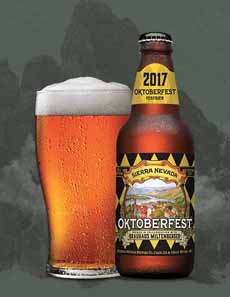
Sierra Nevada Oktoberfest Beer

[2] Oktoberfest beer from Sierra Nevada.

 
According to legend, a brewer ran out of the then-traditional fall beer, the Dunkel—a group of malty, dark German lagers that range in colour from amber to dark reddish brown (Dunkel means dark).

Instead, he served a beer similar to Märzen.

The first named “Oktoberfest” beer is a Märzen-style beer that was brewed for the Munich Oktoberfest in 1872 (it seems to have taken a long while for marketing to take over).

The celebration became an annual festival in Munich, running from the third week in September through the second week in October*.
 
 
HAVE YOUR OWN OKTOBERFEST CELEBRATION

Oktoberfest/Märzen beer has become a very popular style for U.S. brewers to produce. If you’re a lover of malt, look at your local selection of American craft brews for examples. Just a few examples:

  • Anaheim Brewery | Oktoberfest Lager | Anaheim, California
  • Cape May Brewing | Oktoberfest | Cape May, New Jersey
  • Chuckanut Brewing | Old Fest | Bellingham, Washington
  • Due South Brewing | Oktoberfest | Boynton Beach, Florida
  • Enegren Brewing Co. | Oktoberfest | Moorpark, California
  • Lumberyard Brewing | Oktoberfest Marzen | Flagstaff, Arizona
  • Meadowlark Brewing | Festbier | Sidney, Montana
  • Pedal Haus | Oktoberfestbier | Tempe, Arizona
  • SanTan Brewing | Oktoberfest | Chandler, Arizona
  • War Horse Brewing | Rolling Storm | Geneva, New York
  •  
    Pull together as many selections as you like, and call the crew over for your own little Oktoberfest*. Also scan the shelves for Dunkels to compare.

    And if you have as good a time as we think you will, plan another tasting next month, with pumpkin beers and ales.
     
     
    CHECK OUT THE DIFFERENT TYPES OF BEER IN OUR BEER GLOSSARY.
     
     
    PLAN YOUR OKTOBERFEST PARTY

    How To Plan An Oktoberfest Party

    Oktoberfest Foods

    Oktoberfest Burger With Pork Schnitzel & Beer Cheese Sauce
    ________________

    *The 2017 Oktoberfest in Munich runs from September 16th through October 10th.
      

    Comments off

    TIP OF THE DAY: An Edible Delicata Vase

    Delicata Squash
    [1] Turn a delicata squash into an edible vase (photo courtesy Good Eggs).

    Delicata Squash Bouquet
    [2] An edible delicata squash vase from Olmstead | Brooklyn.

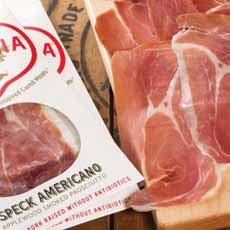
    La Quercia Speck

    [3] Domestic speck from La Quercia in Iowa.

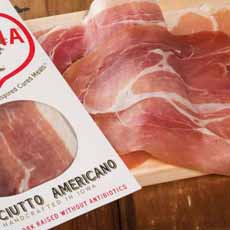
    La Quercia Prosciutto
    [4] Domestic prosciutto from La Quercia (photos #3 and #4 courtesy Murray’s Cheese). Prosciutto and speck look almost identical in photos. The difference is in the flavor and aroma. See why below.


    Olmstead, in Prospect Heights, Brooklyn, New York, is one of two New York City restaurants that was named to the list of James Beard Award-winning restaurants of 2017 (the other is Le Coucou).

    These delicata squash vases are one of chef Greg Baxtrom’s favorite seasonal dishes. Multiply this recipe by the number of servings you’d like.

    For a vegetarian course, substitute thin curls of a hard cheese like parmesan or aged gouda for the prosciutto/speck.
     
     
    RECIPE: DELICATE SQUASH VASES

    Ingredients For 2 Servings

  • 1 delicata squash
  • 2 ounces sliced prosciutto or speck
  • Cooking oil
  • 1 bunch sage
  • 3 tablespoons ricotta
  • 1 smallish green pear
  • 1 bunch mustard greens
  • 1 head lettuce (we used butter lettuce)
  • Salt and pepper
  • Olive oil
  • Sherry vinegar
  •  
    Preparation

    1. PREHEAT the oven to 375°F. Cut the bottom off the squash so it has a level base, slice it in half and scoop out the seeds. Then slice it in half horizontally, to create two “vases” (you’ll have four pieces, and will use two pieces to make one vase). Season with salt and pepper and roast for 30 minutes or until tender.

    2. REDUCE the heat to 325°F and bake the prosciutto/speck on a baking sheet until crispy.

    3. HEAT the cooking oil to 300°F and fry the sage for 20 seconds. Remove and set on paper towels to drain.

    4. SEASON the ricotta with olive oil, salt, pepper and lemon zest. Clean the lettuce and mustard greens. Slice the pear thinly on a mandoline. Dress the lettuce greens and pear with salt, pepper, olive oil and sherry vinegar

    5. ASSEMBLE: Stand up two halves of the squash and fill it halfway with ricotta. Build the vase, adding lettuces to make the bouquet. Decorate the lettuce bouquet with strips of crispy ham, pear slices and sage.
     
     
    WHAT IS DELICATA SQUASH?

    The delicata is a winter squash, a cream-colored cylindrical shape with green stripes. It is a member of the genus/species Cucurbita pepo, which also includes pattypan squash, pumpkin, yellow crookneck squash, yellow summer squash and zucchini.

    Delicata refers to its delicate rind, which can be eaten. Along with its creamy texture, delicata makes a perfect edible vase. It is often stuffed with meat or vegetable mixtures.

    Delicata squash is most commonly baked, but can also be microwaved, sautéed and steamed. The seeds can be toasted and eaten.

    Indigenous to North and Central America, squash were introduced to early European settlers by Native Americans. References to the delicata date to 1856. While the standard delicata is grows on vines, sweeter bush varieties have been introduced and sold with proprietary names such as Honey Boat and Sugar Loaf [source].

    Delicata is not as rich in beta-carotene as other winter squashes, but is a good source of dietary fiber and potassium, with smaller amounts of vitamins B and C, magnesium and manganese.

    Delicata is also known as Bohemian squash, peanut squash and sweet potato squash. They are easy to grow, mature roughly 105 days after germinating. After harvested, you’ll need to cure them for approximately a week in a warm, dry place, protected from frost. A garage works.

     
    PROSCIUTTO VS. SPECK: THE DIFFERENCE

    Prosciutto and speck are very similar hams, both made from the hind leg of the pig, rubbed with salt and spices.

  • Prosciutto is cured by air-drying.
  • Speck is air-dried, then smoked as a final step in the curing process.
  • The result: speck has a smoky flavor, prosciutto does not.
  •   

    Comments off

    FOOD FACTS: Kappa Does Not Mean Cucumber!

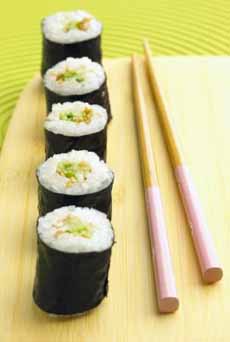
    If you’re a sushi lover, you’ve invariably had—or at least seen—kappa maki. It’s a sushi roll (maki) filled with cucumber, and often garnished with sesame seeds.

    Most of us assumed that kappa is the Japanese word for cucumber. Today we discovered differently.

    The kappa is a well-known Japanese mythological creature, a water imp that inhabits rivers and ponds.

    Threats of the kappa have been used to warn children of the dangers lurking in rivers and lakes. A kappa may try to lure them into water, and pull them down.

    Tke kappa is a trickster. It is typically depicted as roughly humanoid with scaly reptilian skin, about the size of a child.

    Cucumber is their favorite meal. Hence, kappa maki was named for them. The Japanese word for regular cucumber is kyuuri.

    Here’s more about the kappa.

      Kappa Maki Goma
    Kappa maki with goma, sesame seeds. Here’s the recipe from JapaneseFood.About.com.


    Comments off


    © Copyright 2005-2026 Lifestyle Direct, Inc. All rights reserved. All images are copyrighted to their respective owners.