THE NIBBLE BLOG: Products, Recipes & Trends In Specialty Foods


Also visit our main website, TheNibble.com.

FOOD HOLIDAY: America’s Favorite Cookies

October is National Cookie Month, National Cookie Day is December 4th, and today, October 1st, is National Homemade Cookie Day.

According to OnePoll.com, the average American eats 18,928 cookies in their lifetime.

According to Huffington Post, America’s top 10 favorite cookies are:

1. Chocolate chip cookie
2. Brownie (a brownie is classified as a bar cookie)
3. Peanut butter cookie
4. Oreo
5. Oatmeal raisin cookie
6. White chocolate macadamia cookie
7. Sugar cookie
8. Shortbread
9. Butter cookie
10. M&M cookie

You can bake any of them today, including homemade Oreos, with this recipe. Here’s a comparison:

  • Oreo ingredients: unbleached enriched flour, sugar, palm, and/or canola oil, cocoa, high fructose corn syrup, leavening, cornstarch, salt, soy lecithin, vanillin (artificial vanilla), and unsweetened chocolate.
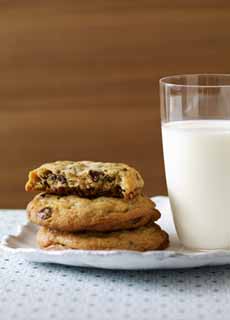
  •   Chocolate Chip Cookies
    Homemade chocolate chip cookies: America’s favorite to bake, too (photo courtesy Baked NYC).
  • Homemade ingredients: all-purpose flour, sugar, light brown sugar, butter, cocoa, egg, egg yolk, vanilla extract, instant coffee, salt, baking powder and a filling of fondant icing.
  •  
    According to Eat This, Not That, the “secret formula” Oreo center that fans love so much is made from sugar, palm and/or canola oil, high fructose corn syrup, soy lecithin, and artificial flavor. Oh, yum!

    But the story gets even better: Originally the center was made with pig lard! Here’s more about what’s in Oreos.
    See the different types of cookies in our Cookie Glossary.
     
     
    THE HISTORY OF CHOCOLATE CHIP COOKIES


    Comments off

    TIP OF THE DAY: Cast-Iron Cooking & Beef Bacon Hash Recipe

    Beef & Bacon Hash Recipe
    [1] Beef and bacon hash for brunch (photo courtesy Lodge Manufacturing).

    My Lodge Cast Iron Cooking
    [2] One of Lodge Manufacturing’s three cookbooks devoted to cast-iron cooking (photo courtesy Lodge Manufacturing).

    Lodge Cast Iron Cookware

    [3] A kitchen’s worth of Lodge cast-iron cookware. Photo courtesy Williams-Sonoma.


    One of our family’s favorite Sunday brunch recipes was corned beef hash with poached eggs. Mom always made her hash in a large cast-iron skillet (and the corned beef in a pressure cooker). A hot cast-iron skillet adds a crispy crust to the hash.

    We never heard the words “beef hash,” much less “beef-bacon hash.”

    So when we received the recipe below from Lodge Manufacturing, a Tennessee-based producer of cast-iron cookware, we pulled the skillet out of the cupboard.
     
     
    THE BENEFITS OF CAST-IRON COOKING

  • A well-seasoned cast-iron pan is as effective as a nonstick pan, and avoids the chemicals used to coat nonstick pans.
  • While nonstick coatings can leach harmful chemicals into your food, cast-iron cookware leaches beneficial iron!
  • Cast iron heats completely evenly (not so with other metals, except copper), which is why professional chefs use them.
  • The pots and pans go from stovetop to oven or broiler.
  • You don’t have to scrub them. Once the pan is seasoned, just wipe it clean.
  • Here’s more information from Eating Well.
  •  
    If you don’t have a cast-iron skillet, put it on your wish list and use it to give a great crust to:

  • Bibimbap
  • Cornbread
  • Dutch pancakes (Dutch baby)
  • Frittata
  • Panini
  • Pan pizza
  • Steak
  •  
    You’ll also enjoy using it to for:

  • Fried chicken
  • Skillet chocolate chip cookie
  • Toasting spices and grains
  • Just about anything
  •  
    Lodge has issued three books on cast-iron cooking. This recipe comes from My Lodge Cast Iron Skillet Cookbook: 101 Popular & Delicious Cast Iron Skillet Recipes.

     
    RECIPE: BEEF-BACON HASH

    This is a delicious way to use leftover beef or other meat. Use a cast-iron skillet preferably 10 inches in diameter or larger.

     
    Ingredients For 4 Servings

  • 3 slices bacon
  • ½ cup finely chopped onion
  • 2 cups new potatoes, cut into ½ -inch cubes and parboiled 5 minutes
  • 1 cup cubed (1/2-inch) leftover cooked beef or other meat
  • 2 garlic cloves, minced
  • 1 tablespoon fresh thyme leaves or 1/2 teaspoon dried
  • Sea salt and freshly ground black pepper
  • 1/4 cup (or more) fresh flat-leaf parsley leaves, chopped
  •  
    Plus

  • Eggs
  •  
    Preparation

    1. FRY the bacon until crisp. Drain on a paper towel, and pour off all but a thin layer of fat. Save the bacon fat in a jar for cooking eggs, potatoes, etc. (25+ uses for bacon fat).

    2. ADD the onion to the skillet and cook for 2 to 3 minutes over medium heat, stirring. Turn the heat up under the skillet and add the potatoes in a single layer. You might need to brown the potatoes in two batches, depending on the size of the skillet.

    3. COOK until the potatoes are browned on both sides, about 5 minutes. Add the beef and lower the heat slightly. Add the garlic and thyme, season with salt and pepper to taste, mix well, and heat thoroughly.

    4. REMOVE the pan from the heat and add the parsley. Crumble the bacon (or cut it into small pieces) and add to the hash. Mix well, and serve hot or at room temperature.
      

    Comments off

    TIP OF THE DAY: Beurre Blanc, Beurre Noir & Beurre Noisette

    Yesterday we wrote about LoveTheWild, a line of frozen fish entrées with pats of flavored butter (compound butter) that melt into a sauce.

    The concept of compound butter comes from French cuisine, but French butter sauces don’t stop there.

    Today, we take on three butter preparations that are used as sauces—sauces that you can easily make to spruce up your evening meal. You don’t need a lot of it to add richness to your dish.

    There are other French butter-based sauces, of course.

    > Check out the different types of butter in our photo glossary.

    > The history of butter.
     
     
    BEURRE BLANC & BEURRE ROUGE (WHITE AND RED BUTTER SAUCES)

    French for white butter, beurre blanc is a hot emulsified butter sauce made popular in Loire Valley cuisine. There it is made with Muscadet, the region’s best-selling white wine, which has been made since the late 16th or early 17th century.

    The ingredients of beurre blanc—and the other sauces in this article—are simple:

  • White wine.
  • Champagne vinegar or white wine vinegar.
  • Shallots.
  • Chopped fresh herbs, such as tarragon, basil, parsley or chives.
  • Optional: bay leaf and peppercorns.
  •  
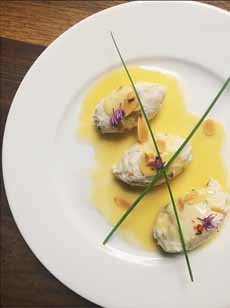
    It is a popular sauce for fish and shellfish, including poached fish and Coquilles Saint-Jacques; as well as vegetables, such as asparagus. With the latter, a splash of tarragon vinegar or a bit of fresh tarragon is added——not part of the original recipe, nor are any fresh herbs. Nor are the bay leaf and peppercorns added by some cooks (photo #1).

    To make the emulsion, cold, whole butter is blended into the hot reduction of wine and vinegar. It is similar to the mother sauce hollandaise in concept, but is considered neither a mother sauce nor a compound butter.

    Beurre rouge, a variant of beurre blanc sauce, is made by substituting a dry red wine for the white wine and red wine vinegar for the white wine vinegar. The red wine supplies color and more of a tang.

    Here’s a recipe for beurre blanc.
     
    Some beurre blanc history: The chef Clémence Prau Lefeuvre of the Loire restaurant La Buvette de la Marine, is credited with the invention of beurre blanc. Cooking at the beginning of the 20th century, she developed the recipe by accident.

    The story is that she intended to prepare a béarnaise sauce for a pike dish, but forgot to add the tarragon and egg yolks.
     
     
    BEURRE NOISETTE (BROWN BUTTER SAUCE)

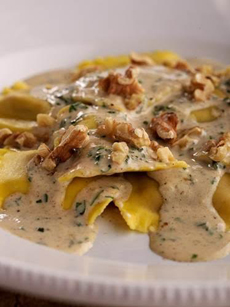
    For more depth of flavor, the butter is cooked longer. A step up from beurre blanc is beurre noisette (photo #2).

    Literally meaning hazelnut butter, but commonly referred to as brown butter, it is melted butter that’s cooked until the milk solids turn the light golden brown color of hazelnuts and the butter gives off a nutty aroma.

    Beurre noisette is popular for sautéeing and saucing meat, poultry, fish and fruit; as a sauce for pasta and vegetables; and in baking biscuits, cakes and cookies. We like it with polenta and grains.

    > Here’s a recipe for beurre noisette.

    > The history of beurre noisette, brown butter.


    Oysters In Beurre Blanc
    [1] Oysters in beurre blanc (photo courtesy Oyster Club | CT).

    Ravioli With Beurre Noisette
    [2] Ravioli in beurre noisette, brown butter (photo courtesy David Venable | QVC).

    Beurre Noir

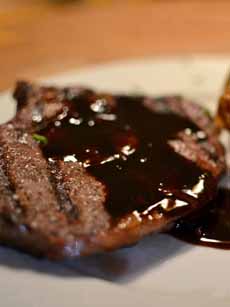
    [3] Beurre noir is butter cooked until it turns a very dark brown (photo courtesy Alchetron).


    BEURRE NOIR (BLACK BUTTER SAUCE)

    French for black butter, the butter is cooked over low heat until it turns dark brown (not literal black—photo #3).

    When the sauce turns brown, a few drops of red wine vinegar or lemon juice are added. Some recipes add capers and parsley or thyme. Modern cooks have amended the recipe to include balsamic vinegar, garlic, even minced hot chiles (essentially, sauces that should be called balsamic beurre noir, garlic beurre noir, etc.).

    Two famous classic dishes are calves brains in black butter (a dish, alas, that is not served much these days since the spread of Mad Cow Disease) and skate in black butter. Here’s a recipe for skate in black butter.

    Beurre noir is not to be confused with Jersey black sutter, an English speciality made by slowly cooking apples with cider, licorice and spices. It’s generally eaten on toast.
     
     
    BONUS: BEURRE MONTÉ, A COOKING TECHNIQUE

    Beurre monté is not a sauce, but a method of infusing meats and fish with the flavor of butter. Solid butter is an emulsification of butter fat, water and milk solids; beurre monté is a way to manipulate the emulsification into liquid form.

    A few drops of water and chunks of butter are whisked over a moderate heat to melt the butter and keep it emulsified—a solid, creamy sauce. Foods are cooked in it, meats are rested in it, sauces are made with it. “It’s an extraordinary vehicle for both heat and flavor.” says chef Thomas Keller.

    > Here’s his recipe.


    CHECK OUT WHAT’S HAPPENING ON OUR HOME PAGE, THENIBBLE.COM.


    Comments off


    © Copyright 2005-2026 Lifestyle Direct, Inc. All rights reserved. All images are copyrighted to their respective owners.