THE NIBBLE BLOG: Products, Recipes & Trends In Specialty Foods


Also visit our main website, TheNibble.com.

RECIPE: Mother’s Day Martini

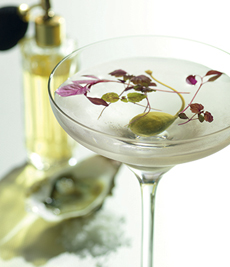
Make a special Martini for Mom with this recipe from Grey Goose. It’s all in the garnish: microgreens and a caperberry instead of the usual olive or twist.

Here, the conventional olive or lemon twist is replaced with with microgreens and a large, stemmed caper berry: arty and pretty.

Use your favorite Martini recipe or this one:

RECIPE: CLASSIC DRY VODKA MARTINI

Ingredients Per Drink

  • 2½ parts vodka
  • ½ part dry vermouth
  • 1 dash orange bitters
  • Garnishes: caper berry, amaranth and shiso microgreens
    (or substitutes)
  •   microgreen-martini-greygoose-230

    Make it pretty for Mother’s Day. Photo courtesy Gresy Goose.


    Preparation
    1. COMBINE ingredients in a shaker with ice. Shake and strain into a Martini glass.

    2. GARNISH and serve.
      

    Comments off

    TIP OF THE DAY: The Easiest Cupcake Garnishes

    candy-garnish-cupcakes-sweetstreetdesserts-230
    Easy Mother’s Day cupcakes. Photo courtesy Sweet Street Desserts.
     

    If you still haven’t settled on a dessert for Mother’s Day, here’s the easy way out.

    You can make cupcakes like these, from SweetStreetDesserts.com, simply by purchasing plain cupcakes and topping them with a large piece of candy.

    Instead of sprinkles, the idea is to have one chocolate “centerpiece” to top the cupcake. Consider:

  • Baci
  • Bonbons
  • Chocolate-coverd cherries
  • Chocolate disks
  • Hershey Kisses (unwrapped)
  • Non-pareils
  • Toffee or brittle (large piece)
  •  
    Of course, you can bake your own cupcakes from scratch or a mix. But with this concept, the busiest dad or young child can “make cupcakes” for Mom.
      

    Comments off

    Spring Salad Recipe: Asparagus & Radishes & The History Of Radishes

    It’s easy to put together a spring salad of asparagus and radishes. Most of us are familiar with the crimson radish, and maybe even black radish and white radish (the shredded daikon served with sashimi).

    If you’re lucky, you’ve enjoyed the beauty of a watermelon radish (photo # 3) or another specialty radish (photo #4—check your farmers market).

    If you’re a radish lover, take a look at these heirloom radishes. We’d never seen the Chinese Green Luobo Radish (Qingluobo), with lime-green skin and flesh; and the purple-skinned Malaga Radish that looks like a beet.

    Some radishes are small globes, others have pointy tips, still others are the shape of carrots or turnips.

    The amazing Rat’s Tail Radish from Thailand doesn’t look like a radish at all. It’s a very long, slender green pod with radish “seeds” inside, and was grown in U.S. gardens in the 1860s. The Zlata Radish from Czechoslovakia is the color of gold beets.

    Radishes, botanically known as Raphanus sativus, are actually cabbage relatives that originated in Asia. They are a member of the Brassicaceae family of vegetables that is famed for its anti-carcinogenic properties.

    There are small varieties for salads and radishes the size of potatoes that in pre-refrigeration times could be stored through the winter.

     
    Growing radishes is easy. You can plant salad radishes in spring through fall in most locations. Repeated plantings ensure you’ll have fresh radishes until the frost.

    Whether you buy them or grow them, celebrate spring with this refreshing radish and asparagus salad. It’s from Katchkie Farm in Kinderhook, New York, which uses its micro arugula in the recipe.

    > The history of asparagus.

    > A brief history of radishes is below.

     
    RECIPE: SPRING RADISH SALAD WITH ASPARAGUS & BLOOD ORANGE VINAIGRETTE

    Ingredients For 3 Servings

  • 1 bunch specialty radishes (or substitute)
  • 2 blood oranges*
  • ½ cup pistachios
  • 1 teaspoon lemon juice
  • 1 tablespoon olive oil
  • Salt and pepper to taste
  • 12 asparagus spears
  • 1 cup micro arugula‡
  •  
    For The Blood Orange Vinaigrette

  • 3 tablespoons blood orange juice
  • 1 teaspoon champagne vinegar†
  • 1 teaspoon minced shallot
  • Salt and pepper to taste
  • 9 tablespoons olive oil
  •  
    Preparation

    1. PEEL the asparagus and blanch in salted boiling water then shock in ice water, drain and reserve.

    2. PREPARE the Blood Orange Vinaigrette. Whisk together the orange juice, vinegar, minced shallot, salt and pepper. Add the olive oil while continuing to whisk. Taste and adjust seasoning as necessary.

    3. TOSS a bit of the vinaigrette with the asparagus.
    4. WASH and trim the tops of the radishes so that some of the green is left. Cut each radish into four wedges and reserve. Peel the oranges, being careful to remove all of the pith, then separate the segments. Set aside and keep the orange remnants to use for the vinaigrette.

    5. TOAST the pistachios in a dry skillet over medium heat. Remove and set aside to cool.

    6. PLACE the radishes, oranges, and pistachio in a salad bowl, then add the lemon juice, olive oil, salt, and pepper. Toss together and adjust the seasoning to taste.

    7. PLATE: Place four asparagus on each plate. Spoon the radish mixture on top. Garnish with some micro arugula and drizzle with vinaigrette.

    ______________

    *If you can’t find blood oranges, see if the fresh juice section of the store has blood orange juice. Or, substitute orange or tangerine juice.

    †Substitute white wine vinegar.

    ‡Substitute other microgreens or sprouts.


    Bunch of Fresh Asparagus
    [1] Start with the asparagus (photo © Good Eggs).

    radish-beauty-sweetgreen-230
    Next, pick your radishes. But instead of the familiar Red Globe radish… (photo © SweetGreen).


    [3]…How about some watermelon radishes from a specialty produce store… (photo © High Mowing Organic Seeds).


    [4]…or something even more special from the farmers market, like these purple ninja radishes (photo © Sid Wainer & Sons)?


    [5] This version has a sprinkling of sesame seeds (photo © Taste Of Home).


    THE HISTORY OF RADISHES

    Radishes, a root vegetable, originated in China thousands of years ago. Wild varieties can still be found there.

    In prehistoric times, the radish spread to Middle Asia, where many different forms were developed. Soon afterward, the radish spread to the Mediterranean.

    Radishes were extensively cultivated in Egypt during the time of the Pharaohs. Ancient records show that radishes were eaten before the pyramids were built. The first written records that mention radishes come from 3rd century B.C.E. [source].

    They became an important food in ancient Greece and Rome, as well. But the radish did not spread throughout the rest of Europe until much later.

  • Giant radishes were documented as growing in Germany in the 13th century—a German botanist reported seeing radishes weighing 100 pounds in 1544.
  • Small radishes were not recorded in Britain until 1548, and after the middle of the 16th century for other parts of Europe. By 1586, small radishes were common throughout Europe and Great Britain [source].
  • The radish was one of the earliest vegetables to be brought over to the New World. Records show that they were being cultivated in Massachusetts in 1629, and in Mexico in 1565.
  • Our word “radish” comes from the Latin word “radix,” meaning “root,” and specifically radish root.
  •  
    There are five common radish varieties grown in the U.S. The most well-known variety is the Red Globe radish (photo #2), small (1-4 inches) with red skin and white flesh. It is commonly eaten whole or sliced on salads.

    The other radishes grown in the U.S. are the black radish, daikon, California Mammoth White, and White Icicle. You may also find exotic varieties like the Purple Ninja (photo #4).

    Radish leaves are edible. Use them in your own salads, soups (especially potato soup), or sautéed as a side dish. (Guinea pigs, hamsters, and rabbits are also big fans of the leaves.)

    The leaves also look pretty as crudites or plate garnishes

    Fun fact: The “hot” flavor of the radish is found in the skin. If you peel the radish, you lose the heat—and most of the flavor [source: USDA & Wisconsin Department Of Public Instruction].

    Radish is a rich source of ascorbic and folic acid, potassium, vitamin B6, riboflavin, magnesium, copper, and calcium.

    When buying radishes, choose smaller ones: they have a better flavor and texture.

    If you cut off the tops of the radishes when you buy them and store them in plastic bags, they can last up to two weeks in the fridge.


    CHECK OUT WHAT’S HAPPENING ON OUR HOME PAGE, THENIBBLE.COM.


    Comments off

    RECIPE: Oysters & Pearls

    The great chef Thomas Keller, inventor of “Oysters and Pearls,” created a splendid first course with fresh-shucked oysters in a pearl tapioca sabayon, garnished with osetra caviar (today it’s domestic white sturgeon caviar, due to import restrictions).

    Here’s a video, here’s the recipe).

    Keller’s inspiration was a box on tapioca pearls he noticed on a shelf. He turned the tapioca into something savory instead of the conventional sweet pudding, thinking “Where do pearls come from? Oysters.”

    The iconic dish came together just like that.

    While we can’t get enough of Oysters and Pearls, here’s an easier take on the dish that you can make for Mother’s Day or other special occasion.

      pearls-in-oysters-chalkpointkitchen-230sq
    An easy version of “Oysters and Pearls.” Photo courtesy Chalk Point Kitchen | NYC.
     
    You can serve as many oysters on a plate as you like: a minimum three, up to a dozen oysters on the half shell if your guests are like Diamond Jim Brady.

    Serve this course with a dry white wine or saké.
     
    RECIPE: OYSTERS & PEARLS

    Ingredients

  • Oysters on the half shell
  • Seaweed or microgreens
  • Salmon caviar (vegan option finger lime pearls)
  • Yuzu or rice wine vinaigrette
  • Optional: halved cherry or grape tomatoes, lime wedges
  •  
    Preparation

    1. DRESS the seaweed with some yuzu or rice wine vinaigrette so it can be eaten as a salad.

    2. CREATE a seaweed bed on each serving plate, topped with the oysters.

    3. TOP each oyster with pearls of caviar. Decorate the plate with the cherry tomatoes and lime wedge.


    Comments off

    TIP OF THE DAY: Different Egg Dishes

    frittata-applegate-230r
    A frittata, made on the stove top and
    finished in the oven or under the broiler.
    Photo courtesy Applegate Natural &
    Organic Meats.
      You can have your breakfast eggs baked in a nest, boiled, fried, poached or scrambled or stuffed.

    You can make breakfast burritos and pizzas, Eggs Benedict and a library of other egg dishes.

    Which brings us to today’s tip: the differences among the egg casserole, frittata, omelet, quiche, strata and torta/tortilla.

    OMELET

    The simplest of this group of egg dishes, an omelet consists of beaten eggs mixed with a small amount of cream, milk or water. The mixture is cooked in an omelet pan until set, then folded around a pre-warmed filling (see “inclusions” in the Casserole section), cooked a minute more and served.

    An omelet pan is important to success. A shallow pan with sloped edges, it can vary in diameter.

    For those who don’t make omelets enough to develop the technique to flip, there’s a hinged omelet pan.

    Omelette is the French spelling. It evolved from the earlier amelette and alemelle, literally a thin plate, from the Latin lamella.
     
    CASSEROLE

    A casserole is a beaten egg dish with inclusions, that is baked in the oven.

    “Inclusions” are anything else you want to include in addition to the eggs: bacon, ham or sausage; cheese; herbs; and any number of vegetables, such as asparagus, bell peppers, mushrooms, onions, potatoes, spinach and summer squash. Toss in leftover veggies, too, like carrots, peas and edamame.

     
    It is the easiest of these egg dishes to make, since it requires no flipping. Just put the ingredients in a casserole dish and bake until ready. See the photo below.

    The word origin is French, from casse, a small saucepan, derived from the Medieval Latin cattia, crucible, a metal container for heating substances to high temperatures.
     
    FRITTATA

    A frittata is an Italian-style omelet, often cooked in a large pan to create multiple portions. Like the rest of the egg dishes featured here, it can have a variety of inclusions; some Italian cooks also include leftover pasta.

    All of the ingredients are cooked at once on the stove top. The frittata is then flipped. (If you don’t like to flip—it takes practice to do it well—then make a casserole.)

    Unlike an omelet, a frittata is not folded; the inclusions are cooked with the eggs, not a separate filling (see the photo above). The frittata is typically finished in the oven or under the broiler.

    The result is dense like a crustless quiche, which is cut and served in wedges. It can be eaten hot or cold, as can the strata and torta (the later is often served as tapas).

    The word comes from the Italian fritto, fried.


    STRATA & TORTA

    A strata is cooked on the stovetop and flipped in the pan; then, like a frittata, finished under a broiler or salamander.

    The Spanish torta or tortilla is similar, but always includes sliced potatoes (an option with a strata) cooked in olive oil, and is not finished under a broiler.

    Strata means layer in Italian; “torta” is the Spanish word for cake and some regions use the diminutive tortilla. Before the 16th century, before the availability of sugar in Europe (it originated on the Indian subcontinent and was affordable only by the wealthy until the 18th century), cake often referred to a savory dish.

    A tip: instead of stove top, you can cook the whole thing from scratch in a springform pan. This doesn’t work for a casserole, which is not as solid in consistency (see photo at right).

     
    QUICHE

    A quiche is a savory baked custard pie, made with cream and eggs to achieve a delicate custard texture. It is cooked in a pie shell, although if you don’t want the carbs, you can make a crustless quiche in a pie plate.

      egg-bake-kraft-230
    A strata, also called a casserole and an egg bake. Photo courtesy Kraft.
     

    A quiche includes cheese, as well as other ingredients: bacon or ham, seafood (crab, lobster, shrimp), vegetables (leeks, mushrooms and spinach are popular).

    The French word was derived from the German Küche, a diminutive of the word for cake, Küchen.
     
     
    You’ve got a couple of days to research recipes and decide what you’d like to cook for Mother’s Day.


    Comments off

    The Nibble Webzine Of Food Adventures
    RSS
    Follow by Email


    © Copyright 2005-2026 Lifestyle Direct, Inc. All rights reserved. All images are copyrighted to their respective owners.