THE NIBBLE BLOG: Products, Recipes & Trends In Specialty Foods


Also visit our main website, TheNibble.com.

PRODUCT: Sandra Lee Cocktail Time Margaritas

You could bring a bottle of wine as a house gift, or you could bring a bottle of ready-to-drink Margaritas.

We really enjoyed the new Sandra Lee Cocktail Time Margaritas, in Key Lime or Strawberry. We’ll be buying more to bring to our Memorial Day hostess—and to enjoy ourselves, at home.

The ready-mixed Margaritas taste like freshly-made, top-self drinks. A blend of premium blue agave silver tequila and triple sec liqueur, infused with real Key limes or strawberries, these open-and-pour Margaritas hit the spot with us.

We prefer the classic (Key Lime) to the Strawberry, but if you want a strawberry Margarita, Ms. Lee’s is delicious.

The cocktails, which are 13% ABV/26 proof, have fewer than 150 calories per 4-ounce serving.

The suggested retail price is $15.99 per 750ml bottle. Learn more at CocktailTime.com.

  Sandra-Lee-Cocktail-Time-Margaritas-230
A great-tasting Margarita, poured straight from the bottle. Photo courtesy Diageo.


Comments off

TIP OF THE DAY: Homemade Rhubarb Ketchup

rhubarb-ketchup-tasteofhome-230
Rhubarb and tomato ketchup. For a smooth texture, use an immersion blender or food processor. Photo courtesy Taste Of Home.
 

Need something to bring to a Memorial Day cook-out? How about homemade ketchup? Pack it into mason jars and tie a ribbon around the neck.

Go one step further and make rhubarb ketchup, a condiment from yesteryear.

A combination of the familiar tomato and the less-familiar tang of rhubarb (now in season), the recipe below adds notes of cinnamon and pickling spices to burgers, fries, sandwiches and other foods.

It’s how ketchup used to taste, before the bland tomato sweetness of major national brands took over.

It’s very easy to make ketchup at home. Prep time is just five minutes, plus an hour to simmer and another hour to chill.

This recipe is courtesy of Taste Of Home.


RECIPE: RHUBARB KETCHUP

Ingredients For 6-7 Cups

  • 4 cups diced fresh or frozen rhubarb
  • 3 medium onions, chopped
  • 1 can (28 ounces) diced tomatoes, undrained
  • 1 cup sugar
  • 1 cup packed brown sugar
  • 1 cup white vinegar
  • 2 teaspoons salt
  • 1 teaspoon ground cinnamon
  • 1 tablespoon pickling spice
  •  

    Preparation

    1. COMBINE all ingredients except the pickling spice in a large saucepan.

    2. PLACE the pickling spice on a double thickness of cheesecloth, gather the corners of the cloth to enclose, and tie securely with string. Add to saucepan.

    3. COOK 1 hour or until thickened. Discard the spice bag. Cool the ketchup. Smooth with an immersion blender, if desired.

    4. STORE in airtight containers in the refrigerator.

     
    MORE KETCHUP

  • Here’s a homemade tomato ketchup recipe that uses honey instead of sugar. It includes variations for chipotle, cranberry, curry, garlic, horseradish, jalapeño and sriracha ketchup flavors.
  • Check out the history of ketchup, a condiment and table sauce that originated in Asia and wasn’t made with tomatoes until centuries after it was brought to the West. The Asians made it with pickled fish and the Brits made it with mushrooms. Tomato ketchup was born in the U.S.A.
  •   rhubarb-trimmed-beauty-goodeggsNY-230
    Rhubarb, ready to turn into ketchup. Photo courtesy Good Eggs | New York.
     
    BEYOND BURGERS & FRIES: 10 USES FOR KETCHUP

    Burgers, fries and other fried or breaded food—chicken, mozzarella sticks, onion rings, zucchini fries—are obvious. Meat loaf sandwiches are a given, as are breakfast eggs. Here are ten more everyday condiment uses for ketchup.

  • Baked Beans: Mom topped her baked beans recipe with ketchup and bacon strips before placing the dish in the oven.
  • Barbecue Sauce: Read the labels—most have a ketchup base! Browse homemade BBQ sauce recipes and add your own favorite ingredients.
  • Cocktail Sauce: Mix with horseradish.
  • Dip: Mix ketchup with plain yogurt, or serve it straight with potato chips.
  • Hot Dogs: We grew up with mustard on hot dogs, and discovered well into adult hood that many people use ketchup instead.
  • Meat Loaf Glaze: A favorite topping in American meat loaf recipes: Add a tablespoon of apple cider vinegar to 1 cup of ketchup.
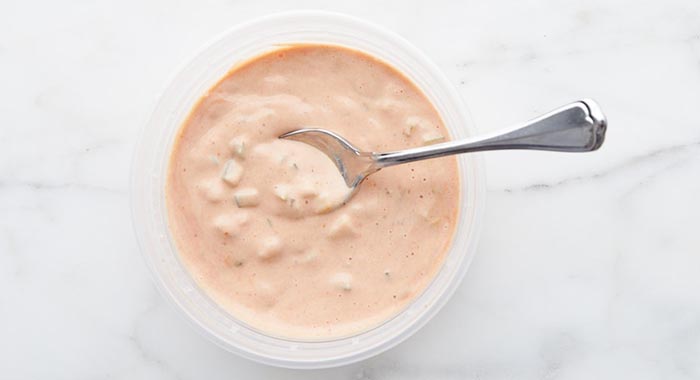
  • Russian Dressing: Combine equal proportions of ketchup and mayonnaise.
  • Steak Sauce: Melt a stick of butter in a sauce pan, add three minced garlic cloves, simmer a bit and stir in a cup of ketchup. Serve hot or room temperature.
  • Sweet & Sour Sauce: Add Thai fish sauce and fresh lime juice.
  • Thousand Island Dressing: Combine ketchup with mayonnaise and sweet pickle relish.
  •   

    Comments off

    TRENDS: Current Favorites & Next Wave Foods

    bento.com.sg-230sq
    Will kimchi, Korean hot pickled vegetables,
    be replaced by Mexican hot pickled
    vegetables as a topping for burgers,
    sandwiches, eggs and other fusion dishes?
    Photo courtesy Bento.com.sg.
      What’s next after the current food trends?

    Parade magazine took a look at What America Eats with predictions from Mimi Sheraton, author of 1,000 Foods To Eat Before You Die: A Food Lover’s Life List.

    She takes a peek at what’s coming next. Here are current trends and what Mimi thinks will follow.

    1. HOT SAUCE

    Now: Sriracha, the fiery Thai chile sauce.

    Next: Piri-piri, the fiery African chile sauce. A Peruvian version is spelled peri-peri.

     
    2. INTERNATIONAL SNACK

    Now: Hummus, now ubiquitous in an every-expanding number of flavors, including fusion flavors like chipotle, jalapeño and wasabi.

    Next: Khachapuri, a Georgian* comfort food of cheese-filled bread. Leavened bread is filled with cheese, eggs and other ingredients. According to Wikipedia, in a 2009 survey, 88% of Georgians preferred khachapuri to pizza.

     
    3. PICKLED VEGETABLES

    Now: Kimchi, Korea’s spicy-hot fermented vegetables, enjoyed as a condiment.

    Next: Mexican hot pickled vegetables, a take on Italian giardiniera that combines garden vegetables (carrots, cauliflower, celery, onions) with jalapeños, garlic, oregano and cider vinegar. A condiment with tacos, it has been ported to American burgers and sandwiches.


    4. GREEK YOGURT

    Now: Thick, creamy, tangy Greek-style yogurt, a category so hot, there’s no more room in the grocer’s dairy case.

    Next: Labneh, a thick, creamy, tangy fresh cheese, often called “yogurt cheese” in the U.S., that’s a mainstay for breakfast and snacking in the Middle East.
     
    5. BEVERAGE

    Now: African ginger beer, which is even spicier than Caribbean ginger beer. If you’d like a much more intense ginger ale experience, pick some up.

    Next: Matcha, the mellow, powdered green tea that’s drunk hot in Japan (it’s part of cha no yu, the Japanese tea ceremony), but available hot, cold, sparking, in green tea lattes and more in the U.S.
     
     
    It’s up to you: Keep eating what’s hot today, or get ahead of the trend!

      labneh-crackers-thewhitemoustache-goodeggsNY-230
    Labneh looks like tangy Greek yogurt and tastes like it, but it’s a spreadable cheese. Photo courtesy Good Eggs | New York.
     
     
    *From Georgia, the country that lies between Russia and Turkey.


    Comments off

    Classic Cheese Soufflé Recipe & The History Of The Soufflé

    Cheese Souffle
    [1] A cheese soufflé, golden, fragrant, cheesy, made with goat cheese cheese (photo © Eno Bytes).

    Cheese Souffle With Red Bell Pepper
    [2] This cheese soufflé contains red bell pepper, but you can spice it up with jalapeno. Here’s the recipe (photo © Taste Of Home).


    [3] Individual cheese soufflés can be served as a cheese course with salad and as a dessert with fresh fruit. These are made with Jarlsberg cheese (photo © Jarlsberg USA).

    Blue Cheese Souffle
    [4] You can use just about any cheese to make a soufflé. This uses blue cheese. Here’s the recipe (photo © Taste Of Home).

    Spinach Souffle
    [5] Spinach is a popular cheese soufflé flavor. Here’s the recipe (photo © © Taste Of Home).

    sancerre_rose_Wine-thor-wiki-230ps
    [6] Rosé is our favorite wine with a cheese soufflé (photo ©Thor | Wikipedia).


    May 18th is National Cheese Soufflé Day: a day to have at least one cheese soufflé and for us say hello to our various soufflé dishes and ramekins that have been hiding in the closet since last year’s holiday.

    We spent most of our 20s making soufflés, both sweet (chocolate, vanilla, fruit) and savory (cheese, fish, spinach). The frenzy with which we turned them out was, in retrospect, our own mash-up of Julie & Julia and Groundhog Day.

    The word soufflé is the past participle of the French verb souffler, “to puff up”—which is exactly what happens when the combination of an egg custard base with beaten egg whites folded in is baked into an airy, spongy, quasi-moist, quasi-cakey concoction, just firm enough to hold its shape.

    While a soufflé can be baked in a variety of containers, fluted soufflé dishes or individual ramekins have become traditional over the years. Soufflés can be savory and served as a main dish or sweetened as a dessert. There are dessert “frozen soufflés,” but the chemistry is different—dense, frozen cream provides the shape, not fluffy, beaten egg whites.

    A hot soufflé puffs up to an impressive height because of the bubbles of hot air trapped in the batter. As the soufflé cools, the hot air contracts and the soufflé deflates or “falls.” That’s why a soufflé needs to be served immediately to impress with its full majesty. Although fallen soufflés are less airy, they taste just fine.

    But there are special names that make a fallen souffle seem intentional. See them below.

    Below:

    > How to make a soufflé.

    > Cheese soufflé recipe.

    > The history of the soufflé.

    > More delicious soufflé recipes.

    > What to call a fallen soufflé.

    > The best wines for cheese soufflé.

    Elsewhere on The Nibble:

    > The different types of cheese: a photo glossary.

    > The history of cheese.
     
     
    IT’S EASY TO MAKE A SOUFFLÉ

    To make a cheese soufflé, grated cheese is mixed into a béchamel (a type of white sauce).

    In the course of making cheese soufflés over and over again, we tried different cheeses, from Comté and Gruyère to Cheddar and Stilton. The cheese you prefer will depend on how mild or sharp you like your cheeses, but start with Comté or Gruyère, two French basics.

    There are a few “givens” for best results:

  • Use a straight-sided soufflé dish.
  • Butter the entire inside thoroughly so the soufflé will rise evenly instead of sticking.
  • After you butter the dish, coat the butter with grated Parmesan or bread crumbs; then turn the dish upside down and tap out the extra crumbs. It’s just like buttering and flouring a cake pan.
  • Make an optional collar from parchment or foil, and tie it around the dish with kitchen twine. This enables the soufflé to rise up perfectly, but it isn’t essential unless you’re really aiming to impress picky gourmets.
  • Always place the rack in the center of the oven before preheating.
  •  
    The following recipe uses a 10-cup soufflé dish or six individual ramekins (individual soufflé dishes).
     
     
    RECIPE: CLASSIC CHEESE SOUFFLÉ

    Ingredients For 4 to 6 Side Servings Or 2 Mains

  • Grated Parmesan cheese and softened butter for soufflé dish
  • 1/2 stick (1/4 cup) unsalted butter for the béchamel (white sauce)
  • 5 tablespoons all-purpose flour
  • Pinch of cayenne pepper
  • Pinch of ground nutmeg
  • 1-1/4 cups whole milk
  • 1/4 cup dry white wine
  • 6 large egg yolks
  • 1 teaspoon salt
  • 1/4 teaspoon ground black pepper
  • 6 ounces coarsely grated Gruyère cheese (1-1/4 cups plus 2 tablespoons, packed)
  • 1/4 cup finely grated Parmesan cheese
  • 8 large egg whites
  •  
    Preparation

    1. PLACE the rack in the center of the oven and preheat to 400°F. Generously butter one 10-cup soufflé dish or six 1-1/4-cup ramekins. Sprinkle the dish(es) with Parmesan cheese to coat and tap out the extra. If using ramekins, place all six on a rimmed baking sheet for easy removal from the oven.

    2. MELT the half stick of butter in a large, heavy saucepan over medium heat. Add the flour, cayenne pepper, and nutmeg. Cook without browning until the mixture begins to bubble, whisking constantly, about 1 minute.

    3. GRADUALLY WHISK in the milk, then the wine. Whisk constantly until the mixture is smooth, thick, and beginning to boil, about 2 minutes. Remove from the heat.

    4. BLEND the egg yolks, salt, and pepper in a small bowl. Add the yolk mixture all at once to the white sauce and whisk quickly to blend. Fold in the Gruyère and the Parmesan cheeses (the cheeses do not need to melt—they’ll melt in the oven).

    5. BEAT the egg whites in a large bowl with an electric mixer, until stiff but not dry. Fold 1/4 of the whites into the [lukewarm] cheese base to lighten. Fold in the remaining egg whites.
     
    6. TRANSFER the soufflé mixture to the buttered dish. Sprinkle the top with the remaining 2 tablespoons of Gruyère.

    7. PLACE the soufflé in the oven and immediately reduce the heat to 375°F. Bake the soufflé until it is puffed, golden, and gently set in the center—about 40 minutes for the large soufflé or 25 minutes for the ramekins.

    8. REMOVE the baked soufflé with oven mitts to a heatproof platter (or individual plates for the ramekins), and serve immediately.
     
     
    MORE SOUFFLÉ RECIPES

  • Blood Orange Soufflé
  • Broccoli Rabe, Corn & Cheese Soufflé
  • Chocolate Soufflé With Bacon
  • Dessert Truffle Soufflé
  • Double Dark Chocolate Soufflé
  • Gruyère Cheese Soufflé
  • Pumpkin Soufflés
  • Spinach Soufflé With Sundried Tomatoes
  • Blood Orange Soufflé
  • Chocolate Soufflé
  • Chocolate Bacon Soufflé
  • Frozen Cappuccino Soufflé
  • Frozen Raspberry Soufflé
  • Spinach Soufflé
  •  
    Cheese Souffle
    [7] Maman’s Cheese Soufflé. The maman is Chef Jacques Pépin’s. Here’s the recipe (photo © Julia Gartland | Food52).
     
     
    THE HISTORY OF THE SOUFFLÉ

    According to the Oxford Companion to Food, custards, puddings, and pies have been made since Medieval times, and Renaissance European cooks used whisked egg whites—a critical component of the soufflé—in a variety of dishes. But it wasn’t until the 17th century that chefs perfected meringue, a technique that then enabled them to develop the soufflé.

    What we know as the modern soufflé was developed in France in the 18th century.

    Cheese Soufflé (The Original): Savory soufflés, particularly those made with cheese or meat, were the first to be documented. The earliest mentions are attributed to French master cook François Massialot in the 1730s, and they remained the dominant form throughout the 1700s.

    Meat Soufflé: While these are next common now, Meat soufflés (made with purée beaten into the custard) often rise a bit less (and/or collapse sooner) than cheese soufflés because the meat additions can make the base heavier and harder to keep airy.

    Cheese and meat soufflés initially were one course of a larger meal.

    Dessert Soufflé: While sweet versions existed in the late 18th century, dessert soufflés—such as those flavored with chocolate or fruit—didn’t gain widespread popularity until the 19th century. Chocolate, vanilla, lemon, and orange flower water (replaced today by orange liqueurs like Grand Marnier) were favorite sweet flavors.
     
    Chocolate Souffle With A Cup Of Coffee
    [8] Chocolate soufflé, light and airy dessert perfection. Here’s a recipe (photo: The Nibble).

  • FoodReference.com notes that the word soufflé first appeared in English in 1813 in Louis-Eustache Ude’s The French Cook.
  • By 1845 the term was so commonly accepted that in Eliza Acton’s Modern Cookery, a recipe for soufflé was included as just another recipe.
  • In 1841, Chef Marie Antoine Carême, the founder and architect of French haute cuisine, published Patissier Royal Parisien with so much detail on the technique of making soufflés, that it is clear that cooks had been having trouble with soufflés that collapsed.
  •  
    Chef Carême, often called “the first celebrity chef,” is largely credited with perfecting the technique in the early 1800s. He utilized updated, air-draft ovens that allowed soufflés to rise more consistently, helping the dessert version become a luxury staple of Victorian-era dining.

    While the majority of today’s soufflés have a custard base (egg yolks combined with the flavor element), in Carêm’s day it had as its starting point a roux (a cooked mixture of flour and butter), a recipe that was invented in France in the late 18th century. (Modern recipes can still be found with a flour base).

    The great chef and restaurateur Antoine Beauvilliers, who opened the first “real” restaurant* in Paris in 1782, was possibly serving soufflés at that date; his L’Art du Cuisinier, published in 1814, includes recipes.

    The dish was an immediate success and Beauvilliers, according to Brillat-Savarin, “was for more than fifteen years the most famous restaurateur in Paris.†”

    Those recipes show that modern tastes parallel older ones.

    As one writer noted in 1828, “It will be sufficient to observe on the subject of soufflés that they are all made in the same manner, and that they vary only in the taste you give them.”

    The cheese soufflé, initially one course of a larger meal, evolved in modern times to a light main course, served with a green salad and a glass of rosé or white wine. The evolution follows.
     
    The Cheese Soufflé Today

    The cheese soufflé today is still an emblem of classical French technique, yet it has become far more flexible and friendly. While some Francophile chefs still choose to create that that tall, immaculate crown of cheese and air, modernists have developed other techniques:

  • Slightly thicker bases, more precise baking temperatures, and smart “insurance policies” like a touch of starch, a bit more cheese for structure.
  • Individual ramekins are another way to control rise and timing.
  •  
    Creatively, the biggest shift has been in flavor and format.

  • Bolder cheeses: blue, smoked, washed-rind).
  • Hybrid bases: béchamel enriched with cultured dairy productslike crème fraîche or yogurt for tang and lift.
  • Unexpected aromatics: browned butter, gochujang, miso, roasted garlic, toasted spices.
  • Mini soufflés as starters, soufflé “sandwiches” made from baked slabs, twice-baked soufflés that can be reheated for service, and gluten-free approaches that rely on cornstarch or nut flours.
  •  
    The modern cheese soufflé still honors tradition, but with a more versatile canvas.
     
    Chef Antoine Careme Making A Souffle
    [8] The great Chef Marie Antoine Carême, beating egg whites for a souffle in the early 1800s in France (photo: The Nibble | Abacus).
     
     
    WHAT TO CALL A FALLEN SOUFFLÉ

    The culinary world definitely has come up with a few clever ways to rebrand a fallen soufflé so it sounds like an intentional recipe rather than a kitchen mishap.

  • Dense-Style or Gâteau Soufflés. These are chef-bestowed names. By referring to a “gateau” (cake), you shift the expectation from airy cloud to “rich, moist flourless cake, making the collapse look like a deliberate concentration of flavor.
  • Soufflé Omelet. One of the most common names, this term is frequently used for soufflés that are either cooked in a pan or have lost their height. “Omelet” emphasizes the rich, egg-forward texture rather than the vertical lift of “soufflé.”
  • Fondant de Fromage (savory) or Chocolate Fondant (sweet). Names found especially in French bistros, is “fondant” implies a melted, gooey center, which perfectly describes the dense, delicious core of a deflated soufflé.
  • Sunken Soufflé or Crusty-Top Pudding. Not surprisingly, these names derived in home cooking circles. In some southern regions of the U.S., a collapsed sweet soufflé might be served as a “spoonbread” dessert, highlighting its soft, custard-like interior.
  •  
    Cheese Souffle With 4 Wines
    [9] A cheese souffle pairs beautifully with the four popular types of wine: white, sparkling, rosé, and red. Read the specific details that follow (photo: The Nibble).
     
     
    THE BEST WINES FOR CHEESE SOUFFLÉ

    Historically, the French have paired cheese soufflé with wines from the regions where those cheeses originate. For a Comté or Gruyère soufflé, a Vin Jaune or a dry Savagnin from the Jura region is the traditional choice.

    Most Americans haven’t tried these wines, but if you get to France, they offering a unique oxidative, nutty flavor that matches the cheese perfectly.

    For bottles readily available in the U.S.:
     
    White Wines With Cheese Soufflé

    White wines pair best because they don’t have tannins that might clash with the creamy, salty profile of the cheese. Some of these pair best with particular cheeses.

  • White Burgundy: Chassagne-Montrachet and Meursault have enough body and buttery notes from the oak to match the richness of the soufflé. A classic pairing.
  • Chablis: A crisper option from Burgundy, with a wonderful minerality that works beautifully with Alpine-style cheeses like Alpha Tolman, Appenzeller, Comté, Emmental, Gruyère, or Tarentaise.
  • Chardonnay From Elsewhere: An unoaked or likely oaked Chardonnay is a good bet, esecially with the nutty flavors of Gruyère.
  • Sauvignon Blanc: For a goat cheese (chèvre) soufflé, a Sancerre or Pouilly-Fumé is the perfect match. The herbal, citrusy notes of the wine mirror the tanginess of the goat cheese.
  • Savennières or Old-Vine Chenin Blanc: Great for a Cheddar soufflé, but not easy to find in the U.S. These wines often have a waxy, honeyed weight and high acidity that can stand up to a very sharp or aged Cheddar soufflé.
  •  
     
    Sparkling Wine With Cheese Soufflé

    Sparkling wine is airy, just like the souffle, making bubbles an excellent choice.

  • Champagne (Blanc de Blancs): The effervescence and brioche notes of a 100% Chardonnay Champagne create a luxurious pairing. The bubbles literally scrub the palate clean after each rich, cheesy bite.
  • Crémant d’Alsace: A more affordable but equally effective French sparkler that offers great acidity and fine bubbles.
  • Affordable sparklers like Cava and Prosecco (see the different types of value bubbly).
  •  
     
    Rosé Wines & Cheese Soufflé

    Our go-to wine with cheese soufflé is rosé; many professional sommeliers considered a “secret weapon” pairing. It sits in that perfect middle ground, with the refreshing acidity and chill of a white wine to cut through the heavy fats of the eggs and butter. And it has just enough red-fruit structure to stand up to the savory depth of an aged cheese. Three suggestions:

  • Provençal Rosé: The bone-dry rosé from the south of France is considered the most elegant match. These wines often have notes of red currant, melon, and a distinct flinty minerality. They are light enough to not weigh down the “airiness” of the soufflé while providing a crisp, citrusy finish that cleanses the palate after a mouthful of rich, melted cheese.
  • Tavel or Bandol: A particularly bold soufflé—one using a sharper Gruyère, a touch of mustard powder, or even some smoked ham, for example, either of these rosés is ideal. They’re darker, more robust, “gastronomic” rosés that can handle intensity. (Tavel is one of the few regions of the world that only produces rosé, and its wines are sturdy and spicy.)
  • Sparkling Rosé Pairing the bubbles of a Rosé Champagne or a Crémant de Loire Rosé with a soufflé is a masterclass in texture, says one wine writer. The “lift” from the carbonation mimics the aerated structure of the soufflé itself. The subtle strawberry and brioche notes in these wines create a sophisticated fruit-and-cheese flavor profile.
  •  
     
    Light Red Wine Pairings With Cheese Soufflé

    Those who only drink reds need to avoid heavy, tannic wines like Cabernet Sauvignon and Zinfandel, which will overwhelm the dish and can taste metallic when paired with eggs. Instead, two better choices are:

  • Beaujolais (Cru): A Fleurie or Morgon made from the Gamay grape is light, fruity, and low-tannin. It provides a bright berry contrast to the savory cheese.
  • Pinot Noir: A light-bodied Pinot Noir from Burgundy or Oregon is delicate enough to not overshadow the soufflé, while offering earthy undertones that pair well with the nuttiness of the cheese.
  •  
    Individual Cheese Souffle & Side Salad
    [10] A delicious light lunch or first course: cheese souffle and a green salad. Here’s the recipe (photo © Egg Info).
    ________________

    *The first restaurant in Paris purportedly was opened in 1765 by a soup maker named Boulanger. It is true that his was the first establishment to offer a menu with a choice of dishes, and he may have been the first to use the term “restaurant” to describe his establishment. But Beauvilliers’ restaurant, La Grande Taverne de Londres, was, as the famous gastronome Jean-Anthelme Brillat-Savarin said, “the first to combine the four essentials of an elegant room, smart waiters, a choice cellar, and superior cooking.”

    From Horizon Cookbook and Illustrated History of Eating and Drinking Through the Ages, William Harlan Hale [American Heritage] 1968 (p. 713).
     

    CHECK OUT WHAT’S HAPPENING ON OUR HOME PAGE, THENIBBLE.COM.


    Comments off

    TIP OF THE DAY: Pasta Made Tricolor With Veggies

    mediterranean-chicken-pasta-urbanaccents-230

    Mediterranean Pasta With Chicken. Photo
    courtesy Urban Accents.
      Doesn’t this pasta dish look more exciting than a conventional red-sauced plate? It uses vegetables to make “tricolor pasta” instead of pasta colored green and red with spinach and tomatoes.

    Tricolor pasta—green and red plus white—looks appealing in the bag but typically fades when cooked. So try a more colorful approach with veggies!

    In this recipe, color comes from red cherry tomatoes, purple kalamata olives and green spinach. If you want to use a red sauce, simply switch out the red tomatoes for orange or yellow varieties.

    Whether you use a red, white or colorless sauce (e.g. olive oil), adding two, three or four vegetable colors to your pasta dish provides great eye appeal as well as more flavor and nutrition.

     
    YEAR-ROUND COLORFUL VEGETABLES

    While green ingredients are a given, look for ingredients from the other produce “color groups.” For reference with other recipes, we’ve included fruits along with vegetables in this list.

  • Green: edamame (soybean), herbs (basil, cilantro, dill, parsley), Granny Smith apples, grapes, green beans, green peas (frozen are fine), mesclun or other salad greens, olives, snow peas, sugar snap peas
  • Orange: bell pepper strips, carrots (baby carrots, sliced or shaved carrots), kumquats, grape tomatoes, mandarin wedges, mango, sweet potatoes (cubed or sliced)
  • Purple/blue: blackberries, blueberies, cauliflower, Concord grapes (seasonal), purple grapes, kalamata olives, kale, Peruvian potatoes, red cabbage red raisins (plumped in cider)
  • Red: beets, bell pepper strips, cherry tomatoes, dried cherries or cranberries, grape tomatoes, lady apples, mini red jacket potatoes, pomegranate arils, radicchio/red endive, radishes, red grapes/champagne grapes (currants), red onion
  • Yellow: bell pepper strips, golden raisins (plumped in cider), lemon peel, miniature pattypan squash, star fruit (carambola)
  •  

    RECIPE: TRICOLOR MEDITERRANEAN PASTA
    WITH CHICKEN

    This Mediterranean Pasta With Chicken is an easy one-pot dinner, with a goat cheese-based sauce accented with sundried tomatoes, olives and Mediterranean herbs. It was adapted from Urban Accents, which used its Athenian Herb Dryglaze seasoning blend, which pairs sundried tomato with honey and thyme flavors.

    Prep time is 10 minutes, cook time is 30 minutes.

    Ingredients For 4 Servings

  • 1 tablespoon extra virgin olive oil
  • 1 pound boneless, skinless chicken breasts
  • 1 packet Urban Accents Athenian Herb Dryglaze, divided seasoning
  • 1 pound penne, rigatoni or other medium tubular pasta
  • 1 cup sundried tomatoes (not oil-packed), roughly chopped
  • 5 ounces soft goat cheese, crumbled
  • 1 cup Kalamata olives, sliced lengthwise and pitted
  • 1/3 cup chopped arugula, parsley or spinach
  • Salt and pepper to taste
  •  
    For The Seasoning

  • 1-1/2 tablespoons dried oregano
  • 1 tablespoon dried thyme
  • 1/2 tablespoon dried basil
  • 1/2 tablespoon dried marjoram
  • 1-1/2 teaspoons dried minced onion
  • 1-1/2 teaspoons dried minced garlic
  •   penne-rigate-sxc-230
    Penne rigate. Rigate refers to the ridges, which help the sauce adhere. They give their name to rigatoni, ridged tubes. The difference between penne rigate and rigatoni and is the end cut: Penne (“quills”) are cut at an angle, rigatoni are cut straight. Also, rigatoni tend to be slightly larger. See the different pasta shapes in our Pasta Glossary.
     

    Preparation

    1. BLEND the seasoning ingredients. Bring a large pot of salted water to a boil, for the pasta. As the water heats…

    2. RUB the chicken breasts with 1 tablespoon olive oil and place in resealable plastic bag. Add the seasonings, reserving 2 tablespoons of seasoning for later use. Seal the bag tightly and gently shake so that breasts are coated evenly; refrigerate for 30 minutes.

    3. PREHEAT the stovetop grill pan for medium heat; spray with non-stick cooking spray. Cook chicken breasts, turning once, until cooked through and instant read thermometer indicates 170F. Slice cooked chicken breasts on angle. While chicken cooks…

    4. COOK the pasta for 3 minutes less than package instructions. Add the sundried tomatoes to water and cook for 3 minutes. Reserve 1 cup of the pasta water. Drain the pasta; return the pasta and the sundried tomato mixture to the pot.

    5. ADD the goat cheese, reserved seasoning and cup of pasta water to hot pasta. Wait 1-2 minutes, then stir gently to combine. Add additional pasta water if you prefer a saucier dish. Stir in the olives and sprinkle with the arugula/parsley/spinach. Divide the pasta among 4 plates and top with slices of chicken.
      

    Comments off

    The Nibble Webzine Of Food Adventures


    © Copyright 2005-2026 Lifestyle Direct, Inc. All rights reserved. All images are copyrighted to their respective owners.