THE NIBBLE BLOG: Products, Recipes & Trends In Specialty Foods


Also visit our main website, TheNibble.com.

TIP OF THE DAY: Lettuce Wraps ~ Wrap It Up

Lettuce wraps are a Vietnamese specialty, often used as an appetizer or side instead of a main course. But for a light, better-for-you lunch or dinner, we enjoy them as a main.

Lettuce wraps are a fun, interactive course for lunch or dinner. You can wrap up any boneless protein in a lettuce leaf; or make it a vegetarian dish, using anything from tofu or seitan to stir-fried vegetables.

While the recipe below is so easy it can be made on weekdays, it’s also festive for Labor Day weekend. The secret is pre-cooked Tony Roma’s Boneless Ribs (other brands sell a similar product).

The meaty ribs ready to heat and eat. You can heat them on the grill, in the oven or in the microwave. The ribs are sold at Sam’s Club and other retailers nationwide.

The other tasks are simply to wash the lettuce, make a quick Asian slaw and set out the sauces. If you want to cut back on the number of sauces, just pick the one everyone will like (we recommend hoisin*). Whatever you choose should be thick, so it doesn’t dribble out of the wrap.

   
/home/content/p3pnexwpnas01_data02/07/2891007/html/wp content/uploads/boneless ribs lettuce wraps tonyromas 230
Wrap cooked boneless ribs in lettuce leaves and top with Asian slaw, cilantro and a sauce of choice. Photo courtesy Tony Roma’s.
 
*Hoisin sauce is a thick, sweet-and-pungent sauce popular in Chinese cuisine as a glaze for meat, an addition to stir fries, as dipping sauce and a condiment (e.g., in lettuce wraps as well as dishes with pancake wrap such as Moo Shoo Pork and Peking Duck). It is dark brown in color. Hoisin is not the same as plum sauce, which is an orange-colored sweet and sour sauce. In Vietnamese, hoisin sauce is called tuong den.
 

WHAT ARE BONELESS RIBS?

Boneless ribs, also called country-style pork ribs or or pork shoulder country-style ribs, are thick strips of meat cut from the pig’s shoulder. They come from a cut called the pork shoulder steak; so they are not actually from the rib cage, but look like the meat removed from a rib. They are marinated and seasoned before cooking.

Boneless ribs, also called pork loin country-style ribs, can be cut from the shoulder blade as well. They can be sold bone-in, but the bone is usually to make them boneless.


/home/content/p3pnexwpnas01_data02/07/2891007/html/wp content/uploads/Boneless Pork Country Style Ribs porkchops.com 230
Boneless country-style pork ribs. Photo courtesy Calumet Diversified Meats.
 

RECIPE: BONELESS RIB LETTUCE WRAPS

Since the ribs are pre-cooked, prep time is just 15 minutes; cook time is 15 minutes.

Ingredients For 4 Servings

  • 32 ounces† Tony Roma’s Boneless Pork Ribs
  • 12 leaves of crisp green leaf lettuce (we use romaine hearts, but Boston or bibb work well too)
  •  
    For The Slaw

  • 1 radish, finely chopped
  • 1 large carrot, finely chopped
  • 1 cucumber, finely chopped
  • 2 green onions, thinly sliced
  • 4 tablespoons sweet rice vinegar
  • Salt to taste
  •  
    †There are 3 boneless ribs in each 16-ounce package and 6 boneless ribs in each 32-ounce package. Each person can have two lettuce wraps.
     
    For The Garnish

  • ½ cup fresh cilantro, finely chopped
  •  
    For The Sauces

  • 4 tablespoons hoisin sauce
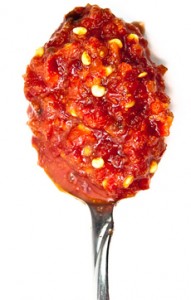
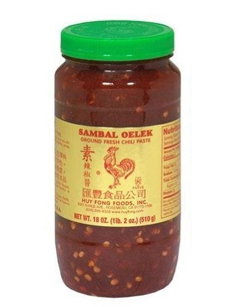
  • 4 tablespoons sambal oelek chili sauce or Sriracha hot sauce
  • 4 tablespoons sweet chili sauce
  •  

    Preparation

    1. WASH the lettuce and pat dry with paper towels.

    2. PREPARE the boneless ribs per package instructions.

    3. MAKE the salad topping: Combine the radish, carrot, cucumber and green onions in a mixing bowl. Add the sweet rice vinegar and season with a pinch of salt (or more to taste). Gently toss and set aside in a cool place. When ready to serve…

    4. INSTRUCT everyone on how to serve themselves: Take a lettuce leaf and place a strip of boneless rib in center. Top with some of the slaw; then garnish with cilantro and choice of sauces (hoisin, Sriracha, sambal oelek, sweet chili).


    Comments off

    TIP OF THE DAY: American Bruschetta & Beet Swath

    This beautiful plate from Gardenia restaurant in New York’s Greenwich Village is a composition of grilled mackerel, butternut squash and endive, garnished with baby greens dressed in vinaigrette and a dollop of pesto.

    But what really stood out to us is what we’ve named “American bruschetta,” a square of crustless white toast, topped with pickled vegetables, a gherkin and an herb leaf tossed in vinaigrette (shown on the bottom left of the plate).

    If this is “American bruschetta,” what’s Italian bruschetta? Here’s the scoop, including the difference between bruschetta and crostini. (NOTE: Pronounce it broo-skett-a, not broo-shett-a.)

    You don’t need a baguette or other crusty loaf that serves as the foundation of classic bruschetta.

  • Toast anything—from ordinary white bread to raisin walnut bread.
  • Top it with anything that complements the entrée. Look in your fridge, pantry, freezer.
  • Use up leftovers.
  • Have fun with your creation.
  •  
    RECIPE: AMERICAN BRUSCHETTA

    Ingredients

       
    /home/content/p3pnexwpnas01_data02/07/2891007/html/wp content/uploads/grilled mackerel gardenianyc 230

    Check out the crustless toast topped with veggies. This bruschetta, along with the, orange squash and swath of burgundy beet purée, add vibrant color to the plate. Photo courtesy Gardenia Restaurant | NYC.
  • Cheese: goat cheese, crème fraîche, fromage blanc or other mild cheese on raisin bread or walnut bread (or a raisin-walnut-semolina combination)
  • Condiments: chutney, compound butter, olives
  • Fish: anchovies, caviar/roe, sardines, shellfish
  • Meat: bacon, sausage, other charcuterie
  • Spreads: egg salad, guacamole, Middle Eastern (babaganoush, hummus, tzatziki, etc.), spreadable pâté, tapenade, pimento cheese or other cheese spread
  • Vegetables: fresh (baby arugula, cherry tomatoes, cucumbers or watercress are easy), pickled, puréed cooked vegetables
  • Whatever you have at hand (yesterday we used leftover creamy polenta garnished with sliced olives and pimento
  •  
    Plus

  • Butter, mayonnaise, mustard, olive oil, vinaigrette, yogurt or other binder as needed, to anchor dry ingredients to the bread
  • Garnishes: sliced chiles, herbs, gherkins, spices, etc.
  •  

    /home/content/p3pnexwpnas01_data02/07/2891007/html/wp content/uploads/duck breast carrot puree copperbox 230
    Duck breast with carrot purée. Photo courtesy CopperBox.com.
      Preparation

    1. ASSEMBLE the ingredients. Grill or toast the bread (in a toaster or under the broiler). Remove the crusts as desired.

    2. SPREAD a binder, if necessary, on the bread.

    3. TOP with the featured ingredients and serve.
     
     
    RECIPE: HOW TO MAKE A SWATH OF VEGETABLE OR FRUIT PURÉE

    Painted swaths of fruit or vegetable purée are clever ways to add color to a plate. Use them along with entrées that are beige, brown or white—which includes every protein we can think of except crab, shrimp and lobster (fish, meat, poultry, seitan, tofu).

    That also goes for most standard starches: beans, potatoes, noodles, white and brown rice and most other grains.

    Even if you have another bright color on the plate—butternut squash, carrots, corn, green beans, etc.—you can round out the plate with a swath of a different color.

    No time to cook vegetables for your color splash? Canned beets and carrots work well: Just drain and purée.

     
    Ingredients

  • Bright colored fruit or vegetable—green, orange, red, yellow
  • Seasonings to taste—anything from salt and pepper to curry, garlic, etc.
  •  
    Preparation

    1. PURÉE and seasonthe cooked vegetable.

    2. USE a silicon basting brush to paint a swath of purée across the plate.
      

    Comments off

    TIP OF THE DAY: Sipping Rum

    Rum is a new world spirit, initially distilled by slaves on Caribbean sugar cane plantations. The distilled rum can be drunk in its clear state (white or blanco rum), or aged in oak barrels for various lengths of time, the process of which creates the different types of rum.

    Why is one blanco (or añejo, etc.) better than another? If the aging time is the same among different rums, the quality factors include the type of the sugar, yeast, and still and aging barrel and how long the fermentation is, and the quality of the still.

    Clear rum is mostly used for mixed drinks; among the more popular are the Daiquiri, Hurricane, Mojito, Piña Colada and Rum and Coke (Cuba Libre).

    Light rum, also used for mixed drinks, is aged briefly or not at all. As with other grades of rum, the longer it is aged (Añejo, Extra Añejo, etc.) the more complex it becomes.

    For National Rum Day, August 16th, here’s an explanation of how rum is made, courtesy of Cruzan Rum (there’s an infographic at the end of the page.

    1) Molasses, a by-product of refining sugar from sugar cane, travels from the sugar plantation to the distillery. There it is diluted with water—often spring water from local aquifers.

    2) Yeast cultures, often proprietary, are added to the molasses to start the fermentation. The yeast convert the sugars in the molasses to alcohol.


    /home/content/p3pnexwpnas01_data02/07/2891007/html/wp content/uploads/cruzan single barrel rum 230

    Cruzan Single Barrel Rum, a fine sipping experience. Photo courtesy Cruzan.

     
    3) The alcohol is distilled into a clear rum distillate. Light rum, also called clear, crystal, silver and white rum, is bottled immediately. rum which is then aged for a brief or extensive period.

    4) Distilled rum to be aged goes into oak barrels, which are laid down in warehouses to age for a minimum of two years; some are aged for twelve years or more. As much as half the rum can be lost to evaporation, which is why, along with the cost of carrying the inventory, older rums are that much costlier.


    /home/content/p3pnexwpnas01_data02/07/2891007/html/wp content/uploads/dark rum shot baccard 230
    Dark rum on the rocks. Photo courtesy Baccardi.
      5) After barrel aging, the rum is charcoal filtered and diluted to 80 proof; it is then bottled.

    See the infographic below.

    SINGLE BARREL RUM

    The finest rum for sipping is single barrel rum. If you’re looking for that ultimate experience, look for award-winning Cruzan Single Barrel Rum. It’s made from a proprietary blend of vintage rums that have been aged for up to 12 years,

    The term “single barrel” refers to the process: After its initial aging, the rum is handpicked and blended before it is barreled for a second time in new American oak barrels. It is slowly aged again, bottled and individually numbered, one cask at a time.

    The resulting spirit well-rounded, mellow and full-bodied, with a balance of caramel sweetness and oak from aging. The finish is smooth and buttery (the latter also from the oak.

    Single barrel rum is best enjoyed sipped neat or on the rocks. Cruzan’s is just $29.99 per 750ml bottle.


    HOW SINGLE BARREL RUM IS MADE

    /home/content/p3pnexwpnas01_data02/07/2891007/html/wp content/uploads/aged rum infographic cruzan 520


    Comments off

    FOOD FUN: Corn Custard & Popcorn

    Before the summer corn fades away, make corn custard—and for fun, serve it with a side of popcorn. It’s not just for Thanksgiving, a traditional time for corn custard (also called corn pudding and corn casserole, even corn soufflé; but the latter should be an airy soufflé, not a custard dish).

    But by Thanksgiving, fresh corn is a distant memory, and canned or frozen corn must be employed. So make hay—or corn custard—while the sun shines on fresh summer corn.

    Corn custard is typically served as a side, but you can make an first course with it, along with optional garnishes. In this recipe, we make individual corn custards that are better for a first course.

    Or, you can place them in the middle of your green salad, as part of the salad course.

    Prep time is 20 minutes, inactive time is 15 minutes, cook time is 1 hour 10 minutes (total time 1 hour 45 minutes). This recipe was adapted from one by Nealey Dozier on FoodChannel.com.
     
     
    RECIPE: CORN CUSTARD

    Ingredients For 8 Servings

  • 1 tablespoon unsalted butter, melted, plus more for greasing
  • 3 tablespoons sugar
  • 2 large eggs plus 1 yolk
  • 2 tablespoons all-purpose flour
  • 1 teaspoon salt
  • 3/4 teaspoon baking powder
  • 1 cup heavy cream
  • 1 cup milk
  • 1-1/2 cups fresh or frozen sweet yellow corn (thawed if frozen)
  •    
    /home/content/p3pnexwpnas01_data02/07/2891007/html/wp content/uploads/corn custard popcorn kitchenincBoston 230

    Turn summer corn into corn custard, with a side of popcorn for fun and fiber. Photo courtesy KITCHENiNC | Boston.

  • Plate garnish: popcorn
  • Custard garnishes: bacon crumbles and snipped chives, jalapeño, chopped fresh or sundried tomatoes
  •  

    /home/content/p3pnexwpnas01_data02/07/2891007/html/wp content/uploads/bicolor goodeggs 230r
    Take advantage of fresh corn for this recipe. Photo of bicolor corn courtesy Good Eggs.


    Preparation

    1. PREHEAT the oven to 325°F. Lightly coat 8 individual soufflé dishes, ramekins or Mason jars (4 to 5 ounces each) with butter or cooking spray. Place in a shallow baking pan or on a cookie sheet (preferably with a rim).

    2. ADD the sugar and eggs to the bowl of a stand mixer fitted with the whisk attachment (or with an electric hand mixer), and beat until light and frothy (approximately 3 minutes).

    3. ADD the flour, salt and baking powder and beat for an additional 3 minutes, until the mixture is airy and foamy. Fold in the heavy cream and milk until thoroughly combined.

    4. STIR the corn and melted butter together and divide evenly among the ramekins. Pour the batter over the corn mixture, filling each dish almost to the top.

    5. BAKE the custards for 60 to 70 minutes, rotating the pan once, until the filling is set and the top is golden brown. Remove the ramekins and cool on a wire rack for at least 15 to 20 minutes before serving, to allow custard to firm up.

    6. GARNISH the custards as desired, and garnish each plate with popcorn.


    Comments off

    TIP OF THE DAY: Avoid Grill Toxins With Organic Grilling

    August 16th is National Bratwurst Day. Before you throw some brats on the grill, here are tips on organic grilling from Maria Rodale, CEO and Chairman of Rodale Inc., a publisher of health and wellness magazines, books, and digital content*.

    Not surprisingly, she’s committed to organic living. This article is adapted from a larger article:

    AN ORGANIC GUIDE TO GRILLING

    Grilling in America needs an organic makeover—independence from exposure to conventional grilling toxins, says Maria. We need to apply that spirit of revolution to our health and the environment and take it organic every time we fire up the grill!

    Sure, you can find throw a grass-fed, certified-organic steak or an Applegate Farms organic hot dog on the grill. But there’s more to organic grilling than just what you cook.

    Organic grilling is a complete process that minimizes toxic chemicals from beginning to end, as it maximizes flavor and healthful benefits for you and the environment.

       
    /home/content/p3pnexwpnas01_data02/07/2891007/html/wp content/uploads/hot dogs grill hillshirefarmsFB 230

    Avoid toxic charcoal briquettes; use organic charcoal. Photo courtesy Hillshire Farms.

    Here Maria demystifies the grilling process and detoxifies it as much as possible. Her tips are safe and simple.
     
    *This article was originally published on June 24, 2015 on Maria’s Farm Country Kitchen blog.
     
    STEP 1: USE ORGANIC GRILLING MATERIALS

    You can use any grill; Maria uses a Big Green Egg charcoal grill with certified-organic charcoal. Big Green Egg sells organic charcoal, as do other companies.

    Whatever the brand, always use charcoal that’s made from natural materials like wood (look for “lump charcoal,” bamboo or coconut). You can use wood logs instead of charcoal; just make sure you have time to let them burn down a bit first. Avoiding toxic briquettes is the most important organic choice you can make for the environment and for your health.

  • To start the grill, you will need a chimney starter, which lets you light the charcoal without poisonous lighter fluid. A chimney starter and organic charcoal solve most of your toxin problems.
  • Everything else you need: paper to stuff under the chimney, matches, organic food to grill, tongs and a silicone hot pad. Maria recommends tongs that are long, non-locking and without plastic parts.
  •  
    STEP 2: PREPARE THE GRILL

    Make sure your grill is in a safe place, all your materials are handy, and the grill is clean enough.

  • Never use a wire cleaning brush to clean your grill. Those little wire bits can break off and get stuck in your stomach. Instead, use a heavy-duty sponge, a wood grill scraper or a natural-fiber scrub brush.
  • When the grate is clean, rub it with some high smoke point oil on the grill—Maria likes coconut oil but canola, peanut, soybean, sunflower and others are fine—to keep your food from sticking.
  •  
    STEP 3: LIGHT THE FIRE

    First, remove the grill grate. Put a few pieces of crumbled dry paper (or one piece of newspaper) at the bottom of the chimney; then load the charcoal on top. Spread a bit of charcoal around the sides, too. Light the paper on fire underneath.

  • Keep checking to make sure that it’s burning hot enough. For example, in damp weather, it might take a few tries to get the paper burning hot enough to light the charcoal.
  • You will know if it’s caught fire when you see smoke coming out of the top of the chimney and/or feel the heat.
  •  

    /home/content/p3pnexwpnas01_data02/07/2891007/html/wp content/uploads/grilled shrimp thesmokedolive 230
    Put some shrimp on the barbie… Photo courtesy The Smoked Olive (try their terrific smoked olive oil!).
     

    STEP 4: WAIT

    It will take 10 to 15 minutes for the charcoal to get hot enough. You’ll know it’s ready when you can see red coals glowing through the chimney holes.

  • During that time, make sure all your food is ready to be put on the grill.
  • When the fire is hot enough, grasp the handle of the chimney with a hot pad and dump the burning coals into the grill.
  • Remove the chimney, which will be burning hot, to a safe place, out of the reach of anyone (adults as well as children).

     
    STEP 5: GRILL!

    Put the grill grate back on the grill. It will need a few minutes to warm up, so don’t rush. Spread some oil on the grill to prevent sticking and add the food.

  • You can use aluminum foil if you want, but it’s not necessary. The important thing is to give the food the time it needs to cook properly.
  • Remove the food from the grill onto a clean platter and get ready to dig in.
  •  
    ADDITIONAL GRILLING SAFETY TIPS

  • Keep a squirt bottle or squirt gun handy in case the fire gets too hot. This is especially important if you are using wooden logs—they can get really hot. If they do, give the grill a squirt. Most natural or organic charcoal doesn’t get super-hot, unless you use lots of it.
  • Don’t put cooked meat on the same platter you used for raw meat without washing it first. That’s just good food safety.
  • Don’t get distracted. You can’t grill successfully while trying to get the rest of the meal ready. You need to keep an eye on the food or it can easily burn (or not cook fast enough). If you have no other hekp, make sure all of the other items on your list are ready before you start to grill.
  •   

    Comments off

    The Nibble Webzine Of Food Adventures
    RSS
    Follow by Email


    © Copyright 2005-2026 Lifestyle Direct, Inc. All rights reserved. All images are copyrighted to their respective owners.