THE NIBBLE BLOG: Products, Recipes & Trends In Specialty Foods


Also visit our main website, TheNibble.com.

TIP OF THE DAY: Winter Fruits & Vegetables

Here’s our final installment of seasonal fruits and vegetables. We began this series with spring produce, then summer produce, then fall produce.

With the winter season, our “year of produce” is complete. But don’t think of winter produce as bleak and limited. It’s time to revel in different types of citrus, try new fruits and winter squash varieties, and take a look at recipes for items you rarely buy: cherimoya and chestnuts, cardoons and collards.

Then, look online for interesting ways to prepare them.

If your main food market doesn’t have some of the more specialized items, check international markets that focus on Chinese, Indian, Latin American and other specialties. You can also check online purveyors like Melissas.com.

The list was created by the Produce for Better Health Foundation. Take a look at their website, FruitsAndVeggiesMoreMatters.org, for tips on better meal planning with fresh produce.

A final tip: Know where your produce comes from. While some imported produce is excellent, others are picked too early and have a long ocean voyage. If you buy something that’s lacking flavor, speak with the produce manager and get recommendations.

WINTER FRUITS

  • Cactus pear
  • Cherimoya
  • Clementines
  • Date plums*
  • Dates
  • Grapefruit
  • Kiwifruit
  • Mandarin oranges (clementines, tangerines, etc.)
  • Maradol papaya
  • Oranges
  • Passion fruit
  • Pear
  • Persimmons
  • Pomegranate
  • Pummelo
  • Red banana
  • Red currants
  • Sharon fruit*
  •    
    Persimmons

    When was the last time you had a persimmon? Persimmons can be eaten as hand fruit, made into tarts and sorbet, baked into muffins, sliced into salads, turned into mousse and more. Photo courtesy Foods From Spain.

     
    *The date plum, also known as the lotus persimmon, is the variety known to the ancient Greeks as “the fruit of the gods.” Its English name probably derives from the Persian khormaloo, literally “date-plum,” referring to its flavor, reminiscent of both dates and plums. Sharon fruit is an Israeli cultivar of persimmon, called Triumph. The fruit is named for the Sharon Plain where it is grown. Sharon fruit” has no core, is seedless and particularly sweet. It can be eaten whole. You may find still other varieties of date plums in your market.


    Cardoons
    Not a variety of celery, these stalks are
    cardoons, a member of the artichoke family.
    If you’re an artichoke lover, snap them up:
    They taste like artichokes without the bother
    of the thorns and the fur. Photo courtesy
    Johnnyseeds.com.
     

    WINTER VEGETABLES

  • Belgian endive
  • Brussels sprouts
  • Buttercup squash
  • Cardoon
  • Chestnuts
  • Collard greens
  • Delicata squash
  • Kale
  • Leeks
  • Sweet dumpling squash
  • Sweet potatoes
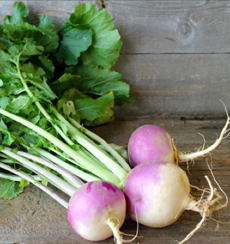
  • Turnips
  •  
    DON’T OVERLOOK FARMERS MARKETS

    Farmers markets are our go-to place for something different. If you don’t see what you’re looking for, ask the farmers if they know where you might find it, or to suggest other items in the market that you shouldn’t pass up.


    You can search the National Farmers Market Directory for locations near you.


    Comments off

    TIP OF THE DAY: Cacio E Pepe Spaghetti & The Recipe

    In addition to National Pasta Day on October 17th, there’s a National Spaghetti Day and it’s today, January 4th. Today’s tip is to celebrate a preparation that is rarely found on restaurant menus: Cacio e Pepe.

    Cacio e Pepe, “Cheese and Pepper,” is a Roman dish from central Italy. Cacio is a dialect word for a sheep’s milk cheese (like Pecorino Romano), and pepe refers to black pepper.

    The recipe is that simple: long, thin spaghetti*, grated Pecorino Romano cheese, and freshly-ground pepper.

    The only other ingredient in the dish is a bit of olive oil to bind the ingredients. It whips up very quickly when you don’t have time or energy to make a more elaborate recipe.

    > The history of Cacio e Pepe.

    > The history of pasta.

    > The scoop on pecorino cheese is below.
     
     
    SUBSTITUTES

    If you don’t have the ingredients in the classic recipe—or prefer others—here’s what we would substitute:

  • For the spaghetti: any thin flat noodle such as bavette, bavettine, fettucelle, linguine, linguettine, tagliatelle, taglierini.
  • For the Pecorino Romano: any hard Italian grating cheese.
  • For the black pepper: red chile flakes, dried chipotle or jalapeño flakes.
  •  
     
    RECIPE: CACIO E PEPE

    In this recipe from Good Eggs, the Pecorino Romano cheese is blended with some Parmigiano-Reggiano for more depth of flavor.

    Since so much of the flavor is from the cheeses, buy good ones!

    Ingredients

  • 10 ounces fresh spaghetti (substitute dried)
  • 1-3/4 cups of Pecorino Romano cheese, freshly grated
  • 1/2 cup of Parmigiano-Reggiano cheese, freshly grated
  • 10-12 grinds of black pepper peppercorns, or 1/2 to 1 teaspoon dried chile (more to taste)
  • Extra virgin olive oil
  •    

    Cacio e Pepe
    [1] Cacio e Pepe, a classic Roman pasta dish (photo © Good Eggs).

    Pecorino Romano
    [2] Pecorino Romano cheese from Fulvi, the only company still making the cheese in greater Rome (photo © Pastoral Artisan).

     
    __________

    *Long, thin spaghetti has different names in different regions of Italy; for example, capellini, fedelini, spaghetti alla chitarra and tonnarelli. In the U.S., you’re most likely to find spaghettini, vermicelli and of course, spaghetti. The widths of all of these strands vary, but not in a significant way to impact the recipe.
    __________
     
    Preparation

    1. FILL a large pot with water about 3/4 full. Add 1/4 cup of salt and taste the brine. The rule of thumb is that the cooking water should be as salty as ocean water. Add up to an additional 1/4 cup salt as desired—but don’t over-salt, since the cheese is very salty. Cover the pot and bring it to a rolling boil over high heat. Meanwhile…

    2. GRATE the cheese into the bottom of a large bowl. This will be the bowl in which you’ll toss and serve the pasta, so choose accordingly. When the cheese is grated, add about 10 grinds of fresh black pepper to the bottom of the bowl and set aside.

    3. REDUCE the heat and add the pasta to the boiling water. Fresh pasta will take about 3-5 minutes to cook, while dried spaghetti will 10-12 minutes, per package directions. When the pasta is at the right state of al dente, dip a mug into the pot to reserve a bit of the pasta cooking water; then strain the pasta in a colander. (Why do cooks reserve some of the pasta cooking water for blending? The heat melts the cheese, while the starches in the water help to bind the cheese and pepper to the pasta.)

    4. ADD the strained pasta to the bowl, along with a splash of the pasta water and a drizzle of olive oil. Use a large fork or soft tongs to toss the pasta, pepper and cheese. (We love our silicone pasta tongs). When the spaghetti is well coated, taste it and adjust the cheese and pepper levels as desired. If the texture is a little dry, add another splash of pasta water or a bit more olive oil. Serve immediately.


    Pouring Olive Oil
    Cacio e Pepe has no formal sauce; just a bit
    of olive oil that binds the grated cheese into
    a coating. Photo courtesy North American
    Olive Oil Association.
      ABOUT PECORINO ROMANO CHEESE

    Pecorino Romano is a hard, salty, full-flavored Italian cheese made from sheep’s milk (pecora is the Italian word for sheep). An ancient cheese, Pecorino Romano was a dietary staple for the Roman legionaries. Today’s Pecorino Romano is made from the same recipe, albeit with pasteurized milk.

    The method of production of the cheese was first described by Latin writers like Pliny the Elder, some 2,000 years ago. It was made in Roman countryside until 1884, when a city council ruling over cheese salting in shops caused producers to move to the island of Sardinia.

    One brand, Fulvi, is still made in the countryside outside of Rome. It is known as genuine Pecorino Romano. Like Parmigiano-Reggiano, Pecorino Romano is made in very large wheels, typically 65 pounds in weight.

    Today, the designation “Pecorino Romano” is protected under the laws of the European Union. [Source]

    Pecorino Romano is often used in highly flavored pasta sauces, particularly those of Roman origin such as Bucatini all’Amatriciana and Spaghetti Alla Carbonara.

     
    Like Asiago, Parmesan and other grating cheeses, Pecorino Romano is often served on a cheese plate, accompanied by some hearty red wine. Typically, a younger cheese (five months of maturation) is used for table cheese, and a more mature, sharper cheese (eight months or longer) for grating and cooking.
     
    Don’t Confuse These Cheeses

    There are two other well-known pecorino cheeses, which are less salty and eaten as table cheese or in sandwiches. Don’t confuse them with Pecorino Romano:

  • Pecorino Sardo from Sardinia
  • Pecorino Toscano from Tuscany
  •  
    And beware of “Romano” cheese sold in the U.S. This is a mild, domestic cow’s milk cheese, bland and not right for this recipe. If you can’t find Pecorino Romano, the best bet is to substitute Asiago or Parmesan.


    CHECK OUT WHAT’S HAPPENING ON OUR HOME PAGE, THENIBBLE.COM.


    Comments off

    PRODUCT: Nabisco Even Thinner Wheat Thins

    How do you add excitement to a venerable cracker brand?

    In the case of Nabisco Wheat Thins, you make Even Thinner Wheat Thins.

    Last week, Nabisco launched the Even Thinner Wheat Thins Limited Edition. It’s the same 100% whole wheat snack we love, but…thinner, and in a more upscale box.

    The notable difference is that thinner crackers mean fewer calories. For the same calories (140 per serving), the traditional Wheat Thins have a serving size of 16 crackers, while the Even Thinner Wheat Thins provide 22 crackers.

    How long will the Even Thinner Limited Edition last? That depends on you, dear reader. If customers buy them, not just initially but repeat purchases, the brand may decide to continue them.

    Or, they may decide to continue them because, we suppose, they make more money on a thinner product.

    Isn’t it nice when decisions benefit everyone!


    Nabisco Even Thinner Wheat Thins
    New from Nabisco: Even Thinner Wheat Thins. Photo courtesy Nabisco.


    Comments off

    TIP OF THE DAY: White Whole Wheat Flour (And Bread)

    White Whole Wheat Flour

    White Whole Wheat Flour Comparison
    Top photo: White whole wheat flour may
    soon become one of the hot “better for you”
    foods. Bottom photo: white whole wheat
    flour compared to whole wheat flour from red
    wheat. Photos courtesy King Arthur Flour.


    We always start January with better-for-you tips of the day. There are a few weeks between the holidays and Valentine’s Day temptations where we can actually focus on better-for-you foods.

    Americans say that their number one resolution for the new year is to lose weight. “Eat healthier” is in the top five.

    One of the easiest switches Americans can make is to whole wheat flour in daily bread products—bagels, sandwiches, pasta, pizza crusts; baked goods like chocolate chip cookies and brownies; and family favorites like pancakes and waffles. Whole wheat provides lots of nutritional benefits and helps to mitigate the guilt of enjoying carbs.

    But many Americans don’t like the stronger taste of whole wheat.

    Enter white whole wheat flour, also called whole white wheat flour and marketed by some bread manufacturers as whole grain white bread. It’s milder in flavor and whiter in color than conventional whole wheat, and is a terrific option for nutrition-oriented people who aren’t crazy about the flavor of conventional whole wheat.

    Aren’t “white whole wheat” and “whole grain white bread” contradictions in terms?

    Friends, it’s only confusing at first. Just think of white whole wheat as “albino whole wheat.”

    WHAT IS WHITE WHOLE WHEAT?

    Most of the wheat grown in the U.S. is hard red winter wheat. In Australia, most of the wheat grown is hard white spring wheat. Both genuses of wheat are milled into whole grain flour (containing the bran, endosperm and germ) that is equally nutritious.

    While white wheat has been grown in Australia for decades, different varieties needed to be developed to do well in American soil and climate. It has been slowly creeping into retail America, both in sacks of flour and baked goods. Even Wonder Bread now sells whole grain white bread!

    Why is it whiter?

    Hard white wheat lacks the genes for bran color. Traditional red wheat has one to three bran color genes.

     
    The bran of white wheat is not only lighter in color but it’s also milder in flavor, because it also lacks the strongly-flavored phenolic compounds in red wheat. The milder flavor also means that products made with white whole wheat require less added sweetener to attain the same level of perceived sweetness.

    The flavor of whole white wheat flour is more appealing to people who prefer refined white flour. If that’s you, you can now have your cake [or bread] and eat it, too.

    In sum:

  • Hard white spring wheat flour yields milder-tasting baked goods than the red winter wheat flour traditionally used in the U.S.
  • Breads and cakes made with whole white wheat flour are lighter in color than those made with whole red winter wheat.
  • White whole wheat provides the same nutrition and fiber as flour made from red winter wheat.
  •  
    Here’s more information from The Whole Grains Council.


    TIPS FOR BAKING WITH WHITE WHOLE WHEAT

    Use it as you would regular whole wheat flour. Try these tips from King Arthur Flour, useful for both red and white whole wheat flours:

  • If you substitute whole wheat flour in a yeast bread recipe calling for refined white flour, let the dough rest for 15 minutes before kneading.
  • Substituting orange juice for some of the water in a whole wheat bread recipe tempers any potential strong flavor in the wheat.
  • Whole wheat dough shouldn’t be kneaded as long or as vigorously as dough made with all-purpose flour. That’s because whole wheat bran particles are sharp, and can potentially cut the developing gluten strands if the dough is handled roughly.
  • If the recipe is a bit too sweet (from the naturally sweeter white flour), cut down on the sugar next time.
  •   Cinnamon Swirl Bread
    Plan ahead for brunch next weekend: Try this cinnamon swirl bread recipe from King Arthur Flour.
     
    YOUR NEXT STEP

    Pick up a sack of white whole wheat flour and try it with some favorite recipes. See if you can tell the difference in flavor.

    If you can’t find it at your supermarket, look at natural food stores.

    Get yours at KingArthurFlour.com.
      

    Comments off

    TIP OF THE DAY: A Delicious Vegetable Mix At Breakfast (Ratatouille)

    Fried Egg Ratatouille
    [1] You can dice your ratatouille fine or chunky. A fine dice is a better base for the egg, crostini, etc.; a larger dice is better as a side dish (photo © Elegant Affairs Caterers).

    ratatouille-theformerchef-230r
    [2] Make chunkier ratatouille for a side dish (photo © The Former Chef).


    [3] This preparation uses a jar of pasta sauce as the base. Here’s the recipe (photo © Classico Riserva).

      Nutritionists expend lots of effort to get their clients to achieve nutrition goals. Americans are major under-consumers of vegetables.

    There are numerous ways to add good vegetables into every meal (fried onion rings don’t count!)

    You don’t have to twist our arm to adopt this one: ratatouille at breakfast. It can be served with eggs or polenta.

    See the recipe variations below, along with other ways to serve ratatouille.
     
     
    WHAT IS RATATOUILLE

    Ratatouille (rah-tah-TOO-ee) is a vegetable side dish that originated in the Provence region of France.

    The classic recipe consists of sautéed eggplant, onions, tomatoes, yellow squash, zucchini plus garlic and herbs.

    Sometimes, each vegetable is sautéed separately, then layered into a baking dish and baked (check out the beautiful tian).

    Modern recipes make it easier: We fully sauté groups of vegetables with similar densities, combine them and don’t bake them.

    You can customize the dish as you like—for example, with bell peppers, celery, fennel, olives, onions and yellow squash.

    There are similar dishes in other Mediterranean countries, including:

  • Tourlou or briami in Greek cuisine
  • Türlü in Turkish cuisine
  • Samfaina in Catalonian cuisine
  • Ciambotta in southern Italian cuisine
  •  
     
    OUR FAVORITE RATATOUILLE RECIPE

    We misplaced our nana’s ratatouille recipe card; but the recipe below, adapted from TheFormerChef.com, looks almost identical.

    Ratatouille is delightfully colorful when you use red, yellow and/or orange bell peppers and tomatoes/cherry tomatoes.

    Regarding the tomatoes: Ratatouille has traditionally been a summer dish, when tomatoes, zucchini and yellow squash are plentiful.

    While you can find decent squash in the off season, imported tomatoes can be both pricey and lacking in flavor.

    You can substitute cherry, grape or sundried tomatoes; or use diced canned San Marzano tomatoes.

    Canned tomatoes don’t need to be sautéed; just drain them and add them to the final heating.
     
    TIP: Don’t throw away the liquid you drain off. You can freeze it into ice cubes for Bloody Marys, or add a bit of gin, tequila or vodka for a mini cocktail treat.

     
    RECIPE: RATATOUILLE

    We make double recipes and microwave the ratatouille (or other sautéed vegetables) from the fridge while the eggs are cooking.

    Ingredients

  • 6 tablespoons olive oil
  • 2 cups onions diced (about 1.5 large onions)
  • 1 6 tablespoon garlic, minced (about 3 cloves)
  • 3 cups bell peppers (1 each, red, yellow, green), diced
  • 8 cups zucchini and yellow squash, large diced
  • 6 cups eggplant (about 1.5 lbs), diced
  • 1/4 cup water
  • 5 cups fresh tomatoes, chopped and seeded as necessary
  • 3 6 tablespoons fresh herbs, chopped (rosemary, basil, thyme)
  • Optional: 1 teaspoon ground coriander fennel seeds
  • Optional garnish: capers or caperberries (the difference*)
  • Salt and pepper to taste
  •  
    Preparation

    1. HEAT 2 tablespoons of the olive oil in a large sauté pan or skillet†, over medium-high heat. Add the onions and sauté until they are translucent, about 5 minutes. Add the bell peppers and sauté for another 5 minutes. Add the garlic and cook 2 minutes more. Transfer the sautéed vegetables to a bowl and set aside.

    2. RETURN the pan to the heat and add 2 more tablespoons of olive oil. Add the zucchini and yellow squash and cook until tender, about 5-7 minutes. Add them to the onions and bell peppers.

    3. Return the pan to the heat and add the final 2 tablespoons of olive oil. Add the eggplant and sauté for 2 minutes. Add the 1/4 cup of water; the eggplant will absorb all the oil very quickly and the water will help it cook before it burns. When the water is absorbed and the eggplant begins to soften (about 5 more minutes), add the chopped tomatoes to the eggplant.

    4. COOK the tomatoes until they start to break down and the eggplant is soft, but not mushy. Add the rest of the vegetables back into the pan, folding it all together with a large spoon.

    5. Cook for another 5 minutes and add the fresh herbs. Season with salt and pepper. Don’t overcook; you want the flavors to remain fresh and distinct. Plus, if you plan to reheat the ratatouille at a later time, it will cook more then.
     
    __________________________________________

    *Capers are the flower bud of the caper bush, Capparis spinosa. Caperberries are the fruit with seeds inside. Both are brined and thus contribute saltiness as well as flavor to dishes. They are members of the same botanical order as cruciferous vegetables, Brassicales, but a different family.

    †While the pans can usually be used interchangeably, a skillet or frying pan has slanted sides and a sauté pan has straight sides. A skillet has a larger bottom surface area, and its straight sides are better for making an omelet or frittata—even though you may see slope-sided pans marketed as “omelet pans.”


    RECIPE VARIATIONS

  • Serve with a poached or soft-boiled egg instead of a fried egg.
  • Mix the vegetables into an omelet or scrambled eggs.
  • Add with cooked eggs to a breakfast burrito or pita breakfast sandwich.
  • Combine eggs and toast: Make ratatouille crostini (toast topped with ratatouille topped with the egg).
  •  
     
    SUBSTITUTES FOR RATATOUILLE

    Serve any of the following, and don’t hesitate to mix them together.

  • Any leafy green vegetable(s), such as kale, spinach and/or watercress.
  • Shredded Brussels sprouts.
  • Sautéed cherry or grape tomatoes, halved.
  • Cauliflower steak.
  • Sautéed mushrooms.
  • Sweet potato or purple potato hash with beets and leeks (or default to white potatoes).
  •  
     
    OTHER THINGS TO DO WITH RATATOUILLE

    Ratatouille is a side dish that’s great with grilled fish or seafood on Meatless Monday, or as a side anytime with grilled or roasted beef, chicken, lamb or pork. But you can also:

  • Us it as a topping for pancakes or waffles—savory instead of sweet.
  • Serve it as a vegan main course with a whole grain, couscous‡, polenta, beans or legumes.
  • Use it to top bruschetta, crostini (the difference) or flatbread.
  • Use it instead of tomato sauce, chunky or puréed, on pasta, grains and other dishes.
  • Use as a topping for burgers, grilled cheese and other sandwiches.
  • Use the purée as a base for vegetable soup (add broth to desired consistency.
  •   Fried Egg On Sauteed Brussels Sprouts
    [4] Go cruciferous: Place your egg atop sautéed Brussels sprouts, collards or mustard greens. At Olio e Piú in New York City, the Brussels sprouts are mixed with radicchio (photo © Olio e Piú).

    Fried Eggs On Toast
    [5] Combine the toast and eggs into ratatouille crostini, or as shown above, with asparagus in season (photo © Urban Accents).

     
    We’re off to make breakfast: ratatouille and fried eggs (no surprise).
    ___________________________________

    ‡You can find whole grain couscous; but most supermarket products are not whole grain.


    Comments off

    The Nibble Webzine Of Food Adventures
    RSS
    Follow by Email


    © Copyright 2005-2025 Lifestyle Direct, Inc. All rights reserved. All images are copyrighted to their respective owners.